
![[독해] 정답 한방에 찾아야죠! | HSK 챌린지 1기 _ 9차 영상 (4,5급 독해) [자세한 자료와 단톡방은 '더보기'를 보세요]](https://i.ytimg.com/vi/pmU34NzMDiU/maxresdefault.jpg)
![[1000个英语单词系列] 从零轻松学英语//每天英语20个//初级基礎英语单词 (第二十一课)](https://i.ytimg.com/vi/2E6ObuUKUfo/maxresdefault.jpg)





















In Ælis, a constructed language without traditional verbs, the same root word can translate to different English verbs depending on whether it combines with an agent (sender) or patient (receiver) argument; for example, the root word for 'food' translates to 'eating' when combined with a patient but 'feeding' when combined with an agent, demonstrating that Ælis forces learners to think about the fundamental semantic relationships between words rather than relying on one-to-one translations.
How to Express Verbs in Ælis Without Verbs: A Guide to Syntax
Added:Fundamental syntactic categories and parts of speech, specifically the traditional grammatical functions of verbs, nouns, and adjectives.
The concept of thematic relations and semantic roles in linguistics, particularly 'Agent' (the initiator of an action) and 'Patient' (the entity affected by an action).
Information structure in typography, specifically the distinction between Subject-Predicate and Topic-Comment grammatical structures.
An introductory understanding of language construction (conlanging) and how constructed grammars can systematically deviate from Indo-European language patterns.
Strategies for expressing grammatical tense, aspect, and mood (TAM) within a purely nominalized or verbless syntactic framework.
Comparative analysis of natural languages that exhibit weak verb-noun distinctions or utilize extensive nominal sentences, such as classical Arabic, Salishan languages, or lifestyle-based pidgins.
Advanced translation methodology for converting highly verbal English idioms, passive voice constructions, and auxiliary verbs into the Ælis agent-topic-patient structure.
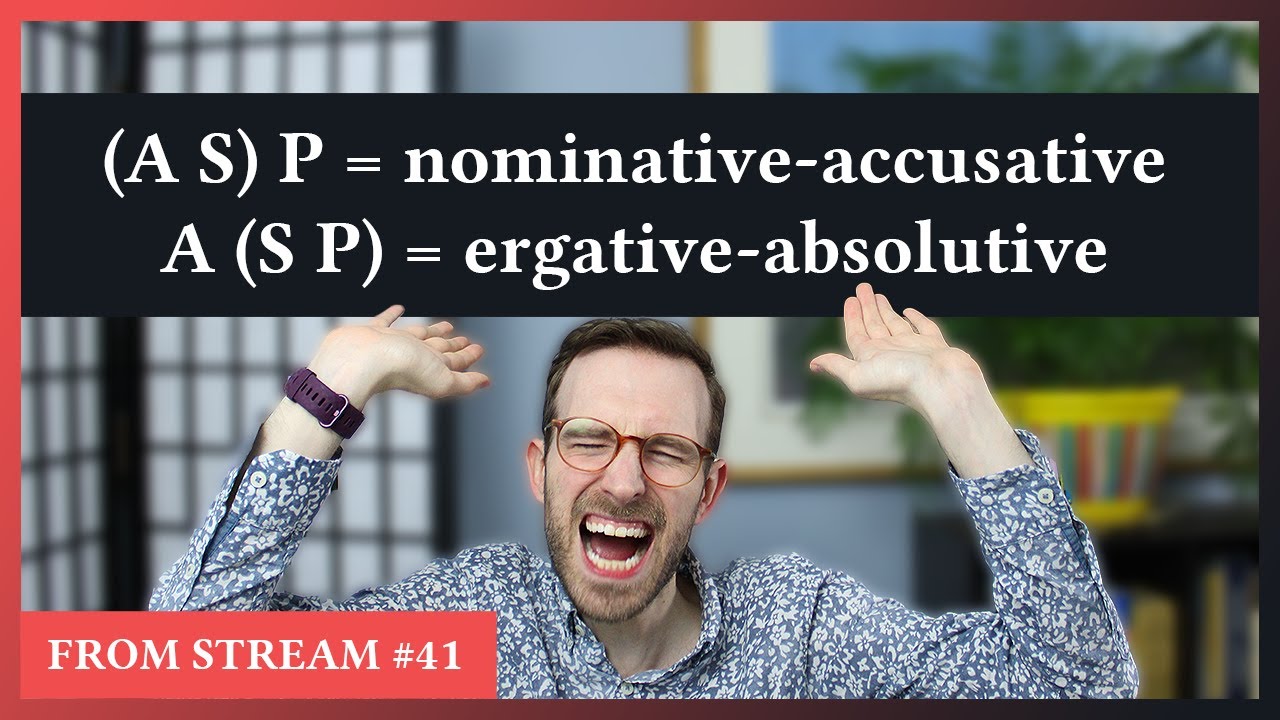
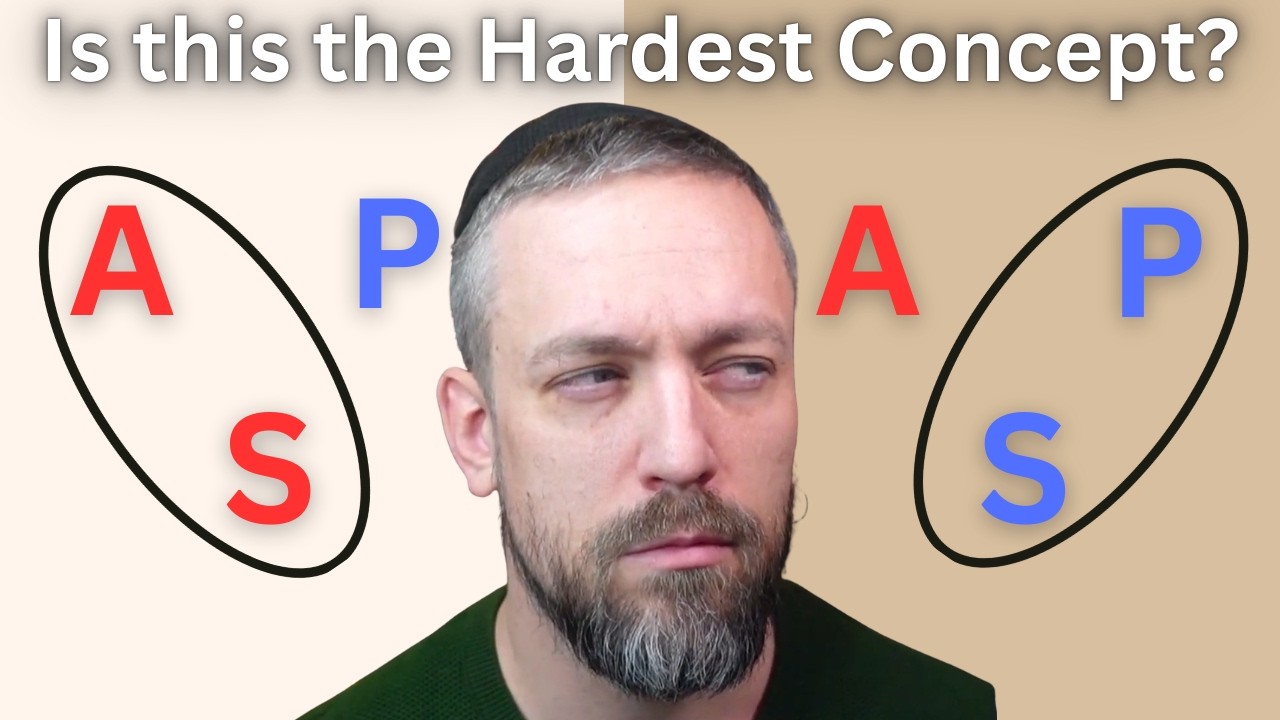
Syntactic design for original conlangs, focusing on alternative morphosyntactic alignments (such as ergative-absolutive or oligomonadic systems) that eschew traditional verb templates.
129 views1likes17:07Original Release: 2019-11-30
Na'ora my friends. My name is Binz, and here we are in video 38 of the video tutorial series on the Ælis language.
Today, I'd like to talk about verbs. Ahh, the verb.
Majestic in its richness and flexibility. The verb is truly an mesmerizing feature of language and communication. In any sentence you could possibly fathom, an indispensable role is played by the verb. I daresay, what water is for man, the verb is for language. Everything flows around it.
And just the way man cannot be without water, language cannot be without the verb.
Through the mere presence of a verb, as well as its conjugation, you can express what is done, who is doing it, describe the time frame in which this happens relative to the narrative point of view, set an active or passive voice, discern hypothesis from reality, express desire, and command others to carry out certain actions. 't Is but for the intrinsic discretion of the verb that we can know how many guests will be sat at the linguistic table for supper.
The verb sets everything in motion. And so, we couldn't conceivably communicate without the basic ingredient of language: the verb.
Also, Ælis doesn't have it. I tire myself when I think about all the times I've heard myself mention how root words in Ælis comprise a central idea rather than being easily translatable to another language, which entails it doesn't distinguish word types like nouns, adjectives, verbs, and so on, like most if not all languages in the world. A root word like {li} could mean origin, start, beginning, exit, original, initial, starting, to begin, source, leave, departure, from, to originate, to exit, to depart, to commence, to initiate, to leave, originally, initially, exiting, departing, leaving, going out of, etcetera.
Right? So, the question is: in Ælis, how do you verb? Since the verb is indeed a quite fundamental part of any sentence, presumably in your native language as well, it can be challenging to convert whatever the verb contributes to your utterance in a language that doesn't work the same way. So the aim of today's video is to help you with that. How can you translate a sentence from English to Ælis, if the latter has no verbs? To get started, it is important to keep in mind the three basic arguments that Ælis sentences have: the agent, the topic, and the patient. They were first introduced in video 11 of the series. The agent is the “sender”.
It is actively involved in whatever the utterance expresses.
The agent “does” something in the sentence. Okay?
The topic corresponds to the “message”. The topic expresses a so-called 'essive' argument, which means that the argument in question “is”.
It exists, it takes place. The patient, finally, corresponds to the “receiver” of any sentence. It is a passive argument that “undergoes”, “gets”, or “is affected by” the rest of the utterance.
The topic is a word that expresses either a thing, which can be a tangible object like for example a “book”, or a conceptual idea like for example “love”; an action; an event; or a circumstance. If the topic is a word that expresses a thing, then the agent is the argument that sends, gives or emits this thing.
The patient is then the argument that receives this thing, has received it or will receive it. Since the time frame isn't relevant here, the patient can also express possession or ownership.
After all, the immediate consequence of “receiving” is “having”.
If you “got” a cat previously, then now you “have” a cat.
Right? At least that's how Ælis sees it.
If the topic describes an action, then the agent is the argument that carries out that action. The patient is the argument that's affected by that action. In case of an event, the agent initiates the event or actively contributes towards the event taking place, and the patient experiences that event. The agent creates or causes a circumstance to be the way it is, and the patient is affected by it.
Now, back to the verb. A verb, in English, apart from auxiliary verbs like 'to be', usually expresses an action that's being carried out, or an event taking place. That means that the slot that corresponds most to it would be that of the topic. It is true that a verb, provided it's an active verb like 'to play' or 'to speak' or 'to walk' or whatever, will usually correspond to the syntactical role of topic in Ælis. But the way in which this transposition from verb to topic works, brings about an interesting phenomenon.
In many cases, it causes a situation where one and the same topic translates to two different verbs in English, and the distinction between the two verbs in question depends on whether the topic in the Ælis sentence is accompanied by an agent or a patient.
In other words, the presence of the syntactical arguments of agent and patient can determine the way we'll want to translate an Ælis topic to an English verb.
This idea already came up in video 11, where I gave three example sentences to explain what a fluid‑S active-stative morphosyntactic alignment means.
I told you that the verbs “to see”, “to hear” and “to fall” change into “watch”, “listen” and “jump down”, respectively, if you turned the patient into an agent.
But unfortunately, I must once again fess up to you, because the translations of the latter three are actually not correct. It took me a long time to find the courage to address this topic, because I'm not the best at admitting I was wrong.
But while the three example sentences given do sound plausible, the switch from passive to active couldn't be upheld the same way for any given topic.
Back when I started the series, I was convinced that the topics I'd cover were elaborated enough to create a video that wouldn't have to be revised.
Topics that weren't fully fleshed out yet, I simply wouldn't create a video about.
But while I try to be perfect, unfortunately I too am only human.
So it's better to clear the air, and tell you how it's really done.
I really hope that there won't be a point in time where I'll be forced to review even this revision video, so let's keep our fingers crossed for that one, shall we?
Ah well... Back to our three primary syntactic arguments.
In some cases, the correspondence is as easy as 'subject' - 'verb' - 'direct object'.
For example, the word {doe} which means 'fire'. Let's add an agent: a woman named Tina, and a patient: food. If we look at the topic and patient alone, we get a passive sentence: {hadoe ia'nu'ætu} - the food is set to fire, or more likely in a majority of contexts: the food is being cooked.
If we look at the topic and agent alone, we get an active sentence.
{lanire'tina hadoe} means 'Tina is active with fire', 'Tina sets something on fire', or 'Tina uses fire'. If we look at all three arguments together, both of these sentences are combined into one, and that gives us a transitive sentence: “Tina sets fire to the food”, or simply “Tina cooks the food”.
Since Ælis doesn't structurally distinguish active sentences from passive ones, we may also interpret this as a passive sentence: “the food is being cooked by Tina”.
Now, on a side-note, while active and passive voice don't exist in Ælis, we can give a sentence an active or passive “flavor” by playing around with the word order.
If you put the agent at the front, you get {lanire'tina hadoe ianu'ætu}: Tina cooks the food. If you reverse the word order and put the patient first, you get {ianu'ætu hadoe lanire'tina}: the food is being cooked by Tina.
Right? So anyway, due to the mechanics of both Ælis and other languages, the correspondence of agent-topic-patient won't always be as straightforward as subject-verb-direct object. Unfortunately.
So let's have a look at some cases where the verb we'd use in English changes according to whether the topic in the Ælis equivalent is combined with an agent or a patient.
Our first example is {nu'ætu}. The root word {nu} means 'nutrition', and {ætu} means something like 'the first state of chemistry'; the first chemical state of matter. This is 'solid'.
And “solid nutrition” translates to 'food'. So {nu'ætu}: food.
Now, assume a sentence where 'food' is the topic of the sentence.
If we combine it with a patient, for example {æma}, the male first person, we get {ia'æma hanu'ætu}: I am the recipient of the food. Well, if I am the recipient of the food, then I am eating it. So as a verb, {nu'ætu} translates to 'eating'.
But only if we specify a patient. If we connect the food to an agent instead, we get something like 'I am the giver of food', 'I am the provider of food'.
In that case, {nu'ætu} translates to 'feeding' rather than 'eating'.
The same goes for {nu'etu}, liquid nutrition or beverage.
In combination with a patient, we get the verb 'to drink'.
In combination with an agent, we get the verb 'to give to drink', or perhaps 'to water plants', 'to irrigate crops'. Right?
Next, we'll look at {en}: vision or sight. If you pair it with a patient, it means 'to see'. If paired with an agent, it turns into 'show' or 'present'. And for {er}, 'sound', it is similar.
With a patient, it means 'to receive sound', or simply 'to hear'.
With an agent, it means something like 'to make noise' or potentially 'to play audio'.
Now, I'd like you to look at these four pairs of words, and really think about them.
The fact that we translate them into English as different verbs is, at least from Ælis' point of view, a flaw of the English language, not the Ælis language.
Because think about it. If you feed something or someone, it means the same as 'to make someone eat'; 'to cause eating'.
The same in the second case: to water or irrigate is the same as “cause something or someone to drink”. If you show something to someone, then you're causing them to see it. And if you make noise or play a song, you're causing someone else to hear it. So in essence, the reason we can translate these pairs of verbs with only one Ælis topic each is because they mean the same thing.
The only difference between eat and feed, drink and give to drink, see and show, or hear and play is whether the other arguments in the sentence are at the receiving or sending end of the action that the topic expresses. If you're at the receiving end of food, you're the eater. If you are at the sending end of food, you're the feeder. And this logic applies to the other three examples as well. Let's look at some other examples.
{ii'an'eda'ira} means 'going up' as a verb, or 'upward movement' as a noun.
If you pair it with a patient, it means 'to ascend', 'rise' or 'to climb'.
If you combine it with an agent, it means 'to lift up'.
We already covered, I believe in video 19, how the word {egen}, meaning 'visual communication', switches between 'read' for a patient and 'write' or 'gesture' for an agent.
Also, {eger}, auditory communication, switches between 'hear' and 'speak'.
And we've also seen the last example pass by.
The word {ii'ei'ira} means cognitive improvement. If you're at the passive end, the cognitive improvement applies to you, and so you learn or study.
If you're at the active end, the cognitive improvement is provided by you; you teach.
And again, we can see how the verb pairs are related to one another in exactly the same way. The reason we have separate verbs in for example English, one of which is inherently active or transitive and the other is inherently passive or intransitive, doesn't make sense from an Ælis point of view.
But because we've grown up being taught a language that exhibits a type of behavior we don't question to a point we assume it's the only viable way to do it, we lose track of the intrinsic relations that some words, in this case verbs, have to one another.
They essentially have the same semantics, but only differ in aspect.
It is this connection between certain words that you have to see and understand in order to learn how to say things in Ælis. If you rely too heavily on your native language, limiting yourself to finding one‑on‑one translations for words you know, you're going to have a tough time trying to reach the light at the end of the tunnel.
This is ultimately what Ælis aims to do: it tries to force you to reduce words, sentences and utterances to their fundamental semantics, not just on a morphological level, but as you can see, on a syntactical level too. Ælis aims to make you rethink language, and, I've said it before, think about what you're actually saying when you're saying it.
So I hope that this video has brought you a step closer to that light.
Even if you perceive only a faint and dim light, trust me: it shines brightly.
A final thing I'd like to do before I let you off on your merry way is have another look at the example sentences I gave. You know, the wrong ones.
The ones that will forever bring shame on me, my family, and everyone else I hold dear.
*SIGH* alright, I'm just going to have to live with this.
What do the sentences on the right actually mean?
Well, the first one doesn't mean “I watch the dog”, but “I show the dog off”, “I present the dog” to someone or something. The second sentence doesn't mean “I listen to the dog”, but “I cause the dog noise” or something like that.
“I make the dog bark”, for example. And the final one doesn't mean “she jumps down”, but rather “she pushes (something or someone else) down”.
Okay? So that begs the question: how would you express the verbs 'watch', 'listen' and 'jump down'? Well, easy.
You turn the agent and the patient into the same person.
If “the vision of the dog is given to me and by me”, then that means as much as 'I make myself see the dog'. And “making yourself see something” equals 'watching' it. The same logic applies to the second sentence.
If you make yourself hear something, that equals listening to it.
And the same logic also applies to the third sentence.
If she causes herself to make a downward movement, then that translates to lying down, jumping down, lowering yourself off a rope perhaps, or something similar.
Alright? Now, I'm still debating with myself about whether I should actually add a new, fifth function marker to the language.
A kind of reflexive marker that would indicate that the agent and patient of a sentence are the same argument. This would omit the need to say things like {ia'æma la'æma}, or {ia'ini la'ini}, which is very repetitive in sentences like these.
I'm not sure, what do you think? Anywhoo, I hope you've gotten an at least somewhat satisfactory answer to the question “how do you verb”.
If you feel like you can't yet verb the way you'd like to, feel free to contact me or ask away in the comments. I'm going to call it a day because I've grown tired of hearing myself speak. Not you though.
You love my voice and you can't wait until the next video comes out.
I'm positive. And yes, also inappropriately full of myself.
Na'ora people. I'll be back.
Up Next
48:35
From Sounds to Words: Building Invented Languages in the Linguistics Classroom
@FiatLingua
689 views•2013-10-02
36:52
Constraint Interaction in Optimality Theory: Epenthesis & Deletion
@Vidyamitra
180 views•2018-08-20

8:59
Forensic Linguistics: How Language Solves Crimes | PBS
@pbsstoried
1M views•2024-01-25

21:32
Accent Expert Explains U.S. Regional Dialects | Part 1
@WIRED
9.3M views•2021-01-21
Related Study Plans & Knowledge Roadmaps
Structured learning paths in Linguistics
linguistics
Optimality Theory: Tableaux & Constraints
01Phonological Basics: Sounds, Syllables & Rules
02Foundations of Optimality Theory: GEN, CON, and EVAL
03The Constraint Inventory: Markedness vs. Faithfulness
+ 2 more learning modules
15h5 modules
Explore Roadmap
linguistics
Morphosyntactic Alignment: S, A & P Systems
01Foundations of Syntax: Transitivity and Arguments
02The Linguistic Variables: Mapping S, A, and P
03Nominative-Accusative Alignment
+ 3 more learning modules
12h6 modules
Explore Roadmap
linguistics
Analyzing Sign Language: Phonology & Syntax
01Foundations of Sign Language Linguistics
02Phonology: The Five Parameters of a Sign
03Morphology: Word Formation and Classifiers
+ 2 more learning modules
14h5 modules
Explore Roadmap
linguistics
Pragmatics: Speech Acts, Grice & Politeness
01Introduction to Pragmatics: Meaning in Context
02Grice’s Cooperative Principle & Implicature
03Speech Act Theory
+ 2 more learning modules
14h5 modules
Explore Roadmap