







![[Syntax] Case Theory](https://i.ytimg.com/vi_webp/7X7V8wpjaGI/maxresdefault.webp)






![[AFLA27] Absolutive movement in Polynesian: Syntactic ergativity and word order - Lauren Clemens](https://i.ytimg.com/vi/i2eXiK_7zxo/maxresdefault.jpg)


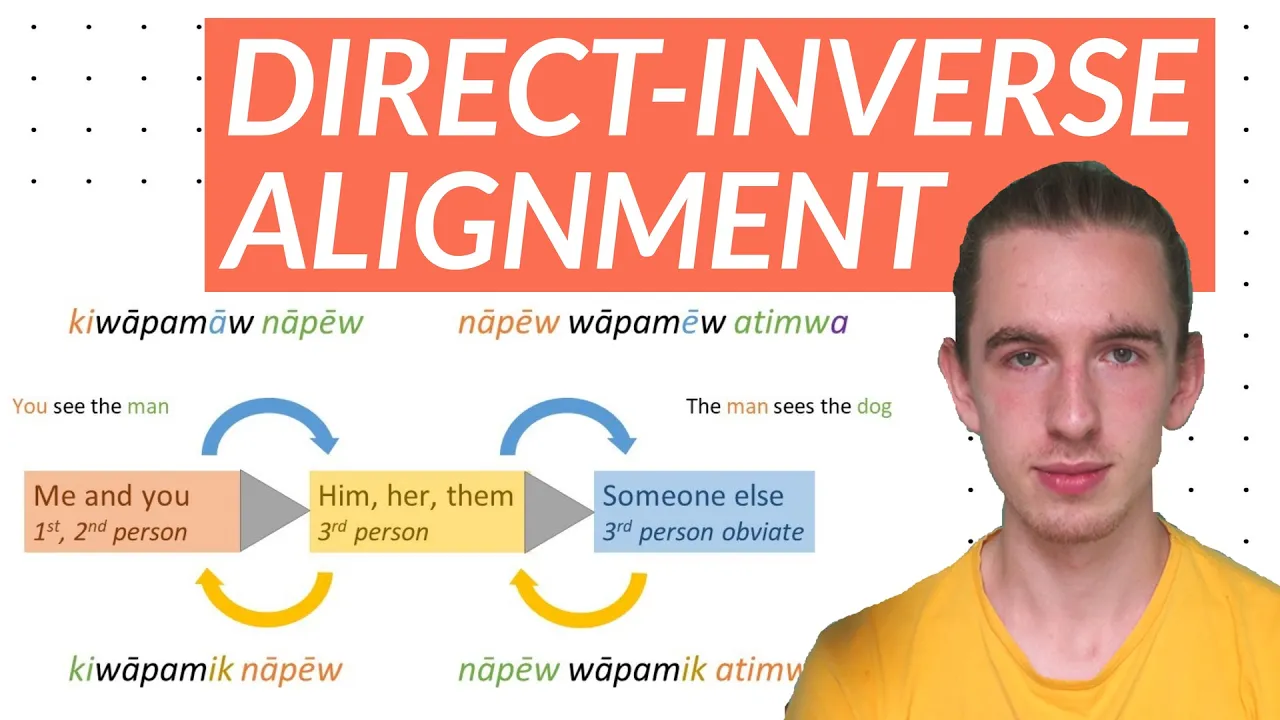
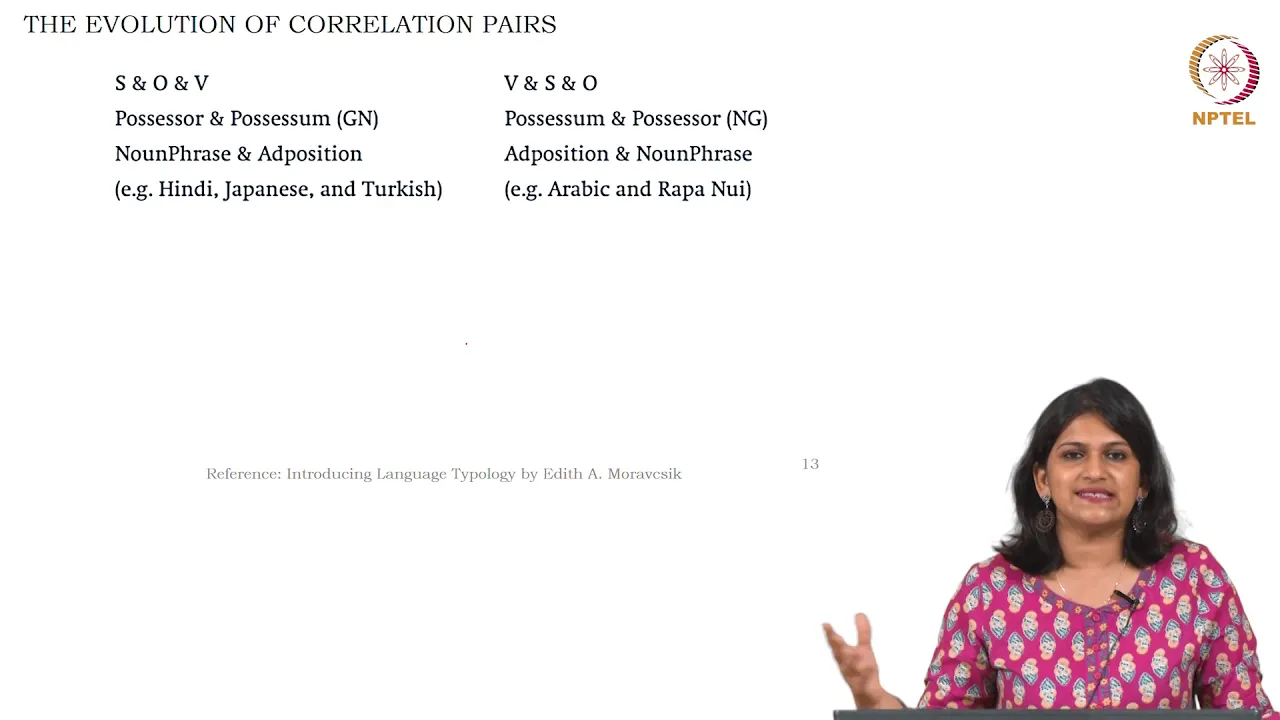
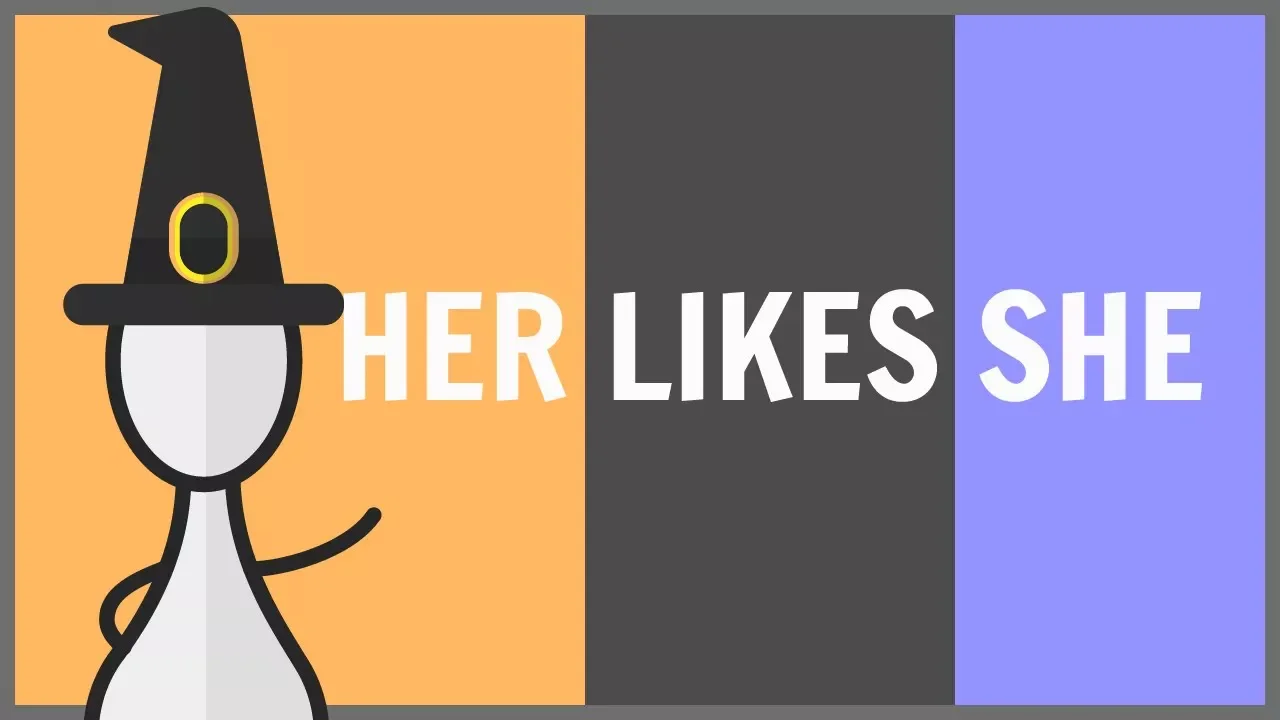


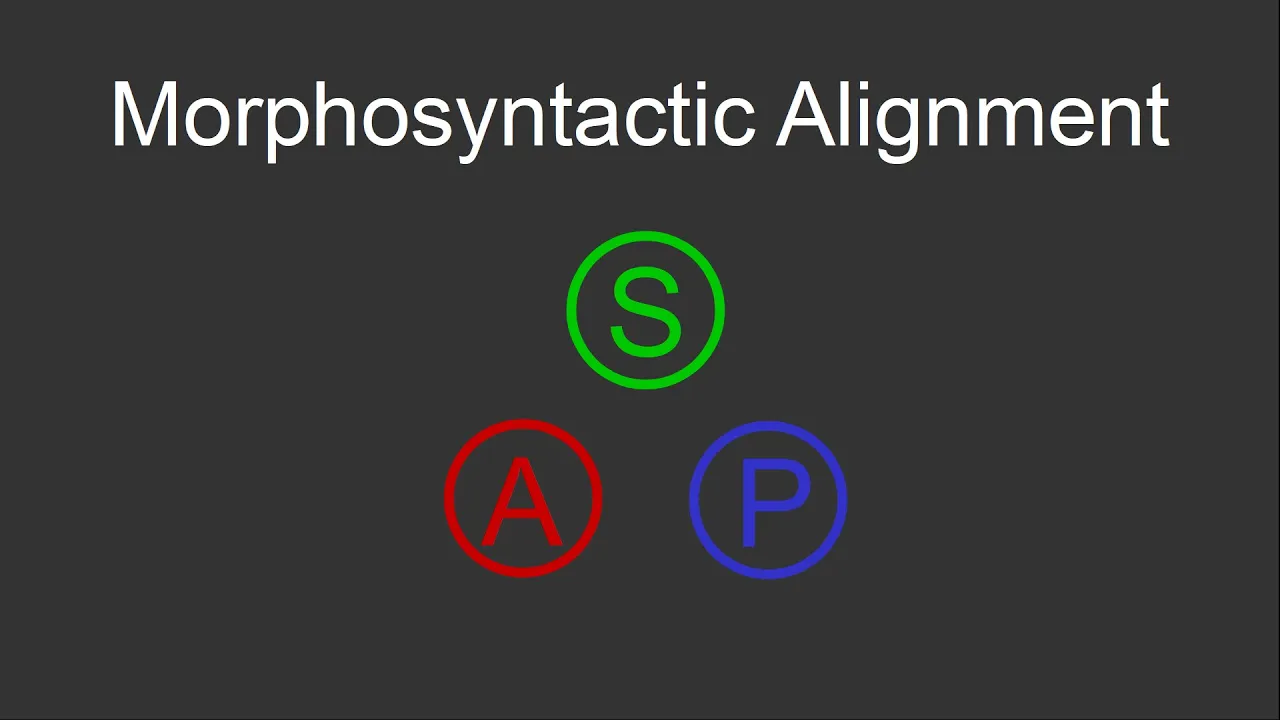
Case is a system of marking nouns for their relationship to other elements within a clause, distinguishing between grammatical functions (subject, object) and semantic roles (agent, patient). Languages can be classified by their morphosyntactic alignment: Nominative-Accusative alignment marks the subject of both transitive and intransitive verbs the same way (nominative), while the object takes a different form (accusative); Ergative-Absolutive alignment marks the subject of an intransitive verb the same as the object of a transitive verb (absolutive), while the subject of a transitive verb takes a different form (ergative). Some languages exhibit more complex systems like split-S alignment, where the subject marking varies based on whether the predicate makes the subject more agent-like or patient-like.
Case & Morphosyntactic Alignment Explained: Ergativity & More
Added:let's take a first stab at it and say well the owl is the thing that's ruling the world is the thing that's ruled unfortunately it's a bit complicated but consider [Music] this the world is ruled by the [Music] owl YouTube Welcome Back we are about to jump in and talk a little bit about case we got a lot of stuff to deal with in the world of case you know you can you can read whole books on it if you want um we're going to do a little bit of clearing up of terminology first and then we're going to see what we can do after that but the terminology that's the stuff that we got to get down because it actually does get a little bit confusing and the terminology is among the worst in linguistics I think uh I think case terminology is pretty bad um so without further Ado let's go to the side webcam and let's see a blank screen excellent yeah okay so case um I'm going to start us from like the very very basic bottom floor of the case skyscraper I'm going to be mixing metaphors like uh like it's no one's business here today just a fair warning okay so what is case if I were to give a kind of dictionary definition of it and say it's a system of marking nouns for their relationship to uh other elements within the clause or sentence uh and if we can get a little more specific case is a system for marking uh dependence relationships to their heads so within a within a phrase we have a we have the notion of a head which we can kind of pre-theoretically uh think of as the most important element of that phrase so if we look at um we look at a a phrase like the big owl what's the most sort of what is this basically this a big owl is basically an owl right so we would think of this in a pretheoretical sense uh as a a phrase a noun phrase headed by the noun owl it's a noun phrase because its head is a noun so whatever the kind of um whatever kind of element is the head of the phrase that's what kind of phrase it is so rules the world is this a kind of world or is this a kind of ruling it's a kind of ruling so we have a verb phrase with a head Rule now I did mention pretheoretical a few times during that because there are um there are different theories that use the word head in slightly different ways but let's stay sort of zoomed out in a this kind of um basic basic Linguistics um basic Linguistics level all right so the Big Al rules the world together we have a nice sentence the Big Al rules the world World noun phrase and a verb phrase so this is uh some old some old style syntax but sentence equals noun phrase and a verb phrase the Big Al rules the world that's just a little aside for those who are interested in in the more syntactic side of things obviously sentences do get a bit more complicated than that as time goes on uh so okay we talked about heads um and we talked about how noun how case is a a way of signaling the relationship of a noun to the to the rest of uh to the rest of the clause or if we think of it in terms of heads um we have the head of the of the clause which can be thought of as the verb um again being a bit pretheoretical here because there are other theories that will tell you different but so the Big L rules the world fundamentally this is an instance of ruling we're talking about this is the action the Big Owl is ruling the world so the head of this is rules the head of this clause or this sentence is rules so the things that interact with the things that sort of hang off of this head are its dependence so in this case we have the head which is rules and the dependence we have two dependents the Big Owl that's one and the world so here the head is a verb and the dependence are two noun phrases the big Big Owl and rules the world okay so the Big Owl rules the world head dependence what is Case Case is a way of signaling the relationship of these two dependents to their head what's another kind of uh so this is this is a clause that's one type of head dependent relationship uh another one is uh possessor possessed relationship so the big owls um rule or maybe say Dominion there we go so here we have a possessor and a possessed a possessum if you will so the possessor and possess some meaning the thing possessed so the big owl and Dominion Dominion don't know why that jumped around like that okay and so here we have two we actually have the head being a noun phrase uh being a noun Dominion so overall the big 's Dominion is a noun phrase the head is the possess sum so the dependent is the Big Owl I'll write these a little bit more clearly like this so we have the Big Owl and the world these are the dependents here we only have one dependent uh the Big Owl so in both cases the Big Al is a dependent um okay and actually you can see the start of something that looks like case here because note that to Mark the fact that the Big Al is a possessor we have this Z morphology on on there so we're signaling the relationship of the dependent which is the Big Owl to the Head quick uh quick aside to look at the chat we do have um that you can still absolutely add your names to the uh the fan service language um I would say put it in the Discord and just at me uh on there or at Lucy and one of us and we'll get it we'll get it sorted out uh and if you have a preferred um a preferred meaning be sure to include that there I don't have the spreadsheet open right now otherwise I do it now okay so here we are um here we are yeah sa's got some comments on case okay we will get to these we will get to these comments um although saon feel free to hold Court in the chat um for now I'm just going to get through all of these uh these definitions so case is going to be helping us to clarify the relationships of the dependents to their head so it's a form of dependent marking case is a form of dependent marking that occurs on nouns okay so let's get out of abstract land a little bit and let's let's do a little bit of like um con langing just for the purpose of making up an example so say we have um a world a word for owl uh which is something like hooo uh say we have a word for world and the word for world is maybe something like um maybe something like P P hu and to rule is a verb likea okay so the Big Owl rules the world we can just say the owl rules world to make our Our Lives a bit easier here um the owl's Dominion or ruling so if we were to make a uh let's assume that we have an SVO word order so if we have an SVO word order and nothing else that we know about the language if we want to say the owl rules the world we would say something like hu which we gloss as owl rule World okay just ignoring agreement there are two relationships there are two um dependents here right we have owl and world so if we this were a language that used case marking to Mark the specific relationship of the dependent the noun phrases to the Head the verb then we would put something maybe on the end of these you might be thinking well we already know which is which which you know something is ruling here and something is ruled and we know which because we know this is subject verb object language right so that's sort of irrelevant why do we need case well language sometimes does things redundantly um you do get case marking in languages with uh with a strict word order like this um sometimes you sometimes you have both sometimes you have neither but um but sometimes you have both so let's take that case so if we were to mark this we need something that cries out saying hey I'm the subject right so let's say we have an AIX like T and ta is going to say I am the subject of this sentence we'll get a little bit more into what a subject is uh in a second but we're going to just say subject marker and we need something for um for the object so let's say something like new new is going to say I'm the object so H the owl subject rules the world object all right so case we are now ex entering the domain of case because we are distinguishing the subject from the object and notice if say we didn't have a a fix fixed word order language say we had a free word order language then we could say something like H and and this would be owl subject World object Rule and crucially the State of Affairs in the world that this describes would be the same the ow rules the world because the relationship of The Owl and the world to the situation of ruling is expressed with these little markers on the nouns okay all right so so far so good um we've got these little markers on the nouns they're telling us what the relationship of the nouns is to the rest of the phrase um let's let's move on so I said subject and object like those are things that everyone just can easily identify but it's not necessarily the case there's a bit of complication with um what a subject and object is so in the sentence the owl rules the world I could tell you that the owl is the subject then we have our verb and then we have our direct object which I'll just abbreviate to object for now um the world but you know me just telling you that isn't especially helpful so we have to come up with a a more General way of thinking about what a subject is and what an object is unfortunately it's a bit complicated because one let's take a first stab at it and say well the owl is the thing that's doing the action right the owl is the thing that's ruling the world is the thing that's ruled so it's the thing that's getting the action done to it so we might as a first attempt say well the out the subject is whatever is doing the action and the object is the other is the thing that's having the action done to it but consider this the world is ruled by the owl now we know English is an SVO language let's just take that as given so English is SVO subject verb object so the thing that's coming in front of the verb we expect to be the subject but here it's no longer the thing that's doing the action it's the thing that's having the action done to it and so this is a passive construction and a passive Construction in English um and in many languages is defined as uh a construction in which the thing that has the action done to it is the subject so we can see that subject isn't something that has a a clear semantic meaning it's not just the door of the action it's more of like a structural position in the sentence and in English we have verb agreement verb agreement with the subject so we have subject verb agreement so if I change the world to the worlds we'd have to say the worlds are ruled by the owl the owl has dominion over the many worlds so um that's another that's a diagnostic for the subject in English it's the thing the verb agrees with so it's it's a bit abstract this notion of subject um and in different Construction the mapping between the subject and a particular semantic rle like the thing that does the action let's call that the agent so here the owl is the agent agent owl is Agent running out of space is the agent in a protot a prototypical active sentence like the owl rules the world the subject is an agent in the prototypical passive sentence the subject is not the agent it's not the thing that does the action it's the thing that has the action done to it so what could we call that we could call that a patient it's something that is undergoing the action so 's agent world is patient so we have now three kind of levels of analyzing things we have see if I can go down here we have subject versus object we have uh what I've been calling subject case versus object case we'll we'll make that a bit more technical sounding soon and then we have agent versus patient so instead of subject case we have a fancy name this is nominative and here's where the nomenclature comes in this is a a name that we've inherited as linguists from from Antiquity from the from the Classical period nominative and accusative um the naming case and the case of accusing it's a it's actually a poor translation from the Greek original which I actually don't know um but that's why we call it accusative all right okay so we have these three layers let's let's give them different names so here we have case nominative versus accusative so in English uh these are things like uh he versus him she versus her they versus them I versus me we versus US these are all nominative accusative distinctions right so the owl rules the world um say we have say say the owl is a he we say he rules the world um the owl rules the people he rules them um or if the was a she she rules the world she rules them not she rules they right because because in English the direct object is going to want to take the accusative form so we have this distinction nominative versus accusative then we have subject versus object and this is called not case but grammatical function or a grammatical relation um and this is that kind of abstract thing this is the the position in the sentence that that the main verb agrees with in English so this is the thing that the subject that that the um the agent occupies in an active sentence and the patient occupies in a passive sentence um so this is this kind of abstract layer why have I separated well okay let's let's finish up and then I'll talk about the separation why have I separated agent and patient from subject and object it's just because of things like this passive situation where where there's not a match it's not that the subject is always the agent uh and so we can call this a semantic role or a thematic role or a Theta role which is probably the term that um well different theoretical schools use different terms the one I'm most familiar with is Theta Ro okay so oh see excellent stuff happening in the chat okay we are we are going to uh we are going to continue so why so you know now why I've separated the idea of a grammatical function and a Theta Ro because they're not always one to one why have I separated grammatical function and case well because nominative and accusative these two categories in English these things like he versus him I versus me um you find accusative in case in there it is in instances when it's not a direct object so there's an example like um me and him are fighting which is look down upon prescriptively but that's part of English right so here we have two subjects the whole subject is me and him and they're both in the accusative case yet they're on the subject so we get these kinds of interesting situations um and we get other situations where different cases show up on the subject um English doesn't really have these anymore but it used to you get other cases than you'd expect showing up on the subject sometimes um cool cool so the three layers case grammatical function and Theta R semantic role thematic role whatever you want to call it okay so English has a remnant of a case system in its pronouns and then it has that apostrophe s thing that that looks case like um that expresses possession uh okay so we we've climbed up to one step of the mountain when we've come we've come to basee Camp or case Camp just let that sink in for a minute okay what next I want to make a point about the names of cases because this is something that's come up on the Discord and by the way people watching on YouTube there's a Discord check out the link in the description um the names that we give to cases are are just that they are given to cases by people who are talking about them people who are analyzing them linguists in general but but also others and it's not always possible or advisable to compare something called the nominative in one language to something called the nominative in another language there's always an aspect of case which is language specific so we have ways we have rules that we use to to name these cases like generally when a linguist is analyzing a language and the linguist sees there's a case marker that goes on the subject of transitive verbs and the subject of intransitive verbs I should talk about transitivity in a second um then that linguist is probably going to say G I'll call this nominative because this is kind of what we call nominatives it's not the ca it's not so that there is uh some sort of abstract nominativ that different languages just sort of partake in um these are sort of anal iCal categories that we put on on the language so what the language has you know you could think of it as like form a Form B form C and form a is used for subjects Form B is used for direct objects uh and if we're talking about English Form B is also used in uh conjoined noun phrases so me and him uh and form C is used for possessors but to make our lives a bit easier we do give them give them these names is it's just not always true that you can compare them simply from one language to the next um okay because uh one language might use you know in English we have the accusative case that shows up in these conjoined noun phrases this is not true in all languages that have nominative accusative uh in many of these languages these would show up as you would more you you'd really expect them to as nominative because they are subjects okay so uh Logan saying in the chat that thematic rules and Theta rules are different things um they are you know they are they can be considered different things depending on what theoretical persuasion you have I'm trying to zoom out a bit um but yes they they're called theeta rules because it's an abbreviation for thematic roles um then there are people who have separated those two concepts um but we could be very general and just think of it as as a semantic rule if that's um if that's easy okay so where were we we've CL we've climbed up to case camp we have been talking about case grammatical function uh semantic rules what else do we have well I mentioned transitive and intransitive verbs okay so we could think of um let's think of two two sentences like the owl rules the world and the owl rules so one of these has a direct object and the other doesn't and transitive is just a way of saying has a direct object so this is a transitive sentence this is an intransitive sentence yes I spelled that right okay so why do I bring this up well let's look at let's look at our little toy language here I'm going to try and clear out some of this stuff so we have the rules the world transitive we could also just say the owl rules in general so that would look maybe something like Whoa ow and now we're more sophisticated we're going to say nominative instead of subject case let's change all of this accusative accusative nominative accusative okay so the owl rules whereas these mean the AL is the world okay super um note that when we have a an intransitive sentence we only have one one dependent noun phrase one argument in this case so oh I said case again see it's impossible why do we have to call this why do we have to use the same thing here h as here who I mean because there's only one argument here we could just as easily say who who knew it's kind of arbitrary so there's no there's no no Ironclad rule that says you have to treat the subject of a transitive sentence the same as the subject of an intransitive sentence so let's come up with some it looks like an accusative right but when this happens we come up with a different nomenclature and here's where it gets kind of tough kind of annoying actually so when we have this situation so let's call this situation a subject of intransitive looks the same as the subject of transitive verbs and the object of transitive verbs looks different so you get one marker oops oops there we go you get one marker say t for these two and you get one marker new for this one that's situation a situation B which this little toy language gives us uh the example of puts the subject of an intransitive marked the same as the object of a transitive verb for historical reasons we call this nominative and accusative for historical reasons we call this ergative and absolutive so if you've ever heard of ergativity that's what this is referring to it's referring to a situation where the subject of an intransitive verb is marked the same as the object of a transitive verb in that case we don't call that that marker accusative we call absolutive and we call the marker of the subject of the transitive verb ergative so urg stands for ergative abs stands for absolutive I'll just write that down so everyone can see and to make it easier to talk about these things to make it easier to talk about these things we have different abbreviations so subject of the transitive sorry subject of an intransitive verb we call this we abbreviate this as s object of a transitive verb or let's go subject of an of a transitive verb we call this a um which stands for agent but we've already tried I've already worked so hard to distinguish subject and agent for you that I would just like you to think of it as a and the only reason I bring this up is because you will see this everywhere that this is discussed and kind of have to know it if you if you want to uh read any of these papers and then the final thing is p which is the object of a transitive verb so S A and P we have these three participants here we have s equals a n p here we have a and S equals P when s equals P that's an ergative absolu of system when s equals a that is a nominative accusative system so I should call this situation B so situation B is ergative absolutive alignment that's the uh that's the term morphosyntactic alignment to discuss to describe the difference between these two kinds of systems here's nominative accusative alignment okay so we have three let's let's see if I can just reiterate that because I think it there's a lot of stuff coming at you and I think this is an important point so s is the subject of an intransitive sentence so here I will just write down owl equals s subject of an intransitive sentence the owl rules here owl is an a the subject of a transitive sentence or Clause um and here world is p the object of a a transitive Clause so sa A and P nominative accusative alignment is when the form used to mark s is the same as the form used to Mark a so in this case T leaving out P so P only occurs in transitive sentences and we call that the accusative case this is the nominative accusative uh system this is the morph this is the nominative accusative alignment okay yeah orative absolute of systems orative absolute of alignment this is when you have a marked differently than S and P I don't know why that happened all I wanted to do was make it bold so that's it that's what ergative absolute of alignment is so now you can all make ergative absolute of systems uh let's see there's a bit more there's a bit more scrolling down so you have S A and P those are our those are our three our three things and let's use um the forms T new and so we have three case markers T new and let's say Le what are the different systems that we could come up with we could come up with a system where s is marked with t a is marked with t p is marked with new this is nominative accusative alignment the over a bit more over here we could come up with a system where s is marked with new a is marked with t p is marked with new orative absolutive you can maybe see where I'm I'm coming you know I'm I'm approaching something here okay what are the other options we have logically we have more options than this right well we could also have we could also have maybe new so we group A and P together so that means when you have a transitive sentence both participants are marked the same way and that's different from the way that the an intransitive um subject is marked all right so I should warn you that that's Ultra Ultra Ultra ultra rare um um this has been called double oblique alignment but I wouldn't be surprised if it had like 50 other names because linguists love naming things double oblique um what else could we do well we could just have tat right just put make everything the same this is called neutral alignment and you could argue that um that languages which don't Mark Case effectively have this so English in the nouns is neutral in the uh pronouns is nominative nominative accusative this is very common and what else do we have well we could do T or maybe like new T three different situations three different cases triart agreement or Tri tripartite alignment and that's pretty rare as well because you can see it's it's not strictly necessary because you never have both S and A or both S and P in the same sentence so these are um five different five different types of alignment um and it gets worse gets more complicated uh because there are also systems that that Mark that split um different types of these arguments even even below the S level so you have you know we've been talking about S A and P like they're all the same but there are some languages for example which split the S so some s's take T and some s's take new depending on depending on what depending on how agent like the intransitive sentence is or the the the subject of the intransitive sentence is and how or how patient-like it is so let's look at an example so if we have let's make up a new verb for our little language um let's say boho oops Yeah boho I realize I did this wrong n that's better so the owl eats what would the owl eats be let's bring this all the way down so that we can see it on the same screen the owl eats is going to be if we have a split s it's whooo something boho so if this is a nominative accusative language this is going to be huab bohu namak if it's an ergative absolu of language we would say whoo who no boho if it's a split s language what we could have have is huab because eating when you eat something you're actually like you're really doing that action that is something that you are the agent of uh so there are some uh there are some predicates whose subjects are more agent like what does mean for something to be agent like well when we think about um when we think about how actions take place in the world there is often something acting on something else what do the what do things that act on other things have in common they have volition they move around in the world they are um they're sentient they're you know they're going around enacting their plans you know humans are great examples of of things that uh are often agents because we're going around we're chopping down trees we're punching we're punching rocks we're doing all sorts of stuff um and we have this volition this sensient this this um this ability to move and to cause change so humans are are often are often put in in agent position not always right one human can act on another so what what makes something more of a patient a patient is something and we're talking here about this agent versus patient distinction just to to call back to that um what makes something more agent like is it's sentient it causes action it moves it has volition what makes something more patient like it's that it undergos a change of state you know so if you think of something super agent like it would be like a kid throwing a baseball at a window so the kid is the agent the window is the patient the kid broke the window so the kid is an agent par exot sensient moving around causing action willing what it does and the window is a great example of a prototypical patient because it underg goes a change of state it has no say in this action it's not a sentient being at all it's just a it's an inanimate object that just stays put until it gets broken um now it's important to notice that that that it's not the fact it's not the case that all that boys are or the kid is always going to be an agent right because the mother could scold the kid so now we have the kid undergoing a a change of state from being maybe happy to being sad um and so taking on more of the characteristics of a patient okay so this is also largely determined by what what predicate we're talking about what in this case what verb we're talking about so when you eat you are more agent-like because you're deciding to eat you're causing the action on the food you're chewing it up you're causing a change of state in the food you're you're doing this willingly uh most often and you are sensient you're you're able to well you're sensient know I don't know what else to tell you you're sensient sorry to be the the bear of bad news so in a split s language because eating is something that whose subject is more agent-like we get the the marking like an a so s equals a but if we have a a verb like let's make up another verb let's make up a verb like to fall something like something like lamu that seems like fall so here we'd have something like hu because falling is a kind of action uh where the subject is not very agent-like usually um the the subject under goes a change of state often this is you fall by accident not on purpose so this is s equals p uh these predicates where s is is more agent-like are called unergative and again I have deeply apologized for this terminology and the ones that uh where the the subject is more patient-like are called unaccusative again apologies for the terminology okay so split s so s can be either a or P depending on the properties of the predicate we also have fluid s languages and it gets a bit weird sounding here uh where you would have a distinction between H lamu the owl fell intentionally versus who who knew uh sorry hunu huu so in each case this is owl and then a case marking and then fall s ASP and here the the change of the case marker indicates that um the owl had some sort of control over the event in the case of hu where s is equal to a and less in the case of hu um where s is equal to P so this is called split s and this is called fluid s which is kind of a type of split s okay I think we are now at the point where we can move on so sorry a lot of terminology hopefully this can be kind of a reference um uh yeah Logan's totally right uh unergative and unaccusative is one of the all-time worst uh nomenclatures in all of Link istics okay all right okay I got through everything and it only took an absurd amount of time uh let's YouTube let's just think about YouTube quickly YouTube yeah um I had to tell you at some point I had to mention unergatives and unaccusatives at some point today was the day thank you so much for joining us um come back and we will do more more more con langing and and and and we'll use the terminology that we've that we we've acquired in our our our climbing of case Mountain all right all right [Music] what
Up Next

Morphosyntactic Alignment Explained: Syntax
@LanguageShrimp42
475 views•2026-01-02
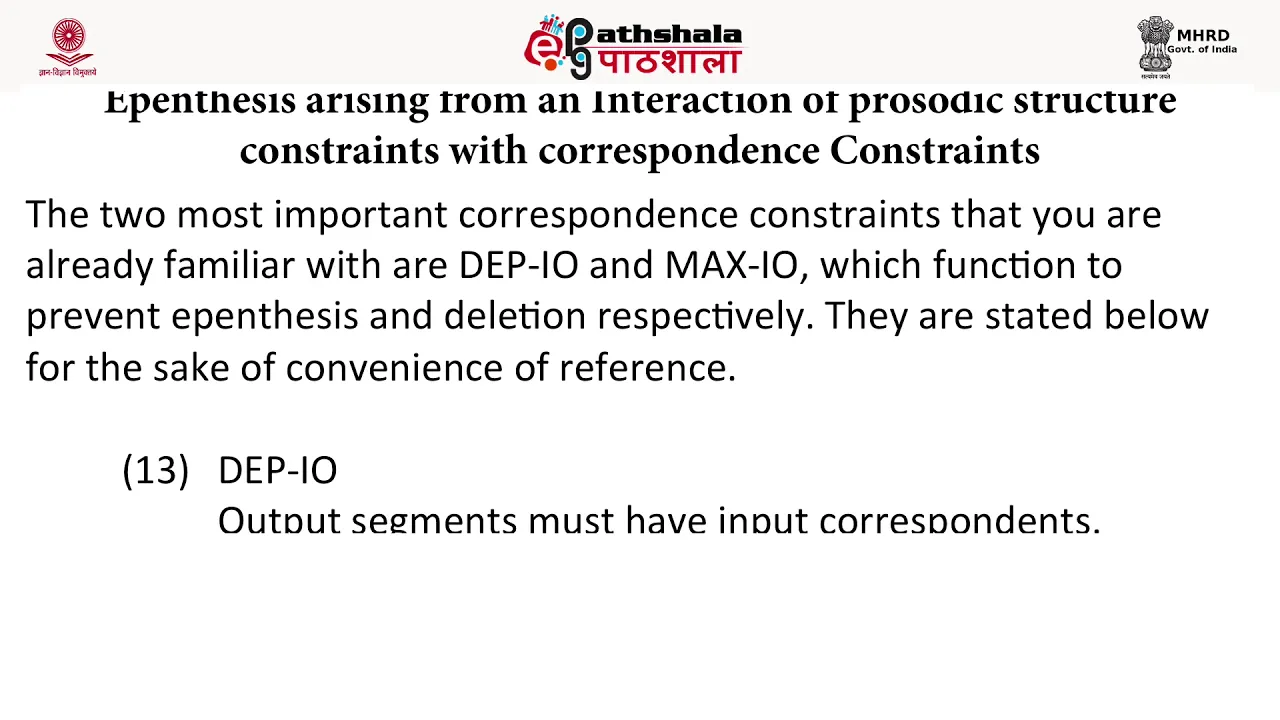
Constraint Interaction in Optimality Theory: Epenthesis & Deletion
@Vidyamitra
180 views•2018-08-20

Forensic Linguistics: How Language Solves Crimes | PBS
@pbsstoried
1M views•2024-01-25

Accent Expert Explains U.S. Regional Dialects | Part 1
@WIRED
9.3M views•2021-01-21
Related Study Plans & Knowledge Roadmaps
Structured learning paths in Linguistics