





![A. François – [#T2] Relations actancielles – cours de Typologie linguistique](https://i.ytimg.com/vi/Ls40MWTFRaM/maxresdefault.jpg)





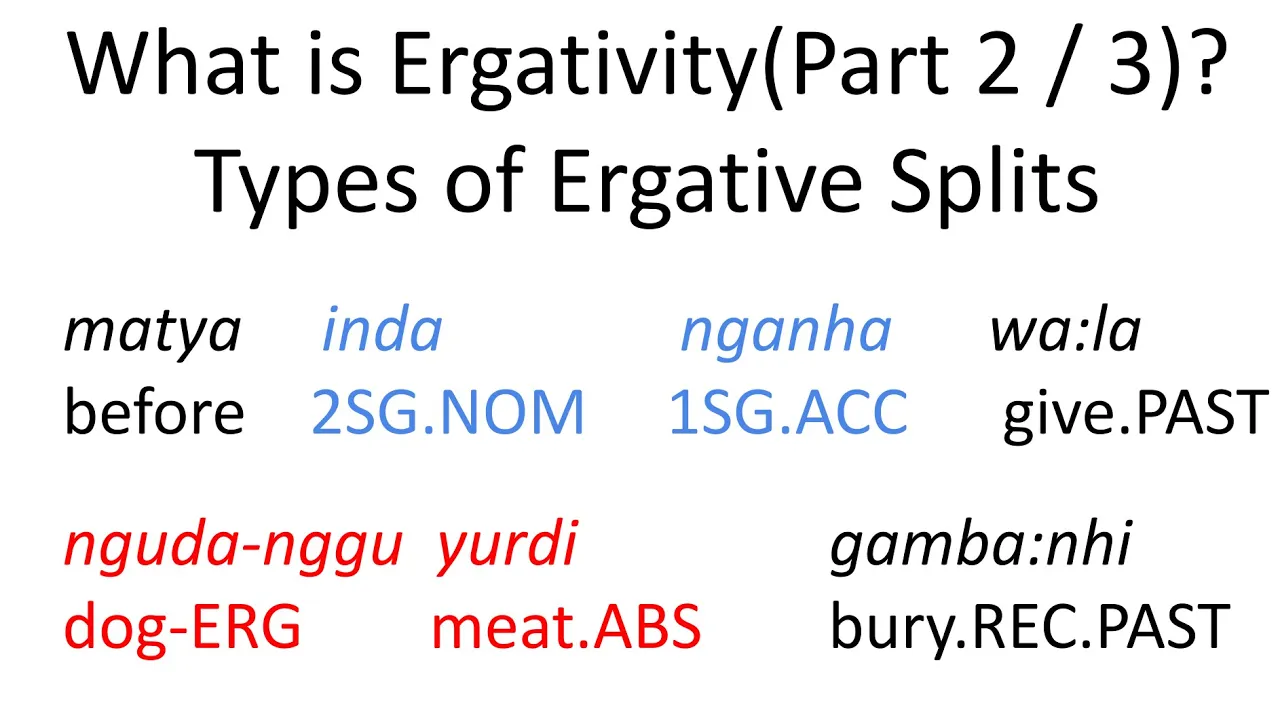








A split system in linguistics is a language where subject and object alignment is inconsistent, meaning the same grammatical pattern doesn't apply uniformly across all sentences; English exhibits this characteristic through pronouns showing nominative-accusative marking while non-pronoun forms show neutral marking, and languages commonly display split intransitivity where intransitive verbs are divided into ergative (volitional actions like fly, run) and accusative (passive processes like fall, freeze) categories that receive different grammatical marking.
Split Systems in Linguistics: Definitions & Types | Mini-Lesson
Added:Morphosyntactic alignment typologies, specifically the difference between Nominative-Accusative and Ergative-Absolutive systems.
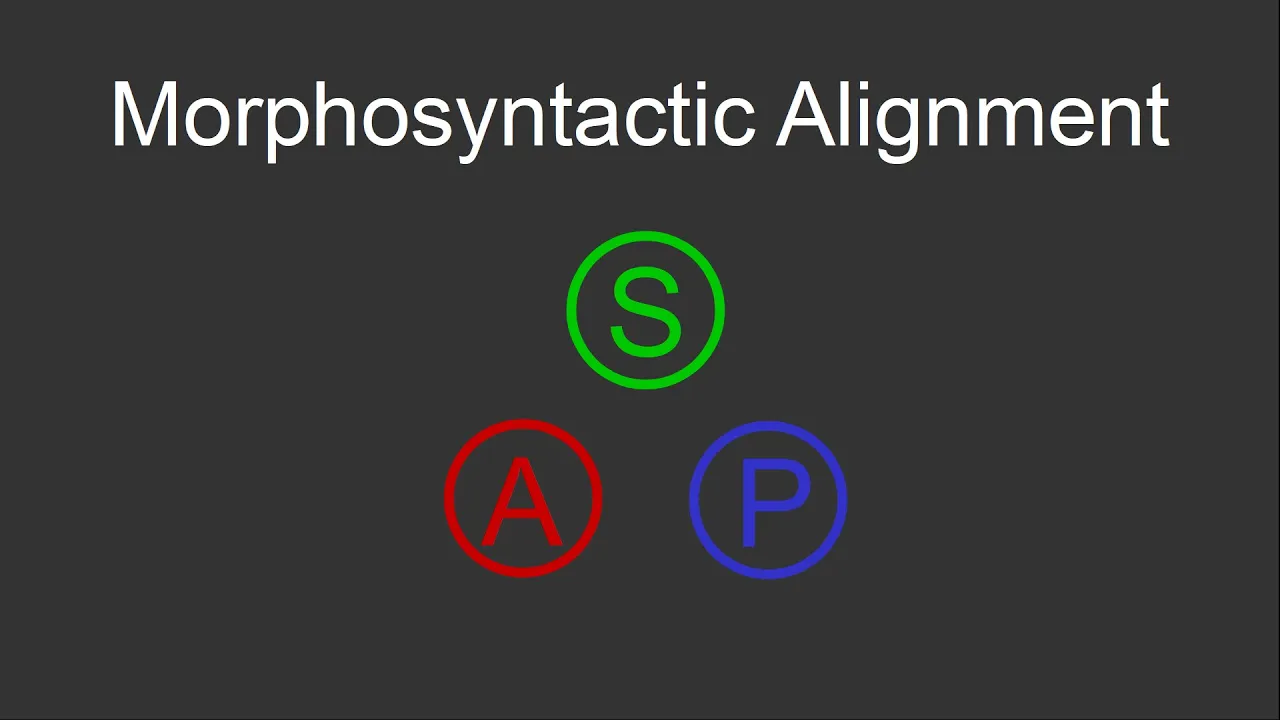
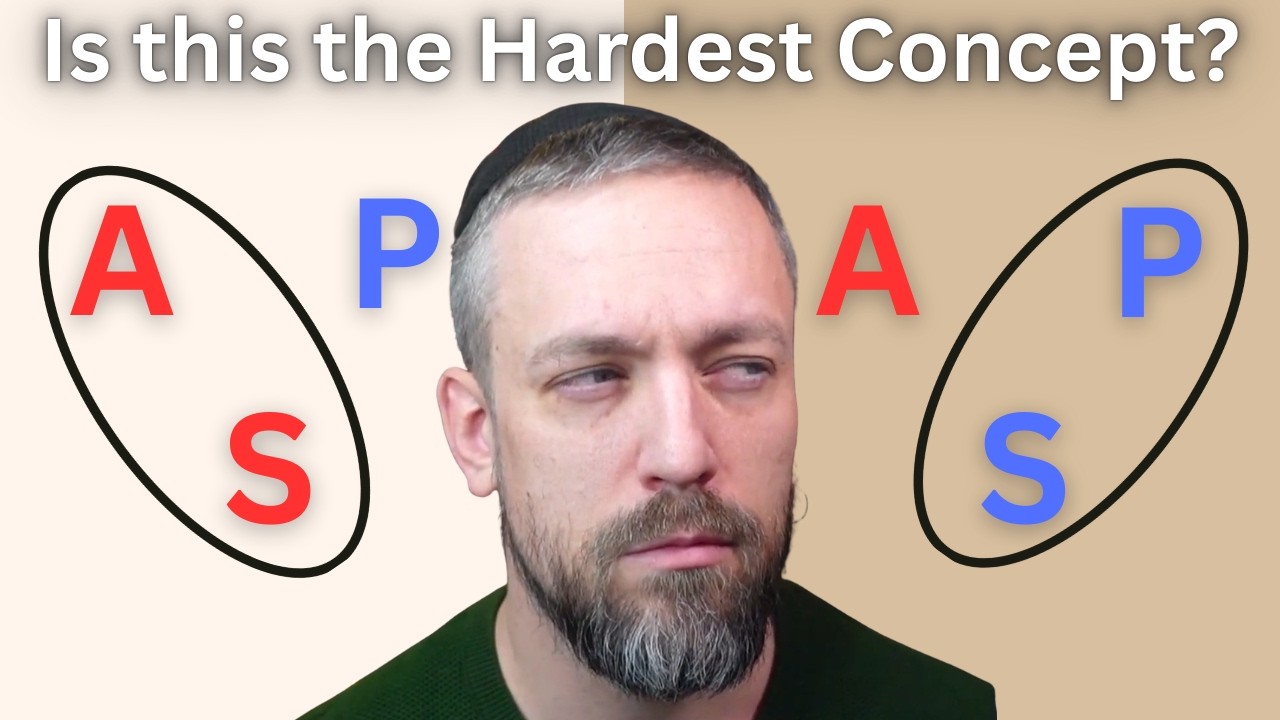
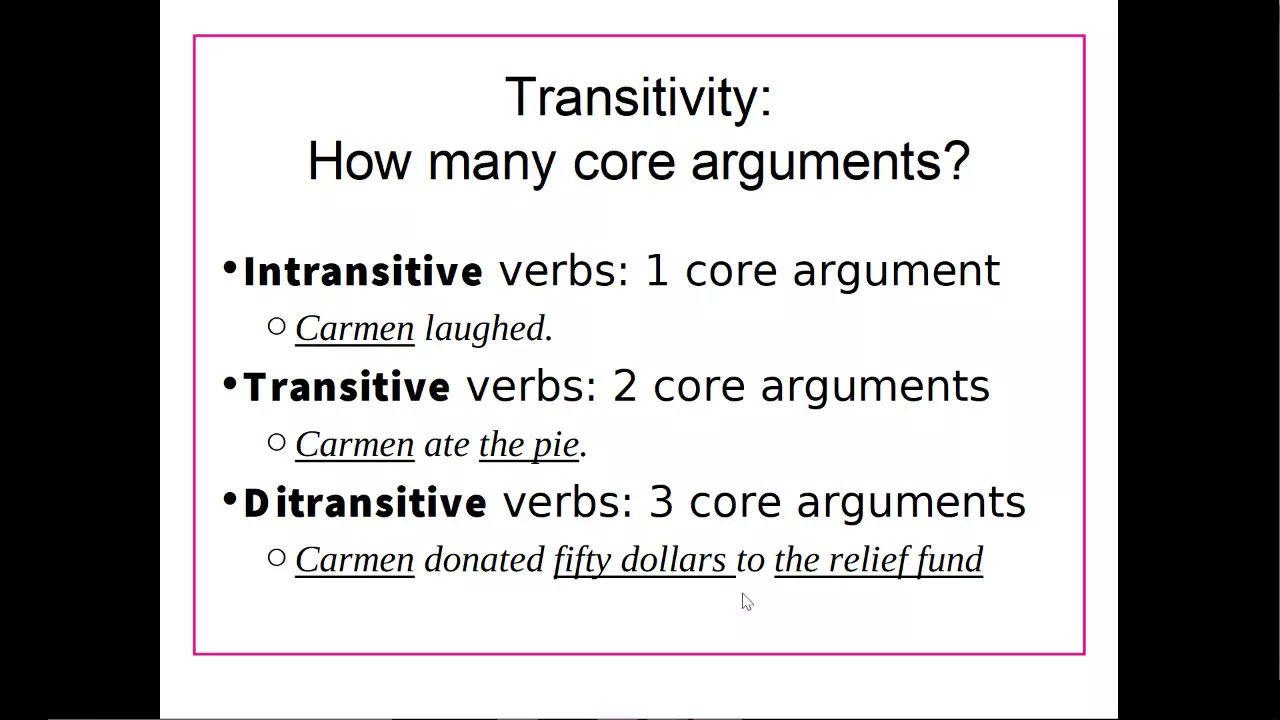
The distinction between core grammatical arguments: Subject of an intransitive verb (S), Agent of a transitive verb (A), and Patient of a transitive verb (O/P).
Basic grammatical case marking (declension) and how morphological marking indicates syntactic roles in a clause.
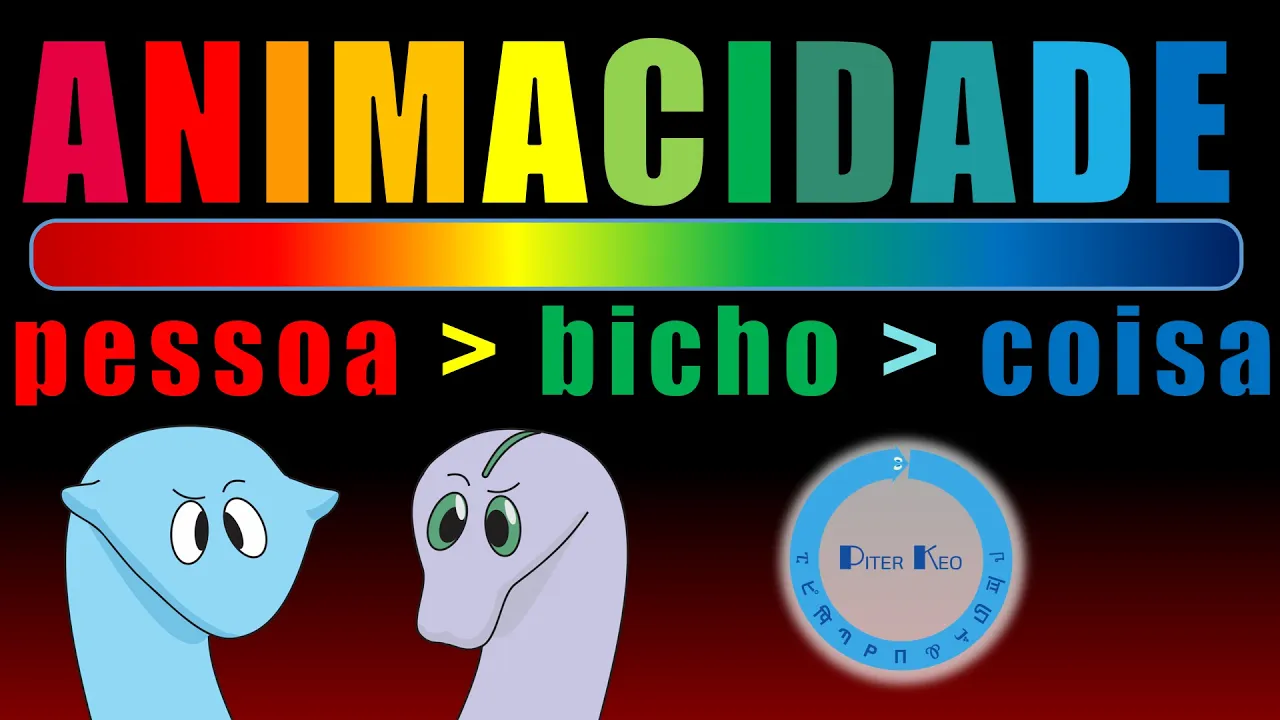
The conceptual understanding of the nominal hierarchy (or animacy hierarchy) and how it affects grammatical structures.
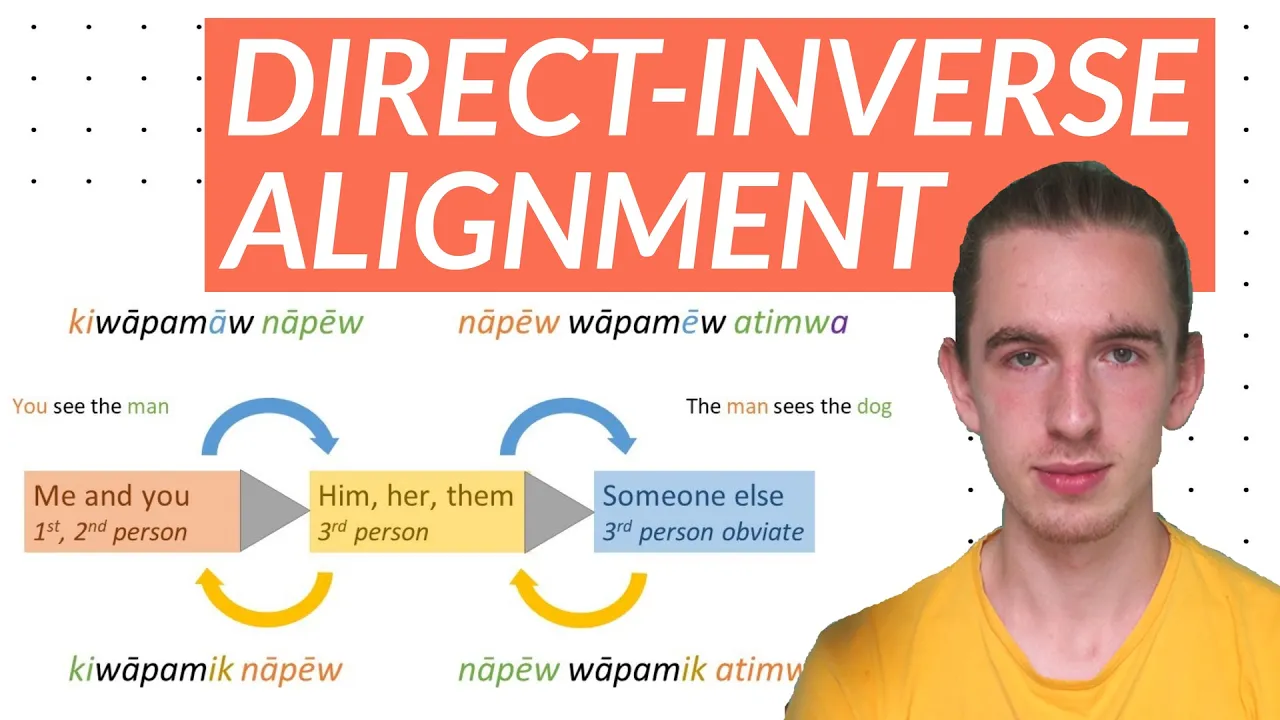
The study of Direct-Inverse alignment systems and hierarchical alignment based on person and animacy.
Diachronic linguistics and the historical evolution of split systems (how tense/aspect splits develop over time in languages).
In-depth case studies of specific languages showcasing complex split alignments, such as Georgian (screeve-based splits), Dyirbal (pronoun/noun splits), and Hindustani (aspectual splits).
Functionalist explanations for split systems, focusing on differential subject marking (DSM) and differential object marking (DOM) based on cognitive economy.
4K views120likes8:18Original Release: 2018-03-23
all right everybody welcome to this little mini introduction about various sorts of split systems this is what we call a mis split systems in linguistics a split system is someplace where the sum is a language in which for some reason the subject and object alignment are inconsistent for some reason you can't just say this sentence is always there could've absolutive or the sentence is always not accusative because there's something that changes around about it so English can actually be thought of as kind of a split system we wouldn't actually probably analyze it that way but that it had a lot of characteristics of the split system so when we're using pronouns in English we see in our intransitive sentence we say he flew he saw him there's a difference between the subjects of of both intransitive and transitive and the object of a transitive this makes it a nominative accusative marking language wonderful wonderful we have a nominative accusative language but then we look and we look at examples where where we're not using pronouns and Tim doesn't have any special suffixes anywhere and Jordan doesn't have any special suffixes anywhere right so this is a neutral marking system right we just have ten flew Tim saw Jordan there's no suffixes there's no there's no case marketing elsewhere in the system so this is a split system because we have a nominative accusative pattern in some circumstances and a neutral pattern in other circumstances this would probably technically not be analyzed as a split system once we start looking at the actual structure of it but but that is the that is the pattern that we're seeing there is a split pattern a lot of languages display something called split in transitivity so when we were talking about ergative absolutist sentences we labeled the subject of in transit is all as s as though they're all the same right so so these are all subjects of transitive verbs might bees fly bees freeze they're both intransitive sentences but there's a difference between these two verbs if you think about what semantic role is beat is the be performing in this sentence the bee is not undertaking any sort of volitional action it's actually sort of undergoing inaction right so so the Bee is actually being frozen right whereas here the bee is voluntarily choosing to take off so in a lot of ways this acts like an agency kind of thing right there's there's an agenda act an aspect at that right there's there's there's desire to fly whereas in this it sort of acts a little bit like a patient right it's undergoing something right so we can tell it because we can say things like the weather froze the bee but it's a little bit weird to say the weather flew the bee right I mean you can fly an airplane but that's a little bit different right so so so these are two separate categories of intransitive verbs ah this this first category is what we usually think of when we think of intransitive verbs these are called uh negative verbs this is a historical thing that these are called unyk use that event on ergative totally confusing names but we have to stick with them so on ergative ones our verbs like fly run dance sing scream think these are all things where you're where you're engaging some sort of volition you're intentionally undergo you're intentionally performing some action on accusative verbs are verbs like open fall freeze starve sink and grow a lot of these can be used transitively and when they're used transitively the thing that they're when they're used in transitively is the sub well that's a terrible way to phrase the sentence so when we say john opened the door and then we make it the door opened in an unaccredited was the direct object and you make it the subject right so when you can use them in in two ways that's how you do it with on argot of verbs you don't really you know you're gonna take right so you can say John sang a song and if you just want to make that intransitive you still say John sang right so in both cases John is still the subject so these are two different types of verbs and there are languages that mark these differently quite commonly these are marked these uh nikita's get marked as absolutive and ergative absolutive languages things like that because these are sort of object like and these are sort of subject these are these are more sort of transitive subject like so this is split in transitivity is when these when the on ergative verbs and uh Nikita verbs get marked differently alright the last kind is just general split orga tivity so flitter Givet ii is quite common because our Givet ii in general is a little bit marked it's a little more unusual to be a negative language than to be a nominative accusative language and so many languages that have a target ivities have some portions of the language where they use nominative accusative marking so there's a couple things that commonly make you use nominative accusative marking as opposed to you're sort of normal or absolute marking and one of them is anima c so for example if our anima c hierarchy says that humans are animate and nonhumans are inanimate then then our 'get of absolutive marking pattern might be beautifully shown in be flu and be bees like flowers right we mark this is absolutive and this is argot --iv but as soon as we start putting in humans we start seeing a different marking pattern where the one with volition is doing the action so this this this is a split argot of system right so we have four you know let's animate things we have a negative absolutive and for more intimate things we have a nominative accusative system um the other place where we often see a split our utility is in when the tents or aspect or mood changes so this would be a circumstance like where you would say bees like flowers with orchid of absolutive marking in the present tense but these liked flowers in the past tense this is supposed to be accusative so so this happens commonly I you can change the aspect or the mood or the or the tense and you see a change in the in the in a subject or object or language alright so split systems for various reasons you get inconsistent subject and object alignment there is a lot more possibilities here but this is how we talk about these sort of weird patterns that we sometimes see with subject and object alignment where it's not very clear exactly how the system is working Thanks
Up Next
46:01
Ergativity Explained: Language's Hidden Alignment System
@Lingthusiasm
939 views•2023-10-20
36:52
Constraint Interaction in Optimality Theory: Epenthesis & Deletion
@Vidyamitra
180 views•2018-08-20

6:49
Object Alignment in Linguistics | Mini-Lesson
@isabelthelinguist
2.1K views•2018-03-23

21:32
Accent Expert Explains U.S. Regional Dialects | Part 1
@WIRED
9.3M views•2021-01-21
Related Study Plans & Knowledge Roadmaps
Structured learning paths in Linguistics
linguistics
Optimality Theory: Tableaux & Constraints
01Phonological Basics: Sounds, Syllables & Rules
02Foundations of Optimality Theory: GEN, CON, and EVAL
03The Constraint Inventory: Markedness vs. Faithfulness
+ 2 more learning modules
15h5 modules
Explore Roadmap
linguistics
Morphosyntactic Alignment: S, A & P Systems
01Foundations of Syntax: Transitivity and Arguments
02The Linguistic Variables: Mapping S, A, and P
03Nominative-Accusative Alignment
+ 3 more learning modules
12h6 modules
Explore Roadmap
linguistics
Analyzing Sign Language: Phonology & Syntax
01Foundations of Sign Language Linguistics
02Phonology: The Five Parameters of a Sign
03Morphology: Word Formation and Classifiers
+ 2 more learning modules
14h5 modules
Explore Roadmap
linguistics
Pragmatics: Speech Acts, Grice & Politeness
01Introduction to Pragmatics: Meaning in Context
02Grice’s Cooperative Principle & Implicature
03Speech Act Theory
+ 2 more learning modules
14h5 modules
Explore Roadmap