













![[Шесть лекций о лингвистике] Грамматическая система и грамматикализация](https://i.ytimg.com/vi_webp/gxFF42YyQgE/maxresdefault.webp)


A morpheme is the smallest unit of meaning in a language, categorized into free morphemes (standalone words like 'train' or 'fat') and bound morphemes (meaningful units that must attach to other morphemes, such as affixes). Affixes include prefixes (attached at the beginning, e.g., 'un-' in 'unkind'), suffixes (attached at the end, e.g., '-ed' in 'implied'), and infixes (inserted within words, found in languages like Tagalog). These bound morphemes can either maintain or change the lexical category of the word they attach to, enabling complex word formation through hierarchical tree structures.
Morphemes, Free & Bound Morphemes, Affixes in Linguistics
Added:Basic understanding of linguistics as the scientific study of language and its core subfields (e.g., phonology, syntax).
The distinction between a word's sound (phonemes) and a word's meaning (semantics).
Familiarity with basic parts of speech (nouns, verbs, adjectives, adverbs) and their grammatical roles.
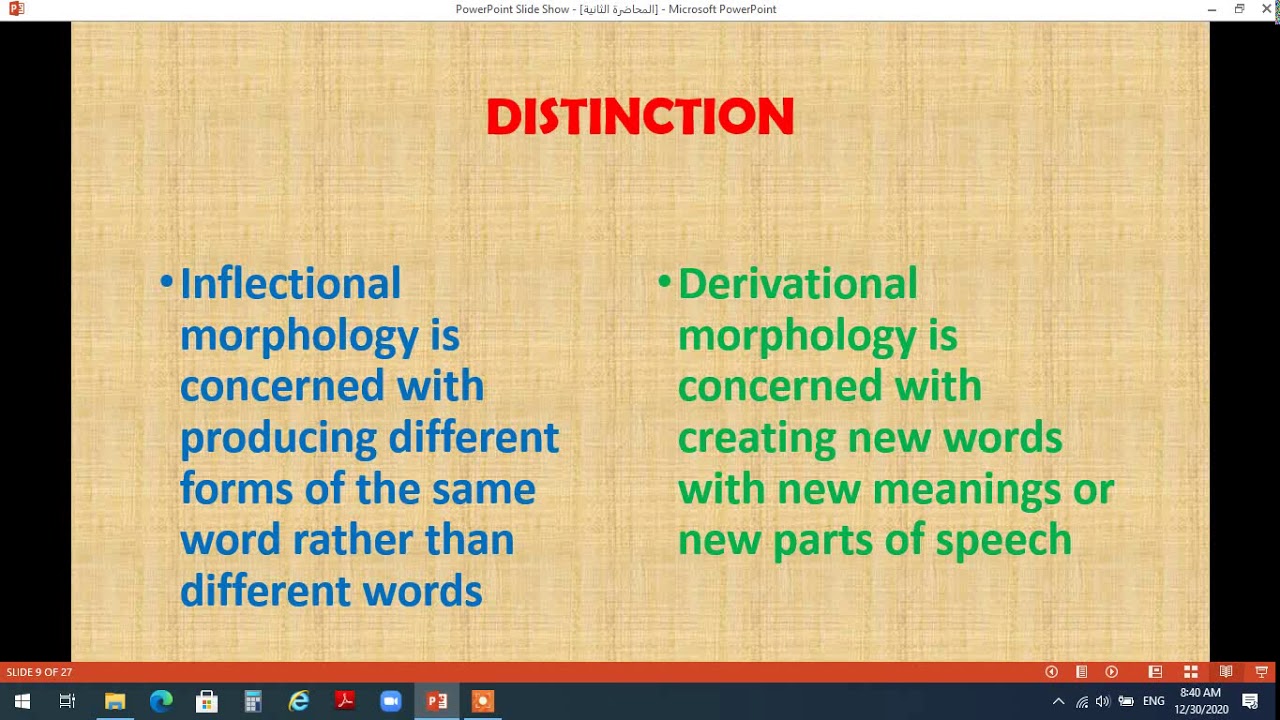
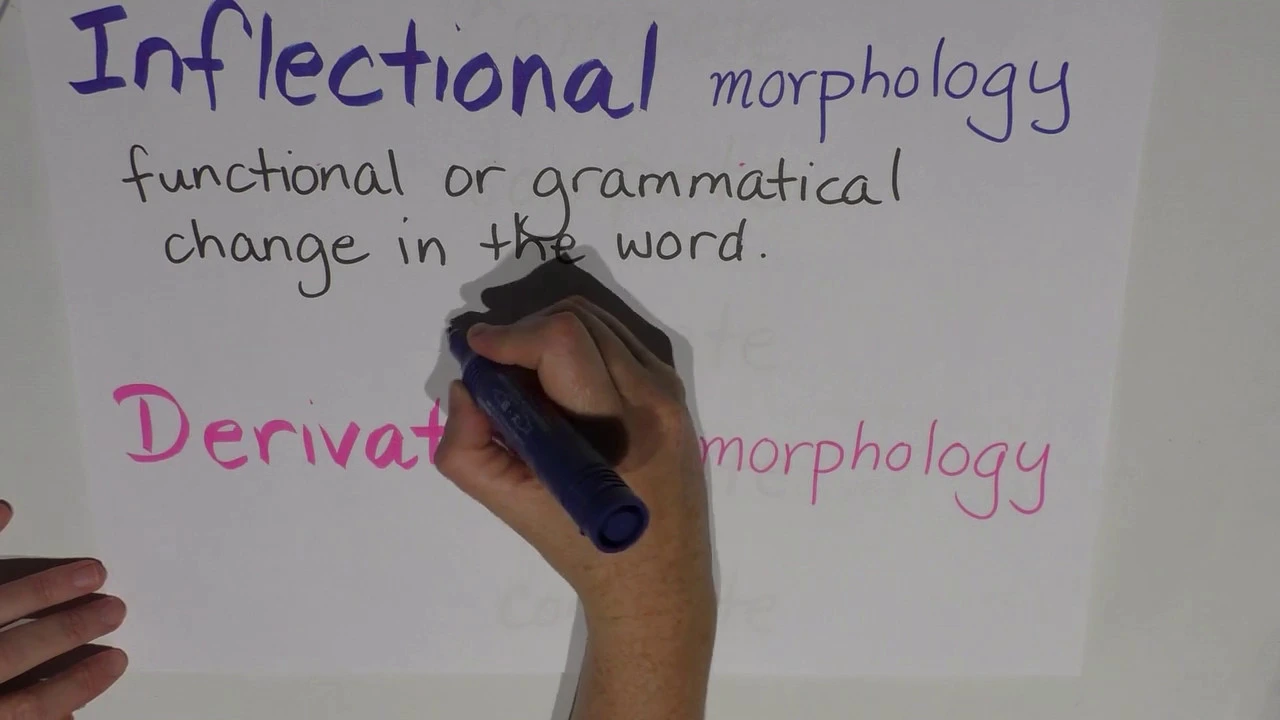
The distinction between inflectional morphology (grammatical markers) and derivational morphology (meaning or category-changing affixes).
The concept of allomorphs, which are phonetic variations of a single morpheme (such as the plural 's' pronounced as /s/, /z/, or /ɪz/).
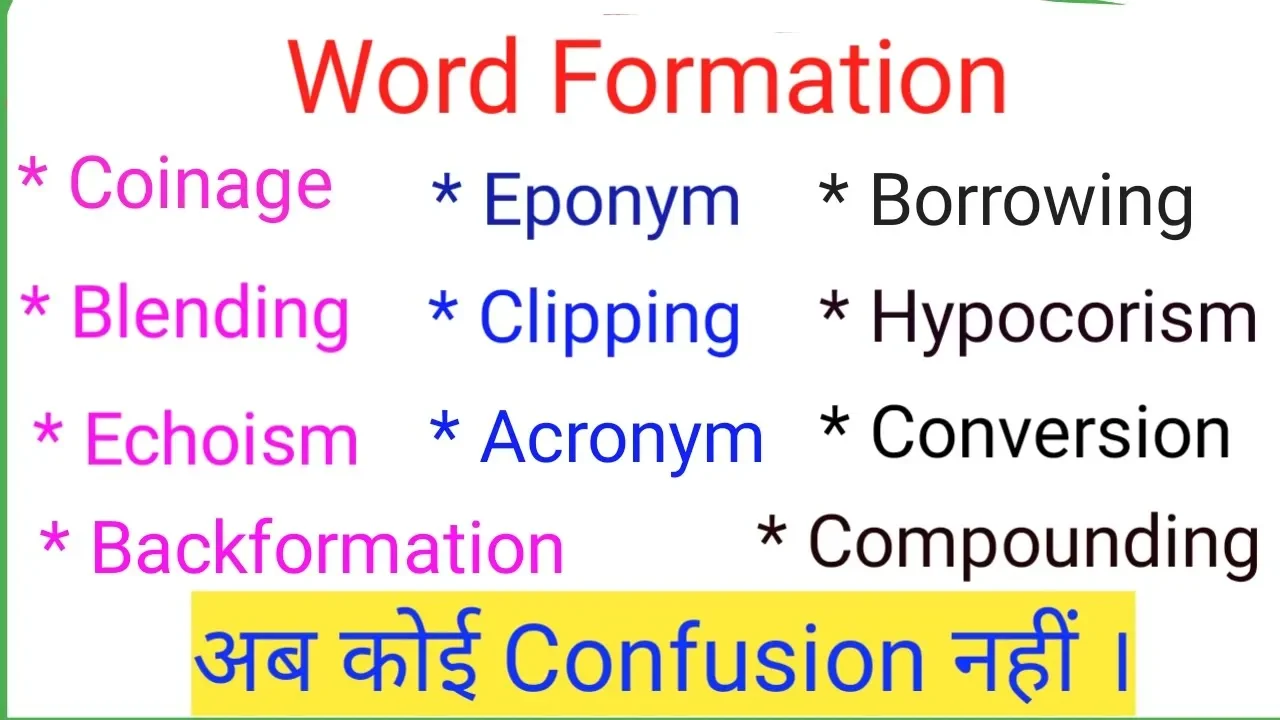
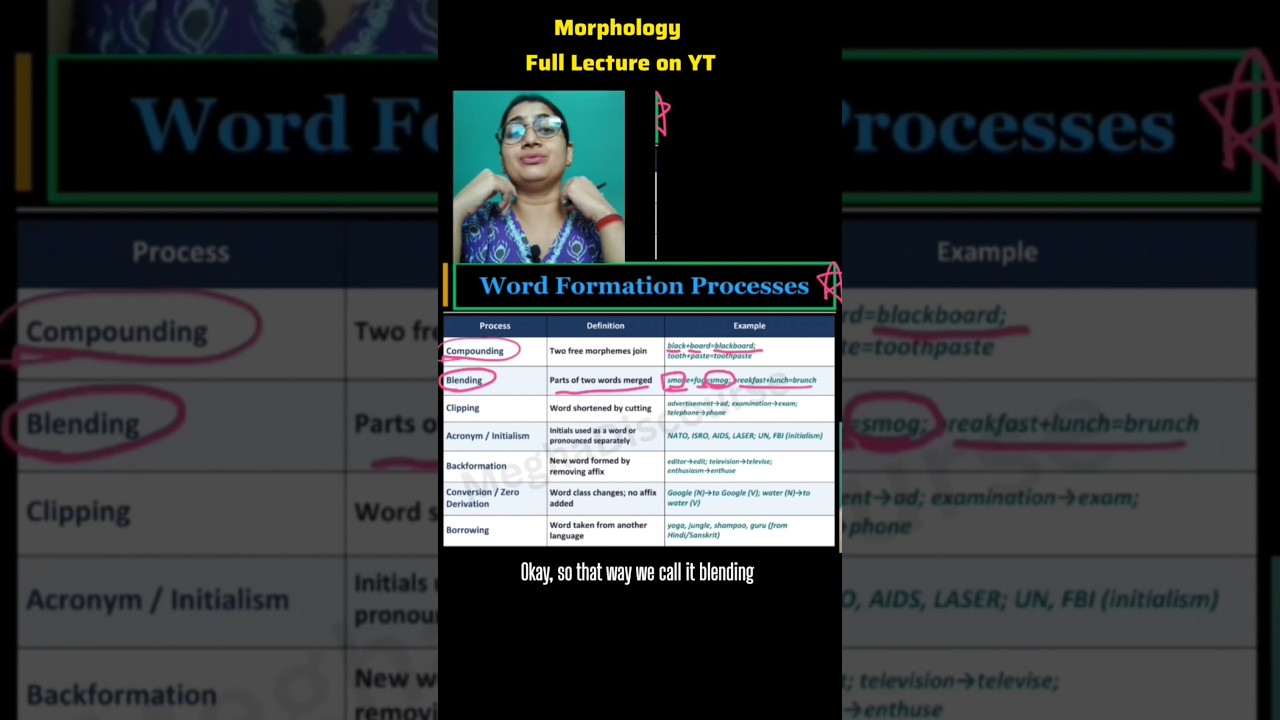
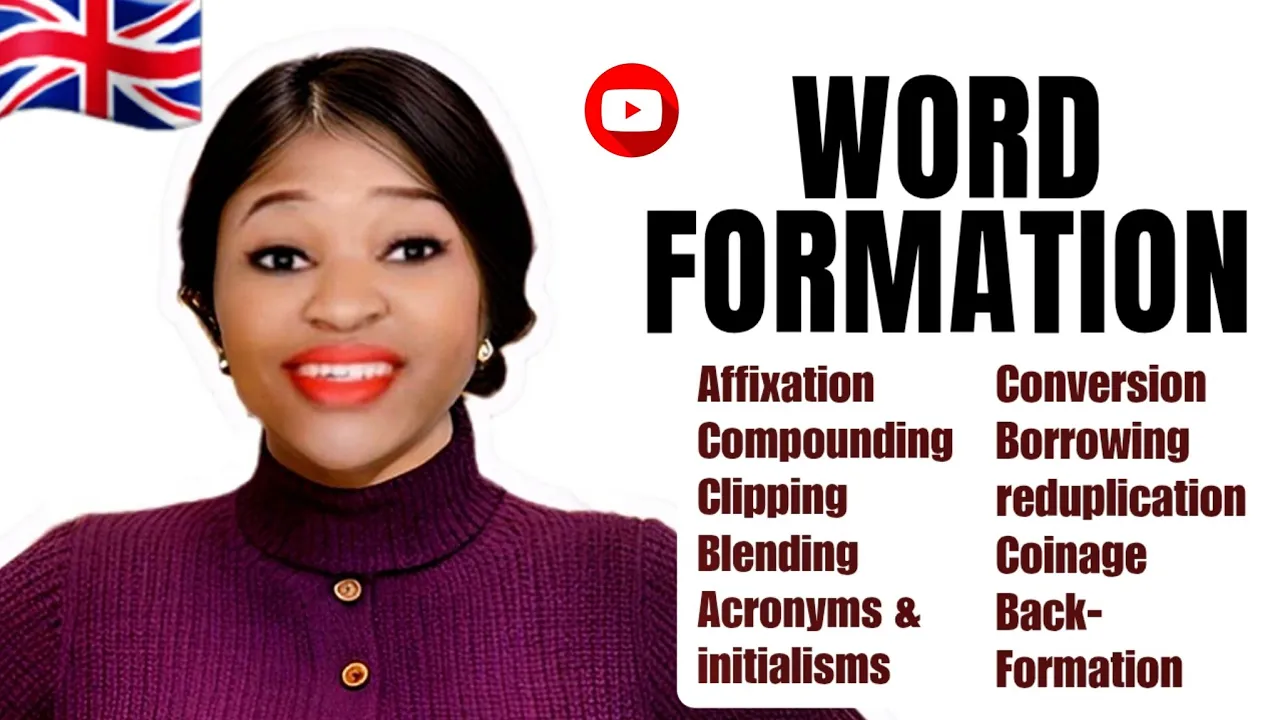
Morphological word-formation processes such as compounding, blending, clipping, acronyms, and back-formation.
Morphological typology and how different languages organize morphemes (e.g., agglutinating, isolating, synthetic, and polysynthetic languages).
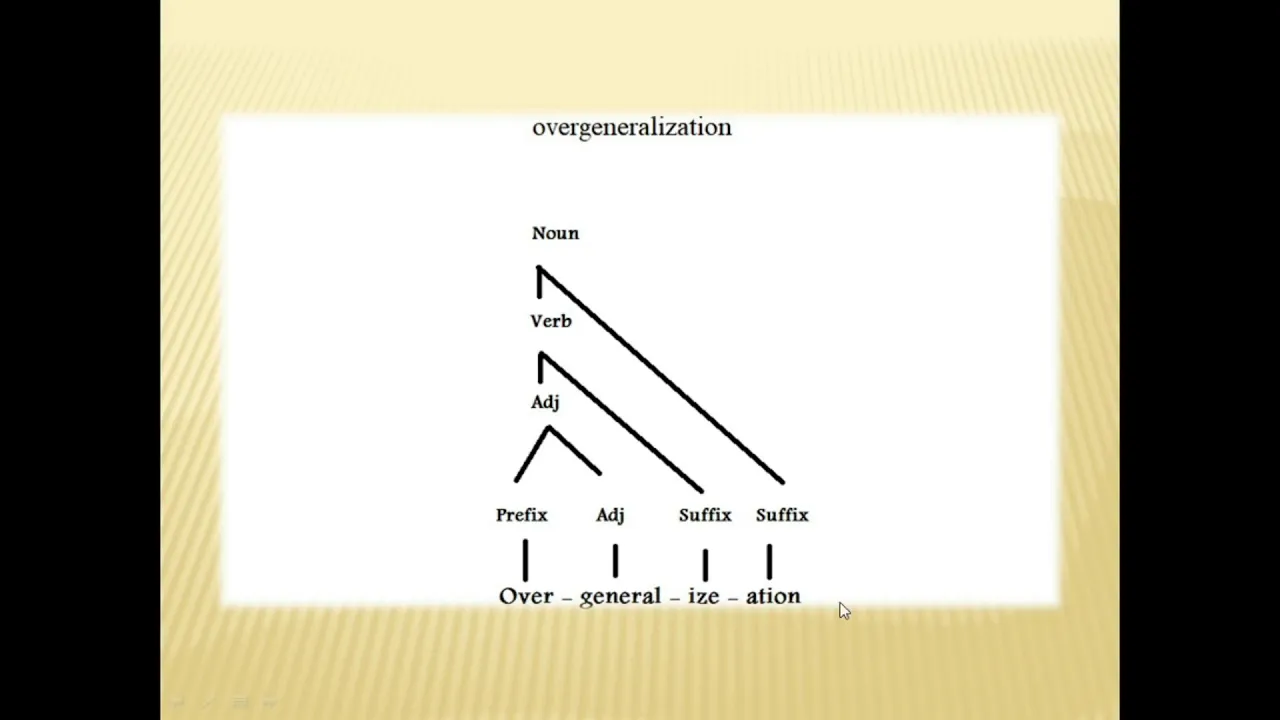
Drawing morphological trees to represent the hierarchical structure and order of affixation in complex words.
331.3K views5.4Klikes13:15Original Release: 2015-03-07
welcome to morphology today we're going to start composition of words and we're going to introduce a morphe right off the bat so what is a morim a morphe is the smallest unit of meaning in a language so here's some examples in English we have words like train and fat we know what these words mean and they don't have any augments to them so when you think of train you think of one object and when you think of fat you think of well you think of one specific property now there's other types of morphemes here like er which is a comparative morphine so if we say fatter if you say fatter and combine the two so if you take these two together it makes the word fatter there's Sometimes some other letter changes in there but this is just the underlying morphine and it means that something is fatter than the other it is more fat than something else you're comparing it to and there's also the S morphine which is the plural morphine so you can combine train with the plural morphine and you can make trains so these have the smallest unit of meaning we may never see some of these morphemes on their own like you would never just see ER in a sentence all by itself you have to attach it to a word but it still has a unit of meaning attached to it so here's a question how many morphemes are in each of these words okay well you can do this along with me if you want to pause the video and do it real quick go right ahead uh tempting okay well tempting hm well is something tempting is is there a word tempt oh is he tempted by it hm yeah you can say tempted so that means that there must be a root of temps and then there's this suffix ing so we have two more FES here we have tempt as a word and in as a Progressive meaning so it's Progressive the action of tempt is ongoing okay what about dog okay well this is fairly straightforward it's a word has no suffixes or anything so dog is just a morphe on its own cats well you have the idea of a cat and then you have the plural morphine so that's two judgers okay this one a little bit trickier so we know this s here means there's more than one okay and we know judge is a word so we have judge and then we have this R okay so we have three morphemes here judge ER and S so judge is our verb here or might even be a noun we don't quite know which what it is it doesn't necessarily matter so we have this judge and then we have this ER that makes it a judger so that's a person and then judgers is a multiple people or is multiple people not is a multiple people so this word judgers is composed of three different units of meaning that we aren't even aware is happening when we do it so how do we do this well first we need to distinguish types of morphemes so there's free morphemes and there's bound morphemes so free morphemes three free morphemes are Standalone which means they're words we can use them in a sentence on their own while bound morphemes we can't so jump you can say jump on its own so jump is free but this ER is bound because we can't just say yeah that ER over there is doing something no it this bound morphine modifies the word jump what about implied well implied is made up of the word imply and the past tense suffix so this Ed is going to be bound to the word imply and of course all words are free so imply is a free morphine what about faithful well faith is a word so it's free on its own and full is a suffix that attaches to Faith so it's going to be bound so normally when we write free and bound morphemes if it's free it's just going to be a word we'll call it XYZ and if it's bound then it's going to look like one of these three forms it's going to have a dash with an XY or whatever letters to symbolize it being a suffix you might have XY on the front and these can be any letters with a dash on the right to be a prefix or an infix might look something like that of course those are just variables so we have Ed takes this form right here okay so that's the difference between free and bound morphemes so affixes affixes are prefixes suffixes infixes so these don't have lexical categories so they're not nouns they're not verbs they're not adjectives they're just morphemes they're just bound morphemes and they attach to words to either change or to keep the lexical categories the same so I'll show you that in a second so let's classify affixes and draw some trees okay well we have prefixes now prefixes attached to the beginning of words here so we have unkind and deactivate so what we do when we draw trees is we just put the prefix out front and we separate it from the morphe so we just separate all of our morphemes here so again un and kind are two different morphes un is an AIX so we write AF kind is an adjective and we link them up so un and kind makes unkind and that is also an adjective okay what about deactivate well we have D and we have activate D is an affix activate is a verb and deactivate together is also a ver verb so we take our prefix combine it with our free morphine and it becomes a new word all right suffixes suffixes come on the end of words and we do this the same way we have vividly and clue less so vivid is a h it is is an adjective can describe something as being Vivid ly is just an AIX and we can combine them to make vividly now of course what type of word is vividly he vividly described the outcome so this is actually an adverb so we can see here that this AIX actually changed the word type of vivid it changed its category that's kind of interesting okay what about clueless well clue is a noun and less is just an AIX when we combine it together we get Clue clueless which is an adjective so again this AIX changed the lexical category of one of our free morph FES it's kind of cool that this can happen so those are prefixes and suffixes there's one more that we don't have in English but we do have in tagalag so this is a tagalag example so we have Billy to buy of course my fowls might be off I didn't have a phonetics chart for this but we can get Billy which is by so we have Billy right here and then we have benil to mean bot so what happens here is we take B and we just add in this morim in the center and what's the difference between buy and Bot well this is present tense to buy and this is past tense for bought so this ni infix that goes in the middle of words is the past tense more F now drawing a tree for this it's not exactly possible at least it's not possible to be nice and neat looking so we're not going to draw trees for infixes but these are another type of AIX that occurs in other languages so infixes are cool let's do some practice here draw them yourself and and I will do them in just a moment here okay well hopefully you tried this out we're going to start off with books cuz books is pretty straightforward we have the word book and we have the plural s so book is a noun the plural s is just an AIX and we can combine them together to make a new noun books okay not that bad let's try blackend so black is a word blacken yeah you can blacken something so we have this suffix n and we also have the suffix ed so we kind of have this multi-layer tree so black we'll call this an adjective and then we have two affixes here now how do we combine affixes well bound morphine have to be attached to free morphemes or to other bound morphemes so what we'll do is we will attach the morphine black the free morphine to the closest bound morphine first so we have blacken now blacken what is blacken that is a verb okay you can blacken something okay what about blacken it was blackened so this is also a verb okay so there are two trees for some words now you notice here that this suffix s did not change the lexical category but this suffix changed the category here and this Ed category or this Ed morphine didn't change the category okay what's what's up with this well next time we're going to talk about the difference between those two which is derivational versus inflectional morphemes and then we're going to talk about how some morphes work in other languages and there are sometimes internal changes sometimes this thing called suppletion happens reduplication and there's also stress differences when we speak words so next time we'll cover these as always if you have any questions leave them in the comments below and if you want to check out more videos go to Trev tutor.com and there's more there so have a great day and I'll see you guys hopefully next time
Up Next

19:41
Language Classification: Morphological, Syntactic & Phonological
@oer-vlc
56K views•2012-08-17
36:52
Constraint Interaction in Optimality Theory: Epenthesis & Deletion
@Vidyamitra
180 views•2018-08-20
19:56
Phonological Rules and Derivation in Linguistics
@Trevtutor
100.8K views•2016-04-27

21:32
Accent Expert Explains U.S. Regional Dialects | Part 1
@WIRED
9.3M views•2021-01-21
Related Study Plans & Knowledge Roadmaps
Structured learning paths in Linguistics
linguistics
Optimality Theory: Tableaux & Constraints
01Phonological Basics: Sounds, Syllables & Rules
02Foundations of Optimality Theory: GEN, CON, and EVAL
03The Constraint Inventory: Markedness vs. Faithfulness
+ 2 more learning modules
15h5 modules
Explore Roadmap
linguistics
Morphosyntactic Alignment: S, A & P Systems
01Foundations of Syntax: Transitivity and Arguments
02The Linguistic Variables: Mapping S, A, and P
03Nominative-Accusative Alignment
+ 3 more learning modules
12h6 modules
Explore Roadmap
linguistics
Analyzing Sign Language: Phonology & Syntax
01Foundations of Sign Language Linguistics
02Phonology: The Five Parameters of a Sign
03Morphology: Word Formation and Classifiers
+ 2 more learning modules
14h5 modules
Explore Roadmap
linguistics
Pragmatics: Speech Acts, Grice & Politeness
01Introduction to Pragmatics: Meaning in Context
02Grice’s Cooperative Principle & Implicature
03Speech Act Theory
+ 2 more learning modules
14h5 modules
Explore Roadmap