

![[Introduction to Linguistics] Phonetics and Basics of Transcription](https://i.ytimg.com/vi/-FHQJEo38Vk/maxresdefault.jpg)





![[배개념][문법] 기초 개념 정리 2강 (음운변동 개념 마무리)](https://i.ytimg.com/vi/YxJ2kxr9R58/maxresdefault.jpg)







![[Phonology] Feature Geometry: The Feature Tree](https://i.ytimg.com/vi_webp/25paumHrekI/maxresdefault.webp)



Phonological rules describe systematic sound changes in language using formal notation where A becomes B in the context of C and D (A → B / C_D), with rules ordered sequentially to produce correct surface forms; for example, nasalization occurs when vowels become nasalized before nasal consonants, while aspiration applies to voiceless stops (/t/, /p/, /k/) after primary stressed syllables, and nasal consonants assimilate their place of articulation to match adjacent sounds (e.g., /n/ becomes /m/ before bilabial consonants and /ŋ/ before dorsal consonants).
Phonological Rules and Derivation in Linguistics
Added:Understanding of the International Phonetic Alphabet (IPA) and basic articulatory phonetics, including place, manner, and voicing of speech sounds.
The conceptual distinction between phonemes (underlying representations) and allophones (surface realizations).
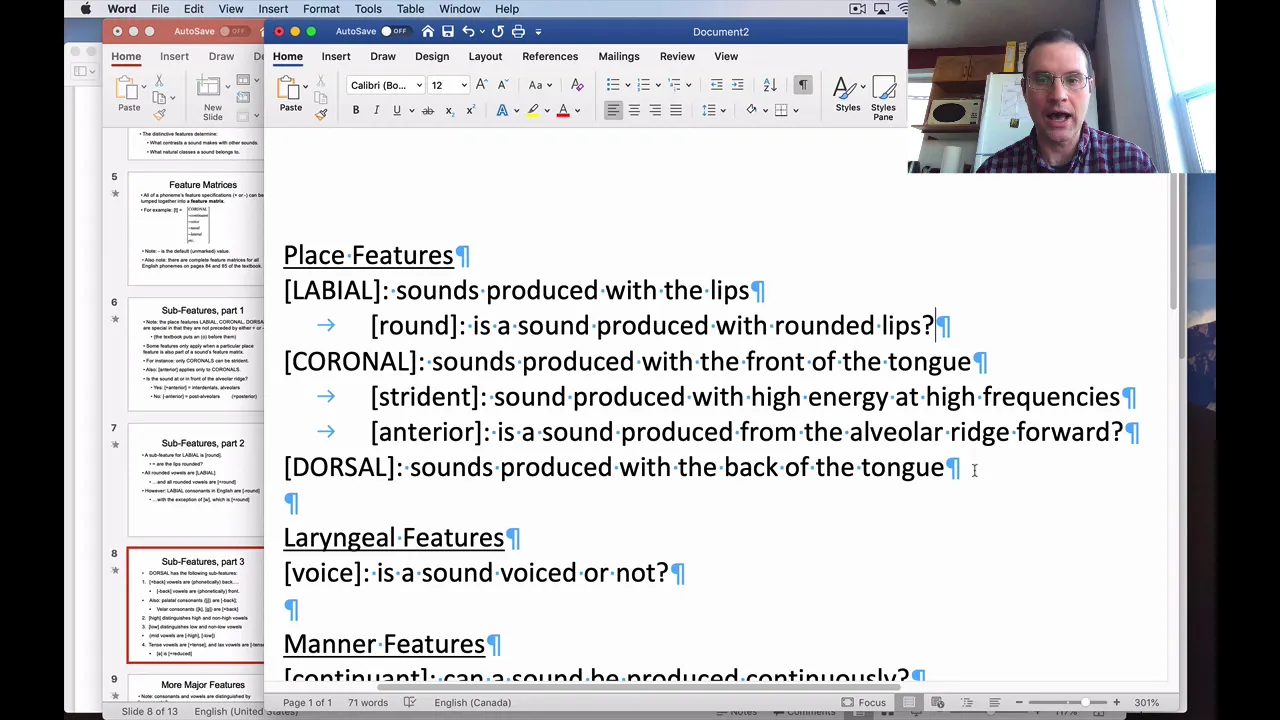
Familiarity with distinctive features (e.g., [±nasal], [±voice], [±sonorant]) used to group speech sounds into natural classes.
Basic familiarity with phonetic environments (e.g., word-final, intervocalic) and how they influence sound changes.
Analyzing rule ordering and interactions, specifically how rules can feed, bleed, counterfeed, or counterbleed each other in a derivation.
Transitioning from rule-based phonology to Optimality Theory (OT), exploring constraint-based systems of grammar.
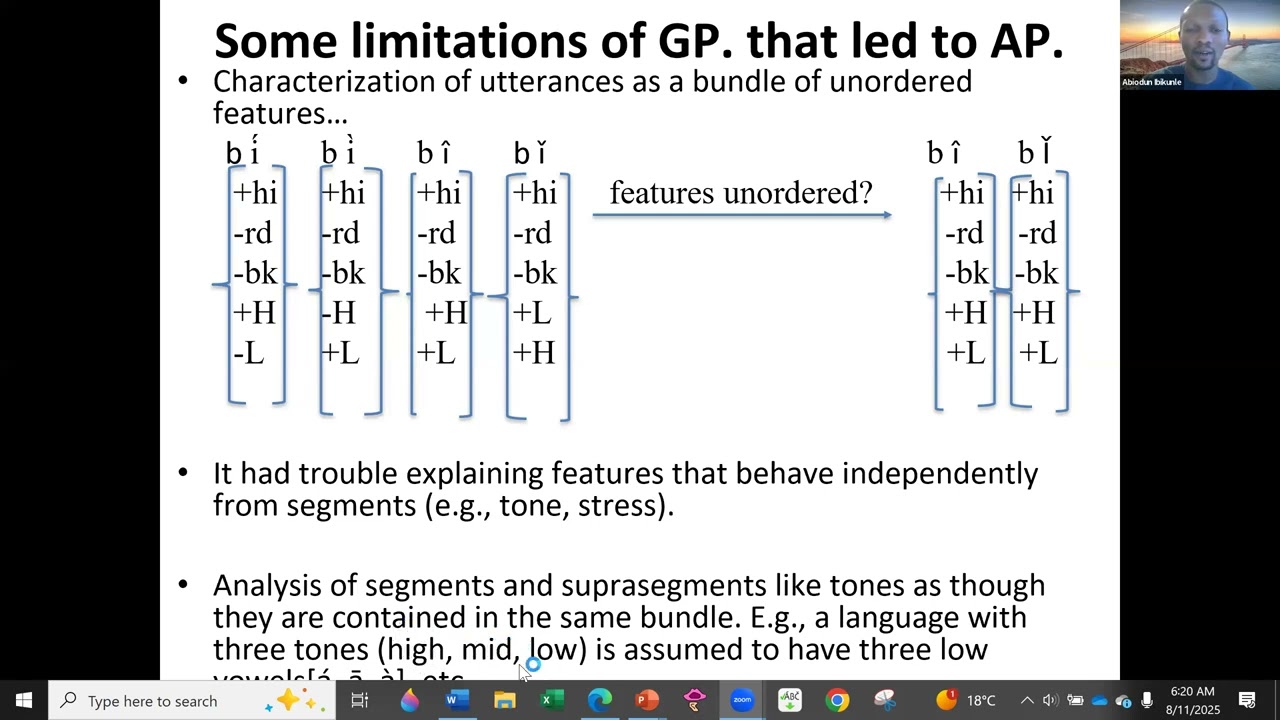
Studying Autosegmental Phonology and Feature Geometry to represent non-linear phenomena like tone, nasal harmony, and syllable structure.
Applying phonological rules to morphophonemic analysis, examining how morphological boundaries affect sound change rules.
100.8K views1.3Klikes19:56Original Release: 2016-04-27
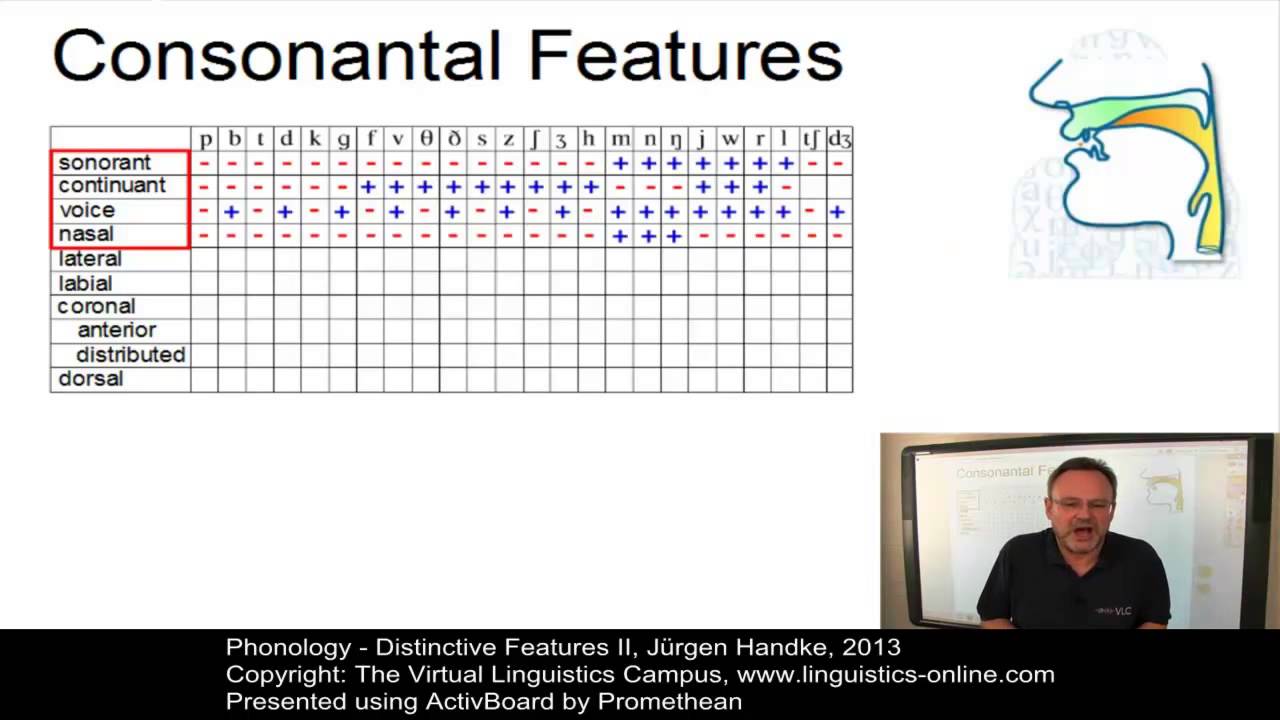
welcome to the final lecture of introduction to Linguistics today we'll talk about rules in phology so let's get right into it what is the purpose of rules well we want to formally explain how these phonological changes occur so for instance we have these underlying phones and the word can but we do some rules and then we get to this surface form where the K is aspirated the a is a little bit nasalized and that and looks like an H so let's fix that so we have these rules and we need to order them in a way that when we take words and we get to the surface form the rules interact properly and we don't get anything weird so for instance uh let's take a look at this flowchart first we have the underlying word can uh the first rule is going to be to aspirate it so we're going to aspirate this K so this becomes an aspirated K with this a and this n and the second step is going to be to nalize the vowel because it's before an N so we take this aspirated K we nalize the ash here and we have n so our surface form is can and it goes through this little black box where we put in an input it pops out an output and we have this formalized change okay so that's the Rough Guide to how this thing works so how do we talk about rules well first of all we have some thoughts here rule order May matter so here if I did nasalization first and aspiration later wouldn't make a difference however when we work with stress and schwas we need to put stress on before we take vowels and make them schwas otherwise everything will have schwas and if we put stress on later you can't have a stress schw so we need to make sure our rules are ordered properly and the second part is that maybe these rules that we're constructing maybe that's not how speech Works maybe we don't take the word and then we first nasiz it and then we first and then we aspirate it um maybe we want them to be aspirated in every case and then we just change it to non- aspirated who knows who knows how we do things so those are some thoughts on rules but even even though we have these thoughts and we say hey maybe these rules aren't how things work um we're going to teach it anyway because it's in every textbook and it's good to think a little bit differently so here's how we write rules this looks weird right we have an A we have an arrow we have a b we have a slash we have an X we have an underscore and we have a y what does this mean so the first part here says that was a terrible thing this means a turns to b or a becomes B let's write that okay so a becomes B what does the slash mean in the environment so basically this means a goes to B and then we take a look at the environment so first thing is this underscore this is um this is the sound you're looking at so to make this clear if I'm talking about nasalization I would put the a here so if I'm talking about um a going to this nasalized then I'm looking at the a in this underscore uh the two locations are going to be before and after the sound we're looking at so for instance [Music] um let's do this more for informally here so we have a goes to nasalized a in the environment of well it doesn't matter what's before it so we don't put anything um we put the a we're looking at and this happens before n so what this means is that a becomes nasalized before so that is the description of how form rules work and this is a very very informal way of writing it so normally we don't just use Sounds here because there might be more sounds for which this works and we want to Encompass all the things that change in one rule so for instance nasalization should not be one rule about a and it should not be before n it should be about all vowels before nasals so how do we do these things well we use features so for instance whatever vowel we have adds the property of nasalization before nasal consonants that's what this one is saying so we take the vowel for instance we take a and it becomes this nasalized a so for instance we add this property of nasalization to it and what this says is before these consonant nasals these nasal consonants so this set of features talks about n talks about and talks about n so for instance in the word pain it's saying that look that's nasalized that a is nasalized so it's pain you have that a sound instead of a it's e so this is the nasalization rule so again let's just go over this quick again um just to really drill this in because this is the first time you're probably seeing this kind of thing we take a vowel um I know you're saying hold on a second you said you said we need to be General why are you writing vowel here when you should use features um it's pretty common just to write a v because we know it means vowel c means consonant we're just being really General here we're saying any vowels but we could just write um minus cons plus Sil plus sonant and that would be the same thing so this adds the nasal property before nasal consonants okay so that's nasalization what about aspiration so remember how we took this C and this became a c when there was um a stress and onset okay so we have this thing here and we have this chart so this chart this thing this chart of sounds this feature Matrix and this feature Matrix says plus consonant minus continu minus voice minus delayed release these are the four features necessary to Target t p and K so so you might be thinking hold on a second how did you come up with this how did you come up with these four features well first of all these are the targets so I look at this and I say what features do I need I need plus constant for sure okay that's important but then I have S and F and F in it and I don't want those so I have to take out the continuent sounds but now I have B and G and J and uh duh I don't want those so I have to take out the voice sounds because I don't want those um delayed release so now normally I'd say okay hold on I'm done here but wait a second there's more there's ch CH is not voiced CH is not continuous CH is a consonant but what feature makes different from every other sound delayed release and that has delayed release so we want the ones that aren't delayed release and then we end up with this TP and K okay so that's the Target and this becomes aspirated so what is the aspiration feature aspiration is the spread glotus so we want to aspirate something we spread our glaus so this gets the plus spread glotus feature and then we use in the environment of well this is after this is after something and I'm using this weird thing here and I'm saying hold on a second you have a syllable here and you have this word stress here can can I do that and the answer is well no but yes that's okay because really the condition is saying look when you have primary stress on a syllable the TP or k becomes aspirated so this is how we write it we use the syllable all the time so really what I'd say is syllable and maybe plus stress so we just make that a feature because we do have to denote it somehow so you could do that or you could subscript it the important part is that you know and you're explaining where the environment occurs so plus stress and it's right after the stress syllable and of course um you may be thinking hold on a second this is the syllable so it's after a syllable um so there's another convention I should probably mention if it's here the syllable this usually means in the onset if it's here it usually means in theoda so um if it's between both it usually means the nucleus so these are things um you kind of have to use your judgment on there's no formal features for this but this is Comm used in rules definitely check with your professor before you submit something with a syllable on it um but this is a good way of writing stress so aspiration um this is the rule again we use these four features to target the tpn K we change it to the aspirated um T C and P with spread glotus and this occurs after primary stressed syllables so this was the same example we used in the previous video so hopefully you've UND OD the aspiration by now so I'll give you a task it's a very special task um you have to look at these phonemes to alep phone variations and you have to come up with two rules that explains the change here so you can pause the video and try your best um and then you can unpause it now and I'll tell you how to do this okay first of all what are we looking at this NG goes to and p goes to okay so what do we see here it all starts off as an N everything is n but then depending on what is beside it it changes so when it's beside a g it becomes an N so what is g g is voiced verer and is a verer nasal so maybe this verer property maybe the fact that it's in the back of the mouth affects what's happening to n what about this n here n and then a p a p is bilabial and so is this m so maybe the place of articulation is affecting the N let's take a look and verify it the DU is an alveolar does not affect the alveolar T is alveolar the B here is a bilabial and that changes the N to an M the K is a verer that changes the N to to an sh is palatal doesn't do anything f is almost Bal it's um labio Dental so yeah that uh that changes it to a bilabial m so we're going to say is that the place of articulation affects the okay so that's the general idea here so let's write some rules and the first way we do rules is we kind of look at it informally and we say okay what's happening informally well this becomes an and this is before um we want to say Bales but are there any features well we do know one feature it's the labal feature so it's before lab it becomes an what about this well this is different because it's just before dorsal so this last one here this I leave it here because we could write something like before core but we can see this is the same sound to begin with so do we really need this description no because we're not making a rule that changes n to n n is always n so we just say this n OCC occurs elsewhere and we make rules to change n to the other two sounds instead why because n doesn't go to m in very many um environments and N doesn't go to n in very many environments it is most commonly n so because n is most common we don't want to write it a rule for that we just want to say okay that's the default so that's the informal analysis let's do some rules so how do you target n as a sound say it's coronal and it's plus nasal that distinguishes n from everything else because English only has three nasals has m is the m the n and the so it's really either coronal dorsal or labal Okay so let's write the change from n to m the cornal plus nasal it loses its cornal and just becomes aial so you could write just lab you could write minus core as well um it's not easy to have a coronal sound so you probably don't have to write this minus core but just in case to illustrate a point it loses its coronal and becomes a laal and in what environment this happens before laal sounds so before laal this n will become an M okay what about n to the Ang well again it just becomes dorsal and it loses it loses its cornal and this happens before dorsal sounds now if we want to be more specific we could say okay it's before um dorsal consonants and in fact we should say it's before cons because vowels are dorsal and it doesn't happen before all vowels so specifying consonant is probably good so these are the two rules I we're saying hold on a second um two rules for this one thing this is this is a similation this is one process why do we have two rules that's that's that's a good question why do we need two rules for one process it looks like they're exactly the same thing it's just we're changing our place of articulation why don't we have a general place of articulation rule so here's the question why can't we say that this becomes um core Plus nasal actually let's not even say that why can't we have it that this nasal becomes I don't know some place of articulation before um the place of articulation and we sort of have rules like this we can cheat we can say okay this is a variable so call this Alpha so this just means that this nasal becomes whatever place of articulation is in the environment of whatever that um place of articulation is so these are um variables and this on the right means it's the same variable so as an example if this is a laal this becomes a labal if this is a dorsal this becomes a dorsal so that's how the alpha Works um most props will not allow this in introduction to Linguistics maybe in your intro phenology course you'll talk about this but um this is generally um generally I wouldn't say bad generally not welcome so I'd highly suggest not using this rule but the question why doesn't this exist is very very good it's a very important question and I will answer that by saying you should look at feature geometry and optimality Theory these are above what this course has taught these are way above this course but this addresses those questions um feature geometry says okay look we have these feature trees and sometimes you have this sound like say this n and this G and it has this plus coronal property and what it does is it spreads to this feature and suddenly this becomes an so we get this kind of spreading here that's what feature geometry says and optimality theory is a little bit different instead of having feature trees we have something that says okay well when we have this n and this G um we don't want um a change in uh place of articulation with nasals and we call these constraints we say look we want to avoid this at all costs so what it does is because we're avoiding this change um this just becomes the same place of articulation so these are two different approaches to phonological rules and of course there are more but those are the two big ones that I'll explain so you'll encounter those later in phology I might introduce them at some point but um these are two different ways of looking at it so that's it introduction to Linguistics the course is now complete um there are exams at trevor. in the Linguistics section you can go down to introduction to Linguistics scroll down to the bottom there are exams um I may do videos covering them at some point um but for now congratulations you've completed the course if you watched all the videos um that is analytic Linguistics of course the social Linguistics historical Linguistics first language acquisition second language acquisition um there's all that kind of stuff but uh they're not covered in this course and I don't really intend Toc to cover those so uh for those of you who wanted I'm sorry but you will not see those here so uh hope you enjoyed the series if you have any questions leave them in the comments below share and like the video If you enjoyed it and uh hopefully I'll see you for mathematical Linguistics in the future
Up Next
72:19
Phonology, Part 2: Optimality Theory and Constraints | MIT 24.900
@mitocw
8.1K views•2023-01-27
36:52
Constraint Interaction in Optimality Theory: Epenthesis & Deletion
@Vidyamitra
180 views•2018-08-20

8:09
Wh-Questions and WH-Movement in Syntax | X-Bar Theory
@Trevtutor
94.3K views•2017-05-15

21:32
Accent Expert Explains U.S. Regional Dialects | Part 1
@WIRED
9.3M views•2021-01-21
Related Study Plans & Knowledge Roadmaps
Structured learning paths in Linguistics
linguistics
Optimality Theory: Tableaux & Constraints
01Phonological Basics: Sounds, Syllables & Rules
02Foundations of Optimality Theory: GEN, CON, and EVAL
03The Constraint Inventory: Markedness vs. Faithfulness
+ 2 more learning modules
15h5 modules
Explore Roadmap
linguistics
Morphosyntactic Alignment: S, A & P Systems
01Foundations of Syntax: Transitivity and Arguments
02The Linguistic Variables: Mapping S, A, and P
03Nominative-Accusative Alignment
+ 3 more learning modules
12h6 modules
Explore Roadmap
linguistics
Analyzing Sign Language: Phonology & Syntax
01Foundations of Sign Language Linguistics
02Phonology: The Five Parameters of a Sign
03Morphology: Word Formation and Classifiers
+ 2 more learning modules
14h5 modules
Explore Roadmap
linguistics
Pragmatics: Speech Acts, Grice & Politeness
01Introduction to Pragmatics: Meaning in Context
02Grice’s Cooperative Principle & Implicature
03Speech Act Theory
+ 2 more learning modules
14h5 modules
Explore Roadmap