

![Syntax II: Intro to linguistics [Video 6]](https://i.ytimg.com/vi_webp/3CaX6MIzbZw/maxresdefault.webp)




![[Syntax] Subject Auxiliary Inversion and Movement](https://i.ytimg.com/vi_webp/IKwsgqT9cdg/maxresdefault.webp)
![[Introduction to Linguistics] Theta Roles / Thematic Roles](https://i.ytimg.com/vi_webp/FWgWbJlxvds/maxresdefault.webp)



![[Syntax] Islands](https://i.ytimg.com/vi_webp/oIydDG4_V4E/maxresdefault.webp)



![[ICU-LINC0047] Rajesh Bhatt (University of Massachusetts, Amherst)](https://i.ytimg.com/vi/psTsIcMPnQM/maxresdefault.jpg)

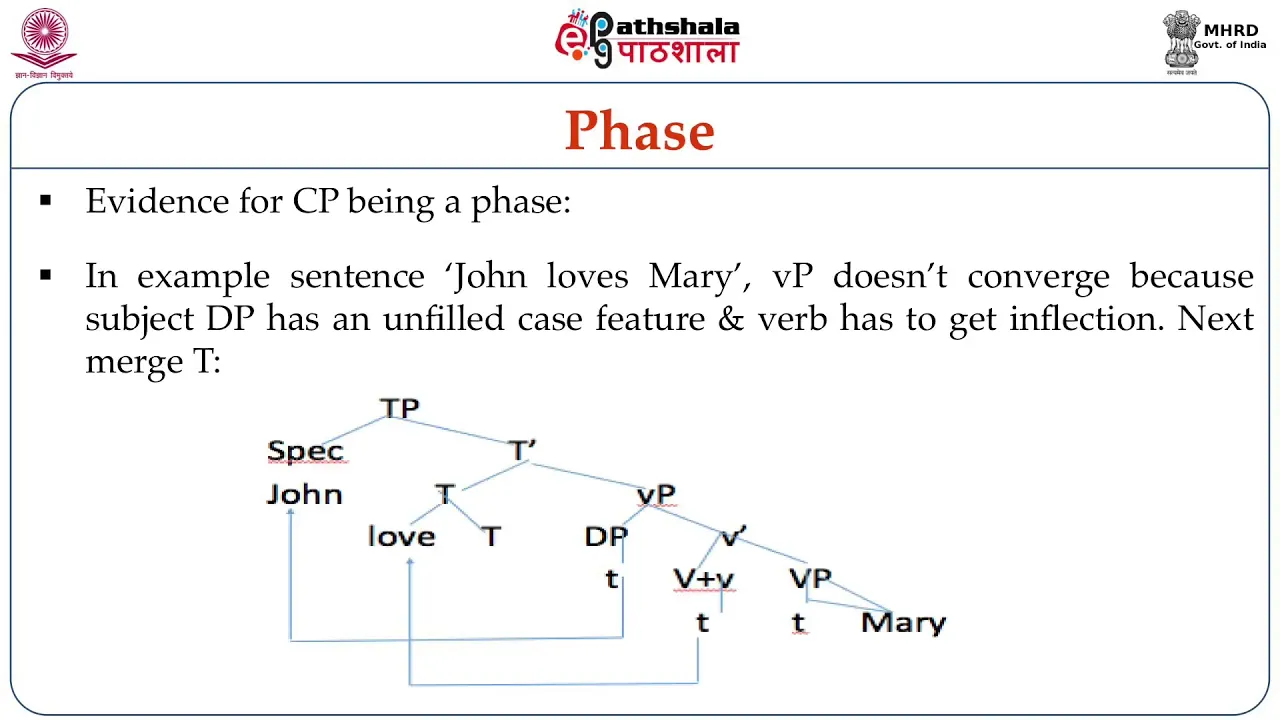



WH-questions are formed by extracting WH-words (what, when, who, where) from their base positions in a sentence, which involves movement to the specifier of CP (Complementizer Phrase); this movement is cyclic, meaning WH-words must pass through intermediate spec CP positions in embedded clauses before reaching the matrix clause's spec CP, as they cannot move directly across phase boundaries.
Wh-Questions and WH-Movement in Syntax | X-Bar Theory
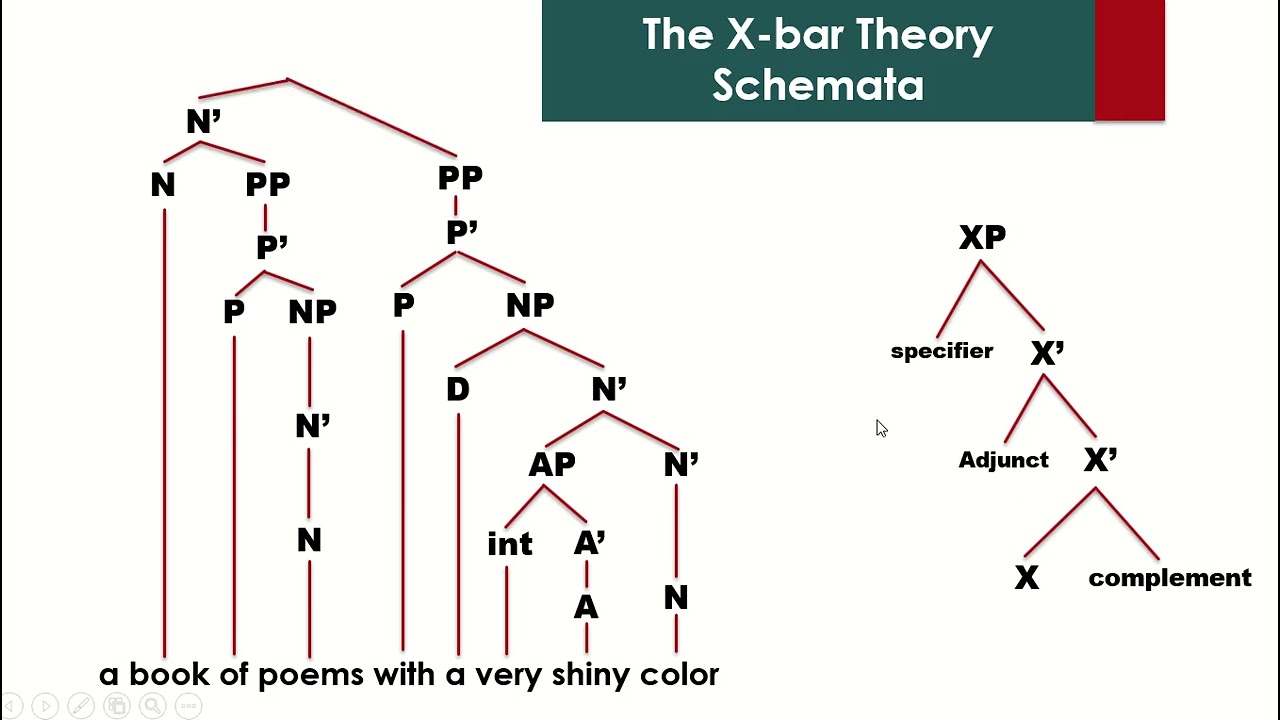
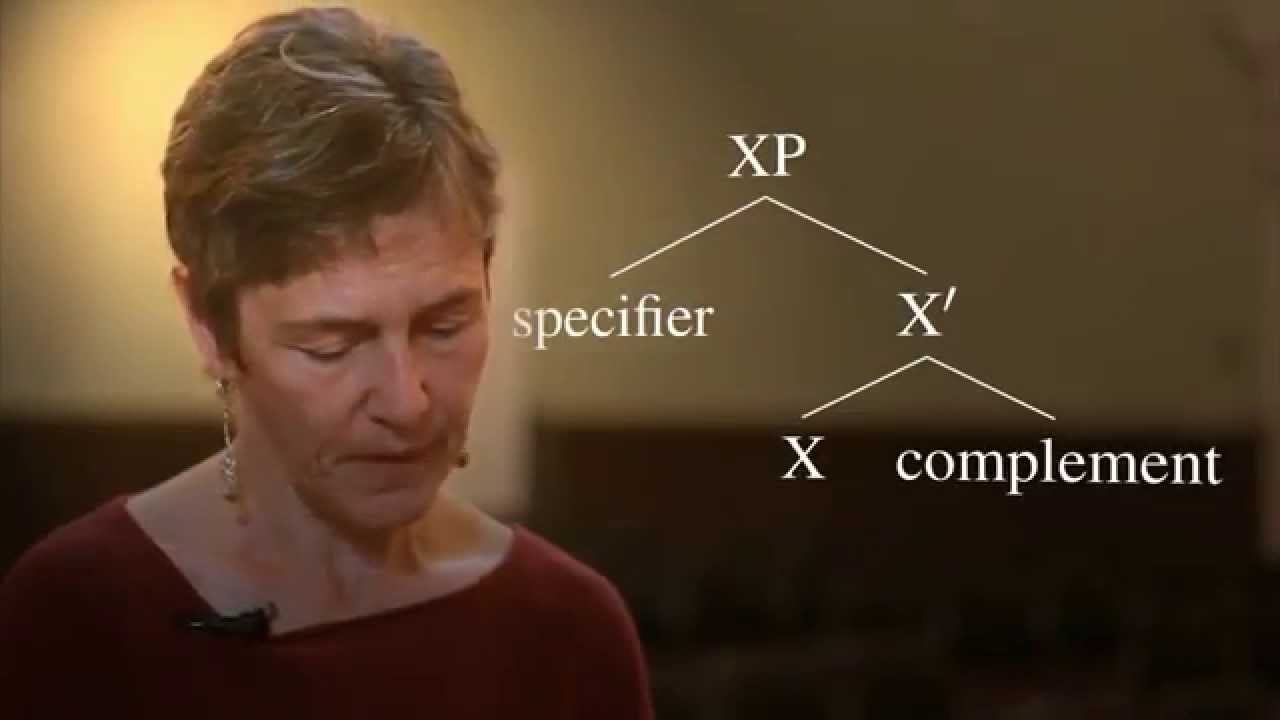
Added:Understanding of the core X-bar schema, including the hierarchical structures of CP (Complementizer Phrase), IP/TP (Inflection/Tense Phrase), and VP (Verb Phrase).
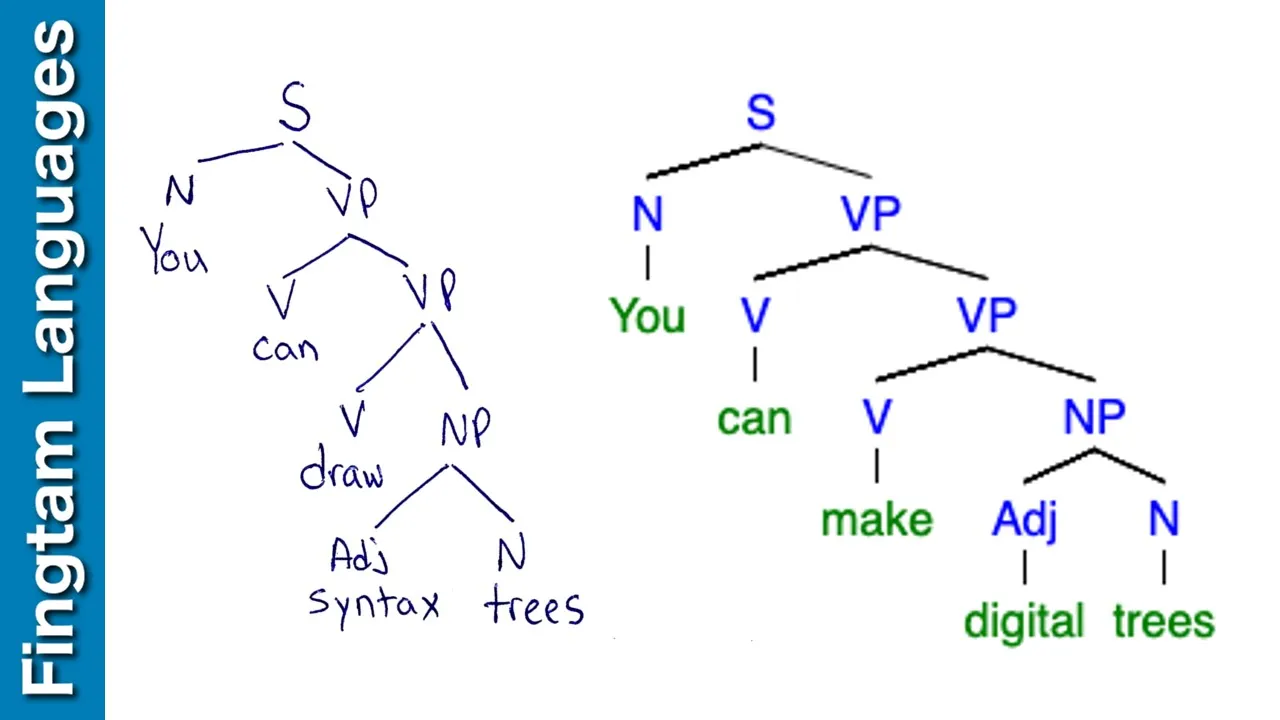
Ability to draw and interpret basic syntactic phrase structure trees to identify constituents.
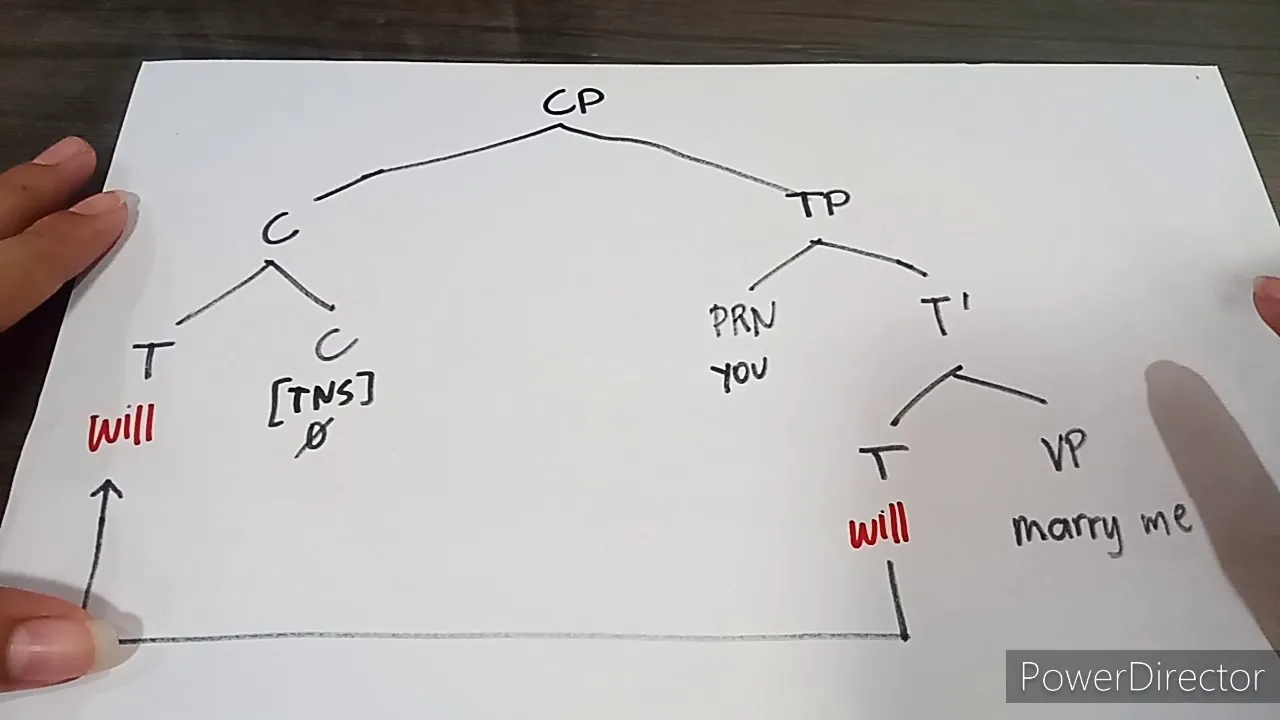
Familiarity with Head-to-Head movement, specifically Aux-to-C movement (Subject-Auxiliary Inversion) in yes/no questions.
Basic knowledge of thematic roles (theta-roles) and how arguments are initially merged into the syntax (Deep Structure vs. Surface Structure).
Exploration of Syntactic Islands and movement constraints (e.g., the Coordinate Structure Constraint and the Complex NP Constraint).
Study of Wh-in-situ languages (e.g., Mandarin Chinese) and the theory of covert movement at Logical Form (LF).
Distinguishing between A-movement (Argument movement, such as Passive and Raising) and A'-movement (Non-argument movement, such as Wh-movement and Topicalization).
Introduction to Phase Theory and Feature Valuation/Checking within the Minimalist Program.
94.3K views1.1Klikes8:09Original Release: 2017-05-15
in this video I'm going to introduce wh-questions and WH movement so what are WH questions I just use one in the sentence what what is a wh word and we can form a question with it we could say something like Cindy ate a pie and this is a declarative statement but I can ask two questions from this that are WH question I can say Cindy age what and this is called WH in situ where we just replaced the entire DP here with what this is also known and as an echo question because I'm echoing the entire phrase except for the missing piece of information the other thing I can do is I can form the sentence what did Cindy eat in this case the object of eat is being moved up to the top of the sentence and becoming a WH word so these are WH questions but what other WH words are there well there's when so we can say when did Maryland die and in this case this is not a DP we treat this as an adverb phrase because when does Maryland die Marilyn died yesterday which is also an adverb who did Shelly loves well here's our WH question that we've seen before where did I even go I even went to the zoo where did I even go as we can see here this usually replaces prepositional phrases okay with that in mind let's do some trees here's this tree for Cindy ate what which is an echo question and here I have some movements so Cindy is the eater so Cindy ate has started in spike VP and moved up spec TPD a case from T and then we have v8 and now what about the object well this is an echo question so really what we do is we just replace whatever we're thinking like Cindy ate the pie we're just replacing this with the WH word what and that's all we do and then what gets accusative case from the verb so echo questions are very simple in that they just take up the position of the DP and there's no movement involved at all now the other ones where this WH movement are a little bit more complicated so here we have the tree so far so Cindy starts inspect PP moves up to spec DP to inspect EP dia case what starts in the same position as the echo question but now we make use of the CP and the C head so what's special about the C head first thing I'll just write this a little bit bigger on the side C has a plus Q in it signaling that it's a question and it also has a plus WH signifying that it wants a WH word in spec CP so what does it do well it searches in the tree for the WH word and then it pulls it up so in order for the sentence to be okay we have to pull WH words up to spec CP so in this case we have our new spec CP which is the DP which is what and this is movement from the object position of eat now we end up with what did Cindy eat and of course we also have did here which we need for our questions what Cindy eat isn't okay to say we need what did Cindy eat and that was covered the formula to support videos so this is WH movement but it gets a little more complicated because we don't have to say something like who did Jon kiss we can embed sentences who do you think Jon kiss who does Mary think that you believe that John kissed and in this case we have something called the cyclic movement where someone was kissed by John so John kissed someone and that someone moves up to be who do who do you think John kissed so I can think John kissed Mary but maybe John didn't kiss Mary John kissed soup so these could be different and then finally it moves up so these WH words are moving through empty spec CP positions and if a spec CP position is full then there cannot be movement ok so let's see this in a tree and in this case I have to split up into two trees because it's just too long to do on one page and I want you to be able to see the whole thing at once so here we have some movement that's occurred which I will do in light blue so we have the agent of kiss being John moving up to spec DP I'm not going to write case here we also have you so who do you think you are the thinker so that has moved up and now we have this who and we want who to end up all the way up here in spec CP so how do we do this well first of all it's important to note here that who has accusative case so it does have case and it has a theta role so it can't move into positions that give case of theta role so where does it go first the first thing it does is it moves up to spec CP of the embedded clause which just to show you explicitly where it is is under this CP so this is the embedded clause here so who is going to move up into spec CP in this position so DP whoo and then we'll leave a trace down in the object but this CP head C does not pull for a wh word it also does not pull for a question but the C head in the matrix Clause is looking for that WH word and that question so it's going to stop here inspect CP become a trace and then continuous journey up to satisfy this C head so now the C head is satisfied and it's okay question is why can't we just do it follow once well this CP which I won't talk too much about it's called a phase and you can't just move anywhere out of the phase you can only move out of the phase if you're in the speck CP position I may talk about this later in future videos but there is quite a lot of theory to this that we just can't cover in these 10 minute videos and really what I want to do in these are show you how these constructions look like in the x-bar theory so you can do well on the practical portions of your exams so that's all the information I have on wh movement the next video we'll talk about relative clauses and how WH words work in there but if you have any questions please leave them in the comments below and I'll answer them the best that I can
Up Next

25:25
Head Movements in Syntax: V-to-T and T-to-C Movement
@linguistically-speaking
292 views•2025-11-29
36:52
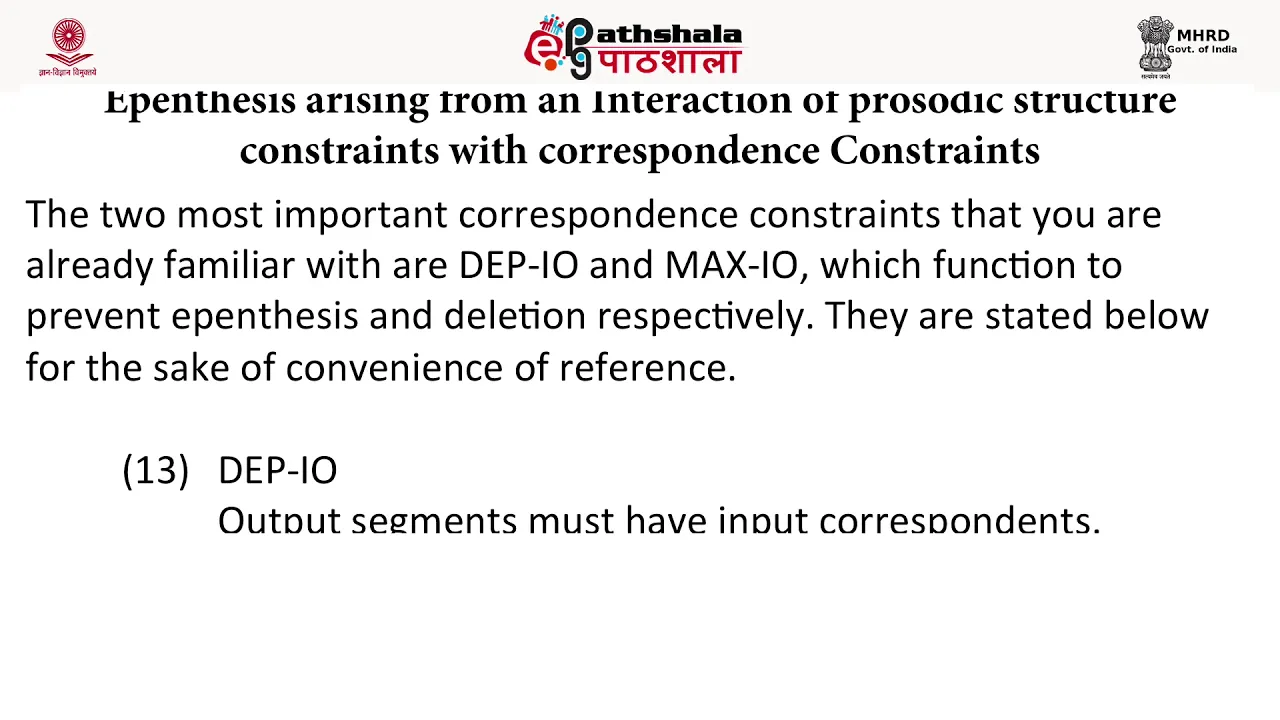
Constraint Interaction in Optimality Theory: Epenthesis & Deletion
@Vidyamitra
180 views•2018-08-20
19:56
Phonological Rules and Derivation in Linguistics
@Trevtutor
100.8K views•2016-04-27

21:32
Accent Expert Explains U.S. Regional Dialects | Part 1
@WIRED
9.3M views•2021-01-21
Related Study Plans & Knowledge Roadmaps
Structured learning paths in Linguistics
linguistics
Optimality Theory: Tableaux & Constraints
01Phonological Basics: Sounds, Syllables & Rules
02Foundations of Optimality Theory: GEN, CON, and EVAL
03The Constraint Inventory: Markedness vs. Faithfulness
+ 2 more learning modules
15h5 modules
Explore Roadmap
linguistics
Morphosyntactic Alignment: S, A & P Systems
01Foundations of Syntax: Transitivity and Arguments
02The Linguistic Variables: Mapping S, A, and P
03Nominative-Accusative Alignment
+ 3 more learning modules
12h6 modules
Explore Roadmap
linguistics
Analyzing Sign Language: Phonology & Syntax
01Foundations of Sign Language Linguistics
02Phonology: The Five Parameters of a Sign
03Morphology: Word Formation and Classifiers
+ 2 more learning modules
14h5 modules
Explore Roadmap
linguistics
Pragmatics: Speech Acts, Grice & Politeness
01Introduction to Pragmatics: Meaning in Context
02Grice’s Cooperative Principle & Implicature
03Speech Act Theory
+ 2 more learning modules
14h5 modules
Explore Roadmap