











![LENGUAJE 📚 Sintaxis y clases de oraciones 📢[CICLO FREE]](https://i.ytimg.com/vi/Dv57mumxGgo/maxresdefault.jpg)

![Syntax II: Intro to linguistics [Video 6]](https://i.ytimg.com/vi_webp/3CaX6MIzbZw/maxresdefault.webp)

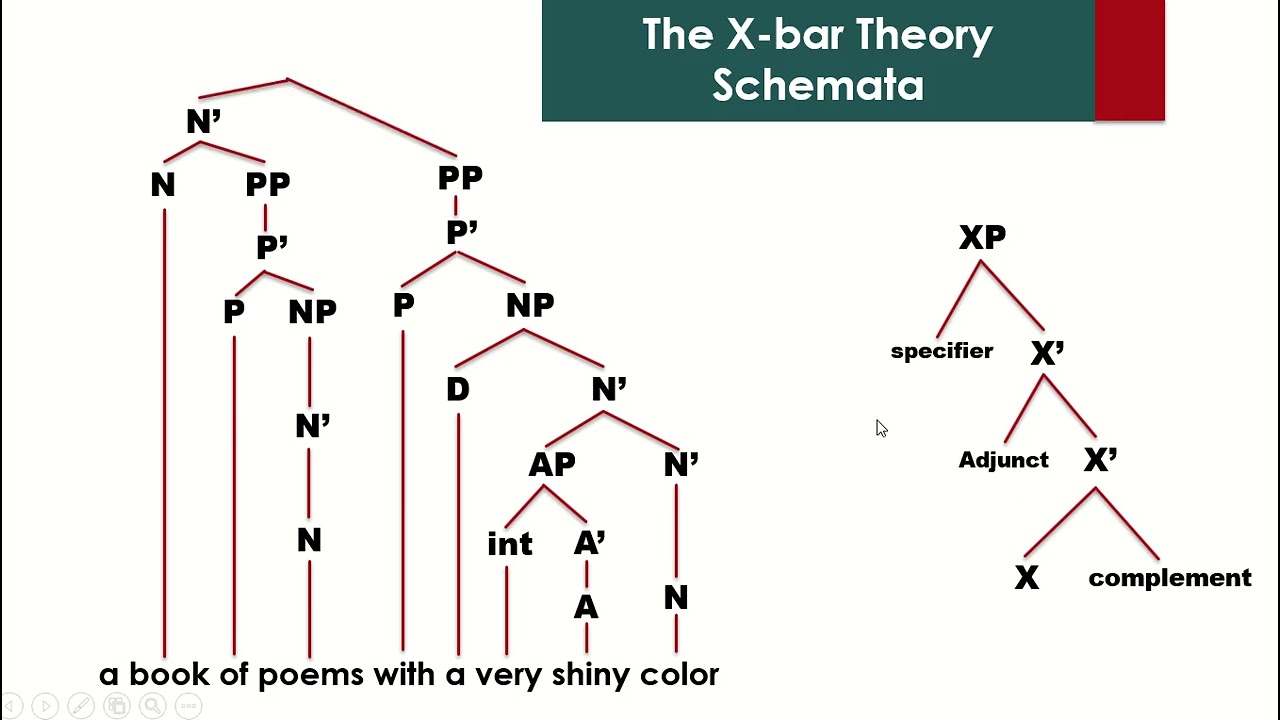


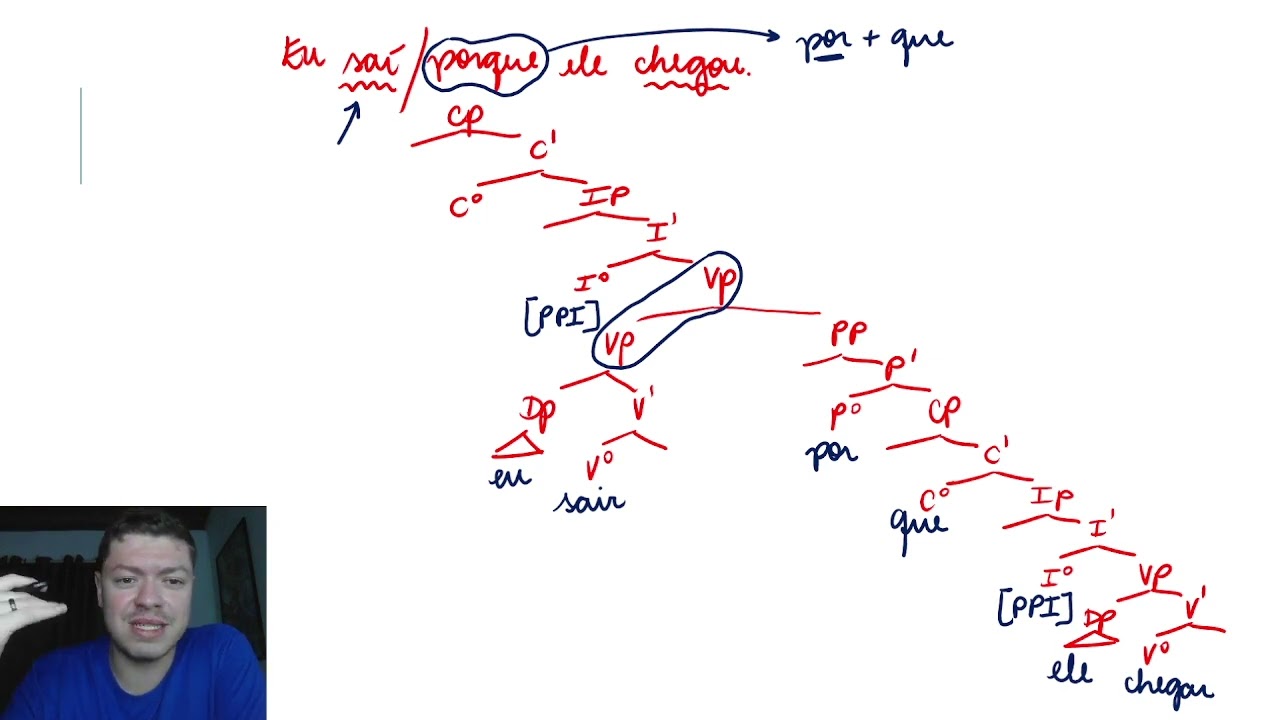

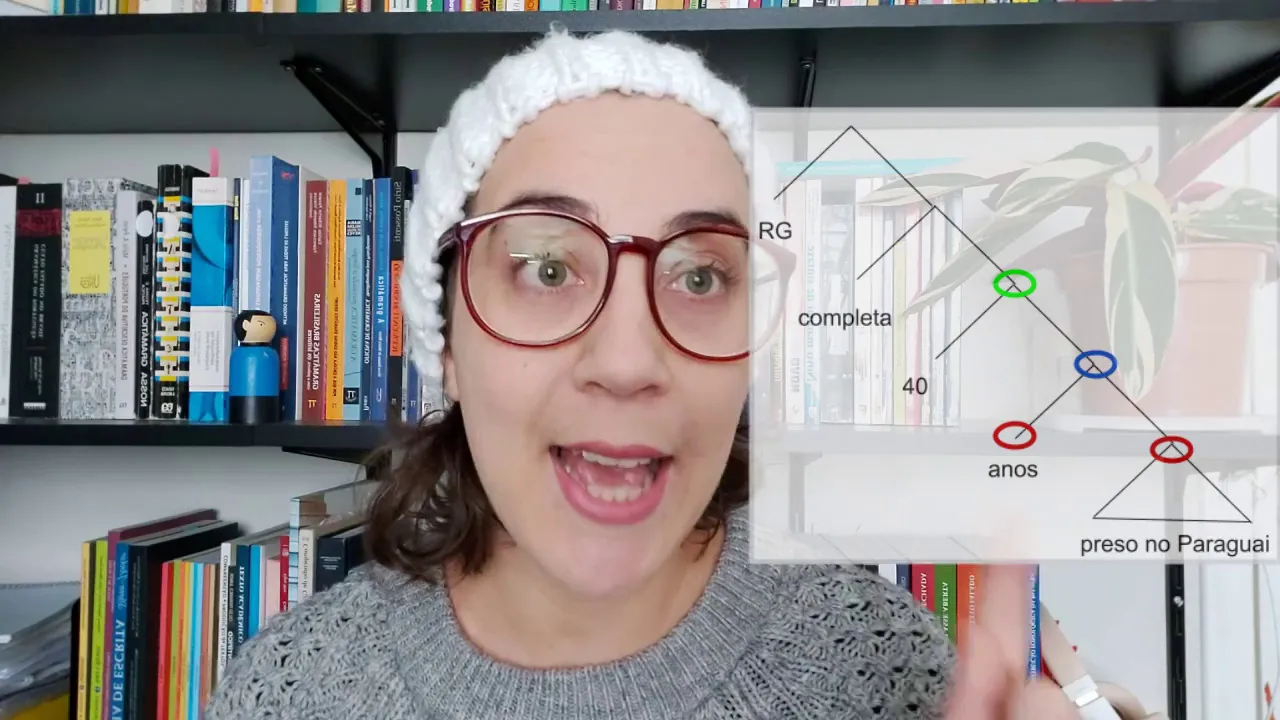


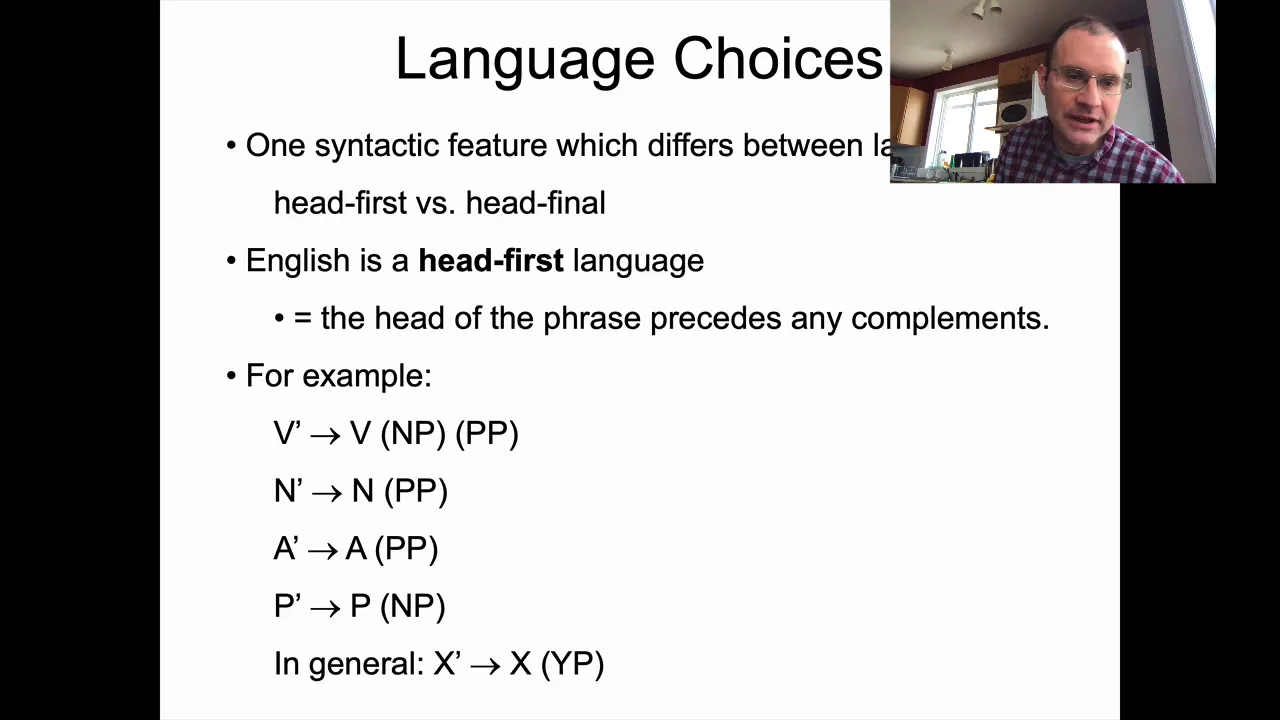
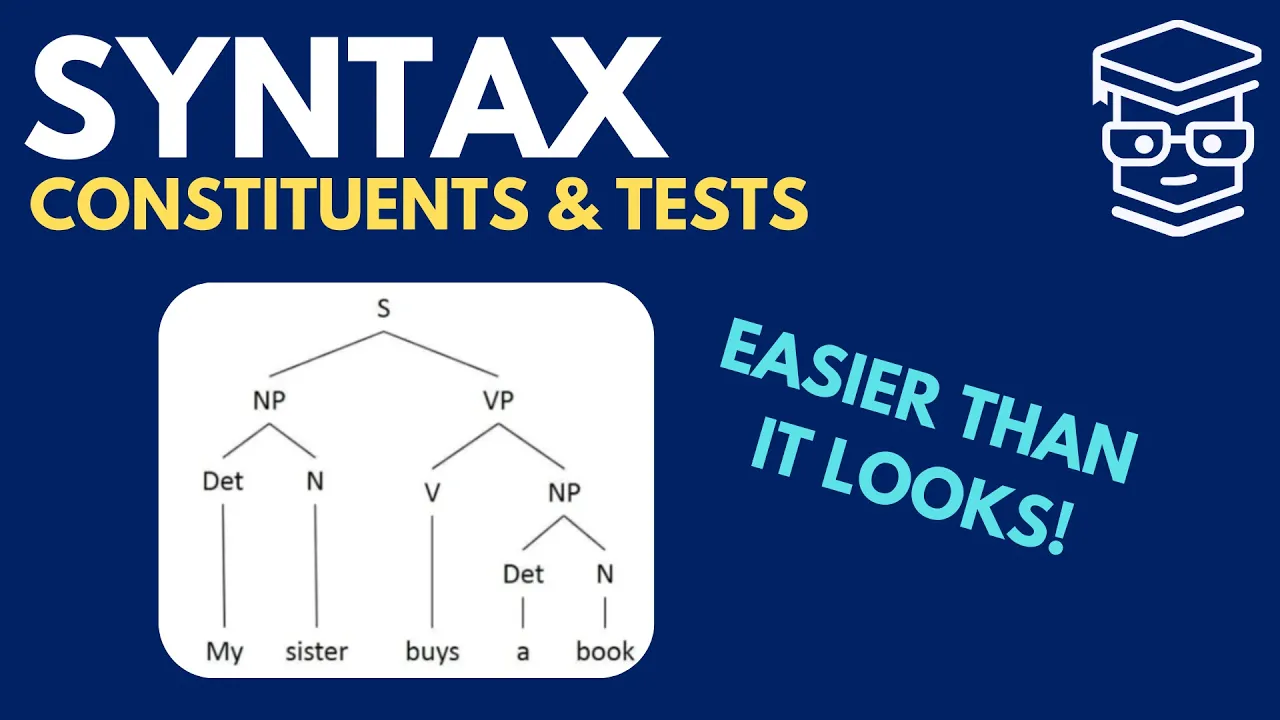
Tree structure diagrams are visual tools used in linguistics to represent the hierarchical organization of sentences, where each node represents a constituent (such as noun phrases or verb phrases) and their relationships; these diagrams reveal that sentences follow recursive structures where phrases can contain smaller phrases, allowing linguists to identify grammatical patterns across different sentences and understand how words combine to form meaningful expressions.
Syntax Tree Diagrams Explained | Grammar Rules & Structure
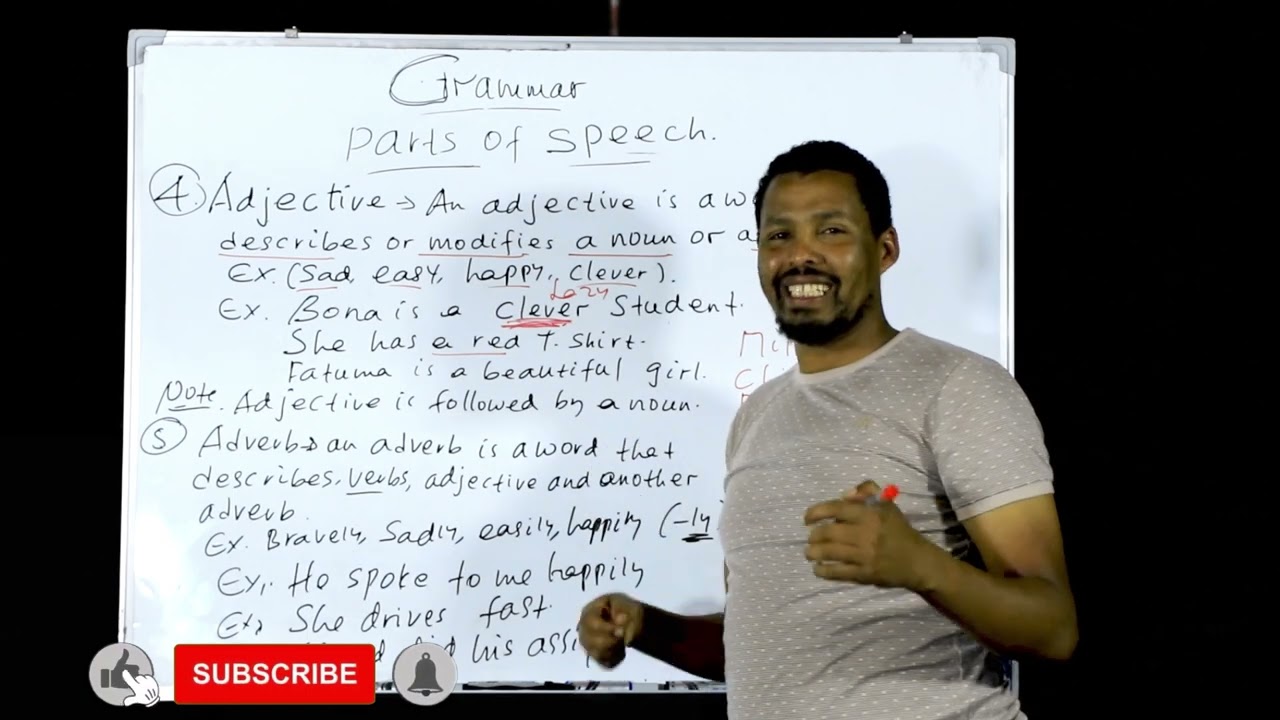
Added:Basic parts of speech (lexical categories like nouns, verbs, adjectives, and prepositions).
The concept of constituency and how words group together to form basic phrases, such as Noun Phrases (NP) and Verb Phrases (VP).
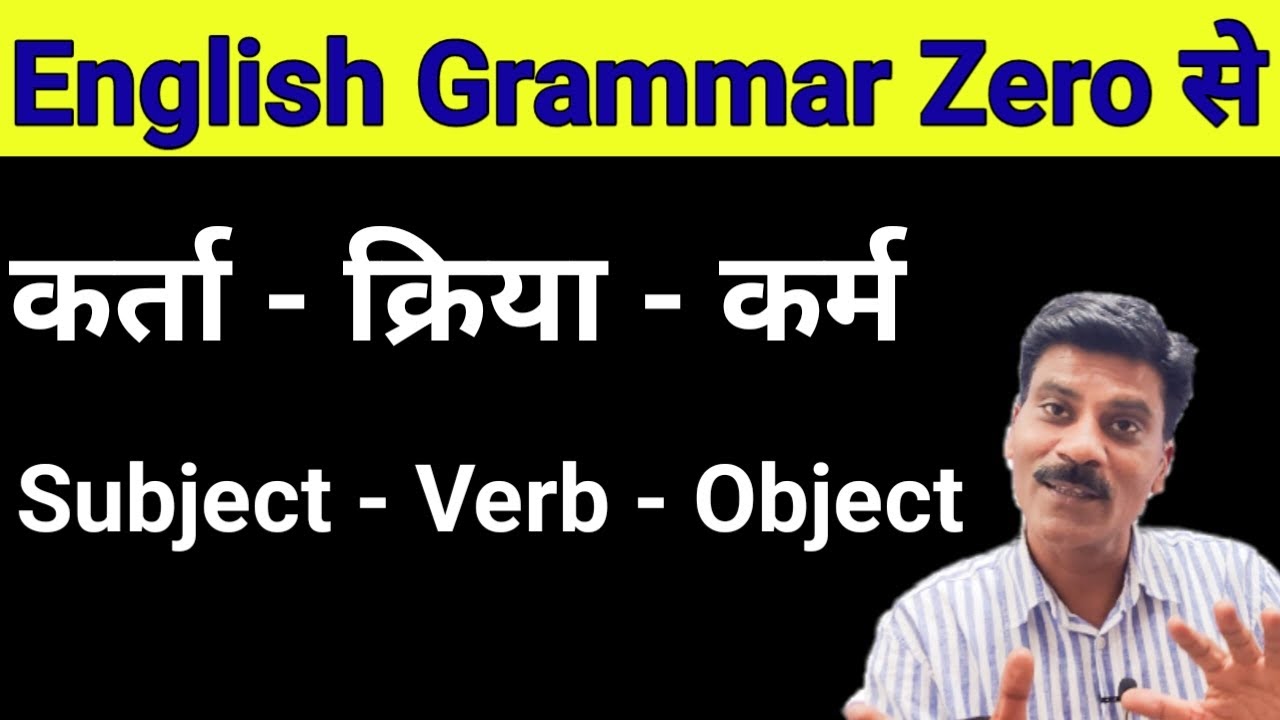
Fundamental English sentence structure, including the distinction between subjects, verbs, and objects.
A general understanding of what syntax is and how it differs from morphology and semantics.
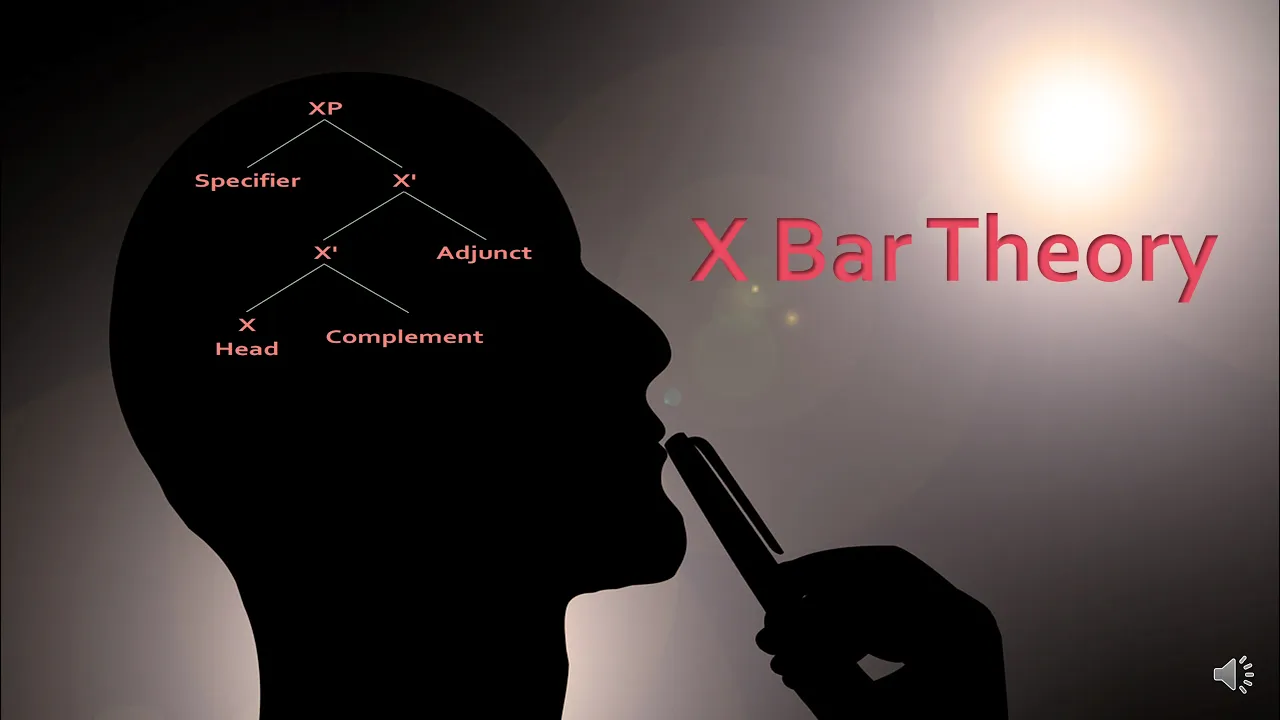
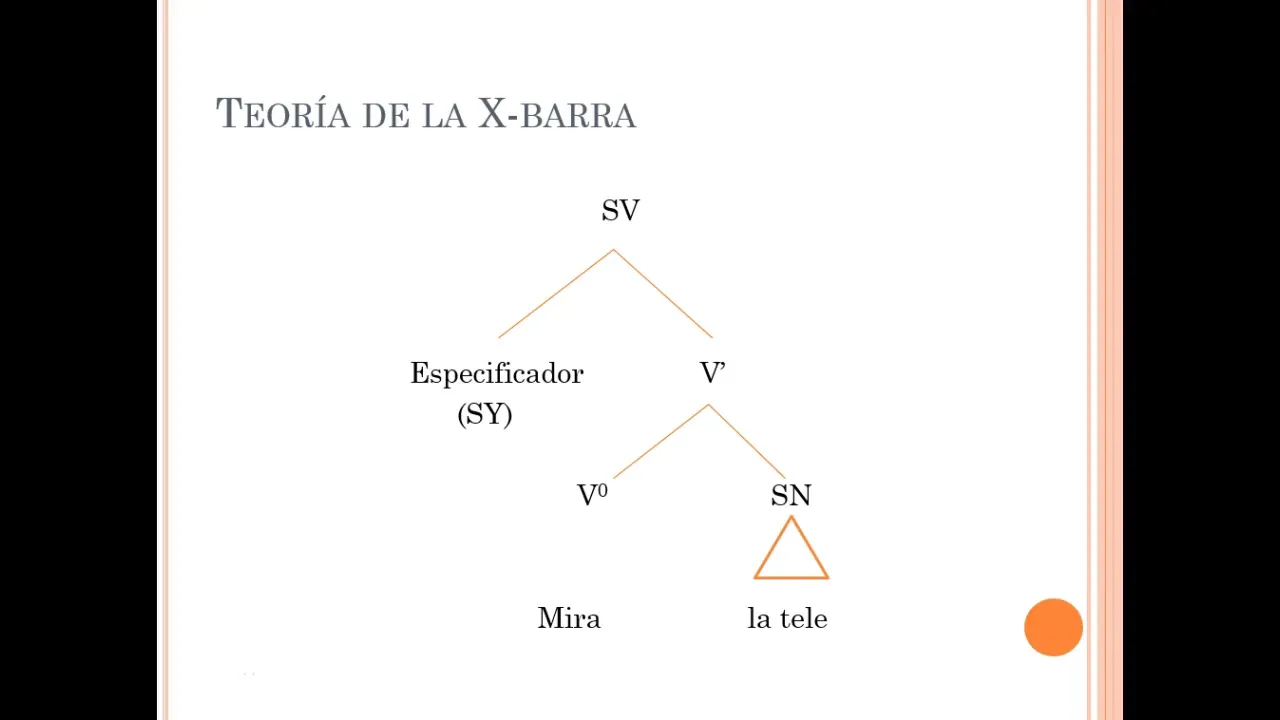
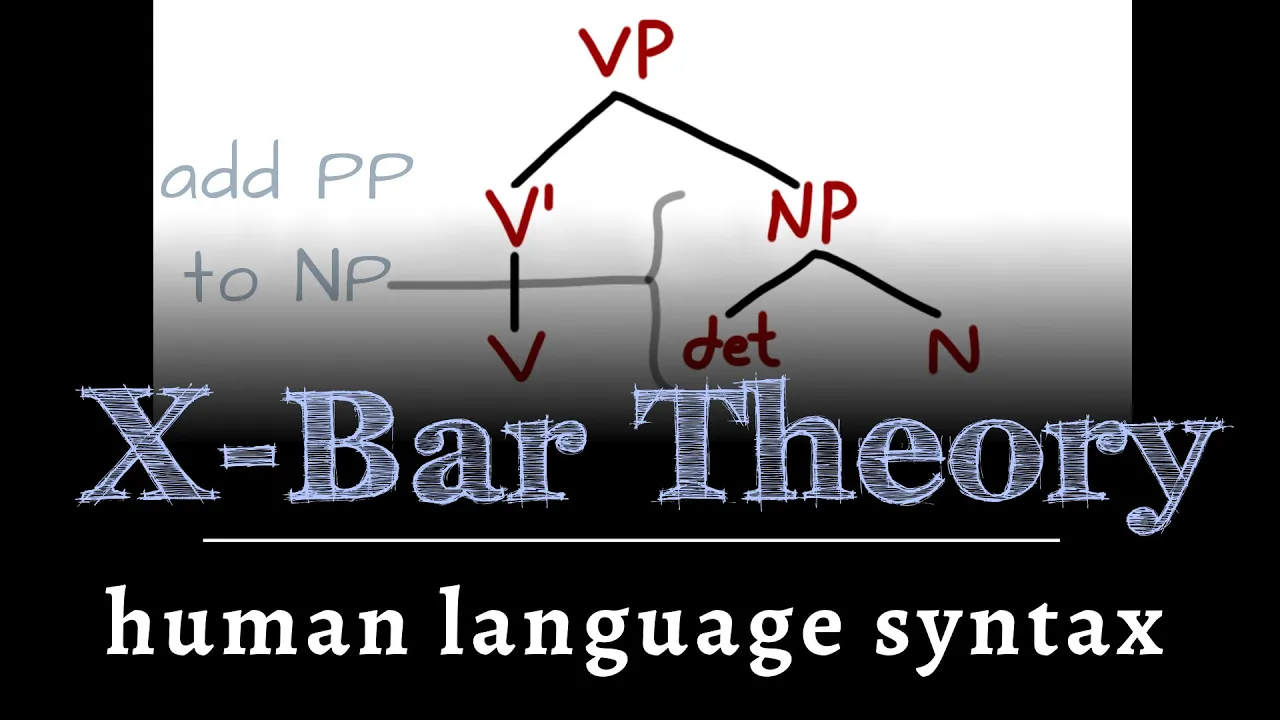
X-Bar Theory, which introduces a more standardized, hierarchical template for all phrase structures.
Transformational Grammar and movement rules, explaining how sentences shift from deep structure to surface structure (e.g., forming questions or passive voice).
Analyzing structural and syntactic ambiguity (how a single sentence can have multiple tree representations and meanings).
Applying syntactic tree structures to Natural Language Processing (NLP) and computational parsing algorithms.
Cross-linguistic syntax, exploring how tree diagrams accommodate languages with non-SVO (Subject-Verb-Object) word orders.
306.6K views8.2Klikes10:42Original Release: 2020-10-02
Hi, I'm Taylor and welcome to Crash Course Linguistics!
In episode 3, we learned about how to test which parts of a sentence are constituents, or closely-related subgroups of words.
So in the sentence, “Taylor sees the rabbit,” we know "the rabbit" is one such constituent because we can substitute for it a single word or pronoun, like "Gavagai" or "them".
And "sees the rabbit' is another, slightly larger constituent, because we can move the whole thing up to the beginning of the sentence in a cleft construction: "it's seeing the rabbit that Taylor does".
Now, we want to take it a step deeper.
Let’s figure out a way to keep track of these groupings, and extract some rules that could help us find patterns between lots of different sentences.
[THEME MUSIC] A simple way to keep track of different parts of sentences is by drawing connections between words.
For example, we could draw circles around each constituent.
But circles get really big, really quickly as our sentences get longer.
Or, we could draw brackets around each of the constituents.
Brackets are nice and compact, but they can be hard to easily scan and understand at a glance.
So, instead, linguists often represent the structural relationships between words using a tree structure diagram, sort of like a family tree with nodes and branches.
Tree diagrams strike a nice balance between being understandable and taking up a reasonable amount of space.
The nodes represent links between constituents, so it's useful to label them.
That helps us compare the tree diagrams across various sentences and track the different phrases in the sentence, too.
A phrase is a constituent that's sorta mid sized.
It's less than a full sentence but often more than a single word.
In this video we’re going to meet some of the common phrases that are the basis of English grammar.
For example, the difference between the phrases "sees the rabbit" and just "the rabbit" is that "sees the rabbit" has a verb in it.
So we can call "sees the rabbit" a verb phrase.
Using the substitution test we talked about in the previous video, we can swap the positions of "Taylor" and "the rabbit" in this sentence.
So they should both be the same kind of phrase.
Since both of these phrases have a noun in them, we'll call them noun phrases.
The word "the", by the way, is part of a class of words that linguists call determiners, which also includes words like "a," "this," "my," "one," and "every."
Determiners help us figure out which specific instance of a specific noun we're talking about.
There's one theory of syntax that actually argues there are determiner phrases as well as noun phrases.
Either way, these small words do a big job.
So, let’s label our tree with the phrases and the word classes to keep track of all of this information.
And the whole thing, as we already know, is a sentence.
Writing out "noun phrase" and "verb phrase" every time gets kind of tedious, so linguists generally abbreviate these as NP and VP.
And the same goes with N for noun, V for verb and S for sentence, plus Det for determiner.
Tree diagrams let us see the predicate relationship we talked about in the last episode.
The verb and the object noun phrase are both together within the VP.
Even in languages that put their words in a different order, the verb and the object still have this closer relationship.
Let's take Japanese for example.
In Japanese, the verb comes at the end of the sentence.
The verb is still in the same phrase, the verb phrase, as the object, so we can represent this in a tree structure diagram by just giving the VP node a little twist.
Going back to English now, here's another sentence: Gavagai ate my cake.
This new sentence has completely different words from the first one, but it has the exact same structure, so its tree structure diagram looks the same.
We can make a lot of sentences from just a few basic bits of structure.
And this leads us to an interesting puzzle.
Let's try to figure out all of the possible structures for sentences in English.
In other words, let's try to make a grammar of English.
A grammar is a description of how sentences go together in a language.
We could use a grammar to start to teach machines to understand English, or to compare the rules of English to those of another language.
A grammar isn't necessarily what's actually going on in your head when you're saying a sentence.
That's still an open question that linguists are researching.
And while we’ll be focusing on a grammar of English here, every language has one.
Making a grammar is actually a pretty big challenge.
Let's start out with a few sentences and figure out how to describe their structures.
Taylor sees the rabbit.
The rabbit ate cake.
And, Gavagai hopped.
First we notice that we can split each sentence into two pieces, and we can mix and match the front half and the back half.
We have “Taylor,” “the rabbit,” and “Gavagai” on one side and “sees the rabbit,” “ate cake,” and “hopped” on the other.
This structure predicts that "Taylor hopped" and "Taylor ate cake" and "Gavagai sees the rabbit" should be okay sentences, even though they're not on our original list.
Based on my linguistic intuitions as an English speaker, that's a good prediction and is part of our grammar!
We've established that sentences contain two parts.
But what if we split those sentences up like this instead?
This predicts that the sentences "Gavagai ate rabbit ate cake" and "the my cake" should be possible, and we know as English speakers that they're not!
We'd expect some groupings to fail like this in any language we tried.
So in our grammar of English so far, these sentences contain two parts, but it also matters what those two parts are.
Let's go back to our list that works, and highlight the nouns, verbs, and determiners in different colors.
So for “Taylor sees the rabbit,” we’ll make “taylor” and “rabbit” red for noun, “sees” blue for verb, and “the” green for determiner.
Based on this, we could write a couple rules for English grammar.
First, we can say that a sentence in English is made up of two parts: a noun phrase plus a verb phrase.
A noun phrase is made up of a determiner plus a noun.
And a verb phrase is made up of a verb plus a noun phrase.
But even though those rules are a good start, they still need a few tweaks.
Not all of our noun phrases have a determiner in them.
Sometimes it's "the rabbit" but other times it's just "cake".
And some of our verb phrases don’t have a noun phrase in them, either.
Sometimes it's "sees the rabbit" or "ate cake" but other times it's just "hopped".
So we need to indicate that certain parts of these rules are optional, which we can do using parentheses.
It has a nice effect.
The only thing that's absolutely required in a noun phrase is a noun, and the only thing that's required in a verb phrase is a verb.
We call this required piece, the part that the phrase is named after, the head, and the less important additions the complement.
There are plenty more things we can add to a sentence, which starts to make a grammar even more complicated.
For instance, take these ones: The rabbit with a scarf hopped.
And Gavagai ate cake on the moon.
We've added two new phrases: “with a scarf” and “on the moon.” These phrases contain a determiner and a noun, but they also contain a preposition, a word that shows the relationship of a noun phrase to the rest of the sentence.
So now we can make a rule for a prepositional phrase, which contains a preposition as the head and a noun phrase as the complement.
We also need to refine our rules for noun phrases and verb phrases to allow for optional prepositional phrases.
So far, our grammar contains just four rules.
But it's already really powerful.
To find out how, let's go into the Thought Bubble.
Hey look!
Gav and I are inside a thought bubble.
Let's go into another thought bubble.
Cool, we're inside a thought bubble inside a thought bubble!
Let's go deeper!
Now, we're inside a thought bubble inside a thought bubble inside a thought bubble.
We could just keep going!
We might get bored or run out of space on the screen or get cut off by YouTube's time limits, but in theory, we could just keep embedding thought bubbles inside thought bubbles...forever.
Uh, let's pop a few of these thought bubbles to get some more breathing room.
Okay, leave thought bubble.
And….leave thought bubble.
Ok, we're back in a normal single bubble!
Thought bubbles have the property of recursion.
We can embed thought bubbles inside thought bubbles forever.
Language is also recursive. Let's take the phrase "inside a thought bubble".
"Inside" is a preposition, so this is a prepositional phrase.
And "a thought bubble" is a noun phrase.
But inside this noun phrase "a thought bubble" we can add another prepositional phrase.
Let's say it's also "inside a thought bubble".
And we can keep going.
In fact, we already did, when we were describing the recursive thought bubbles in the first place.
We don't always have to embed the exact same words.
Recursion just means that we can build structures inside other structures.
For instance, the Rabbit on the moon in the solar system in the milky way in the universe on Friday hopped.
There Gav goes!
Thanks, Thought Bubble!
(And thought bubble, and thought bubble!)
Our simplified little set of four grammar rules is powerful enough for recursion, but there are also some things missing: adjectives like "big" or "purple", adverbs like "quickly", pronouns like "you" or "me".
Sadly, this video does not actually contain infinite recursive space, but now that we’re thinking like linguists, we can use our knowledge of language to continue to build up a more complete set of rules.
This is just the start!
But even with just four rules, we can see that sometimes completely different words have the same linguistic structure.
Other times, the same words have different linguistic structures.
We can see these similarities and differences by looking at language from the perspective of syntax.
Let's take these two sentences.
“Time flies like an arrow” means that the concept of time is fast, like an arrow is fast.
“Fruit flies like a banana” means that these small insects are fond of fruit.
Both of these sentences have "flies" and "like" in them, but these words have different structural relationships with the rest of the sentence.
In this first tree, "flies" is the verb, and "like" is a preposition.
In this second tree, "flies" is part of the noun phrase and "like" is the verb.
We can represent that difference by drawing diagrams.
Don’t stress about the triangles.
Linguists use triangles within a tree to save space and represent constituents that are not the focus of what we're talking about.
But we can see how these shared words occupy different parts of each tree.
Or take the song about the mythical "One-eyed one-horn flying purple people eater".
This could mean a song about a creature that eats any kind of people and has one eye, one horn, flies, and is purple.
Or it could be about a creature that eats one-eyed, one-horned, flying purple people.
Or something in between.
Maybe a one-eyed, one-horn creature that eats flying purple people?
Some of these beasts are a lot more dangerous than others.
Throughout this episode, we've been using rules and tree diagrams as a fairly simple way of representing the structure of sentences.
But there are lots of other ways of representing the same sentences.
There are many theories of syntax which have different ways of representing grammatical structures, each with their advantages and limitations.
And there are some grammatical structures that syntacticians haven't even figured out how to represent yet!
So far, we've seen sentences with absurd meanings but reasonable grammar.
Next time on Crash Course Linguistics, we'll go deeper into meaning itself.
Thanks for watching this episode of Crash Course Linguistics.
If you want to help keep all Crash Course free for everybody, forever, you can join our community on Patreon.
Up Next

5:11
Pragmatics Explained: Speaker Meaning, Context, and Distance
@pragmatics-phkarlsruhe890
186.3K views•2018-07-15
36:52
Constraint Interaction in Optimality Theory: Epenthesis & Deletion
@Vidyamitra
180 views•2018-08-20

9:57
Pragmatics and Grice's Maxims | Crash Course Linguistics
@crashcourse
338.9K views•2020-10-16

21:32
Accent Expert Explains U.S. Regional Dialects | Part 1
@WIRED
9.3M views•2021-01-21
Related Study Plans & Knowledge Roadmaps
Structured learning paths in Linguistics
linguistics
Optimality Theory: Tableaux & Constraints
01Phonological Basics: Sounds, Syllables & Rules
02Foundations of Optimality Theory: GEN, CON, and EVAL
03The Constraint Inventory: Markedness vs. Faithfulness
+ 2 more learning modules
15h5 modules
Explore Roadmap
linguistics
Morphosyntactic Alignment: S, A & P Systems
01Foundations of Syntax: Transitivity and Arguments
02The Linguistic Variables: Mapping S, A, and P
03Nominative-Accusative Alignment
+ 3 more learning modules
12h6 modules
Explore Roadmap
linguistics
Analyzing Sign Language: Phonology & Syntax
01Foundations of Sign Language Linguistics
02Phonology: The Five Parameters of a Sign
03Morphology: Word Formation and Classifiers
+ 2 more learning modules
14h5 modules
Explore Roadmap
linguistics
Pragmatics: Speech Acts, Grice & Politeness
01Introduction to Pragmatics: Meaning in Context
02Grice’s Cooperative Principle & Implicature
03Speech Act Theory
+ 2 more learning modules
14h5 modules
Explore Roadmap