
























Pragmatics is the branch of linguistics that studies how meaning is derived from context rather than just words themselves; according to philosopher Paul Grice's Cooperative Principle, effective communication relies on four key assumptions (called Grice's Maxims): Quality (speakers tell the truth), Quantity (speakers provide sufficient but not excessive information), Relevance (speakers stay on topic), and Manner (speakers communicate clearly and directly); when these assumptions are violated, listeners infer alternative meanings through implicature, allowing speakers to be polite and indirect while still conveying their intended message.
Pragmatics and Grice's Maxims | Crash Course Linguistics
Added:The distinction between semantics (literal meaning) and pragmatics (contextual meaning).
Basic models of communication, including how speakers encode and listeners decode messages.
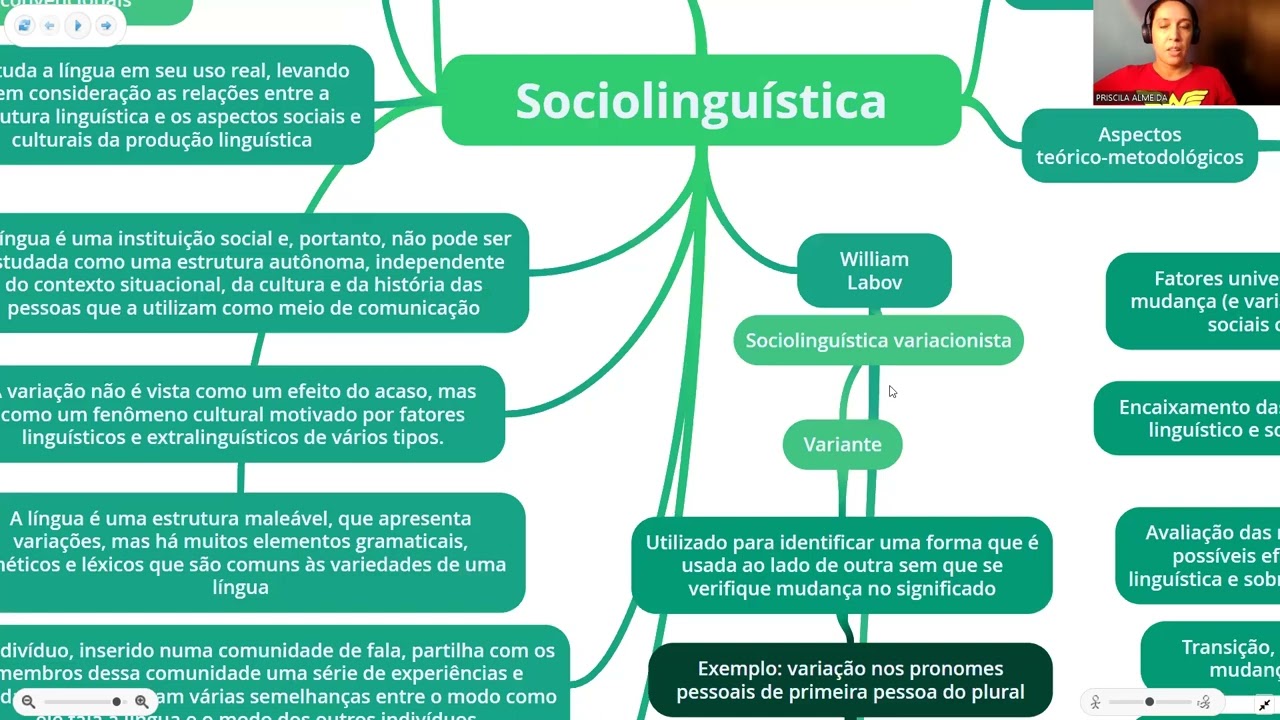
Fundamental concepts in sociolinguistics, specifically how social context and speaker relationships influence language choice.
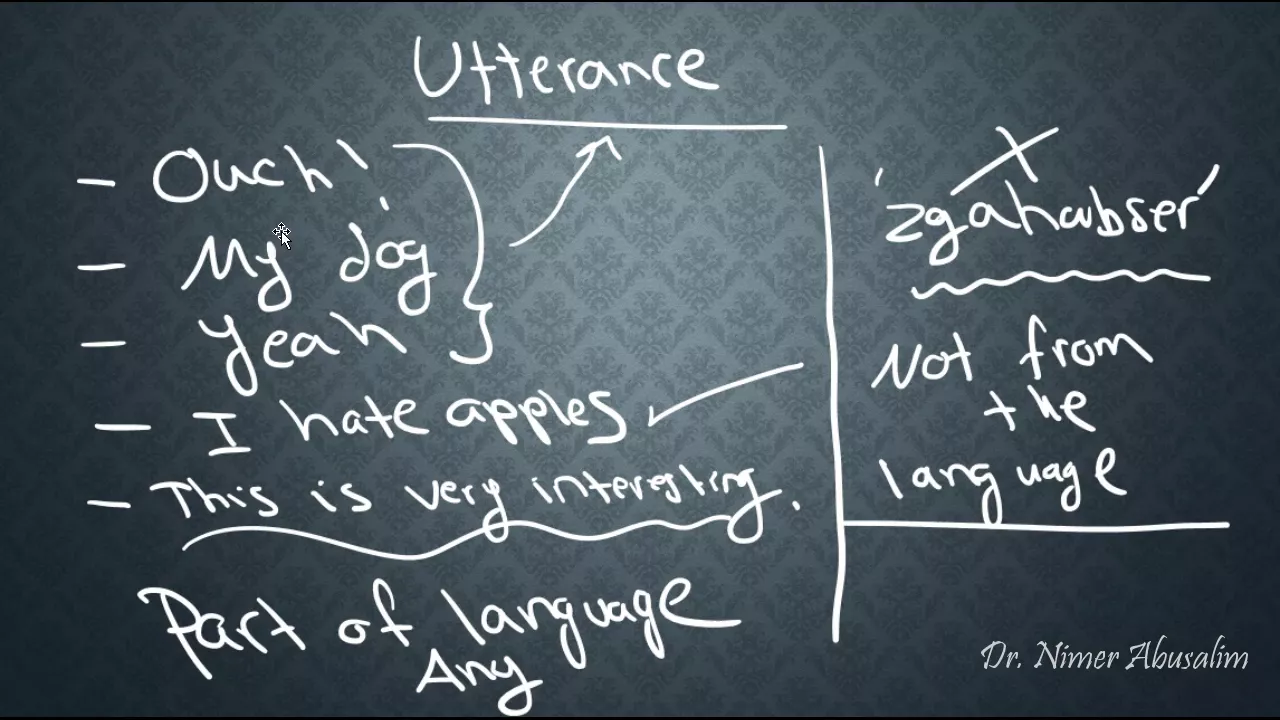
An understanding of basic linguistic units, such as utterances, sentences, and propositions.
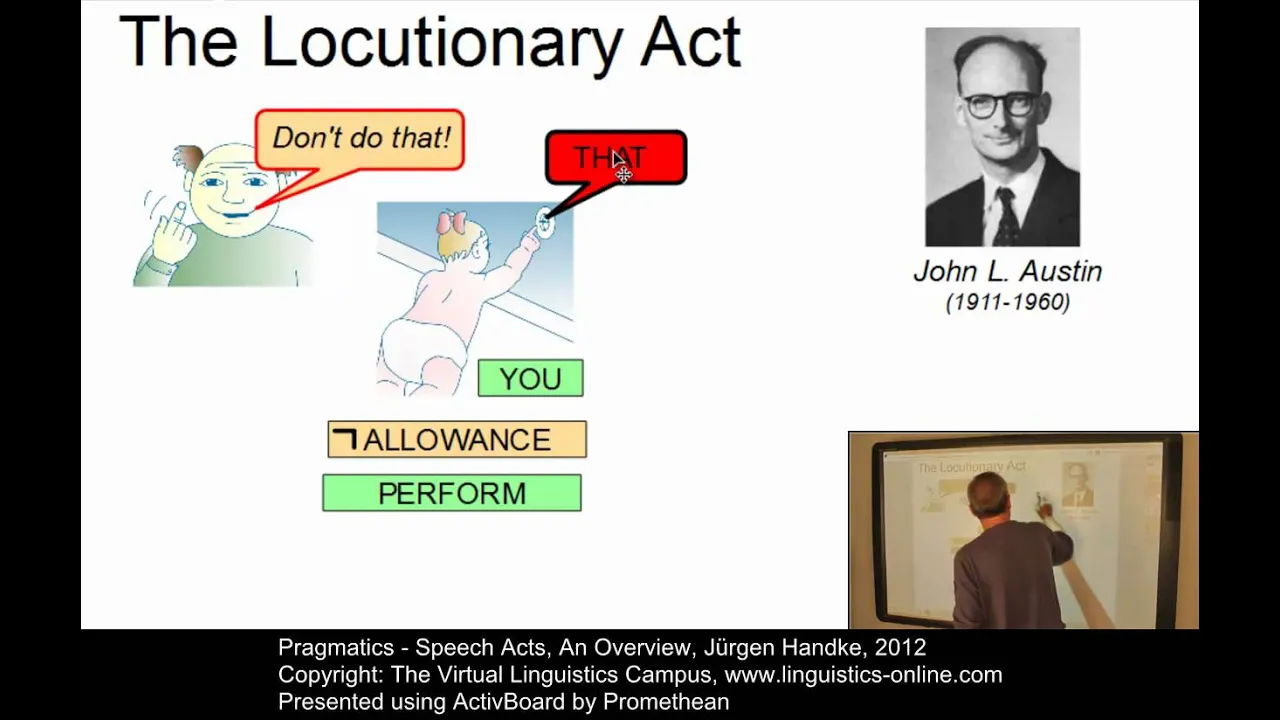
Speech Act Theory, including how speakers perform actions through utterances (locutionary, illocutionary, and perlocutionary acts).
Relevance Theory, a cognitive framework that refines and challenges Grice's cooperative principle.
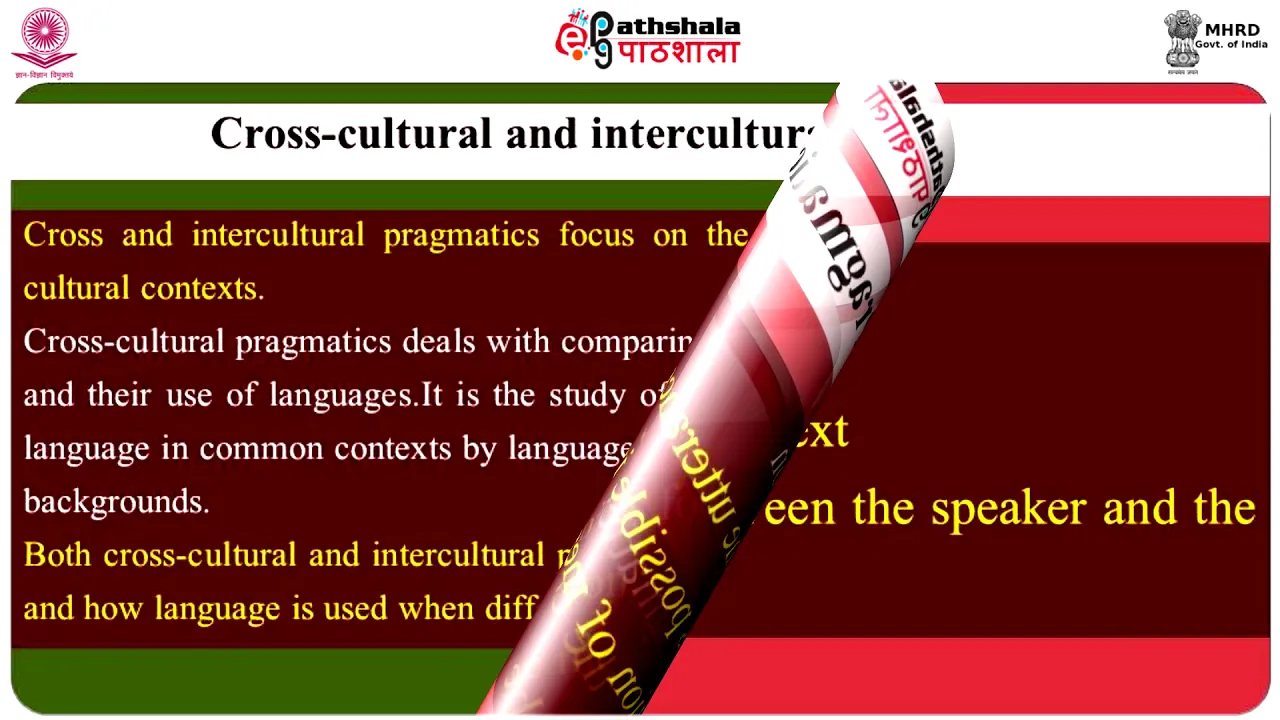
Cross-cultural and intercultural pragmatics, examining how politeness and conversational norms differ across global societies.
Conversation Analysis (CA), focusing on the micro-structures of naturally occurring talk, such as adjacency pairs and repair mechanisms.
Applications of pragmatics in Natural Language Processing (NLP) to help artificial intelligence detect sarcasm, irony, and indirect speech acts.
338.9K views10.4Klikes9:57Original Release: 2020-10-16
Hello, I'm Taylor and welcome to Crash Course Linguistics!
Sometimes we don't say exactly what we mean, and yet we still manage to understand each other.
If you ask, “Is it raining?” when I come inside soaking wet and I say, "Great job, Sherlock", you'll probably assume that I'm being sarcastic rather than giving you a compliment.
Or if you ask me "Can you close the window?"
I'll probably interpret your question as a polite request, rather than a question about my physical ability.
The reason we can figure out what's going on is because we don't just look at words and sentences for meaning — we also look at context.
The area of linguistics that puts meaning into context is called pragmatics.
[THEME MUSIC] We don’t have 100 percent complete information about everything that's going on when we’re talking to people, so we often need to make some assumptions about the context in order to understand each other.
There are four main assumptions that pragmaticists talk about when it comes to communication.
Let's start with "Great job, Sherlock".
In some contexts, that could be a statement of admiration at your friend's deductive powers.
But in other contexts, like if your friend has done something especially… unwise, calling them "Sherlock" actually illustrates how much they're NOT like Sherlock Holmes.
That’s because most of the time, we assume that people are trying to communicate high-quality information.
We know that people can lie, but we usually assume that they’re telling the truth.
So when the context and the words clearly don't match, we can deduce a more subtle truth, like sarcasm.
Let’s move on to a second assumption.
Here's a gif that floated around the internet a while back, with the caption "look at all these ducks there are at least ten."
This caption is technically true.
There are at least ten ducks, in fact there’s a whole swarm of ducks, probably hundreds.
And "hundreds" is definitely consistent with “at least ten.” But anyone who can see that there are at least ten ducks in this gif can also see that there are wayyyy more than ten ducks.
And there’s something so funny about the way the caption goes against our assumptions about communication.
That assumption is that people are giving us a sufficient quantity of information.
Enough detail, but not too much.
The boring, consistent-with-our-assumption version of this caption would have been "look at all these ducks there are hundreds."
But that ordinary version wouldn't have been as funny, and probably wouldn't have gone viral.
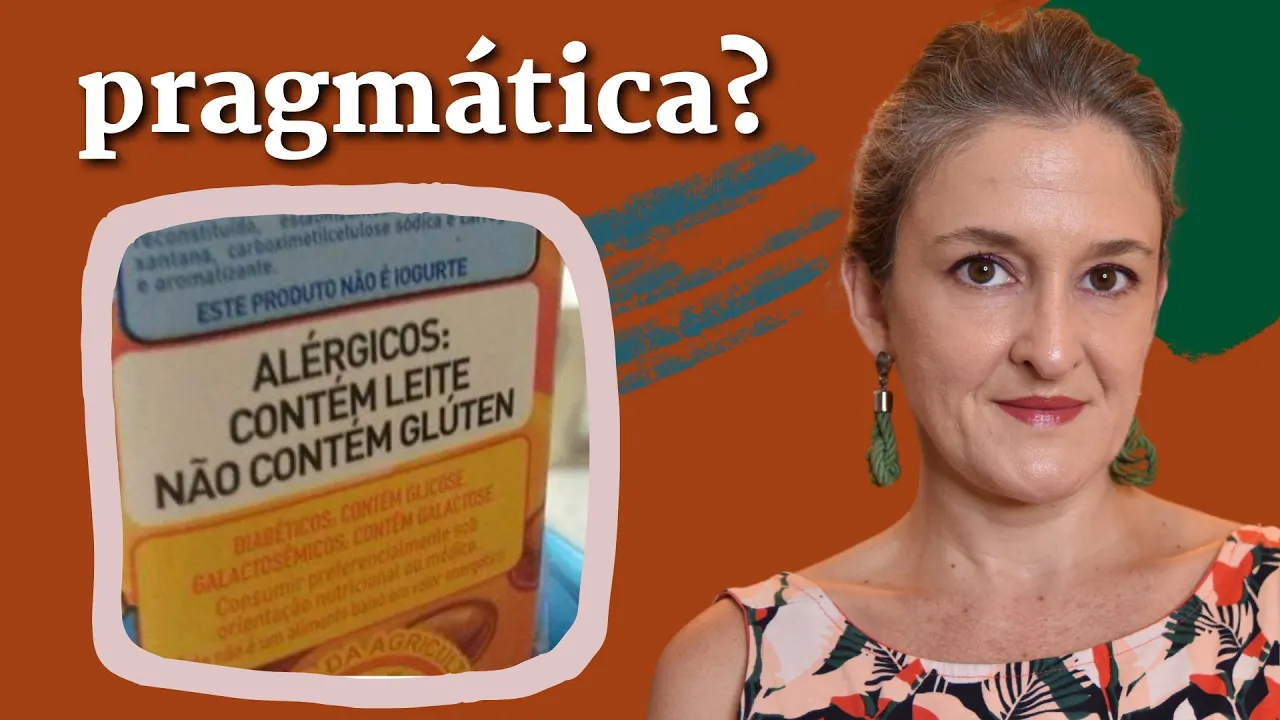
Food labels also generally align with our third assumption.
For example, if a pack of gum says it's sugar-free, it’s because gum does sometimes contain sugar.
We generally assume that people will tell us information that is of relevance, so the boring gum packaging checks out.
But our assumption about relevance can also be used for humor or to mislead — to imply that something is relevant when it actually is not.
Like, if an olive oil brand starts labeling its bottles “sugar-free olive oil” you might think, “Wait a sec, I didn’t know olive oil ever contained sugar!” That might convince you to avoid other brands of olive oil that don’t say they’re sugar free, even though none of them ever contained sugar.
That information actually isn’t relevant!
Finally, let's say you're trying to figure out whether you want to take a particular class with a particular professor next year.
You ask one person for advice.
"Well, it certainly is a class," they say.
You ask someone else, who says, "Oh yeah, the professor shows up every week, and wears clothes, and stands in front of the room, and talks to us, and gives assignments."
Both of these statements theoretically seem like they should be completely unremarkable.
Of course you'd expect a class to be a class, or a professor to show up and wear clothing and give assignments!
And yet, somehow when your friends give you way less detail than expected, or lots of detail about obvious things, it raises suspicions.
What on earth is going on with this class that they can't just tell you if it's good?
Our fourth assumption is that people will say things in a manner which is as straightforward as possible for the context.
If something is good, we can probably just say it's good.
If something is not so great, though, we might be reluctant to criticize it overtly.
So we sometimes say things in a less straightforward manner in order to be more diplomatic.
So when our friends say something that misaligns with our assumptions, that might tell us that something’s up with that professor.
These four assumptions, that what someone says will be of sufficient quality, quantity, relevance and manner, can be summed up with one bigger idea: that we assume people are generally trying to be cooperative with us.
So these assumptions are called the Cooperative Principle.
They were first described by the philosopher Paul Grice, so they're also sometimes known as Grice’s Maxims.
But it’s ok, we can use them too!
According to the cooperative principle, whenever someone says something that doesn't make sense at a literal level, we can figure out, or infer, what else they could have meant, assuming they're still trying to contribute in a cooperative way to the conversation.
Sometimes we assume cooperation so quickly that we don't even really notice it!
For instance, if I say, "Hey Gav, do you wanna have a picnic?" and Gav says, "It's raining," we can probably infer that Gav was declining my picnic suggestion.
But technically speaking, Gav didn't actually say yes or no.
If we were a computer program, or a lawyer, or someone else who cares about very strict literal interpretations, we'd have to point out that the picnic sentence and the raining sentence don't have to be related.
It's only because we have an understanding of context and cooperation that we interpret them as related.
We know that picnics involve eating food outdoors, and that it's hard to eat outdoors in the rain.
This additional meaning layered on top of the words we’re saying is known as an implicature.
Understanding how implicature works can help us make sense of the moments when someone says one thing and means another.
If Gav asks, "Can I have a cookie?" and I reply, "I don't know, can you?", Gav will quite justifiably be annoyed at me, because I'm deliberately ignoring the implicature that this is a request.
And if you watch enough YouTube videos, you know what the ‘subscribe button’ looks like and that it sits below this video.
So if I turn to the camera and say “the subscribe button is below this video”, I'm not actually telling you new information.
I’m not even asking you to subscribe, but you might have thought about it.
In this context, pointing out the button is really saying “please subscribe!” without overtly saying “please subscribe!” I’m using implicature to ask without asking.
It's a way of being polite by being indirect.
And languages have lots of other strategies for being polite.
Some languages add a short word, or particle, to make something polite, like please or sorry.
In Malay, you can add lah to a command, something like, “hand me that, la?” That turns it from a demand into something more like “Would you please do that?” In Mandarin, you tell a person to have a seat by just saying “Sit!” zuo4.
That probably sounds way too strong, like something you’d command your pet.
And it sounds strong to Mandarin speakers, too.
But instead of adding a “please,” they repeat the word: Zuo4 zuo4 or “Sit sit” which means something like “here, have a seat.” Some languages have different forms of verbs or other words depending on the social status of the person you’re talking to.
In French, the pronoun "tu" is informal and singular, and "vous" is formal and plural.
English actually also used to make this distinction with "thou" for the informal singular and "you" for the formal or plural version of the word.
Making something seem more question-like or tentative can also make it more polite.
In BSL, raised eyebrows are used both to indicate questions, and also as one way of making a request or an apology more polite.
While there’s a wide variety of grammatical ways to show politeness across languages, we also see a general tendency that adding qualifiers and caveats, known as hedges, to our replies tends to be seen as more polite.
So does being indirect, such as asking or even just hinting, rather than ordering.
So, if I want you to close the window because I’m freezing, it would be more polite to say “Would you mind closing the window?” or “Brr, it’s chilly in here!” than it would be to straight up tell you, “Close the window!” We follow our culture and our language's norms of politeness because it's part of the whole process by which we create meaning between us and the people we're talking to.
Both politeness and the Cooperative Principle are part of pragmatics.
They're part of our agreement about how we're going to talk to each other.
Pragmatics affects everything from our words to even the very way we have those conversations.
Let’s step into the Thought Bubble for a chat.
The flow of words between people is known as turn taking.
I say something, you reply, I reply to that, back and forth.
There’s a lot of variation across individuals and even across cultures as to who does more or less of the speaking, how long they talk for, and how much overlap or silence there is between the people talking.
When it comes to overlap in conversation, we can think broadly about two different ends of a spectrum.
On one end we have a conversation style where people do a lot of overlapping, talk at the same time, and don’t leave much or any silence after the other person has finished speaking.
This is known as high-involvement interactional style.
On the other end, we have a conversational style where people do not overlap, and leave space after someone else is finished before beginning their turn.
This is known as high-considerateness interactional style.
You might tend to be more high-involvement and have a friend who is high-considerateness and it makes you feel like you’re doing all the conversational heavy-lifting.
If you tend towards high-considerateness, you might feel like your friend doesn’t let you get a word in edgewise.
There are some general trends in different areas, too.
Speakers of Tzeltal and Japanese tend to have more overlap than speakers of Lao and Danish.
Even within American English, New Yorkers tend to be more high-involvement and Californians tend to be more high-considerateness.
These differences are measured in just milliseconds, which shows how sensitive humans can be to turn-taking differences — and to all the other little pragmatic nuances that make up politeness.
Thanks, Thought Bubble.
I appreciate it.
So, when we look at how people use language in conversation, we see that it’s less like one person baking-in all the meaning they want to convey in their words and handing it over to another person, and more like we’re using context to bake a cake as a team.
And just like everyone has their own way of making a carrot cake, the individual conversation styles and cultural norms mean each conversation or interaction can turn out a little bit differently.
Next time on Crash Course Linguistics, we’ll look specifically at how your social reality affects your linguistic choices.
Thanks for watching this episode of Crash Course Linguistics.
If you want to help keep all Crash Coursefree for everybody, forever, you can join our community on Patreon.
Up Next

12:49
Semantics vs Pragmatics: Meaning & Context in Linguistics
@judy-lessons
3.2K views•2021-09-17
36:52
Constraint Interaction in Optimality Theory: Epenthesis & Deletion
@Vidyamitra
180 views•2018-08-20

10:42
Syntax Tree Diagrams Explained | Grammar Rules & Structure
@crashcourse
306.6K views•2020-10-02

21:32
Accent Expert Explains U.S. Regional Dialects | Part 1
@WIRED
9.3M views•2021-01-21
Related Study Plans & Knowledge Roadmaps
Structured learning paths in Linguistics
linguistics
Optimality Theory: Tableaux & Constraints
01Phonological Basics: Sounds, Syllables & Rules
02Foundations of Optimality Theory: GEN, CON, and EVAL
03The Constraint Inventory: Markedness vs. Faithfulness
+ 2 more learning modules
15h5 modules
Explore Roadmap
linguistics
Morphosyntactic Alignment: S, A & P Systems
01Foundations of Syntax: Transitivity and Arguments
02The Linguistic Variables: Mapping S, A, and P
03Nominative-Accusative Alignment
+ 3 more learning modules
12h6 modules
Explore Roadmap
linguistics
Analyzing Sign Language: Phonology & Syntax
01Foundations of Sign Language Linguistics
02Phonology: The Five Parameters of a Sign
03Morphology: Word Formation and Classifiers
+ 2 more learning modules
14h5 modules
Explore Roadmap
linguistics
Pragmatics: Speech Acts, Grice & Politeness
01Introduction to Pragmatics: Meaning in Context
02Grice’s Cooperative Principle & Implicature
03Speech Act Theory
+ 2 more learning modules
14h5 modules
Explore Roadmap