







![[GRAMÁTICA PT-PT] - ATOS DE FALA ou ATOS ILOCUTÓRIOS - Teoria e Prática](https://i.ytimg.com/vi_webp/0dHJmGqXdpw/maxresdefault.webp)






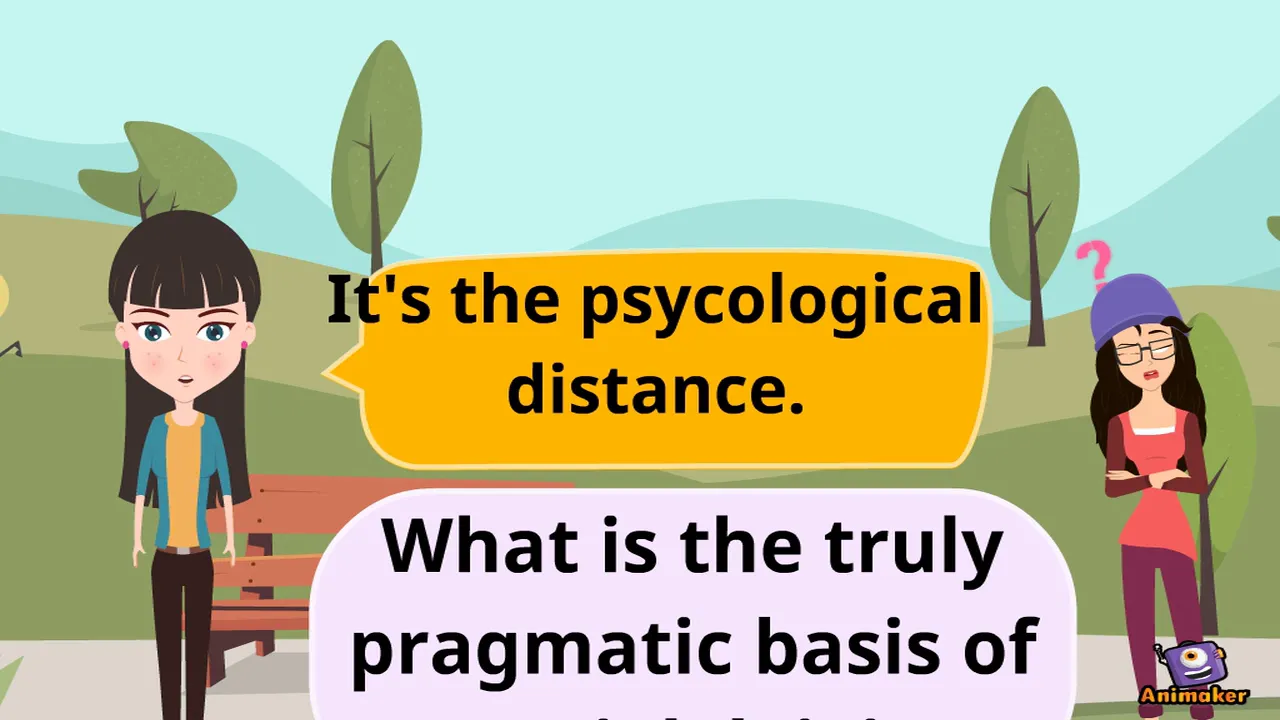
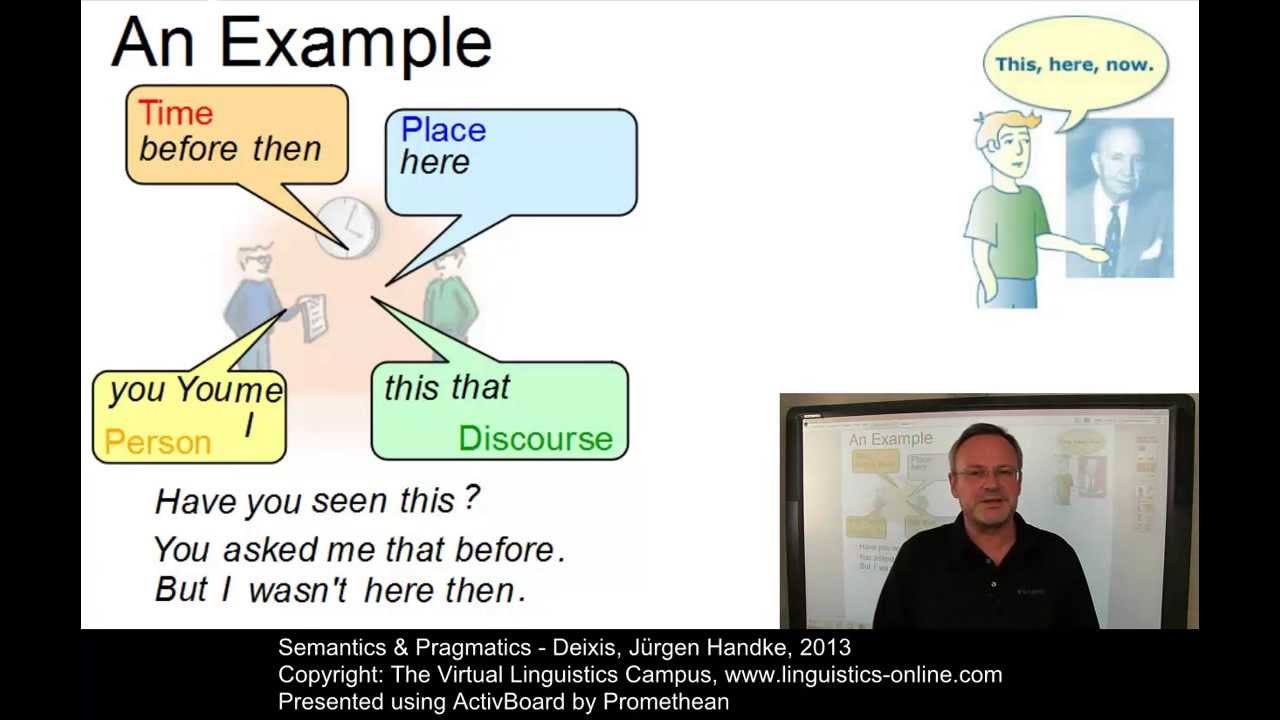



Pragmatics is the study of speaker meaning as distinct from word or sentence meaning, focusing on how listeners interpret what speakers intend to communicate beyond the literal content of their utterances. It encompasses four key dimensions: (1) the interpretation of speaker meaning by listeners, such as understanding that 'May I have a glass of water?' indicates thirst; (2) contextual meaning, where the same utterance changes interpretation based on social context, like realizing that asking to bring water at someone's home violates conversational norms; (3) invisible meaning, where listeners must infer unstated intentions, such as understanding that 'Please close the window' might mean the speaker is cold or there is noise outside; and (4) relative distance, where physical and social closeness determines how much needs to be explicitly stated, such as using 'take this' with close friends versus providing more detail with strangers.
Pragmatics Explained: Speaker Meaning, Context, and Distance
Added:[Music] hi Sara how are you hi enna good thanks and you good too but a bit in a hurry my car starts in 10 minutes Oh what course do you have now pragmatics pragmatics what's that about well it is a really interesting course but I have only got five minutes to explain basically pragmatics is the study of speaker meaning as distinct from word or sentence meaning I don't understand can you say that in easier words again no Voris I had travels as well at the beginning so pragmatics is the study of the relationship between words and users of the words so for example I have got a new boat and now I have a specific picture of the boat and you have a different one in your mind so it is about the interpretation of the words and the utterances and about trying to read what people mean by the utterances ah okay now I've got an idea if you're interested in more I can recommend the book pragmatics by George uirr that is the book we are using in our course he also explains pragmatics in more detail along four different dimensions ah do you still have time to give me a quick overview about that as well yes sure first of all pragmatics is the study of speaker meaning that means it is concerned with the interpretation of the speaker meaning by the listener so for example if someone asks may I have a glass of water the listener interprets that the speaker is thirsty oh I never thought about it from that perspective what is the second dimension the second dimension is the study of contextual meaning so it is about the interpretation of what people exactly mean in a specific context and how the context influences what is said for example you are at my place and I asked you if you could bring me a glass of water so the utterances are not fitting the context because usually I would offer you something to drink at my place and not the other way around so you can see how the context influences the meaning hmm I'm not quite sure if I got that right could you give me an additional example no problem think about the beginning of a conversation the first person asks hi how are you and the second person answers with ah lovely weather today so you can see it is grammatically correct but it doesn't fit the context and the situation ah now I got it and do you want to know about the third dimension yes please if you don't mind not at all it is a really good practice for me the third dimension is the study of how more gets communicated then a set which means that you as a listener have to investigate the invisible meaning what do you mean by invisible meaning hmm maybe it is easier to understand if I give you an example if someone asks you please close the window the invisible meaning of the person asking is that the person is freezing or that it is too noisy outside depending on the situation so for example if I hear noises outside during the utterance please close the window the invisible meaning which is not being spoken is that it is too noisy yeah exactly and the last dimension is the study of the expression of relative distance so the physical and social closeness determines how much needs to be said an example physical closeness would be take this so only people close to the speaker know what this refers to and social closeness can be found between friends an example would be if I tell you we had fun on the weekend you would know that it was last weekend and that you know which friends of mine Ament by we oh okay yes that makes sense it seems to be a very complex topic yes it is but it is super interesting too I'm really sorry but I think I have to hurry up now yeah sure you better be on time but things for your time and explanations we can talk about pragmatics and other time again if you want yes I would love to talk more about this topic with you sure see you later [Music]
Up Next

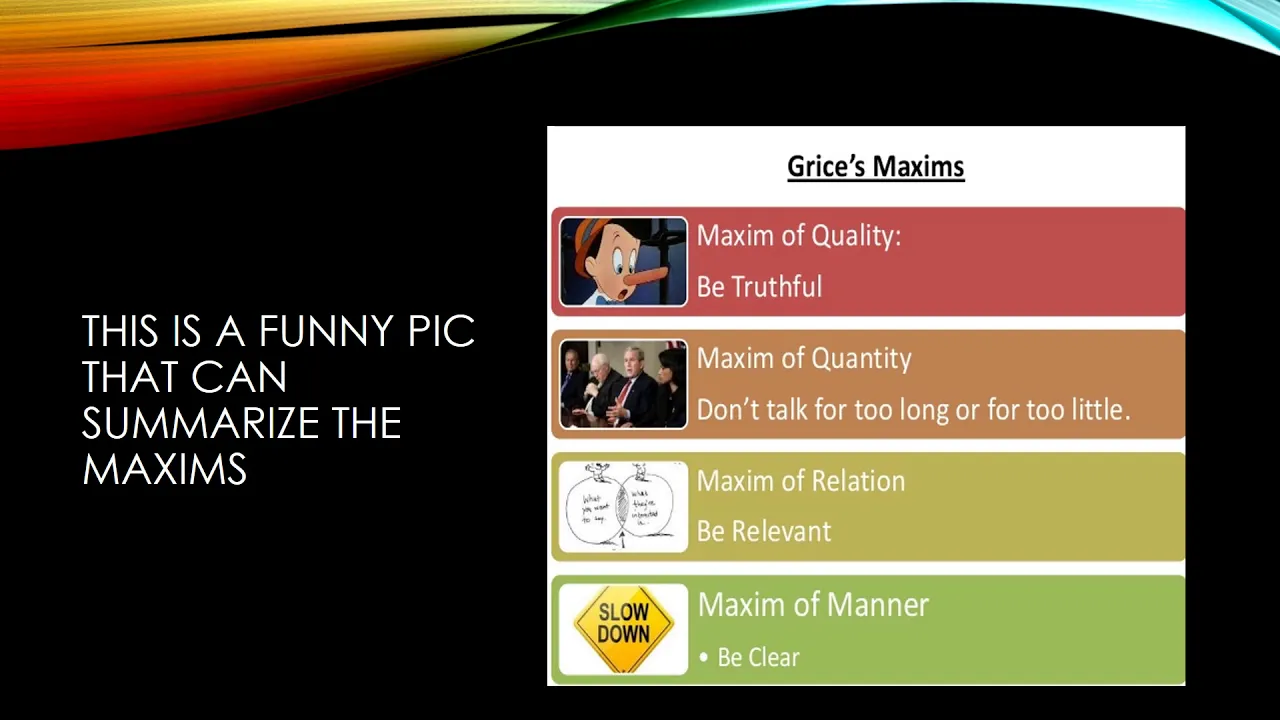
Pragmatics and Grice's Maxims | Crash Course Linguistics
@crashcourse
338.9K views•2020-10-16
Constraint Interaction in Optimality Theory: Epenthesis & Deletion
@Vidyamitra
180 views•2018-08-20

Pragmatics: Cooperation and Implicature Explained
@pragmatics-phkarlsruhe890
22.1K views•2018-07-15

Accent Expert Explains U.S. Regional Dialects | Part 1
@WIRED
9.3M views•2021-01-21
Related Study Plans & Knowledge Roadmaps
Structured learning paths in Linguistics