














![Políticas Linguísticas - [Unidade III - Aula 02]](https://i.ytimg.com/vi/5H6ugYXRalQ/maxresdefault.jpg)








Sociolinguistics is the study of how language functions as a social phenomenon, examining how factors like geography, demographics (age, education, class, race, ethnicity, gender, sexuality), and social networks shape our speech patterns and accents, while also revealing how societal attitudes toward different ways of speaking can lead to discrimination despite all linguistic varieties having equal grammatical sophistication.
Sociolinguistics: Language and Social Identity
Added:Basic understanding of linguistics, including the distinction between grammar (structure) and usage (context).
An introductory concept of 'identity' in sociology, specifically how group membership and social roles are constructed.
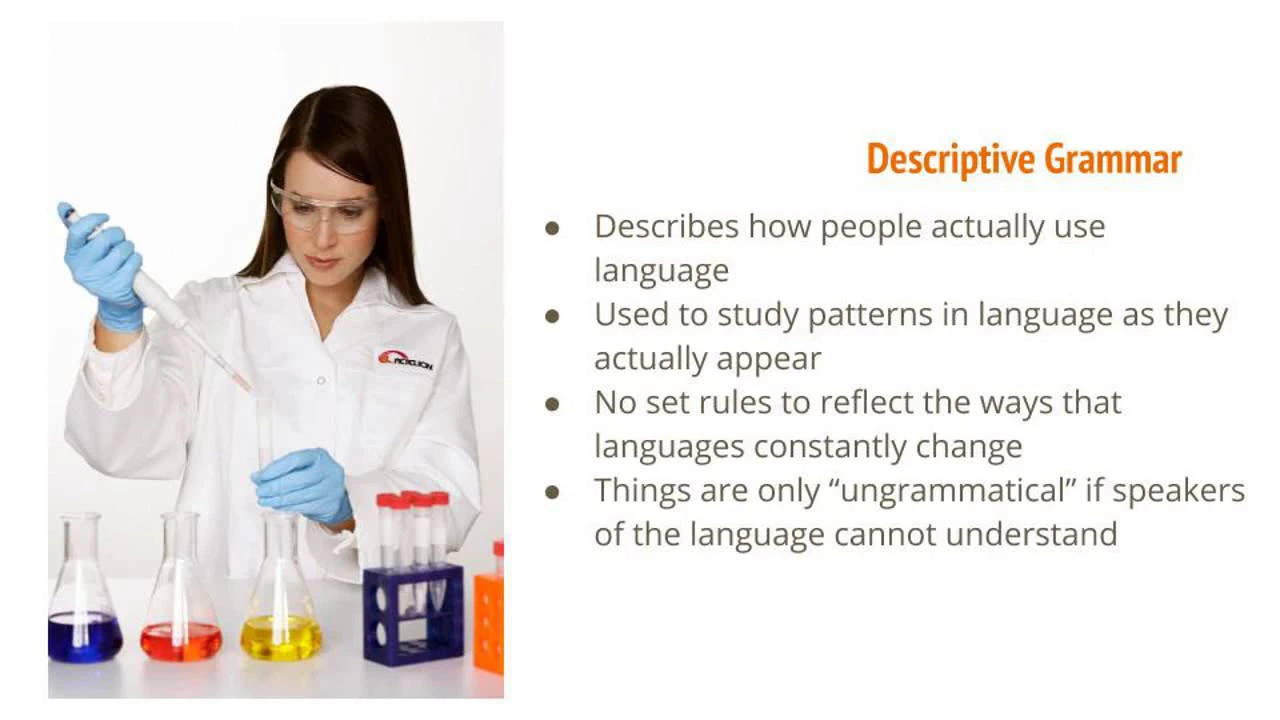
The distinction between prescriptive grammar (rules of how language 'should' be used) and descriptive grammar (how language is actually used).
A general awareness of language variation, such as the basic definition of an accent versus a dialect.
The Sapir-Whorf Hypothesis (Linguistic Relativity) and how the structure of a language influences its speakers' worldview.
Language Policy and Planning, examining how governments and institutions regulate or suppress minority languages.
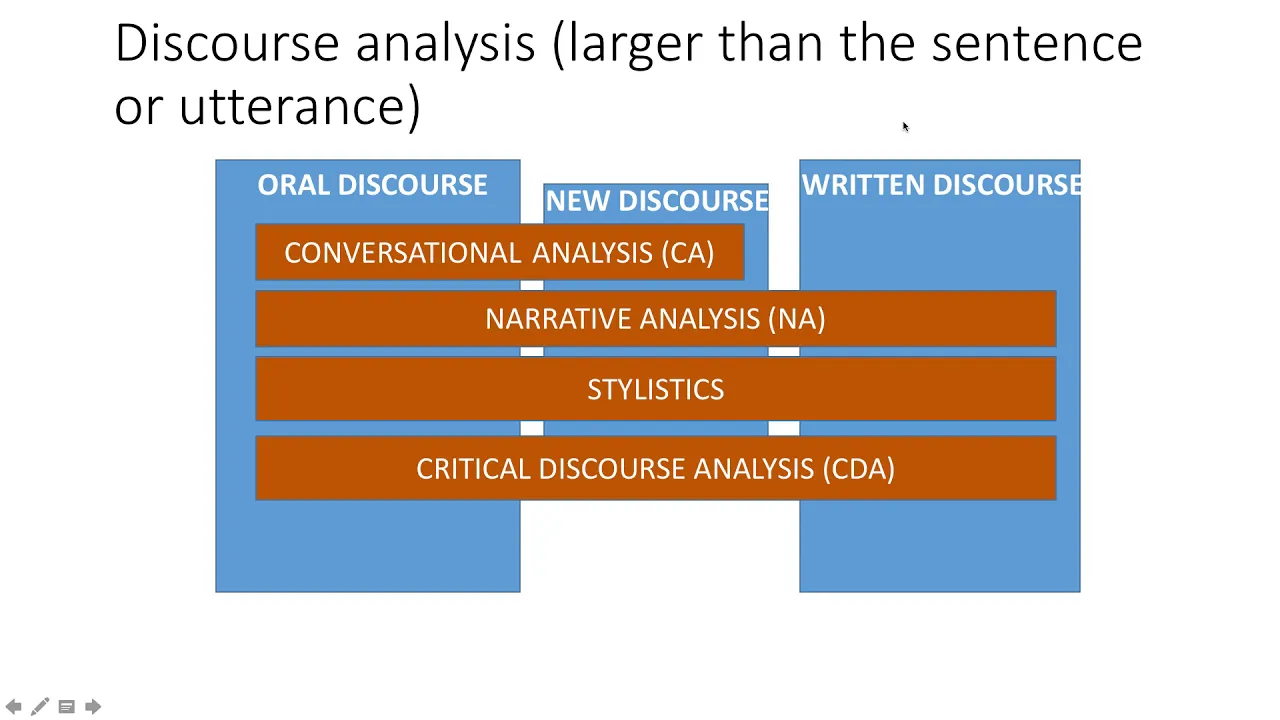
Critical Discourse Analysis (CDA), learning to analyze how power dynamics, dominance, and social inequality are reproduced through text and speech.
The study of language endangerment, shift, and revitalization efforts in marginalized communities globally.
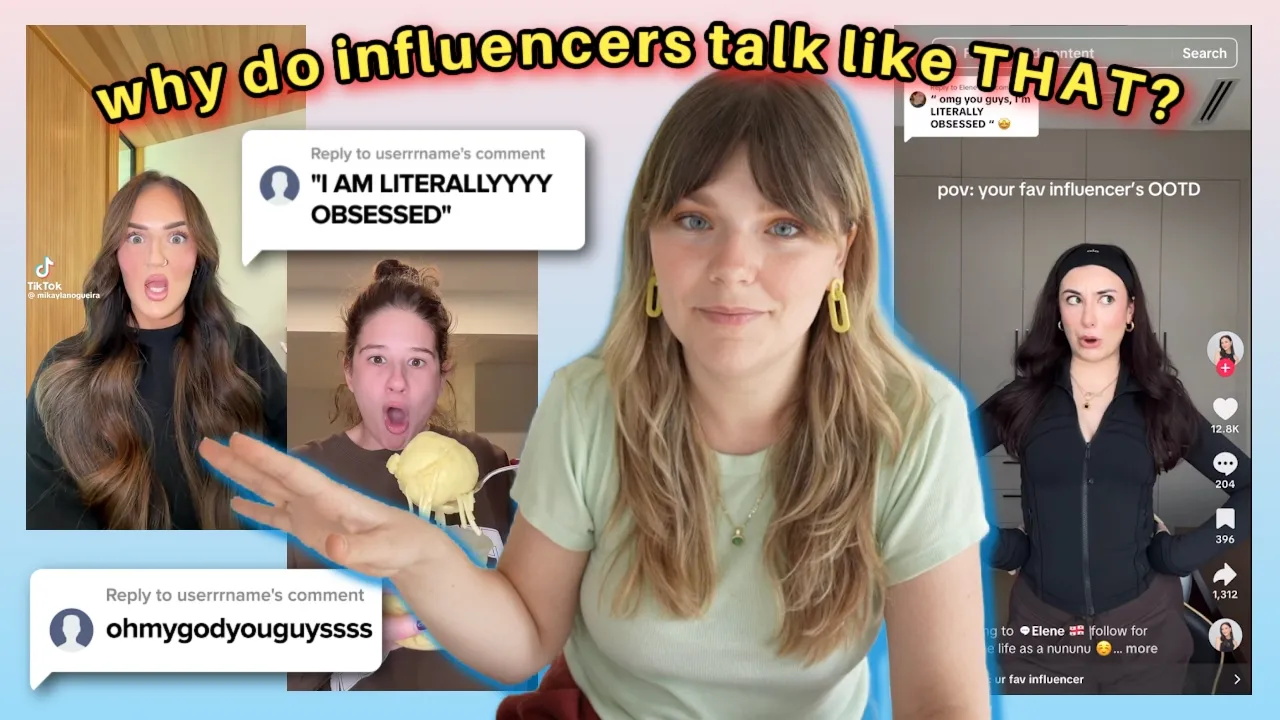
Digital Sociolinguistics, exploring how social identity and code-switching manifest in online spaces, text messaging, and social media.
314.5K views8.9Klikes11:21Original Release: 2020-10-23
Hi, I'm Taylor and welcome to Crash Course Linguistics!
Everyone has an accent — there's no such thing as an "accentless" version of English or any other language.
The many, varied ways we speak are influenced by who we grow up with and where we live and tons of other demographic factors.
And the way we feel about how we speak and how others sound to us is influenced by society.
Language can have a huge impact on our workplaces, media, and even a trip to the store.
So it’s no wonder our personal accents and languages get tangled up in our identities.
Looking at this social element of language, and how language forms part of our identity, is the study of sociolinguistics.
[THEME MUSIC] We talk like the people we know.
That can include our accent, the way we pronounce things, but also other linguistic features like the words and grammar that we use.
And, especially before the internet, one of the biggest factors that affects who we know and who we can talk to is geography.
One of the earliest kinds of sociolinguistics was dialectology: trying to map out all of the regional variations of a given language.
While dialectologists were historically focused on regional variations, a dialect is any variety of a language associated with a group of people.
Early dialectologists traveled around by car or bicycle with a notebook or a tape recorder, interviewing locals and recording how they spoke.
As technology evolved, they also started using telephone calls and then internet surveys and social media data.
They found that generally speaking, the longer a group of people has been living somewhere and speaking the same language, the more dense the linguistic variation in that area.
There are a few specific languages that have stayed relatively stable in places like Switzerland and Papua New Guinea.
So we see lots of variation in a pretty small area: between individual villages.
In contrast, languages like Arabic, Chinese, English, French, Spanish and BANZL have spread over wider geographic areas because of more recent colonization.
So we see variation between larger, more spread out regions, like the city or country level.
By the way: BANZL is the name for the group of related signed languages including British Sign Language, Auslan, used in Australia, New Zealand Sign Language, as well as South African Sign Language.
Anyway, you may even have encountered some of the fruits of English dialectology here on YouTube.
Those “accent challenge” videos you may have watched actually use a list of words from a linguistic study from 2003.
And I’ve experienced variations in real life myself.
When I was growing up in Wisconsin, I always called that thing that you drink water from in school a bubbler.
But when I moved to New York, I learned that people here didn't know what I was talking about and I had to learn to call it a water fountain.
But it's not a straightforward switch: when I'm on the phone with my family in Wisconsin, I switch right back to bubbler and baeg instead of fountain and bag.
I also encountered regional accent variations when I was learning Spanish.
My professor in the US spoke Spanish from Argentina, and sounded completely different from the professors I met abroad in Madrid.
Now, in New York I mostly encounter Puerto Rican and Dominican varieties of Spanish.
It's fun to notice all the variations!
Even within a geographic region, other factors influence how we speak.
For example, we tend to spend more time with people close to our own age than 30 years younger or older than us, which is why linguists find that people of different ages talk differently.
Other demographic factors also influence who people hang out with and sound like — things like education, class, race, ethnicity, gender, and sexuality.
Traditionally speaking, sociolinguists have studied these demographics as a way of getting insight into how different people talk.
And sure enough, they do find linguistic varieties associated with all of these demographics.
The way that I talk represents important parts of me: I’m a 20-something, college-educated, multiracial, queer woman and I use differences in my language to express each of those identities, and all the combinations of them, in certain ways at certain times.
Now that social media lets us more easily graph out people's social connections, though, linguists have found that our individual networks play a big role in our language choices beyond demographic categorization.
So if most of your friends are actually much older or younger than you, for example, you might talk more like them than like your age-mates.
Like, I was on tumblr and youtube a lot in the early 2010s, and it definitely also had an effect on how I speak.
Like saying LOL out loud.
Signed languages also display variations in dialect.
For example, American Sign Language is more closely related to French Sign Language than to the BANZL group, because French signers were involved in early American schools for the deaf.
There are also differences between black ASL and white ASL because of racial segregation in Deaf education.
Similarly, in the past there were clear distinctions between the varieties of Irish Sign Language used by men and women because of gender segregation in Irish schools for the deaf, though younger ISL signers have been breaking down these differences.
Sociolinguists have also found that the more closely we identify with a group, the more likely we are to speak like members of that group.
People who express more rootedness in their local community tend to speak with more features of Appalachian English.
Jewish women in one study showed variation depending on how closely they related to their Jewish faith.
And young men in Washington, D.C. with one black parent and one white parent are likely to talk differently depending on whether they identify as biracial or black.
But because people often change the way they talk depending on who they're talking to, sociolinguists trying to study linguistic variety can run into the observer’s paradox.
That’s when the very act of participating in a study makes people talk differently, because “university research” is a formal social context with a very different atmosphere than, say, talking to your friend on Twitter.
Let’s observe how one language researcher dealt with the observer's paradox with a visit to the Thought Bubble.
Willam Labov is a linguist who was interested in the classic New York City accent, the one that drops the R after vowels.
You might have seen it on t-shirts — I love New Yawk.
I’m new here I’m very sorry Back in the 1960s, Labov wanted to figure out what social factors influenced whether people said the R.
Instead of the lab, he went to a fancy department store, a mid-range department store and a bargain department store.
In each store he picked a department on the fourth floor — say, the shoe section.
Labov then approached various salespeople and asked them where to get shoes, since both ‘fourth’ and ‘floor’ are words with an r after a vowel.
He could listen closely to hear whether they said the r or not when they replied.
The salesperson would say either ‘fourth floor’ or ‘fawth flaw’, and then Labov would say, ‘pardon?’ so the salesperson would repeat it more carefully.
Labov would then head off, but instead of buying shoes, he'd pull out his notebook and write down whether the person used r each time.
He repeated this over and over at the three department stores.
And if you think that sounds a bit suspicious, you'd be right.
Apparently, he got questioned a few times--whoops!
At the end of the study, Labov found that the staff at the fanciest department store were most likely to pronounce r, followed by the mid-range store, and finally the bargain store.
He also noticed that people at all three stores were more likely to use the r pronunciation when they were asked to repeat themselves.
So if they'd come into the university for a study, they might all have used this more careful style of speech the whole time.
That r was associated with how prestigious someone wanted to sound, even if everyone was from New York.
Thanks thought bubble for taking us shopping!
This study found a way out of the observer’s paradox and opened the door to framing language differences around social identities, and not only where someone was from.
Other researchers have navigated the observer’s paradox by studying a community that they, or a research assistant, are members of.
This means people are less likely to change the way they speak.
Some linguists also specifically look at language that's public, like news interviews or YouTube videos, because people in those recordings have already decided who they are speaking for.
However, there's also a certain...YouTuber voice.
When I started to make vlogs, I noticed myself speaking differently.
I'd watched enough videos online that I found myself doing this sort of “whats up guys!’ upbeat YouTuber voice when I went in front of the camera.
I'm actually a lot more mellow when I'm hanging out with my friends or even in my own videos compared to this video, where I have two people directing me and I'm adjusting my speech to the conventions of more academic content.
Changing the way we speak depending on which group we're speaking with is called code-switching.
I also code switch depending on whether I'm talking with my black friends or my white friends.
Because one of my parents is black and the other one is white, I was exposed to two varieties of English from my family: African American English, or AAE, and Standardized American English.
So I may swap dialects depending on the situation.
But there’s more pressure for many people to use “white-sounding” standardized accents in professional contexts, kind of like this one, and there’s research backing me up.
Sociolinguists like John Baugh and Kelly Wright have found linguistic discrimination in areas like the housing market.
When someone calls and asks about renting a house with a black-sounding accent, they're more likely to be told that it's no longer available, only to get a yes when they call back in a few minutes with a white-sounding accent.
That’s just one example, but linguistic discrimination is pervasive, affecting things from education to job prospects.
Even though African American English speakers face discrimination, AAE has as much grammatical sophistication as any other variety of English.
One example of the grammar of AAE is from a 2005 study by Janice E. Jackson and Lisa Green.
These linguists showed young children pictures of Cookie Monster sick in bed with no cookies, while Elmo was nearby eating all the cookies.
When the kids were asked, "who is eating all the cookies?" all the kids pointed to Elmo.
But when Jackson asked, “Who be eating cookies?” the black kids, who spoke AAE, pointed to Cookie Monster, while the white kids, who spoke Standardized American English, pointed to Elmo.
That's because that ‘be’ is a specific verb form in AAE grammar, known as "habitual be," which indicates an action that someone usually does.
And as these kids knew, Cookie Monster's usual state involves eating cookies.
Words from AAE regularly get appropriated into the nonblack American mainstream as the latest cool trends, and onto the rest of the world through American cultural exports like shows and music.
This popularity is actually part of a problematic double-standard, where nonblack people are rewarded for the same linguistic features that black people, their original creators, face discrimination for.
Seriously, brands, you can stop replying to my tweets like “yaaaas periodt sis.” Just like AAE, every linguistic variety has its own cool features when you start looking at it deeply.
We could do a whole series about any of the hundreds of varieties just within English alone!
The social beliefs that people have about accents and dialects — whether they sound cool or boring, ugly or beautiful, silly or serious — are really a reflection of our attitudes towards the people we associate with those ways of speaking.
Standards like national languages and style guides exist because they’re supported by people with power, not because some forms of language are inherently better than others.
As people learning about linguistics, we have a responsibility to use our newfound understanding of how language works to fight linguistic discrimination, and to use language as a way of being more compassionate and respectful with each other.
Next time, we’ll continue learning about the way people talk by looking at the study of speech sounds and the way linguists write them down.
Thanks for watching this episode of Crash Course Linguistics.
If you want to help keep all Crash Course free for everybody, forever, you can join our community on Patreon.
Up Next

17:10
AAVE: African American Vernacular English — Ling 101
@Langfocus
1M views•2020-07-03
36:52
Constraint Interaction in Optimality Theory: Epenthesis & Deletion
@Vidyamitra
180 views•2018-08-20

9:57
Pragmatics and Grice's Maxims | Crash Course Linguistics
@crashcourse
338.9K views•2020-10-16

21:32
Accent Expert Explains U.S. Regional Dialects | Part 1
@WIRED
9.3M views•2021-01-21
Related Study Plans & Knowledge Roadmaps
Structured learning paths in Linguistics
linguistics
Optimality Theory: Tableaux & Constraints
01Phonological Basics: Sounds, Syllables & Rules
02Foundations of Optimality Theory: GEN, CON, and EVAL
03The Constraint Inventory: Markedness vs. Faithfulness
+ 2 more learning modules
15h5 modules
Explore Roadmap
linguistics
Morphosyntactic Alignment: S, A & P Systems
01Foundations of Syntax: Transitivity and Arguments
02The Linguistic Variables: Mapping S, A, and P
03Nominative-Accusative Alignment
+ 3 more learning modules
12h6 modules
Explore Roadmap
linguistics
Analyzing Sign Language: Phonology & Syntax
01Foundations of Sign Language Linguistics
02Phonology: The Five Parameters of a Sign
03Morphology: Word Formation and Classifiers
+ 2 more learning modules
14h5 modules
Explore Roadmap
linguistics
Pragmatics: Speech Acts, Grice & Politeness
01Introduction to Pragmatics: Meaning in Context
02Grice’s Cooperative Principle & Implicature
03Speech Act Theory
+ 2 more learning modules
14h5 modules
Explore Roadmap