




![Какой же русский не понимает санскрита? Ученые против мифов: классика [7-11, 2018]](https://i.ytimg.com/vi_webp/Jzz8vUHO9tQ/maxresdefault.webp)





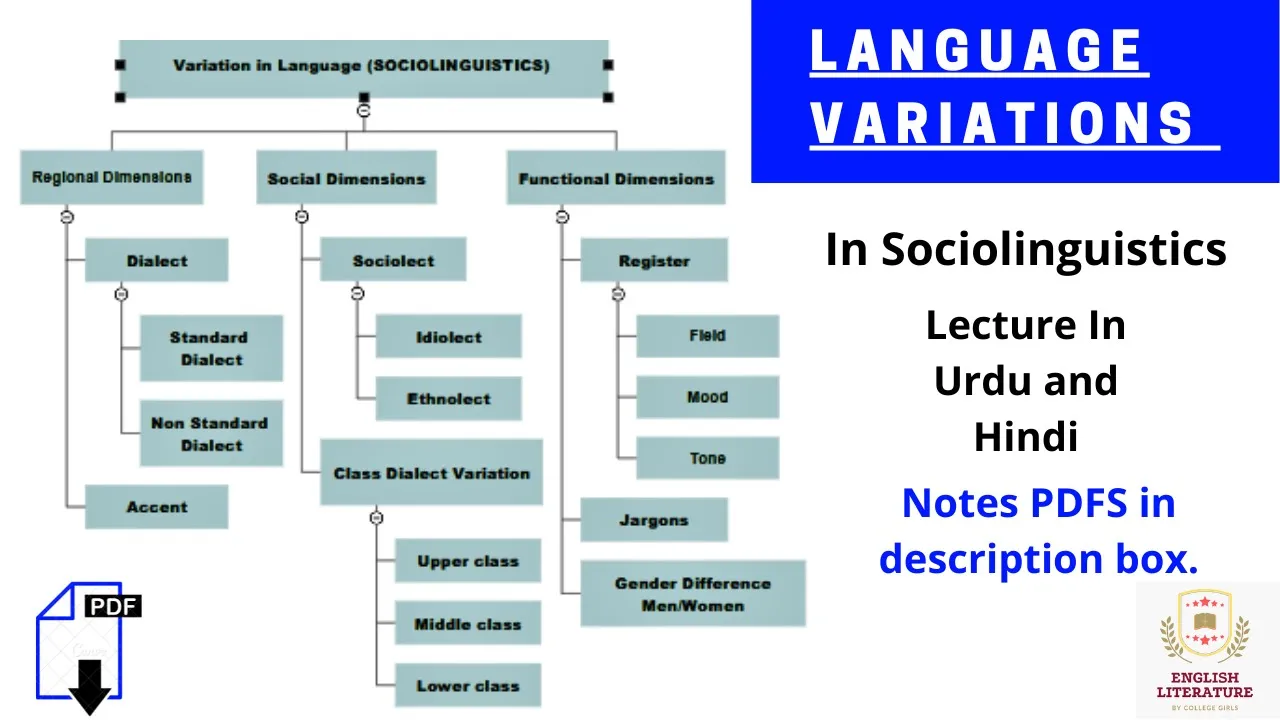









The number of languages in the world is estimated at around 7,000, but this figure is approximate due to three main factors: (1) the difficulty of distinguishing between languages and dialects based on mutual intelligibility, as languages change gradually over time and space creating dialect chains; (2) political factors that influence classification, such as governments treating dialects as separate languages (Hindi vs. Urdu) or lumping them together (Chinese dialects); and (3) varying degrees of resources and records available for different languages, with major world languages receiving disproportionate attention compared to smaller ones. This complexity affects how we understand linguistic diversity and the rights of speakers to maintain their languages.
How Many Languages Are There in the World?
Added:Hi, I'm Taylor and welcome to Crash Course Linguistics!
If you ask ‘how many languages are there in the world,’ the answer you’ll most likely hear from linguists is ‘around 7000’.
That’s certainly more than you’ll find on any language learning app!
The reason that the ‘around’ is in there is because it’s really difficult to give a specific number.
There are three big reasons why: One, it can be hard to know where a language stops and a dialect begins.
Two, there are lots of political factors involved.
And three, there are varying degrees of resources and records about different languages.
Understanding these factors why "how many languages" is a complicated question can help us understand the diverse social structures that human languages exist within.
[THEME MUSIC] Let’s start with that first complication, the fuzzy distinction between “language” and “dialect”.
One basic way we can tell if two people speak the same language is whether they can understand each other.
This is known as mutual intelligibility.
If you can understand me right now, we're mutually intelligible.
We can say that we speak the same language.
If you can understand me but you'd say some things a bit differently from me, whether that's in terms of sounds, words, or grammar, then we can say that we speak different dialects of the same language.
So far, that seems pretty easy.
But all languages change over time.
That’s how Spanish went from a dialect of Latin to its own language.
But pinpointing the exact moment when Latin turned into Spanish is complicated.
At every point in this chain, kids spoke slightly differently from their parents, but the generations could still essentially understand each other.
Nobody went to bed one night speaking "Latin" and woke up the next morning speaking "Spanish".
Let’s go to the Thought Bubble to see how this gradual change happens across space as well as time.
Let's imagine a chain of four villages.
The first village and second village have different dialects, but good mutual intelligibility.
Now, people in village three can understand people from village two pretty well, but they have a harder time with people from village one, who are farther away.
The fourth village can also understand people from village three pretty well, but they can barely understand people from village one at all.
If we just look at village one and village four, who can't understand each other, it feels like we should conclude that they're not speaking the same language.
But it’s hard to know where to make a break.
Between villages two and three?
Three and four?
But they’re mutually intelligible to their neighbors!
This tendency for language to change gradually along a gradient is known as a dialect chain or dialect continuum.
Dialect chains are very, very common, and they're found all over the world.
French villages near Spain or Italy are home to varieties of French that are closer to the "Spanish" or "Italian" dialects just across the border than they are to the official versions spoken in Paris, Rome, or Madrid.
And while Greenlandic and Inuktitut, in Greenland and northern Canada, are sometimes considered two languages, they're actually part of a large dialect continuum that spans that part of the Arctic Circle.
Meanwhile, in the Himalayan mountains, languages follow valleys.
People at the top and bottom of one valley might both speak varieties of Tibetan, but they might not be able to immediately understand each other.
So, sometimes, geographical features that prevent people from talking to each other can disrupt a dialect chain, allowing different varieties to change and become less like each other over time.
Thanks, Thought Bubble!
Sometimes language changes because people migrate from their homeland and live somewhere new, creating diaspora communities.
People living within a diaspora may maintain parts of their original culture, especially language.
But a diaspora member might learn a language from their parents and return to their original community to find that people there think they talk or sign like old people.
They’re not up on the current slang at all.
That’s because larger groups, like their homeland community, generally change how they talk faster than smaller groups, like the diaspora community.
On a larger timescale, this is how one language can become two.
Another way that languages get added to official language counts is when they've existed for a long time, but they've started being taken more seriously by researchers.
This is the case for many hundreds of signed languages.
There are two common circumstances where signed languages become stable across generations and add to the count of languages in the world.
The first is deaf-community signed languages, which are created when large numbers of deaf people get together and use a common language to talk to one another.
We saw this happen in a school for the deaf in the case of Nicaraguan Sign Language, but deaf-community sign languages also often arise in cities with a sizable deaf population, such as French Sign Language in Paris.
The second way signed languages form is in small communities with a high degree of genetic deafness, and thus a large proportion of deaf people in the population.
When both deaf and hearing members of a community develop a signed language together, this is known as a village sign language.
Some village sign languages are Kata Kolok, in Indonesia; Central Taurus Sign Language in Turkey; Al-Sayyid Bedouin Sign Language in Israel; and Adamorobe Sign Language in Ghana.
Signed languages can also form through the combination of both deaf-community and village sign languages.
For example, ASL, created by Deaf students at the American School for the Deaf in the 19th century, was influenced by both a deaf-community sign language, Old French Sign Language, and local village sign languages, including Martha's Vineyard Sign Language.
Now, another complication in deciding what “counts” as a language is identity and politics.
Individuals, communities, and governments might want to appear similar to each other, or establish their differences.
Their decisions to alter their image through language have had a range of consequences, from different alphabets to deliberately suppressing languages.
Hindi, spoken in India and written with the Devanagari script, is treated as a separate language from Urdu, spoken in Pakistan and written with the Arabic script.
But when spoken out loud, they are about as mutually intelligible as US and British English.
Hindi and Urdu are counted as distinct languages for political reasons, not linguistic.
Once dialects get split apart for political reasons, they often keep diverging in different directions as speakers reinforce the political difference.
Hindi is more likely to borrow new words from Sanskrit, whereas Urdu is more likely to borrow new words from Arabic.
While sometimes politics splits languages apart, other times it lumps them together.
It’s standard to label the seven language groups of China as dialects of Chinese rather than languages, but those language groups diverged at least a millennium ago, though, and many aren't mutually intelligible!
Part of the reason that there’s debate over where to draw the line between these groups is that they share the same writing system.
It’s basically the opposite of what’s happened with Hindi and Urdu.
Similarly, many governments, like those of England, France, and other European countries, lump their dialects into a single standardized version of their language based on how upper-class people in the capital speak.
They establish official monolingualism, bilingualism, or other limited numbers of state-sanctioned official languages to create the image of a unified national identity.
The standardized languages get taught in schools at the expense of regional dialects, even though the regional dialects are just as old.
Governments might also try to avoid counting or eradicate some languages entirely, to give the appearance of more unity.
India doesn’t officially recognise any language with fewer than ten thousand speakers.
However, linguists know it’s possible for a language to be vibrant with a few thousand speakers.
In fact, there are at least 400 such languages in India, and probably many more than that, including Turung, Karbi and Runglo.
Yet the country only officially recognizes 121 languages.
In a similar vein, the residential school system in the United States and Canada was part of deliberate government policies to stop Indigenous children from speaking their languages and learn English instead by forcibly removing them from their communities and their languages.
Linguists aren't generally the ones in charge, wandering around with our mutual intelligibility yardsticks, measuring what is and isn't a language.
Instead, what “counts” as a language is influenced by language ideologies: beliefs that people have about language, language varieties, and what their use tells us about their speakers.
Since they’re beliefs, language ideologies aren’t necessarily true!
Lastly, the third big complicating factor in how languages can get counted is the fact that we know a lot more about some languages than others.
The media, resources, classes, and tools that we use to study and preserve languages only show us a limited view.
Let's think about making a dictionary, as an example.
A dictionary is a really big project.
It takes, at minimum, several trained linguists or lexicographers years of full-time work to create one.
Throughout this process, these dictionary makers need to eat and sleep somehow, which means that someone needs to fund that dictionary.
Funding might come from a government or university sponsoring a dictionary for the prestige, a private company making one for profit, or individuals taking it on as a huge project around their day jobs.
The same goes for making other kinds of language tools and resources, whether it’s media like novels, movies, and podcasts, learning resources like textbooks and grammars, or tech tools like keyboards and apps and speech recognition.
They're all made by humans, one language at a time, and all require funding at some point.
When it comes down to it, some languages have access to a lot more money than others.
And this imbalance adds up.
Once there's one dictionary for a language, it becomes easier to make an updated edition, or to build a word game app or spellcheck tool on top of it.
So the same few languages tend to show up again and again in the translation dictionaries you see in a bookstore or the list of language options you see in a dropdown menu.
Access to resources, like politics, can also affect whether a language can exist at all.
People can be pressured not to pass on their languages to the next generation, or unable to do it if they want to.
But there’s some good news.
Sometimes people revive or reconnect with their ancestral language.
They might revive their language from written records, like with Hebrew in Israel and Wampanoag in Massachusetts and Rhode Island.
Other times people work with elders to revitalize and document a language where transmission has been interrupted for a generation or two.
They can create learning environments such as language nests or immersion schools for children and adults, as well as resources for continued learning like dictionaries and recordings of stories.
Maori and Hawaiian have been revitalized through programs like these.
In other cases, there are still many speakers of a language, but it hasn’t received official recognition yet.
Members of a community might work to get it recognized by governments, supported in schools, or available on major tech platforms.
Gaining recognition and support is part of seeking linguistic justice for people’s right to speak their language.
When you get into the linguistic and political complexity of languages, it’s no wonder there’s no widely agreed upon total for the number of languages in the world.
We can make that number more accurate by supporting the rights of children to access education in their language, fighting for the visibility of smaller languages, not discriminating against people for the way they speak, and dismantling the assumption that there’s always a one-to-one relationship between nations and languages.
We can also think of it this way.
Instead of asking how many languages there are in the world, a better question to ask might be: how can we help maintain the richness of linguistic experience?
Thanks for watching this episode of Crash Course Linguistics, which is produced by Complexly and PBS.
Are you craving more humanities in your YouTube diet?
Storied is PBS’ home for the liberal arts geek in all of us, and features It’s Lit, a series about our favorite books with Lindsay Ellis and Princess Weekes, as well as Monstrum, a show about monsters and myths, and what these stories say about us.
They’re also going to launch Verbatim, a NEW linguistics show, very soon!
Subscribe to Storied, and tell them Crash Course sent you!
Up Next
Reviving Salish: Kalispel Tribe's Language Preservation
@ksps_pbs
17K views•2011-04-29
How Language Shapes Reality: Oppression and Liberation
@Kathrin_yt
13.6K views•2025-01-30

Pragmatics and Grice's Maxims | Crash Course Linguistics
@crashcourse
338.9K views•2020-10-16

Accent Expert Explains U.S. Regional Dialects | Part 1
@WIRED
9.3M views•2021-01-21
Related Study Plans & Knowledge Roadmaps
Structured learning paths in Linguistics