
![[Syntax] X-Bar Theory - Practice Sentences](https://i.ytimg.com/vi_webp/CIFOSEvcsT4/maxresdefault.webp)



![[Syntax] Case Theory](https://i.ytimg.com/vi_webp/7X7V8wpjaGI/maxresdefault.webp)


![[Syntax] Expletives and Extended Projection Principle (EPP)](https://i.ytimg.com/vi_webp/1F_3Twr5dBk/maxresdefault.webp)



![[Syntax] Control Verbs and PRO](https://i.ytimg.com/vi_webp/BmgzZlauASk/maxresdefault.webp)




![[ICU-LINC0047] Rajesh Bhatt (University of Massachusetts, Amherst)](https://i.ytimg.com/vi/psTsIcMPnQM/maxresdefault.jpg)


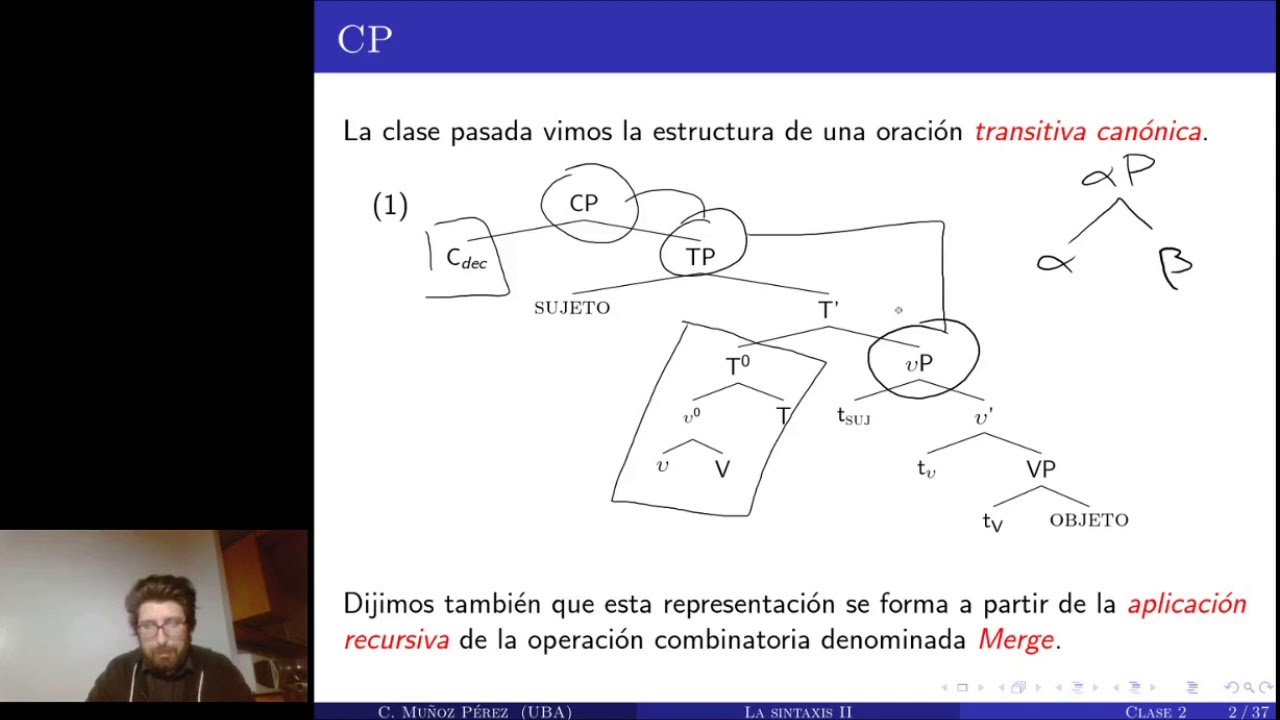

In generative syntax, raising is a movement operation where a DP (determiner phrase) moves from its theta position in an embedded clause to a subject position in a higher clause, allowing the DP to receive its theta role from a verb in a different clause while appearing as the surface subject of a higher predicate; this operation resolves apparent violations of the locality condition on theta assignment, which requires that theta roles be assigned within the projection of the head that assigns them.
DP Movement: Raising in Syntax | Generative Grammar
Added:Understanding of X-bar Theory and basic phrase structure, particularly the structure of Determiner Phrases (DP) and Tense Phrases (TP).
Familiarity with Theta Theory, including the Theta Criterion and how theta-roles (such as Agent and Theme) are assigned by predicates.
Basic knowledge of Case Theory, specifically how structural Case (such as Nominative and Accusative) is assigned or checked in a syntactic derivation.
An introduction to the concept of Syntactic Movement (Move) and the Extended Projection Principle (EPP), which requires every clause to have a specifier/subject.
Distinguishing between Raising and Control structures (e.g., comparing 'John is likely to win' vs. 'John is eager to win') and the introduction of PRO in Control Theory.
Applying DP movement analysis to Passivization, exploring how underlying objects are promoted to subject positions to satisfy the EPP and receive Case.
Exploring the distinction between A-movement (argument movement, like raising and passives) and A-bar movement (non-argument movement, like Wh-movement in questions).
Investigating the Minimalist Program's approach to movement, focusing on feature valuation, the 'Agree' operation, and DP movement as a convergence requirement.
14.6K views173likes9:15Original Release: 2020-09-29
[Music] welcome to syntax a generative introduction fourth edition my name is andrew carney i'm a professor of linguistics at the university of arizona i'm the author of your textbook and i'll be leading you through this series of video tutorials in the previous chapter we talked about cases where x-bar theory failed and we needed an extra operation to get certain word order results so in particular in order to get vso order in order to get orders with adverbs and negations in french we had to propose a rule of v to t raising we also proposed a rule of t to sea raising which allowed us to understand subject auxin version in english and french in this unit we're going to look at a different kind of movement this movement is movement of dps rather than of heads into heads now this movement is primarily motivated by issues having to do with theta theory the phenomenon we're going to start with is called raising here's the um basic idea underlying it it seems to be the case that there is a restriction on where theta rolls can be applied so theta roles typically are applied locally meaning within a particular structure within the tree so take for example um the verb leave leave requires an agent yeah you have to say adrian left you can't you can't use an expletive it left it left of course is grammatical if it is um not an expletive but is a pronoun but what we see is that agent must be in the same clause as the verb that assigns it so for example um adrian left is fine i think adrian left is fine adrian is in that um is within the same clause as the verb leave but if you say something like i want bradley that left that's terrible or john thinks that left where john is meant to be simultaneously the experiencer of think and the agent of leave so in these sentences there there is an ungrammaticality that seems to be due to the fact that we have an argument that's not within the same clause as the verb that assigns it so here's how we're going to encode that we're going to write up a condition or constraint constraint is something like the theta criterion or the binding conditions or the extended projection principle called the locality condition on theta rules essentially the basic idea is that theta roles are always assigned within the projection of the head that assigns them so for example when you have a verb that verb is going to assign the theta role for the theme so that theme has to appear within the verb phrase similarly agents are introduced by the null active head so they're going to be assigned within the um these the voice p that contains that null active head recall that this is where we proposed that subjects in particular agents have to be generated for languages like irish in order to get the vso order so here's our problem that constraint seems to hold most generally but there's a set of verbs where things go awry let's take the verb john is likely to leave if you think about it for a moment john here is the structural subject of his likely but it doesn't really get a theta role from his likely its federal comes from leave john isn't likely right john is going to be leaving what's likely is john's leaving so and we actually see this that there are varieties of this sentence where you can say things like it is likely that john left where it is um an expletives in getting a theta role so we actually have to uh find a way for john to get its federal from leave but end up as the surface subject of is likely now notice that is likely allows two forms other than john is likely to leave one is what we call the clausal subject construction that john will leave is likely here we have in the subject position of his likely a clause and the other is the expletive construction which is sometimes called extra position although that's irrelevant to the analysis at hand here where that john will leave is in the complement position of his likely and you get an expletive in the subject position both of these sentences are consistent with a theta grid where is likely assigns one theta rule um it's probably a theta rule like proposition that goes to a cp and that is not a question because we have the that here and it is finite so it's not a non-finite clause and this uh this construction allows um you to have this here or um the the clause in the complement position um given this right leave is assigning a theta role to john or more accur accurately the null active head is but we'll just abbreviate that here and likely is assigning a theta role to the cp now what's going on with john is likely to leave here we have the same thematic properties leave seems to be assigning a theta role to john but john is not in the same clause as leave so we have to think about ways we can do this one way is we have a rule of dp movement and the dp john is moved from its theta position up into the subject position of that higher clause so this tree is a little terrifying don't panic it's it's got all the things that are in it are things you've seen before um this is the strike this structure for is likely we have a tp we have a verb phrase with the copular is and we have the ap likely which is probably an adverb phrase or or something like that it doesn't matter and is is going to undergo um uh v to t movement as auxiliaries in english often do when they're tensed we know that this operation happens because this auxiliary will undergo subject toxin version to see in a question context the complement to is likely is another clause this clause is a minus question and what we have downstairs here is we have john in the specifier of the voice phrase as we argued in the previous chapter it's where agents go relative to verbs they start inside the voice phrase by the voice phrase internal subject hypothesis it gets its theta role in this position this is this is great but this is not where this guy ends up this dp ends up way up there at the top of the tree in the specifier position of the highest tp or the subject position of his likely so this operation this movement from this lowest position up to that very high position is called raising because you remove it you're raising the dp from one clause to another now we can indicate this with an arrow just like we indicated head movement with an arrow we just move we just draw an arrow to indicate that it starts downstairs and it moves upstairs now um just the terminological point um this operation that we just saw has three different names it can be called np movement it can be called dp movement and sometimes it's called a movement for argument movement all three of those names refer to exactly the same phenomenon that raising rule that we just saw [Music] you
Up Next

18:22
Syntax: DP Movement & Case Theory Explained by Andrew Carnie
@CarnieSyntaxthEdition
14.3K views•2020-09-29
34:16
How Language Shapes Reality: Oppression and Liberation
@Kathrin_yt
13.6K views•2025-01-30

12:36
Syntax 7.5: Affix Hopping in TP, ProgP, PerfP & VoiceP
@CarnieSyntaxthEdition
7.8K views•2020-09-01

21:32
Accent Expert Explains U.S. Regional Dialects | Part 1
@WIRED
9.3M views•2021-01-21
Related Study Plans & Knowledge Roadmaps
Structured learning paths in Linguistics
linguistics
Pragmatics: Speech Acts, Grice & Politeness
01Introduction to Pragmatics: Meaning in Context
02Grice’s Cooperative Principle & Implicature
03Speech Act Theory
+ 2 more learning modules
14h5 modules
Explore Roadmap
linguistics
Code-Switching: Syntax, Poplack & MLF Model
01Foundations of Bilingualism and Language Contact
02Sociolinguistic Motivations of Code-Switching
03Poplack's Grammatical Constraints
+ 2 more learning modules
15h5 modules
Explore Roadmap
linguistics
Writing Systems: Abjads, Alphabets & Logographs
01Foundations of Writing Systems
02Meaning and Syllables: Logographies & Syllabaries
03Segmental Scripts: Alphabets & Abjads
+ 2 more learning modules
8h5 modules
Explore Roadmap
linguistics
Language Documentation: Ethics, IPA & Metadata
01Foundations of Language Endangerment & Documentation
02Fieldwork Ethics & Community Collaboration
03Audio and Video Recording Standards
+ 3 more learning modules
16h6 modules
Explore Roadmap