



![[Introduction to Linguistics] Theta Roles / Thematic Roles](https://i.ytimg.com/vi_webp/FWgWbJlxvds/maxresdefault.webp)


![[Syntax] Subject Auxiliary Inversion and Movement](https://i.ytimg.com/vi_webp/IKwsgqT9cdg/maxresdefault.webp)

![[Syntax] Expletives and Extended Projection Principle (EPP)](https://i.ytimg.com/vi_webp/1F_3Twr5dBk/maxresdefault.webp)




![[Syntax] Control Verbs and PRO](https://i.ytimg.com/vi_webp/BmgzZlauASk/maxresdefault.webp)

![[Syntax] Raising Verbs](https://i.ytimg.com/vi_webp/xrGjDH5ToHg/maxresdefault.webp)



![[Syntax] Passive Constructions](https://i.ytimg.com/vi_webp/4RoWaq6F6M8/maxresdefault.webp)


![[ICU-LINC0068] Dr. Jason Kandybowicz (City University of New York)](https://i.ytimg.com/vi/aOAoQqlWaBM/maxresdefault.jpg)
![[ICU-LINC0047] Rajesh Bhatt (University of Massachusetts, Amherst)](https://i.ytimg.com/vi/psTsIcMPnQM/maxresdefault.jpg)


In generative syntax, DPs move in raising constructions (e.g., 'John is likely to leave') because they need to reach case positions—specifically the specifier of TP for nominative case, the complement of V for accusative case, or the complement of P for prepositional case. The case filter requires that all DPs must have their case features checked in local configurations, and this abstract case licensing, combined with the Extended Projection Principle's requirement for subjects, motivates DP movement from their base positions in embedded clauses to higher clause positions where they can receive proper case assignment.
Syntax: DP Movement & Case Theory Explained by Andrew Carnie
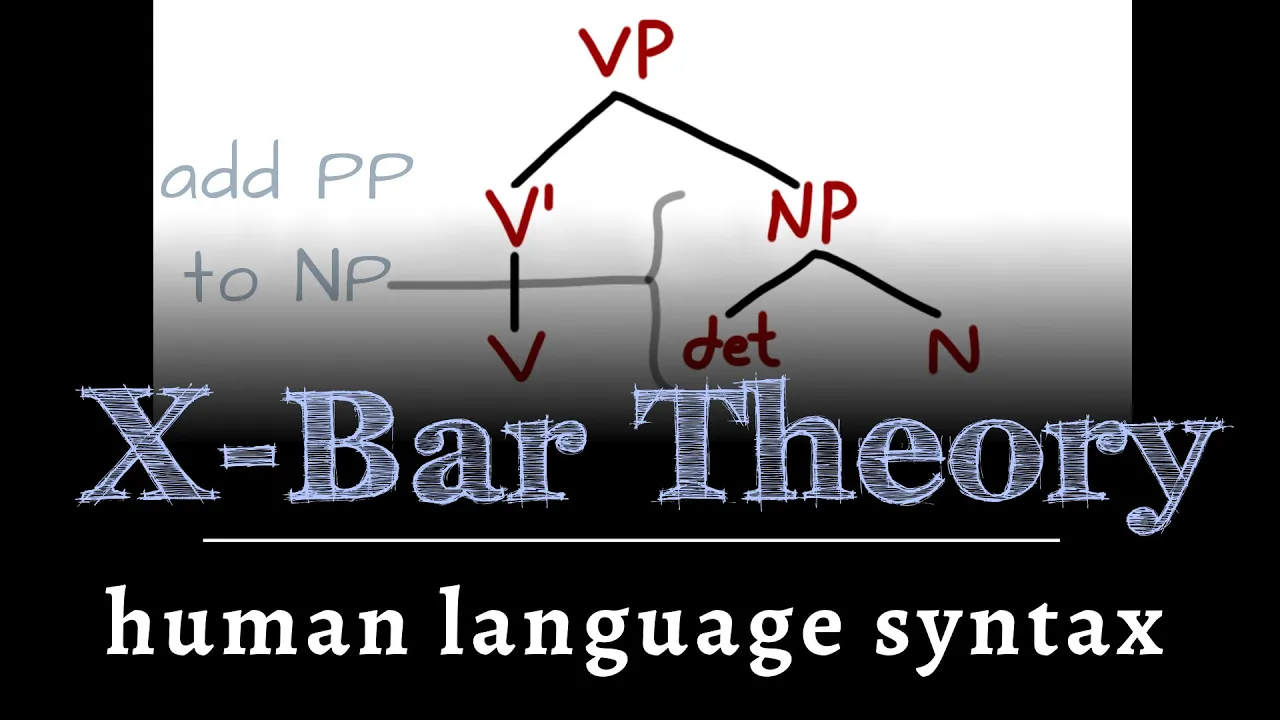
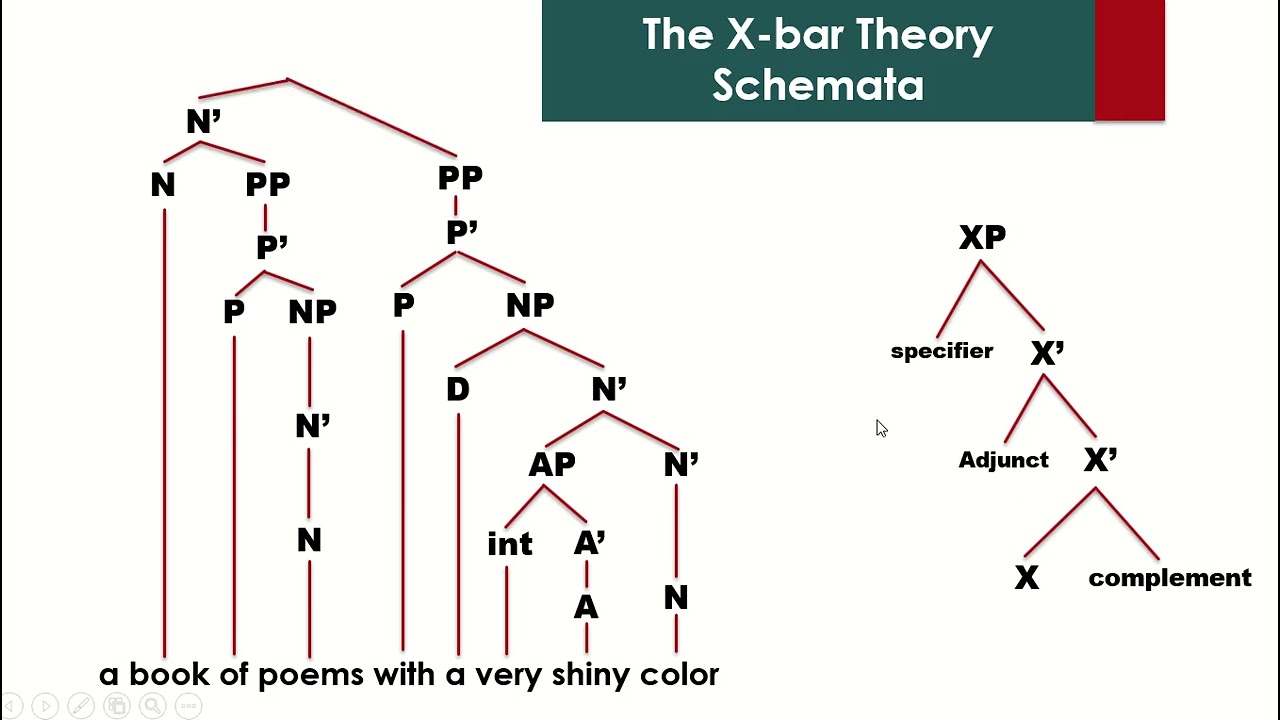
Added:Understanding of X-bar theory and basic phrase structure, particularly the internal structure of Determiner Phrases (DPs) and Tense Phrases (TPs).
Familiarity with Theta Theory, including how thematic roles (like Agent and Theme) are assigned and the requirements of the Theta Criterion.
A foundational grasp of syntactic movement (specifically A-movement) and the concept of 'traces' or copy theory of movement.
An introductory awareness of the Extended Projection Principle (EPP) and its demand that clauses have subjects.
Contrasting Raising constructions with Control constructions (e.g., the structural differences between 'John seems to be happy' and 'John tries to be happy').
Applying DP movement and Case Theory to passive constructions, including an exploration of Burzio's Generalization.
Exploring the Minimalist Program's approach to Case and Agreement, focusing on feature valuation and the 'Agree' operation.
Investigating A-bar movement (such as Wh-movement and Topicalization) and comparing its constraints and landing sites with A-movement.
14.3K views249likes18:22Original Release: 2020-09-29
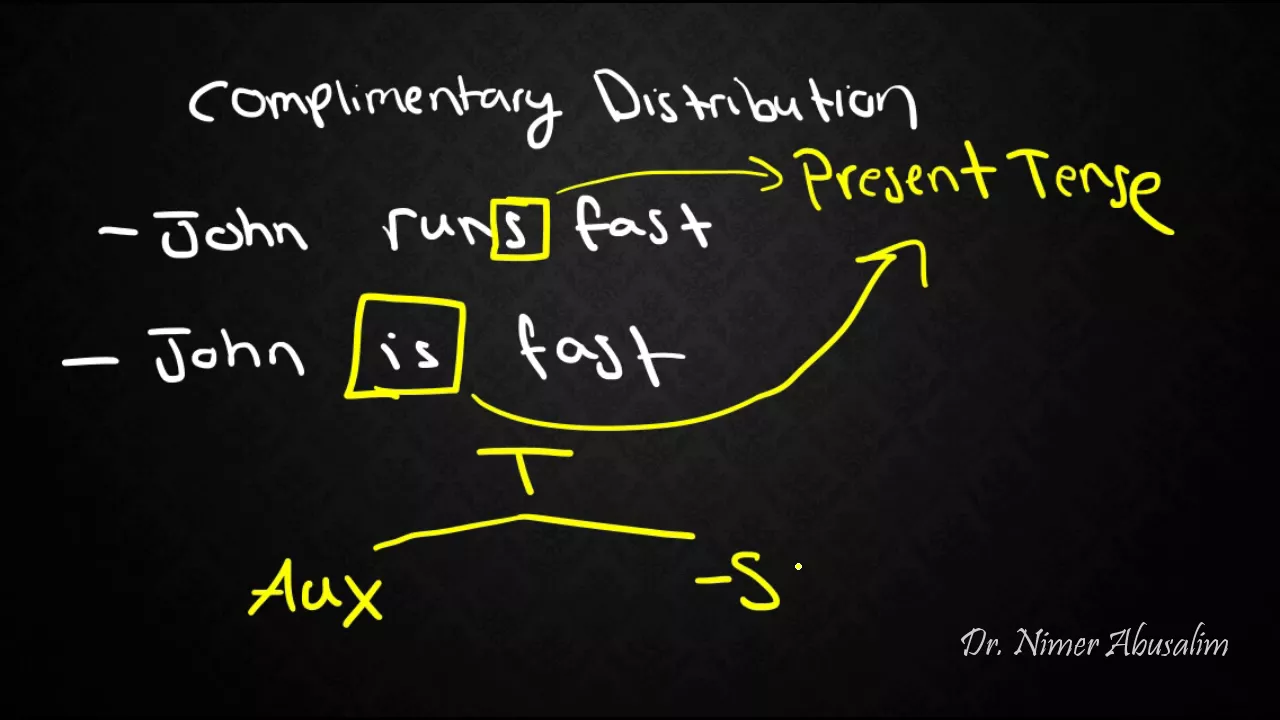
[Music] welcome to syntax a generative introduction fourth edition my name is andrew carney i'm a professor of linguistics at the university of arizona i'm the author of your textbook and i'll be leading you through this series of video tutorials in the last video we talked about the fact that dps appear to move from one clause to another in raising constructions that involve verbs like is likely it's reasonable to ask the question why would a dp move why would it move from the embedded clause to the higher clause and in this video we're going to talk about the motivations for such movements in particular we're going to take an approach that involves the notion of case and this particular approach is called case theory so why did you piece raise one possibility right is that it might actually happen for the epp the extended projection principle the requirement that every sentence have a subject that means that the specifier of the tp has to be filled the dp the dp john could move to satisfy this requirement in a sentence like john is likely to leave but then this doesn't explain why this doesn't also happen in sentences like john is likely that left why is it that john doesn't move to the subject position of his likely when the embedded clause is tensed similarly we have another strategy for satisfying the epp it's the strategy we talked about when we talked about whether verbs and verbs like is likely where you can insert an expletive it into the subject position to satisfy that requirement so why is it the case that you can't say it is likely john to leave leave john downstairs in the embedded clause and put an expletive in the higher clause's spec tp that is a strategy that you can use in other contexts because you can say it is likely that john left so why does john move in john is likely to leave so that's the issue that case theory has to address so here's the some of the ideas behind this case is like a licensor in order for the sentence to be grammatical a dp must get case you can think of this as a little bit like getting a driver's license in order to have a driver's license you have to go to the department of motor vehicles or whatever the equivalent is in your in your state or country and be at that place in order to receive your special license to drive cases like that for dps case is the license that you need in order to surface as a dp in the sentence and it can only appear in specific positions so let's take for example the idea that nominative case is assigned only in the specifier of finite tp notice finite this is critical because non-finite tp does not assign nominative case similarly we're going to claim that accusative case is specific to a to a position where it's a complement to a transitive verb and we are going to revise that one a little bit later the prepositional case also sometimes called the date of case is assigned to the sister of a preposition now our claim here is that these are in fact the three positions that dps can appear in legitimately only these three positions um if it appears in the specifier of this of the finite tp it gets nominative case if it's a complement to the verb it gets accusative case if it's the complement to a preposition it gets prepositional case so in order for dps to get their driver's license they have to be in one of these positions if it's ever the case where you have a dp that's not in one of these positions it's going to have to move to one of these positions in order to get its case so one little sideline here linguists are very bad at terminology and we have two distinct notions in linguistics both of which are called case and believe it or not they are distinguished by whether or not you use a capital c or a lowercase c i know that's nuts but that's the way it is this is the the way um the terminology is used in the literature [Music] case with a capital c is what we're talking about the the the case with a lowercase c refers to the morphology involved now when we're talking about english we have the problem that noun phrases in english don't dis morphologically display case um lowercase c so in john saw the dog and the dog saw john the dog and john um have the same morphology whether they're in the subject position or the object position so morphologically that's lowercase c we don't distinguish these of course you do see it in pronouns so you do see he saw him or she saw her so you do get case distinctions and pronouns but not in full uh noun phrases like john or the dog but in case theory which is written with a capital c um we are talking about a more abstract notion not the morphology itself but the licensing relationship so we're going to claim that in english here the john in john saw the dog has nominative case capital c and that john in the second sentence has accusative case capital c um even though there's no overt morphology here so uh again this is like one of the worst pieces of um notation you can ever find capital c case versus lowercase c case but that's what we that's the cards we've been uh dealt and that's what we will deal with so from now on remember that what we're talking about is this abstract notion which is this which is about being in a syntactic position nominative case is spec of tp accusative cases uh complement to v and prepositional case is complement to p we're not talking about the overt morphology that shows up because in english you don't see that morphology of course you will see it in other languages okay so why did dps move here's the idea we have a filter or a constraint called the case filter which says all dps must have case with a capital c that means all dps must appear in one of those positions spec tp complement of v or complement of a preposition this is a filter or a constraint much like the theta criterion much like the extended projection principle and much like the binding conditions this is a constraint on trees that makes sure that uh the tree is well formed okay here's how we're going to make sure this happens we're going to use features and we're going to do something called case checking so imagine that the specifier of the tp finite t comes with a special feature on the tense node and it's a feature called nom or nominative and this feature can also be found on gps if you have a dp with a nom feature it has to be in a local configuration remember that one from before but this time we're talking about case instead of theta rules it has to be in a local configuration with a head that also has a nom feature this is a local configuration for the features to be in because they're within the same tp and so this is a legitimate nominative case con configuration if this dp was not in this position it wouldn't be in a local configuration with the nominative and the the this feature would not be checked we would say that this is an unchecked feature but in this configuration it is checked because it is local we can do the same thing with accusative case so this dp has an abstract capital c accusative case and it is in a local configuration it's within the same vp as the the head v and we're going to claim that this verb loves has an accusative case feature and it has to this accusative case feature on the dp has to be near an accusative case feature on a verb when that happens you check the case and we have a fine configuration finally the same thing happens in prepositional phrases we i'm using the term prepositional case here you could use data you could use other prepositional cases this preposition has a prep feature and this dp has a prep feature they are in a local configuration they're within the same prepositional phrase so this is a case where the features are checked and everything is good the case filter effectively says case features must be checked ah now let's do a quick little detour back into english simple sentences like john left now remember um that we are generating um agents in the specifier of this voice phrase the active voice phrase so in the sentence john left this is where john starts out um we did this because there's a local there's a constraint on theta roll assignment that this dp must be local to its theta signer which is this active voice head so it gets its theta role there but notice that this is not a case position this is not one of those three pre-specified positions so this dp is going to have to move it's going to move into the specifier of that tp now it does it for two reasons it does it because of the epp which is what we had argued before when we generated dps in this position so you can move up here for the epp but it also moves here for case so that it can be in a local configuration with the nominative case feature so it will be within the same projection as this t head this finite t head so that is what is going to motivate the movement of the dp out of the voice phrase and into the specifier of the tp now uh this you have to think for a moment about irish remember in irish the dps stay in this position we'll come back to that okay let's look at how this would work with raising so we've generated john down here in the specifier of the voice phrase that's associated with the verb leave this is where it gets its um its agent theta rule but again this is not a case position right so this is not a legitimate place for it to sit so this dp is going to have to find case so it's going to move and um it's actually going to move in two hops eventually it's going to want to be way up here in the specifier of the higher tp but it's going to move to the specifier of this lower tp simply for epp reasons so it's got to stop off here because this tp must also have a subject it's going to move in there for that but this is not a case position because 2 is not finite so it doesn't bear the nominative case feature so we're not yet out of the woods this dp still has to go and find a case position so it's going to move up to the very higher tp up here and that is the position where it can get its nominative case as a consequence it also makes sure that the epp for this higher clause is met because this higher clause also requires a subject so the db starts down in this base position where it gets an agent theta role it moves to this intermediate tp position for the extended projection principle and then it moves up here to the higher position where it gets nominative case capital c and it satisfies the epp we're also going to see uh in the next uh chapter um that this movement this double movement the stopping off in this position is motivated by another principle called the minimal link condition and the minimal link condition effectively says move to the first potential position where you could check the feature so potentially john with its nominative case could potentially check nominative case and the specifier of this tp it doesn't actually do that because this is a non-finite t but it still stops there before it moves on up and that's the minimal link condition if that went by too quickly don't worry we're going to come back to the minimal link condition in some detail one more thing to say about raising verbs john is likely as a raising uh construction john gets its theater role from leaving but there's also a set of sentences which look almost identical in that it's um you've got a dp in the subject position you have a copular verb and then you have some kind of adjective or adverb and then you have a non-finite clause and this is um but this second kind of sentence isn't actually raising john is eager to leave if you think about it um is the john's relationship to eager is very different from john's relationship to likely what is likely john's leaving what is eager john right so john seems to be getting a theta role from eager it also seems to be getting a theta rule from leave that's a problem because the theta criterion says dps can get one and only one theta roll and here john seems to be getting two theta rolls it seems to be getting a theta role from eager and it also seems to be getting a theta role from leave we're going to solve this problem in chapter 15 by proposing that these the second kind of sentence actually has a null subject called pro and this pro is the thing that gets the theta role we'll return to this in that unit but just note for the moment that not all sentences like this are raising sentences we have these other kinds of sentences that we call control sentences that look very similar but actually behave very differently for the moment wars stick to ourselves to raising so let me summarize raising some dps appear to be displaced from their theta positions this is caused by the rule of raising also known as dp movement or np movement or a movement we motivate this operation by case effectively speaking the embedded subject doesn't get case where it gets its theta role neither in the specifier of the voice phrase nor in the specifier of the non-finite tp that's not a case position so the dp moves up to the next clause up which has a finite tense node and that finite tense node bears the feature that allows it to check the nominative case we also noted that not all constructions of this forum dp some kind of verbal followed by a missing subject and to leave are raising some involved pro but we're going to leave that mostly aside for the moment next in the next video we're going to talk about passives [Music] you
Up Next

11:25
Introduction to Phonetics: Articulatory, Auditory & Acoustic Branches
@oer-vlc
133.2K views•2012-05-25
36:52
Constraint Interaction in Optimality Theory: Epenthesis & Deletion
@Vidyamitra
180 views•2018-08-20

9:15
DP Movement: Raising in Syntax | Generative Grammar
@CarnieSyntaxthEdition
14.6K views•2020-09-29

21:32
Accent Expert Explains U.S. Regional Dialects | Part 1
@WIRED
9.3M views•2021-01-21
Related Study Plans & Knowledge Roadmaps
Structured learning paths in Linguistics
linguistics
Optimality Theory: Tableaux & Constraints
01Phonological Basics: Sounds, Syllables & Rules
02Foundations of Optimality Theory: GEN, CON, and EVAL
03The Constraint Inventory: Markedness vs. Faithfulness
+ 2 more learning modules
15h5 modules
Explore Roadmap
linguistics
Morphosyntactic Alignment: S, A & P Systems
01Foundations of Syntax: Transitivity and Arguments
02The Linguistic Variables: Mapping S, A, and P
03Nominative-Accusative Alignment
+ 3 more learning modules
12h6 modules
Explore Roadmap
linguistics
Analyzing Sign Language: Phonology & Syntax
01Foundations of Sign Language Linguistics
02Phonology: The Five Parameters of a Sign
03Morphology: Word Formation and Classifiers
+ 2 more learning modules
14h5 modules
Explore Roadmap
linguistics
Pragmatics: Speech Acts, Grice & Politeness
01Introduction to Pragmatics: Meaning in Context
02Grice’s Cooperative Principle & Implicature
03Speech Act Theory
+ 2 more learning modules
14h5 modules
Explore Roadmap