








![[ICU-LINC0047] Rajesh Bhatt (University of Massachusetts, Amherst)](https://i.ytimg.com/vi/psTsIcMPnQM/maxresdefault.jpg)









When speakers construct sentences, words move from their original positions, leaving behind invisible traces that ensure grammatical correctness; these traces explain why certain sentence structures are ungrammatical (like 'Who does Annie wanna defeat the ghost?') and allow linguists to understand how different languages achieve similar syntactic functions through varying movement patterns, supporting the theory of Universal Grammar that all human languages share fundamental syntactic building blocks.
Syntactic Movement and Traces: An Introduction
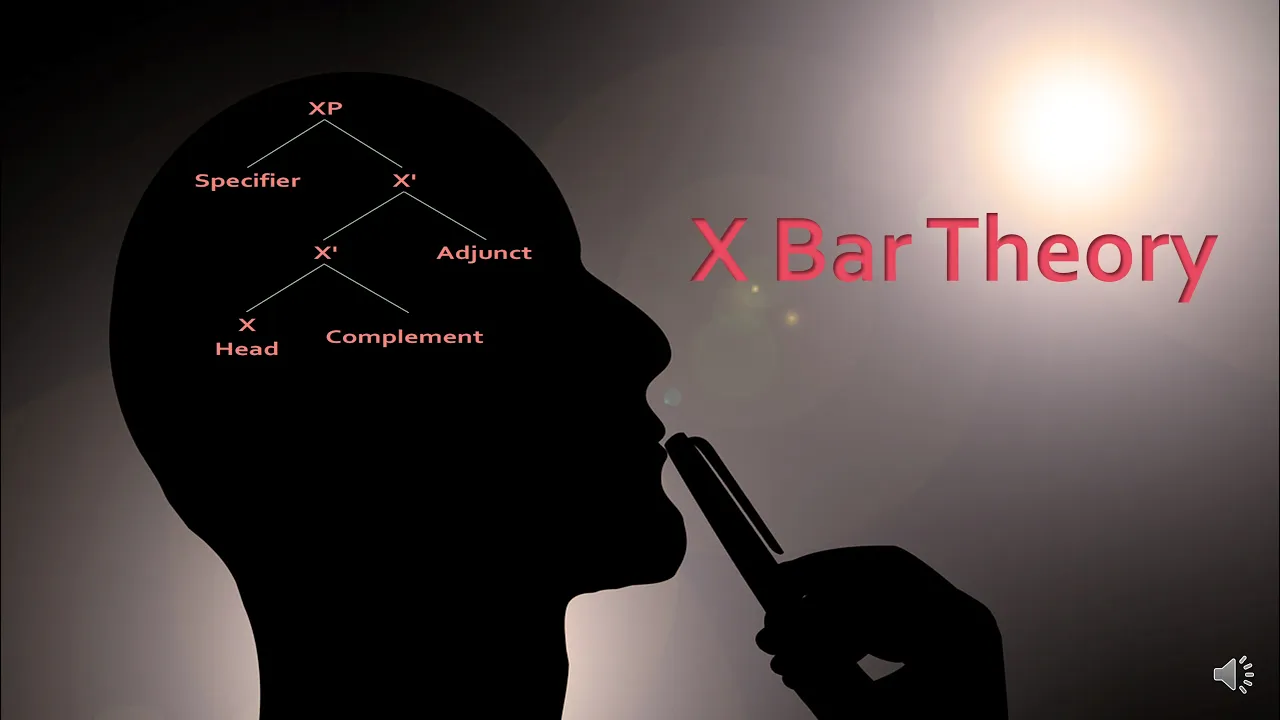
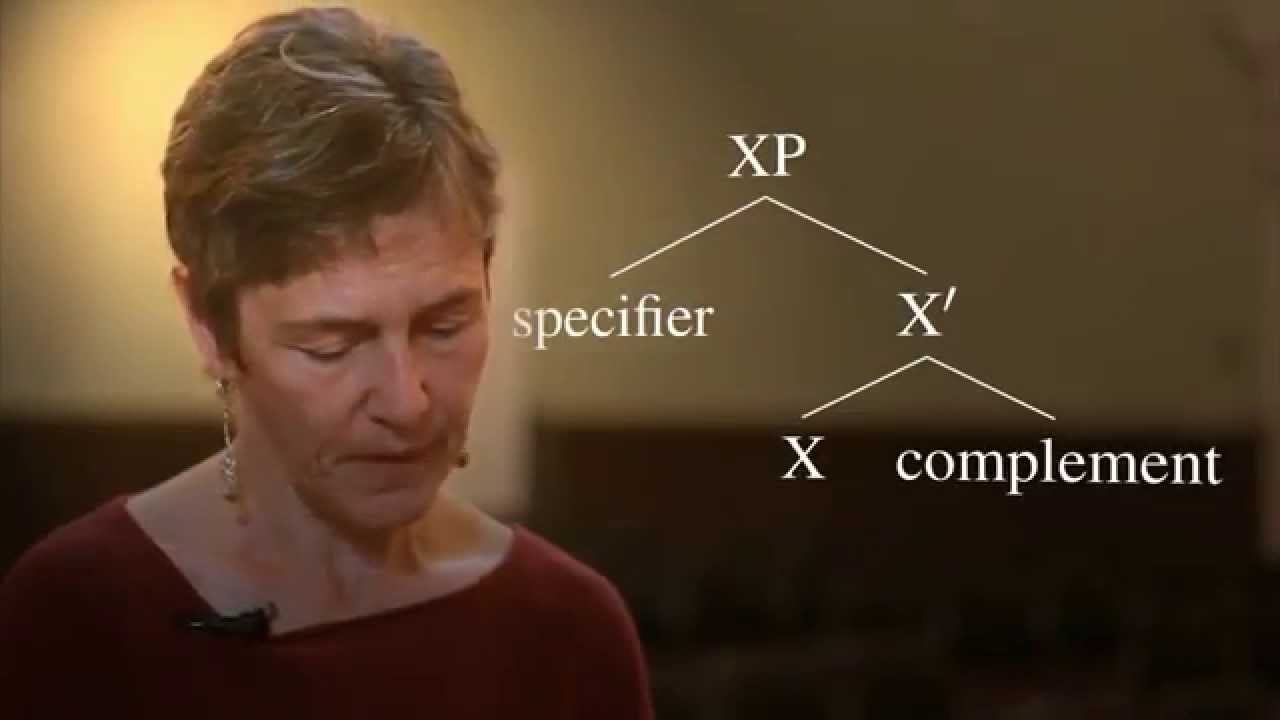
Added:Basic Phrase Structure and X-bar Theory: Understanding how sentences are represented hierarchically as structural trees (e.g., NP, VP, CP).
Deep Structure (D-Structure) vs. Surface Structure (S-Structure): Familiarity with the generative grammar concept that a sentence has an underlying abstract form before it is pronounced.
Constituency and Syntactic Categories: Knowing how to identify constituents and understand the roles of syntactic heads, specifiers, and complements.
Basic Question Formation in English: Awareness of auxiliary inversion and the basic positioning of interrogative words (who, what, where).
Movement Constraints and Islands: Exploring syntactic boundaries (like the Coordinate Structure Constraint or Wh-Islands) that block elements from moving.
A-Movement vs. A'-Movement: Distinguishing between movement to argument positions (like passive and raising constructions) and non-argument positions (like Wh-movement).
The Copy Theory of Movement: Investigating the Minimalist Program's updated framework where moved items leave identical copies rather than abstract traces.
Parametric Variation and Wh-In-Situ: Comparing languages with obligatory Wh-movement (like English) to languages where Wh-words remain in their original positions (like Mandarin Chinese).
42.8K views624likes8:12Original Release: 2015-02-18
So let’s talk about traces. Whatever technology or magic you may have, it’s nearly impossible to make your way through the world without leaving some evidence of how you got there.
And it’s no different for language – whenever we move words around inside of our sentences, there’s always something left behind, even if we can’t hear it. So let’s set out to track that down! I’m Moti Lieberman, and this is The Ling Space.
So first of all, we’re returning to talk about syntax, so if you feel like you need a refresher, you can click here to watch our previous episode on the topic. Syntax tells us that our language comes with a set of blueprints for how to put our phrases together, and we reach for those structures and templates when we want to build our sentences. We just slot the words into the right places to craft the meanings that we want.
When we think about it that way, it doesn’t sound as if we’ll ever need to move our words around. Why not just stick all the words exactly where we want them, in the surface order we say them, every single time? That seems a lot simpler than putting things in one place, and then moving them around later to wherever they’re supposed to end up.
Maybe building sentences should be like crafting robots: you put all the pieces into the frame, and then you fix them there.
That’s a nice idea, but it turns out that it doesn’t really mesh with our intuitions about language, like the relationships one version of a sentence has with another.
The easiest way to check this out for English is by looking at questions. Let’s say you’re talking with your friend Kat after class, and she says, “Annie will show the forest to Andrew.” But it’s too noisy, and you don’t really get the name of the person who’s taking this arboreal tour. So what do you do?
You ask, “Who will Annie show the forest to?” And for the sake of making this comparison easy, let’s say the answer is, “She will show the forest to Andrew.” So we can feel the connection between these sentences, right? All that’s changed when we made the question is that we’ve moved will in front of Annie, and that we’ve swapped who for Andrew, and then moved that who to the very front of the sentence. We can see that question and answer are just like two sides of the same coin.
Okay, sure, so maybe you can see the connection between these two sentences, but maybe you’re thinking, why does that mean that the question has to come from the regular sentence? Can’t they just be two independent sentences? Well, if who will just got plopped at the beginning of a brand new sentence, and nothing had moved around, we might get a tree like this.
But then there’d be no reason not to, say, stick some other words in the places in the tree that those words would normally go. If the who didn’t come from down below the verb there, referring to the person getting shown around the wondrous, magical forest, then there’s no reason why that person needs to be Andrew. You could stick somebody else in there, like, Parley.
And the same thing should be true of will; if that didn’t move up from the spot on the other side of the subject, then we should be able to put some other word in there, like a should. Now, let’s go ahead and try that, then. How does this sentence sound: “Who will Annie should show the forest to Parley?” I don’t know about you, but to me, that is one terrible, garbage sentence of English. Just right out. The reason for that is, making questions in English requires movement.
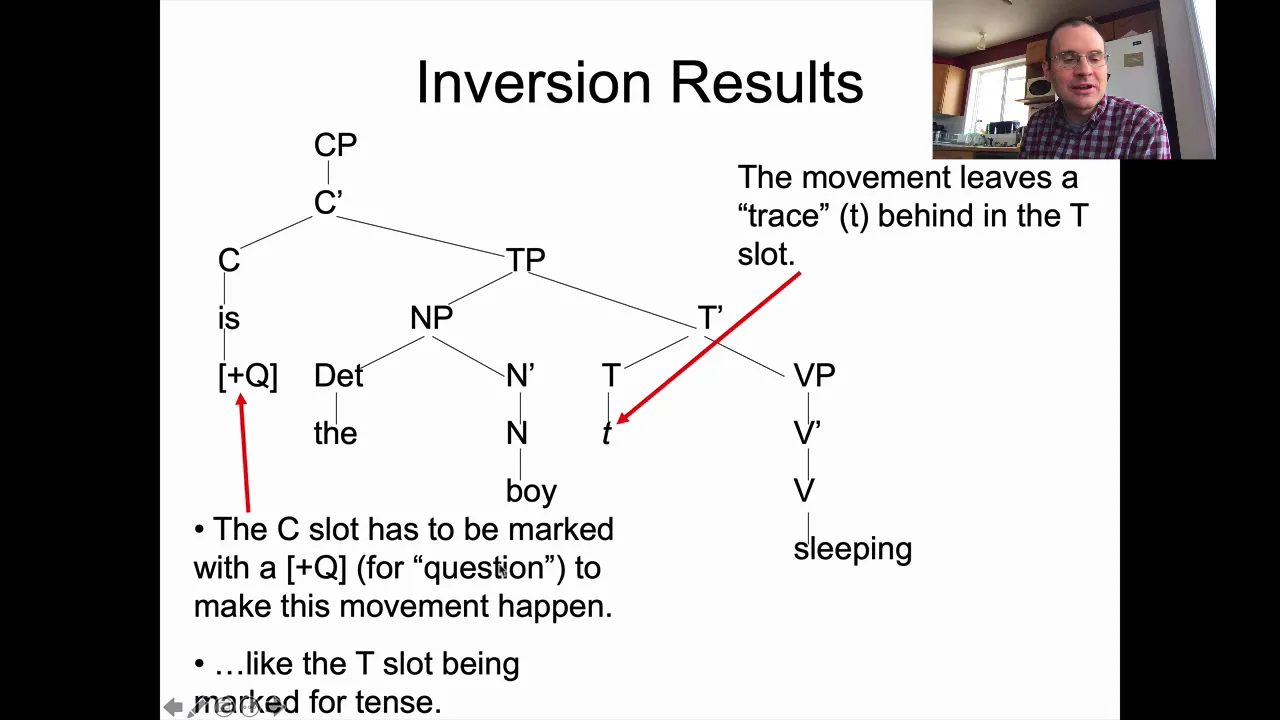
And when you move a word out of its original place, you leave a little trace of it behind.
It has to make sure that nothing else makes its shadowy way into its home court, or everything goes totally nuts. Traces can even keep you from contracting words, like changing “want to” to “wanna.” Like, think about a sentence like “Annie wants Parley to defeat the ghost.” Now, you can’t contract want and to, because Parley’s in the way. There’s no “Annie wanna Parley defeat” anything.
But if you make it a question, you can get Parley out of the way, and end up with something like “Who does Annie want to defeat the ghost?’ You might think that now, we could put a “wanna” in there if we want to, but we can’t. “Who does Annie wanna defeat the ghost?” is pretty bad. That little trace from where who originally came from might not be audible, but it’s enough to keep want and to apart.
And the traces are kind of like placeholders for the words that got shifted around. And if you ignore the trace, the sentence gets super broken! That shows us that the question and its answer must be related, rather than them being built independently. And the way they’re related is through moving things around.
If you didn’t have those traces, if they weren’t left in the structure that you’re building once you moved the original word, then your system could stick other elements in there and just gum up the whole sentence works. But this isn’t the only thing that movement is important for. We want to be able to capture every language in the world with the syntactic system we have.
That’s just part of the Universal Grammar project. All languages have to work from the same stuff underlyingly, if we want to say all humans have the same systems. Vietnamese and Pashto and Igbo may look really different from each other. But we want to say they’re all built from the same syntactic building blocks, if you pry open their language casings and look inside. And it turns out, if we have those X’ templates, and we have the ability to move words around in a sentence, that’s all we need.
We can capture a lot of the similarities and differences between languages by looking at how they move things. Let’s compare English and French, and what they do with their verbs.
English verbs are very lazy, just staying down in the verb phrase where they’re put and never getting out. French verbs, on the other hand, cheerily move up out of the verb phrase, into where the tense goes, if there’s no tense there already.
How do we know this? Well, it explains a lot about where words show up in relation to each other for English and French. Let’s look at a couple of examples. In English, we find the verb just after negation, like in “Jones did not smile at the students”. French does the same thing… as long as the verb is in the past tense.
That gives you “Jones a pas souri aux élevès”. But when the sentence is in present tense, that a goes away. And then there’s nothing to hold the tense!
The tense needs to attach to something, or the whole sentence will fail. Luckily, French verbs are on the ball, and know just what to do. The verb moves up, leaving its trace behind. And so, in present tense, the verb comes before negation, like in “Jones sourit pas aux élevès”. Or, we can see a similar thing happening for adverbs. In English, we find the verb coming after the adverb, like in the sentence like “Coyote joyously laughs”.
In French, on the other hand, the adverb comes after the verb, like in the counterpart sentence “Coyote rit joyeusement.” And it’s for the same reasons: something needs to hold the tense, and the verb takes on the job. On the surface, it might not look like these phenomena are connected. After all, adverbs and negation are about as different as a fox spirit and a dragon hunter. But if you look at the structure, you can see that adverbs and negation both sit right on top of the verb phrase. And if we just say that the verb can move around, then we can capture what’s going on in both of them, and bring fox spirits and dragon hunters closer together.
So if you have the verb showing up right after them, as in English, then the verb can’t have moved. But if the verb is showing up before pas or joyeusement, then it must be up above those in the tree.
So movement allows us to capture the way languages behave. English and French might look different, but underneath, we can find deep similarities in the operations they use to put things together.
Everybody uses the same gears; it’s just how you hook them up to each other that’s different. And even the stealthiest of movements can’t shift things around without leaving a little something behind.
So we’ve reached the end of the Ling Space for this week. If you traced all of my word movements, you learned that we can shift words around to create different kinds of sentences; that whenever we move something, we always leave a trace behind; that we can tell there must be traces by seeing what kinds of sentences we can’t make; and that different languages choose to move around different elements when they’re crafting their syntax.
The Ling Space is produced by me, Moti Lieberman. It’s directed by Adèle-Elise Prévost, and it’s written by both of us. Our production assistant is Georges Coulombe, our music and sound design is by Shane Turner, and our graphics team is atelierMUSE. We’re down in the comments below, or you can bring the discussion back over to our website, where we have some extra materials on this topic.
Check us out on Tumblr, Twitter and Facebook, and if you want to keep expanding your own personal Ling Space, please subscribe. And we’ll see you next Wednesday. Sampai jumpa!
Up Next
8:09
Wh-Questions and WH-Movement in Syntax | X-Bar Theory
@Trevtutor
94.3K views•2017-05-15
36:52
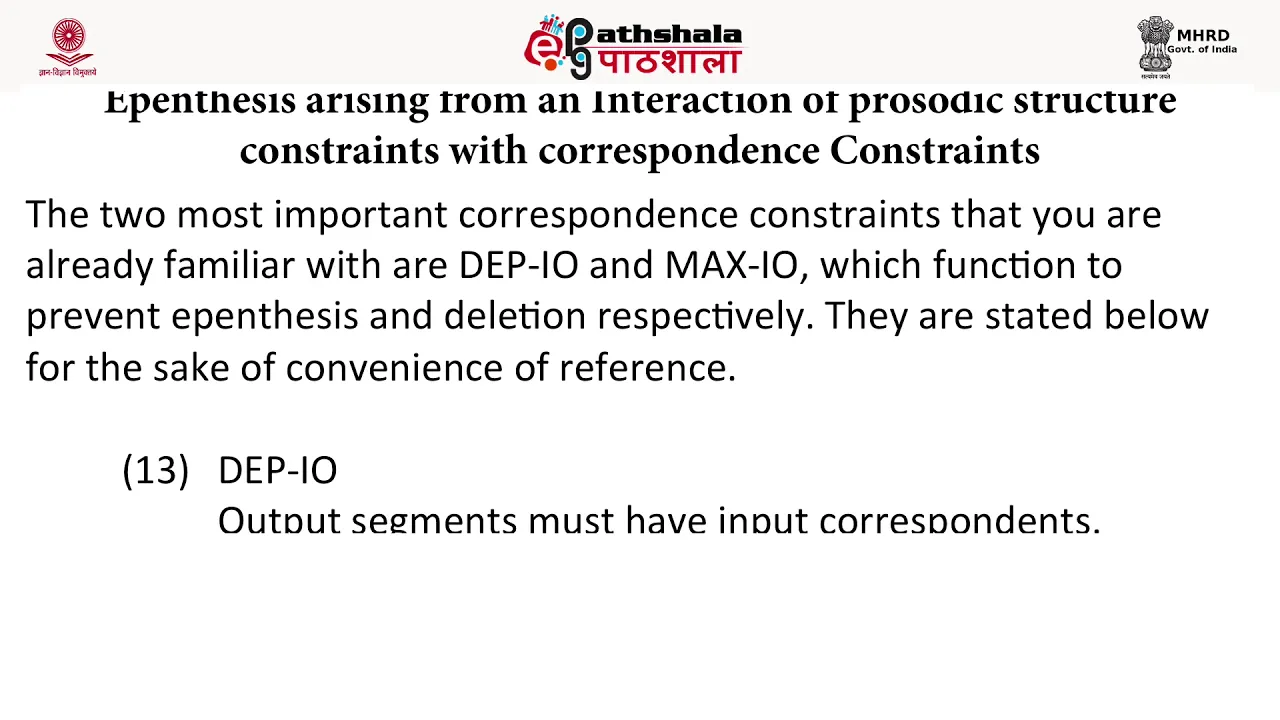
Constraint Interaction in Optimality Theory: Epenthesis & Deletion
@Vidyamitra
180 views•2018-08-20
10:17
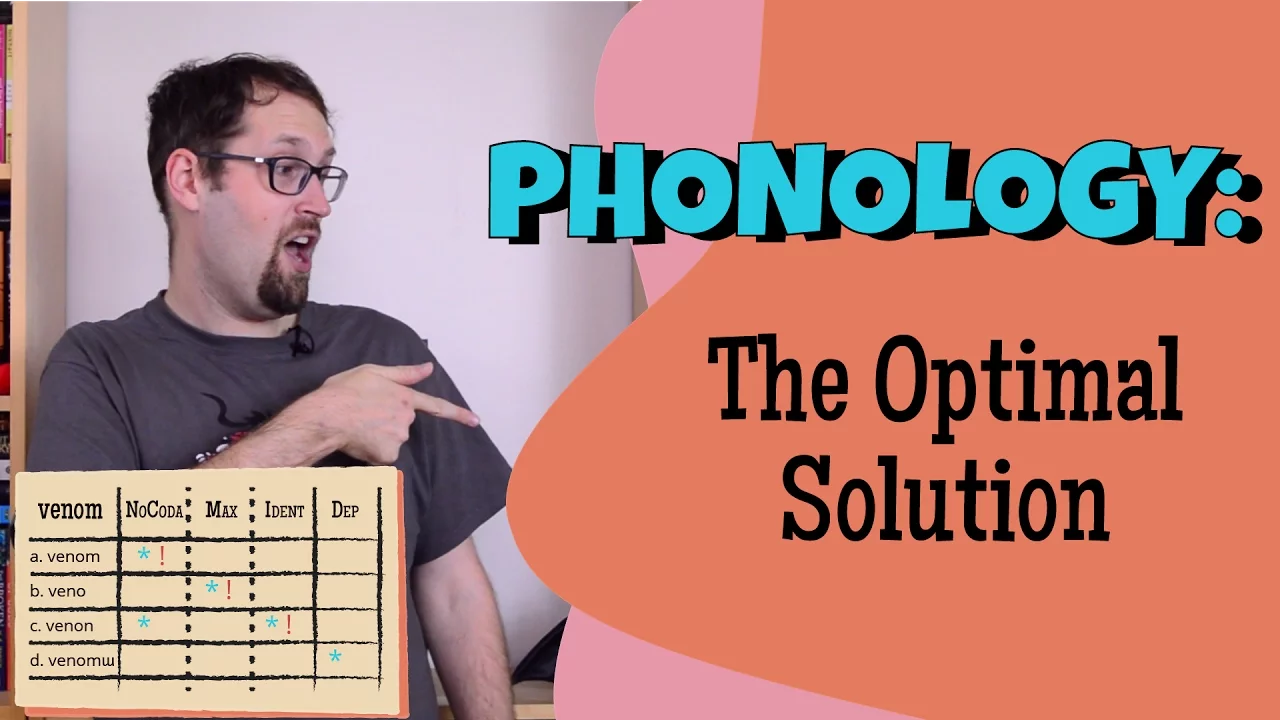
Optimality Theory: Constraints on Linguistic Sounds Explained
@thelingspace
42.9K views•2016-12-01

21:32
Accent Expert Explains U.S. Regional Dialects | Part 1
@WIRED
9.3M views•2021-01-21
Related Study Plans & Knowledge Roadmaps
Structured learning paths in Linguistics
linguistics
Optimality Theory: Tableaux & Constraints
01Phonological Basics: Sounds, Syllables & Rules
02Foundations of Optimality Theory: GEN, CON, and EVAL
03The Constraint Inventory: Markedness vs. Faithfulness
+ 2 more learning modules
15h5 modules
Explore Roadmap
linguistics
Morphosyntactic Alignment: S, A & P Systems
01Foundations of Syntax: Transitivity and Arguments
02The Linguistic Variables: Mapping S, A, and P
03Nominative-Accusative Alignment
+ 3 more learning modules
12h6 modules
Explore Roadmap
linguistics
Analyzing Sign Language: Phonology & Syntax
01Foundations of Sign Language Linguistics
02Phonology: The Five Parameters of a Sign
03Morphology: Word Formation and Classifiers
+ 2 more learning modules
14h5 modules
Explore Roadmap
linguistics
Pragmatics: Speech Acts, Grice & Politeness
01Introduction to Pragmatics: Meaning in Context
02Grice’s Cooperative Principle & Implicature
03Speech Act Theory
+ 2 more learning modules
14h5 modules
Explore Roadmap