











!["Optimality Theory in Generative Phonology" [a brief description on Optimality Theory]](https://i.ytimg.com/vi/1HwT3gFKli4/maxresdefault.jpg)


![[AFLA27] Tracing constraint movement: Austronesian binary feet and word minimality - Alexander Smith](https://i.ytimg.com/vi/BQHy93O7Qcc/maxresdefault.jpg)




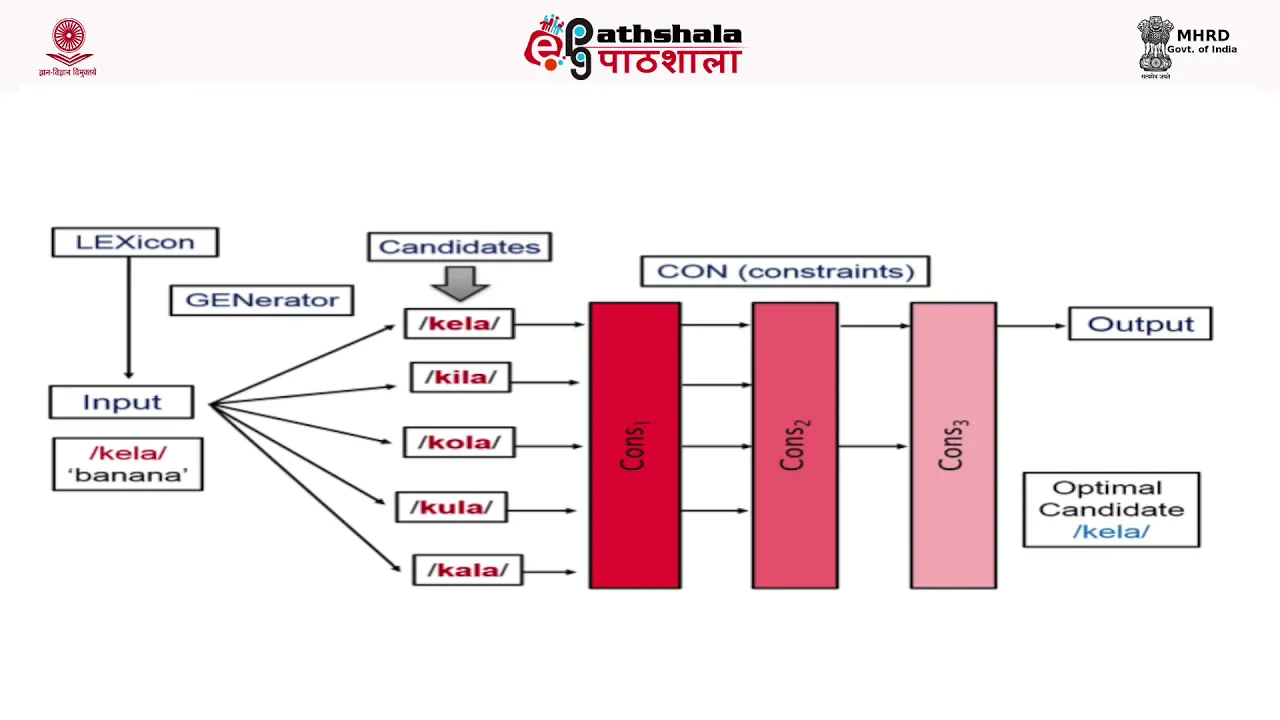
Optimality Theory explains cross-linguistic variation in sound systems by proposing that all languages share a universal set of phonological constraints, but differ in how they rank these constraints; markedness constraints (which favor common cross-linguistic patterns like requiring syllable onsets) compete against faithfulness constraints (which preserve input sounds), and the optimal output emerges when languages prioritize different constraints based on their specific phonological needs.
Optimality Theory: Constraints on Linguistic Sounds Explained
Added:Fundamentals of phonetics and phonology, including phonemes, allophones, and distinctive features.
Classical rule-based generative phonology (such as the Sound Pattern of English model) and the distinction between underlying and surface representations.
Common phonological processes such as assimilation, epenthesis, deletion, and neutralization.
The concept of Universal Grammar and how structural variation exists across different language families.
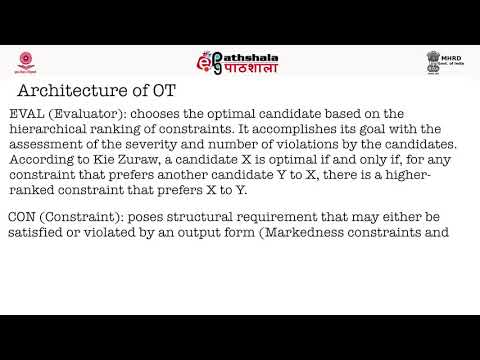
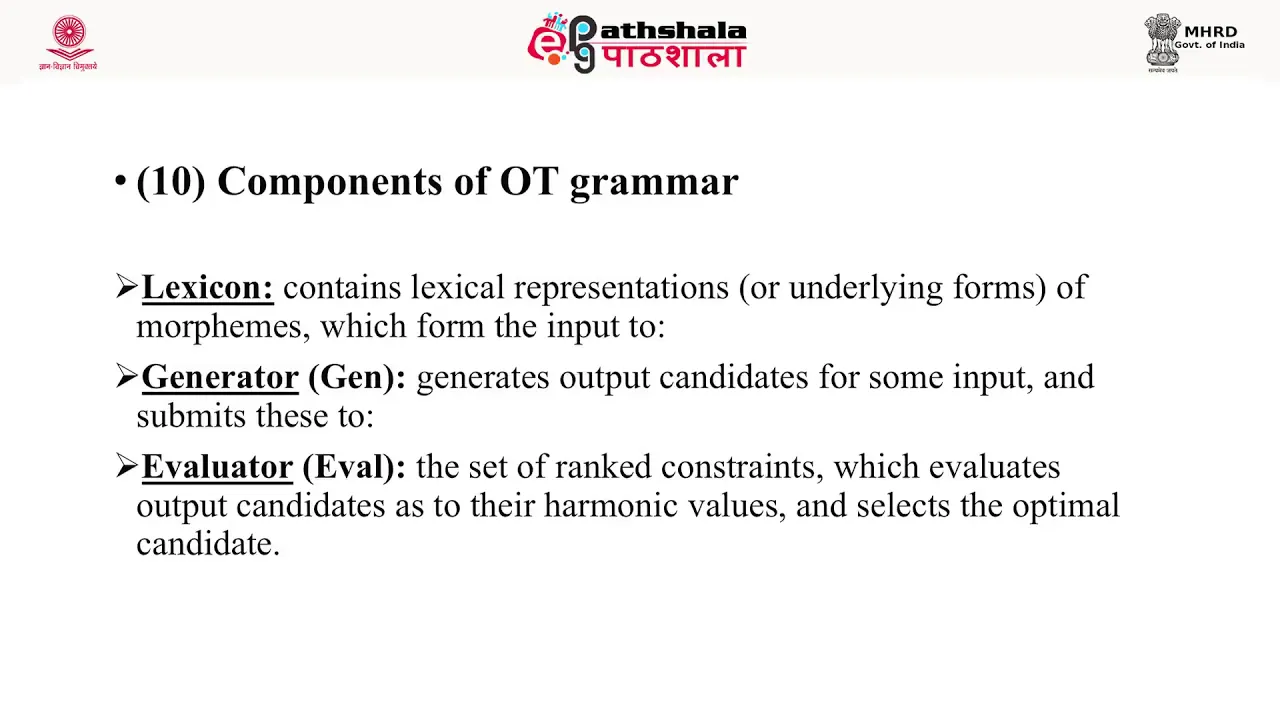
The formal mechanics of Optimality Theory, specifically how the Generator (GEN) and Evaluator (EVAL) function using constraint tableaux.
The distinction and interaction between Faithfulness constraints (which preserve input) and Markedness constraints (which favor unmarked output).
How child language acquisition and historical sound change are modeled through the reranking of universal constraints.
Advanced frameworks that build on or adapt OT, such as Harmonic Grammar, Maximum Entropy (MaxEnt) phonology, or OT syntax.
42.9K views1.1Klikes10:17Original Release: 2016-12-01
So let’s talk about constraints.
All of us have rules that we live by, from simple codes to always seek freedom, to complicated orders that bind and drive our actions.
Those constraints don’t just apply to our ethics: we can find rules going way down into how we shape our sounds and words.
And when it comes down to the gears of phonology, our differences stem from what guidelines we don’t feel too guilty about breaking.
I’m Moti Lieberman, and this is the Ling Space.
When you look across all the languages of the world, the amount of variation in the sounds humans use, or in the combinations we come up with to build words, can almost make you dizzy.
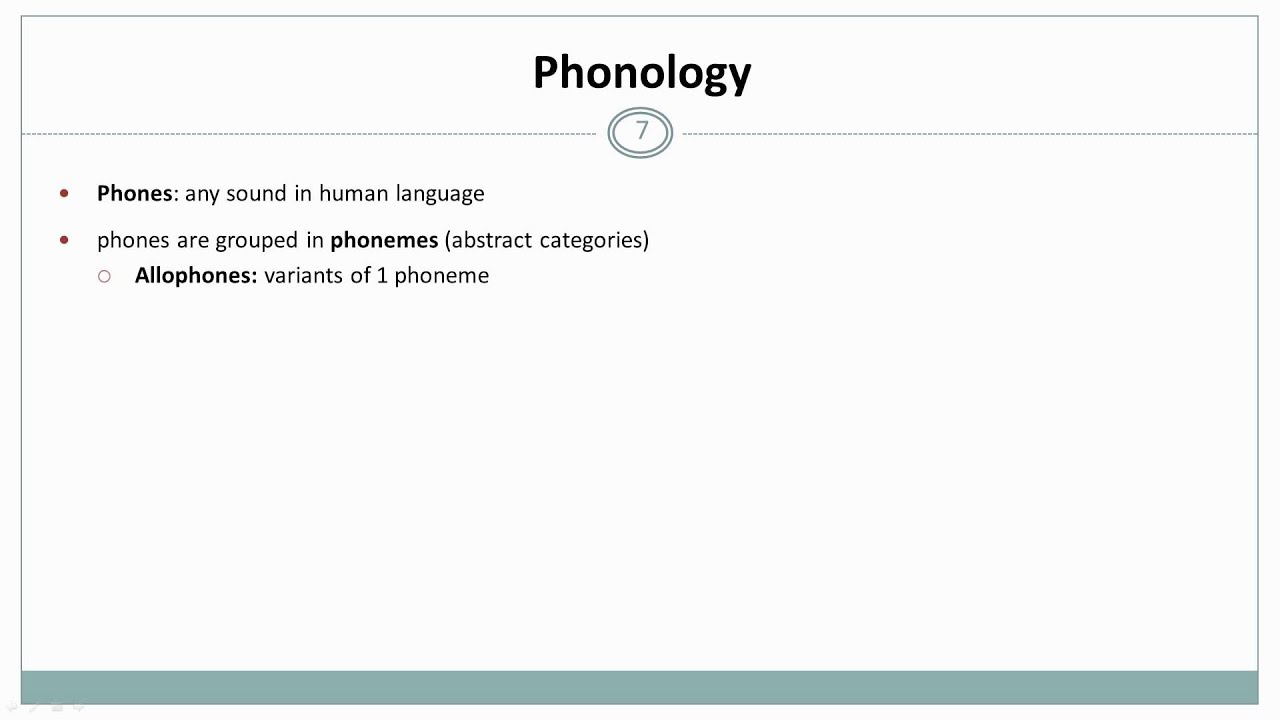
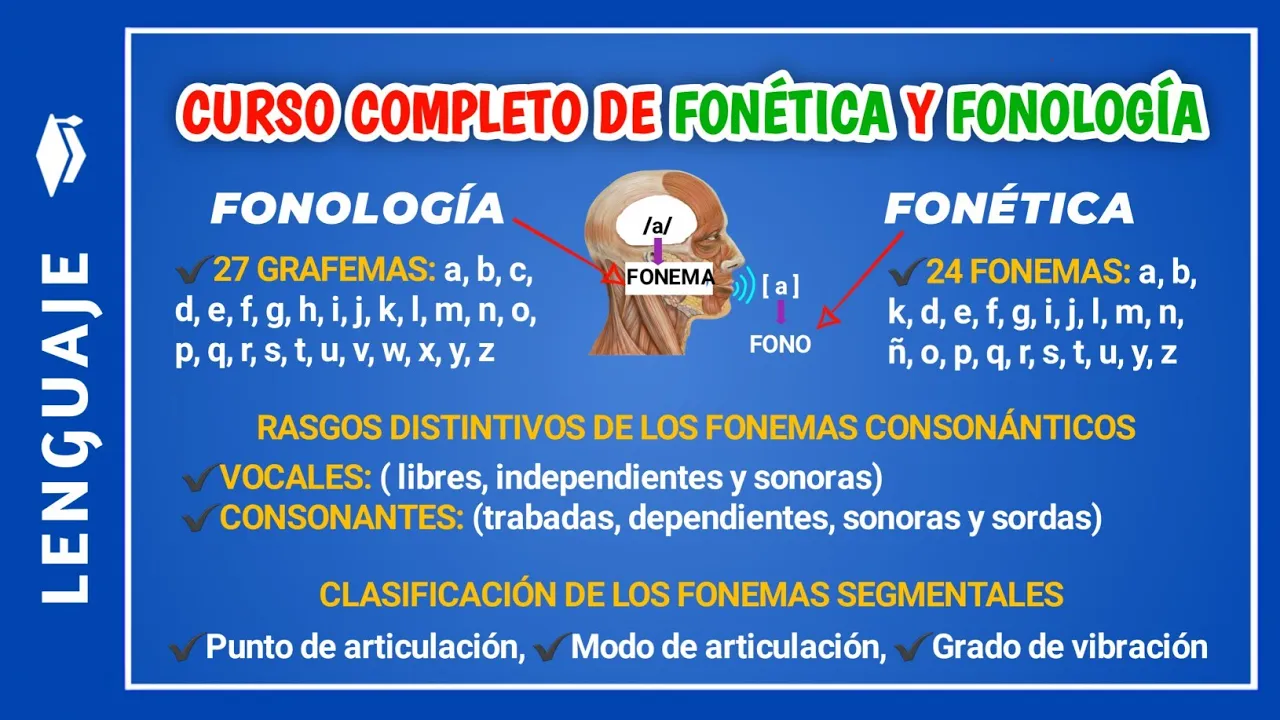
You can find languages like Rotokas that only have 12 basic sounds, or phonemes, in their phonology.
And you can find languages like Taa with over ten times that number.
There are languages that only let you have the simplest of syllables, just a consonant followed by a vowel, like Mba, or there are languages like English that let you have words like strength, where you can pile a heap of consonants before and after the vowel.
All those differences in what one language versus another lets you do with sounds may be enough to make you want to stick a paper bag over your head and forget about trying to work out what’s happening underneath.
There’s a real tension between all the variation we hear and the idea that we’re all working from the same cognitive playbook.
But when you start digging around, you find that there are deeper commonalities across the different sound systems.
And those are things that we want our phonological theory to explain.
Today, we’ll be looking at one particular theory that takes up this fight: Optimality Theory, or OT.
In OT, all languages draw on the same basic set of constraints on what you can do with your phonology.
And all languages can feed just about any candidate string of sounds into their phonological machines.
So the constraints are the same, and the inputs are potentially the same, but we end up with vastly different outputs.
Where does all the variation come from?
According to OT, it’s all in how important each language finds each of the rules in relation to each other.
Just like different people view different rules as more or less vital, languages do, too.
Like, your attitude towards stealing will be different if you’re a pirate or a holy knight.
So you may have to slash up some rule or another in order to make a set of sounds fit the constraints of your language, but as long as you don’t break any of the important ones, then you’re okay.
You end up with the optimal solution for your languages.
To get to those solutions, you need to rank your different constraints against each other.
But before we can do that, like, we’ve got to ask: what are these constraints, even?
There are two basic types, and the first of them tracks with those commonalities between languages we brought up before.
These are known as markedness constraints, and they tell you to do the most common thing cross-linguistically.
The most common traits get called unmarked, and the less-common, typologically rarer outcomes get called marked.
So for example, let’s go back and look at how we build syllables.
You may remember from our episode about syllable structure that the beginning and ending consonants of syllables work differently.
Depending on the language, the beginning ones, known as onsets, can either be required, or they can be optional.
So in Mba or Hawaiian, you always need an onset.
But in other languages, like Korean or English, you don’t have to have them – you can, like in the word May, but you don’t have to, like in Eddie.
But there are no languages that ban you from putting consonants at the beginning of syllables.
It’s always allowed, at the least.
And OT captures that with the markedness constraint Onset.
This is just a rule that says that syllables should always have onsets, and depending on how that rule gets ranked compared to the others, that’ll affect how your language turns out.
But let’s get back to that in a bit, and focus on syllables some more first.
So, unlike consonants in onsets, languages are way iffier about putting consonants at the end of syllables, in the coda.
Some languages take a hard line, and just ban all consonants from popping in to finish a syllable, like in Fijian or Yareba.
Other languages do allow them, but in restricted ways, like Japanese or Mandarin, where only a subset of all the consonants in the language can make it into the coda.
Like, [n] could make it in, but not [b].
And still other languages, like German or, yes, English, let you put almost any sound down in the coda.
But no language requires you to have a coda; it’s always optional.
So it’s the opposite pattern from onsets: Onsets can be required or optional; codas can be optional or banned.
For OT, this pattern is codified in the constraint NoCoda, which… actually, you can guess that one, probably.
Now remember, under the OT view, every single human has both of these constraints.
The difference between languages on how they treat syllables is just driven by how much weight they put behind each rule.
In a decent number of languages, Onset and NoCoda rank really high, above all other relevant constraints, and so they just end up with simple consonant-vowel syllables, tossing CVs all over the place like they’re applying for jobs.
In the World Atlas of Language Structures, there are 61 such languages, which makes up 12.5% of their analyzed sample.
But obviously, that means the vast majority of languages break one or the other of those rules, if not both.
How do we know that everyone still has a complete set of those constraints?
Like, if you’re an English speaker, it doesn’t look like Onset or NoCoda apply at all.
But if we look carefully, we can still find situations where low-ranking constraints can win out.
Take a word like “Johnny”.
For that middle [n], you have a choice: do you put it at the end of the first syllable, like [dʒɑn.i:], or do you put it at the beginning of the second, like [dʒɑ.ni:]?
If you don’t have Onset or NoCoda left at all in English, either should be fine.
And yet, what English actually produces is the second one, [dʒɑ.ni:].
Words like this show us what’s called the Emergence of the Unmarked: they serve as a testament to the stealth operation of otherwise violable markedness constraints.
But… what other kinds of constraints are there?
After all, we have to be ranking something above constraints like Onset and NoCoda, if we’re going to keep them from enforcing the same syllable shape for every language everywhere.
And so in opposition to markedness, we have Faithfulness constraints.
The family of Faithfulness rules says that whatever input you put through your phonological cruncher should come out looking the same on the other side.
Like, you have constraints like Max, which says that you shouldn’t delete any sounds from your input; Dep, which declares that you shouldn’t just stick any extra sounds into a word, and Ident, which states that all the items in the output should be exactly the same as those in the input.
These, plus more faithfulness constraints like them, don’t care whether the pattern in the input has codas or unusual consonants or two vowels or three consonants in a row.
Those things are the concerns of markedness constraints.
Faithfulness constraints just want everything to sound exactly the same on both sides.
So let’s put these two together for a simple test.
Let’s say your input string is something like “Venom”.
How would we deal with Venom in Japanese?
First, we need to do some setup.
In OT, we show our considerations in a little tableau.
We put our input, “venom”, up here, and then we list our possible candidates down this column here.
That [m] at the end could be a problem, since it’s a coda, and we know that codas aren’t great across languages.
But we could potentially just be super faithful and leave everything as it is.
We could delete the [m] completely and get [veno].
We could change the [m] to a [n], which would be less marked at the end of a syllable.
Or we could stick in a vowel like [ɯ], and then that [m] wouldn’t be a coda anymore.
It’d be the onset of a new syllable instead.
So those are our four candidates under consideration.
Along the top, we list our relevant constraints for what we’re doing, and here, that’s NoCoda, Max, Ident, and Dep.
If you look closely, you’ll see each of our candidates violates one of these constraints.
We mark each of those violations with a little star in the appropriate box.
Just keeping “venom” the same would be a violation of NoCoda.
Deleting the [m] outright makes you violate Max, which says you shouldn’t delete things, and changing it to “venon” is a problem for Ident, because [m] and [n] aren’t the same sound.
Finally, adding the vowel at the end breaks Dep, since you stuck an extra sound in.
Now, if we look at how Japanese actually works, we can see that the one that wins out is [venomɯ].
So what that means is that for Japanese, all the other constraints outrank Dep, because that’s the one that ends up getting violated.
All of the other ones encounter fatal errors by hitting their relevant constraint, and so we mark each of those with a little exclamation point.
And that tells us how “venom” works.
By looking across lots of different words in Japanese, we can work out how the ranking of constraints works for the whole language.
And different languages have different rankings: check the English one out here.
In English, generally speaking, faithfulness constraints rank pretty high: we don’t really like changing things that much.
Even though keeping “venom” as just “venom” violates NoCoda, it turns out English doesn’t really care that much about it; sticking with Ident and just keeping everything the same is the best.
And this is just one small example!
Some phonologists use OT to try to explain everything from stress patterns to how and where to add affixes.
Even some syntacticians have tried using OT to explain similar sorts of cross-linguistic patterns in their own field.
It’s a very powerful tool, so when it comes to how to apply Optimality Theory, it’s important not to constrain your imagination.
So we’ve reached the end of the Ling Space for this week.
If you found the optimal solution, you learned that there are patterns to what sounds languages use and how they put them together; that Optimality Theory tries to explain these commonalities by proposing a universal set of constraints; and that depending on how a language ranks those constraints, they end up with different phonological patterns.
The Ling Space is made by all these amazing people over here.
If you want to learn more about how kids learn what rankings their language uses, check back on our website!
And while you’re there, why not check out our store?
We just added some new shirts for the holiday season!
We’re also on Tumblr, Twitter, and Facebook, and if you want to keep expanding your own personal Ling Space, please subscribe.
See you next time! Aruriiawagáac!
Up Next

51:17
Optimality Theory in Phonology | UC Berkeley Lecture Linguistics 115
@nicholasrrolle8313
66.2K views•2016-11-30
36:52
Constraint Interaction in Optimality Theory: Epenthesis & Deletion
@Vidyamitra
180 views•2018-08-20
8:32
Pragmatics & Gricean Maxims: Cooperative Principle | The Ling Space
@thelingspace
150.2K views•2014-09-10

21:32
Accent Expert Explains U.S. Regional Dialects | Part 1
@WIRED
9.3M views•2021-01-21
Related Study Plans & Knowledge Roadmaps
Structured learning paths in Linguistics
linguistics
Optimality Theory: Tableaux & Constraints
01Phonological Basics: Sounds, Syllables & Rules
02Foundations of Optimality Theory: GEN, CON, and EVAL
03The Constraint Inventory: Markedness vs. Faithfulness
+ 2 more learning modules
15h5 modules
Explore Roadmap
linguistics
Morphosyntactic Alignment: S, A & P Systems
01Foundations of Syntax: Transitivity and Arguments
02The Linguistic Variables: Mapping S, A, and P
03Nominative-Accusative Alignment
+ 3 more learning modules
12h6 modules
Explore Roadmap
linguistics
Analyzing Sign Language: Phonology & Syntax
01Foundations of Sign Language Linguistics
02Phonology: The Five Parameters of a Sign
03Morphology: Word Formation and Classifiers
+ 2 more learning modules
14h5 modules
Explore Roadmap
linguistics
Pragmatics: Speech Acts, Grice & Politeness
01Introduction to Pragmatics: Meaning in Context
02Grice’s Cooperative Principle & Implicature
03Speech Act Theory
+ 2 more learning modules
14h5 modules
Explore Roadmap