











![PHILOSOPHY - Language: Gricean Pragmatics [HD]](https://i.ytimg.com/vi_webp/we6uSVf4qss/maxresdefault.webp)







The Cooperative Principle, proposed by philosopher Paul Grice in the 1970s, provides the fundamental rules governing human conversation through four conversational maxims: Quality (speaking truthfully with adequate evidence), Manner (communicating clearly and appropriately for the audience), Relevance (staying on topic), and Quantity (providing exactly enough information). These maxims enable listeners to infer meaning beyond literal word choice, creating implicatures that make conversation efficient and natural rather than requiring exhaustive explicitness like legal contracts.
Pragmatics & Gricean Maxims: Cooperative Principle | The Ling Space
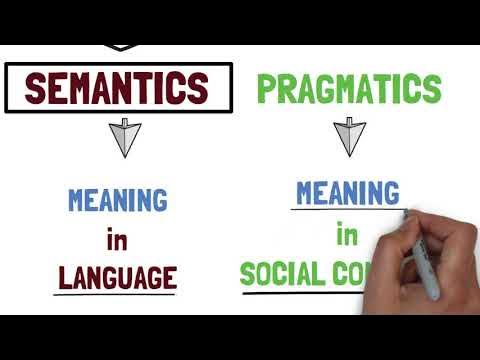
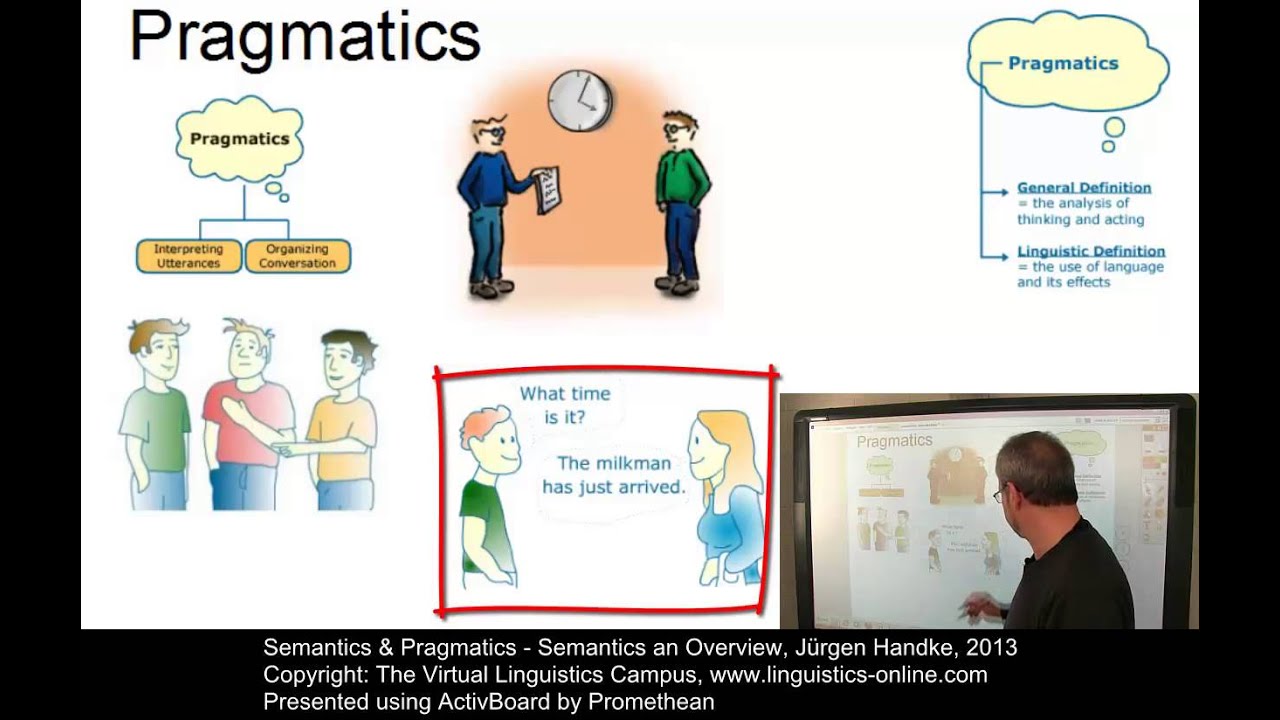
Added:The distinction between semantics (literal sentence meaning) and pragmatics (speaker meaning in context).
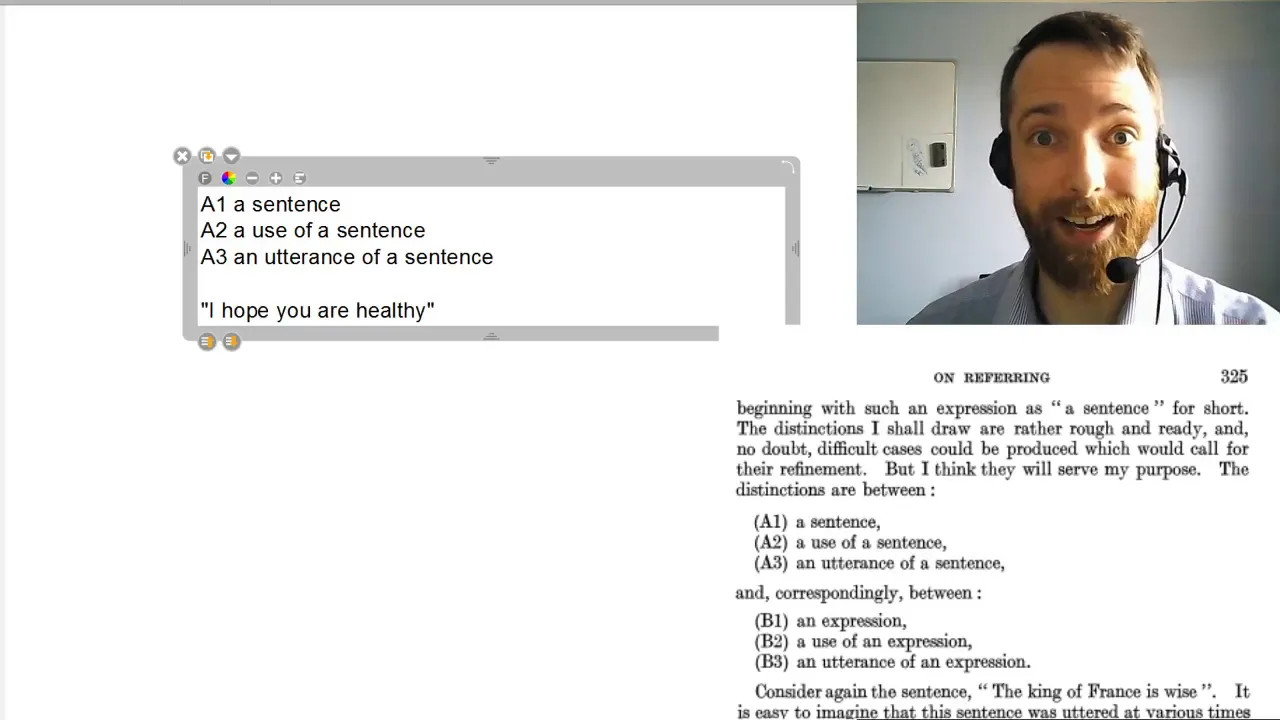
The concept of an utterance as a situated, real-world instance of language use, as opposed to an abstract linguistic sentence.
The foundational idea of communicative intent—that speakers use language with specific goals and expect listeners to recognize those goals.
The crucial distinction between 'flouting' a maxim (deliberately violating it to convey a hidden meaning) and 'violating' or 'opting out' of a maxim.
Relevance Theory by Sperber and Wilson, which simplifies Grice's maxims into a single cognitive principle of relevance.
Neo-Gricean pragmatic theories, specifically Laurence Horn's Q- and R-principles and Stephen Levinson's three heuristics (Q, I, and M).
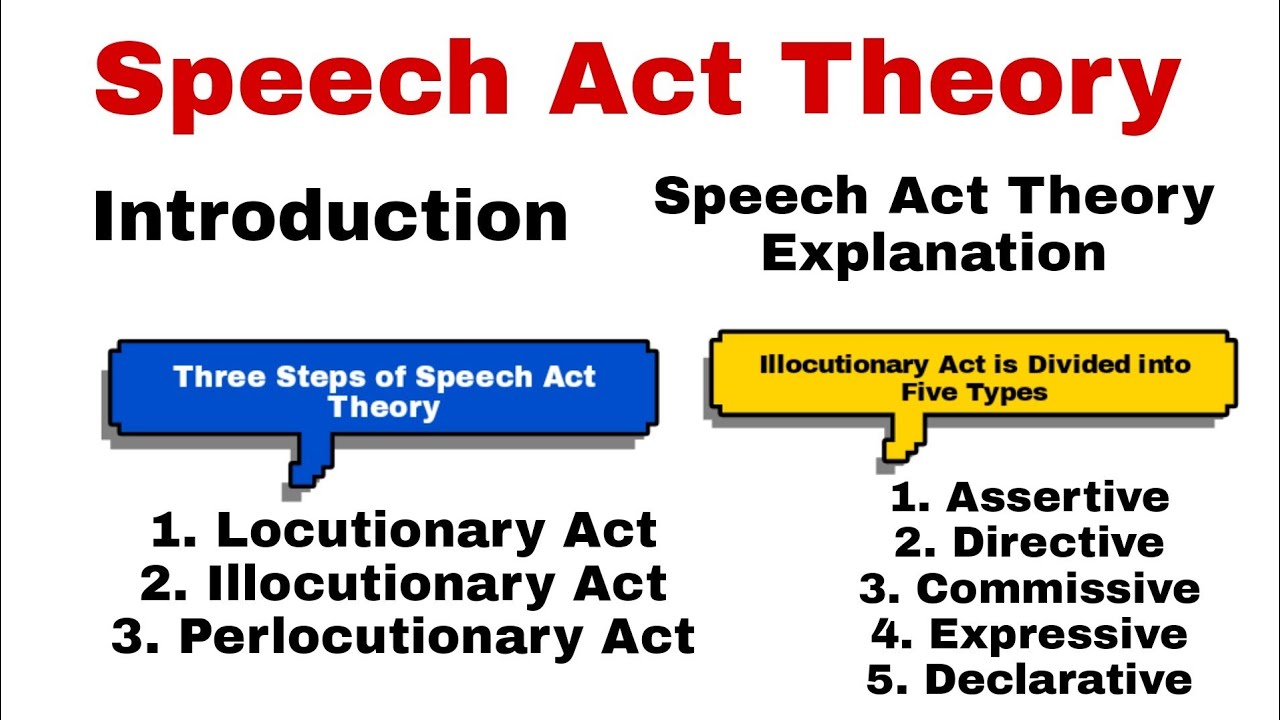
Speech Act Theory (pioneered by J.L. Austin and John Searle) to understand how language is used to perform actions.
Cross-cultural pragmatics and Politeness Theory, examining how different cultures interpret conversational cooperation and directness.
150.2K views2.3Klikes8:32Original Release: 2014-09-10
So let's talk about logic. This uh is not the greatest strength that people have. We behave in terribly illogical ways. We puzzle Vulcans and computers alike. But being beyond logic doesn't mean we don't have some rules to play by when we communicate. I'm Mot Liberman and this is the Ling Space.
Welcome to the Ling Space.
No matter what language we speak, when we hear a sentence, the first thing we do with it is get the logical interpretation. We work out the exact truth of what the other person said. But we're not just like robotic logic machines, like some logic bot 3000. We also know there's more to conversation than just word for word facts. there's a consistent way our conversations should work and we use our knowledge of those rules to go beyond what the person actually said and figure out what it is they mean. So what rules do we have? The simplest place to start with this is with the cooperative principle first proposed by philosopher Paul Grace in the 1970s. It basically says that you should say things that are the right kind of things for the right kind of conversation you're in at the time which sounds totally weak. It sounds so loose, it barely feels like a rule at all.
Well, by itself, without looking at all the pieces that make up the principle, it's hard to see how it could really be helpful. But let's just think about what happens when you can't assume that the people that you're talking with will cooperate. That's the sort of thing that happens in legal contracts where everything needs to be spelled out in minute detail and it's crystal clear about who's supposed to do what. Regular conversations aren't like that. So what does lay under all the conversations we're having so we're not stuck in legal ease all the time? Gry's principle can be broken down into four different conversational maxims. The maxims of quality, manner, relevance, and quantity. These sound really technical, but they have pretty basic rules to play in guiding our conversations down friendly paths, and you use them all the time without even knowing it. Let's start with the maximum of quality. This one just says that you should tell the truth and that you should have enough evidence to back up what you're saying.
This rule is very basic. Whether you're a person or a logic bot, you need to be able to assume that the person talking with you is telling you the truth and that they know what they're talking about. You can't have a quality conversation with someone if you think they're lying to you or they're misinformed. So having this as a rule for talking with people makes sense. The next rule is the maximum of manner. What this one means is that you should talk in a way that's appropriate for the people that you're talking with. Now, appropriate means four different things here. First, it means that you should use words that you think your listener will understand. So, explaining why the sky is blue or why stars twinkle will be very different if you're talking with a kindergartener or a fourth year university student. Second, it means you shouldn't blather on forever when you can make your point quickly. There's no need to go on for five minutes talking about the texture and composition of your green curry chicken when you think all your friend wants to hear is that it's delicious. You're just wasting their time. The third rule under the maximum of manner is that you should stay away from ambiguity. If you can come up with a clear way to phrase your sentence, you should go with that. So, you should probably think twice about saying, "I got caught in the shower when my phone rang." if you mean you answered a call while you were out in some light rain or Sergio heard about the new ice cream parlor at the mall if he was at home when he heard about it. If there's a better way to say it, you should go with that. And finally, you should go through whatever you're trying to say in the right order from start to finish.
This might sound straightforward if you're not Christopher Nolan, but it really makes a difference. You won't just confuse people. If you list your lasagna recipe the wrong way, your friend might create an abomination. And saying she ate some shrimp and went to the hospital is very different from saying she went to the hospital and ate some shrimp. Maybe the hospital cafeteria just has tasty shrimp. Now, let's get down to the third maxim, the maximum of relevance. This one's really simple to state. It just says to be relevant. This sounds super easy, but we say things that seem like total nonsequittors all the time. We need this maxim to tell us the two things are related even when they don't seem to be.
This is where our behavior really diverges from your logic bots. Let's say you ask your friend Nius, "Who ate all my Cheetos?" And she says, "Well, Simon has orange fingers." Your logic bot 3000 might say, "Nilas, why are you telling me about Simon and his dermatological problems? I want to know where are my Cheetos." But the maximum of relevance tells us that what Nius is saying must be related to my question. So, what she's really trying to say is that Simon is a Cheeto thief. Or how about the layers of relevance in an exchange like, "Honey, I'm leaving you." Well, who is he? Logicbot 3000 would be totally flumxed by this. Where do you even start interpreting it? You need to know that the question is relevant and fill in some real world knowledge to know that you've just been asked whether you've been seeing someone on the side. Without that, this question just seems out of nowhere. The last of Grace's maxims is the maximum of quantity. Of the four of them, this one's the most opaque. It says that you should be as informative as you need to be, but no more so. To put it differently, it says you should lay out the exact amount of information that you think is appropriate. But what does this mean? Well, let's consider a sentence like, I think some cookies are delicious. What do you get from this?
probably that I like some kinds of cookies, but there are also some I don't like, like ones with coconut or macadamia nuts. But that's not logical.
Logic bot 3000 would say that me saying that some cookies are delicious is totally compatible with me thinking all cookies are delicious. In logic, the term some means some and possibly all.
But the maximum of quantity says that me using some cookies is wrong if I mean all cookies. Using all is more informative. So I should use all if I think all is true. If I use some, it must mean that I don't think all is true. So I must not like some kind of cookie like coconut. Because we assume people are following these maxims when they're talking with us. We can build our interpretations that way. Whenever we go beyond what a logic bot would do, we're creating what's known as an implicature. extra info that takes in what we know about people and about conversation. Now, I've been saying these are really rules when they're more guidelines. They're what we should follow, what people will assume we're doing, and they're pretty much universal. But we're not obliged to go by the maxims. So, you can lie or make up stuff about topics you know nothing about, or you can blather on forever or tell your stories backwards.
You can go off on total tangents or you can be that guy who says yes when somebody asks if you want super salad, but you won't exactly be cooperative and that makes everyone you're talking with sad. So you're better off following the rules and you've probably been following them all along without even knowing it.
They're just part of human language. So we've reached the end of the ling space for this week. If you are being cooperative, you learned that our communication goes way beyond logic.
that everyone follows the same cooperative principle in all languages.
That the principle is made up of four maxims, quality, manner, relevance, and quantity. And that you can break all the rules, but it'll make you look bad. The link space is written and produced by me, Moti Lieberman. It's directed by Adel Po. Our production assistant is George Kulom, and our music and sound design is by Shane Turner. Our educational consultants are LevelUp Learning Solutions and our graphics team is Attelier Muse. We're down in the comments below or you can bring the discussion over to our website where we have some extra material on this topic.
Check us out on Twitter and Facebook.
And if you want to keep expanding your own personal link space, please subscribe and we'll see you next Wednesday.
Up Next
19:31
Language Contact and Change: Sociolinguistics for 3rd Year LMD Students
@ciav.universitedebiskra1565
1.8K views•2022-03-24
36:52
Constraint Interaction in Optimality Theory: Epenthesis & Deletion
@Vidyamitra
180 views•2018-08-20
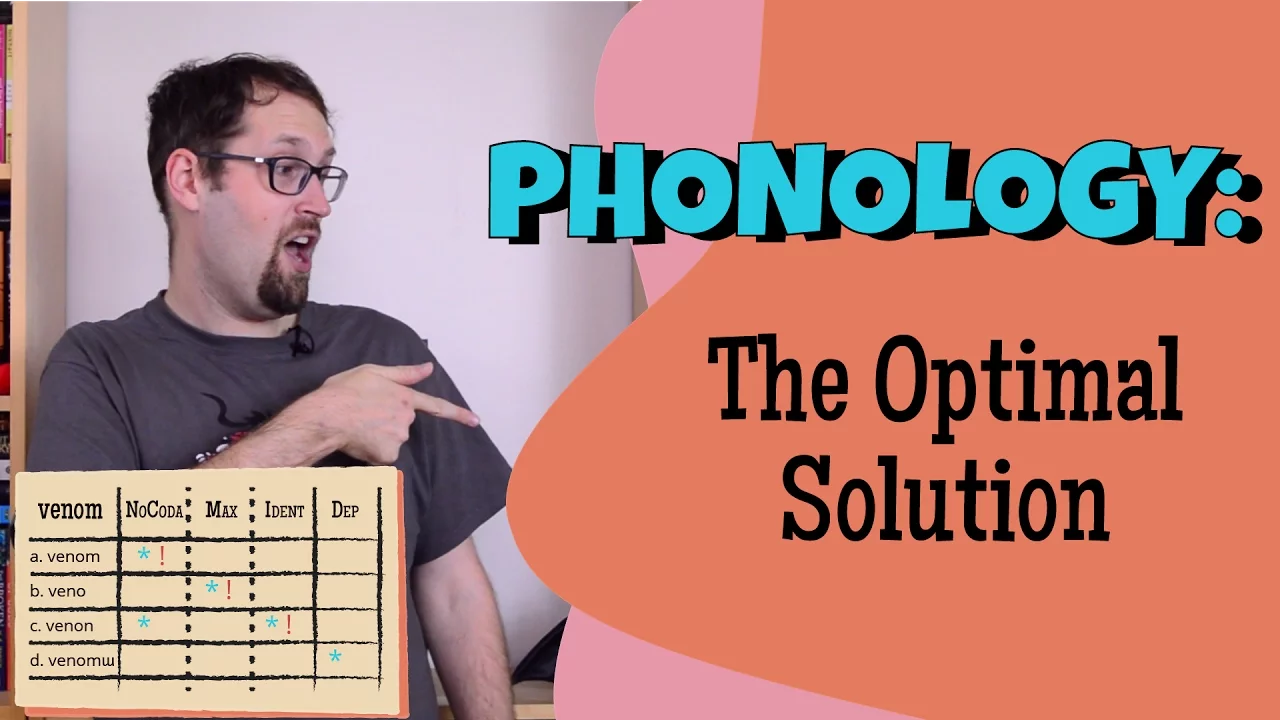
10:17
Optimality Theory: Constraints on Linguistic Sounds Explained
@thelingspace
42.9K views•2016-12-01

21:32
Accent Expert Explains U.S. Regional Dialects | Part 1
@WIRED
9.3M views•2021-01-21
Related Study Plans & Knowledge Roadmaps
Structured learning paths in Linguistics
linguistics
Optimality Theory: Tableaux & Constraints
01Phonological Basics: Sounds, Syllables & Rules
02Foundations of Optimality Theory: GEN, CON, and EVAL
03The Constraint Inventory: Markedness vs. Faithfulness
+ 2 more learning modules
15h5 modules
Explore Roadmap
linguistics
Morphosyntactic Alignment: S, A & P Systems
01Foundations of Syntax: Transitivity and Arguments
02The Linguistic Variables: Mapping S, A, and P
03Nominative-Accusative Alignment
+ 3 more learning modules
12h6 modules
Explore Roadmap
linguistics
Analyzing Sign Language: Phonology & Syntax
01Foundations of Sign Language Linguistics
02Phonology: The Five Parameters of a Sign
03Morphology: Word Formation and Classifiers
+ 2 more learning modules
14h5 modules
Explore Roadmap
linguistics
Pragmatics: Speech Acts, Grice & Politeness
01Introduction to Pragmatics: Meaning in Context
02Grice’s Cooperative Principle & Implicature
03Speech Act Theory
+ 2 more learning modules
14h5 modules
Explore Roadmap