





















![PHILOSOPHY - Language: Gricean Pragmatics [HD]](https://i.ytimg.com/vi_webp/we6uSVf4qss/maxresdefault.webp)
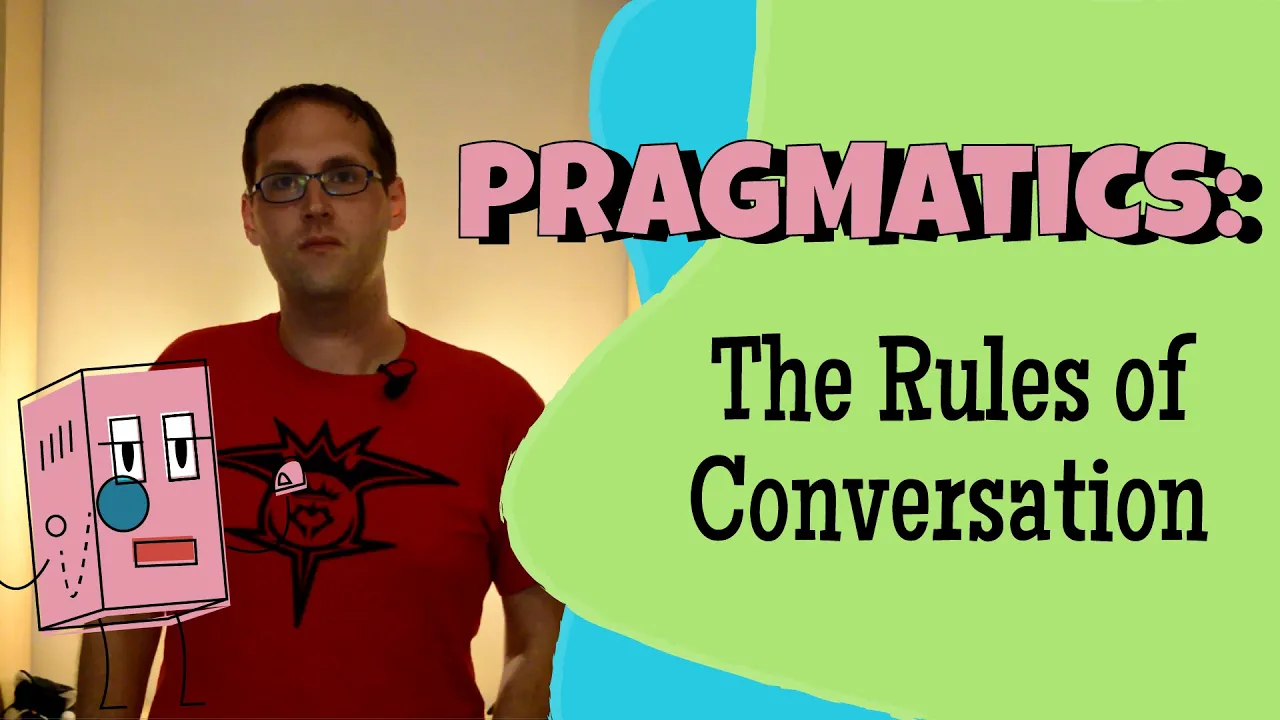





Gricean Maxims are four cooperative principles that guide effective communication: Quantity (provide necessary information without excess), Quality (speak truthfully), Relation (remain relevant to the conversation), and Manner (be clear and unambiguous). When speakers intentionally violate these maxims, they create conversational implicatures—implied meanings that listeners must infer. For example, saying 'vegan tomatoes' flouts the Maxim of Quantity by providing unnecessary information, implying that other tomatoes might not be vegan. These implicit rules allow us to understand context-rich communication without explicit statements.
Grice's Maxims: The Hidden Rules of Conversation
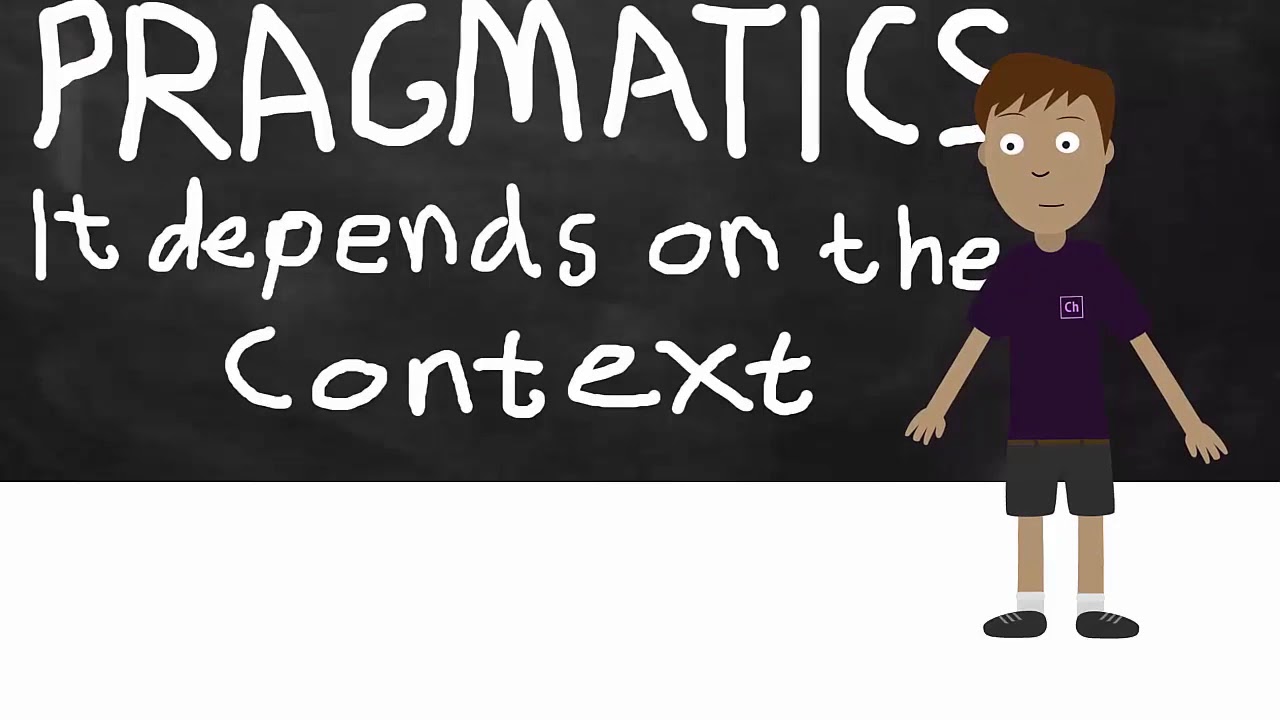
Added:The distinction between semantics (the literal meaning of words) and pragmatics (the meaning of words in context).
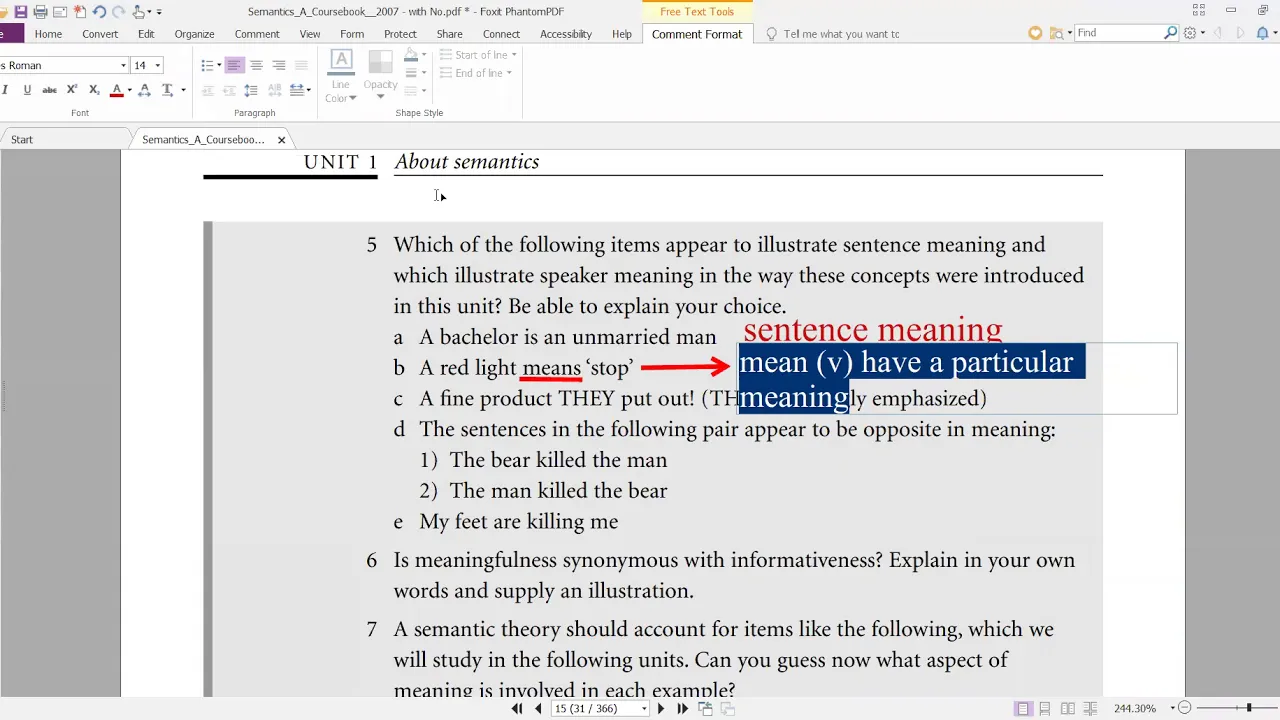
The concept of 'speaker meaning' versus 'sentence meaning'—understanding that people often communicate more than what they literally say.
Basic cognitive processes involved in drawing inferences and making logical deductions during a conversation.
The mechanics of 'flouting' and 'violating' maxims, and how these deliberate deviations generate irony, sarcasm, and metaphor.
Brown and Levinson's Politeness Theory, which explores how social relationships and 'face-saving' influence why speakers deviate from Grice's maxims.
Relevance Theory (Sperber and Wilson), a cognitive framework that serves as a major post-Gricean alternative, reducing the maxims to a single principle of relevance.
Neo-Gricean pragmatics (such as Horn's and Levinson's frameworks) which simplify and refine Grice's maxims for modern linguistic analysis.
Applications in Natural Language Processing (NLP) and Artificial Intelligence, specifically how computational models are trained to detect implicature and sarcasm.
5.8M views237.5Klikes5:32Original Release: 2020-05-04
“Vegan burgers” are a sensible thing to find on a supermarket shelf.
But “vegan tomatoes” wouldn’t be.
In fact, those tomatoes would sound a bit suspicious: it’s the same as the old joke about asbestos-free cereal.
Those labels are ignoring one of Grice’s Maxims, a set of… guidelines that explain how we communicate with each other.
Paul Grice was a philosopher of language, and in '75 he published a paper called "Logic and Conversation".
He was dealing with the gap between natural language and what’s called “logical formalism”.
Basically, we communicate far more than just the literal meaning of our words.
Grice wrote that for that to be possible without having some hyper-logical unambiguous language, we must be operating under some shared assumptions, what he called the Cooperative Principle.
We assume that we are cooperating with each other when we are talking.
Which is obvious, right?
But there's a deeper point there: we all try to fit what other people say into the context of what’s happening or what’s already been said.
That's part of why, when we play a computer game and a character says exactly the same thing no matter if we’ve just saved their village or burned down their house, we can tell that they're preprogrammed.
We can't find a way to fit their words to the situation.
So here are Grice’s Maxims, and if you’re not in a video game, these are the rules that we assume our conversation partners are following.
Although, despite how they’re written, they are not prescriptive, you-must-do-this rules: they’re just guidelines.
So first: the Maxim of Quantity: give as much information as required, and no more.
Which is what we're talking about with vegan tomatoes.
We already know they’re vegan from the word “tomato”, giving too much information is strange.
Next, the Maxim of Quality: tell the truth.
Next, there’s the Maxim of Relation: be relevant.
The person you’re talking to will assume that what you’re saying is related to what they just said in some way, and they’ll try to find what that connection is.
And finally, the Maxim of Manner: be clear in what you’re saying.
Although Grice phrased that in a way that I don’t think actually follows his own guidelines?
Actually, all of these maxims were stated and restated at length.
But then, he was a philosopher. They tend to do that.
So let’s have a good example of using Grice’s Maxims, and after that, a deliberately bad one.
Let’s imagine someone says, “I’m out of petrol”, and in reply, I say, “there’s a garage down the road”.
Without context, just using the super-literal, logical meaning of those sentences, there’s no connection there.
Those are just two factual statements.
But if you assume I’m trying to follow the Cooperative Principle, then you can automatically work out a lot more.
Using the Maxim of Relation, the garage probably has petrol.
Using the Maxim of Quantity, we know that that's all I need to say in order to imply: hey, you can push your car there, you can buy fuel, and you can solve your whole "being stranded" problem.
A problem which, by the way, was also completely implied using the Cooperative Principle.
We can bring the graphics in now, but until this moment, all that backstory about a stranded car was implied just by the words “I’m out of petrol”.
Now, using the Maxim of Quality, we can assume I’m telling the truth and this isn't a lie or a guess.
And using the Maxim of Manner, even someone who’s confused by my dialect can work out that "garage" probably means the British slang for what Americans would call a “gas station”.
It’s not just someone’s garage at home where they park their car.
That would be weird.
All that got implied from just the phrase “there’s a garage down the road”.
But what about when we don't follow the Maxims?
Grice says that in that case, we’re asking for Conversational Implicature.
Which is to say, we are implying something not said.
There are two ways to break a maxim: you can “violate” it or you can “flout” it.
Violating it is just, like, lying.
It’s breaking a maxim to deceive.
But “flouting” is breaking a maxim in a way that you expect the other person to pick up on.
One of Grice’s examples is a philosophy professor who has to write a grad school letter of recommendation for a student that they have no faith in.
And, yes, I absolutely believe that this is just Grice quietly grumbling about one of his students.
Anyway, the professor writes the letter using the Cooperative Principle.
"The student’s command of English is excellent, "and his attendance at tutorials has been regular.” That is, technically, a letter of recommendation, but it doesn’t follow the Maxim of Quantity.
It is far too little information.
It doesn’t say the student’s actually good at philosophy.
It’s flouting the maxim, and when someone does that, they are hoping that the person reading or listening will understand what they’re really trying to communicate.
And that’s why you see product packaging that says “vegan tomato” or “asbestos-free cereal”, or, more realistically, “low in fat” or “low in sugar”.
They’re flouting Grice’s maxims to imply that the other brands aren’t, or to imply that those claims are good things to be.
And that might not be true.
But it’s not technically lying.
It’s just not playing fair by the Cooperative Principle.
Either that, or there really is some sort of evil, animal-byproduct tomato out there.
Thanks to my co-authors Molly Ruhl and Gretchen McCulloch.
Gretchen’s podcast Lingthusiasm is linked in the description, it is well worth a listen.
Up Next

81:50
The Science of Linguistics: Language, Dialects, and Communication Science
@SciGuys
36K views•2022-10-02
36:52
Constraint Interaction in Optimality Theory: Epenthesis & Deletion
@Vidyamitra
180 views•2018-08-20

4:00
Why Adults Struggle to Learn Languages Like Children
@TomScottGo
2.8M views•2015-06-04

21:32
Accent Expert Explains U.S. Regional Dialects | Part 1
@WIRED
9.3M views•2021-01-21
Related Study Plans & Knowledge Roadmaps
Structured learning paths in Linguistics
linguistics
Optimality Theory: Tableaux & Constraints
01Phonological Basics: Sounds, Syllables & Rules
02Foundations of Optimality Theory: GEN, CON, and EVAL
03The Constraint Inventory: Markedness vs. Faithfulness
+ 2 more learning modules
15h5 modules
Explore Roadmap
linguistics
Morphosyntactic Alignment: S, A & P Systems
01Foundations of Syntax: Transitivity and Arguments
02The Linguistic Variables: Mapping S, A, and P
03Nominative-Accusative Alignment
+ 3 more learning modules
12h6 modules
Explore Roadmap
linguistics
Analyzing Sign Language: Phonology & Syntax
01Foundations of Sign Language Linguistics
02Phonology: The Five Parameters of a Sign
03Morphology: Word Formation and Classifiers
+ 2 more learning modules
14h5 modules
Explore Roadmap
linguistics
Pragmatics: Speech Acts, Grice & Politeness
01Introduction to Pragmatics: Meaning in Context
02Grice’s Cooperative Principle & Implicature
03Speech Act Theory
+ 2 more learning modules
14h5 modules
Explore Roadmap