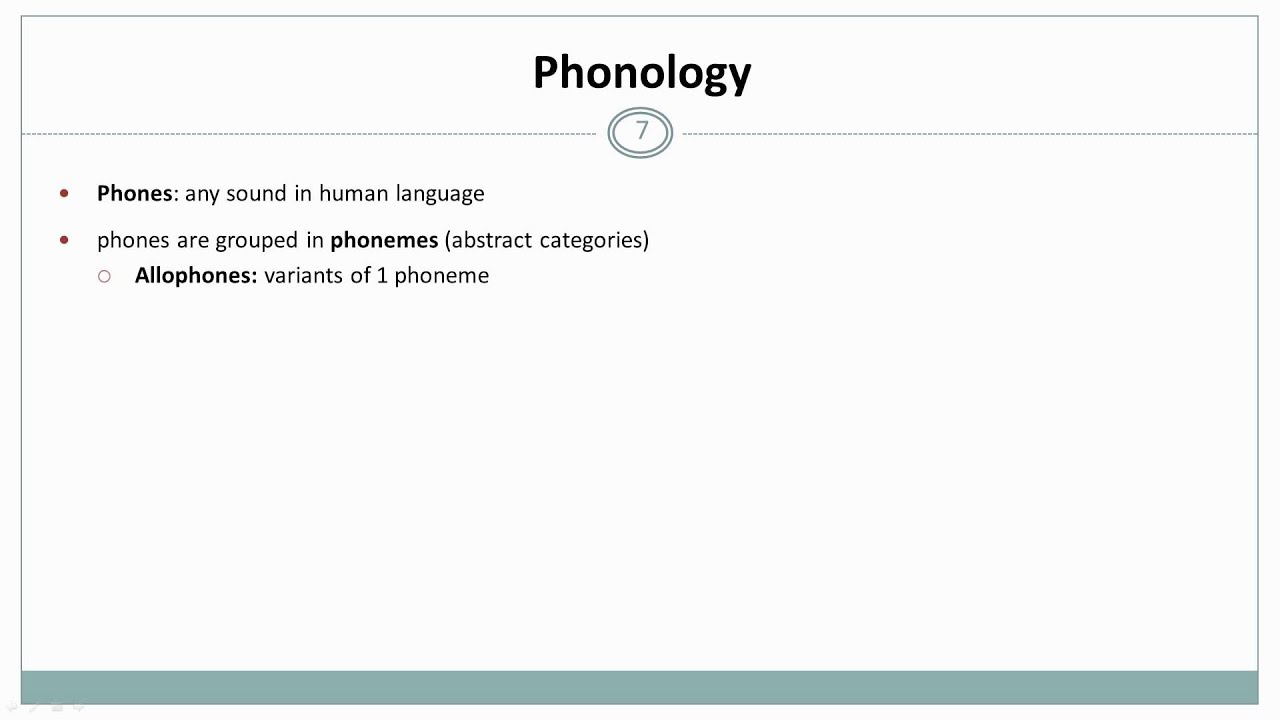
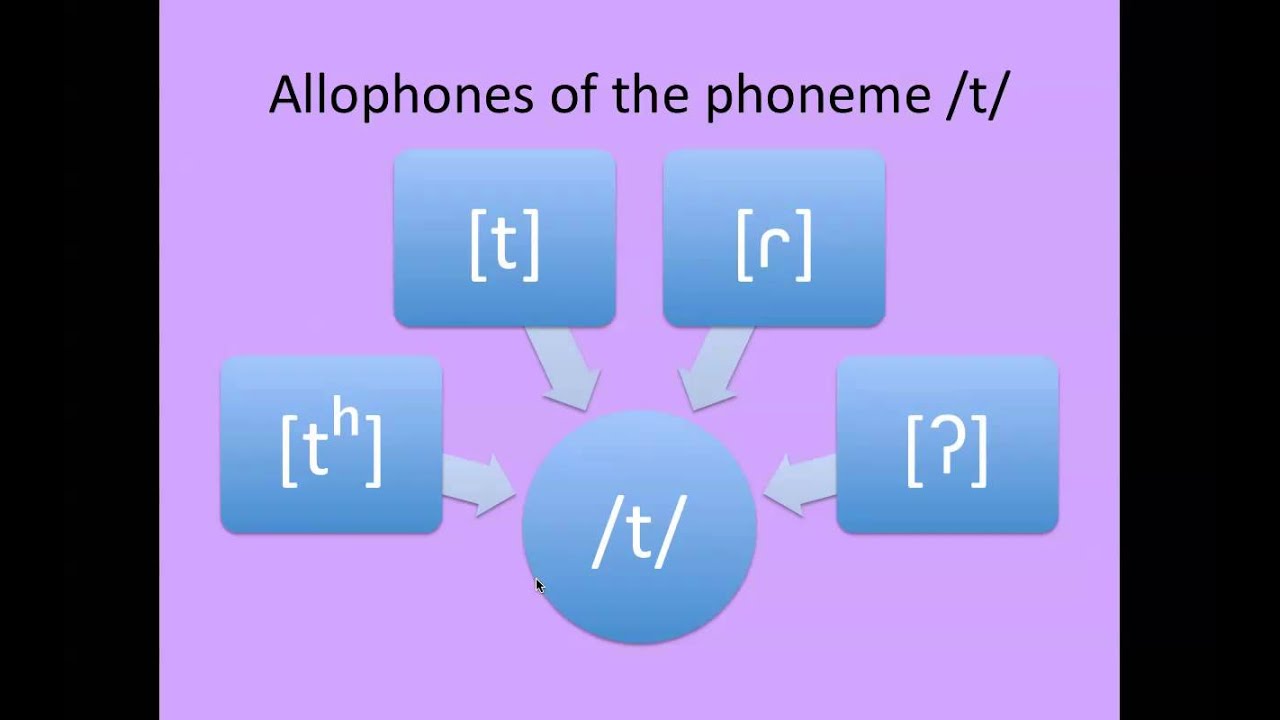



















Optimality Theory (OT), developed by Alan Prince and Paul Smolensky in 1993, is a general theory of cross-linguistic variation and formal theory of linguistic typology that explains phonological phenomena through constraint-based competition rather than rule-based systems. OT proposes that all constraints are universal and valuable but ranked hierarchically within each language, where the optimal output is selected from multiple candidates by minimizing violations of the highest-ranked constraints. The theory distinguishes between markedness constraints (which enforce well-formedness and prohibit difficult-to-produce structures) and faithfulness constraints (which preserve lexical contrast between input and output). This framework accounts for phenomena like English pluralization alternations (e.g., 'book' → 'books' with [z] vs. 'dog' → 'dogs' with [s]), demonstrating how constraint rankings determine which violations are fatal versus acceptable.
Optimality Theory in Linguistics: Key Concepts & Architecture Explained
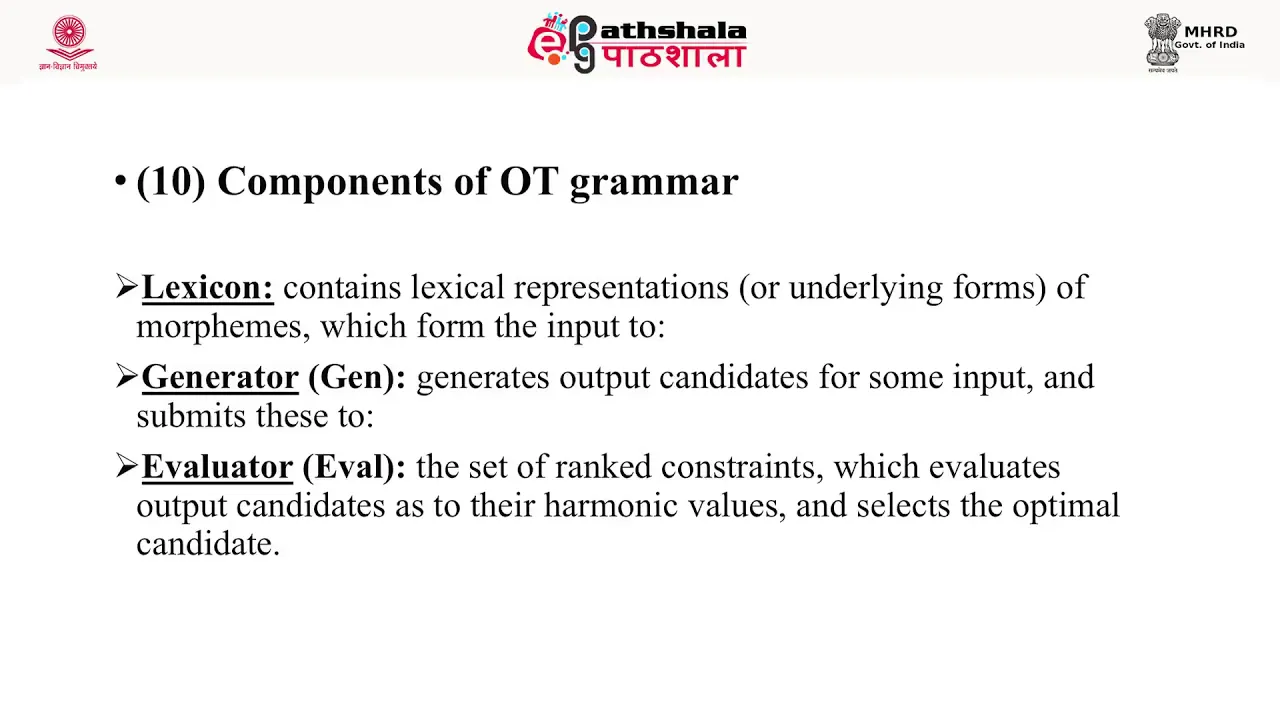
Added:[Music] welcome to EPG part shala in this module we are going to discuss about introduction to optimality theory part 1 what is the system of knowledge how did the system of knowledge arise in our mind how do we put to use this system of knowledge what are the physical mechanisms that are responsible for this system of knowledge and putting it to use whereas the generative grammar tradition can account for just the first question optimality Theory also known as OT can account for all the four optimality theory is a general theory of cross-linguistic variation and a formal theory of linguistic typology it is used not only in phonology but also in other areas of linguistics such as semantics and syntax in this model we are going to discuss about OT in depth how our team works what is the architecture of OT who are the major contributors of OT and the basic thing that ot deviated from rule-based phonology on the basis of constraints and not rules so we are going to talk about this constraints in detail the markedness and the faithfulness constraints now let's start to understand the subject in detail OT is essentially an alternate view to phonology this theory was developed as a response to a conceptual crisis at the center of phonological thought my prince in Smolensk in 1993 concerning the role of output constraints the noticeable familiarity with the ideas of optimization competition parallel evaluation along with along with conflicting constraints strongly suggests that the optimality theory framework was at least partly inspired by the concepts of neural networks ot is a general theory of cross linguistic variation and formal theory of linguistic topology moving on to the major contributors of OT Alan Prince of Rutgers University and Falls mullinski of John Hoskins University both in USA starter introducing their studies on a new approach to language this new approach was named optimality theory by 1993 and became quite well known by Prince and small on skis widely circulated manuscript optimality Theory constrained interaction and generative grammar the impact of this pioneering study in the field of phonology was far reaching intense and instantaneous further since its inception in early 1990s optimality theory has been adopted in many other areas of study within linguistics including syntax semantics historical linguistics social linguistics etc and even beyond the discipline of linguistics during and after the initial phrase of Inception John McCarthy Linda Lombardi Rena Koga and many other scholars contributed significantly in the growth of optimality theory it is no wonder Oh tea is considered one of the top five developments in generative grammar in recent times moving on to the architecture of 44 neurological constraints are ranked and viable by the phonetic forms of their underlying representations in ot structure so basically what Oh tea has is constraints constraints that are universal and which are valuable now and these are ranked hierarchically these constraints are minimally evaluated by a set of candidates and the one which will cause the least serious violation wins so basically OT in OT there are a lot of potential candidates now these potential candies fight with each other to become the optimal candidate now the optimal candidate is one that in cause the least amount of violation and the least serious violations which are not that costly so if optimal can date is the one that violates the least ranked constraints the seriousness of violation is defined in terms of hierarchies of constraints the violations of higher rank constraints is considered to be fatal and there if we use a w22 harmony maximization as the criterion for optimality where the weights are in the top row and the rightmost column provides the how many values for the candidates according to Kagera the inevitable violation of a constraint does not imply ungrammaticality whereas the absolute satisfaction of all constraints is crucial to the grammars outputs now moving on to the architecture of 40 we have legs the Jen the eval and the corner the leg stands for lexicon the Jen for the generator the eval for the evaluator and the corn for the constraints now lexical is or Lex is one where the underlying forms are there the lexical representation or the underlying forms are there now these serve as the input to the generator now the generator takes accepts the input now the generator forms various candidates potential candidates and sends these potential candidates which is like an infinite set of candidates to the evaluator for the evaluator to evaluate now the generator has generated infinite number of potential candidates and send these candidates to the evaluator now what the evaluator does is evaluate the most optimal candidate based upon the ranking of these constraints the candidate that incurs the least serious violation is chosen by the evaluator as the most optimal candidate a candidate X is optimal if and only if for any constraint that prefers Anan Candide y2x there is a higher ranked constraint that prefers X to Y now corn stands for constraint it is basically markedness constrain and faithfulness constraints now Odie has two kinds of corn strain which is one is the market neskowin strain the other is the faithfulness constraints we're going to talk about this later on but now I'm just going to give you a brief idea of what these constraints are basically markedness constraints are the well formulas constraints and the faithfulness constraints are the correspondent constraints that seek for identity between the input and the output now before moving on it is very important to note two actualities first that constraints are valuable but the violation must be minimal all constraints are viable there is no such constraint that is not valuable every constraint has to be universal and it should be valuable but the violation should be minimal that is the least ranked constraints could be violated by the optimal candidate and the ranking process the constraint is very crucial to get the optimal output every language has its own specific ranking this ranking it's language specific and it's as various crucial in OT as well as to the language itself so constraint ranking for language l now if there is an input then there are potential candidates as you can see candidate one candidate to candidate three and there are constraints constraint one constraint to constrain three now you can see candidate one violates constraint two candidate two violates constraint one and can be three violates constraint three now since candidate one and to violate the higher-ranked constraints these violations would be called as fatal whereas candidate three violating the car string3 is not fatal and hence chosen as the most optimal candidate in the graphic representation of or tea structure you can see there is an input which is basically from the lexicon now this input goes to the generator now the generator accepts the input and forms different potential candidates which is like candied 1 2 3 & 4 now these candidates go to the eval for evaluation the evaluator based upon the constraint ranking and the constraints in hand it evaluates the most optimal candidate and therefore we get the output so there is another graphic representation for the Hindi word kala banana in which there are different constraints and how the working of 40 happens how it goes to the generator how generator generate candidates you can see the nen number of candidates there there are five candidates and there are different constraints and finally you get the output which is the optimal candidate now we want to talk about the constraints now as we said that ot has constraints and not rules and these constrains are universal and have their own ranking they are violating constraints are universal they are valuable and they have a ranking of their own which is language specific in the candidate that in costs the least amount of violation of the least serious violation is chosen as the optimal candidate now what are these constraint length what are the types of constraints as I said there are two types of constraints one is the marketers constraint and the second is the faithfulness constraint the constraints in OT can be categorized into two major groups namely is above as described by chronic hugger unmarked values across linguistically preferred and basic in all grammars while marked values are cross-linguistically avoided and used by grammars only to create contrast so basically since mark and s constraints our well Forman is constrained they give rise to an MA to values whereas faithfulness constraints maintain that lexical contrast markedness constraints enforce well formulas of the output candidate prohibiting structures that are difficult to produce or comprehend for instance Google is some of the common marketers constraints across many languages a syllabus must have on sets be vowels must not be nasal and our optimal obstruents must be voiced after nasal sounds moving on to faithfulness constraints faithfulness is understood as the combined grammatical factors that preserve the lexical contrast they demand similarity between input and output candidates here is a list of some of the typical examples of faithfulness constraints first that output must present all segments present in the input that is there should not be any kind of deletion output segments second output segments must have counterparts in the input that means that there should not be any kind of appendices and the third the output must present the linear order of segments in the input the linearity sequencing of the linearity order of segments and the input shouldn't be maintained in the output like for example metathesis is not allowed now moving on to know how it works let us take an example of the English pluralization in English pluralization we know that for example a book become books whereas dog becomes dogs now the plural morpheme here has two allophones sir Ensor now basically what happens is that the plural morphine agrees in voicing and then you get the two allophones depending upon that so now we have to prepare a constraint set now what are the constraints set there has to be a maken is constrained and there has to be your faithfulness constraint the markedness constraint basically is about agreeing in voice that the agree in specification of voice and the faithfulness constraints we can have that no deletion which is max IO Deb IO which is like no kind of a pentas is going on and I didn't i/o for the feature voice like if the feature voice is present in the input it should also be present in the output in its correspondent so the grammar for this language that could be constructed so far is presented in the following ranking now what is the ranking that is max io is the most higher ranked constraint followed by deep I Oh followed by the markedness constraint agree voice followed by the ID entire faithfulness constraint with for the feature voice so basically what we are trying to say is that there has to be no kind of deletion no appendices and the feature voice has to be markedness constraint has to agree with the feature voice and the faithfulness constrain opposes this that the contrast should be maintained if there is voice in the input it should be also in the output now we know the underlying morphine for the plural morpheme is up now if you take the input as book followed by the Sur morpheme you have four potential candidates one is the book is when there is books and then there's books and then there is book now with the constraint ranking given that max I have ordered by Deborah followed by agree boys followed by I'd entire voice we have the most optimal candidate to be B why because we can see that evaluates depe because there is an insertion in a the e vowel is inserted so that is a fatal violation of de pyro in C you can see that the agree voice the market is constraint is not a green like Z is plus voice whereas curve is not voiced so there is no voicing agreement there therefore C violates agree voice which is another fatal validation and in D you can see there is there is deletion the zomo famous the plural morpheme so max io is deleted so B since it occur in curls the least serious violation which is the faithfulness of constraints violation of to the corresponding feature voice therefore B is the most optimal candidate similarly in dogs also you can see the same thing that a B and D in cafe tree violations as in a there is we can see a pentose is going on there and indeed there is deletion going on the plural morpheme is deleted and be voicing is deleted sorry you know deleted the voicing is not being agreed sir does not agree with girl with respect to voice so therefore that and then za becomes voiceless so I don't I was also getting violated there you deserve morpheme becomes so so violent IO is getting violated there and ins and C has no violations at all so C is the most optimal candidate again gives away he was full factorial typology of mark in this constraints and faithfulness constraints so what he says is if the mark honest constraints which are context-free dominated by the context-sensitive mark honest constraints and faithfulness constraint there wouldn't be any variation those gives rise to only unmarked structure because the the well formulas constraint is dominating so there won't be any kind of variation there now if a cons context-sensitive mark honest constraint dominates a context-free mark in is constraint and a faithfulness constraint there can be a loafer neck variation which we saw in the previous example of English pluralization there was kind of an alpha nu variation because the agree voice Marconi's constraint was a context-sensitive constrain and if a context-sensitive mark in is constrained dominates a faithful con faithfulness constrain and which dominates a context-free god daum constraint we can see a positional neutralization in one particular position the sounds neutralized that there is no difference within between the sounds in a particular position and finally a faithfulness constrain dominate all the other we can find full contrast a full lexical contrast in this module we discussed about optimality theory in detail we saw the various components of OT which were the lexicon the generator the evaluator and the constraint set we talked about the constraints which is the core of optimality theory in detail the types of constraint the markedness constrain and the faithfulness constraints we also saw how a team works how it chooses the most optimal candidate we took the example of English pluralization to account for the allophonic variations in languages optimality theory gained immense popularity not in phonology but also in syntax semantics and other interdisciplinary areas I hope this module was of great help to you thank you
Up Next
Phonological Rules and Derivation in Linguistics
@Trevtutor
100.8K views•2016-04-27
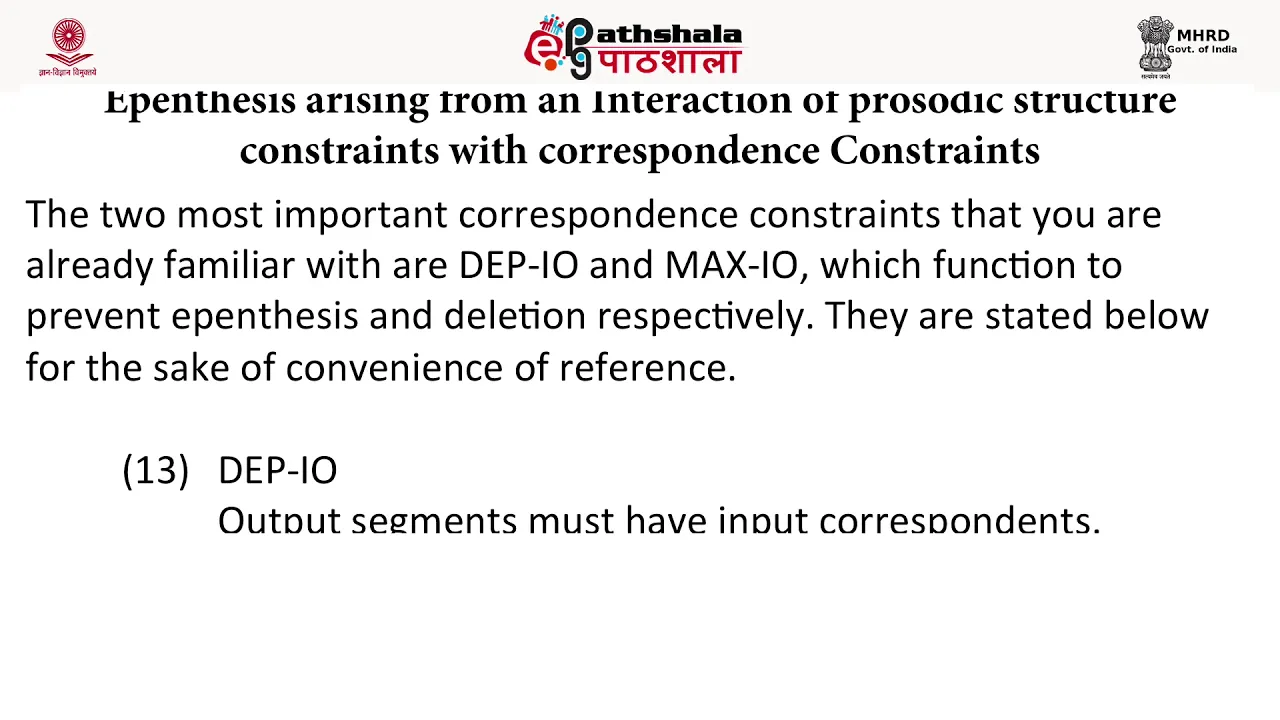
Constraint Interaction in Optimality Theory: Epenthesis & Deletion
@Vidyamitra
180 views•2018-08-20

Forensic Linguistics: How Language Solves Crimes | PBS
@pbsstoried
1M views•2024-01-25

Accent Expert Explains U.S. Regional Dialects | Part 1
@WIRED
9.3M views•2021-01-21
Related Study Plans & Knowledge Roadmaps
Structured learning paths in Linguistics