
















![Phonetics: Intro to linguistics [Video 2]](https://i.ytimg.com/vi_webp/GLBsvdaR_ow/maxresdefault.webp)









Phonetics is the scientific study of human speech, divided into three interconnected branches: articulatory phonetics (studying how speech sounds are produced through the vocal tract and articulators), auditory phonetics (investigating how humans perceive speech sounds through the hearing system), and acoustic phonetics (analyzing the physical properties of speech signals); speech sounds are fundamentally categorized into vowels (allowing free airstream passage) and consonants (involving some obstruction), with suprasegmental features like stress, loudness, pitch, and length adding additional layers of meaning to speech.
Introduction to Phonetics: Articulatory, Auditory & Acoustic Branches
Added:An understanding of linguistics as the scientific study of language, distinct from prescriptive grammar rules.
The conceptual distinction between spoken speech sounds (phones) and written alphabetic letters (orthography).
A basic awareness of human vocal anatomy, specifically the lungs, larynx, vocal cords, and oral cavity.
Elementary physics concepts of sound waves, including frequency, amplitude, and propagation through a medium.
Mastery of the International Phonetic Alphabet (IPA) to transcribe and represent the consonant and vowel sounds of global languages.
The transition to Phonology, studying how these physical speech sounds are organized into abstract, cognitive systems and patterns within specific languages.
Hands-on training in acoustic analysis software (like Praat) to analyze sound spectrograms, pitch, and formant frequencies.
Exploration of real-world applications in speech-language pathology, forensic speech analysis, or speech recognition and synthesis technology.
133.2K views2.1Klikes11:25Original Release: 2012-05-25
phonetics looks at human speech from three distinct but interdependent viewpoints articulatory phonetics studies how speech sounds are produced auditory phonetics studies the way in which humans perceive speech sounds and acoustic phonetics studies the physical property of speech now the names of these branches all use an initial letter A alternatively you could use a p and Associate these branches with speech production auditory phonetics with the perception of speech an acoustic phonetics with the physics of speech so here you have your initial characters p a good way to remember these disciplines let us look at the main goals of these branches first articulatory phonetics investigates how speech sounds are produced for example speech sounds such as these vowels here [Music] e or to use the second one the vowel U or let's take consonants such as this one as in p versus well let's take a more exotic one this one here as in a now the production and the description of these segments of speech involves some basic understanding of speech Anatomy for example some knowledge about the lungs and the question how the lungs produce the necessary energy in form of a stream of air or let's look at the larynx next so here is the larynx which serves as a modifier to the Airstream and is responsible for phation well at last but not least the vocal tract itself now here is the vocal tract and the vocal tract modifies and modulates the Airstream by means of several articulators let's mark those articulators which are actively involved in the modification of the Airstream that's those four active articulators now further more since all these speech sounds involve some sort of air we have to look at the central Airstream mechanisms because so you see without Airstream nothing will happen so let's look at the Airstream mechanisms in some detail now whereas in English all speech sounds are initiated cre by outward goinging aggressive air from the lungs other languages may use additional ways of producing an Airstream the following Airstream mechanisms can theoretically be used in human speech well most languages in fact all languages use speech sounds that are produced with egressive that is outward goinging pulmonic I.E from the lungs coming air so aggressive pulmonic air as in par for example now you could use this aggressively that is inward directed in situations when you so or cry such as so this was an ingressive pulmonic Airstream but you will certainly agree that this is a rather exceptional situation so let's put this in Brackets and Mark it with a minus the glottalic agressive Airstream which is produced here in the larynx of course exists in many languages it can be used agressively in sounds such as a or and it can be used aggressively as in sounds like or so here we have the ingressive glottalic Airstream and the Rive one coming from the glotis and finally we have the veric Airstream which cannot be used aggressively it is produced here in the vocal tract itself but in an ingressive form it can be used in sounds such as and here I like this one ah the symbol is nice isn't it for a kiss it's this phonetic symbol so it can be used the combination of anatomical properties and the respective Airstream allows us to precisely Define all speech sounds that are used in natural language where two types can be differentiated vowels and consonants now vowels allow an almost free passage of air through the vocal tract the example that you can see here to my right is e and you see the Airstream passes freely through the vocal tract and the lips have to be spread consonants by contrast involve some sort of obstruction to the a stream in the vocal tract here we have the example of C as in a again a and you see during the consonantal posture some sort of closure has been created now vowels and consonants are the basic segments of speech just like the notes are basic segments in music together vows and consonants form syllables they form larger units and eventually utterances superimposed on the segments are a number of additional features known as Supras segmental or prootic features they do not characterize a single segment but a succession of segments the most important Supra segmental features are stress loudness pitch and length and then we also have aspects such as secondary articulation now in music to draw the parallel again Supras segmental features would be something like cresendo or something like diminuendo or Forte to name a few the two remaining branches of phonetics are often treated in an interdisciplinary Way by means of a combination with psychology Anatomy acoustics physiology to name a few let us briefly discuss them auditory phonetics investigates the processes underlying human speech perception the starting point for an auditory analysis of speech is the study of the human hearing system that is the anatomy and physiology of the ear and the Brain since the hearing system cannot react to all features present in a soundwave it is essential to determine what we perceive and how we perceive it this enormously complex field is referred to as speech perception well if you want to find out more about this field consult our e-lecture pre-lexical processing one acoustic phonetics and here you see some machines studies the physical properties of the speech signal this includes the physical characteristics of human speech such as the frequency patterns involved the analysis of friction noise and Etc there are numerous factors that complicate the straightforward analysis of the speech signal for example background noise anatomical and physiological differences between me and you and many more these and other aspects contribute to the overall speech signal and are studied under the heading of acoustic phonetics this e-lecture is just an overview of the field in future e-lectures about phonetics we will concentrate on articulatory phonetics and discuss the details of segmental and Supra segment mental phonetics we will look at consonants at vowels we will discuss aspects of stress pitch loudness and will illustrate our findings with numerous examples from the language index of the virtual Linguistics campus by the way in the toolbox here is your toolbox you have permanent free access to our interactive consonantal and vowel charts and many more so join us okay that's it for now see you again in one of our e- lectures on phonetics and if you like on the virtual Linguistics campus
Up Next

5:03
Articulatory Phonetics: Describing Vowels in North American English
@ubcvisiblespeech9115
798.6K views•2015-02-04
36:52
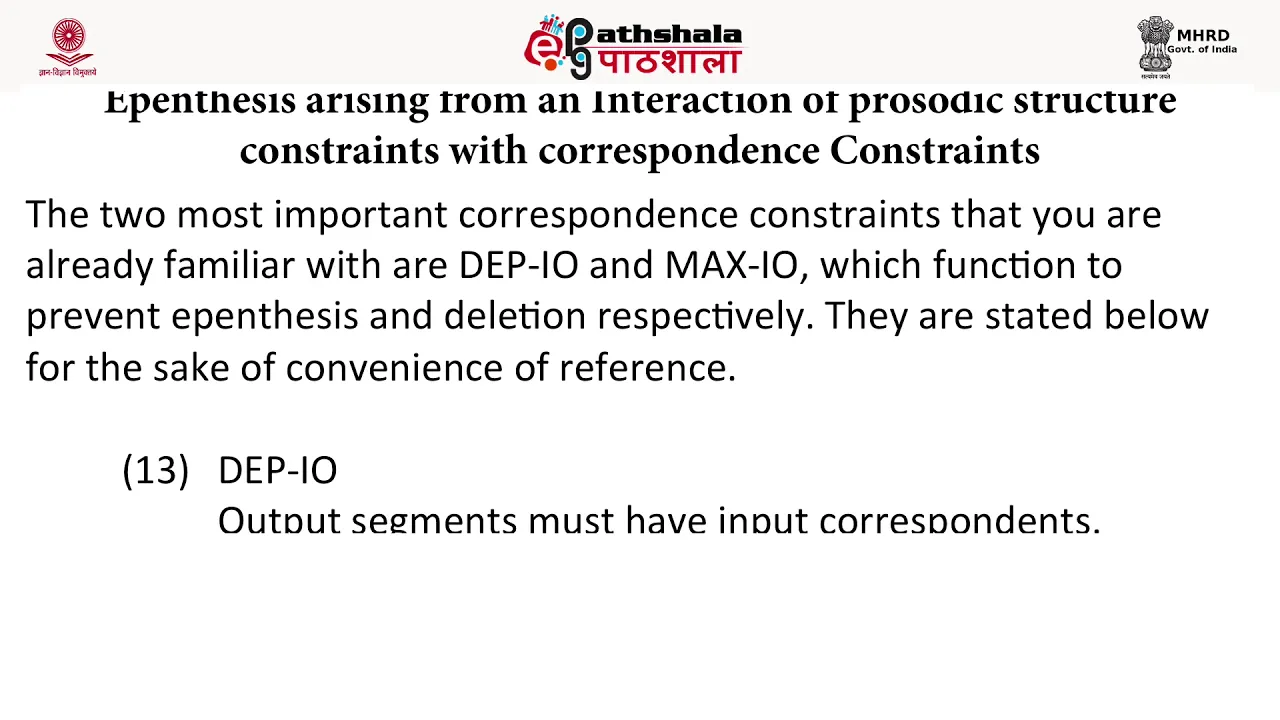
Constraint Interaction in Optimality Theory: Epenthesis & Deletion
@Vidyamitra
180 views•2018-08-20
19:54
Understanding Grammatical Case: A Cross-Linguistic Study
@oer-vlc
13K views•2012-10-30

21:32
Accent Expert Explains U.S. Regional Dialects | Part 1
@WIRED
9.3M views•2021-01-21
Related Study Plans & Knowledge Roadmaps
Structured learning paths in Linguistics
linguistics
Optimality Theory: Tableaux & Constraints
01Phonological Basics: Sounds, Syllables & Rules
02Foundations of Optimality Theory: GEN, CON, and EVAL
03The Constraint Inventory: Markedness vs. Faithfulness
+ 2 more learning modules
15h5 modules
Explore Roadmap
linguistics
Morphosyntactic Alignment: S, A & P Systems
01Foundations of Syntax: Transitivity and Arguments
02The Linguistic Variables: Mapping S, A, and P
03Nominative-Accusative Alignment
+ 3 more learning modules
12h6 modules
Explore Roadmap
linguistics
Analyzing Sign Language: Phonology & Syntax
01Foundations of Sign Language Linguistics
02Phonology: The Five Parameters of a Sign
03Morphology: Word Formation and Classifiers
+ 2 more learning modules
14h5 modules
Explore Roadmap
linguistics
Pragmatics: Speech Acts, Grice & Politeness
01Introduction to Pragmatics: Meaning in Context
02Grice’s Cooperative Principle & Implicature
03Speech Act Theory
+ 2 more learning modules
14h5 modules
Explore Roadmap