
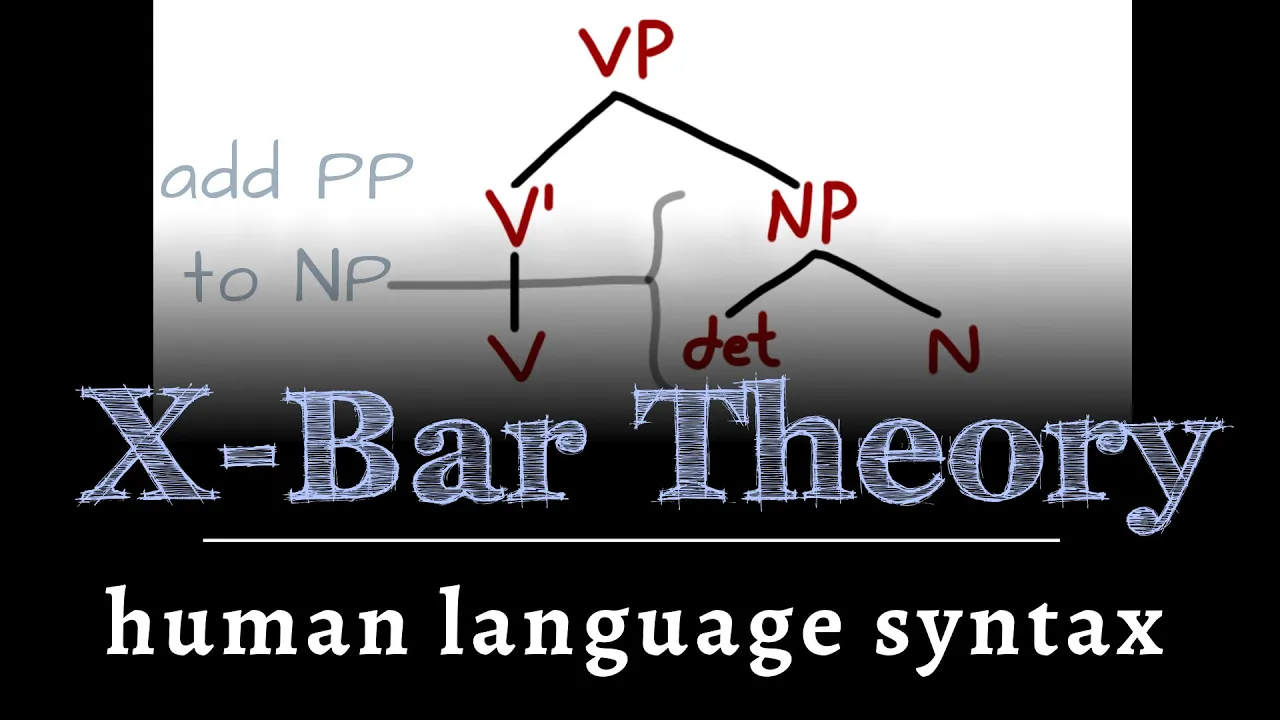


![Syntax II: Intro to linguistics [Video 6]](https://i.ytimg.com/vi_webp/3CaX6MIzbZw/maxresdefault.webp)












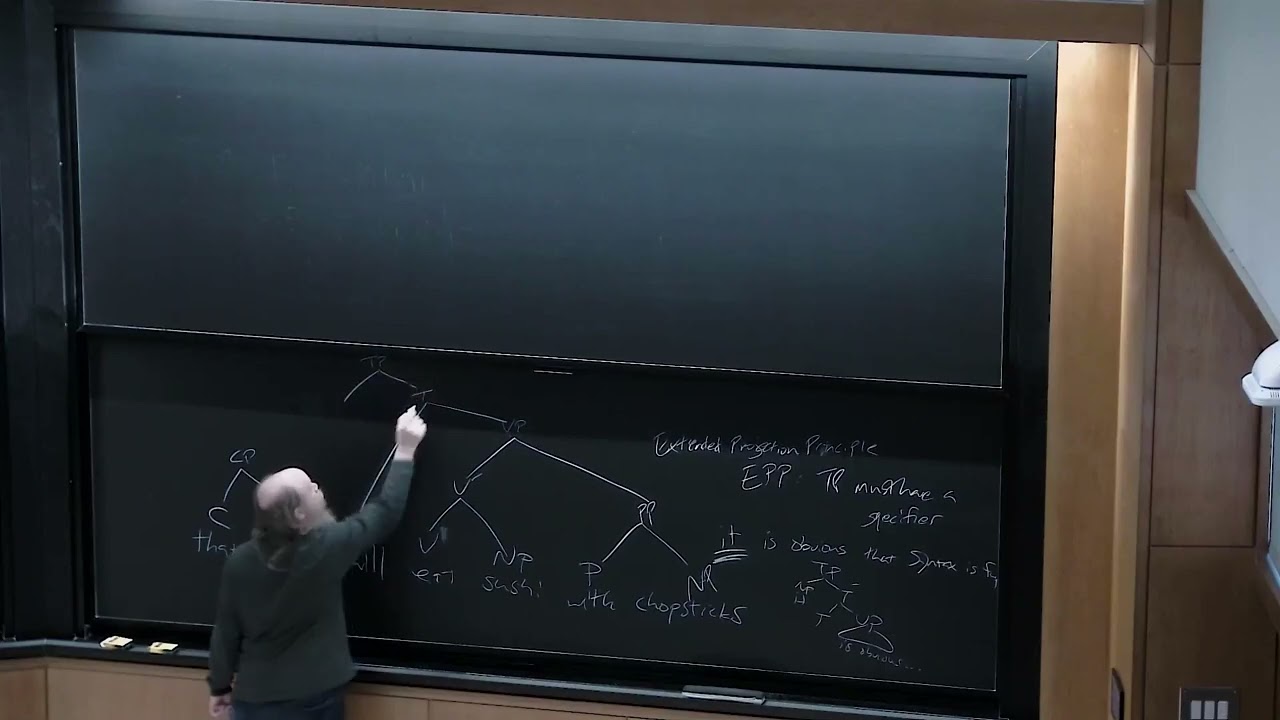


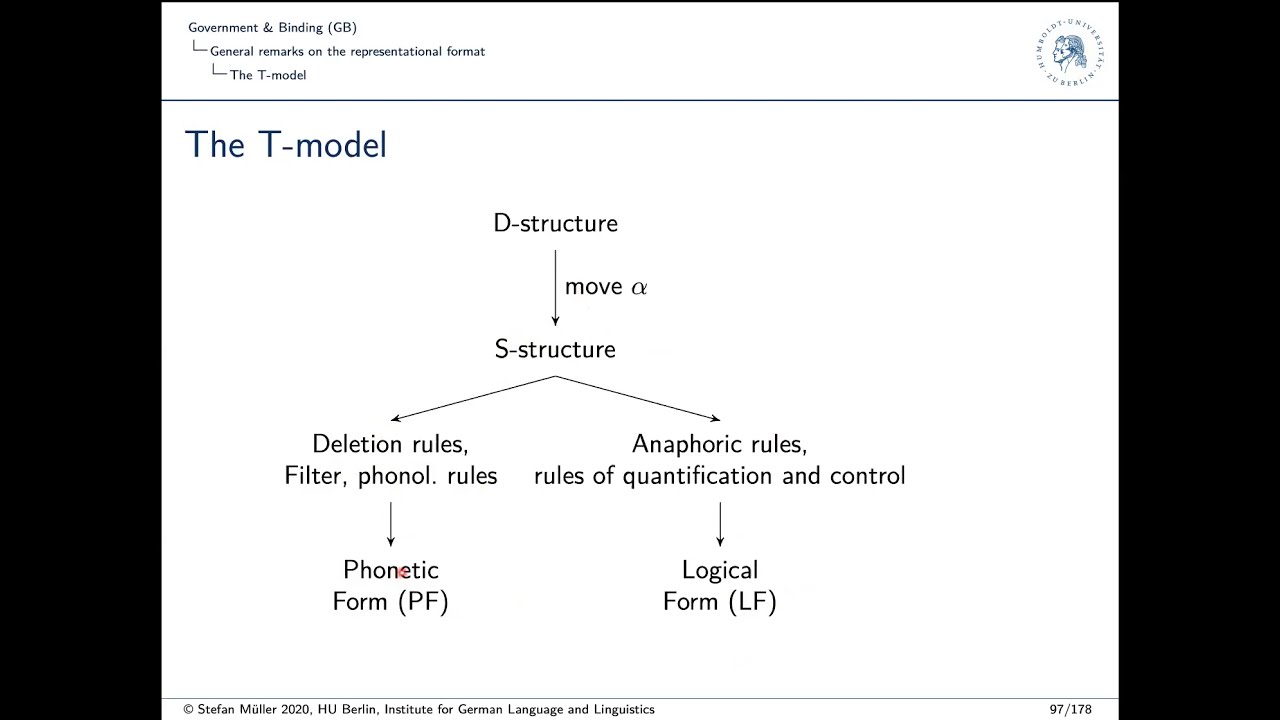


Head movement is a syntactic operation where heads move between positions in the structure, such as T-to-C movement (auxiliary moving from Tense to Complementizer position) and V-to-T movement (verb moving to Tense position). In modern English, tense is weak and cannot attract the verb, so do-support is used instead of V-to-T movement. In Shakespearean English, tense was strong enough to attract the verb, resulting in V-to-T movement. Movement is not literal movement but a composite operation of COPY + DELETE, which maintains the headedness principle and binarity principle. Successive cyclic movements combine multiple head movements in a single derivation, as seen in Shakespearean interrogatives like 'Know you not the cause?' where the verb moves from V to T and then from T to C.
Head Movements in Syntax: V-to-T and T-to-C Movement
Added:Hey, hey, hey, hey. I'm back and today we are going to be tackling yet another subject. We have moved on from null determiners, null constituents, null auxiliaries, and now we're going to talk about what is known as head movements kind of boxing stuff. I've broken my microphone. So, what do we mean by head movement? Head movement is a movement from a head in the structure towards another head in the structure. First, we're going to start with the TC movement and we're going to illustrate with the examples that are given here.
As always, this video is based on Radford's book, The Minimalist Syntax.
Without further ado, let's get started.
So, first I suggest we give a tree structure to this sentence just to dissect the structure and see what we're going to have there. So, the sentence ends. So, as always, minimalists start from the bottom. So, the sentence is going to end with Z row with a pronoun V R N. And then from there, we're going to go up to the V and our VP. Our V here in this case is help. And the pronoun is me. And I move on to my T. And this is this is a finite sentence. It does have inflection. So, we're going to have an extended projection. It will give me a T. And the T in this case will be hosting the auxiliary will. And then I'm running out of room as always. And then I move on to the T. And then the TP will give me the pronoun here P R N which is you. So far we have you will help me.
But this is actually an interrogative question or an interrogative sentence.
So we do need to extend the projection a little bit further and we need to go to the CP and then the sentence should be headed by a C and the C itself should be if. Yeah. So if you look at this you see that it's quite straightforward. If is the complementizer you is the pronoun.
Will is the auxiliary occupying the T. V is the main verb which is help. And then the object pronoun is me. Now what happens if instead of saying if you will help me we need to say will you help me question mark what is going to happen here let's try to do that with the structure that we have added here and see if we can achieve the same structure by just moving one constituent to the place of the constituents that's going to be deleted. Let me move this tree where we can see it clearly and then let's do that. Okay. Okay. So, if we want to change if you will help me to will you help me, we can simply get rid of the if because we don't have an if here anymore. And then this will instead of being here on the T, we can have it here on the C. And then it becomes will you help me. So, we moved from a head T towards another head C. Hence the name head movement and hence the name T2C movement. TC movement. Now the question is why is this happening? Why is it happening? The answer linguists have suggested is the fact that in C you have if you have a question in C if you have an interregative force with your the sentence it's meant to ask a question.
What you will have here is a strong aixel question element. So you're going to have it here. This Q here needs to be attached to something. If it happens to have the if then the Q is happy. The stronger or a fixual Q is is a fine. If you don't have your if in here should be back here in the first. If you don't have your if in here, then no F in here and Q all of a sudden becomes really sad. How do you draw a sad face like this? Q now is very sad. What does it need? It needs to attract the closest head that can be transported to the sea and it does it because we call it's a strong aics. It's strong aixel in nature. So what will happen is this will will be moved to here and then in the end you have will you help me. So this is what happens in terms of movement and this is the explanation we have as to why this movement happens in the first place and the explanation lays in the fact that Q here is strong that that's that's why it attracts or draws the other head to towards it. So we've seen an example of TC movement. There is another case of headto-head movement. In fact there are multiple cases of head-to-head movement. Today we're only going to look at two. the T to C movement and the V to T movement. Now this is another head movement. It just involves V moving to the T. So we start lower this time and then we move on like we did before. I am going to draw the tree diagram for the first sentence and then we're going to see how we can work our way towards the second sentence.
First of all, this sentence over here, if you have noticed, you'll see that it's something that that we are quite familiar with. This is from modern English. This is not modern English. So, this this is something that's taken from one of Shakespeare's plays. So, as you can see, the English structure is a little bit different. But why was why does this sentence look like this while this one looks like this? If we read the first one, I don't care for her. That's what we say in modern English. While Shakespeare, if he wanted to express the same idea, he would say something like, I care not for her. We're going to look at the examples here. We're going to have three diagrams. Then hopefully we'll be able to understand what happens behind the scenes. So, let's start with the first sense. I don't care for her.
So, we start with the pronoun here, her.
Then we we will be moving to a prepositional phrase here. Since we have four, the head is four in this case.
Then we move on to the VP. Our VP here is our head V is care. And then I keep going. It's going to be a T bar since we have inflection. Then a T and this we we're not going to split this into further heads because I should have the negative phrase um projection separate.
But for the sake of privacy, I'm not going to do it now. So, I'm just gonna write don't. Okay, it's fine. It's not the point. Just uh just follow with what I'm doing. Okay. So, I keep going to the TP. And then here, I'll have my pronoun P RN, which is I. So, I don't care for her. Now, I don't really need to go further with the projection, further up with the projection because we're not going to use the CP layer. So let's just stay here and see what happened. So what we have here first of all is our verb.
As you can see our verb is care. Now the verb stays where it is. It does not move at all. So we can't really say this is a case of v to t movement. Why is the verb not moving? The verb is not moving because remember earlier we said that the will moved from T to C because of the strong aixel head in the C that needs to to be attached to something.
Let me scroll back to show you real quick. So I said that there usually is a strong fix head here which takes the wheel from here all the way to here. Now in modern English, we're talking about T's. Now in modern English t's do have an aixual tense tns but the thing with this aixual tense is that it's not strong enough to attract the verb. So this aixual tense cannot just stay there on its own. It needs to attach to something. And the way we solve this is by adding the auxiliary do. That's why it's called an auxiliary because it helps. So we add the auxiliary do so that it's it it attaches to the tense and then you have don't. So I don't and the verb doesn't need to move. Why?
Because tense is not strong. So all in all to recap, the tense is weak. So it cannot attract the verb to satisfy the requirement of having to attach to something. Instead, what the language does is let's just add a do. And actually it's called a do support addition because we support that tense.
Now the tense can stay because it has something to be attached to. Now this is modern English. Let's look at the same sentence. Let's draw the same the another tree structure for the same expression but in Shakespearean English from one of his plays. Let's start. So we're going to have something that is quite similar pronoun which is her. I move to PP and a P which is for is everything. Oh, I'm blocking f. Luckily, I have realized that I am blocking the view before I continued. Let's move this up a little bit. Or maybe here. I don't want to move my head. Okay, let's keep going. Maybe I should write a little bit smaller. Let's finish this four. And the PP will take me to the T bar. The T bar will take me to the T. The T here. What is it? I care not for her. Oh, what am I doing? I should put the verb first.
Okay. VP V care. Okay. Well, here we are going to actually use the neg phrase.
The neg phrase care. So the negative here is projected into its own phrase.
The neg P or negative phrase and then the neg P is headed by the negative particle in this case not. So the neg P occupies the position between the VP and the TP as we shall see. Let me move this a little bit MU. Okay, almost there I think. So I move on to a T bar and then the head T. And the head T also has the same tense. Tense always exists. T and S. It's getting a little bit crowded there. I hope you have not lost track of what I'm doing. Let me just move a little bit some of the stuff. Okay, I think now we're fine. Yeah, I think we're fine. Yeah, you never know how much you're going to write until you start writing. Anyways, so the tense here, just like the modern English counterpart, does exist. Of course, we need tense. And then we continue to add TP which has in a specifier another pronoun which is I in this case. So I not care for her. Of course something is missing. Now let's look at the tense. We say in the modern English that the tense is weak. In the English that Shakespeare used the tense the tense was actually strong. It hit the gym. So what happens when you have an aixal head that is strong? It attracts the closest head that can that to which it can be attached. The closest head to which it can be attached in this case is care. So what happens to care? Care gets moved to the tense. And in the end the result you're going to have is I care not for her. This pretty much it. And this is how v to t movement happens. It doesn't happen in modern English with verbs, but a little bit before it used to happen as you can see from this example. I hope this was clear. If you have any questions, just write them down in the comments and I'll be answering them shortly. Okay. So, so th those are two things I wanted to talk about. The VTO T movement and then the TOC movement.
There's something that might happen in the syntax and and and that's when you combine both of them. Both movements can combine. Obviously, we can't really combine them in modern English because we don't have the V tot the way it used to be. But if we look at at at another sentence from Shakespeare, we can see that those two movements were actually combined. And actually, it is a common thing that not that common, but it's not that rare to see movement being cyclic.
And this is the key word here, cyclic.
So cyclic means you jump from one head and then you jump again from that head to the upper position for more than one time. And this is known in syntax as the successive cyclic movements. Another sentence from the taming of the shrew, one of my favorite comedies of Mr. Shakespeare. The sentence says, "Know you not the cause?" Now let's try and draw a tree diagram for this sentence and let's see if we can if we can deduce how the movements will happen. Let's get started. Let's take as much space as we can this time so that we don't do the same mistake having everything look quite crowded. So no, you're not the cause. So I'm not going to split this DP. I'm just going to keep it as it is.
And I'm going to write the cause. No need for capital T's. The And again my face is blocking things. Okay. So the cause is RDP here. I move on. No, you're not the cause. So we're going to have our verb. So VP and our verb here is no.
Yes, it is no because we haven't done the movements yet. So we start the derivation from the bottom. And then we keep going up. And there's something else that also needs to apply is is something what we what we call in syntax the earlessness principle which means operations such as movements need to happen as early as possible. So far there's nothing that is telling us that no should move. What you see here is the final result that we don't have yet.
It's a pity you can't see my cursor but I'll I'll underline things as I am going. I thought you can see my cursor but you can't. But what you have here, no, there's nothing that tells me it needs to be moved anywhere. So actually it stays where it is now. It's not like the final result that we see here.
Anyways, let's continue. So after the VP, as I said earlier, we're going to have a NEGP or a negative phrase, which will be a neg. The neg P is usually between the VP and a TP. So I'm going to do my TP projection. Since this is a finite sentence, it's going to be a T bar. Then it's going to be then what is it going to be? Oh yeah, we have our tense here. TNS and I continue after this we're going to go to our TP and TP is headed by our prone the specifier is our pronoun P RN and you you not know the cause but two things here. First we have the tense before even we continue as as I said we need to apply the earless principle which means we need to do the operation here we said then that in in English tense is strong so it's going to it's going to attract the the closest head that that that it see commands so in this case is snow will move from here it will move and usually in movement we do dotted lines means it will move to here. I continue the derivation. Now I keep going. Remember this is an interrogative sentence. All right, it ends with a question mark. So far I've satisfied the tense requirement. I keep going. After the TP, we going to have a CP and RCP will be headed by a C. Since this is an interrogative question, we also going to have a strong question aix or and and the question aics is also strong. It is as strong as tense. And if tans was able to attract no, the aixel question here will also be able to attract no. Now it looks for the closest head that it see commands which it can use and it happens to be no in its new position which is under the T in this case. In its new position which is under the T. It's really bogging me down that you can't see my cursor but I think I need to play around the settings and fix it for the future. I hope it's clear enough but let's continue now. So the no will now move from here and we're going to do more dotted lines where the no will finally settle here. Now we have no you not the cause. That's it. This is how it happened. And this movement is cyclic because we moved from position number one to under the T from the V to the T.
And then we move from this position to the final destination which is right over here. Final destination not the movies. Okay. So as you see we've seen two examples of movements and then we've seen how they can both combine in what is known as successive cyclic movements and we've seen an example from English.
The last thing I want to talk to you about is the nature of these movements themselves. So what happens when something moves? Do we actually take the thing itself and we literally moved it?
Move it. So we have an empty head here and then empty head here or just something else happens. It turns out it's not simply just a movement. Calling it a movement is actually misleading because nothing moves. Something else happens. And that's the last thing I'm going to talk to you about. Let's scroll to over here. So are we really moving?
That's the question. Are we really moving? When we look at these movements, are we really moving? The answer is no.
We're not moving. Why aren't we moving?
Because if we move, we will be contradicting or violating two principles that are universal for languages in the minimalist syntax.
First one being the head the headedness principle which means every syntactic structure is a projection of a head. So let's go back to one of the examples we've made here. Look at this example.
So we have moved the wheel from here to here because of the strong Q. So we've moved it from here to here. Now after I've moved it, there's nothing here. So this projection here TP is now headless.
It doesn't have a head. Yeah, it does have a head, but not anymore because that head moved to C. So we are v violating a pro the one principle here.
The second principle which is kind of it goes into the same line which is the binarity principle. every non- terminal node in a syntactic structure is binary branching. So what we're saying here is that if we delete if we move the head here then the binarity is not there anymore and by binarity is every node split into two as you can see except for the terminal nodes the last ones where the sentence ends. So if we don't have anything here then actually we're not really branching. So the t just keeps going in one straight line. There is no binary there nothing is branching here there is no binarity as you can see we went straight from from the TP to the VP there is no binarity here and that's also a principle that is universal and we are also violating it so how can we overcome this what can we do to say that none of these elements are violated yet the movement the head movement is still happening whether it's a T to C or V to T doesn't really matter so what we or well not we but what they what linguists have proposed and have accepted in turn was the fact or was the claim to consider that movement is actually a composite operation. Composite operation means it has two parts. So what they do is they take the head in question that is going to move and we are going to literally copy it which means we don't destroy the first one we just copy it.
So that's the first step and of course we're not going to stop at the first step because if we stop now the sentence will be will you will help me. No it doesn't work. So the second part is a delete operation. So after we've copied the head now we can delete it and then we have will you help me and then with deleted it's considered a null element in in the sentence. This way we can maintain our our our proposition that there is movement that happens between heads and at the same time not violate any of the two principles being the headedness principle. Every syntactic projection must be headed by word and the binarity principle. All nodes except for the terminal ones should be branching to two. Now what sort of evidence can we use to support this claim? mainly I can we can talk about two pieces of evidence. The first one is children's speech. Sometimes it's been noted that when children are around 3 to 2 years old or 2 to 3 years old really they will say things like can the cat can jump as a question. So as you see here there's a double can. What what this shows is this child is is doing the first part of the operation which is the copy part. So he copied Ken to the C of the sentence to the complimentizer position of the sentence. The the T has been moved to the C. But the second part of deleting is not yet mastered in this child's language acquisition process. So he's only copying but not deleting. This can be used as evidence. So children's speak speech or many in syntax we can draw so much evidence from from the process of language acquisition because it shows things while they are being whether still being in the process of of being built as as a language or as a mechanism of language. I'll show you the second piece of evidence that we have that supports that movement is an operation of copy and delete. This comes from adult language this time. adult language it sounds like saying words that are bad but that's not what I mean adult languages is like speakers that are already fluent in their mother tongues in this case being English so if we look at this sentence for example should they have should they have should they have called the police called the police I can't write all the word there so I'm just going to keep it with P so look at the sense and look at its counterpart which is not counterpart should they called the P. Okay. Should they have called the P and also question mark. The second sentence is unacceptable by the majority of native speakers. They will accept should they have called the police but they should they will not accept. Should they have called the police? This process that's happening here is known as cliticization. And I think we have used it before as an evidence for the null constituents videos. Now what's happening here is that we cannot cliticize they with have because there's something in the middle. We can do a tree diagram and then we'll understand the last tree diagram. I think this video is quite long but knowledge comes with a price. You need to Okay, I'm done with the tree structure. Now I have the sentence here in its indicative mode.
Not really the interrogative one yet. So the sentence looks something like this.
They should have called the police. Now if I make it turn it into a question that means I am adding the aix here for questions and the aix here is strong as we said. So it's going to attract the closest head which is should in this case. So should will not be moved. Well actually will be moved. But we've already said that instead of move actually what happens is just a copy delete operation. So should has been copied to the C. We still draw the arrow anyways and and and deleted from its original place. Deleted as in it doesn't have any more it doesn't have any explicit phonetic and phological pronunciation. Now why can we not cliticize they with have? If you want cliticization to happen, you will need to have no intervening element. So between the they and between the have, there should be nothing. Had it been the case that there is nothing then they could cliticize onto each other. But in this case there is something and that thing that's in the middle is the deleted copy of should. So should blocks blocks cliticization in this case. And the only proper way to utter the sentence in this case is should they have called the police. And that's pretty much it. Today we talked about head movements mainly T and then V through T and then we talked about the process of combining movements or doing more than one movement being successive cyclic movements. And then finally we discussed the movement operation itself.
Is it simply a pick something and move it somewhere else? Turns out that the answer is no. It's a composite operation of copy and then delete. That's it. Make sure to subscribe. Ask me questions in the comments if you want and tell your friends about my videos.
Up Next

DP Movement: Raising in Syntax | Generative Grammar
@CarnieSyntaxthEdition
14.6K views•2020-09-29
Constraint Interaction in Optimality Theory: Epenthesis & Deletion
@Vidyamitra
180 views•2018-08-20

Forensic Linguistics: How Language Solves Crimes | PBS
@pbsstoried
1M views•2024-01-25

Accent Expert Explains U.S. Regional Dialects | Part 1
@WIRED
9.3M views•2021-01-21
Related Study Plans & Knowledge Roadmaps
Structured learning paths in Linguistics