



















A pidgin is a simplified language variety that emerges when people of different linguistic backgrounds need to communicate with each other for prolonged periods, typically in economically active situations where their native languages are mutually unintelligible; pidgins are characterized by reduced grammar, reduced lexicon, and smaller stylistic range compared to natural languages, and can develop into expanded pidgins that become official languages, as demonstrated by Tok Pisin in Papua New Guinea.
Pidgin Languages in Sociolinguistics | Contact Vernaculars
Added:Basic understanding of sociolinguistics, specifically how social context and human interaction influence language structure and use.
The concept of language contact, which refers to the interaction between speakers of different, mutually unintelligible languages.
Familiarity with fundamental linguistic terminology, particularly 'grammar', 'syntax', and 'lexicon' (vocabulary).
The distinction between a first language (L1/native) and a second language (L2), as pidgins are initially learned as auxiliary contact systems.
The process of creolization, detailing how a pidgin evolves into a fully-fledged creole language when acquired as a first language by a new generation.
The concepts of 'superstrate' (the socially dominant lexifier language) and 'substrate' (the native languages of the contact group) in linguistic power dynamics.
The study of 'decreolization' and the post-creole continuum, where a creole language merges back toward the dominant standard language.
In-depth case studies of other contact languages, such as Haitian Creole, Papiamento, or Nigerian Pidgin (Naija).
How pidgins differ functionally from other global auxiliary languages and 'lingua francas' like Swahili or English.
9.4K views230likes6:13Original Release: 2022-07-20
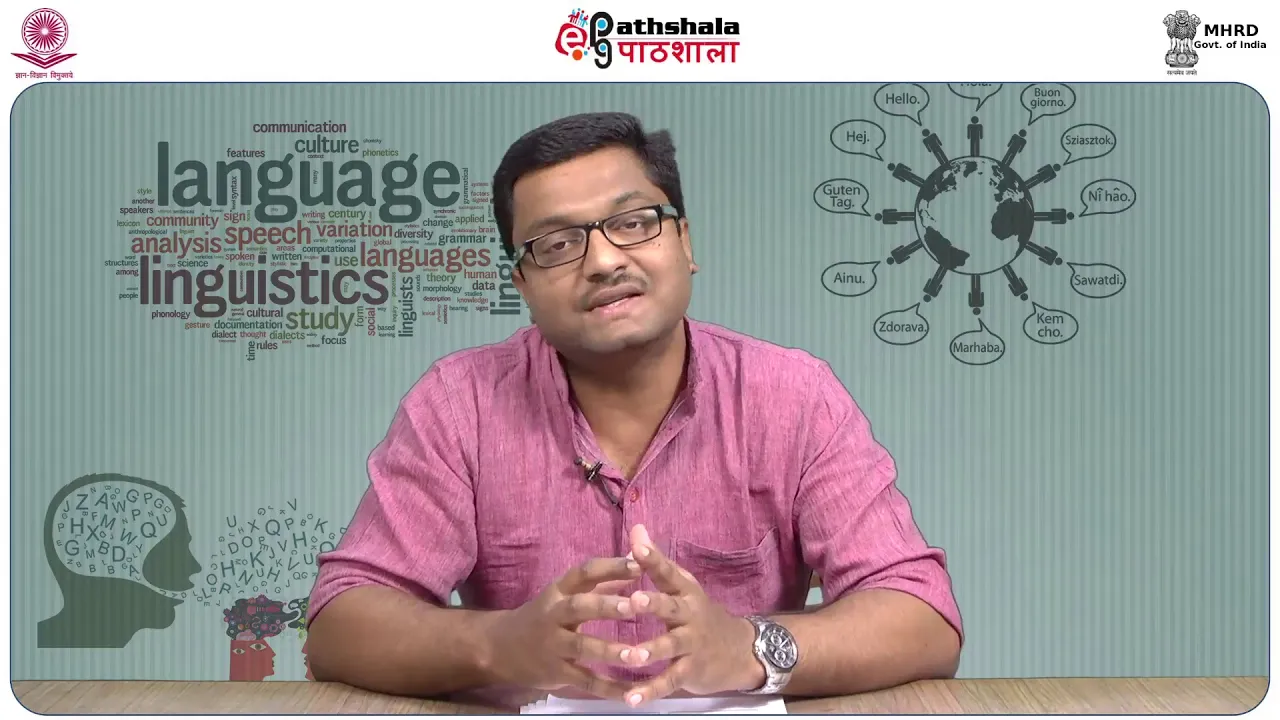
[Music] foreign we already had a video about language contact when you have a situation of contact that situation is going to have consequences so one of those consequences could be could mixing and code switching but those are not the only things that may happen in a situation of contact and then today we're going to cover some of that other stuff there is a particular term that is used in Social Linguistics and that is a word pigeon when people of different linguistic backgrounds are in context for a prolonged period of time in a stable situation this situation can result in the creation of pigeons and even Creoles today's video is dedicated to pigeons now you would ask what is a pigeon in Social Linguistics pigeon refers to a language variety that is no one's native language the word contact language or contact vernacular is also used to refer to the same language variety that we usually call pigeon it's more precise to say when I have a situation of contact it can result in the creation of pigeons or pigeonization keep in mind the fine distinction or the fine aspect and the definition of in contact the contact is when you have bilinguals speaking two languages and in their mind those languages come into contact with each other and it is only then that things will happen that we have been discussing in this and previous videos and we'll discuss in future videos so you have a situation where different linguistic communities come into contact with each other and they don't speak the same language their their languages are mutually unintelligible yet those people are highly motivated to communicate with each other and when I say highly motivated I mean they really need to communicate with each other pigeons are created in situations where there's typically a lot of Economic Development and flourishing and people need to communicate with each other at the same time they don't speak languages that are mutually intelligible and this is why there's another term for Pigeon other than contact language or contact vernacular and that term is trade language pigeons have been historically created as a mix of two or more languages usually they have a substratum language which means they're based on particular language of their main structures and then they borrow items from different languages they seem to be like a quick solution for Urgent communication needs pigeons have reduced grammar it means they have fewer grammatical structures they have reduced lexicon and they have a smaller stylistic range they are much less complex than a natural language pigeons have historically been created in places like the West and East Indies the Americas Africa but there's also pigeons in in Papua New Guinea if you look at the regions that I just mentioned as uh parts of the world where pigeons were created you will notice it these are the places where a lot of European colonization took place during especially during the 17th to 19th centuries there is actually an example of a pigeon that was created outside of those typical regions and that pigeon is called russianorsk it's a pigeon that was once spoken along the Arctic coast of Northern Norway from the 18th until the early 20th century its vocabulary is it was 47 Norwegian 39 Russian 14 other languages including Dutch English or possibly German English Sami French Finnish and Swedish this is an example of not a typical that an example of a pigeon from an area that you wouldn't suspect was a pigeon that was so useful that it actually became an auxiliary language and it was given official status like an official language because the use of this pigeon expanded among its users it's called expanded pigeon and it's now an official language of Papua New Guinea this language is based it's a mix of English and other languages this is a personal pronouns in talk BC as you see it's three persons two numbers a first person second person third person two numbers singular plural me means I you means U and M means he she it you see here when you say reduce grammar as you can see in English we have he she which is natural gender that distinction has been taken away and also in English we have it which is an inanimate third person singular so again animate as a as a grammatical feature has been taken away so this is an example of reduction then we have the plural forms mipella means we Yumi means so there's two words for we exclusive of a speaker and conclusive of the speaker yupela and ola okay another example you took one name um you means you singular talk means say and one m means is a question particle basically you don't change the word order like you do in English it was just a brief introduction into what a pigeon is foreign [Music]
Up Next
14:24
Haitian Creole: History, Grammar, and Global Significance
@Langfocus
762.9K views•2017-05-04
36:52
Constraint Interaction in Optimality Theory: Epenthesis & Deletion
@Vidyamitra
180 views•2018-08-20

5:14
Noun Incorporation in Compound Verbs | Linguistic Analysis
@AzeLinguistics
1.4K views•2020-02-26

21:32
Accent Expert Explains U.S. Regional Dialects | Part 1
@WIRED
9.3M views•2021-01-21
Related Study Plans & Knowledge Roadmaps
Structured learning paths in Linguistics
linguistics
Optimality Theory: Tableaux & Constraints
01Phonological Basics: Sounds, Syllables & Rules
02Foundations of Optimality Theory: GEN, CON, and EVAL
03The Constraint Inventory: Markedness vs. Faithfulness
+ 2 more learning modules
15h5 modules
Explore Roadmap
linguistics
Morphosyntactic Alignment: S, A & P Systems
01Foundations of Syntax: Transitivity and Arguments
02The Linguistic Variables: Mapping S, A, and P
03Nominative-Accusative Alignment
+ 3 more learning modules
12h6 modules
Explore Roadmap
linguistics
Analyzing Sign Language: Phonology & Syntax
01Foundations of Sign Language Linguistics
02Phonology: The Five Parameters of a Sign
03Morphology: Word Formation and Classifiers
+ 2 more learning modules
14h5 modules
Explore Roadmap
linguistics
Pragmatics: Speech Acts, Grice & Politeness
01Introduction to Pragmatics: Meaning in Context
02Grice’s Cooperative Principle & Implicature
03Speech Act Theory
+ 2 more learning modules
14h5 modules
Explore Roadmap