Writing Systems: Abjads, Alphabets & Logographs
Learning Goal: Classify and analyze the structural mechanics of global writing systems, distinguishing between logographic, syllabic, alphabetic, abjad, and abugida scripts.
- Prerequisites: None (Introductory to Advanced Typology)
- Estimated Total Study Time: 8 hours
Module 1: Foundations of Writing Systems
This module introduces the critical scientific boundary between spoken language (an evolved biological faculty) and writing systems (an invented technology). You will trace the historical trajectory of human graphic documentation, moving from early administrative tokens and three-dimensional records to the breakthrough of pictograms, phonetic transfer (the Rebus Principle), and the formation of the world's oldest functional script: cuneiform.
Recommended Videos
- Why this video: This is a comprehensive documentary tracking the evolutionary phases of graphic representation. It provides the perfect entry point, explaining how pictographs (drawings of objects) transitioned to ideographs (symbols for concepts), logographs (symbols for words), and finally phonetic writing via the Rebus Principle.
- Knowledge Checkpoint:
- Explain the Rebus Principle and how it allowed concrete pictures to represent abstract linguistic sounds.
- Contrast the functional difference between an ideographic symbol and a true logographic script.
- Detail how writing systems evolved to reduce the cognitive load of memorizing thousands of unique characters.
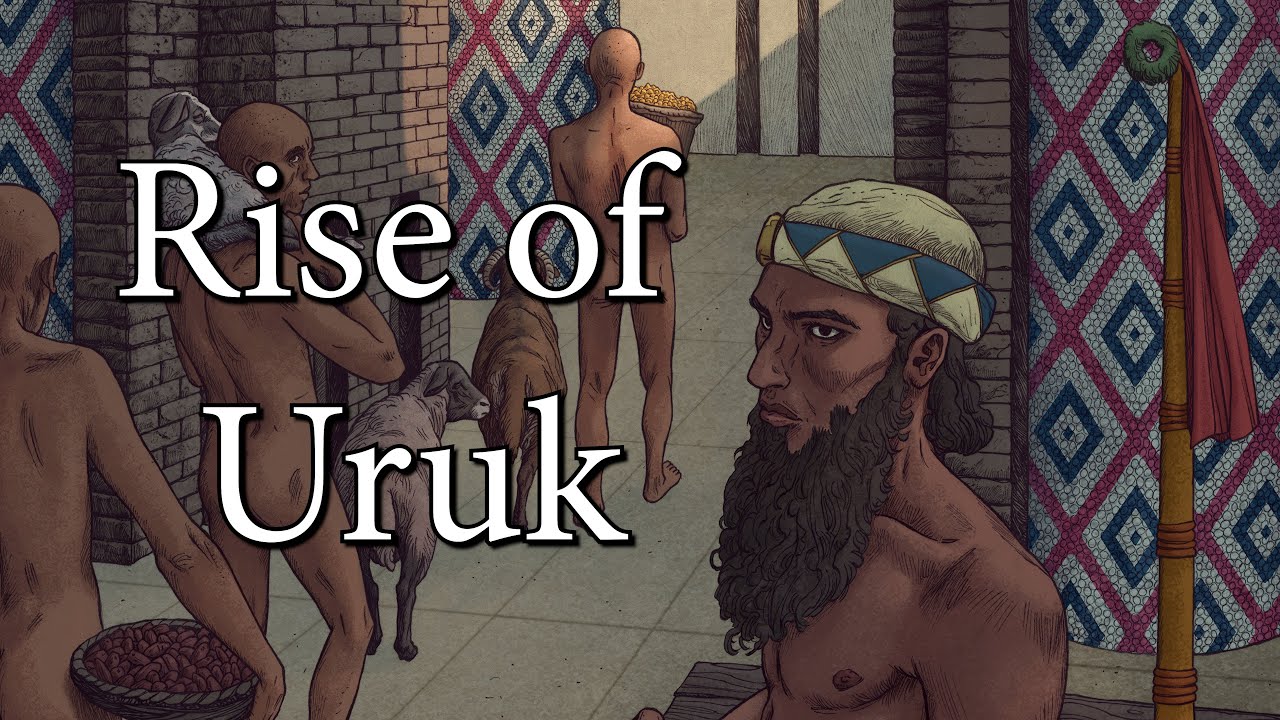
- Why this video: Understanding the origin of writing requires looking at archaeological records. This video explores the socio-economic conditions in ancient Mesopotamia that necessitated record-keeping, tracing how clay tokens inside hollow clay spheres (bullae) gradually flattened into two-dimensional tablets.
- Knowledge Checkpoint:
- Identify the economic triggers in Uruk that led to the invention of proto-writing.
- Describe the relationship between early physical clay tokens and the transition to impressions on flat clay surfaces.

- Why this video: Dr. François Desset delivers a clear, essential linguistic lesson: a writing system is not a language. This brief lecture is vital for establishing the mental model that scripts are visual codes used to represent entirely independent spoken linguistic systems.
- Knowledge Checkpoint:
- Explain the distinction between a spoken language (e.g., Persian) and its written medium (e.g., Cuneiform, Latin, or Arabic script).
- Define what criteria must be met to declare a historical script fully "deciphered."
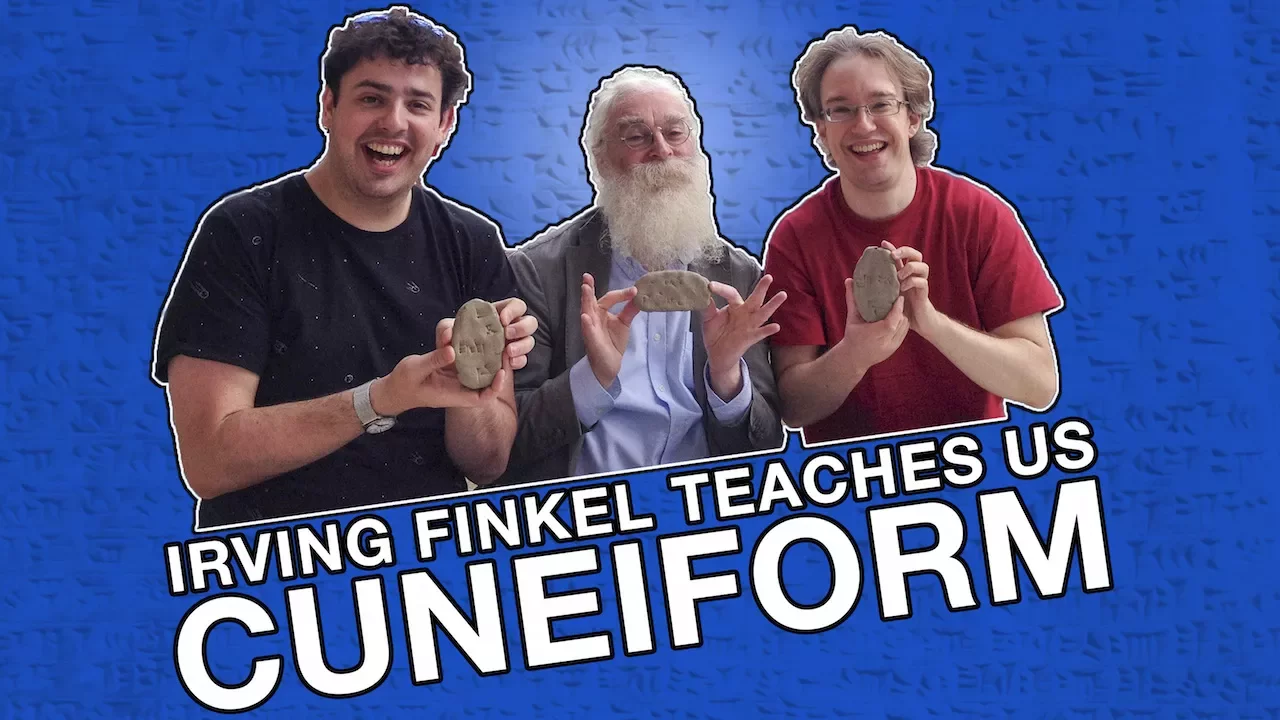
- Why this video: Led by world-renowned British Museum expert Dr. Irving Finkel, this video provides a tactile, hands-on breakdown of cuneiform. You will study how Sumerian and Babylonian scribes combined three basic wedge patterns (vertical, horizontal, and diagonal) to systematically record syllabic sounds on wet clay.
- Knowledge Checkpoint:
- Identify the physical materials and tools (stylus, clay) that restricted cuneiform's visual form to straight lines and wedge shapes.
- Explain how cuneiform represents syllables rather than individual consonant or vowel letters.
Module 2: Meaning and Syllables: Logographies & Syllabaries
This module explores the mechanics of meaning-focused and syllable-focused writing systems. You will analyze Chinese characters (Hanzi), breaking down the myth that they are simple pictures and studying their real structure: phono-semantic compounds. You will then compare this logographic structure to syllabary systems, analyzing Japanese Hiragana/Katakana and classical Mayan glyphs, where written symbols represent complete consonant-vowel (CV) units.
Recommended Videos

- Why this video: This video corrects the misconception that Chinese writing is purely pictographic. It explains how characters represent "morphemes" (the smallest units of meaning) rather than words alone, and explains how characters are built to carry both semantic and phonetic clues.
- Knowledge Checkpoint:
- Define "morpheme" and explain why Chinese is accurately classified as a morpho-syllabic script.
- Describe how a single Chinese character can signal its general meaning category through a "radical" while signaling its pronunciation through a phonetic component.

- Why this video: This video offers an excellent technical demonstration of phono-semantic construction. By analyzing how chemical elements were assigned characters in the Chinese Periodic Table, it shows the structural rules of "radical + phonetic" compounds (Xing-Sheng) in modern action.
- Knowledge Checkpoint:
- Identify the classical classification system (Liushu) and explain the difference between a pictogram (Xiangxing) and a phono-semantic compound (Xingsheng).
- Analyze how modern technical concepts (like gaseous elements vs. metallic elements) are integrated into a logographic script using semantic radicals.

- Why this video: Japanese offers a great case study of how syllabary systems work alongside logographs. This video teaches the phonetic mechanics of Hiragana, explaining how 46 base characters map to consonant-vowel (CV) pairings and solo vowels.
- Knowledge Checkpoint:
- Define a "syllabary" and explain how its structural units differ from an alphabet.
- Map out the grid structure of Kana (combining 5 cardinal vowels with 14 basic consonant series).
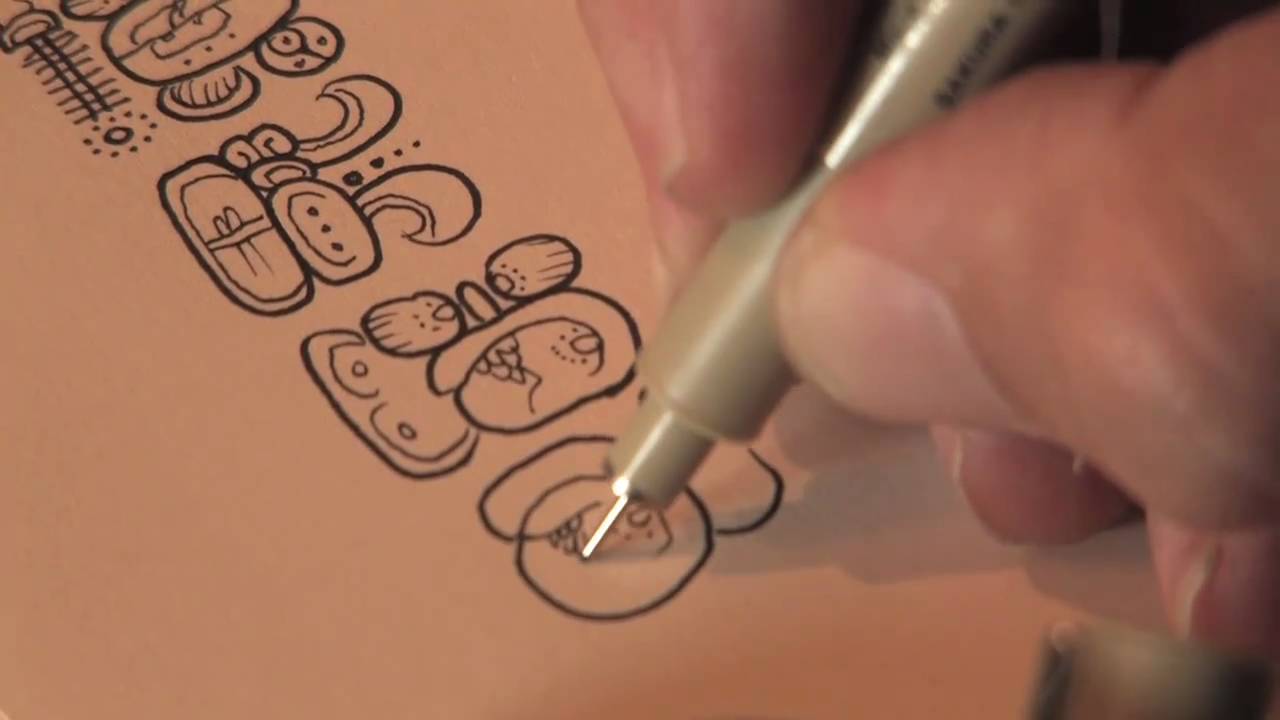
- Why this video: The Maya writing system is a classic example of a complex logosyllabic script. In this visual demonstration, Dr. Mark Van Stone breaks down how Maya scribes combined logographic signs with phonetic syllable glyphs to write words, showcasing block organization and substitution rules.
- Knowledge Checkpoint:
- Explain the structural difference between a Mayan "logogram" and a Mayan "syllabogram."
- Describe how the Maya combined multiple phonetic blocks (consonant-vowel syllables) to spell out words phonetically, using synharmony to handle final consonants.
Module 3: Segmental Scripts: Alphabets & Abjads
This module examines segmental scripts, where writing is broken down into individual consonant and vowel sounds. You will first explore the transition from Egyptian hieroglyphs to the Proto-Sinaitic consonantal script (the first abjad). Then, you will study Semitic root systems (Arabic and Hebrew), analyzing how these languages utilize consonant-only frameworks. Finally, you will trace the Greek adaptation of Phoenician letters, which created the first "true alphabet" by representing vowels and consonants with equal graphic status.
Recommended Videos

- Why this video: This video traces the historic lineage of our alphabet back to Egyptian hieroglyphs. It shows how Semitic miners working in Egypt adapted Egyptian pictograms using the acrophonic principle (using a picture of an object to represent only the first sound of its name), laying the foundation for all modern segmental scripts.
- Knowledge Checkpoint:
- Define the "acrophonic principle" and describe how it transformed Egyptian pictographs into consonantal letters (e.g., alp "ox" becoming the glottal stop sound /ʔ/).
- Trace the line of script evolution: Egyptian Hieroglyphs Proto-Sinaitic Phoenician Greek Latin.

- Why this video: This video covers a crucial linguistic concept: the consonantal root systems of Semitic languages. It explains why abjads (scripts that only write consonants) are naturally suited for Afroasiatic languages like Hebrew and Arabic, where words are built by inserting varying vowels into a core three-consonant template.
- Knowledge Checkpoint:
- Define a "triconsonantal root" (e.g., Hebrew g-d-l or Arabic k-t-b).
- Explain how Semitic grammar allows readers to easily infer missing vowel sounds based on the surrounding context and sentence structure.
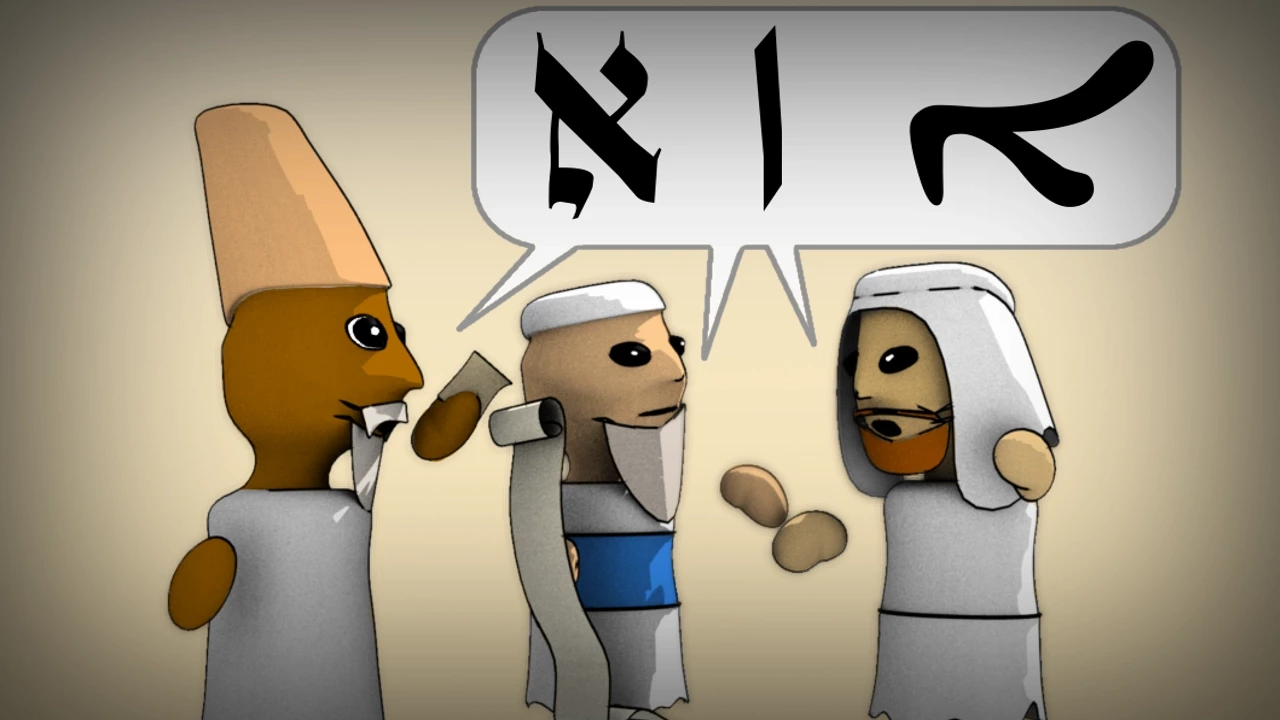
- Why this video: This video directly addresses the structural mechanics of how abjads evolved to handle vowels. It introduces matres lectionis (using certain consonant letters to double as long vowels) and pointing systems (optional diacritic marks like Hebrew nikkud and Arabic harakat used for short vowels).
- Knowledge Checkpoint:
- Differentiate between a "pure abjad" and an "impure abjad."
- Define matres lectionis and identify which consonant signs were adapted to represent long vowels in Hebrew and Arabic.
- Explain "pointing" (pointing/vocalization) and describe why these vowel marks are usually omitted in everyday modern publications.

- Why this video: This academic lecture details the final step in the creation of the true alphabet. When the Greeks adopted the Phoenician abjad, they encountered several Phoenician consonant letters that represented sounds absent in the Greek language. This video explains how the Greeks ingeniously repurposed these redundant consonant letters to represent vowels, establishing the first balanced segmental script.
- Knowledge Checkpoint:
- Identify the specific Phoenician consonants (such as aleph, he, and yodh) that the Greeks adapted into vowels (alpha, epsilon, iota).
- Explain why a "true alphabet" must give consonants and vowels equal graphic status on the baseline, unlike an abjad or an abugida.
Module 4: Diacritics and Features: Abugidas & Featural Scripts
This module explores highly engineered script types: abugidas and featural scripts. You will study how abugidas (like Devanagari and Ge'ez) use a built-in default vowel that is modified by attaching diacritic marks to represent other vowels. You will also learn about conjunct consonants and ligatures in Devanagari. Finally, you will analyze Korean Hangul, a featural script where the physical shapes of the letters actually mimic the phonetic shape and positioning of the human mouth, tongue, and throat.
Recommended Videos

- Why this video: This video introduces the structural design of Devanagari, the script used for Hindi, Sanskrit, and Marathi. Featuring type designer Erin McLaughlin, it explains how Devanagari functions as an abugida (alphasyllabary), highlighting how consonants carry an inherent vowel that is altered by applying distinct vowel marks.
- Knowledge Checkpoint:
- Define an "abugida" (alphasyllabary) and explain how it differs structurally from both a syllabary and a true alphabet.
- Define the concept of an "inherent vowel" (typically the short /a/) and describe how a script removes or changes this default sound.

- Why this video: This video addresses a key gap in abugida education by breaking down the complex rules for combining consonants in Devanagari. You will study how the script handles consonant clusters without intervening vowels by slicing away the vertical stem of characters, stacking them vertically, or merging them into entirely new shapes (ligatures).
- Knowledge Checkpoint:
- Explain how a "halant" (virama) diacritic acts as a mute mark to strip a consonant of its inherent vowel.
- Describe the visual rules of "conjunct consonants": (1) removing the vertical bar of the first consonant to connect it to the next, (2) stacking consonants vertically, and (3) generating unique ligatures (like ज्ञ or क्ष).
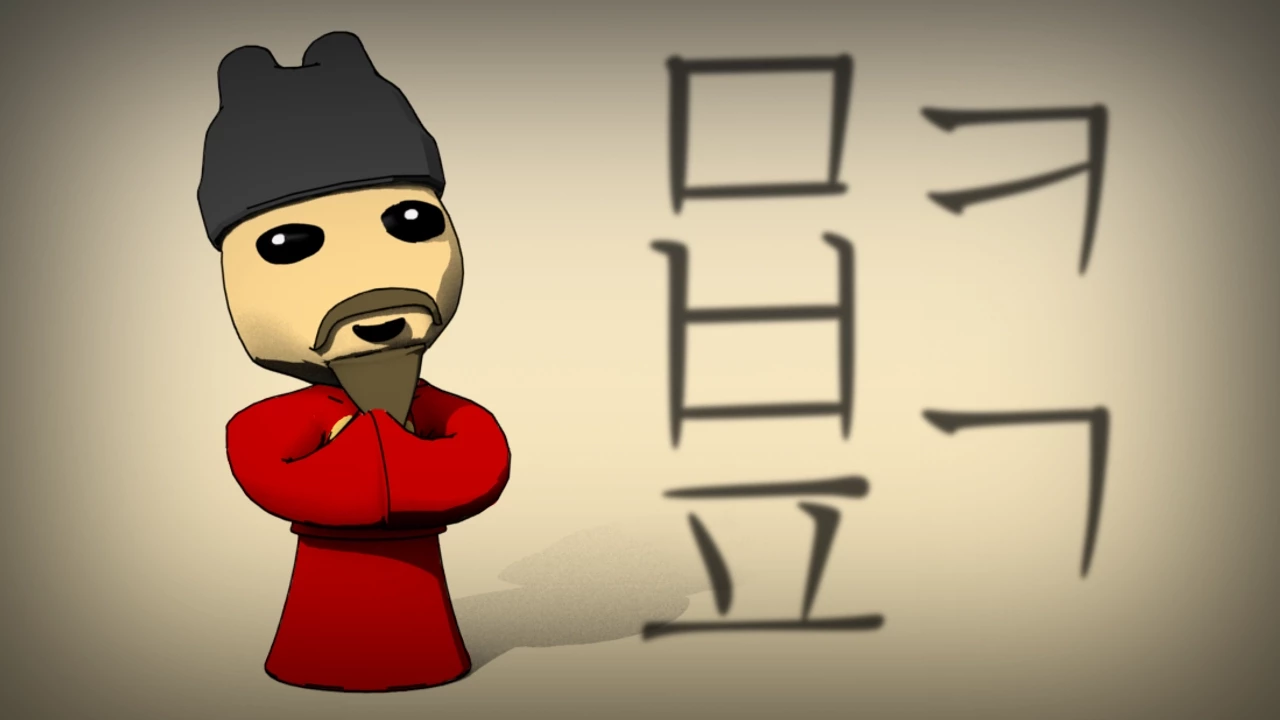
- Why this video: This video is a great primer on Korean Hangul, universally recognized as the premier featural script. It explains how King Sejong designed characters whose visual strokes directly represent the articulatory features of speech—such as the tongue touching the palate or the lips closing.
- Knowledge Checkpoint:
- Define "featural script" and explain how its design parameters differ from a standard alphabet.
- Analyze how Hangul reflects phonetic features (e.g., adding a stroke to a base consonant to signal aspiration or increased breath).
- Describe how individual Korean letters (jamo) are clustered together into square syllable blocks.

- Why this video: This segment introduces the Ge'ez script, a long-running, historically rich African abugida used in Ethiopia and Eritrea. It shows how Ge'ez adapts its consonant frames with small vocalic arms, legs, and rings to represent seven distinct vowel sounds.
- Knowledge Checkpoint:
- Identify the Ge'ez writing system and state the geographic region where it remains in active everyday use.
- Describe how Ge'ez modifies its core consonant stems to denote different vowel attachments.
Module 5: Comparative Typology and Script Analysis
This final module brings all your knowledge together into a comparative typology. You will study classification frameworks used to organize any global script, and look at cognitive neuroscience research detailing how the human brain processes different writing systems. You will learn about the brain's visual word form area (VWFA) and how our cognitive pathways adapt to handle both left-to-right phonetic decoding and the bilateral pattern-recognition demands of logographic scripts.
Recommended Videos

- Why this video: This video acts as a great final summary, comparing alphabets, abjads, and abugidas side-by-side. It reinforces your understanding of the typographic boundaries between these systems.
- Knowledge Checkpoint:
- Build a comparative grid comparing Alphabets, Abjads, Abugidas, and Syllabaries based on how they represent vowels and consonants.
- Explain why a script's structural category determines how easily a learner can pronounce a written word without knowing the language beforehand.

- Why this video: This short video introduces the cognitive science of reading. It reviews neuroimaging research showing that reading logographic scripts (like Chinese characters) activates both brain hemispheres to handle complex visual pattern recognition, whereas alphabetic reading relies more on left-hemisphere phonological structures.
- Knowledge Checkpoint:
- Explain how reading logographic characters activates right-hemisphere pattern-recognition areas, contrasting with the left-hemisphere focus of phonetic decoding.
- Discuss the cognitive trade-offs of learning a logographic script vs. an alphabetic script.

- Why this video: This clip highlights neuroscientific research showing that once a reader becomes fluent in a script—whether phonetic or logographic—their brain activates similar, shared semantic areas during reading. This shows that the brain eventually processes written language through common central pathways, regardless of the script's visual format.
- Knowledge Checkpoint:
- Explain how the brain's Visual Word Form Area (VWFA) adapts to process different scripts.
- Describe the shift in brain activity from slow, letter-by-letter decoding to fast, automatic word recognition.

- Why this video: Dr. Rajesh Rao demonstrates how we can analyze writing systems using computer science. By using probability algorithms to measure entropy (ordered randomness) in the Indus Valley script, he shows how computers can analyze symbol sequences to determine whether an unknown ancient script represents a spoken language.
- Knowledge Checkpoint:
- Define "entropy" in the context of writing systems, and explain how it distinguishes real human language from random symbols or non-linguistic art.
- Explain how calculating sequence probabilities helps researchers determine the grammar and direction of undeciphered scripts.
Course Map
Key People Index
- King Sejong the Great (1397–1450): The 4th king of Korea's Joseon Dynasty. He spearheaded the design of Hangul in 1443 to replace complex Chinese characters, specifically engineering the script to match the acoustic and physical mechanics of Korean speech.
- Dr. Irving Finkel: Renowned Assyriologist and Assistant Keeper of Ancient Mesopotamian script, languages, and cultures at the British Museum. He is a leading authority on cuneiform and the evolution of early writing clay technologies.
- Dr. François Desset: French archaeologist specialized in Near Eastern archaeology. His work on deciphering Linear Elamite has helped clarify the historic separation between spoken languages and writing scripts.
- Erin McLaughlin: Contemporary typeface designer and researcher. She is an expert in Devanagari typography, focused on preserving the linguistic rules of Indian abugidas in modern digital formats.
- Dr. Rajesh Rao: Director of the Center for Neurotechnology and Professor of Computer Science at the University of Washington. He pioneered using statistical computer models to analyze the structure of the undeciphered Indus script.
Final Self-Assessment
Complete this final assessment to verify your mastery of global writing systems:
- Linguistic Distinction: Can you clearly explain why a writing system is a technology rather than a spoken language?
- The Rebus Breakthrough: Can you explain how the Rebus Principle allowed early writing to transition from depicting physical objects to representing spoken phonetic sounds?
- Logographic Mechanics: Can you break down a phono-semantic compound (such as a Chinese character) and identify which part points to its meaning (the semantic radical) and which points to its pronunciation (the phonetic component)?
- Syllabic Structure: Can you describe the difference between a syllabary (where symbols represent complete CV consonant-vowel combinations) and an alphabet (where individual letters represent isolated phonemes)?
- Abjad Vowel Mechanics: Can you explain how Semitic abjads construct words using consonant roots, and list the two tools they use to indicate vowels (matres lectionis and pointing marks)?
- The Greek Repurposing: Can you explain how the Greeks created the first true alphabet by repurposing redundant Phoenician consonant signs to represent vowel sounds?
- Abugida Inherent Vowels: Can you define what an "inherent vowel" is, and describe how an abugida modifies or silences this default sound using diacritic marks (like a halant or virama)?
- Devanagari Consonant Clusters: Can you explain the structural rules Devanagari uses to write consecutive consonants without vowels (half-letters, vertical stacking, and ligatures)?
- Featural Anatomy: Can you explain why Korean Hangul is classified as a "featural script," and describe how its letter shapes represent the physical movements of the mouth and tongue?
- Hemispheric Brain Processing: Can you outline how the human brain processes reading, highlighting why logographic scripts require more right-hemisphere activity than phonetic alphabets?
- Computational Script Analysis: Can you explain how computer scientists use sequence probability and entropy to determine if an ancient undeciphered script represents real spoken language?