







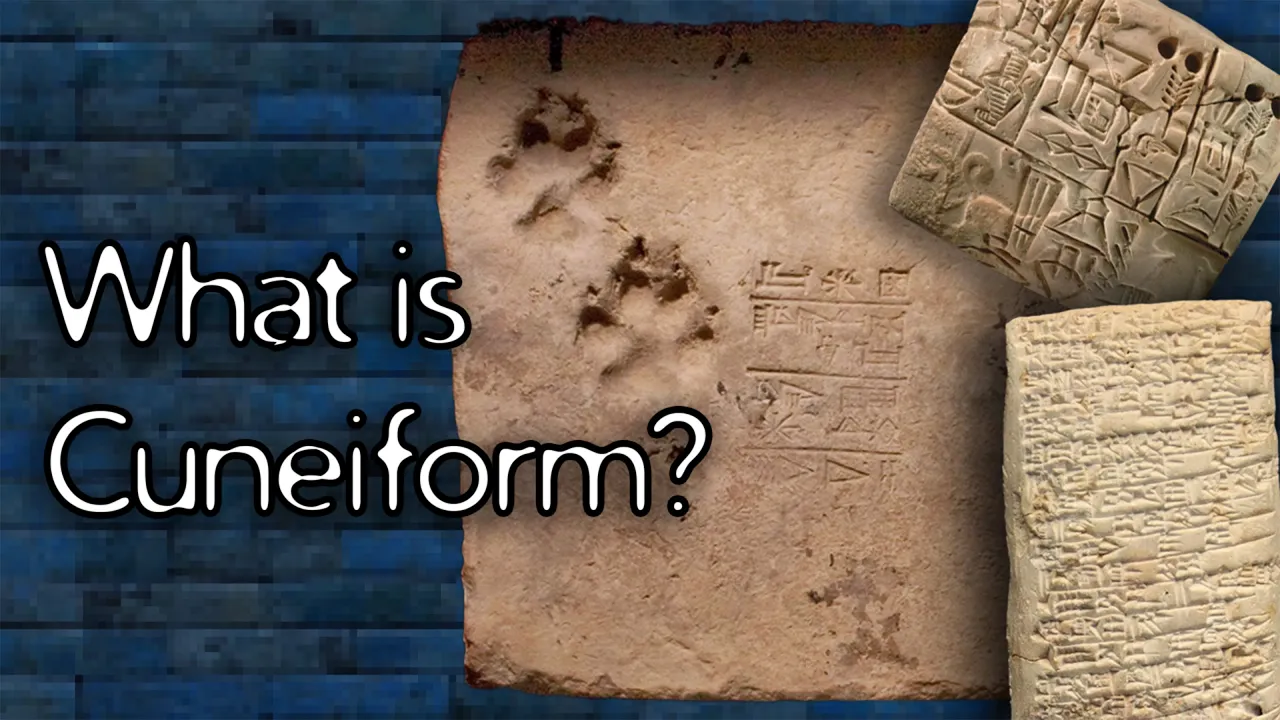






Cuneiform is the world's oldest writing system, developed around 3000 BCE in Mesopotamia, which uses only three basic wedge shapes (vertical, horizontal, and diagonal) combined to form syllabic signs; unlike alphabets, it represents syllables rather than individual letters, requiring approximately six years of dedicated study to master, and was impressed into wet clay using a reed stylus, with professional scribes practicing calligraphic techniques to create flowing, joined-up writing.
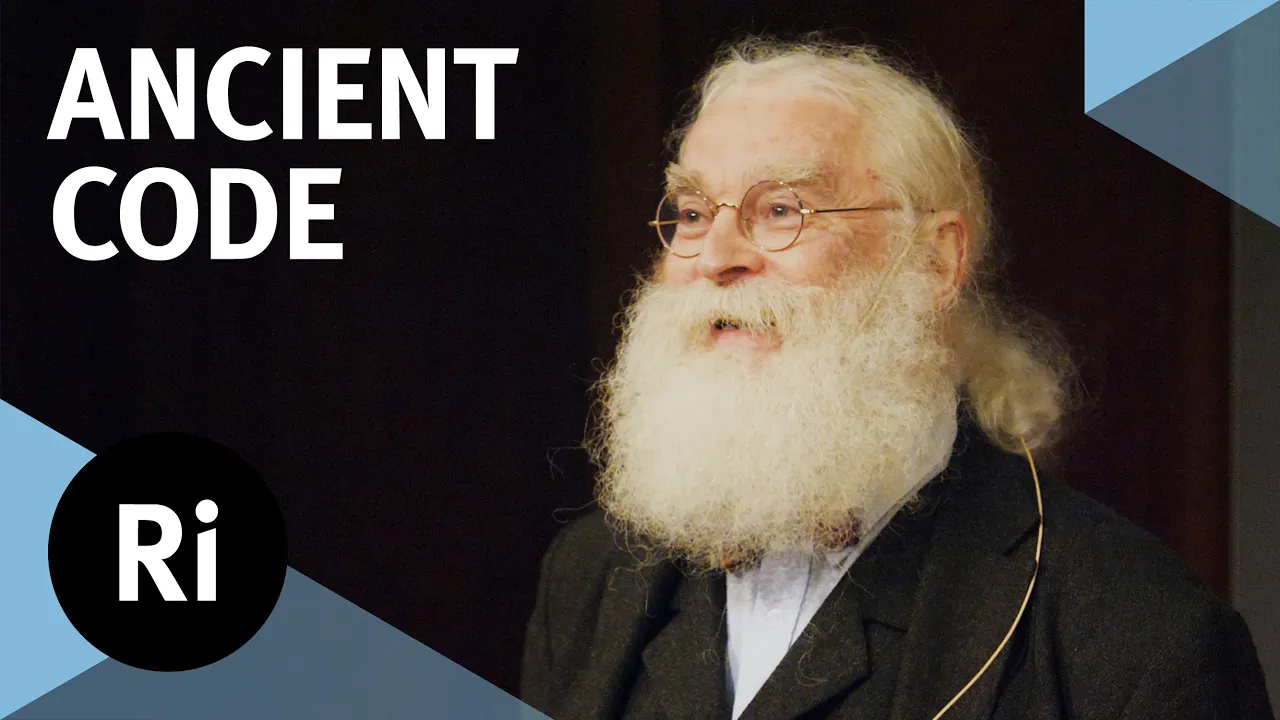
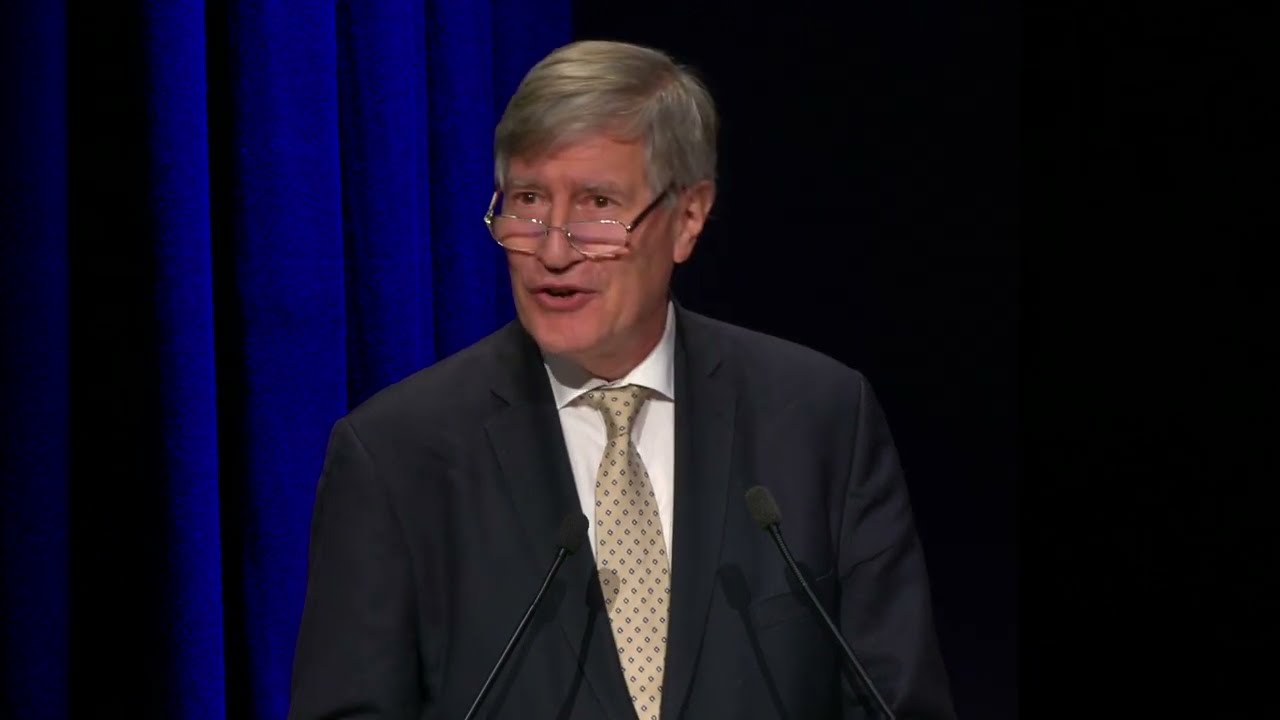
Cuneiform Writing Tutorial with Dr Irving Finkel | British Museum Curator
Added:Historical context of ancient Mesopotamia, including the geographical significance of the Tigris and Euphrates rivers to the civilizations of Sumer and Akkad.
The conceptual difference between alphabetic writing systems (letters representing individual sounds) and logo-syllabic writing systems (symbols representing words or syllables).
The social role of the scribe and the administrative necessity of writing in early bronze age city-states.
The physical properties and archaeological preservation of clay as a primary historical medium.
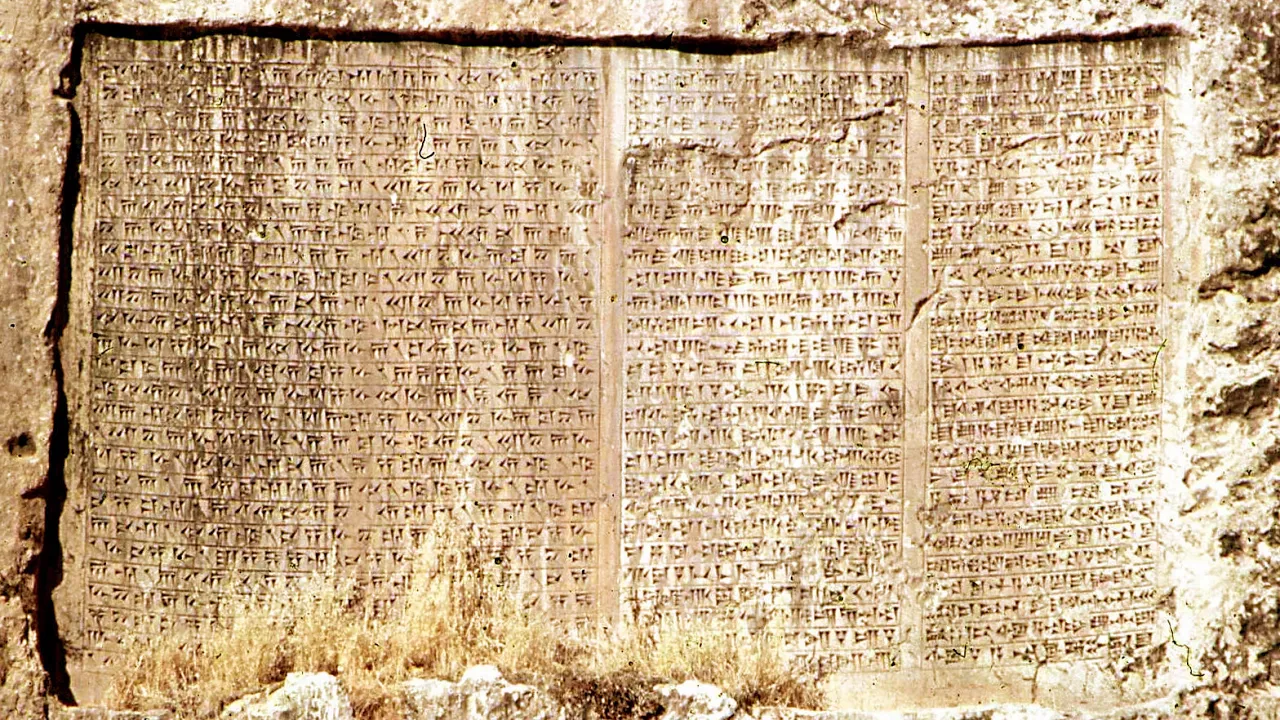
The historical process of deciphering cuneiform, highlighting the significance of the trilingual Behistun Inscription.
The linguistic adaptation of cuneiform signs from Sumerian (a language isolate) to Akkadian (a Semitic language) and other regional tongues.
Exploration of major cuneiform literature, including the Epic of Gilgamesh, the Enuma Elis, and legal codes like Hammurabi's Code.
Modern digital epigraphy methods, such as 3D scanning of clay tablets and the use of the Cuneiform Digital Library Initiative (CDLI) for research.
724.7K views25.7Klikes23:28Original Release: 2017-07-22
[Music] Hi, I'm Matt.
And I'm Tom.
And I'm Irving.
And this is the park bench with Dr. Irving Finkele. Welcome.
Don't be so formal.
This is a very serious occasion, but no formality is necessary. I'm going to teach you guys how to write kunea form writing. Okay? You have to pay attention. You have to keep up. We're not repeating anything at all.
And if we do, I'll edit it out. Also, could you could you briefly introduce yourself and explain why you are qualified to teach us this?
Yes. My name is Dr. Erlingfle. I'm a curator in this museum and I am one of those people who reads Cano form writing and we have 130,000 tablets in our collection and we need more people to come and read them and it's the most interesting writing system in the world and it's the oldest writing system in the world.
Did you say 100? The British Museum has 130,000 behind that very wall behind little boxes all waiting for young scholars to dedicate their lives to this monkish work.
What percentage of them do people know what they say?
Very tricky question. And I would say some know a bit about some of them and some don't know anything about any of them and we know a little bit about most of them.
Very broadly very broad like that.
Yeah. Some used to be in politics.
Right. So this is the first thing. This is a real tablet. Okay.
Oh.
Oh wow.
This doesn't belong to the museum.
Actually it belonged to somebody else. I borrowed it. So it's a school tablet.
It's round and you can see that it's writing here. Right.
Nick, could you come and get a This is Nick uh who is our uh our camera from the museum today. If you want to come around the back here, get a closeup on this.
You're not supposed to read over people's shoulders, you know.
Very rude.
Okay. So, this is it. These signs one, two, one, two, one, two, they're a school exercise. And you can probably already see since you're an advanced student that this sign is the same.
Yeah.
Okay. So, this writing is called QA form. This marvelous book has this very word as a title full of lovely photographs and a bargain at a very cheap price. Leaving that aside, this uh cune kunos is the Latin for wedge. And this is the point because all this writing is not like we do with a pencil on a piece of paper, but it's impressing or like printing into the face of the clay with a stylus. So you displace the clay to make the signs. So it's actually as you obviously now realize a perfectly straightforward matter. So in this writing there are only three components. Okay. There's one upright wedge like so.
Mhm.
There's one horizontal wedge like so. And there's one diagonal wedge like so.
So, is this significantly cuz this looks massively complicated when you draw it.
But that's a combination of just three things to make.
And that's just essentially I don't use the word whacking, but it's tapping the clay in the right way. In point of fact, as I'll show you in a moment when you have to do it yourselves, you just press your stylus into the clay gently and displace the surface to make these shapes. And I'll show you how to do it.
But you see the thing is there are hundreds and hundreds of signs. And what we've got here is a conform chart which you can take home and make into a t-shirt if you like with um arrange as it were after our alphabet these signs in a retrievable way. Now the crucial thing is that all the signs are syllabic.
They never thought of the alphabet. So for example, if you wanted to write the word banana in koiform, I don't know if you ever had that urge, but if you wanted to, what you would need to do is to find on this chart the sign bar and the sign na and the sign na. Write them in sequence and then you in your mind push them together and it spells the word.
It's a salaby like KJI like that only much more interesting, much more elegant and a lot older.
Right.
So the thing is this, if you go to school, um, you have to learn the hard way. You have to learn the science bit by bit. If you take it up now, which I hope you will as of tomorrow, you need approximately 6 years of dedicated work to master the entire script. But on one simple episode like this, you can get the hang of it. So let's, for example, assume that one of you had a resounding complicated, deep, phonetically fascinating name like um, excellent example. So what we have here is that the conventional spelling.
It's got another T on the end of it.
Okay. First point is that spelling is nonsense because this name wouldn't be any different if we didn't have this. So from now on you can forget wasting your time by moving the D. So we have a thing which sounds like Matt.
Right.
I'm I'm going to pull this camera down to get a to get a a closeup on this if that's okay. So I'm not quite sure we're going to get your handwriting in with the the clarity we need here.
It will be tracking. So yeah, if we can if we can pull this pull the top camera down here.
There we go.
That's an old school zoom right there.
Yeah.
So our task now is to write this word Matt using this script. So now we've got the hang of it. We have to find the M row, which is those of us who know the alphabet very quickly.
So we're going to spell it like this. We need the syllable ma and the syllable at. Okay. So this is ma. So you have one vertical wedge and one two three horizontals.
Okay.
And then we find at You're good on the alphabet now, aren't you? So do you want to have a go down here? Down here.
Look at that. Unairing speed. Okay. So to be fair, I just worked it out cuz I figured what was going to happen next.
You're way ahead of me. I don't know.
So this one ends, if you see, in one final vertical, it has three. So it looks rather like very similar.
which is a crucial point.
It has two at the front.
Now, how can you tell the difference between that vertical and that horizontal? You've got the long stroke there.
It's a long stroke, but but that bit in the middle is not one long stroke. It's the side effect of having three horizontal ones next to each other.
Exactly.
Okay.
So, the point is when the stylus, which used to be a reed, was impressed into the surface of the clay. It displaced the clay and the end of the stylus left a kind of corner in the clay. So, that gives it this shape. You will see when you do it, no problem. So I suppose just to keep the class happy, we do need another name. So is there anybody here who's got their own name? Share with simple Tom. Tom and Tom. You see this is a problem.
This is a problem.
This is the same problem I had in uh in Noctitut when I went up uh to Canada.
Is there no oval?
So you're alert to this different.
I have to be either Tam or Tom or Tim or Tim. You can choose. We went with Tam, I think.
We don't want to trade in public. That's how an American would because it was because there's at least some accent in the world that would pronounce that as Tam as opposed to Tam, which is like Birmingham. So, well, I think for a man's personal choice, let's go with Tam. Let's go with Tam.
Okay. Tam is rather fine. So, would you like to find the T sign up? What a team of boys.
Okay. Now, notice here that you've got three. I don't want any boasting or any big headiness. So we need to we're going to write t and then an. Okay.
So t is one.
So is there any pattern here?
Is there any pattern between at and as and am or all the signs have their origin which is unrelated one to the other. But they end up in this format. But the historical explanation for each of the signs uh is different because they began as pictures.
Right. Exactly. And the process of taking a simple child's drawing say of a foot which a child would recognize now into a canoiform sign. The process of adjusting it work differently in each case. So the signs end up looking like this. But historically they're all realistic.
This is a simplification of something that was more complicated. And so the lines are copying that rather than having any formal layout was based on the original.
You have a thing that looks like this.
Yeah.
Which any ideas? I bird bird bird let's get the skull bird.
Yes it's so stimulating you know someone in my position to meet this sort of intelligence. Well indeed you are absolutely right. Well the thing is this is in the old days say 3000 BC and you wanted to talk about birds cuz that's what boys did in those days. Um you would draw a realistic and in in due course that's to say over perhaps a thousand years the sign ended up like this. So it's made of wedges. So some somehow or other I mean we know about it. It's a very complicated thing in each case but this led to that.
Okay.
That's how it works because it's quicker to write that than it is to draw a bird.
Well it is. And there's also this other problem as you know from your recent experiments with plasine that if you're trying to draw a face on plasterine the point that you draw it tends to gather and when you have a curve it's most destructive. So impressing it gives a much sharper and neater thing. So, you see, if you're going to persist with this name T and an is here.
Oh, good. You've got the complicated one, haven't I?
Relax. Okay, it's no problem. You've got two horizontals as we already know about. And then you've got four of these diagonals. So, there's one big one coma and then three resting on top.
I'm going to keep my head out of the the shadow there. Okay.
See?
Right. So in fact your am is 1 2 3 4 5 6. So you see the principle. It's not I was going to say that's really complicated if you consider how many strokes I have to 1 2 3 4 it's five in English to write those letters.
Yes.
So it's a long time since I've done any but I know what you mean.
It seems a lot more complicated because I'm not used to the system.
I think what we need to do now is to see how far you absorb this crucial. Okay.
So this is the thing. If let me just demonstrate once more that all of these signs have these three components like so. So if you take this one, it has one horizontal and one diagonal. Y this one has four diagonals, two horizontals and three vertical. Just be grateful that's not good.
So um you can perhaps appreciate that if you have your clay and you have your stylus and you know how to produce these three different shapes, you can write anything. Okay. So, I think Chrissy made some rather tasty looking Yes, there they are. Made in fact prepared. Thank you very much. They're very fine actually. Very fine to about 1800 BC kind of profile. And we also need some steiny. Um what we use by preference is these um popsicle sticks as they call them in America.
Yes, they do. You can have a long one or a short one.
I'm going to go for a long one.
Yes, I knew that. Well, I don't mind drawing the short straw. So, it's not bad, is it?
Okay. So, this is the thing. If you take your stylus Mhm.
and hold it.
I'm just ask you to keep that just there. There we go.
Is that Is that comfortable?
That works.
Okay. So, you have your um You are both right-handed, aren't you?
Yes.
Okay. You have to write with the sharp edge.
Okay.
Okay. Because you're going to make use of this right angle. So, you have the left hand edge and the top edge which have a right angle where they meet.
Okay.
So when you hold the stylus, hold it comfortably but firmly with about an inch free between the finger and the thumb.
Okay.
In this position, not like a pencil.
Not like a pencil. So not not that but that nicely put.
Okay.
So the simple principle is this. If you take this stylus and you apply it to the clay, if you apply it totally flat, nothing happens. But if you do it in this way that the right edge drops into the clay, it displaces it and you end up This is poetry to my ear. But you see, you have a wonderful long tail and this diagonal head left by the corner. Now look at this.
I did the one.
Go on. Go on. See if you can.
All right. So, you just Okay.
Holy smokes.
Now, obviously, it's going to be clear to you that the next step is to produce a horizontal. So, you simply turn this through um how many 90°. And again you apply that lower edge and press it in and displace the clay and you will have a horizontal.
So not Do you want to come around again?
Oh, I love it. I love it.
Yeah.
You see you see how easy it is?
Yeah.
Then the third thing is we have to make a diagonal. So this is this is slightly more tricky. If you press this into your hand, the corner the point hurts. If you press it a long way, you get a splint and then you gradually bleed it out.
There's no need to go that far. But if you take the corner, the sharp bit and put it in, apply it to the clay, you will displace one at an angle. Do you see what I mean?
Yes. So if you wanted to do something like this and Yeah.
Starting from scratch, we have two horizontals. One, two. Then we It's easier if you do the big diagonal here where there's a bit of room. And then you want to do these three. So you do with smaller strikes of the stylus. you produce this.
So for M it would be two horizontals, two horizontals, right? One large diagonal, comfortable diagonal and then one two three.
I mean I'm not it's it's a first attempt. It doesn't quite match the sign, but I'll I'll take that.
It's recognizable. If a Babylonian would be scrolling along here, he would say and I've made a small one.
See, the bigger the stylus, the smaller the sign. Um compensate.
Exactly. I should They're both really very good considering you are total beginners with six years ahead of you. I think you've done rather well.
So, I can write the rest of my name now.
And the T was that one, which is three vertical.
Yeah.
Where is it? Notice that the this horizontal goes all the way under. It doesn't stop.
When you write M, you have one and then one 2 3. But when you do that thing of T, you have to have a long vertical and then a short one on top. Okay.
Amount of your attainment. No problem.
I'll see what I can do.
No problem.
Um, so I'm going to try and write my name. Were these used for other things than uh than syllables? By the way, this like like some languages where you can also have them represent words.
Yes. Right. Yes. That is actually how it um that's actually how it started off.
They first had one sign for a thing like tree or king.
That's how it began. And then they realized that that wasn't usable to express language. So those same signs were given extreme uses. So you could either do one side for a thing or you could write syllabically. So they had both tools at once. Sorry, is I was in your way there.
No, that's quite right. I'm not quite sure I've got that.
I noticed this goes over the Yes. I have to say that the the point about school in Babylonia as we know that attention among pupils was guaranteed by applications of a large ash stick.
This is your first time.
I only have to press this secret buzzer under the table. Somebody will ring it.
But actually, what have I got wrong there?
You haven't got anything wrong really.
Um Um Where is this tile? Just on our our master sheet. Yes, these two should stop and not go through.
So that one is beautiful. That's a little bit confusing.
That's crossed over. Okay. So you have to get the angle right.
So I've got Matt there. I think you have. Now, you'll notice also that with this upper wedge here, it goes soaring up into the air like a television aerial. Nothing wrong with that. But the ideal conception of a wedge is that the head is more or less the same height um above and below the I'm doing it too flat. So, if I do it more cornery, then it That's exactly right. And I tell you something else about this script. When you wrote a tablet as a proper schol scholar or a businessman or assistant or something like that, they all had a sense of calligraphy. They didn't just do it. So, one of the crucial points was that when you wrote a sequence of signs, when one sign ends, it just meets the next. So, it flows.
It's essentially joined up writing.
It's joined up writing. That's precisely the point. And also, they do it right.
They do it left to right. But I don't think the left hand is inert and the right hand does all the work because sometimes there's a feeling they kind of sculpt the signs and it pushes up to meet it. And you can do all sorts of subtle delicate things um that you wouldn't think were possible in the same way you do.
Calligraphy and it's it's analogist.
It's a form of calligraphy I think. And the marvelous thing about all this stuffing is that when they finish them writing their business documents or love letters or hymns or history or whatever they wrote cuz they wrote everything then the stuff was almost um indestructible because in Iraq um where all this happened the sun was so warm all the time if you leave your tablet out on the wall the clay becomes safe to handle and then once it's in the ground there's destruction or they get buried or they're just there. Am I right in thinking the main reason we have so many tablets now is by accident just because they dried in the sun and someone left them because they didn't want them anymore?
No. Well, they were they kept in normal life things get lost. They get buried.
They get destroyed and broken. But they only seldom fire them. I mean, they knew how to fire a tablet so it wouldn't crack. They knew about all that kiln work. But normally speaking, a normal domestic tablet would just dry and people could handle it. But in the ground, even if they're not fired, even if they are wet still for three or 4 thousand years, when they come out, they are perfectly preserved. So that's how So yeah, like you can laminate paper, but you wouldn't do it for everyday life.
Yeah, exactly.
But it'll biodegrade if it's some some librarians like to laminate the readers, of course, is But you see that when you look at this, for example, if you look at a normal tablet, a bit of writing is fine. It looks at first glance doesn't look like real writing at all. Goodness me know it looks terribly small but you can see perhaps after this exhaustive training that all these signs are made up in the same way of verticals and diagonals and so forth. So a professional scribe will write very neatly like a newspaper something of this kind and and when you are completely untuded like most of the people in the world so far people say well which way up to go but now of course you'll be able to go out into the world explain this to people help them over difficult readings and all that sort of thing which of course the seriologists have to do on a daily b you know you're in the bus queue someone says you know I've got this middle baboon you never know what to do so it's important to realize your new found state well thank you very much you should you should plug the Kickstarter that you're doing. Oh, that's why why you're here. I I spotted Chrissy and this is going you should you should remember the I was I was standing on your foot. I didn't notice it. I was going kick this is something else. Forget all that.
This is something really remarkable.
This is a lump of stone.
Okay.
Okay. And you can see now, can you not that it is made up your face here of thousands of wedges exactly the same as small ones, big ones as we've been doing. Right. This is a lump of stone that's broken naturally.
Oh, in fact, it was a lug on a water vessel which is very heavy and eventually it sheared off and you have nature, the hand of nature imitating canal writing.
It's a very alarming matter when we had to rely on the Babylonians. But the thing is this, somebody person brought this once to me and said, um, can you read this? you know, I looked at the word and uh then I realized it was a natural thing. It's just a kind of flute that it breaks in this way. So I had this idea what would have happened in the Syria and you know kind of Syrian library that in the seventh century when they were very interested in old writing if somebody had dug this up in a ditch in Iraq taken it to Niger and showed it to the king. He went fantastic fallen from heaven must be the most important.
What does it say? What does it say mate?
I'm paying you £100 a week. Um and uh the guy wouldn't be able to read it. And it seemed to me that the person who personified scholarship and learning who worked for the king, the moment this happened, he would realize that all their knowledge, all their tradition, all their scholarship, all their learning would be worth nothing because the first time a real message from the gods arrives, he couldn't read it. So this is an interesting situation. The whole of their science would go. So, it seemed to me what would happen is this guy would have to a get this stone back and kill everybody who ever seen it. So, I had this other idea at the same time.
I mean, we laughed at that, but at the same time, oh, he's like that. Oh, I was just about to say that um as far as I can see, there must have been psychopaths in antiquity as there are today. You know, it's one of those things people learn at school and go on to practice as an adult now, and it was then good, healthy psychopathy. So he says quietly impressing things into his I find it makes me feel more relaxed if I just do a little bit. But the thing is in antiquity there were no police officers and there was no sense of clues. So if you had a very intelligent person who needed to do a sequence of murders in order to cover something. No one would go looking for footprints and you know I think this looks like a psychological type. They could do it if they were clever unchecked. So we have this stone. This is provoked a kind of thing rested in the real Mesopotamia about the magicians and the demons and all that with this madman at loose in the world and in order to follow this to its origin and it's a horror story of unbearable public grown men have been known to leap out of bed and go down and make hot chocolate and that is the book to which you so delicately allude.
I mean it it felt a little bit like being on a talk show. Do you want to plug Do you want to plug the There isn't anything else we need to plug previous work there.
So where do I send the check? Anyway, the thing is this. It's a horrible story. I don't know if you've ever had this experience. You probably have that you're sitting in front of a camera.
Somebody asks you something and out comes this reasoned intelligent narrative that you never thought about the subject before. You ever had that?
Someone presses a button. Yeah. Yeah.
That's what happened to me this whole story. I'm sitting like in a menu and when I read it, it was horrible. It is very very frightening. So I recommend all people in Britain to buy three copies of this book. And in order to do that they have to what was it called?
Kickstarter.
Joy nice to bring it up. But actually it's a remarkable thing because that is they would have gone insane with what to do with it. And in point of fact among all those wedges there are one or two combinations which are real.
It makes the sign truth. So, ducking underneath the camera.
Move the camera now if you would please.
There we go. There is a link to that in the description below this video. Click on the link to find out more as always.
And there's one thing I'm learning and that's that if time machines exist, I don't want you to have one because he seems like you might have ulterior motives.
Okay. So, tomorrow, same time, same place on the bed. We today same time. You've got a time machine.
Well, thank you very much for joining us and teaching me to write my name in KA.
Absolutely.
Since you've been so good, I think you can take them home.
A thank you.
Yay. Free toy.
Thank you so much.
It's a big coincidence running into you.
You know, I was just walking here with a couple of minutes to play and all of a sudden I'm sure that's that guy on the Yeah.
Yeah. Yeah. I did I did a you know royal game of honor with you.
It was you. Yes. I And there just happened to be this, you know, trestle table and bench just set up camera equipment.
Yes. And and folks from the British Museum here to help us help us film.
It's fake. It's fake.
Up Next

17:01
Deciphering the Indus Script: A Computational Approach
@TED
1.2M views•2011-06-28

12:54
Triumph of Orthodoxy Icon: Byzantine Art & History Explained
@BenCallan
2.1K views•2024-08-06

9:49
FastAPI vs Flask vs Django: Choosing the Right Python Web Framework
@TechWithTim
302.5K views•2024-05-26

1:42
Game of Thrones Opening Credits: A Cinematic Analysis
@gameofthrones
46.3M views•2011-04-18
Related Study Plans & Knowledge Roadmaps
Structured learning paths in General & Interdisciplinary Studies
general-studies
Elevator Engineering: History, Physics & Cities
01From Hoists to Safety Brakes: The Dawn of Vertical Lift
02Hydraulic vs. Traction: The Engineering Physics of Elevators
03Modern Speed, Safety, and Algorithms
+ 2 more learning modules
12h5 modules
Explore Roadmap
general-studies
Rubber: Material Science, History & Geopolitics
01Origins of Natural Rubber & Mesoamerican History
02The Chemistry of Natural Rubber & Vulcanization
03The Geopolitics of the Rubber Boom & Colonization
+ 2 more learning modules
12h5 modules
Explore Roadmap
general-studies
Containerization: Evolution, Logistics & Trade
01Ancient Trade & Bulk Cargo: Amphorae to Barrels
02The Industrial Revolution & Cardboard Packaging
03The Containerization Revolution: Malcom McLean
+ 2 more learning modules
12h5 modules
Explore Roadmap
general-studies
Textile Tech: Evolution, Labor & Global Impact
01Pre-Industrial Textiles: Handloom & Cottage Industry
02Mechanization: The Spinning Jenny to the Power Loom
03The Factory System & Global Labor Transformation
+ 2 more learning modules
10h5 modules
Explore Roadmap