Maya hieroglyphs are constructed using phonetic syllables where each glyph represents a consonant-vowel combination, often incorporating pictorial elements like centipede skeletons, fish fins, and upside-down faces; the writing process involves first drawing basic skeletal outlines and then adding finer internal details to complete the glyph.
How Maya Hieroglyphs Are Written: A Demonstration by Dr. Mark Van Stone
Added:Deep Dive
Understanding the basic geography, timeline, and cultural significance of the ancient Maya civilization.
Mayan Civilization - History, Geography, Politics, Society and Maya calendar
241.4K
The Maya civilization was an ancient society located in Mesoamerica, covering parts of modern-day Mexico, Guatemala, Belize, Honduras, and El Salvador. At its peak, the civilization had a population of approximately 20 million people. The civilization flourished from around 250 AD to 900 AD, representing one of the most significant pre-Columbian civilizations in the Americas. The Maya history is divided into distinct periods: the Archaic Period (7020-2000 BC) saw the transition from hunter-gatherer societies to agricultural communities; the Preclassic Period (2000 BC-250 AD) witnessed the development of villages and early city-states; the Classic Period (250-900 AD) represents the civilization's golden age with major city-states and monumental architecture; and the Postclassic Period (900-1524 AD) marked the civilization's decline.
Click to watch →

(Séptimo Básico) Mayas, Aztecas e Incas
523
The Maya civilization existed from approximately 300 AD to 900 AD, disappearing about 600 years before Spanish arrival. Located in Mesoamerica from central Mexico to Guatemala, they developed a sophisticated hieroglyphic writing system and calendar. Their society was hierarchical with an aristocratic class and commoners, based on maize agriculture and trade networks. The Maya abandoned their cities and retreated into the jungle, leaving behind architectural monuments. They practiced polytheism and created a calendar that became widely known, including the controversial 2012 end-of-world prediction which was later proven incorrect.
Click to watch →
CULTURA MAYA **HISTORIA**
234
The Maya civilization flourished during the Classic Period (200-900 AD), reaching its peak between 250-900 AD. They inhabited southern Mesoamerica, including Mexican states (Chiapas, Tabasco, Campeche, Quintana Roo, Yucatán Peninsula) and Central American countries (Guatemala, Belize, El Salvador, Honduras, Nicaragua, Costa Rica). The Maya achieved remarkable advancements in agriculture, astronomy, and mathematics, developing a precise calendar system. Their cities were governed by warrior-priests, with women playing significant political roles through maternal lineage succession. They created an advanced writing system and constructed monumental limestone structures (pyramids, temples, ball courts) aligned with astronomical positions. Trade networks extended their influence across Mesoamerica. The civilization collapsed due to deforestation and internal conflicts, leading to a new flourishing period in the northern Yucatán Peninsula (Uxmal, Chichén Itzá, Mayapán).
Click to watch →
КУЛЬТУРА ИНДЕЙЦЕВ АМЕРИКИ. МАЙЯ. Лекции по культурологии
175
The Maya civilization flourished from the 3rd millennium BCE to the 16th century CE across modern Mexico, Guatemala, Belize, and Honduras. The civilization is divided into the Classic period (first 8 centuries) with a unified state, and the Post-Classic period (9th-16th centuries) with multiple small states. Key cities include El Mirador (home of the largest pyramid in the New World) and Chichen Itza (founded around 450-455 CE). The Maya created precise astronomical calculations, including the year length of 365 days plus 242/1000 millionths of a day. Sacred cenotes formed 65 million years ago from meteorite impacts, serving as religious sites where human sacrifices were offered to Chaac, the rain god.
Click to watch →
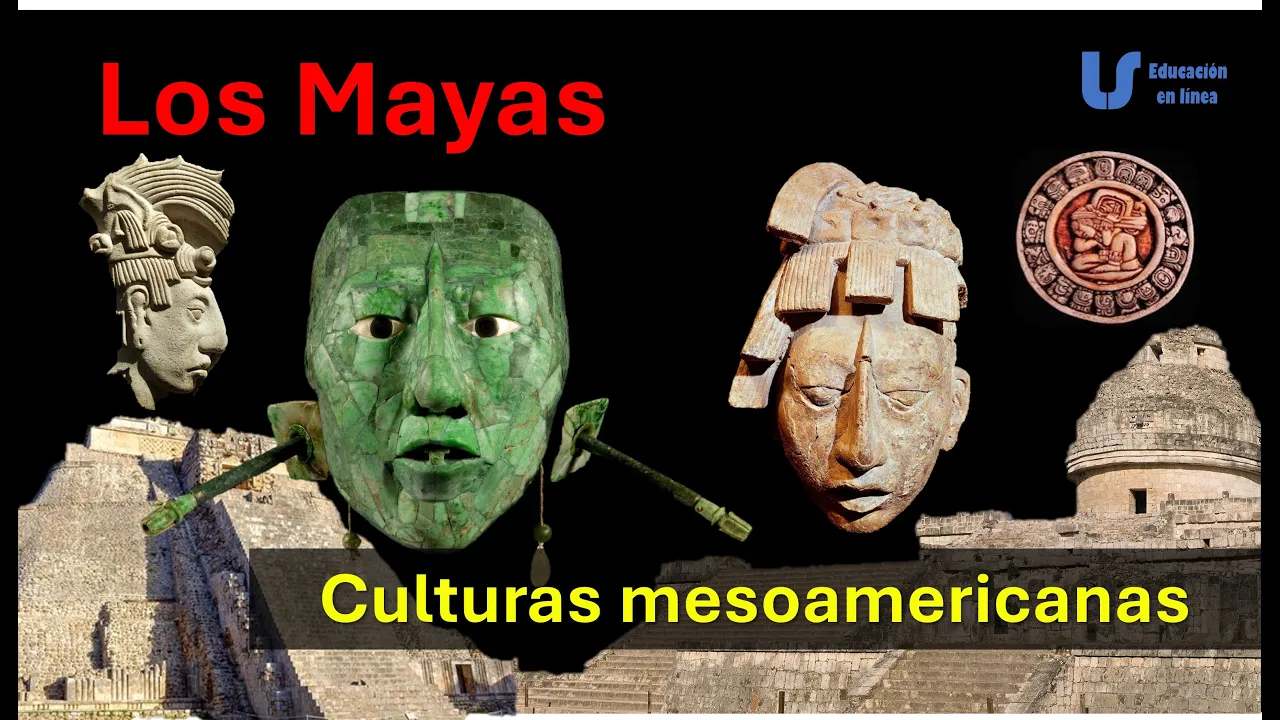
Los Mayas, cultura, arte y su declive - Culturas de Mesoamérica, Historia de México
262
The Maya civilization was one of Mesoamerica's most advanced, recognized for achievements in architecture, astronomy, hieroglyphic writing, mathematics, and calendar systems. The historical period for Mesoamerican civilizations spanned from 200500 BCE to 1521 CE, divided into Preclassic, Classic, and Postclassic periods. The Maya territory covered approximately 325,000 km² across three main regions: Northern Lowlands (Yucatán Peninsula with karstic soil and cenotes), Central Lowlands (tropical rainforest with cities like Tikal and Palenque), and Southern Highlands (mountainous volcanic region with fertile soils). The civilization originated around 2000 BCE with agricultural communities centered on maize cultivation.
Click to watch →
Deep Dive
Familiarity with the distinction between logographic (representing words or ideas) and phonetic/syllabic (representing sounds) writing systems.

Writing Systems
99.3K
Logography represents words/morphemes with single characters, predating phonetic systems (Sumerian/Egyptian). The only living logography is Chinese. Logosyllabic systems combine logographic and syllabic elements using the rebus principle (sound-value writing). Characters can be pictographs, ideographs, or phono-semantic compounds combining meaning and pronunciation indicators. Egyptian hieroglyphs used consonantal roots in templates, giving rise to proto-Sinaitic script, ancestor of most modern writing systems worldwide.
Click to watch →

【ワンポイント英語#21】「文字」の表現*
19K
This lesson explains the fundamental difference between logographic and syllabic writing systems. Logographic characters (表意文字) directly represent meaning, allowing immediate comprehension without knowing pronunciation. Syllabic characters (表音文字) represent sounds only, requiring knowledge of pronunciation to understand meaning. The term 'Chinese character' (Chinese character) refers to the logographic system used in Chinese writing. Understanding this distinction is essential for learning different writing systems and their underlying principles.
Click to watch →
化学的に証明された...時間の正体...時間は存在しなかったのか?【岡田斗司夫 / サイコパスおじさん / 人生相談 / 切り抜き】
260.6K
Writing systems can be categorized into logographic (ideographic) and phonetic systems. Logographic systems like Chinese characters, where each character represents a meaning, are called '表意文字' (ideograms). Phonetic systems like the alphabet, where each character represents a sound, are called '表音文字' (phonograms). The Heptapod language represents an even more advanced form called '表文字' (logograms) that conveys meaning directly without representing sounds.
Click to watch →
Are Chinese Japanese & Korean Related?
127.3K
Chinese, Japanese, and Korean all use logographic writing systems, which consist of thousands of logographs. A logograph is a written character that represents entire words or ideas rather than single sounds, unlike the alphabetic systems used in English, French, or German where each symbol typically represents one sound. These logographic characters have their ultimate origins in China with the Chinese language and were subsequently borrowed by Japanese and Korean for their writing systems.
Click to watch →
![하버드 출신 언어학자 충격! 한글에 숨겨진 충격적 비밀, 한자는 한국의 글자입니다 [해외감동사연]](https://i.ytimg.com/vi/B2D-r6CdyR8/maxresdefault.jpg)
하버드 출신 언어학자 충격! 한글에 숨겨진 충격적 비밀, 한자는 한국의 글자입니다 [해외감동사연]
460.4K
Writing systems can be classified based on how they represent language. Logographic systems (like Chinese characters) represent meaning through symbols, where each character typically corresponds to a word or concept. Phonographic systems (like Hangul) represent sounds through symbols, where characters correspond to phonetic units. This fundamental difference affects how languages are written, learned, and processed.
Click to watch →
Deep Dive
An introduction to the unique layout of Maya inscriptions, specifically the concept of glyph blocks and their double-column reading order.
Le maya classique – Jean-Michel Hoppan - #ouverture | ILARA
1.6K
Maya glyphs are composed of small compact units, typically two or three signs per glyph block. Each glyph block contains one main element (usually larger) around which other elements are arranged in a double column format, separated by small spaces similar to words in alphabetic text. The glyphs are often figurative, representing elements of reality such as human body parts (heads, hands, arms), animal parts (bats, owls, jaguars, snakes), plant elements (flowers), cosmic elements (fire, stones, stars), and cultural artifacts (torches). This makes the Maya script like a visual encyclopedia of the Maya world.
Click to watch →

Mayan Hieroglyphics 101
45.4K
Maya writing is a complex system combining logograms (word signs representing entire concepts) and syllabary (phonetic signs representing syllables). The system contains approximately 15,000 known inscriptions using about 1,800 unique signs, though only around 300 are needed for basic communication. Reading follows a double-column format from top-left to top-right in a zigzag pattern. The system reflects the CVC (consonant-vowel-consonant) structure of Maya words, with the final vowel typically unpronounced. This combination of logographic and phonetic elements makes Maya writing exceptionally challenging for computers to process compared to more systematic scripts.
Click to watch →

Ancient Writing Systems That CHANGED Human History Forever
233
What made Mayan glyphs extraordinary was their dual nature. Some signs represented whole words like a carved serpent meaning sky or divinity. Others stood for syllables allowing scribes to piece together names and verbs like a linguistic puzzle. A single glyph block could contain multiple elements—a main sign, prefixes, suffixes, all arranged to be read in a specific order. Picture it as a visual crossword where direction mattered—left to right, top to bottom in paired columns.
Click to watch →
Breaking the Maya Code
9.6K
The ancient Maya created one of humanity's great civilizations with achievements in mathematics, astronomy, and art. Their cities featured stone inscriptions called hieroglyphs—hundreds of different signs filled with abstract forms, monsters, animals, plants, and body parts. These glyphs appeared on public monuments, personal objects, pottery, building walls, and bark paper books. When European explorers discovered these inscriptions, no one could read them. The question of whether they were pictures or true writing representing spoken language remained unanswered for 200 years. The Maya scribes had tremendous visual creativity within strict rules, arranging glyphs in double columns read left to right and top to bottom. Early inscriptions used single signs, while later ones combined up to half a dozen signs in a single block. Signs could be abstract, represent heads of gods or animals, tucked inside other signs, hidden behind others, or fused together merging attributes. This artistry was as much part of the system as recording language.
Click to watch →

Time Explorers Lesson Four- Maya Writing
912
Maya syllabograms are combined into glyph blocks and read from top to bottom and left to right, similar to English. The arrangement depends on the size and shape of the glyphs, with larger or narrower glyphs placed in specific positions.
Click to watch →
Deep Dive
Basic linguistic familiarity with consonant-vowel (CV) syllabic structures, which form the foundation of Maya phonetic writing.
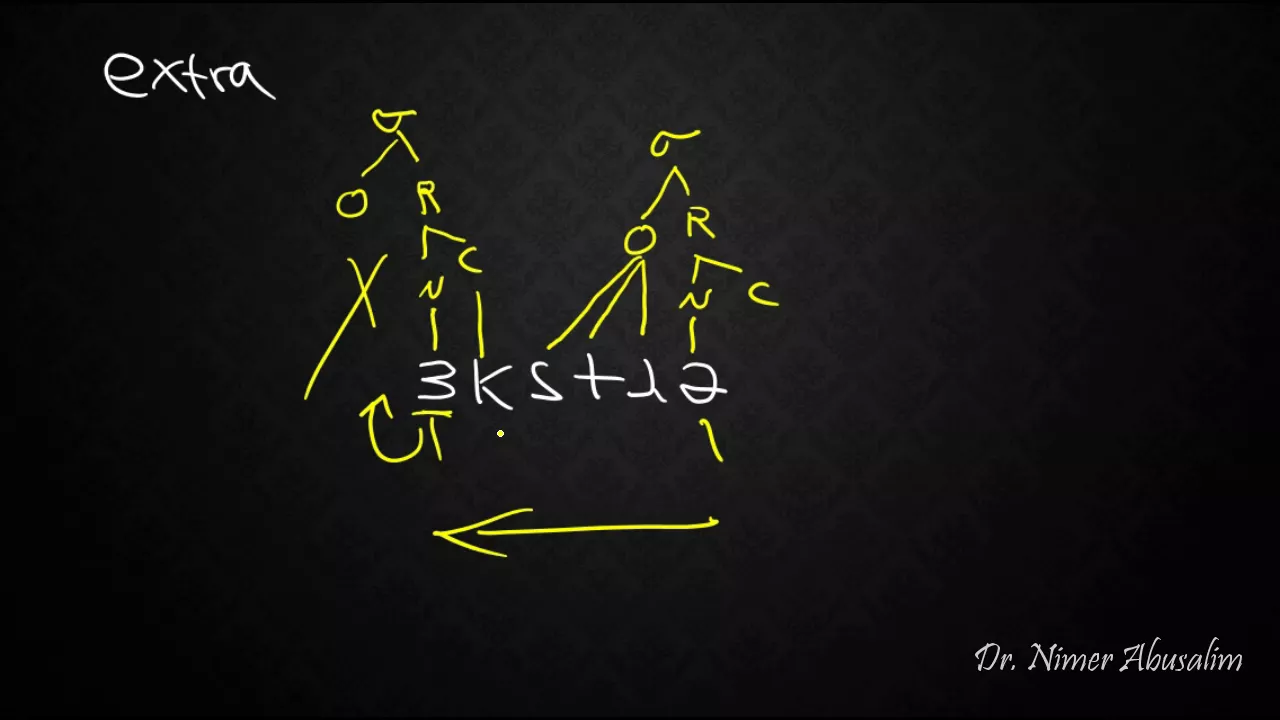
PHONETICS-9: Maximal Onset Principle & English Phonotactics
110.3K
The CV (consonant-vowel) syllable structure is considered the most basic and universal type of syllable across human languages. Evidence for this includes the fact that children worldwide initially produce single-syllable utterances like 'mama' or 'baba' regardless of their native language, suggesting an innate preference for CV structures.
Click to watch →
The History of Writing: From Pictographs to Alphabets
1.2M
The Maya developed syllabaries where characters combine syllable components into blocks to write words. Unlike logographs that happen to be read as sounds, these are sounds capable of writing any syllable in the language. A full syllabary requires separate characters for every possible syllable, dramatically reducing the number needed compared to logographic systems. However, syllabaries face challenges with words ending in consonants, solved through underspelling (ignoring final letters) or echo vowels (repeating the last vowel to indicate endings). The Maya favored echo vowels, writing 'kakaw' as ka-ka-wa and 'balam' as ba-la-ma. Phonetic complements further clarified readings by sitting alongside logographs.
Click to watch →

ภาษาศาสตร์ภาษาไทย : บทที่ 4.1 โครงสร้างพยางค์
11.8K
The CVV 1-5 structure consists of a single initial consonant, a long vowel or compound vowel, and any of the 5 tone marks. Examples: CV1 (สามัญ) - กา, CV2 (เอก) - ป่า, CV3 (โท) - โน้, CV4 (ตรี) - นา, CV5 (จัตวา) - หนู. The CCV 1-5 structure consists of a compound initial consonant, a long vowel or compound vowel, and any of the 5 tone marks. Examples: CCV1 (สามัญ) - ปลา, CCV2 (เอก) - กราบ, CCV3 (โท) - กล้า, CCV4 (ตรี) - พระ, CCV5 (จัตวา) - ขวา. Both structures allow all 5 tone marks.
Click to watch →
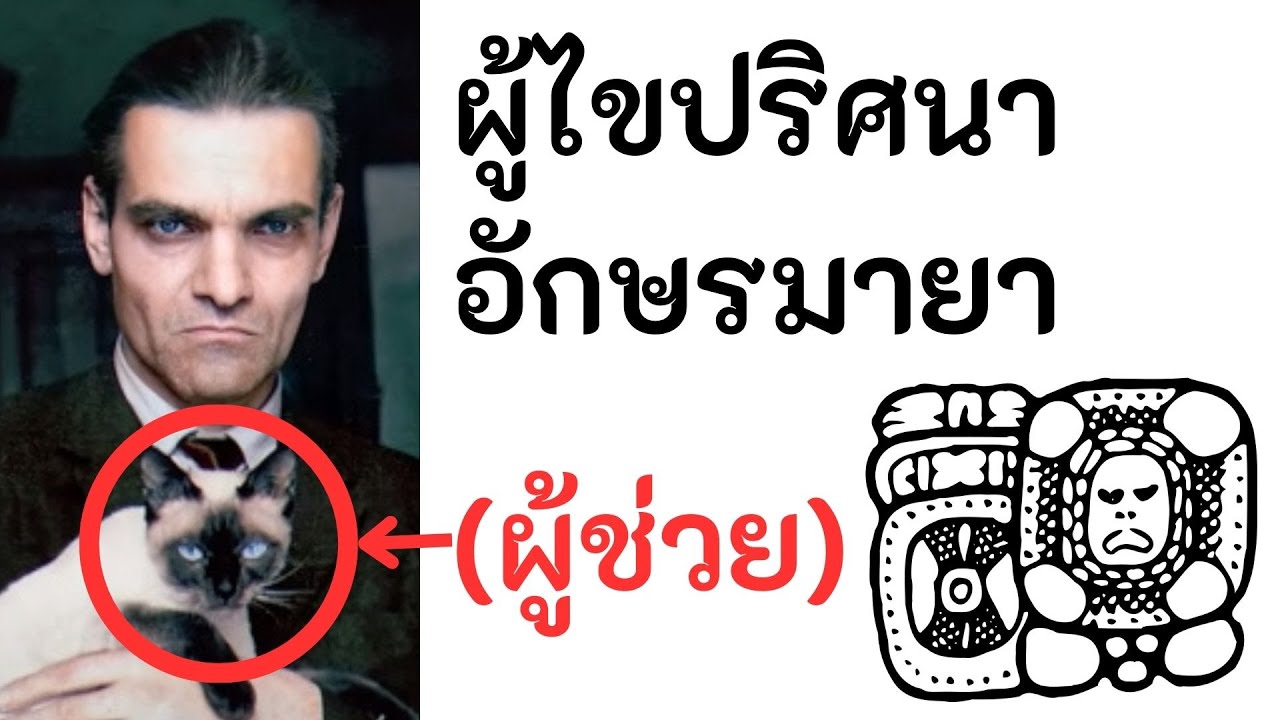
ทาสแมวไทยไขปริศนาอักษรมายา (Maya Script)
1.1K
Knorozov analyzed Maya symbols statistically, finding too many for an alphabet but too few for logograms like Chinese characters. He proposed Maya script was a syllabic system combining logograms and syllabic elements. Recognizing Maya syllables use CVc structure (consonant-vowel-consonant), he used Landa's flawed alphabet to identify syllabic sounds. He demonstrated that Maya words combine two syllabic signs, with the final syllable's vowel not pronounced. This method successfully decoded numerous words, grammatical structures, and deity names, proving Maya script was phonetic and readable.
Click to watch →

MAYAN GLYPHS - Native American Writing Systems, Part 7
1.8K
Classic Maya was a single administrative language used across the Maya region, varying only by regional dialects. It belongs to the Eastern Cholan branch of the Mayan language group. Each character specifies a consonant-vowel combination forming syllables, making it a syllabary. Many Maya languages distinguish between regular and glottalized consonants, with different meanings for words like 'teach' (word/reason vs. blood) and 'cobb' (bee/honey vs. hand). The rebus principle allowed combining images whose names sounded similar to desired words. Classic Maya had a phonological rule that words could never begin or end with vowels, solved by using an understood glottal stop before vowels and dropping final vowels. The Maya script is logosyllabic, combining signs for specific meanings (logographic) and specific sound groups (syllabic).
Click to watch →
Prerequisite Knowledge
- Concept 01Understanding the basic geography, timeline, and cultural significance of the ancient Maya civilization.
- Concept 02Familiarity with the distinction between logographic (representing words or ideas) and phonetic/syllabic (representing sounds) writing systems.
- Concept 03An introduction to the unique layout of Maya inscriptions, specifically the concept of glyph blocks and their double-column reading order.
- Concept 04Basic linguistic familiarity with consonant-vowel (CV) syllabic structures, which form the foundation of Maya phonetic writing.
Subsequent Learning
- Step 01The history of the decipherment of the Maya script, highlighting key historical breakthroughs by figures like Yuri Knorozov and Tatiana Proskouriakoff.
- Step 02Practical epigraphy: Translating actual monumental inscriptions found on stelae, lintels, and pottery from Classic period sites like Palenque and Copan.
- Step 03The material culture of Maya scribes, including the study of the remaining Maya codices, brush calligraphy techniques, and pigment creation.
- Step 04The relationship between the written Classic Mayan language (Classic Ch'olti'an) and the modern Mayan languages spoken today.
- Step 05Comparative epigraphy: Comparing the structural mechanics of Maya hieroglyphs with other ancient logo-syllabic writing systems, such as Egyptian hieroglyphs or Sumerian cuneiform.
Writing Tools
Name Composition
Glyph Details
Symbol Variations
Writing Tools
0:01Playing Section
- 1
Demonstrates writing Maya hieroglyphs with modern pens.
- 2
Explains Maya tools like quills and brushes.
- 3
Focuses on precision and stroke control.
The Ideographic Theory of J. Eric S. Thompson
For much of the 20th century, the dominant paradigm in Maya studies—championed by prominent archaeologist J. Eric S. Thompson—rejected the idea that Maya hieroglyphs were phonetic. Thompson argued that the script was primarily ideographic and symbolic, representing cosmic concepts, mathematical ideas, and calendar calculations rather than the sounds of a spoken language. He fiercely dismissed the phonetic decipherment theories proposed by Yuri Knorozov, which form the foundation of modern epigraphy and Dr. Mark Van Stone's demonstrations. While the phonetic, logosyllabic nature of Maya writing is now universally accepted by scholars, Thompson's anti-phonetic stance remains the most significant historical counterpoint, illustrating how academic preconceptions once stalled the understanding of how the script was actually written.
Deep Dive
The history of the decipherment of the Maya script, highlighting key historical breakthroughs by figures like Yuri Knorozov and Tatiana Proskouriakoff.
How Maya Hieroglyphs Were Deciphered, and By Whom
43.4K
The decipherment of Maya hieroglyphs, completed through collaborative efforts spanning nearly five centuries, revealed that Maya writing is a logo-syllabic system combining logograms and syllabic signs, allowing scholars to understand approximately 90% of glyph sounds and 80% of meanings today; key breakthroughs came from Yuri Knorozov's syllabic approach in the 1950s and Tatiana Proskouriakoff's discovery that inscriptions contain historical records rather than just calendrical data, fundamentally changing our understanding of Maya civilization as a literate society with complex historical narratives.
Click to watch →

Civilizações Perdidas - Maias
418.4K
In May 1945, during the Soviet invasion of Berlin, the National Library was burning and Hitler's army was destroying thousands of books. A Soviet officer rescued a book containing reproductions of Maya codes. The scholar Yuri Knorozov studied the Maya alphabet that Bishop Landa had attempted to transcribe. His great discovery was that Maya hieroglyphs were much more than a simple system of numerical signs. His work was aided by Tatiana Proskouriakoff, a Russian illustrator and archaeologist who detected in dates carved on stones the entire history of lives - birth, death, and everything in between.
Click to watch →

The Great Maya Collapse: What Really Happened? | History for Sleep
682.4K
For decades after their rediscovery, the intricate glyphs covering Maya monuments remained a profound mystery. Sir J.E.S. Thompson championed the theory that glyphs were not a true writing system but mystical symbols recording time and religious concepts. This view dominated academia for decades, leaving the Maya as a people without a history. The breakthrough came from Tatiana Proskouriakoff, who noticed recurring patterns of dates spanning roughly 60-80 years—the normal human lifespan. In a flash of insight, she realized these were human histories: glyphs tied to earliest dates meant birth, later dates meant accession to throne, and final dates recorded death. Her 1960 paper proved beyond doubt that Maya stelae were historical biographies recording the lives and deeds of named kings and queens. This validated Yuri Knorozov's earlier phonetic approach and opened floodgates of understanding. The decipherment transformed our view of the Maya, moving them from mysterious peaceful stargazers to real human history with political drama, ambition, and violence. The Silent Cities could finally tell their own stories in their own words.
Click to watch →

Великий крах цивілізації Майя: що насправді сталося? | Історія для сну
92.4K
The door to Maya's past remained closed. The person who finally opened it was not a linguist but a brilliant architect and draftsman named Tatiana Prokhorova. Having fled the Russian Revolution as a child, she spent many years creating extraordinarily detailed and expressive reconstructions of Maya cities. Her work required careful study of patterns on stone monuments. Analyzing a series of stelae from the site of Piedras Negras, she noticed a repeated pattern of dates. For one monument, the dates spanned approximately 60-80 years—a normal human lifespan. In a flash of insight, she realized what she was seeing. These were not mystical movements of planets but human histories. The glyphs associated with the earliest dates, in her view, meant birth. Those relating to later dates meant accession to the throne, and the final date fixed the death of the king. In a revolutionary article published in 1960, Prokhorova proved beyond doubt that Maya stelae were historical biographies recording the lives and deeds of named kings and queens. This discovery by Prokhorova became the key that opened the doors wide. Her work completely overturned the old dogma and confirmed the phonetic approach that Knorozov had initiated. With this new understanding that glyphs conveyed real histories, a new generation of scholars working together in the following decades began to achieve remarkable results.
Click to watch →

Breaking the Maya Code #5: Yuri Knorosov
71.9K
Yuri Knorosov, a Russian artillery officer who became a linguist during the Cold War, revolutionized Maya decipherment by applying his knowledge of Egyptian hieroglyphs and Coptic to analyze the script's structure; he discovered that the Maya writing system, containing approximately 800 signs, was neither purely alphabetic nor purely logographic but rather a sophisticated combination of both, challenging the prevailing scholarly consensus that it was a limited logographic system.
Click to watch →
Deep Dive
Practical epigraphy: Translating actual monumental inscriptions found on stelae, lintels, and pottery from Classic period sites like Palenque and Copan.
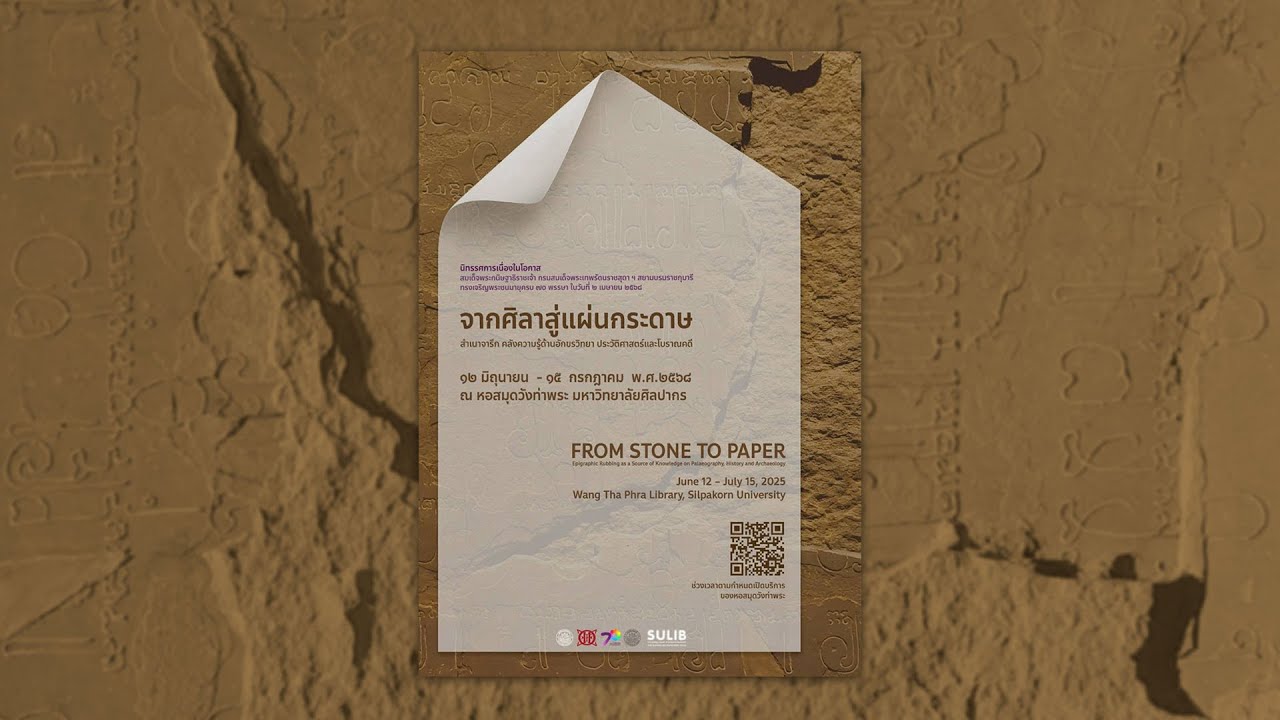
ท่าพระ Vlog | “จากศิลาสู่แผ่นกระดาษ : สำเนาจารึก คลังความรู้ด้านอักขรวิทยา ประวัติศาสตร์และโบราณคดี”
135
This section demonstrates the practical process of making epigraphic rubbings using essential equipment including a rubbing frame, paper mulberry paper, soft bristles, and a spray bottle. The demonstration shows how paper is pressed into stone grooves and ink is applied to create detailed copies preserving even fine details like cracks. The exhibition also features creative educational applications including a board game using characters from the Nanotthapana Sutra (recently declared a UNESCO Memory of the World document) and interactive workshops where visitors can stamp their names using ancient Sukhothai inscriptions from King Ramkhamhaeng's Inscription. These activities make learning ancient scripts engaging and accessible, connecting modern visitors with historical writing practices through hands-on experiences.
Click to watch →
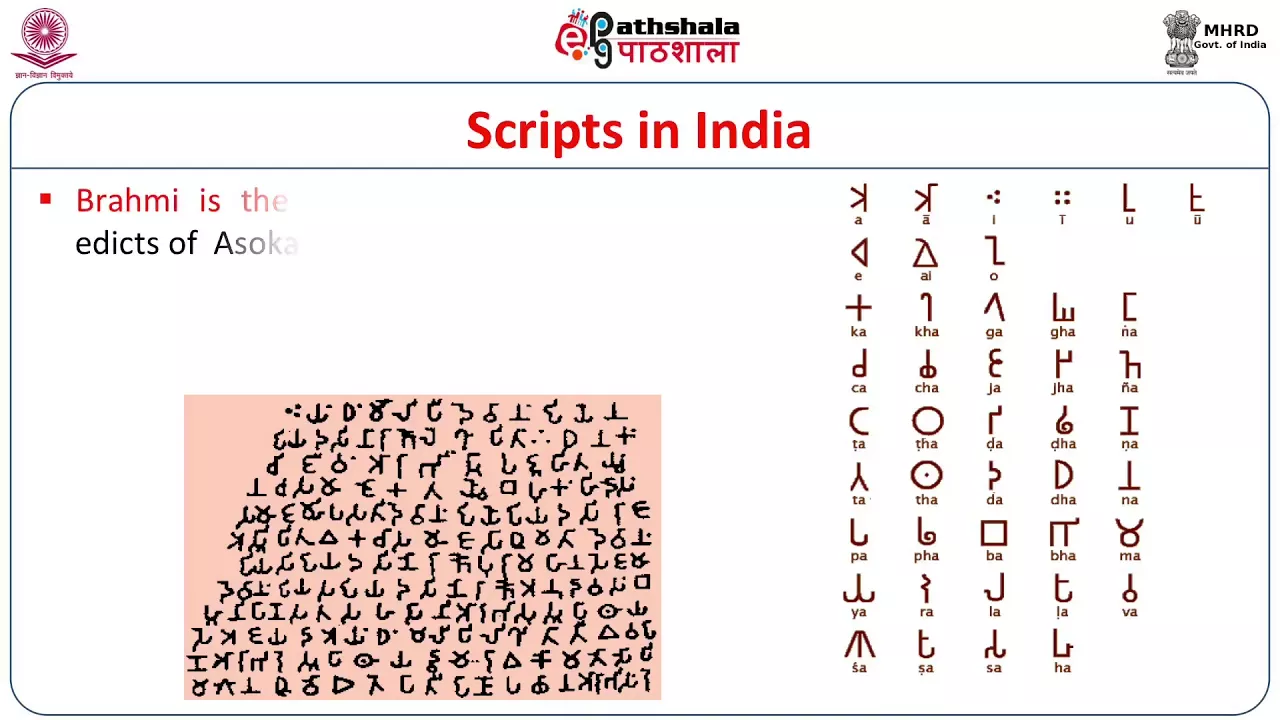
Introduction to Indian Epigraphy: History and Scope
13.1K
Epigraphy is the scientific study of inscriptions on stone, copper plates, and other materials, serving as the most reliable source for reconstructing ancient and medieval Indian history and culture; it encompasses paleography (study of scripts) and linguistics, with the Archaeological Survey of India's Epigraphical Branch established in 1886 at Bengaluru having preserved approximately 87,000 inscriptions across various languages including Sanskrit (13,000), Tamil (48,000), Telugu (13,000), Kannada (13,000), and Arabic/Persian (30,000), with systematic copying techniques varying between stone and copper plate inscriptions.
Click to watch →

Antonin le Pieux : dédicace du mausolée d'Hadrien à Rome (139 ap. J.-C.)
3.3K
Epigraphy is the science of studying inscriptions on monuments as historical sources, encompassing various periods including medieval epigraphy. The practical applications extend beyond academia: students can apply their knowledge when visiting cities to read inscriptions on monuments, whether in Europe, America, or other regions. Roman Republican institutions like 'SPQR' (Senatus Populusque Romanus) appear on buildings worldwide, including in Belgium. Latin inscriptions appear across multiple historical periods, from medieval times to the 16th and 17th centuries, including tomb plaques in churches. The same grammatical rules apply to inscriptions from different eras, demonstrating the enduring influence of Latin as a written language.
Click to watch →

M-01. Introduction to Indian Epigraphy
9.8K
Epigraphy is the study of inscriptions—writings engraved on durable materials like stone, copper plates, and terracotta—that serve as the most reliable sources for reconstructing ancient and medieval Indian history and culture; it encompasses the study of scripts (paleography), language evolution, and provides primary evidence for understanding political, social, economic, religious, and artistic developments from the Mauryan period (3rd century BCE) through the late medieval era, with systematic research beginning in India during the British colonial period (late 18th century) and continuing through the establishment of the Archaeological Survey of India's epigraphical branch in 1886, which has documented over 87,000 inscriptions across multiple languages including Sanskrit, Tamil, Telugu, Kannada, and Arabic/Persian.
Click to watch →
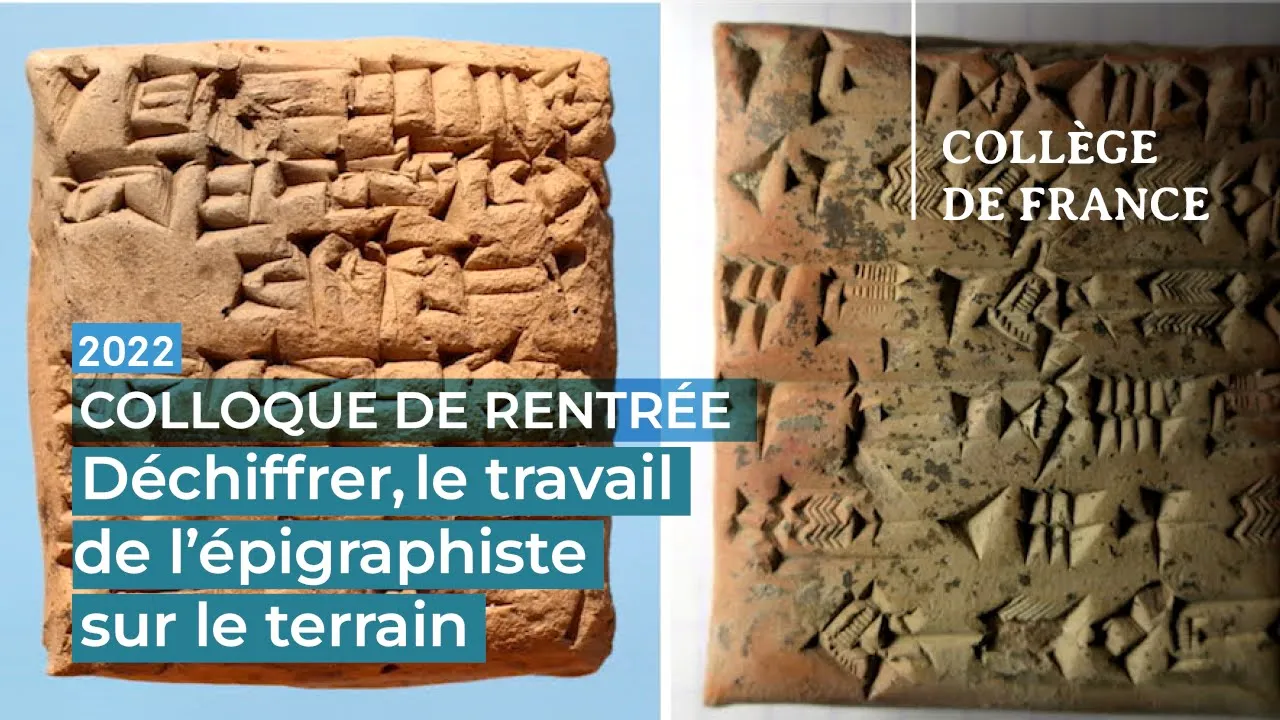
Déchiffrer, le travail de l'épigraphiste sur le terrain - Dominique Charpin
1.5K
The term 'déchiffrer' evolved from explaining ciphered text to finding keys to dead languages, formalized in the 1878 Académie Française dictionary. Cuneiform decipherment was a collective effort spanning 1802-1857, less romantic than Egyptian hieroglyphs. Epigraphists divide labor from archaeologists who study material remains. Locating tablets is challenging because Mesopotamian architecture uses unbaked bricks; when walls collapse, interior spaces fill with brick fragments. Tablets are easier to identify when fired (like 3rd Dynasty Ur tablets, which are harder and orange-colored). Tablets were typically dried slowly in shade to prevent cracking. Clay tablets resist water damage, explaining why Mesopotamian civilization is known through hundreds of thousands of texts.
Click to watch →
Deep Dive
The material culture of Maya scribes, including the study of the remaining Maya codices, brush calligraphy techniques, and pigment creation.
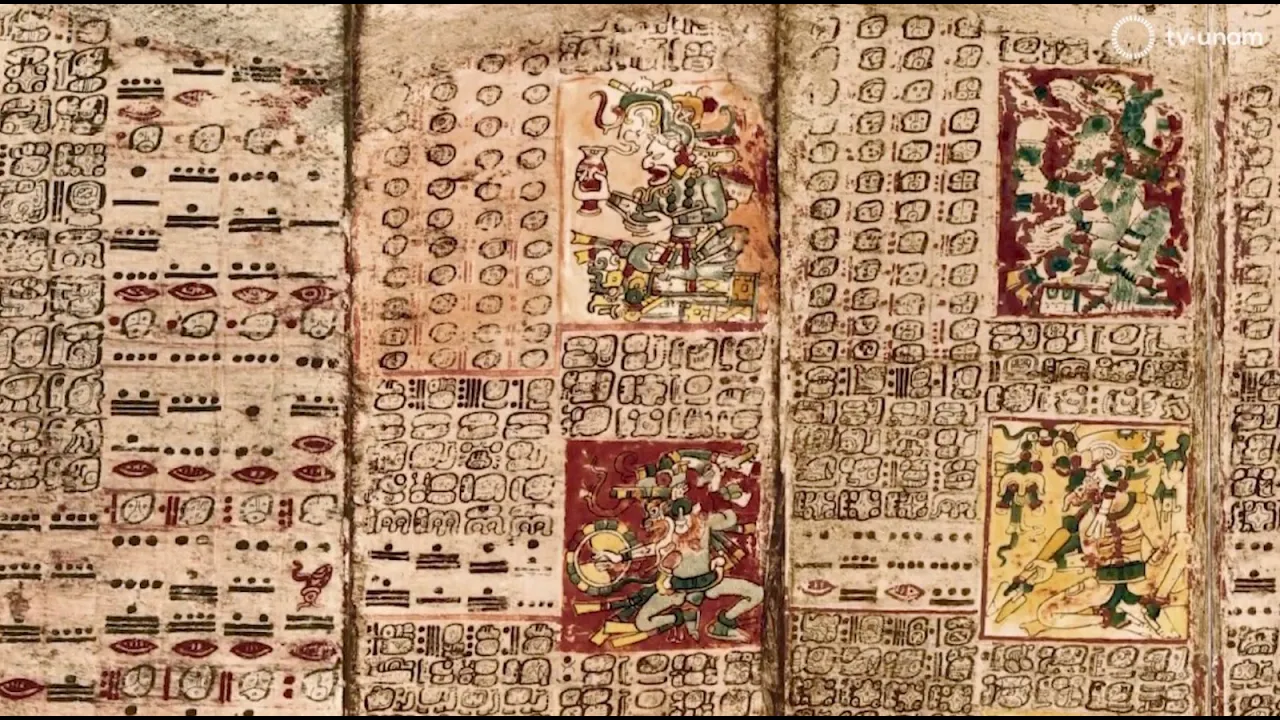
Códices, escribir pintando | Arqueología Mexicana
24.2K
Among the Mexica, scribes were called 'tlacuilo' (Nahuatl), while Maya scribes were 'Achtiv.' Tlacuilos studied at the Calmecac elite school, learning to prepare materials, make brushes, and create pigments. Codices were created on amate paper, deer skin, cotton cloth, and maguey fibers. Brushes used animal hair or plant fibers. Pigments came from plants (indigo, achiote), insects (cochineal), and minerals (charcoal). Production was collaborative: some collected natural materials, others understood astronomy and time. Mesoamerican writing used images rather than alphabets, requiring specialists in both subject matter and visual representation.
Click to watch →
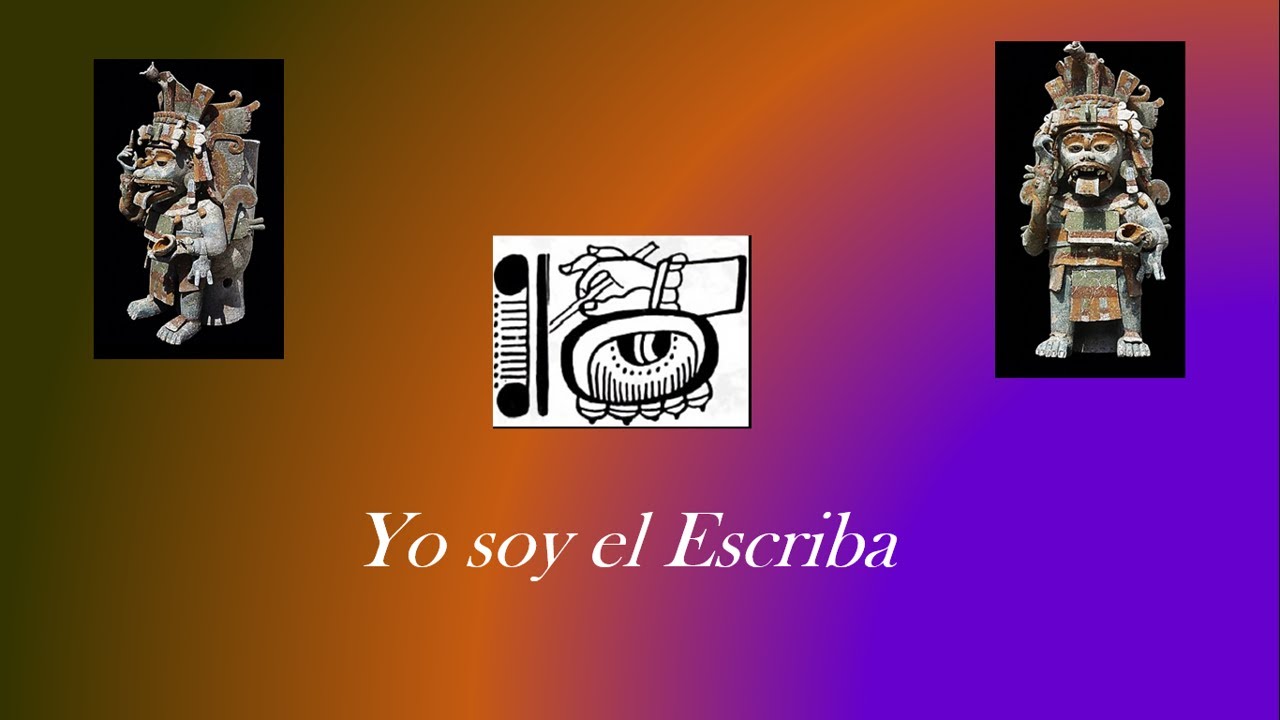
YO SOY EL ESCRIBA MAYA
1.4K
Maya scribes held a privileged position as intermediaries between humans and the divine, responsible for recording, calculating, and transcribing knowledge revealed by the gods. They served as human representatives of supernatural voices, acting as channels for divine wisdom. The Maya believed the creator god existed before space and time, painting the world and writing the universe using a conch shell as palette and reed as brush. Writing was considered a sacred portal connecting the eternal and divine with the human and earthly. Maya codices were made from the bark of the fig tree (Ficus cotinifolia), considered sacred because it connected the three planes of the universe. The preparation involved soaking and boiling bark with lime, similar to nixtamalization of maize. Codices were covered with jaguar skin, considered sacred because the jaguar could penetrate caves and serve as portals to the underworld. Maya scribes held high social status and were considered attributes of power, able to access royal courts and receive great privileges. They were not merely human record-keepers but sacred beings who could be divine and luminous, indicated by marks of divine light on their bodies. The oldest surviving Maya manuscripts were created by Maya scribes before European arrival, now residing in European repositories named after their cities: Paris, Madrid, and Dresden Codices. The Dresden Codex is considered most elaborate with finest facture and complex content, including auguries, planetary tables, eclipse cycles, and Long Count calendar prophecies. Codices served as didactic manuals allowing scribes, priests, and astronomers to understand the ordered functioning of the universe, though much knowledge was lost after the 16th-century auto-da-fé.
Click to watch →
6 OBJETOS PERDIDOS más BUSCADOS del MUNDO
84.3K
Today only four Maya codices are officially known: Dresden, Madrid, Paris, and Mexico. When Spanish conquistadors arrived, the Maya had been recording their world for centuries in books made of paper amatl, filled with glyphs, numbers, astronomical tables, rituals, and time cycles. In 1562 in Maní, Yucatán, Friar Diego Delanda ordered a massive burning of Maya objects, writing that many books were destroyed because they contained nothing but superstitions and falsehoods of the demon. Theories suggest some codices were confiscated and sent to Europe, others were altered before disappearing, and some may exist in secret archives in the Vatican or private collections. The Codex of Dresden contains Venus tables with precision believed impossible without modern instruments. Some codices may have contained knowledge of cyclical destruction events, which was dangerous for a colonizing culture needing to impose a single, eternal future.
Click to watch →
Formas de representación en los códices mayas.
182
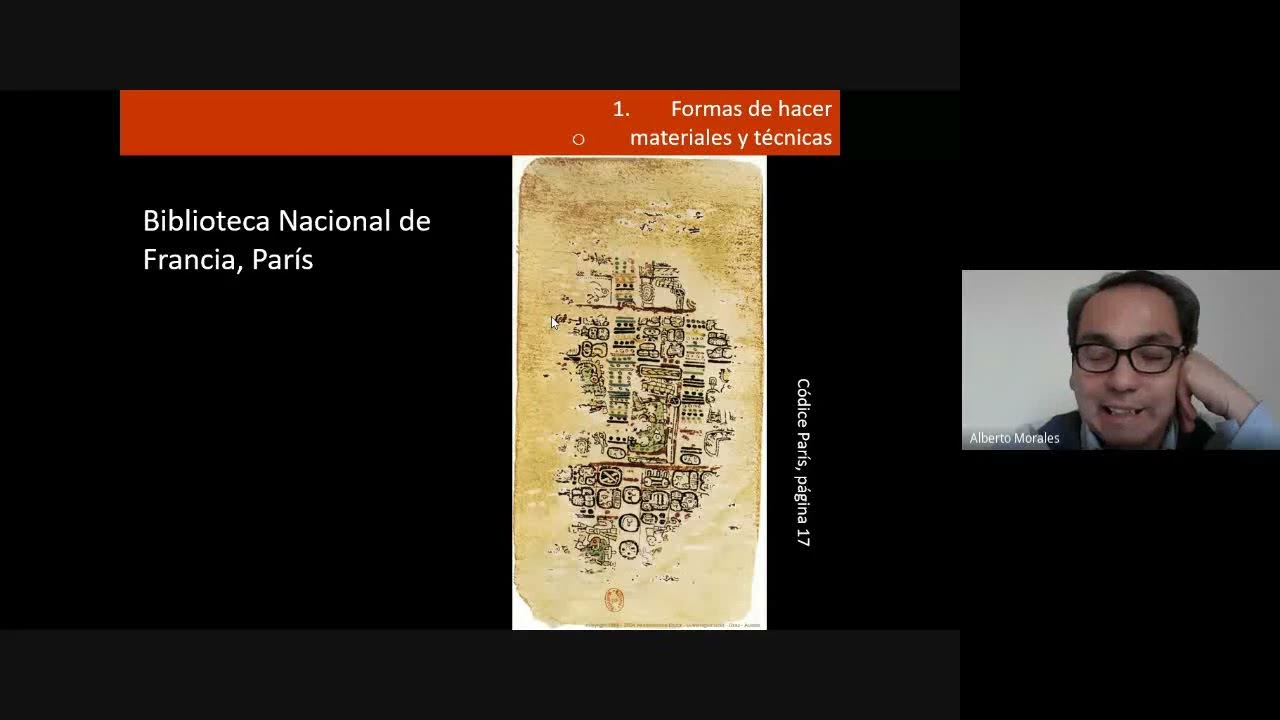
The study of Maya codices employs a visual culture approach that examines how images are made, represented, and perceived. This interdisciplinary methodology, developed through the 'Culturas Visuales en México' project, involves historians, anthropologists, and artists working together. The approach recognizes that images cannot be reduced to a single academic discipline and requires understanding the social contexts of image production, including who made them, how they were made, and how they were used.
Click to watch →

Stephen D. Houston on Vital Signs: The Visual Cultures of Maya Writing, Part 2
2.9K
Maya calligraphy emphasized bold graphic production with flat color within elegantly executed parallel lines of equal width. This 'clear line' technique, also found in Aztec codices and modern comics, requires exceptional hand control and represents a learned bodily practice involving entire body disposition. Painters used torches made from resinous ocote pine to produce black ink (sibik/soot), with red mixed using ritual preparations possibly involving sacrificial blood. Conch shells served as ink vessels, with later examples showing color wheels arranged circularly based on daily observations of wet season colors. The 'dainty hand' gesture with extended pinky signaled delicacy and was refined through training, with young learners having their hands slapped for improper execution.
Click to watch →
Deep Dive
The relationship between the written Classic Mayan language (Classic Ch'olti'an) and the modern Mayan languages spoken today.

Deciphering the Maya Script
210K
The language of classic Maya inscriptions is an ancestral form of a language spoken by about 50,000 people today on the border between Guatemala and Honduras, called Ch'orti'. This is not far from Copan. It was the literary language of the Maya for centuries, all through the classic period. All Maya inscriptions are in this ancestral form of Ch'orti', similar to how Latin was to the medieval church or classical Chinese to ancient China. Some Yucatec words show up in the inscriptions, but even at Chichén Itzá, the language remained ancestral Ch'orti'. Steve Houston thinks the Maya had their own grammarians who maintained this sacred language, and we're now getting a handle on its grammar.
Click to watch →

Solving Mysteries of the Ancient Maya, Dr. Michael Coe Anthropologist
33.9K
The language used in Maya hieroglyphic inscriptions and codices was Classic Chol, a prestige language spoken by relatively few people but adopted across the Maya world for official and literary purposes. This functioned similarly to Latin in medieval Europe or Sanskrit in Hindu tradition—a written language used by educated elites rather than a vernacular spoken by commoners. Today, only about 50,000 people speak Chol, primarily in border villages between Guatemala and Honduras, representing one of the most endangered languages of the Americas. The study of this language and its relationship to modern Mayan dialects continues to yield insights into the linguistic evolution of Mesoamerican civilizations.
Click to watch →
A New History of the Maya with Dr David Stuart
6.8K
Approximately five million people today speak Mayan languages, with 20-30 distinct varieties. Epigraphers work closely with native speakers to identify which modern languages are closest to the ancient glyphic system. Chi'che', spoken by about 25,000 people in Guatemala, proved particularly valuable because it closely resembles the language used in Classic Period inscriptions. This linguistic connection allows researchers to test hypotheses about word meanings and grammatical structures in ancient texts. Unlike Greek, where ancient and modern pronunciations diverge significantly, many Maya words remain identical today, such as 'cacao' for chocolate. This continuity provides a unique bridge between ancient and modern Mayan cultures, enabling more accurate interpretation of historical texts.
Click to watch →

Learn Classical Mayan: The Language of the Ancient Maya
5.5K
Classical Mayan (often called Classic Ch'olti') was the prestigious written language of the Maya Classic period (250-900 CE), used by elite scribes, priests, and for monument inscriptions; it employed a sophisticated logosyllabic hieroglyphic script combining logograms (whole words/morphemes) with syllabic glyphs, enabling the recording of proper names, calendrical dates, verb morphology, and literary passages, and this writing system is considered one of the most advanced pre-Columbian writing systems in Mesoamerica.
Click to watch →

Maya para Dummies 🇲🇽 | La lengua indígena Mexicana MÁS FÁCIL de aprender
32.9K
The Maya civilization consisted of independent city-states rather than a unified empire, with Classical Maya serving as the lingua franca. Maya Yucatec is the third language most similar to Classical Maya, after Tzeltal and Chol, and is the most widely spoken Maya language. The Popol Vuh was written in Maya Yucatec, while the Annals of the Cakchiqueles was written in Kaqchikel Maya. Maya Yucatec can be referred to as Maya, Maya Yucatec, Yucatec, or Maya Peninsular, while other Maya languages should be referred to by their specific names.
Click to watch →
Deep Dive
Comparative epigraphy: Comparing the structural mechanics of Maya hieroglyphs with other ancient logo-syllabic writing systems, such as Egyptian hieroglyphs or Sumerian cuneiform.
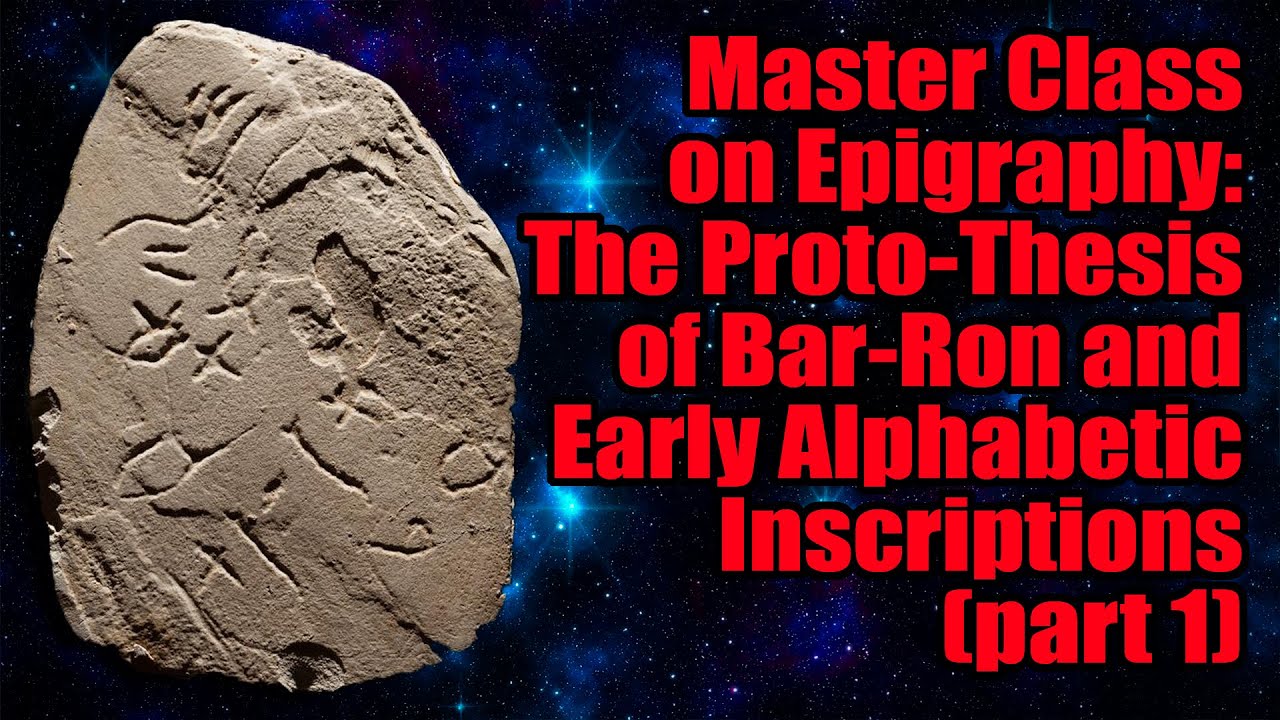
Master Class on Epigraphy: The Proto-Thesis of Bar-Ron and Early Alphabetic Inscriptions (part 1)
1.6K
Sinai 350 is part of the Harvard collection, which primarily contains casts. Benjamin Sass's comparative readings agree with Baron on some characters but differ on others. The inscription is more likely a Golden Horus name (a type of royal name) rather than a votive inscription. The outline shows what appears to be a horse (the 'golden horse' name) with the feet of the Horus bird. A match was found in Beckerath's handbook: Amenemhat II has a Golden Horse name (Ominumhot II), providing strong evidence for this identification. Sinai 345 is a votive inscription to Balot (female counterpart of Baal), a reading not controversial among epigraphers. Sinai 363 shows Baron proposing a 'strophodon' reading where the text swings up to the fourth register, then back down, then across to the fifth register, creating an acrostic pattern that is highly unusual and not supported by other epigraphers.
Click to watch →
Digital epigraphy at the crossroads of the Mediterranean
587
Linked open data enables complex historical analysis of what is going on where and how it is interacting with other places and how it compares to other places and other peoples over time. The Eagle project, directed by Silvia Landy, attempted to put together vocabularies specifically for epigraphy so that when one talks about a funerary inscription, all can point to the same identifier even if using different terms within projects. This enables cross-referencing data from multiple projects and beginning to do things like comparing epigraphic practices in different regions over time. The current dataset is somewhat limited because stone is only a very particular subset of textual, written epigraphic culture. The material of graffiti, ceramics, inscribed objects, and all other categories broadens this out hugely and would change our understandings considerably if it could be brought together.
Click to watch →
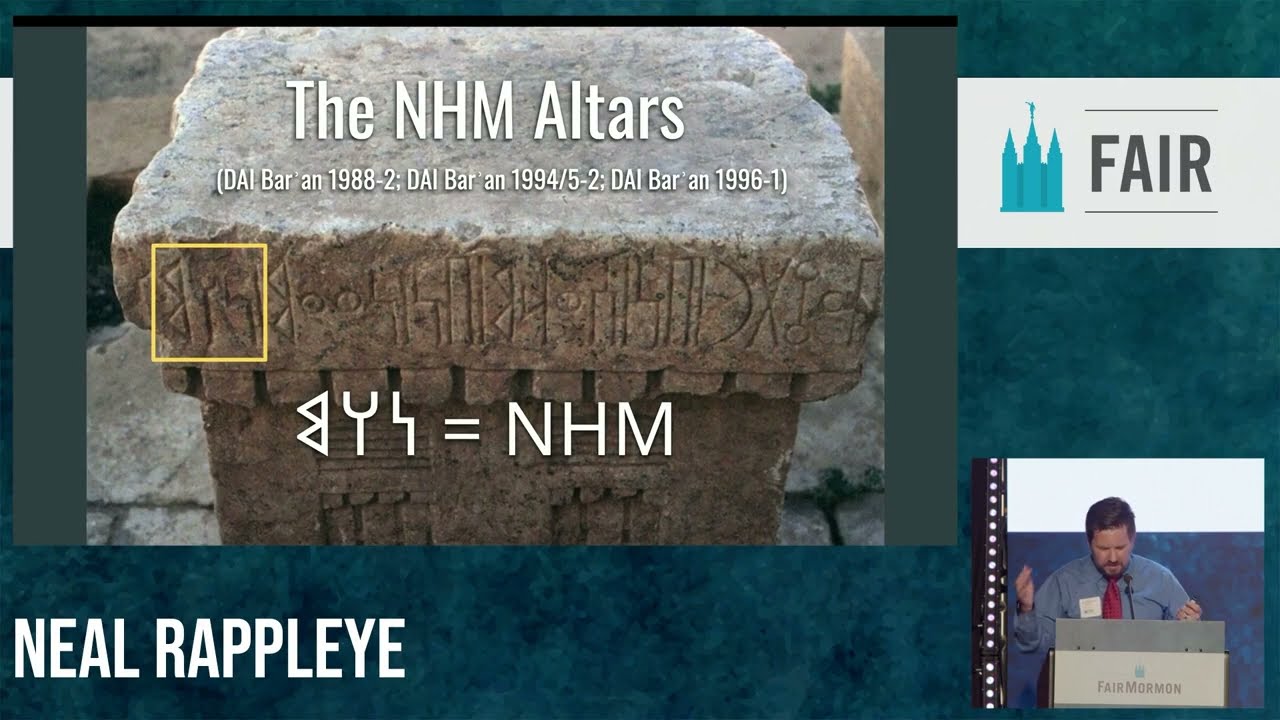
"Ishmael and Nahom in Ancient Inscriptions" by Neal Rappleye from our 2022 FAIR Conference
2.2K
A carved face stele dated to the 6th-7th century BC contains the name 'Yasim' (YSML), recognized by scholars as equivalent to the Hebrew name Ishmael. In South Arabian script, the letter SAT substitutes for the North Semitic Sheen, making these names cognates. This stele represents one of only four attestations of the Ishmael/Ishma name in South Arabian inscriptions dating to the early first millennium BC. Comparative analysis shows approximately 60 attestations of Ishmael in Hebrew epigraphy from the 8th-6th centuries BC, versus only 27 total in South Arabian inscriptions. This attestation confirms someone with this name was buried near the Neem region around 600 BC, consistent with Book of Mormon accounts. Critics suggesting Joseph Smith found Nahom on old maps face significant challenges: no known map from his time comes within 320 miles of the actual NHM altar location, and such maps lack the detailed geographic and cultural context now revealed archaeologically.
Click to watch →

History by Rajesh sir TGT, PGT, GICLT-PGT, GDC, NET, SSC, UPSC परीक्षाओं के लिए महत्वपूर्ण है।
102
Epigraphy (एपीग्राफी) is the study of inscriptions. The oldest inscription is from Bogazkoy (1400 BCE), recording a treaty between Hittite and Mitanni kings with Vedic deities as witnesses. In India, Ashoka's inscriptions are oldest, found at Maski, Gurjara, Nittor, and Udayagiri. Most are in Brahmi script, with some in Kharosthi (written right-to-left). Greek and Aramaic scripts appear at Lagman and Sarakona. Pre-Gupta inscriptions use Prakrit with Brahmi/Kharosthi scripts, while Gupta and post-Gupta inscriptions use Sanskrit. James Prinsep deciphered Brahmi in 1837, enabling systematic study of ancient Indian history.
Click to watch →
Arabs Between Empires: Identity & Power in Late Antiquity | A Conversation with Dr. Greg Fisher
3K
Epigraphy represents the most exciting frontier in pre-Islamic Arabia research. Recent discoveries include: a 2009 mosaic at Amman airport revealing new Roman titles for Al-Mundhir; Christian inscriptions in early Arabic script using Roman dating formulas in southern Saudi Arabia, suggesting pan-Arab identity through shared Christianity; and a Paleo-Arabic inscription referencing Al-Harith discovered in Jordan. Comparative anthropology from colonial American history provides useful frameworks for understanding ancient tribal leadership, recognizing that tribal leaders are creations of imperial states that are then repurposed locally. The Borderlands research model helps analyze how people react when introduced to new technologies and hierarchical structures.
Click to watch →
Writing Tools
Name Composition
Glyph Details
Symbol Variations
Writing Tools
0:01- 1
Demonstrates writing Maya hieroglyphs with modern pens.
- 2
Explains Maya tools like quills and brushes.
- 3
Focuses on precision and stroke control.
The Ideographic Theory of J. Eric S. Thompson
For much of the 20th century, the dominant paradigm in Maya studies—championed by prominent archaeologist J. Eric S. Thompson—rejected the idea that Maya hieroglyphs were phonetic. Thompson argued that the script was primarily ideographic and symbolic, representing cosmic concepts, mathematical ideas, and calendar calculations rather than the sounds of a spoken language. He fiercely dismissed the phonetic decipherment theories proposed by Yuri Knorozov, which form the foundation of modern epigraphy and Dr. Mark Van Stone's demonstrations. While the phonetic, logosyllabic nature of Maya writing is now universally accepted by scholars, Thompson's anti-phonetic stance remains the most significant historical counterpoint, illustrating how academic preconceptions once stalled the understanding of how the script was actually written.
Understanding the basic geography, timeline, and cultural significance of the ancient Maya civilization.
Familiarity with the distinction between logographic (representing words or ideas) and phonetic/syllabic (representing sounds) writing systems.
An introduction to the unique layout of Maya inscriptions, specifically the concept of glyph blocks and their double-column reading order.
Basic linguistic familiarity with consonant-vowel (CV) syllabic structures, which form the foundation of Maya phonetic writing.
The history of the decipherment of the Maya script, highlighting key historical breakthroughs by figures like Yuri Knorozov and Tatiana Proskouriakoff.
Practical epigraphy: Translating actual monumental inscriptions found on stelae, lintels, and pottery from Classic period sites like Palenque and Copan.
The material culture of Maya scribes, including the study of the remaining Maya codices, brush calligraphy techniques, and pigment creation.
The relationship between the written Classic Mayan language (Classic Ch'olti'an) and the modern Mayan languages spoken today.
Comparative epigraphy: Comparing the structural mechanics of Maya hieroglyphs with other ancient logo-syllabic writing systems, such as Egyptian hieroglyphs or Sumerian cuneiform.
251K views5Klikes6:42@markvanstone2012Original Release: 2010-09-06
[Music] hi I'm Dr Mark vanstone and I want to demonstrate a little bit about how the Maya wrote their hieroglyphs I'll be using modern tools the handy pigma Micron pen which is a great little uh tool for drafting uh it's very precise the Maya tools were just as precise but uh they're a little harder to control and uh for for my purposes I use these the my would have used a quill pen made of an bird feather or an animal hair brush and they would have um probably used different sizes of pens for different sizes of Strokes with a brush you can actually make a heavy Stroke by pressing harder and a lighter Stroke by by lighter touch but it's um it's quite a skill to develop and I find it simpler to use these so I will demonstrate by writing the name of my esteemed filmmaker Michael geesi in Maya phonetic glyphs ma la k ya right now I'm drawing the syllable T which means to and uh this glyph that I'm drawing right here is the skeleton of the centipede and this is the first part of the syllable ma which is a symmetrical glyph this is the syllable e the letter I pronounced as it would be in Spanish and and uh C is a fish fin that's just the outline of it and law is an upside down face this is the second name it's the syllable key and this is the syllable C SI it's in three parts and this would be the center and the sides of the glyph yah and then I would write my own name first syllable would be syllable U it's the skeleton of the U and I am writing now the first syllable of my name Ma again same as the ma in Michael and then coup which is what we call a stone glyph and then use the stone glyph again to write the word Stone the word stone is tune in classic Maya it has a cable knee on the end of it looks like a ponytail or maybe a comet so this is the outlines of U ma la k u Mau tuni that means to Michael gei Mark of the stone and I put the details inside use a finer pen makes much finer strokes and this is why I call it a skeleton of a centipede it's got these nice parallel lines an inline little antenna little Arch inside there that's the ma the E glyph the letter I has a kind of a arch inside three dots at the bottom the C like I said is the fin of a fish which is pronounced Kai so the word fish turned into the syllable C this is the syllable law it's an upside down howling face the syllable key nice inline like this and it has a kind of a knot wrapped around it this U Top of the the C is um like little antenna and then it has again three dots inside and the yog liph has a pair of fins like this and sometimes they have a little in line like that and then the syllable U there's a thousand ways to M ooh it's the most common sound in my the most common word but the simplest form is called the UB bracket here's my ma again the tun glyph is uh based on the perhaps a picture of a cave this would be a pool of water with drops around it this would be something like a stalactite and here's the stone again the pool of water again sometimes the stalactite hangs from its own little roof like this and then the knee syllable has a bunch of parallel lines I think of it as a kind of a ponytail and sometimes you put a little inline following the border of the cave like that top maala to Michael gei mark vanstone
Up Next

5:06
Language and Cognition Theories | MCAT Psychology Prep
@khanacademymedicine
332K views•2013-09-17
36:52
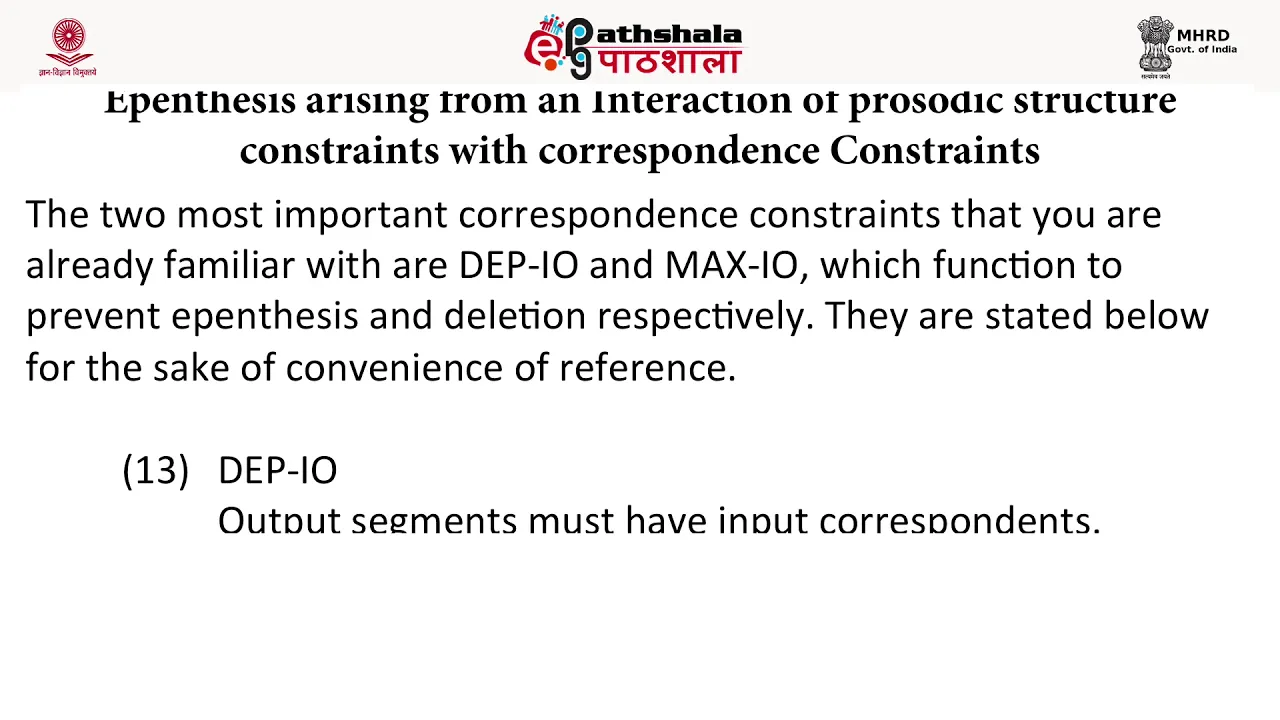
Constraint Interaction in Optimality Theory: Epenthesis & Deletion
@Vidyamitra
180 views•2018-08-20

8:59
Forensic Linguistics: How Language Solves Crimes | PBS
@pbsstoried
1M views•2024-01-25

21:32
Accent Expert Explains U.S. Regional Dialects | Part 1
@WIRED
9.3M views•2021-01-21
Related Study Plans & Knowledge Roadmaps
Structured learning paths in Linguistics
linguistics
Optimality Theory: Tableaux & Constraints
01Phonological Basics: Sounds, Syllables & Rules
02Foundations of Optimality Theory: GEN, CON, and EVAL
03The Constraint Inventory: Markedness vs. Faithfulness
+ 2 more learning modules
15h5 modules
Explore Roadmap
linguistics
Morphosyntactic Alignment: S, A & P Systems
01Foundations of Syntax: Transitivity and Arguments
02The Linguistic Variables: Mapping S, A, and P
03Nominative-Accusative Alignment
+ 3 more learning modules
12h6 modules
Explore Roadmap
linguistics
Analyzing Sign Language: Phonology & Syntax
01Foundations of Sign Language Linguistics
02Phonology: The Five Parameters of a Sign
03Morphology: Word Formation and Classifiers
+ 2 more learning modules
14h5 modules
Explore Roadmap
linguistics
Pragmatics: Speech Acts, Grice & Politeness
01Introduction to Pragmatics: Meaning in Context
02Grice’s Cooperative Principle & Implicature
03Speech Act Theory
+ 2 more learning modules
14h5 modules
Explore Roadmap