























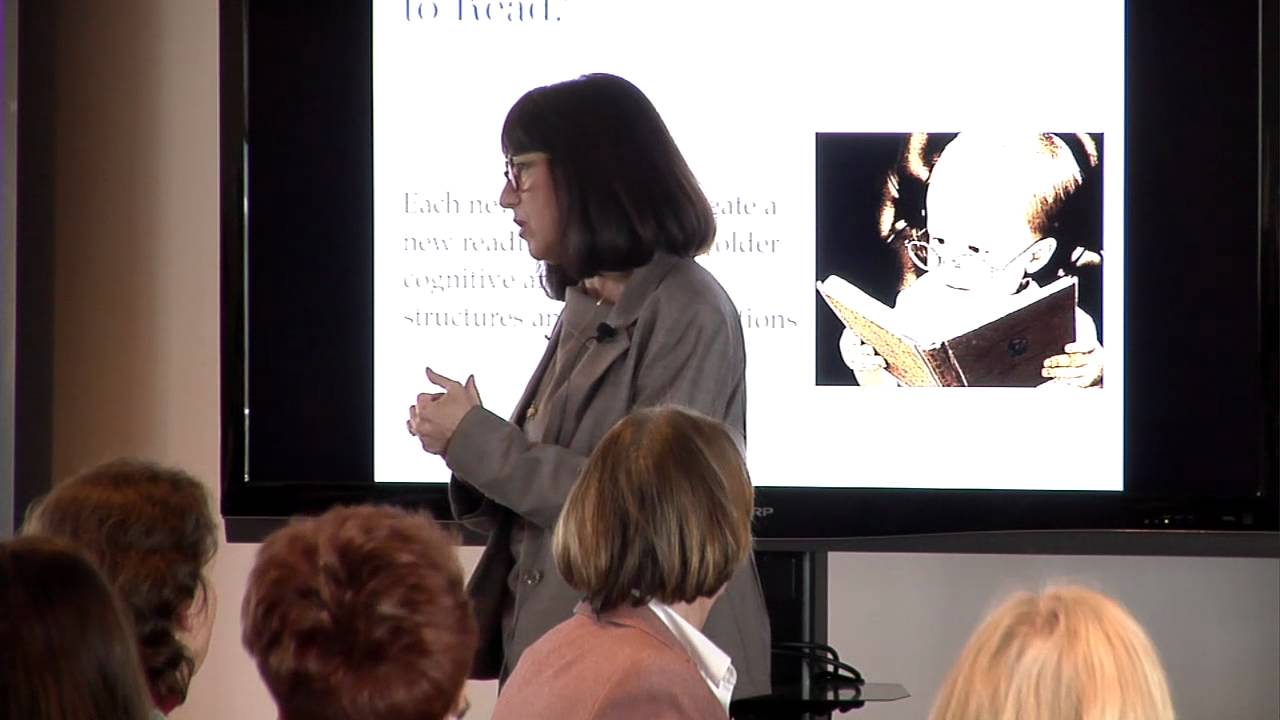
The relationship between language and cognition is debated through several theories: universalism holds that thought determines language (Piaget's view that cognitive development precedes language), while linguistic determinism argues that language shapes thought (weak version suggests language influences thinking patterns, strong version claims language completely determines thought, as proposed by Whorf's hypothesis).
Language and Cognition Theories | MCAT Psychology Prep
Added:Basic concepts of cognitive psychology, including how human perception, memory, and thought processes are defined.
An introductory understanding of language structure, specifically the distinctions between phonology, morphology, syntax, and semantics.
Familiarity with Jean Piaget's stages of cognitive development and his general view that thought precedes language.
The empirical evidence surrounding the Sapir-Whorf Hypothesis (linguistic relativity), such as cross-cultural studies on color perception and spatial orientation.
Major theories of language acquisition, contrasting Noam Chomsky's Nativist perspective with B.F. Skinner's Behaviorist theory and Lev Vygotsky's Social Interactionist theory.
The neurobiology of language, including the specific functions and locations of Broca's area and Wernicke's area, and the pathologies associated with their damage (aphasias).
Applications of language-cognition theories in modern fields such as artificial intelligence, bilingual cognitive advantages, and cognitive behavioral therapy.
332K views2.4Klikes5:06Original Release: 2013-09-17
If you've ever learned another language, then you know that some words don't translate exactly.
For example, there's a language in New Guinea that only has two words for color-- mola, meaning "bright," and mili, meaning "dark."
Now compare that to English.
We have lots of words for color-- blue, green, teal, mauve, all that stuff.
But does the fact that we have different words for color mean that we actually think about color differently?
And your answer to that question places you on one position of the great language-thought debate.
Which comes first?
And we have different theories that we can place sort of on a spectrum.
And on one end, we have something called universalism.
This theory says that thought comes before language.
So your thoughts dictate the language that develops.
So going back to our New Guinean example, a universalist would say that that group of people only thinks in terms of bright and dark, and if they had concepts or ideas about other colors, then they would develop words for them in order to express those thoughts.
So with universalism, we have the idea that thought determines language completely.
And now here, at this point, we have the idea that thought influences language.
Just a little bit gentler of a statement.
And this is the idea that Piaget ascribed to.
Piaget came up with a theory of cognitive development in children, and it was because of this and his observations of children that he believed that once children were able to think in a certain way, then they developed the language to describe those thoughts.
So, for example, when children learn that objects continue to exist even though they can't see them, that's when they start to develop words like "gone" and "missing," "find."
So their language development is influenced by their cognitive development and their newly-discovered ability to understand that objects exist, even when they can't see them anymore.
So that's what Piaget thought.
And now, a little further down, towards the more middle ground, we have Vygotsky.
And Vygotsky thought that language and thought are independent, but they converge through development.
So he didn't really say if language influenced thought or if thought influenced language.
He just said they're both there, they're both independent, but eventually, you learn to use them at the same time.
Because Vygotsky believed that children develop language through social interaction with adults who already know the language.
And through that interaction, then they learn to connect their thoughts and the language that they eventually learn.
OK, so now we're crossing over the middle ground into the world that believes language has an influence on thought.
And we have a couple of positions here, and they both fall under the category of linguistic determinism.
So these are called the weak and the strong hypotheses.
And this isn't a value judgment on how good they are or how well-established they are.
It just refers to how much influence they think language has on thought.
So weak linguistic determinism says that language influences thought.
It makes it easier or more common for us to think in certain ways depending on how our language is structured.
So, for example, I'm going to read you a sentence, and I want you to draw it out or at least vividly imagine it.
"The girl pushes the boy."
OK, so however you drew that out or imagined it, if you drew it this way, with the girl on the left pushing the boy toward the right, than your native language probably reads from left to right, like English.
If you drew the girl pushing the boy this way, with the girl on the right pushing toward the left, then your native language might be one that reads from right to left, like Hebrew.
Now, it's not that you can't or didn't even draw it the other way.
It's just that, depending on how your language is structured, it makes it more likely or easier for you to think about that action in a certain direction.
Now, strong linguistic determinism takes a more extreme view and says that language determines thought completely.
This is also called the Whorfian hypothesis, because the guy that came up with it, his name was Whorf.
And he observed that there is a Native American tribe called the Hopi that don't have any grammatical tense in their language, and he thought that meant that they couldn't think about time in the same way.
Later, people studying the language found that the Hopi have a different way of expressing past, present, and future.
So we don't have an answer yet for which of these perspectives is the correct one, and people are still doing research to try to discover which one is the most accurate.
But now you're aware of the main perspectives on the relationship between thought and language.
And now, when you're learning a foreign language, you can think about how the language you're learning is influencing your thoughts, or vice-versa, how your thoughts are affecting your interpretation of the language.
Up Next

3:16
Linguistic Relativity and Determinism: Does Language Shape Thought?
@NativLang
396.3K views•2013-04-26
36:52
Constraint Interaction in Optimality Theory: Epenthesis & Deletion
@Vidyamitra
180 views•2018-08-20

8:59
Forensic Linguistics: How Language Solves Crimes | PBS
@pbsstoried
1M views•2024-01-25

21:32
Accent Expert Explains U.S. Regional Dialects | Part 1
@WIRED
9.3M views•2021-01-21
Related Study Plans & Knowledge Roadmaps
Structured learning paths in Linguistics
linguistics
Optimality Theory: Tableaux & Constraints
01Phonological Basics: Sounds, Syllables & Rules
02Foundations of Optimality Theory: GEN, CON, and EVAL
03The Constraint Inventory: Markedness vs. Faithfulness
+ 2 more learning modules
15h5 modules
Explore Roadmap
linguistics
Morphosyntactic Alignment: S, A & P Systems
01Foundations of Syntax: Transitivity and Arguments
02The Linguistic Variables: Mapping S, A, and P
03Nominative-Accusative Alignment
+ 3 more learning modules
12h6 modules
Explore Roadmap
linguistics
Analyzing Sign Language: Phonology & Syntax
01Foundations of Sign Language Linguistics
02Phonology: The Five Parameters of a Sign
03Morphology: Word Formation and Classifiers
+ 2 more learning modules
14h5 modules
Explore Roadmap
linguistics
Pragmatics: Speech Acts, Grice & Politeness
01Introduction to Pragmatics: Meaning in Context
02Grice’s Cooperative Principle & Implicature
03Speech Act Theory
+ 2 more learning modules
14h5 modules
Explore Roadmap