Linguistic relativity (also known as the Sapir-Whorf hypothesis) proposes that the structure of a language influences how its speakers perceive and conceptualize reality, meaning that different languages may lead to fundamentally different worldviews; this theory ranges from the weaker claim that language affects thought to the stronger claim of linguistic determinism that language determines thought, though it remains controversial with ongoing debate about whether language shapes cognition or merely reflects universal human thinking patterns.
Linguistic Relativity and Determinism: Does Language Shape Thought?
Added:Deep Dive
Basic understanding of cognitive psychology, specifically how the human brain processes, stores, and categorizes information.

Psychologie - Introduction à la psychologie cognitive
80.4K
Cognitive psychology studies how humans think, examining interactions between thought, emotion, creativity, language, and problem-solving. The brain processes external stimuli into nerve impulses, synthesizing information from both environment and memory to create thoughts. To manage vast information, the brain organizes data using concepts—categories grouping linguistic elements, images, ideas, and memories formed through observation and categorization. Concepts range from concrete (types of birds) to abstract (justice, democracy), serving as frameworks for understanding relationships and storing accessible information. Prototypes represent the best examples of concepts, shaped by personal experiences, enabling efficient mental organization across all aspects of life.
Click to watch →

संज्ञानात्मक मनोविज्ञान की उत्पति एवम इतिहास||History and Origin of Cognitive Psychology||#cognitive
14.6K
Cognitive psychology is a major branch of psychology that studies mental processes including perception, memory, thinking, and problem-solving. The field views the mind as an information processing system where sensory information enters through organs like eyes and ears, travels to the brain, and undergoes processing through stages of perception, attention, and memory. Attention is crucial for determining what information enters conscious awareness and gets processed. The brain processes information similarly to how a computer processes data, encoding, storing, and retrieving information systematically. This information processing model helps explain how we understand, learn, and adapt to our environment.
Click to watch →

🧠संज्ञानात्मक क्या है और संज्ञानात्मक प्रक्रिया🧠(What is cognitive and cognitive process)
598
Cognitive psychology (संज्ञानात्मक मनोविज्ञान) studies how the brain processes information through mental processes like learning, understanding, thinking, and memory. These processes occur within the brain and range from simple recognition to complex problem-solving. In the 1950s, Piaget and Vygotsky revolutionized this field by studying cognitive development and learning. Basic cognitive processes include: Perception (धारणा) - recognizing and interpreting sensory information; Attention (ध्यान) - focused concentration on tasks; Information Processing (सूचना प्रसंस्करण) - organizing and manipulating information; and Memory (स्मृति) - storing and retaining information for future use.
Click to watch →

Lecture 05
111
Cognitive psychology is the scientific study of mental processes such as perception, memory, attention, reasoning, problem solving and decision making. It focuses on how people acquire, process, store and retrieve information. It views the human mind as an information processing system like a computer. Cognitive psychology helps make a bridge between psychology, neuroscience, linguistics and computer science, often using experiments, modeling and brain imaging techniques to understand human mind, emotion and behavioral activities.
Click to watch →

Aimee Callender | Remembering God (02/17/2021)
372
Cognitive psychology is the study of human information processing. It examines how we pay attention to information, how we recognize objects, how we remember, how we solve problems, make decisions, and communicate. The basic assumption in cognitive psychology is that our minds are like little computers. The original research in cognition used the computer as a model for our minds. This approach focuses on mental processes rather than brain structures, developing theories for how we process different pieces of information.
Click to watch →
Deep Dive
The fundamental distinction between language (as a structured system of communication) and thought (as internal cognitive representation).
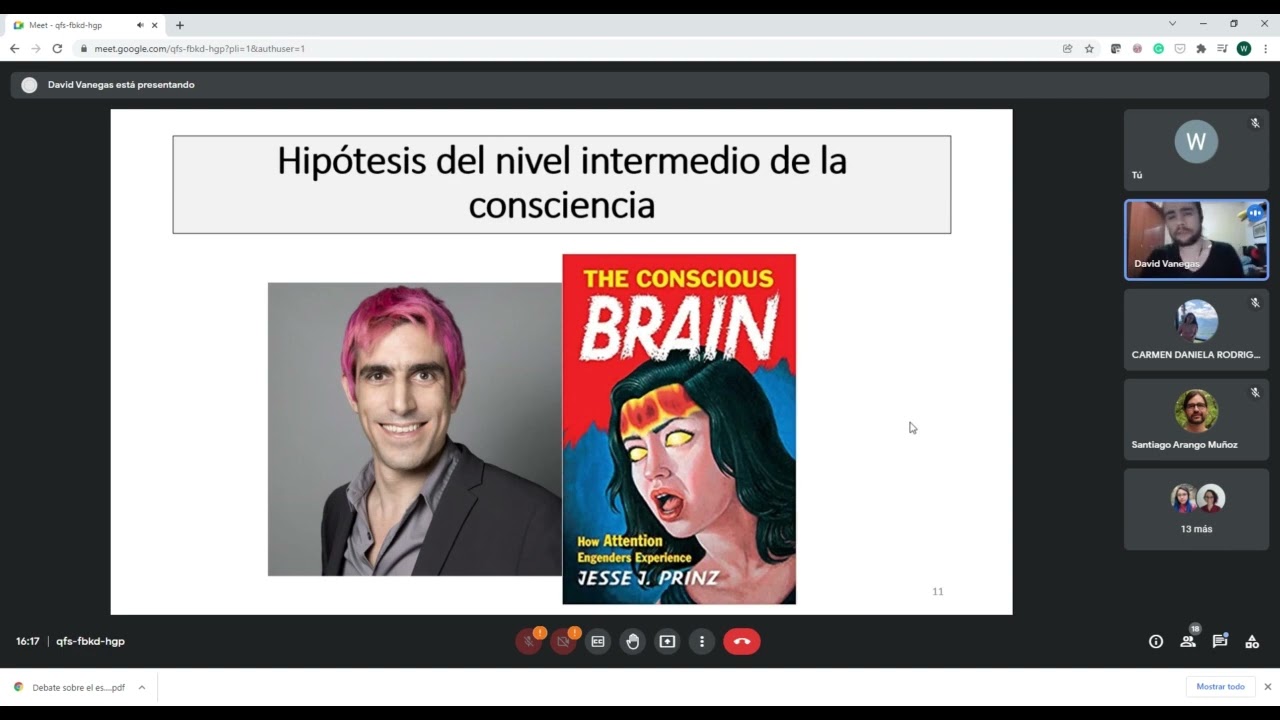
“Lenguaje y conciencia”. David Vanegas Psicólogo y Magíster en Psicología UdeA
593
Language and thought are fundamentally different cognitive processes despite common intuitions that we experience thoughts as internal verbalizations. Evidence includes: (1) Deductive reasoning can occur without language, as bilingual individuals think in neutral conceptual terms regardless of their native language; (2) The same underlying thought can be expressed in different languages with different grammatical structures (e.g., Spanish vs. Japanese, where word order differs); (3) The structure of thoughts themselves does not depend on word order, while language syntax does. This dissociation is supported by cases of language preservation despite general cognitive decline, such as in Williams syndrome and certain linguistic savants. Non-human primates also demonstrate complex cognitive capacities (like redirected aggression) without sophisticated language, further supporting the independence of thought from language. This distinction is crucial for understanding how consciousness relates to both domains.
Click to watch →

Noam Chomsky: Language and Other Cognitive Processes
152.1K
A fundamental dogma holds that language is merely a system of communication. However, approximately 99% of language use is internal (talking to oneself), which is clearly not communication but thinking. Even external language use involves large parts that are establishing social relations rather than communicating information. This distinction is crucial for understanding what makes language unique.
Click to watch →

The Next Horizon: Language & Thought Mission
254
Language and thought are distinct cognitive processes in the human brain, despite common confusion between them. Evidence comes from two approaches: neuroimaging shows language areas become nearly silent during complex reasoning tasks like math, logic, physical reasoning, and social reasoning; neuropsychology reveals aphasia patients who cannot produce or understand language can still engage in chess, driving, and reasoning about others' minds. Language is defined as a system of conventionalized symbols for conveying detailed meanings, while thought encompasses concepts and various reasoning types including physical, social, and abstract reasoning. Different reasoning types may rely on distinct cognitive machinery, though this remains an active research area.
Click to watch →

مقال العلاقة بين اللغة والفكر موجه لشعبة آداب وفلسفة ولغات أجنبية
229.8K
The first position (connectionist view) holds that language and thought are identical and develop together. Words are 'fortresses of meanings' serving thought. The second position (separationist view) holds that thought precedes and exceeds language. Words are 'tombs of meanings' opposing thought. This creates a dual-directional relationship where thought is broader and more important than language.
Click to watch →

PSY 504 || Lecture 43 || Memory || Cognitive Psychology || Short Lectures || VU Lectures
1.3K
Language is a unique human cognitive system characterized by productivity (the ability to generate unlimited sentences from finite rules) and regularity (following consistent grammatical rules), which distinguishes it from animal communication systems; language and thought are separate systems with different processing mechanisms, as proposed by Noam Chomsky, meaning language shapes how we express thoughts but does not necessarily determine what we can think.
Click to watch →
Deep Dive
An introduction to structural linguistics, including basic concepts of semantics (meaning) and syntax (grammar).

Introduction to Linguistics English
1.3K
Syntax studies phrase and sentence structure, with traditional grammar combining syntax and morphology as 'grammar.' Generative grammar uses a limited set of rules to generate potentially infinite sentences. Phrase structure rules determine acceptable arrangements (e.g., NP before VP in English). Tree diagrams represent grammatical structures. Semantics studies word and sentence meaning, including semantic features (properties like animate/inanimate), semantic roles (agent, theme), and lexical relations (synonyms, antonyms, hyponyms, collocations).
Click to watch →

Chapter 6 Video #6 Semantics
189
Semantics is the final element of language that deals with meaning, distinguishing it from syntax which concerns how symbols are joined. Nelson Goodman proposed that art should be understood as symbol systems similar to languages, with keys to understanding contained within the language itself. Ferdinand de Saussure, a structuralist linguist, studied languages as self-contained systems with rules, proposing that language consists of a signifier (word) linked to a mental concept (meaning). This structuralist approach treats language as a system where signs have relationships with each other within the system, rather than directly with external reality.
Click to watch →

أساسيات اللغويات | الصوتيات والنحو والمورفولوجيا شرح كامل لطلاب قسم اللغة الانجليزية
107
Syntax studies how words combine into grammatical sentences, operating at the sentence level above morphology. The hierarchy is: Grammar > Syntax > Morphology. English sentences follow basic patterns: Subject + Verb, Subject + Verb + Object, Subject + Verb + Complement. Complete sentences contain subject and predicate; incomplete sentences lack essential components. Noun phrases contain determiners, adjectives, and head nouns. Adverbial clauses modify main clauses by providing information about time, place, or condition. Semantics studies literal meaning of words and sentences, including synonyms (similar meanings), antonyms (opposite meanings), homonyms (same spelling/pronunciation, different meanings), and homophones (same pronunciation, different spellings). Semantics focuses on dictionary meanings in isolation, while pragmatics focuses on context-dependent meaning.
Click to watch →
Live Class - 72b।।Basic Concepts of Linguistics - Lecture 01।। Introduction to Linguistics।।3rd Year
1.6K
Syntax is the study of sentence structure and the rules governing how words combine to form sentences. It examines the underlying system of language that enables meaningful communication. Semantics is the study of meaning in language, examining how words and sentences convey meaning and how meaning is constructed. The same sentence can have multiple meanings depending on context, and semantics distinguishes between literal meaning and contextual interpretation.
Click to watch →
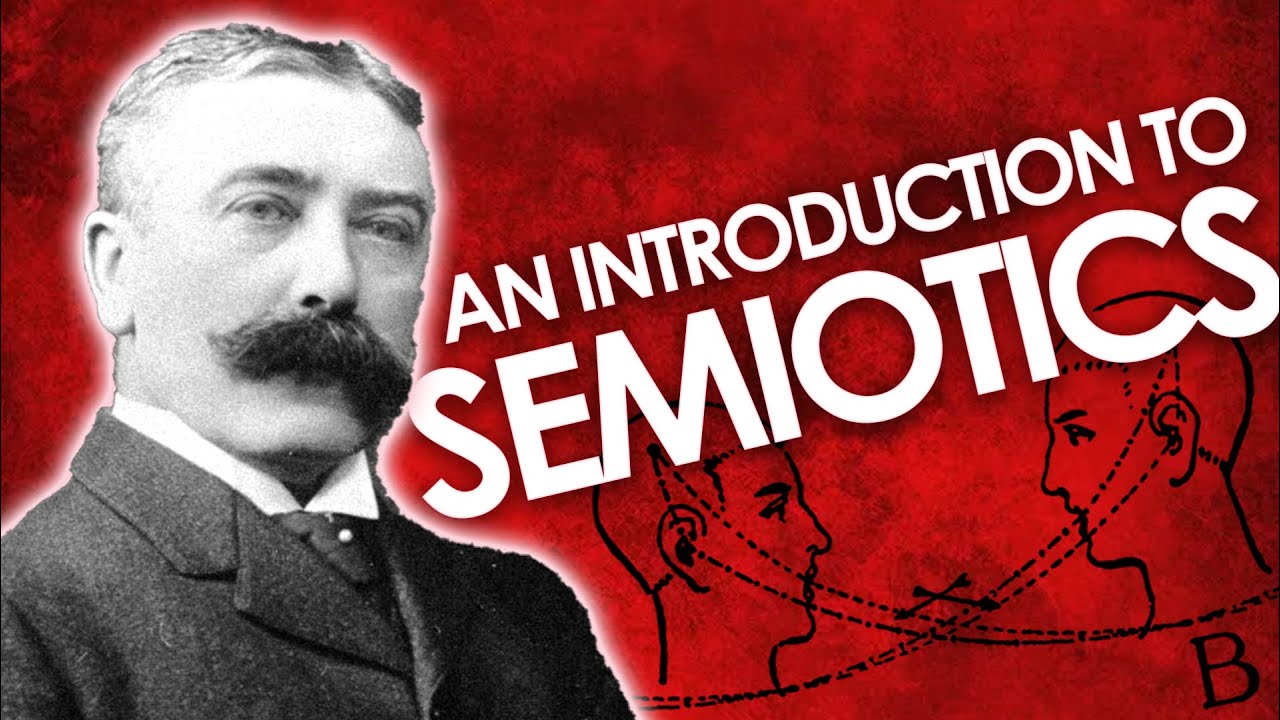
An Introduction to Semiotics
54.5K
Structural linguistics denotes schools or theories in which language is conceived as a self-contained, self-regulating semiotic system whose elements are defined by their relationship to other elements within the system. This represents the essence of Saussure's argument and the essence of structuralism—a theory that views language as a closed system where meaning emerges from internal relationships rather than external references.
Click to watch →
Deep Dive
Familiarity with the concept of cultural relativism—the idea that a person's beliefs and activities should be understood based on that person's own culture.

What is CULTURAL RELATIVISM? | UCLA Anthropology Student Explains & Defines Cultural Relativism
17K
Cultural relativism is the idea that a person's beliefs and practices should be understood based on that person's own culture. It combines two concepts: culture (the traditions, arts, norms, and religious beliefs of a particular group) and relativism (understanding an idea as it relates to different groups or contexts). The key principle is that we should look to understand an individual's culture relative to the norms of that culture itself.
Click to watch →

BA 1st Semester Sociology Important Questions | Introduction to Basic Concepts of Sociology
1.7K
Cultural relativism is the idea that a person's beliefs and practices should be understood based on that person's own culture. Proponents argue that the norms and values of one culture should not be evaluated using the norms and values of another. For example, in the United States, calling someone 'uncle' or 'aunt' for someone who is not actually a relative is considered culturally inappropriate and rude. Cultural relativism is the ability to understand a culture on its own terms, rather than making decisions using the standards of one's own culture. From this perspective, no culture is superior to another when compared to systems of morality, law, politics, etc.
Click to watch →

WBCS main 2022 Suggesion
262
Cultural relativism is the principle that a person's beliefs, values, and practices should be understood based on that person's own culture, rather than judged against the criteria of another culture. This concept emphasizes that cultural practices must be understood within their specific cultural context.
Click to watch →

Cultural Relativism (Explained in 3 Minutes)
14.3K
Cultural relativism is the principle that an individual's beliefs and activities should be understood by others in terms of that individual's own culture. This concept promotes the idea that no culture is superior to another and that moral and ethical systems are relative to cultural context.
Click to watch →

MORNING SHOW EP - 106
455
Cultural relativism is the principle that a person's beliefs and practices should be understood based on that person's own culture, rather than judged against the criteria of another culture. This approach involves understanding why people in different cultures behave the way they do, rather than simply judging them by one's own cultural standards. It recognizes that different cultures have different values and practices that are meaningful within their own context.
Click to watch →
Prerequisite Knowledge
- Concept 01Basic understanding of cognitive psychology, specifically how the human brain processes, stores, and categorizes information.
- Concept 02The fundamental distinction between language (as a structured system of communication) and thought (as internal cognitive representation).
- Concept 03An introduction to structural linguistics, including basic concepts of semantics (meaning) and syntax (grammar).
- Concept 04Familiarity with the concept of cultural relativism—the idea that a person's beliefs and activities should be understood based on that person's own culture.
Subsequent Learning
- Step 01Empirical studies in color categorization (such as Berlin and Kay's research) and spatial cognition (e.g., egocentric vs. geocentric directional terms).
- Step 02The concept of 'Neo-Whorfianism' and modern psycholinguistic experiments that support a weak version of linguistic relativity.
- Step 03How linguistic relativity affects bilingualism and multilingualism, specifically whether switching languages alters cognitive frameworks or decision-making.
- Step 04The implications of linguistic relativity in Natural Language Processing (NLP) and Artificial Intelligence, particularly in cross-cultural machine translation and sentiment analysis.
Linguistic Relativity
Determinism Debate
Linguistic Relativity
0:10Playing Section
- 1
Language shapes distinct worldviews across cultures.
- 2
Hopi time concepts differ from European ones.
- 3
Translation may fail due to cognitive gaps.
Linguistic Universalism and the Language of Thought (Mentalese)
Linguistic universalism, championed by theorists like Noam Chomsky and Steven Pinker, serves as the primary counterpoint to linguistic relativity. This perspective argues that human thought is fundamentally independent of language. Instead of language shaping cognition, universalists propose that all humans share a biologically determined, innate cognitive architecture. Chomsky's theory of Universal Grammar suggests that all human languages share a common underlying structure, reflecting pre-existing mental processes. Furthermore, Pinker popularized the concept of 'Mentalese'—an internal, non-verbal language of thought in which humans conceptualize ideas before translating them into a specific spoken language. From this viewpoint, while languages differ in vocabulary and grammar, these variations merely represent different ways of expressing the same universal human concepts, rather than fundamental differences in how we perceive and understand reality.
Deep Dive
Empirical studies in color categorization (such as Berlin and Kay's research) and spatial cognition (e.g., egocentric vs. geocentric directional terms).

Color Is A lot More Confusing Thank You Think
48.6K
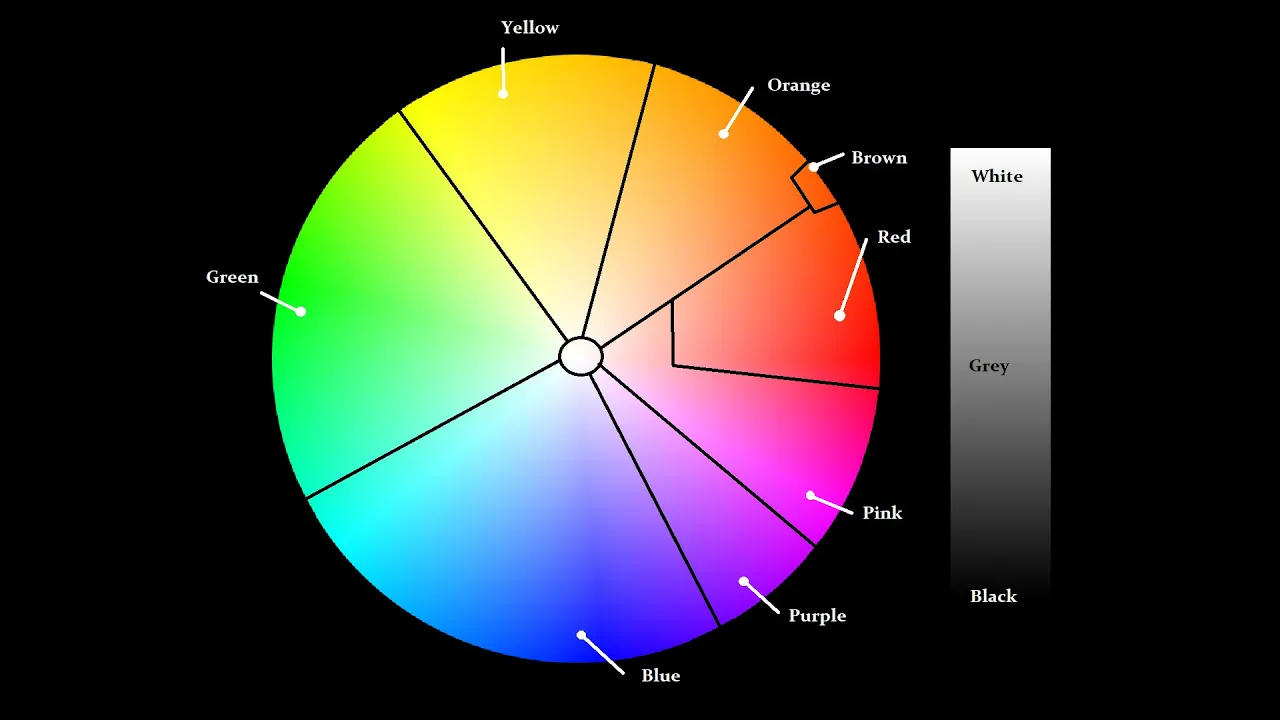
In 1969, Brent Berlin and Paul Kay studied 20 different languages and identified 11 basic color categories: white, black, red, green, yellow, blue, brown, purple, pink, orange, and gray. They discovered that languages follow a specific pattern in which color terms appear: brown, purple, pink, orange, and gray never appear in languages that don't already distinguish between green and blue. The sequence is: red is most basic, followed by green and yellow, then blue, then brown, and finally purple, pink, orange, and gray.
Click to watch →

Linguistic Relativity
70.5K
In 1968, Berlin and Kay discovered that languages categorize the color spectrum according to an implicational hierarchy. Type 1 languages (like Dani in Papua New Guinea) have only two basic color terms: dark/cool and light/warm. Type 2 adds red. Type 3 adds either green or yellow. Type 4 adds both green and yellow. Type 5 adds blue. English is a Type 7 language with purple, pink, orange, and gray. This hierarchy shows universal patterns in how languages divide the color spectrum.
Click to watch →

The Philosophy of Color
1.3M
In 1969, Brent Berlin and Paul Kay studied 20 languages worldwide and identified 11 basic color categories: white, black, red, green, yellow, blue, brown, purple, pink, orange, and gray. They discovered a sequential pattern in which languages acquire color terms: brown comes after blue, which is preceded by both green and yellow, which come after red. The most basic categories are dark cool and light warm, encompassing all cool and warm colors as two fundamental categories.
Click to watch →

China's Lost Color
105K
Linguists Brent Berlin and Paul Kay proposed seven stages in how languages develop color terminology: Stage 1 (light/dark), Stage 2 (red), Stage 3 (green or yellow), Stage 4 (both green and yellow, with blue as green shade), Stage 5 (blue), Stage 6 (brown), Stage 7 (orange, pink, purple, gray). They claimed this pattern is near-universal across languages. Some languages like those in New Guinea have only three basic terms (white, black, red), requiring metaphorical descriptions for blue objects. When languages first develop a term for red, it typically covers all warm colors, gradually splitting into more specific terms. This theory explains why some languages treat blue and green as the same color, while others have developed sophisticated distinctions.
Click to watch →

色彩検定® UC級 独学ポイント解説講座 10
667
Berlin and Kay proposed that color categories develop in a specific sequence across human cultures: (1) White and Black (lightness/darkness), (2) Red (first chromatic color), (3) Green or Yellow (second chromatic color), (4) Blue (third chromatic color), (5) Brown (fourth chromatic color), (6) Purple, Pink, Orange, and Gray (fifth chromatic color). Their research concluded that there are 11 universally recognized basic color categories: White, Black, Red, Green, Yellow, Blue, Brown, Purple, Pink, Orange, and Gray. This hypothesis has been supported by subsequent scientific research and represents a fundamental finding in color cognition studies.
Click to watch →
Deep Dive
The concept of 'Neo-Whorfianism' and modern psycholinguistic experiments that support a weak version of linguistic relativity.

Adam Conover is Fundamentally Wrong about Decades
980
Neo-Whorfism represents a more nuanced approach to the Sapir-Whorf hypothesis that avoids the extreme claims of the original theory. Rather than suggesting that language definitively determines perception, Neo-Whorfism examines how linguistic distinctions in vocabulary might influence what people notice and how they categorize experiences. This approach focuses on the relationship between language and thought without making deterministic claims about cognitive ability.
Click to watch →

Фантастика литературы и философии. Тед Чан "История твоей жизни" и фильм "Прибытие"
1.4K
Modern linguists and psychologists generally support the weak version of linguistic relativity. This version holds that language influences perception but does not determine it absolutely. Learning a new language does not radically change one's fundamental worldview, but it does provide new cognitive tools and perspectives.
Click to watch →
Linguistic Relativity
70.5K
Linguistic relativity, also known as the Sapir-Whorf Hypothesis, proposes that the language or languages one speaks shapes the way one thinks and perceives the world; this hypothesis exists in two versions—a strong version suggesting language determines thought, and a weak version suggesting language merely influences thought—with research demonstrating that languages differ significantly in how they encode spatial relationships (such as prepositions in English versus verb-framed constructions in Spanish), categorization systems (like classifiers in Navajo and Guugu Yimithirr), lexicalization of concepts (such as snow terms in Inuit), color terminology (with Berlin and Kay's implicational hierarchy), and directional systems (geocentric versus geographic), all of which constrain speakers' attention to and conceptualization of different aspects of reality.
Click to watch →

Кронгауз Максим - Гипотеза лингвистической относительности
43.7K
Modern linguistics has transformed the Sapir-Whorf Hypothesis into rigorous experimental science. Researchers now conduct specific experiments comparing how speakers of different languages solve cognitive tasks. Key findings include: (1) Most languages use egocentric spatial orientation (relative to the speaker), while some use geocentric orientation (relative to cardinal directions); (2) Some languages orient objects relative to landscape features (mountains, oceans), and speakers maintain this orientation even when moved; (3) The Pirahã language lacks number words, and speakers cannot learn arithmetic, though this may reflect lifestyle rather than language causation. Modern researchers focus on correlation rather than causation, examining how language structure relates to cognitive abilities without claiming language determines thought.
Click to watch →
Why The World Looks (Almost) the Same in Every Language
571
The strong version claims that the language or languages we speak determine the way we think and view the real world—for example, lacking a word for a concept means you cannot possibly think about it. This was famously illustrated in George Orwell's 1984. However, this strong version was never proved and was discarded by the scientific community. The weak version (also called neo-Whorfianism) is more realistic, claiming that languages have a certain influence on how we think and perceive the world, but do not necessarily force us to think in specific ways.
Click to watch →
Deep Dive
How linguistic relativity affects bilingualism and multilingualism, specifically whether switching languages alters cognitive frameworks or decision-making.
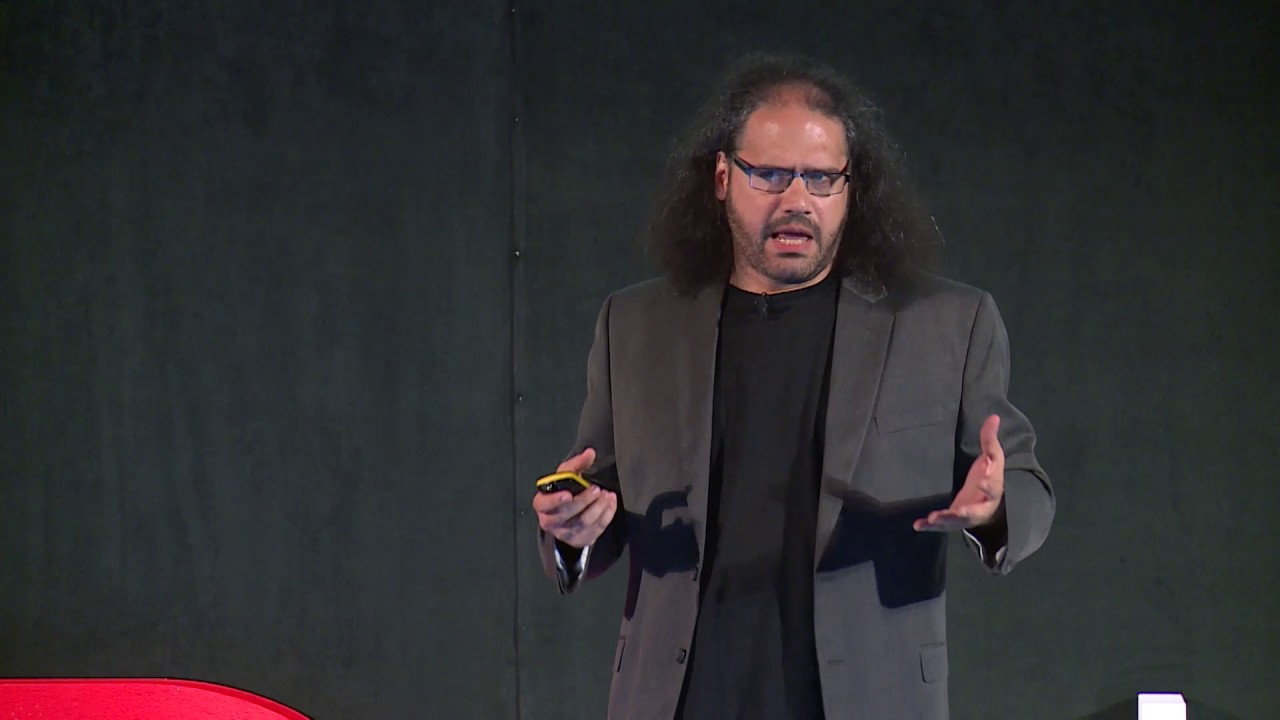
Multilingualism: Living Life in High Definition | Panos Athanasopoulos | TEDxLondonBusinessSchool
55.2K
Languages are not merely codes for the same meanings but embody distinct worldviews. Like binocular vision combines two images into one enhanced picture, multilingual minds integrate multiple perspectives. Research demonstrates this through color perception: Greek distinguishes blue shades (bl/gazio) while English uses one term, and bilinguals select intermediate colors. Similarly, bilingualism reduces gender stereotype bias—French-English bilinguals describe faces consistently regardless of stereotypical context, unlike English monolinguals who shift descriptions based on surrounding objects. This shows how one language mirrors another, helping individuals escape monolingual cognitive constraints.
Click to watch →
How the Languages We Speak Shape the Ways We Think
294.7K
Bilingual individuals maintain knowledge systems from all proficient languages in their minds. When switching between languages, speakers adopt corresponding cognitive patterns—thinking more like a Russian speaker when speaking Russian than when speaking English. However, traces of all learned languages persist regardless of which language is being used, creating mediated cognitive influences across languages.
Click to watch →

CTET September 2026 | Hindi Pedagogy | आगाज़ Series | Part 4 | Hindi by Navneet Sir | KGS Teaching
1.1K
The Sapir-Whorf hypothesis states that language thought is relatively supported by the view that our cognition and perception are determined by language. Language and culture are separate and independent. The way we think about and perceive the world is determined by language, and language plays no role in shaping the form of thoughts. This hypothesis was developed by Edward Sapir and Benjamin Lee Whorf. Code switching refers to the act of switching between different languages or codes within a conversation. Code mixing refers to mixing elements of different languages within a single language. When bilingual or multilingual people use various reasoning-based practices to understand the meaning of languages in their multilingual world, this situation is called code switching.
Click to watch →

【英語脳を手に入れる】世界的な心理言語学者 ビオリカ・マリアンと「言語の力」/母語以外で思考すると、人考え方も変わる?/バイリンガルは才能なのか【PIVOT GLOBAL】
76.4K
Research in psycholinguistics demonstrates that language significantly influences decision-making, with bilingual individuals showing different moral judgments when asked the same ethical dilemmas in their native versus second language (e.g., 20% vs. 33% willingness to sacrifice one life to save five). Language shapes perception by providing frameworks for categorizing reality, such as grammatical gender affecting how people describe objects, and multilingualism enhances cognitive flexibility, creativity, and may provide cognitive reserve against age-related decline.
Click to watch →
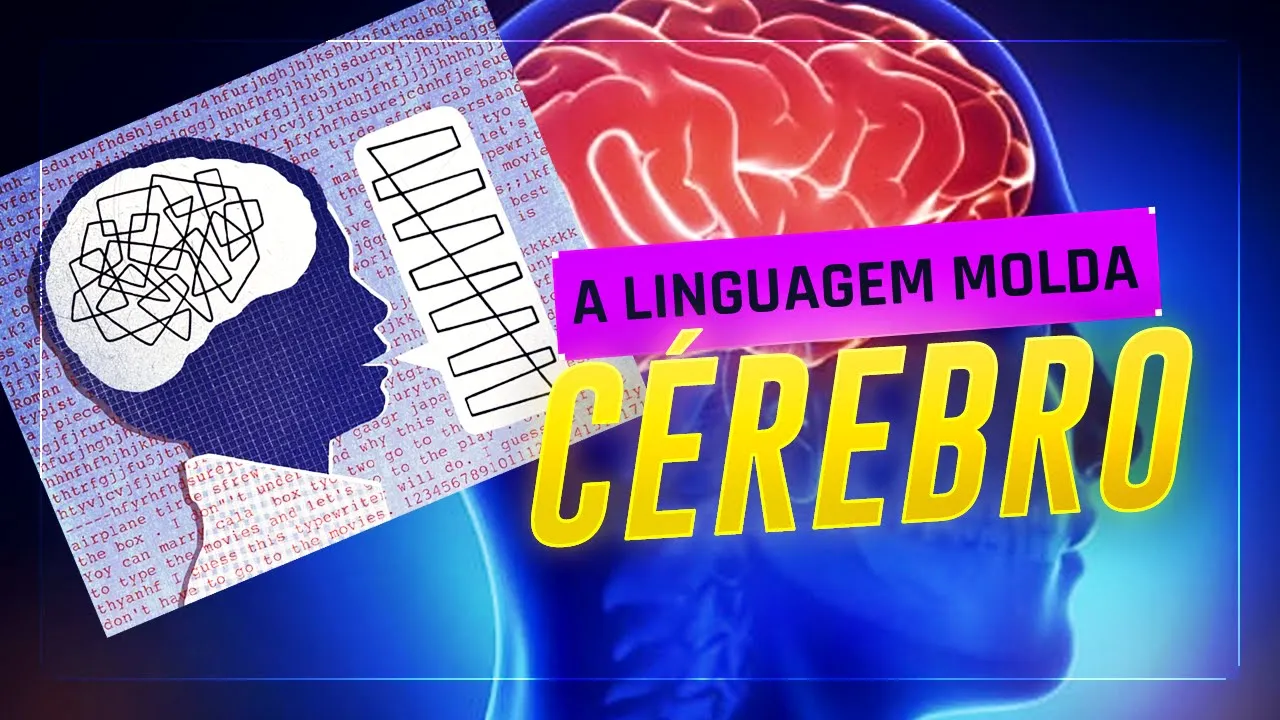
A SUA LÍNGUA INFLUENCIA SEU PENSAMENTO
32.2K
The Sapir-Whorf hypothesis proposes that languages vary significantly in how they interpret and categorize the world, and that language shapes the thought of those who use it. According to this view, people think based on what their language allows them to think, and changing one's language would change how they understand the world. This represents a radical form of linguistic relativism. The hypothesis emerged in the 1930s when anthropologists discovered that different peoples had not only different cultural behaviors but also different languages. They observed that different cultures classified world phenomena using different criteria and terms, leading to the conclusion that language and words used by individuals shaped their perception of the world. However, modern cognitive psychology reveals that the human mind is modular, with different relatively independent capacities including memory, executive functions, attention, decision-making, and language. Language is just one module among many. No single module, including language, can mold the rest of the mind. Silent films can be understood without any spoken words, demonstrating that comprehension does not require language. The ability to create new words (neologisms) demonstrates that we do not need pre-existing words to conceive new concepts.
Click to watch →
Deep Dive
The implications of linguistic relativity in Natural Language Processing (NLP) and Artificial Intelligence, particularly in cross-cultural machine translation and sentiment analysis.

CSE 554 FEB 19 part 4 00046
106
Effective communication requires understanding cultural context and pragmatic norms. What seems funny to one culture may not to another. English politeness strategies like 'I'm afraid' convey 'I'm sorry but I can't' politely. NLP is an AI problem where exact solutions are often impossible due to computational complexity - some problems require 10^150 bytes exceeding known universe atoms (10^80). Despite challenges, rewards are enormous - Microsoft acquired a web search company for $100 million. Turkish translation is easier because it shares grammatical structures with Azerbaijani and Kazakh. Uighur language is similar to Turkish in grammar, using agglutinative morphology. Cultural and economic factors influence language technology development - shared interests and political unions enable collaboration. Open source development accelerates progress while closed systems slow innovation.
Click to watch →

Linguistically informed NLP for healthcare experience data | Healthcare NLP Summit 2021
131
Natural language processing models like BERT often fail to correctly classify sentiment in sentences containing covert negators (such as 'few' and 'any') and modal verbs (such as 'should' and 'would'), because these linguistic structures are sparse in training data and require understanding of semantic inference patterns including entailments, presuppositions, and their interactions with negation and modal operators. By augmenting statistical NLP approaches with linguistic theory, particularly the distinction between entailed predicates (where negation reverses sentiment) and presupposed predicates (where negation preserves sentiment), models can achieve more accurate sentiment classification in healthcare experience data.
Click to watch →

Mohammad Rasooli: Cross-Lingual Transfer of Natural Language Processing Systems
840
Model performance varies dramatically across language families. European languages achieved excellent results (over 84% accuracy on Bible data), while languages outside the Indo-European family faced greater challenges. Turkish, a morphologically rich language, showed particularly poor performance (only 18% from dense projection alone, improving to 59.9% with combination). Latin, with only 1,000 sentences, performed worse than transfer methods. Sentiment analysis experiments confirmed these patterns, with Bible data achieving 40% macro-averaged accuracy versus 18% neutral baseline, and ensemble methods reaching 42.9%. However, languages with fundamentally different syntactic orders (Arabic, Uyghur, Chinese) performed poorly, revealing that syntactic ordering sensitivity remains a fundamental challenge beyond lexical representation.
Click to watch →

Intro to ML & AI & NLP بالعربي with Abu Bakr Soliman & Ahmed Elemam - Tech Podcast بالعربي
34.7K
This segment covers Natural Language Processing (NLP) applications and challenges. The hosts explain that NLP enables computers to understand, interpret, and generate human language, with applications including sentiment analysis, text classification, machine translation, question answering, and text summarization. They discuss challenges including ambiguity, idioms, cultural references, irony, and domain-specific terminology. The hosts explain Open Book Question Answering where systems answer questions based on provided text passages, and hybrid approaches combining rule-based methods with machine learning.
Click to watch →

How Close Are We to a Universal Translator?
46.8K
Natural Language Processing (NLP) is a branch of artificial intelligence that helps computers better understand how humans write and speak. This technology addresses the fundamental problem that translation isn't simply about replacing one word for another—it requires understanding context, cultural references, and the speaker's intent. Without NLP, even accurate word translations can lead to profound misunderstandings when cultural or contextual nuances are lost.
Click to watch →
Linguistic Relativity
Determinism Debate
Linguistic Relativity
0:10- 1
Language shapes distinct worldviews across cultures.
- 2
Hopi time concepts differ from European ones.
- 3
Translation may fail due to cognitive gaps.
Linguistic Universalism and the Language of Thought (Mentalese)
Linguistic universalism, championed by theorists like Noam Chomsky and Steven Pinker, serves as the primary counterpoint to linguistic relativity. This perspective argues that human thought is fundamentally independent of language. Instead of language shaping cognition, universalists propose that all humans share a biologically determined, innate cognitive architecture. Chomsky's theory of Universal Grammar suggests that all human languages share a common underlying structure, reflecting pre-existing mental processes. Furthermore, Pinker popularized the concept of 'Mentalese'—an internal, non-verbal language of thought in which humans conceptualize ideas before translating them into a specific spoken language. From this viewpoint, while languages differ in vocabulary and grammar, these variations merely represent different ways of expressing the same universal human concepts, rather than fundamental differences in how we perceive and understand reality.
Basic understanding of cognitive psychology, specifically how the human brain processes, stores, and categorizes information.
The fundamental distinction between language (as a structured system of communication) and thought (as internal cognitive representation).
An introduction to structural linguistics, including basic concepts of semantics (meaning) and syntax (grammar).
Familiarity with the concept of cultural relativism—the idea that a person's beliefs and activities should be understood based on that person's own culture.
Empirical studies in color categorization (such as Berlin and Kay's research) and spatial cognition (e.g., egocentric vs. geocentric directional terms).
The concept of 'Neo-Whorfianism' and modern psycholinguistic experiments that support a weak version of linguistic relativity.
How linguistic relativity affects bilingualism and multilingualism, specifically whether switching languages alters cognitive frameworks or decision-making.
The implications of linguistic relativity in Natural Language Processing (NLP) and Artificial Intelligence, particularly in cross-cultural machine translation and sentiment analysis.
396.3K views4.5Klikes3:16@NativLangOriginal Release: 2013-04-26
When we talk about language, we often dig down to universal categories like nouns and verbs, consonants and vowels, phrases and sentences.
We end up with these cross-language concepts that individual languages are built on almost as if the colorful diversity found in the world's languages is just icing on the strong unity of the linguistic cake and language is grounded in our way of thinking and processing information which is itself universal among humans. So languages and cultures are superficial, but language and cognition run deep.
But this isn't the only way to look at language.
What if the language we are brought up to speak actually relates to the way we look at reality?
From this perspective a language is a particular way of conceptualizing the world, and has close ties to culture.
In the 1930's, Benjamin Lee Whorf talked about language this way.
He argued that different languages represent different ways of thinking about the world around us.
This view has come to be called linguistic relativity.
Exploring the grammar of the Hopi language, he concluded that the Hopi have an entirely different concept of the time than European languages do and that the European concepts of "time" and "matter" are actually conditioned by language itself.
One practical consequence of linguistic relativity: direct translation between languages isn't always possible.
Since Hopi and English aren't simply ways of expressing the same thing in different words, you can't actually preserve thoughts or viewpoints when you translate between them.
In its strongest expression, linguistic relativity - the idea that viewpoints vary from language to language - relies on linguistic determinism - the idea that language determines thought.
In other words how people think doesn't just vary depending on their language but is actually grounded in - determined by - the specific language of their community.
Linguistic relativity has been abandoned and criticized over the decades with critics aiming to show that perception and cognition are universal, not tied to language and culture, but some psychologists and anthropologists continue to argue that differences in a language's structure and words may play a role in determining how we think.
Experiments on how speakers of different languages approach non-linguistic tasks continue to spark this debate.
Thank you for joining me on this quick tour of linguistic relativity and linguistic determinism.
Please subscribe if you'd like to keep on learning with me.
Up Next
5:18
Language and Color Perception: A Guide for Conlangers
@WesleyDeanTucker
59K views•2020-10-02
36:52
Constraint Interaction in Optimality Theory: Epenthesis & Deletion
@Vidyamitra
180 views•2018-08-20
4:00
Optimality Theory: Grammar as Ranked Constraints (Linguistics)
@NativLang
48.3K views•2012-10-04

21:32
Accent Expert Explains U.S. Regional Dialects | Part 1
@WIRED
9.3M views•2021-01-21
Related Study Plans & Knowledge Roadmaps
Structured learning paths in Linguistics
linguistics
Optimality Theory: Tableaux & Constraints
01Phonological Basics: Sounds, Syllables & Rules
02Foundations of Optimality Theory: GEN, CON, and EVAL
03The Constraint Inventory: Markedness vs. Faithfulness
+ 2 more learning modules
15h5 modules
Explore Roadmap
linguistics
Morphosyntactic Alignment: S, A & P Systems
01Foundations of Syntax: Transitivity and Arguments
02The Linguistic Variables: Mapping S, A, and P
03Nominative-Accusative Alignment
+ 3 more learning modules
12h6 modules
Explore Roadmap
linguistics
Analyzing Sign Language: Phonology & Syntax
01Foundations of Sign Language Linguistics
02Phonology: The Five Parameters of a Sign
03Morphology: Word Formation and Classifiers
+ 2 more learning modules
14h5 modules
Explore Roadmap
linguistics
Pragmatics: Speech Acts, Grice & Politeness
01Introduction to Pragmatics: Meaning in Context
02Grice’s Cooperative Principle & Implicature
03Speech Act Theory
+ 2 more learning modules
14h5 modules
Explore Roadmap