
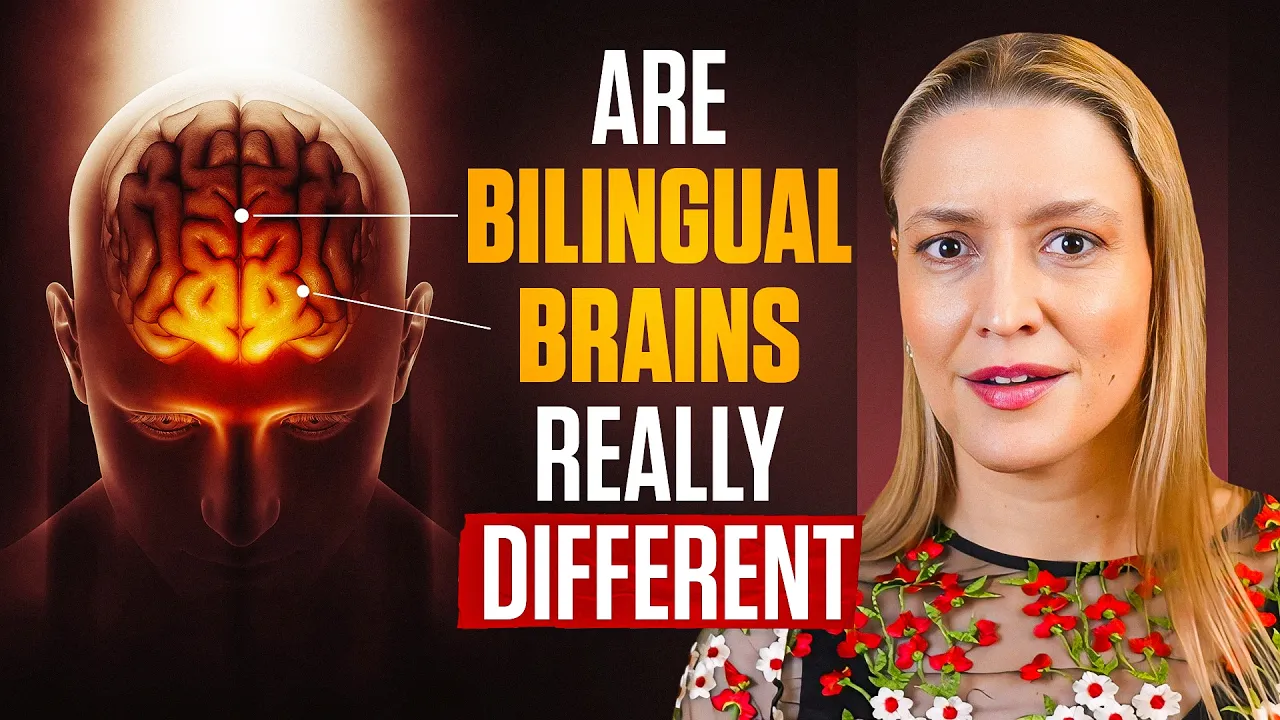




















Research in psycholinguistics demonstrates that language significantly influences decision-making, with bilingual individuals showing different moral judgments when asked the same ethical dilemmas in their native versus second language (e.g., 20% vs. 33% willingness to sacrifice one life to save five). Language shapes perception by providing frameworks for categorizing reality, such as grammatical gender affecting how people describe objects, and multilingualism enhances cognitive flexibility, creativity, and may provide cognitive reserve against age-related decline.
The Power of Language: How Bilingualism Shapes Thought and Decision-Making
Added:The Sapir-Whorf Hypothesis (Linguistic Relativity) and the foundational debate over whether language shapes or merely expresses thought.
Basic cognitive architecture, specifically executive functions like working memory, cognitive flexibility, and inhibitory control.
Fundamental concepts of bilingualism, including the differences between simultaneous and sequential language acquisition.
An introduction to dual-process theory (System 1 and System 2 thinking) and how cognitive biases influence decision-making.
The 'Foreign Language Effect' in decision-making, exploring why individuals make more rational, less emotionally biased choices in a second language.
The neuroanatomy of bilingualism, focusing on structural brain changes (neuroplasticity) and the mechanisms behind cognitive reserve in aging populations.
Sociolinguistic phenomena such as code-switching, cultural frame-shifting, and identity construction in multilingual individuals.
Practical applications of psycholinguistic research in designing dual-language immersion education policies and curriculum development.
76.4K views1.3Klikes27:54Original Release: 2024-03-13
five people and you have to push someone if you ask people in their native language their mother Tong 20% of the time they will say yes I would push a person to say fine but when you ask them in the second language about 33% of uh of the bilingual participants would say that yes it is permissible or I would push this person to save the life of five people same person same decision making and then you change the language and the decision the outcome differs do you think that uh there are people who are good at learning the language or as human beings we used to learning multiple languages yes and yes so both of those things are [Music] true for so Dr Via Maran welcome to pivit thank you for having me so to um today we're going to talk about your book The Power language uh in fact there's a Japanese version out it's very wonderful it's a great cover and I read it in both Japanese and English and it gave me different impression so I'm always really realizing the power language thank you yes you're right the Japanese edition just came out and I have to say I love the covers well it's one of my favorite covers of all the international editions so thank you so it seemed to me that the English version was more strong statement of you trying to convince me that the power language as opposed to the Japanese version it was more softer tone even though it was saying the same thing so I was very surprised to read both languages oh that's really interesting to hear so I don't uh speak Japanese fluently I'm actually uh learning it with a with a language learning app now but of course not at the level where I could write a book in Japanese so uh we had translators translated and then we had um experts in the field in Japan check it for content and that's not surprising that you found somewhat different energies and tones uh coming from the two languages in fact that's very typical because language culture are so closely connected and the Japanese culture and the American culture differ where um it's very often the case that in Japan you don't push things as much and you are much more tactful and reserved in how you express yourself as opposed to being much more direct when you uh speak in English in the United States so the writing in the book reflects these cultural norms because they target different readers it's interesting because you mentioned in your book that if you learn a different language you have a different mindset and which will probably affect uh even decisions in business so that was a very interesting point about your book yeah it's true well language is so connected to our experiences to culture that when you switch between languages different things come to the Forefront different memories different associations different experiences and it does influence decision- making in a range of uh of settings um people think differently about themselves people make different decisions uh in medical decision making in business uh even in personal relationships because emotion is filed differently through language um likelihood of cheating varies across languages different aspects of one's personality comes out depending on which language you are using at any given time ah interesting so I have tons of questions to ask you but um I'll divide it into three parts the first part I want to ask about the majority of the world's population is my by bilingual which surprised me very much so we to talk about that and the second uh about the reality of the world um you you you stated that it's shaped by languages so like we discussed before that maybe we think or act differently if we learn a different language and number three uh since our audience are all Business Leaders in each communities we want to learn tips to learning a new language and finally maybe we can discuss that maybe if we have more bilingual people in the world that will lead to solve social divide or maybe political divide which we're confronting in other parts of the world so uh my first question is about uh what was surprising that the majority of the world's population is actually bilingual what do you mean by that yeah so I am a psycholinguist uh psych Linguistics is this field of the intersection of psychology and and language um Linguistics so I studied the psychology of language particularly with a focus on people who speak two or more languages and during the course of my research over the past uh 25 years um it it became clear that actually the majority of the world's population does speak to more languages it's very common in in countries all over the world for children to grow up with two languages from early childhood and then acquire additional languages later in life and there are some countries where it's not just bilingualism it's trilingualism multilingualism there are countries in which a 100% of the population speaks multiple languages the reason this is often surprising to us is because when we look at research when we look at science um when we go to a library or the bookstore the majority of work is done on people who only speak one language um so it leaves out this huge segment of the population who has studied more than one than one language and uh who speaks more than one language um it really gives us a incomplete and inaccurate understanding of the human mind the analogy uh to make there is if we think of the field of medicine that historically if we look at hundreds of years ago up until not that long ago recently really um most research was being done on just men and now we know that many conditions for example heart disease manifest differently in women than in men um or if we look at just uh which is was also the case a lot of research was done uh at least in Europe and and North America on white populations and now we know that some conditions like diabetes manifest differently in the populations indigenous to North and South America so in the same way if we just study the mind of monolingual people the brains of monolingual people speakers who just speak one language we get an inaccurate understanding of the human language capacity and cognitive potential more generally um in Japan it seems like the Young Generation is studying more than one language now in school uh it's mandatory from an early age so we see this change in demographic a lot of people in Japan and in the United States as well the proportion of bilinguals and multilinguals is increasing interesting so uh Dr Maran you your s uh grew up in uh mova so English is not your native language that's right so I I grew up in a I was born in a Romanian family but uh the part of the of the world that I was born uh and at the time was a Soviet Republic so um I grew up in Soviet Union Russian was the official language I spoke Romanian at home Russian and public uh as a teenager I moved to the United States so uh big began to speak English primarily and then studied other languages in college like French and Spanish and and ended up doing research with speakers of lots of different languages how did learning English change your life or your mindset that's an interesting question I think each language brings with it um a somewhat different way of thinking and it's very hard to separate the influence of language and the influence of culture so um it's hard to know whether it's culture where it's language but really in my experience and also in evidence from our research the way people speak the way people remember uh uh their lives and my own life um tends to change when I speak one language versus another um so sometimes when I switch to Romanian very different things come to mind childhood memories become more accessible for example when I use English I tend to um think in a more professional way in a more logical and reasonable way U sort of more use more reason than emotion it's hard to know if it's English or native language versus second language so there is evidence that um when people use a second language they tend to make more uh utilitarian decisions more rational decisions and when they use their native language they tend to make more um deontological decisions so decisions that are driven by sort of moral uh what is right and what is wrong um and emotion so I do think that when I switch languages um different aspects of myself come forward as well interesting um you mentioned about the experiment where there's a truck or train coming and there's five workmen and there's a person next to you on the bridge and if you push the person and the person fell off the bridge it will stop the train so the five lives will be saved um this is a typical dilemma question but if you ask this question in your native language or suppose English the outcomes will be different that's right so and this is just one example of situations where we can make different decisions in highly stressful situations and you know it's a pretty stressful situation to have to decide if um if you want to sacrifice the life of one person to save the life of five people and you explain the dilemma I can uh go into it a little bit more there are various versions of this um experiment that that's used to study lots of things like ethics and morality um so in this particular experiment uh the scenario is that there is a a trolley coming at a very fast speed and there are five workers working on the tracks you are standing on a foot bridge above the tracks next to a big person with a backpack and this troll is coming so fast it's about to run over these five people and kill them so the questions that is being asked in this experim is is it permissible to sacrifice the life of one person to save the lives of five people how would you answer that what would you say um since I'm speaking English maybe but I think it'll be more I don't want to use this word but maybe um better to push the person to save five lives I know this is a difficult decision but if I have to make a decision maybe I'll think about that yeah you're right it is a very difficult decision and it's interesting to hear you kind of think through it and talk through it uh which is what people usually do and uh what oftentimes participants would say is or even people you talk to say is you know yes uh it makes more sense to save five people by sacrificing one but I wouldn't push this person off the bridge you can't but I wouldn't but then if you if you change things like if you ask well okay you don't have to push the person of the bridge you press a button instead uh people are more likely to say yes or you know it it depends we're saying five people what if it's 50 or 500 or 5,000 so you can really manipulate and change the different parameters on this um decision but in the in this initial one whether it's five people and you have to push someone if you ask people in their native language they mother tongue about 20 20% of the time they will say yes I would push a person to say five but when you ask them in the second language about 33% of uh of the bilingual participants would say that yes it is permissible or I would push this person to save the life of five people so this difference 133% is really quite big if the only thing that changes is you switch the language same person same decision- making and then you change the language and the decision the outcome differs which really does tell us that sometimes when you have to make difficult decisions it can be a good idea to try to make those decisions or ask yourself those questions in more than one language if you speak more than one [Music] language so this is a strategy uh people can use when they make major decisions I know you said a lot of your audience are in business so in business it works if you have to make a negotiation decision or other business decision switching languages and seeing if you come to the same realization can be very helpful but it actually also works in personal decisions and writers often write about it I've had many students say so I had for example a Korean student in my class last spring telling me how um he was trying to decide whether he should marry his Korean girlfriend and saying that whenever he was making this decision in Korean he always would come to the decision that yes he should but when he would switch to English and make this decision in English he would think no he shouldn't so this is an example that he discussed in class he brought up um uh publicly in class and and it's not the only case I think any of our listeners and you yourself and I often now when I'm faced with a decision that I'm having a hard time making I think about it from different perspectives different angles which is what another language gives you it's really quite interesting because there's a lot of research that shows it in business settings when you have diversity multiple people you brainstorm you can come up with better Solutions and better decisions and here's one situation where when you don't have access to multiple people um you can bring these different perspectives yourself within one individual perhaps by approaching a language a question from different language uh different languages and different angles yeah I think that's true because when I speak a different language it seems that a different me installed inside and I become another person so that's very relevant yes so well it's not surprising you our identity is shaped by language and um by the memories that come to mind at any given point in time so the relationships we've had with different people all of those have filtered through language um so before we going to the second part of the session um I want to ask about uh bilinguals because in Japan since uh we are a very homogeneous country um we're beginning to become bilingual but a lot of majority of people only speak Japanese and we have been trying like there's tons of books about how you can learn English and people think that there's you need some special talent to be good at English do you think that uh there are people who are good at learning a language or as human beings we're used to learning multiple languages yes and yes so both of those things are true uh in various ways so yes it's true that some people are more talented uh and have this gift languages just like some people are B at music or at sports or at math we have and I talk about this in the book we have different kinds of uh intelligences or different kind of gifts so yes some people um are better at learning languages but that doesn't explain geographical bilingualism and multilingualism there are countries where everyone is bilingual and multilingual if you look at the Quebec area of Canada the majority of people there are bilingual because French and and English are official languages there and it's not because everyone in Quebec is genetically more gifted towards language learning than if you drive you know a couple hundred 100 miles south to the United States where everyone is monolingual or it's a one official language so some people are better at language learning but everyone can learn more than one language um to different degrees of proficiency and fluency um you can learn another language at any age and you can begin to re benefit benefits from learning another language at any age and in fact in the book I go um into I discuss language as more than just natural languages that we speak and and consider multiple forms of communication multiple codes like music math anything that allows us to transmit information across time and space because this is what language does I would take an idea I encode it in a linguistic code and then I transmit it over time and space in this case through symbol symbolic system through words for you to decode and there are different kinds of symbolic systems as our brains learn new and more symbolic systems they change and our cognitive abilities our um lots of different executive functions um higher order cognition changes as a result of having multiple symbolic systems at our disposal great uh so let's move on to the second part of the session um we kind of touched upon about uh learning different language affects your decision but my question is about the reality of the world so the reality of the world is shaped by different languages could you give us some examples how different languages uh can change how we see or shape our world sure I think sometimes people think that we live in this objective reality yes that we see what we hear is just this objective thing that everyone sees and hears but that's not the case the reality that each of our brains perceives is very subjective the reality that I perceive is very different from the reality that you perceive from the reality that our listeners perceive and and everyone's reality is really shaped by their previous experiences by uh their cognitive abilities by their sensory uh experiences and abilities and the variables that shape our perception of reality are really multiple with language being one of these variables and it's really quite a powerful um variable that shapes reality because we often use language um to filter our sensory system we give labels uh to things to help us reason and and comprehend and understand the world and so one example I could give for example is the rainbow when you look at the rainbow or when children draw the rainbow they tend to use the number of uh color that their language or their culture uh describes the rainbows having but interestingly those numbers those numbers of languages vary of colors vary across languages and more interestingly the rainbow itself is not really eight colors or seven colors or six colors however many colors you choose it's an infinite number of colors so all the colors in this color spectrum are available in the rainbow it just changes by one pixel at a time but the language that we have imposes this structure on how we think about the rainbow and it's not just the rainbow um if you talk to uh for example a chef or wine connoisseur or someone who is a perfume expert the words that they use to describe the food or the smells or the wine um are much more Rich than a person who doesn't drink wine and cannot talk about the finish and the you know it's it's it it changes how we not only describe what we perceive but also what we later remember the details of our experiences so these are even then speakers who only speak one language so with with each new language you sort of learn new ways of thinking about reality another example that's uh sometimes easy for people to understand is is gender grammatical gender so many languages like English do not have grammatical gender all inanimate objects are referred to as it like a pen a pencil a desk but uh there are some languages where inanimate objects are given uh a grammatical gender it's either masculine or feminine or it could still be an it or they could be multiple genders but interestingly if you are a person who speaks a language that has grammatical gender you think about inanimate objects a little bit differently using this the stereotypes and biases that are associated with grammatical gender so for example in experiments in which uh people spoke languages that had grammatical gender if you compared how someone would describe a key and and key and um if you look at Spanish speakers and German speakers in one of these languages it's masculine in the other one it's feminine if it's masculine people describe it as metal uh you know useful H jagged and and serrated and and these kind of adjectives but then if it's feminine people would describe it as Tiny golden intricate or a if you just switch things around and and take something like a bridge the same item is different grammatical genders in this two languages if it's masculine people would describe it as big uh you know strong metal again different adjectives adjectives as opposed to if it's feminine describing it as elegant slender pretty beautiful so the way we even describe things around us is shaped by the language we have and by different features and characteristics of language do you think that uh people who can only speak one language tend to be uh very narrow-minded we don't want to generalize because of course there are people who speak two or more languages and are narrow-minded and then there are people who are monolingual and are open-minded but there is a relationship between open-mindedness and openness to new experiences and language learning um and and it it actually even being exposed even just dating or having friends or being in relationships with people who speak multiple languages changes how you perform on a number of creativity tasks and uh and cognitive flexibility tasks so just being exposed to other languages other cult C other ways of thinking broadens the mind and and um it's definitely a way to to optimize one's thinking process um I asked this question because when I look at social media uh before you know Twitter and the mess um I used to think that uh social media may change your world in a better way because if you exposed to different ideas different people people will brought in their views but what I'm seeing right now at X is different you people are hating each other so I'm curious what you think about that or any thoughts on that it's a it's an interesting observation and I agree with you there is a lot of potential there with uh crosscultural communication being able to reach and speak to people from different walks of life different languages different cultures different countries and that's all there that potential is there unfortunately the algorithms tend to create this Echo Chambers where you end up just increasingly being around more people and certain ideas become Amplified and um instead of broadening your perspectives you are sometimes LED down a path that on the contrary tends to really perpetuate biases um so it's really important that as um technology advances and and and AI uh continues to develop people become really or developers become really mindful of um not perpetuating this biases making sure that a variety of voices are being represented um there are a lot of safeguards that need to be put in place like anything else there is a lot of potential uh uh and it's now a matter of figuring out how to how to I don't want to say regulate because regulation often brings in a lot of negative biases but if we think you know when press first came uh came around or even cars um it took a while to figure out that seat belts are good thing for example and that we need road signs and we need some guidelines for how to move around the roads uh so we'll eventually need to figure out how to move around the the the highway on the internet to make sure that um that the best outcomes uh and in addition you mentioned um there might be uh possibilities risk decreasing the risk of Alzheimer it turns out that speaking to more languages is one of the side variables and you lived your life in different languages um you have different you can sometimes resort to other uh links um that your brain has made in this uh you it'll lose it you know neural firings approach [Music] so
Up Next
12:34
Why We Play Scary Games at Sleepovers: History of Spooky Rituals
@pbsstoried
76.5K views•2023-10-30

68:32
Cognitive Skills for Differentiated Instruction | Teacher PD
@BrainWareLearning
631 views•2017-12-17

9:55
Thinking, Fast and Slow: Daniel Kahneman Animated Book Summary
@FightMediocrity
2.3M views•2015-06-05

6:40
The Nocebo Effect: How Beliefs Can Cause Real Harm
@CGPGrey
10.4M views•2013-12-23
Related Study Plans & Knowledge Roadmaps
Structured learning paths in Psychology
psychology
Neuroscience of Creativity: Networks & Training
01Foundations of Creative Cognition
02The Cognitive Neuroscience of Insight & Fixation
03The Triple Network Model of Creativity
+ 1 more learning modules
15h4 modules
Explore Roadmap
psychology
Imposter Syndrome: Etiology & CBT Framework
01Defining the Imposter Phenomenon
02Socio-Developmental Etiologies
03CBT Fundamentals & Thought Distortions
+ 2 more learning modules
15h5 modules
Explore Roadmap
psychology
Adult ADHD: Executive Dysfunction & Scaffolding
01Neurobiology of the ADHD Brain
02The Core Triad of Executive Deficits
03Executive Dysfunction and Emotional Regulation
+ 2 more learning modules
12h5 modules
Explore Roadmap
psychology
Loneliness: Evolution, Neurobiology & CBT
01Evolutionary Origins of Human Connection and Loneliness
02The Neurobiology and Physiology of Chronic Loneliness
03Maladaptive Social Cognition: The Psychological Loop
+ 2 more learning modules
12h5 modules
Explore Roadmap