![ПОИСК ПРИВЕЛ К ТРАГЕДИИ [Топ Сикрет] Утопия Шоу Реакция на Utopia Show](https://i.ytimg.com/vi/ClEZ-3YhCPM/maxresdefault.jpg)











![[PODCAST] Les miroirs sont-ils des portails ?](https://i.ytimg.com/vi/cZVmhNKMMNo/maxresdefault.jpg)







Sleepover scary games like 'Light as a Feather' and Bloody Mary serve as rites of passage that help children confront fears in safe, controlled environments; these rituals work through psychological mechanisms such as synchronized group action and the illusion of control, rather than supernatural forces, allowing participants to bond and test boundaries during their liminal developmental stage.
Why We Play Scary Games at Sleepovers: History of Spooky Rituals
Added:The concept of the 'ideomotor phenomenon' and how subconscious muscle movements explain perceived supernatural interactions.
Basic psychological theories of fear, specifically why humans seek out controlled scary experiences (sensation seeking and 'safe fear').
The definition and cultural function of folklore, urban legends, and oral traditions in adolescent socialization.
An understanding of group psychology dynamics, such as peer pressure, deindividuation, and shared suggestibility in group settings.
The optical and psychological science behind mirror gazing, such as Troxler's fading and face-deformation illusions.
The socio-historical evolution of Spiritualism in the 19th century and how occult practices were commercialized into board games.
Advanced cognitive biases, such as apophenia (finding patterns in random data) and confirmation bias in supernatural beliefs.
The transition of analog folklore rituals into modern digital horror culture, such as creepypastas and interactive horror video games.
76.5K views5.3Klikes12:34Original Release: 2023-10-30
- We've got to say the magic words, otherwise it's not gonna work.
- [All] Light as a feather, stiff as a board.
Light as a feather, stiff as a board.
Light as a feather, stiff as a board.
(group laughing) - Chances are if you've been to a sleepover, you've heard ghost stories, tried to contact the dead, read fortunes, and attempted to make your friends levitate.
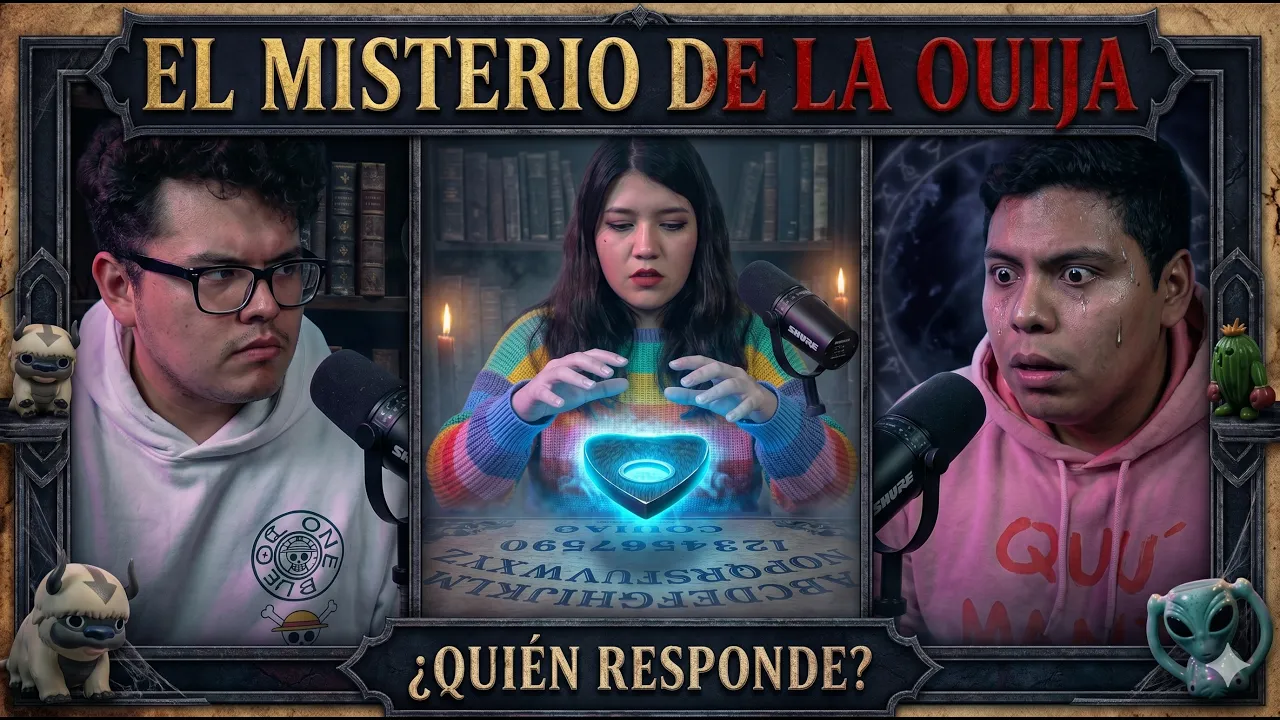
Bloody Mary, Ouija, light as a feather stiff as a board, concentrate, they're scary and entertaining, and participating in them can be a right of passage for children and maybe even adults.
But do you know the histories behind them?
Do they actually work?
And further more, why do we love to scare each other so much?
So join us for one hell of a slumber party.
(phone ringing) - [Person On Phone] Hello?
- Hey, do you wanna come to a sleepover?
(dramatic music) I'm Dr. Emily Zarka, and this is "Monstrum."
The concept of a slumber party has been around since the 19th century, when private bedrooms became the norm and group sleeping became more fun than function.
The sleepover was solidified as a social institution when it was recognized in newspapers and society journals.
In the early 20th century, the sleepover turned a bit more spooky.
According to "The Mary Dawson Game Book," the slumber party was the latest and most popular affair for a young girl.
The book describes the ideal sleepover as hosted in a bedroom with a fireplace adding to the atmosphere to inspire spooky stories and fortune telling.
The sleepover became a right of passage, at least for Americans, by the end of the 1920s.
Particularly for girls and young women.
And they still have that reputation today.
At early sleepovers, communal fire lights set the scene for what would become a fundamental ingredient, spooky games.
A good ghost story could win a girl a prize.
Palms would be read and fortunes told.
Driftwood powder would be thrown on the flames to produce all the colors of the rainbow.
A bit of science disguised as magic.
- Driftwood, especially if it's from the ocean, will burn in different colors.
Mostly shades of blue and light purple, due to the presence of absorbed metal salts, things like copper oxide and copper sulfate.
When you burn the wood, you're adding energy to the atoms in the salts.
They can lose that energy again by releasing light.
Different elements give off different colors just like fireworks, where the specific mix of ingredients, many of them metals, create a whole rainbow of bursts.
But don't try this driftwood magic at home.
It is literally toxic.
- Levitation games or tricks have been a pastime for children for literally hundreds of years.
No, really.
Records from the 17th century note this curiosity in discussion of children's folklore, and the first written mention of levitation games appears in "The Diary Of Samuel Pepys."
It details a spell performed by four French girls as they lifted a little boy in a pseudo resurrection.
In the mid 14th century, a horrific plague, many today know as the Black Death swept through the region.
What may have begun as a way for kids to confront the death that surrounded them during times of plague and a mass death endured as a liminal game.
You probably know what this looks like.
Participants lay only a couple of fingers on the resurrectee and chant.
In 1843, Sir David Brewster's letters on natural magic addressed to Sir Walter Scott described the ritual with a phrase that would give rise to a part of the well known chant.
"To his own surprise and that of his bearers, "he rises with the greatest facility, "as if he were no heavier than a feather."
- I couldn't give her the leverage.
- Yeah.
(Emily laughing) - Okay, I'm trying not to laugh.
- Nope. - No.
- In reality, of course, the person is not suddenly as light as a feather, but instead they weigh exactly the same as what gravity says they do.
When the trick works, it's simply because the weight of the body is distributed among four people, and eight hands, you're not lifting a 60 kilo person with your fingers, you're just lifting 15 kilos, which is very within reason.
And often, those attempting the light as a feather ritual, they try to lift the body without saying the magic words, then they fail.
But when the ritual words are repeated, the lift works.
- [All] Light as a feather, stiff as a board.
Light as a feather, stiff as a board.
Light as a feather, stiff as a board.
Light as a feather, stiff as a board.
Light as a feather, stiff as a board.
- The words hold no magic beyond unconsciously signaling everyone to lift at precisely the same time.
A spookier version of counting down three, two, one.
This is an illusion of control, where our brains assume a cause and effect link for two events that simply just happen close in time.
- And centuries later, kids are still trying to levitate their friends with chants.
Why do kids want to scare each other at parties?
The communal aspect of these games and rituals is an important facet.
Not only are participants bonding when they are pushed outside of their emotional comfort zones, they offer opportunities to demonstrate maturity by showing courage in the face of fear.
They're a rite of passage, an event that marks transition or growth.
- Rite comes from the Latin ritus, meaning religious observance, ceremony, or behavior.
And the phrase rite of passage, yeah, much more recent, the turn of the 20th century.
The same time the sleepover really took off.
Coincidence?
I don't think so.
The term is generally credited to French ethnographer and folklorist, Arnold Van Gennep, who in 1909 argued that the ceremonial events involved a sequence of three distinct parts.
Separation, transition, and incorporation.
Sleepover games, albeit loosely, under the hallmarks of this definition.
Separating from the familiar, both one's home and comfort level.
A transition, the participation and the spooky test or celebrated ritual.
And finally, reincorporation back into one's own home at the end of the sleepover.
A liminal space is an in between one, familiar, but not entirely comfortable.
There's a level of discomfort sleeping in a space that's not your own.
And sleepovers occur first and frequently during a liminal age, puberty.
Which is terrifying enough without adding all the scary stories.
And while under adult supervision, they are peer run environments that promote activities not allowed in every day life.
Granting children an opportunity to explore their own identities.
Eating marshmallows until you get sick, staying up way past bedtime, and summoning ghosts, yeah, not usually a kid's daily routine.
Sleepovers aren't all about rebellion, but curiosity, exploration, and independence.
On the cusp of adulthood, many children and teens want to test the boundaries of what is known, literally and metaphysically.
One ritualistic practice that really test boundaries is communicating with the dead, or trying to, at least in my experience.
And fun fact, while the slumber party was gaining popularity in the 19th century, so was another social trend, spiritualism.
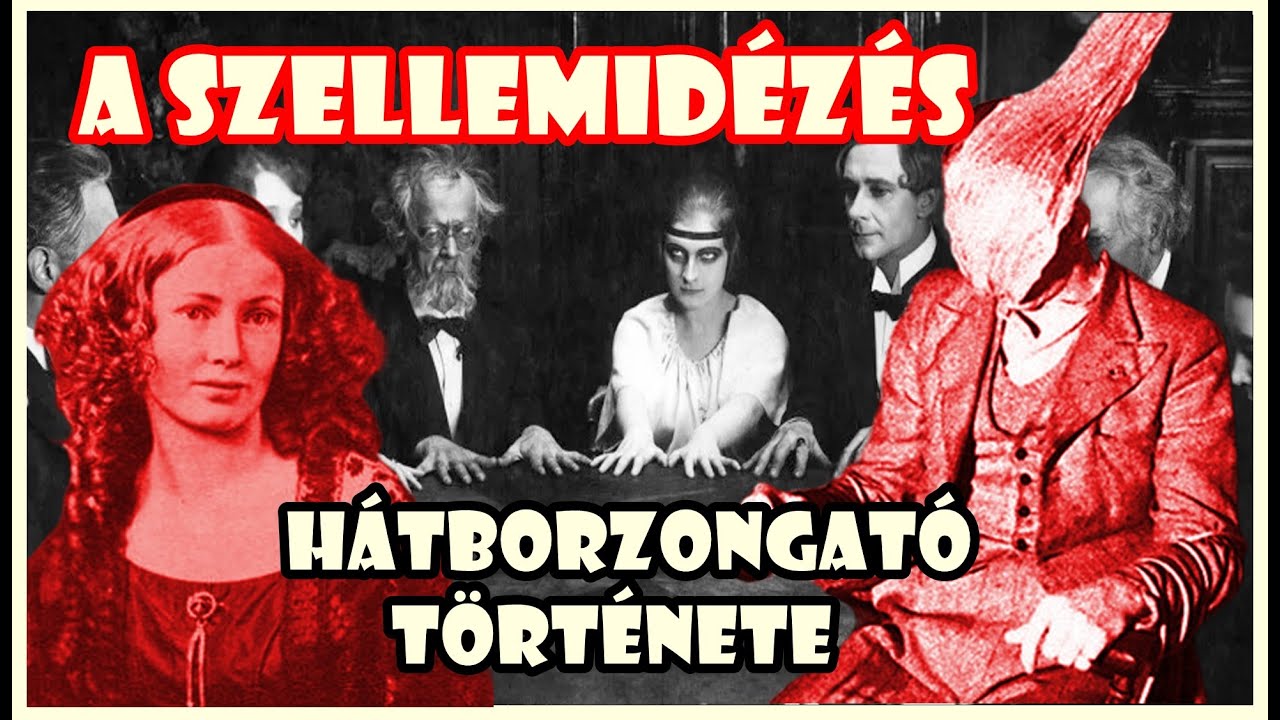
In 1848, young teen sisters, Kate and Maggie Fox developed a cult following for their reported ability to communicate with the dead, via a coded wrapping technique.
They took their act on tour, demonstrating their abilities to large paying audiences, ushering the spiritualist movement into popular culture.
Participants in the spiritualist movement believe the soul lived on past death and tried to seek guidance from the spirit world at small group occasions, often led by an employed medium.
While attempting to communicate with the deceased is nothing new in human history, spiritualism took these practices out of religious or traditional ceremonies and into the popular imagination.
Drawing rooms, public halls, theaters, camps, and other leisure spaces, joined believers and skeptics together to witness communication into the afterlife.
Objects might levitate, spirits could leave their impression on photographic plates, whisper in the medium's ear, or tap on a table.
There were certainly true believers in the spiritualist movement, but even for the worst skeptical, the experience itself was important.
That collective fear experience that offered the possibility of an inexplicable mysterious event was too tantalizing to miss.
People who didn't have access to mediums would engage in other small rituals attempting to communicate with the dead, or see into the future.
Cue Bloody Mary.
If you've seen "Monstrum's" Blood Mary episode, you already know that in the early 20th century, mirror divination rituals were popular, ramping up during the Halloween season.
Young adults, particularly women, turned to the mirror to see into the future, often with the intention of identifying their future spouse.
The Bloody Mary variation is one of the simplest, as it only requires three things, a dark room, a mirror, and a chant.
I'm trying not to blink, and I'm trying to make eye contact with myself, so I feel like I'm seeing something here.
- [Alex] Oh, out of the corner... - Oh, god, the TV.
No! - You unplugged it.
- That's... - [Joe] What happened?
- No, it didn't.
- That was an unplugged TV.
- Tools some spiritualist use to connect to the dead also made their way into sleepover tradition, like the Ouija Board.
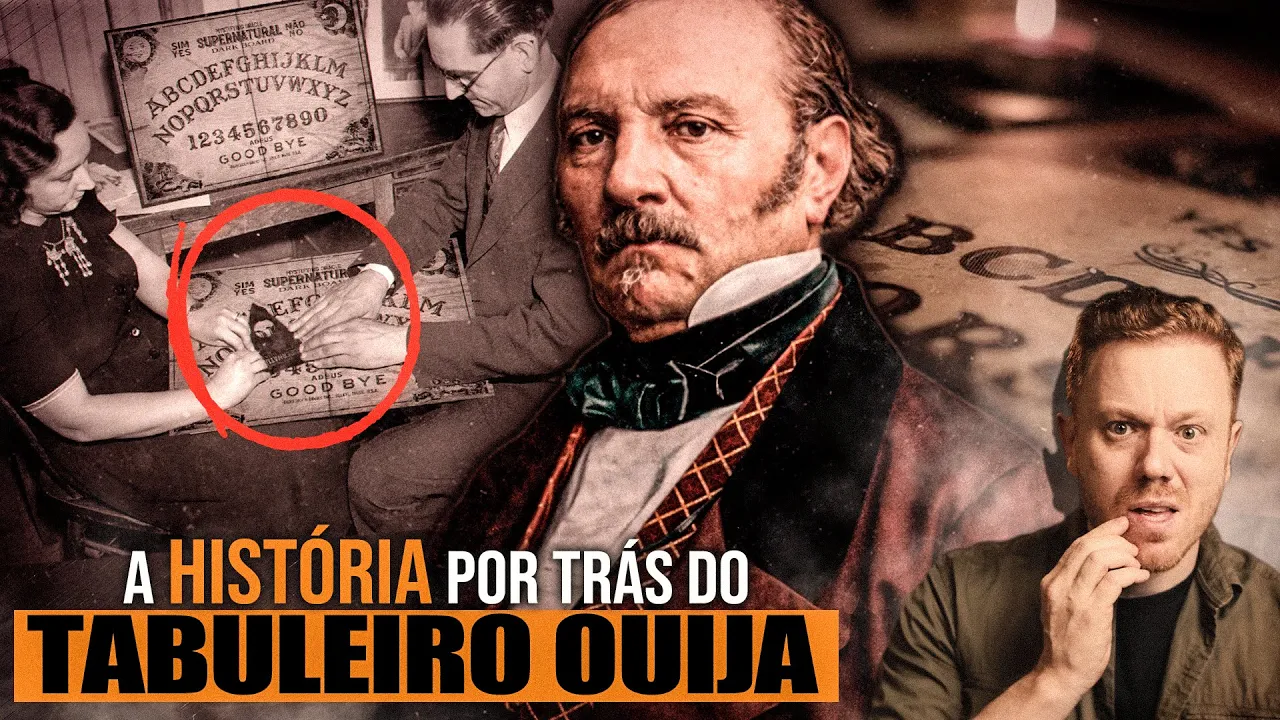
In February 1891, Baltimore inventor, Elijah J. Bond patented a toy, or game, called Ouija, or Egyptian Luck Board.
Supposedly, he named the game on the advice of his sister-in-law, a medium, who asked the board what it wanted to be called.
It spelled Ouija.
Talking boards, simple boards with printed letters predate the Ouija, and served essentially the same purpose, the communicate with spirits.
However, Bond's intent wasn't a means of spirit communication.
The patent says that the player's touch of the hand is what moves the planchette.
Capitalism.
This was not the only parlor game marketed to communicate with the dead, but it would become the most popular.
Ouija really took off in the 20th century, when it began appearing in pop culture texts.
In 1920, a book, "Our Unseen Guest," followed the story of a married couple who began to communicate with a World War I soldier after they discovered a Ouija Board on Halloween.
Anonymously published and marketed as nonfiction, it contains two letters dictated by the spirit himself.
In 1990, the authors were revealed to be two newspaper reporters, and closet spiritualists.
But it was a 1973 horror movie that would skyrocket the Ouija Board's notoriety and popularity, "The Exorcist."
- Hey, where'd this come from?
- The movie adapts William Peter Blatty's novel about a young girl possessed by a demon after playing with a Ouija Board she discovers in the basement.
Other pop culture references to Ouija frequently show the gameplay collectively, sometimes a game contributes more to comedy, like in "Sugar And Spice," or "Friends," but more often, it's evoked to help scare the audience, like in "Ouija," "Thirteen Ghosts," "The Conjuring 2," or "Veronica."
While legends like Bloody Mary are evoked in ritual, these are done primarily to insight fear rather than actually summon a spirit.
A Ouija Board blurs the line between occult practices and playful evocation of terror.
Some scholars argue that publicly vocal fundamentalist Christians in the 1970s along with the Satanic Panic of the 1980s contributed to a shift in perspective of these so called occult sleepover games.
Both movements attributed any dabbling in the occult as inviting in the devil, associating such practices with the demonic.
- [Erica] Well, you can actually... No.
- Oh my god.
- Wait, what?
What was it, you?
- It has to be Joe. - You're lying.
- It's 100% Joe.
- Your smile, it's definitely you.
- [Joe] 'Cause one of you is messing with it.
- I'm not doing it.
Whether you believe or not, it's hard to deny the omnipresent reach of the Ouija game today, with the board's familiar lettering appearing on rugs, shirts, mints, fake nails, and throw blankets everywhere.
Nervous to dabble in the spirit world for answers about the future?
You could always try concentrate.
This trance game in meant to predict how you will die and involves a really creepy poem/ritual designed to give someone the chills.
The origins of this one are very vague, and no, Dwight did not invent it.
My best guess is it developed during the mid 20th century as a messed up form of guided meditation meant to scare people.
Fun fact, I remember playing this as a kid, not at a sleepover, but during recess at my Catholic school.
Supposedly, the color you see after being pushed indicates how you will die in the future.
More than trying to experience a supernatural event, these rituals are about creating connection with the other participants and testing boundaries.
Fear can challenge us and traumatize us, but it can also bond us.
Strange games and liminal spaces allow us to confront the unknown in safe environments, preparing us for the many unexpected mysteries of life.
Before you go, I wanted to remind you that a new season of our sister show, "Fate & Fabled" is underway.
Join me and Dr. McTier for an all new series of the wildest, most adventurous, and sometimes weirdest stories from our strange world's folklore and mythologies, right here on Storied.
But it was a 1973 horror movie that would skyrocket the Ouija's Board... The wigi board.
Luigi board.
So evocation is right?
- Yeah. - Aw.
Up Next

106:29
Ecological Approach to Perception & Action: Harry Heft Lecture
@perceivingacting
19.3K views•2013-11-13

68:32
Cognitive Skills for Differentiated Instruction | Teacher PD
@BrainWareLearning
631 views•2017-12-17

9:55
Thinking, Fast and Slow: Daniel Kahneman Animated Book Summary
@FightMediocrity
2.3M views•2015-06-05

6:40
The Nocebo Effect: How Beliefs Can Cause Real Harm
@CGPGrey
10.4M views•2013-12-23
Related Study Plans & Knowledge Roadmaps
Structured learning paths in Psychology
psychology
Neuroscience of Creativity: Networks & Training
01Foundations of Creative Cognition
02The Cognitive Neuroscience of Insight & Fixation
03The Triple Network Model of Creativity
+ 1 more learning modules
15h4 modules
Explore Roadmap
psychology
Imposter Syndrome: Etiology & CBT Framework
01Defining the Imposter Phenomenon
02Socio-Developmental Etiologies
03CBT Fundamentals & Thought Distortions
+ 2 more learning modules
15h5 modules
Explore Roadmap
psychology
Adult ADHD: Executive Dysfunction & Scaffolding
01Neurobiology of the ADHD Brain
02The Core Triad of Executive Deficits
03Executive Dysfunction and Emotional Regulation
+ 2 more learning modules
12h5 modules
Explore Roadmap
psychology
Loneliness: Evolution, Neurobiology & CBT
01Evolutionary Origins of Human Connection and Loneliness
02The Neurobiology and Physiology of Chronic Loneliness
03Maladaptive Social Cognition: The Psychological Loop
+ 2 more learning modules
12h5 modules
Explore Roadmap