






![Биология поведения человека: Лекция #23. Язык [Роберт Сапольски, 2010]](https://i.ytimg.com/vi/_knieax3HK8/maxresdefault.jpg)










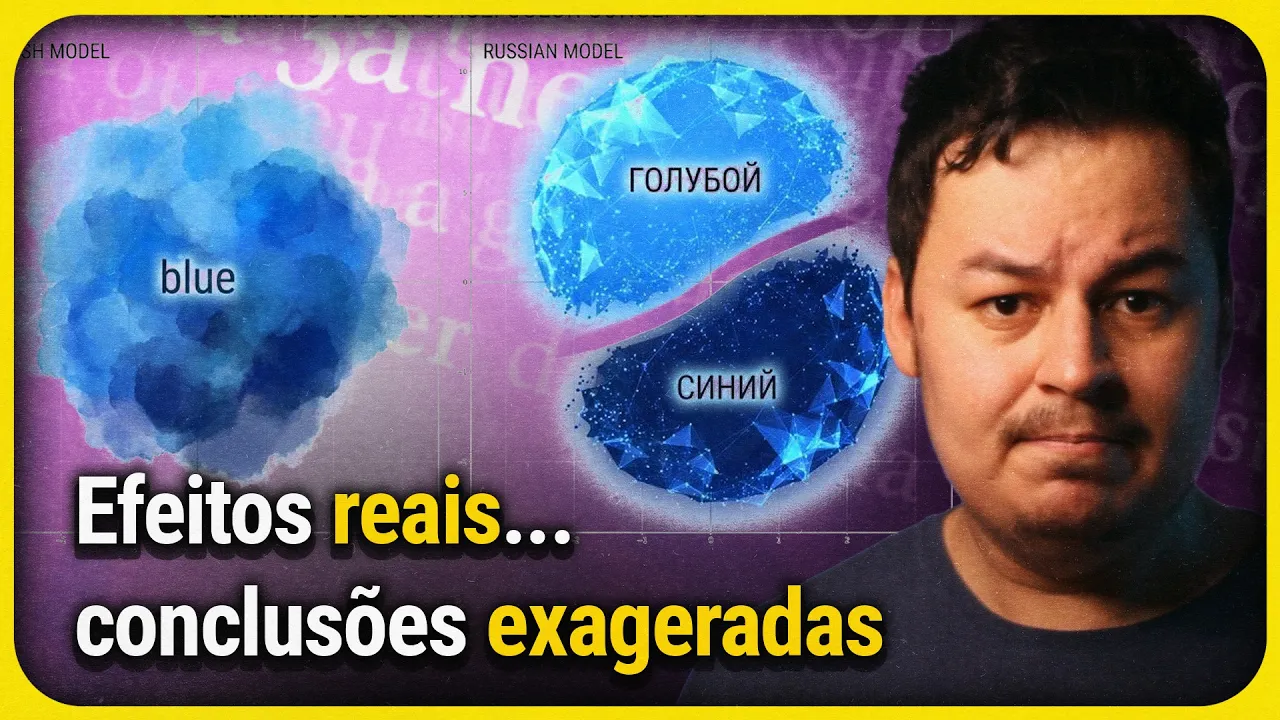
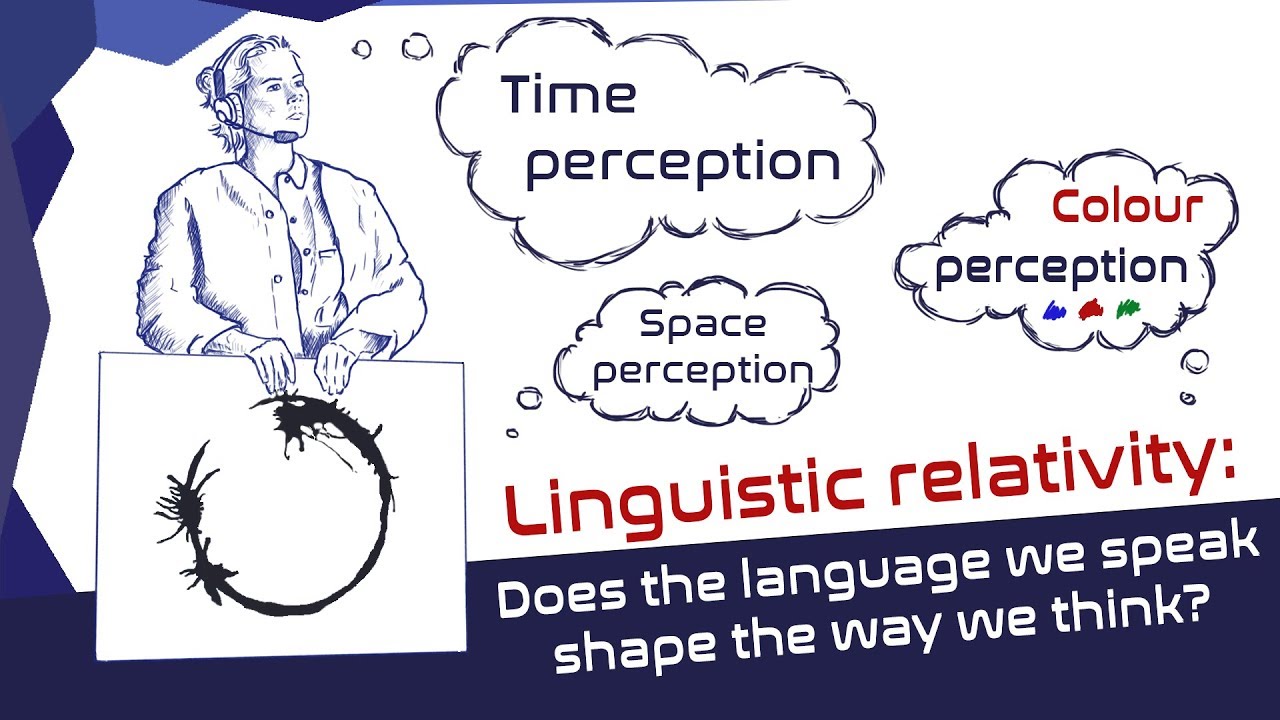


The Sapir-Whorf Hypothesis suggests that language influences perception, as evidenced by research showing Russian speakers can distinguish light and dark blue shades faster than English speakers due to having separate terms for these colors, while English speakers who learn Russian later lose this ability; this demonstrates that language categories shape how we perceive and categorize the world, including color distinctions.
Language and Color Perception: A Guide for Conlangers
Added:The Principle of Linguistic Relativity (Sapir-Whorf Hypothesis) and the general debate over whether language shapes thought.
The basic biological mechanisms of human color vision, specifically how photoreceptors (rods and cones) detect light wavelengths.
Fundamental concepts of conlanging, including how a lexicon is constructed and how semantic fields are mapped to vocabulary.
An introductory understanding of semantic categorization—how languages group continuous natural phenomena into discrete lexical categories.
Applying evolutionary trajectories of color terms (such as the Berlin and Kay color hierarchy) to create culturally plausible conlang lexicons.
Designing color taxonomies for non-human or alien species in conlangs, factoring in different biological visual spectrums (e.g., tetrachromacy or infrared vision).
Exploring other perceptually-driven semantic domains in cognitive linguistics, such as spatial orientation (absolute vs. relative directions) and time metaphor mapping.
Investigating empirical psycholinguistic research methods, such as color-matching and categorization tasks, used to test linguistic relativity in real-world languages.
59K views3.3Klikes5:18Original Release: 2020-10-02
[Music] on this color wheel how many colors do you see your answer should be infinite but how many colors do we actually name and why those colors english has a mostly agreed upon 11.
argue with me all you want that's what's agreed upon here come the comments these 11 terms in english are red orange yellow green blue purple pink brown white gray black i'm sure everyone can name more turquoise indigo maroon pus but since these colors are often seen as shades of a larger mother color they're not basic terms this goes for descriptors like light and dark too if i said light red would you argue that it's a separate category from pink and this argument is only valid for english speakers by the way so is it presumptuous to say that all languages have the same terms for the same colors yes 11 isn't a magic number looking back at the color wheel english speakers have socially linguistically culturally agreed on color categories that look something like this but these divisions are arbitrary there's no reason that the definitive difference between orange and red occurs here in fact depending on the rods and cones in your retina my division might look a little off to you there is no reason why you would say this is a shade of green or this is a shade of yellow other than the fact that your language restricts you to those categories you could compare only these colors and say one is greener than the other but couldn't you also say they're both shades of green we don't have words to differentiate between these shades so we compare them to those that we do in this case green and yellow in russian and i believe italian there are two separate terms for what english speakers would call light blue and dark blue in one study russian speakers were much faster than english speakers at separating light and dark shades of blue their minds are trained to do it but another study found when russian speakers who lived in an english-speaking world or who were using english more than their first language the ability to differentiate weakened their language and consequently their minds didn't categorize the colors as different because the dominant language in their life didn't have words to separate them while the world dictates what words we need to communicate we're unaware of how our language can put restrictions on our perceptions of the world this is a big idea it's the safer wolf hypothesis one that i touched on in my last video and one i hope to talk about in the future but let's stick with color for now in creating a conlang how do you decide what color words speakers use or even need or what colors speakers perceive do they have more or fewer terms than your own language the idea is posited in berlin and k's basic color terms their universality and evolution from 1969 are common in a linguistics classroom they present a progression that languages go through in adopting or developing new words for color starting with a distinction between just light and dark colors red is the first to be given its own category theoretically because of the importance of blood terms follow for green and or yellow then blue and so on so in the iliad when homer uses the phrase wine dark or wine faced to describe oxen or the sea yes he uses the same color for cows and water i don't know either it's possible his language at the time didn't have a word for whatever color he was seeing let's just say it was blue so perhaps ancient greek was in a phase before gaining the word blue what's interesting is that the only ancient culture to develop a word from blue was the egyptians and as it happens they were also the only culture that had a way to produce a blue dye they had a need to discuss the hues of blue where other cultures were find lumping it in with green this is why many languages have words for a blue green category and the separation occurred later by adopting a loanword from a language that makes the separation this can be seen in germanic and romance languages because latin lacked a definitive term for blue and now you must ask yourself but where did the word come from our word for blue comes through french via old german via old norse which was actually used as a synonym for black the origin of green is related to the origin for grass yellow comes from an old word meaning shine red referred to a kind of soil suggesting maybe the speakers saw importance in clay so the divisions of color categories aren't arbitrary and their names aren't either i'd love to hear from you in the comments about some interesting ideas on the perceptions or other ideas in your language or conlangs that don't appear in another or do you have any interesting ideas on how you could split up the colors for a possible conlang thanks for subscribing everybody and for liking my numbers are going up and it's really making me happy and i hope to see you next time [Music] bye
Up Next
30:25
How Language Shapes Our Perception of Color | SciShow
@SciShow
377.6K views•2021-12-19
36:52
Constraint Interaction in Optimality Theory: Epenthesis & Deletion
@Vidyamitra
180 views•2018-08-20

8:59
Forensic Linguistics: How Language Solves Crimes | PBS
@pbsstoried
1M views•2024-01-25

21:32
Accent Expert Explains U.S. Regional Dialects | Part 1
@WIRED
9.3M views•2021-01-21
Related Study Plans & Knowledge Roadmaps
Structured learning paths in Linguistics
linguistics
Optimality Theory: Tableaux & Constraints
01Phonological Basics: Sounds, Syllables & Rules
02Foundations of Optimality Theory: GEN, CON, and EVAL
03The Constraint Inventory: Markedness vs. Faithfulness
+ 2 more learning modules
15h5 modules
Explore Roadmap
linguistics
Morphosyntactic Alignment: S, A & P Systems
01Foundations of Syntax: Transitivity and Arguments
02The Linguistic Variables: Mapping S, A, and P
03Nominative-Accusative Alignment
+ 3 more learning modules
12h6 modules
Explore Roadmap
linguistics
Analyzing Sign Language: Phonology & Syntax
01Foundations of Sign Language Linguistics
02Phonology: The Five Parameters of a Sign
03Morphology: Word Formation and Classifiers
+ 2 more learning modules
14h5 modules
Explore Roadmap
linguistics
Pragmatics: Speech Acts, Grice & Politeness
01Introduction to Pragmatics: Meaning in Context
02Grice’s Cooperative Principle & Implicature
03Speech Act Theory
+ 2 more learning modules
14h5 modules
Explore Roadmap