




















![Language Affects Reality (Part 1: e-Prime) [Esoteric Saturdays]](https://i.ytimg.com/vi/SuMByoqe7SI/maxresdefault.jpg)











Language is not merely a passive tool for communication but an active force that shapes perception, cognition, and thought processes. Research demonstrates that grammatical structures, vocabulary, and cultural metaphors influence how speakers categorize reality, process time, perceive colors, and solve problems. For example, Russian speakers are faster at distinguishing shades of blue due to their language's mandatory color categories, while bilingual individuals develop enhanced cognitive flexibility and executive function through managing multiple linguistic systems. This linguistic relativity suggests that language provides cognitive scaffolding that guides attention, categorization, and reasoning, though it does not impose absolute limits on human thought.
How Language Shapes Thought: Advanced English Listening Practice for C1 Learners
Added:Welcome to the deep dive. We are jumping into a topic today that is well, it's not just fascinating, it's truly foundational. We're going to be talking about the instrument we use for almost every single conscious moment of our lives. Language. We tend to treat it as this uh transparent window onto reality.
You know, a simple tool for getting thoughts out of our head. But what if it's more than that? What if the very structure of your language, the grammar, the words, the way it makes you organize things is actually shaping how you think? That is the exact question we're diving into.
>> We're trying to move beyond this simple idea that language is for communication.
We want to explore its much deeper, much more intricate relationship with our internal landscape, with our cognition.
And this goes so far beyond just vocabulary. We're talking about these little structural nudges that affect everything from how you perceive time to, believe it or not, how quickly you can tell two colors apart. I use language constantly obviously, but the idea that it's actively architecting my own cognitive processes. I mean, not just the content, but the actual scaffolding that my thoughts rest on, that's a pretty compelling idea. It really requires a deep investigation.
>> And that's our mission here to really unpack that relationship. We're going to move from some of the foundational historical ideas to the absolute cutting edge cognitive research. We'll explore how language influences perception, thinking. We'll cover the consequences of specific grammarss, the role of culture, and even what happens in your brain when you speak more than one language. The goal really is to give you, our listeners, some surprising details and and some really solid evidence so you can start to navigate information and even your own thoughts with a new awareness of these hidden mechanics.
>> Okay, let's unpack this. And to do that, we have to start at the very beginning with the theory that kicked this whole conversation off, linguistic relativity.
Right. So the intellectual cornerstone for this entire field is what's known as the Sappiir Wararf hypothesis. It's named after the linguist Edward Sapper and his student Benjamin Lee Warf. And their proposal was well, it was groundbreaking. They suggested that language isn't just a passive mirror reflecting reality. Instead, it's an active force. It actively shapes biases and structures how its speakers perceive and think about the world.
>> Which is a huge departure from what came before. I mean the consensus view was more like universalism, right? The idea that everyone sees the world in the same way and language just slaps different labels on the same universal concepts.
Superwarf just flipped that completely on its head.
>> They absolutely did. And the hypothesis itself, it's not really a monolith. It's usually discussed in two different forms. The strong version and the weak version. And the strong one is well, it's the most radical proposition. It's called linguistic determinism.
>> Okay? And linguistic determinism, that's the idea that language entirely determines your thought, right? It sets the absolute boundaries of what you're even capable of thinking. It's like a cognitive cage.
>> That's a great way to put it, a cognitive cage.
>> Mhm.
>> The extreme view is that if your language doesn't have a word or a structure for an idea, that idea is literally inaccessible to you. You are intellectually barred from it. And you know, this view got some popular traction early on just because the implications are so dramatic. The idea that entire worlds of thought could be walled off just based on the language you were born into.
>> But I know this strong version, determinism, has been largely rejected by modern cognitive science. Why is that? Why is it seen as flawed?
>> For a few really core reasons.
Fundamentally, humans just show immense cognitive flexibility. I mean, we can all think about concepts that are incredibly difficult or clumsy to put into words in our native language. You know that feeling when you're struggling to find the right words? The thought is there, but the language isn't quite catching up.
>> Right. We can mentally grasp something even if we don't have a neat little label for it yet.
>> Precisely. And if linguistic determinism were true, we would never be able to do things like borrow words from other languages. Think about words we use all the time like fang shuy or shodenro. We imported them because they described a concept our language didn't have a neat term for. We also couldn't invent new scientific terms. The very act of inventing a word for a new idea proves the thought existed before the linguistic tool. So thought isn't strictly caged. It can push beyond the current toolkit.
>> Okay. So linguistic determinism was this crucial historical provocation. It set the stage. But the real deep dive, the modern understanding is in the more moderate version.
>> That's the weak version or as it's more commonly known, linguistic relativity.
And this is where the modern consensus lies. It suggests that language doesn't determine thought, but it absolutely influences or guides it. It creates cognitive habits. It creates biases. It makes certain ways of thinking easier or faster or just more habitual for speakers of one language versus another.
It's a lens that focuses your attention, not a wall that blocks your thought.
>> That distinction influence, not determination, that feels absolutely key. It's about probability and speed, not possibility. And Warf's initial case study, even if it's a bit controversial now, his work on the Hopi language and their concept of time, that really laid the groundwork.
>> It really did. Warf looked at the Hopi language from the Native American group and he contrasted it with what he called standard average European languages. So like English and English is just fundamentally rooted in quantifying time. We have mandatory tense markers, [music] past, present, future. We segment time into these discrete countable units like hours and days. We even treat time like a commodity, like a line. You can save time, you can spend time, you can waste it.
>> And his proposal was that the Hopi language just structured it completely differently.
>> He argued that Hopi grammar put way less emphasis on those distinct segments.
Instead of a mandatory three-part tent system, he said its grammar focused more on things like duration, intensity, and and the validation of an event. like is something an ongoing cycle like the sun rising or is it something that was just reported to you?
>> So the idea is that by not forcing speakers to constantly chop time up into these little quantified linear bits, the language might encourage a cognitive feel for time that's more like a continuous cyclical unfolding.
>> That was the hypothesis. Now, as you said, it's important to be cautious here. Later linguists have really debated the specifics of his Hopi interpretation. They've pointed out that Hopi certainly has ways of talking about sequence and duration. So we have to approach that historical example with a bit of academic caution. But the core principle that grammatical structure can bias our cognitive habits about something as fundamental as time that holds up especially with modern evidence.
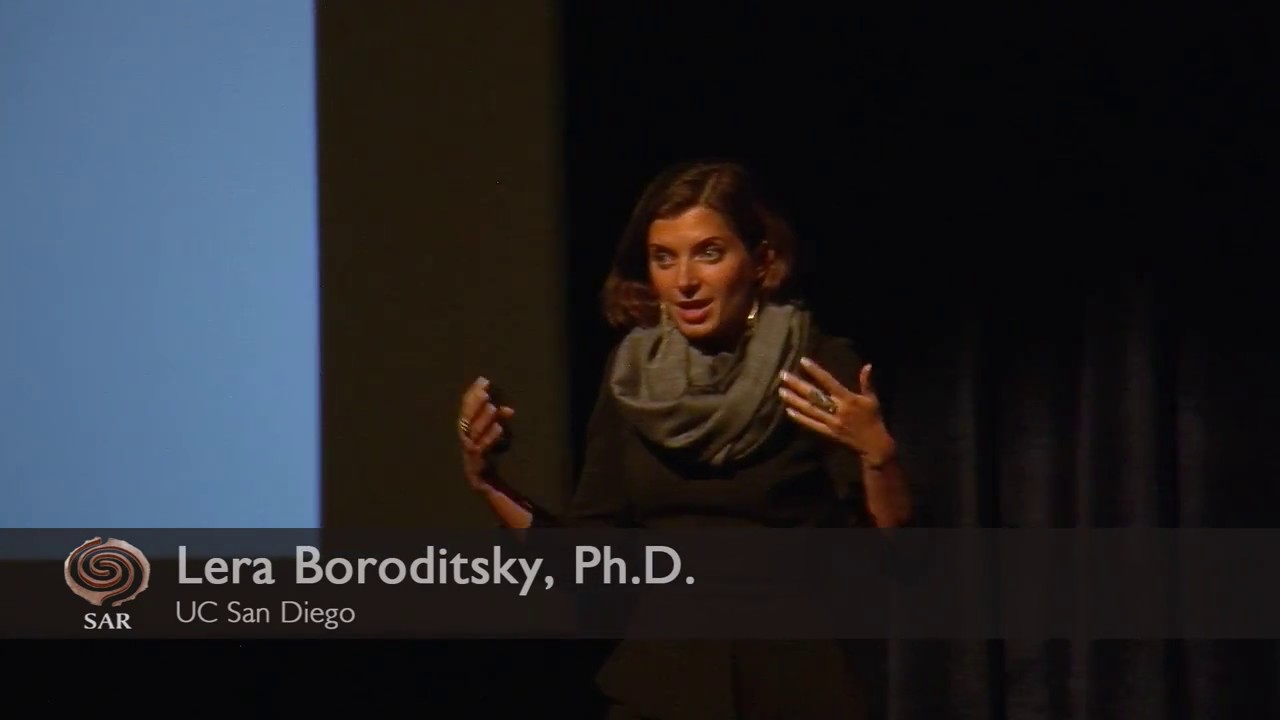
>> And that modern evidence I'm thinking of the work by Larara Borditsky gives us the kind of experimental rigor that Warf maybe lacked. Let's talk about her work on time and space.
>> Right. Braditzky basically confirmed Warf's core idea, but with controlled experiments. She showed that the metaphors a language uses for time really do influence how we process it.
So, if you're an English speaker, you rely almost entirely on horizontal spatial metaphors for time. We look forward to the meeting. We push difficult tasks back. The future is ahead of us.
>> And she compared this to languages that use different metaphors. Right?
>> She contrasted English with Mandarin Chinese. Now, Mandarin speakers can use horizontal metaphors, but they also very commonly use vertical metaphors. The word for up, Shang, is used for the previous week. The word for down, Sha, is used for the next week. So, structurally, the past is mapped as up and the future is mapped as down.
>> That completely flips the conceptual map. But how do you actually measure the cognitive difference? I mean, how do you prove that's not just a figure of speech?
>> The experimental design was just brilliant. She would test speakers of both languages by priming them. So, she'd force them to think spatially in one direction first, maybe by having them arrange objects horizontally or vertically. Then, immediately after, she'd flash a simple time related question on the screen like, "Does March come earlier than April?" And then she'd measure their reaction time down to the millisecond.
>> Okay. So, the visual spatial prime was testing whether their built-in linguistic metaphor created a processing preference, a fast track in their brain.
>> Precisely. And she found that when Mandarin speakers were primed vertically, they were consistently and measurably faster at answering the time question. Their brain was already primed to think along that vertical axis, which aligned with their linguistic habit.
Conversely, English speakers were significantly faster when they were primed horizontally.
>> And this is where it gets so interesting because that demonstrates that the habitual linguistic framing horizontal for English, vertical for Mandarin, isn't just some abstract choice of words. It translates into an actual measurable difference in the efficiency and speed of fundamental cognitive processing. The language really does act as a fast track.
>> It does. It shows that speed advantage that linguistic habit gives you. It wasn't about whether they could think in the other direction, but which method was pre-wired for speed. It's a perfect example of linguistic relativity in action. And this leads us right into maybe the most intuitive aspect of all this, vocabulary.
>> Right? Vocabulary is the most direct cognitive toolkit we have. I mean, words are how we define things, how we categorize them, how we mentally isolate them from the world. If you don't have a ready word for a concept, it's just so much harder to pull it out of the continuous stream of experience and hold it in your mind.
>> Absolutely. The key idea here is what we call lexical specificity. It's the depth and the differentiation of vocabulary that a language has in certain domains.
Languages literally carve up the spectrum of reality differently. usually based on what's culturally or environmentally important. What one language captures in a single neat word, another might need a whole clumsy phrase to get at. [music] >> And this difference can, and this is what's so surprising, it can influence our fundamental sensory perception.
>> The research on color is just the most powerful demonstration of this.
>> Color is the perfect test case. The underlying physics is universal. The human eye and brain process light wavelengths in the same way across all cultures. But how we segment that continuous spectrum of color into verbal categories that differs enormously.
English has one basic fundamental word for blue.
>> But Russian, as the research shows, makes a mandatory distinction right inside that blue spectrum.
>> That's right. Russian has two completely separate basic color terms.
>> Cinei for darker blue and golo boy for lighter blue. And these aren't just modifiers like saying navy blue or sky blue in English. [music] They are fundamentally different categories, just as distinct as red and green are to us.
A Russian speaker is linguistically required to choose between one of those two categories anytime they want to describe something blue.
>> Okay. So, if the language forces you to categorize them differently, does that actually translate into a measurable cognitive difference when you're just looking at the colors?
>> It absolutely does. And this was tested with those same kinds of reaction time experiments. Researchers would show Russian and English speakers three color chips. one on top, two on the bottom, and they'd have to quickly identify which of the two bottom chips [music] matched the top one.
>> And the trip was how they manipulated the relationship between those chips based on that Russian color boundary.
>> Exactly. So they compared two scenarios.
In one, all three chips fell into what a Russian speaker would call the same category. So all were sinei or all were goloy. In the other scenario, they crossed the boundary. The target color might be sine and the distractor chip was goloy. And the finding, >> the Russian speakers were consistently and significantly faster by about 120 milliseconds, which is a lot in reaction time at telling the two blues apart only when the shades crossed that synagog boy boundary. Crucially, English speakers showed no such speed advantage at that specific boundary. This proves the speed increase was tied directly to the mandated linguistic categorization.
>> That is just it's profound. It suggests language isn't just labeling a distinction that's already there. The very act of having two separate mandatory labels actually enhances our perceptual sensitivity at that dividing line. It sharpens your perception in a way you can actually measure with a stopwatch.
>> It's a mechanism called categorical perception. Your brain is trained by the necessity of language to quickly differentiate at that lexical boundary.
It provides a genuine cognitive edge, making certain perceptions easier and faster. It's just a really clear, elegant demonstration of linguistic relativity affecting something as basic as just seeing. Vocabulary isn't passive. It is actively slicing up the world for you.
>> Okay, so moving from vocabulary to grammar, we're getting into an area where the influence is maybe even more subtle, even more insidious because grammar rules dictate what information you must pay attention to, what you have to encode in every single sentence, whether you want to or not. It's a mandatory cognitive routine. That's the critical difference. Vocabulary is a choice. You know, you can say car, you can say sedan. Grammar is obligatory. If you use a verb in English, you must encode tense. You have to say whether it happened, is happening, or will happen, even if you don't care about the timeline. And this mandatory encoding trains cognitive habits.
>> Which brings us to the absolutely staggering case study of the GooGu Yumither language in spatial orientation. GooGu Yimther, a language spoken by a small Aboriginal group in Australia, forces its speakers into a completely different system of spatial reasoning. English and most European languages, we rely on what's called an egocentric or relative frame of reference. So terms like left, right, in front of me, behind you, they all change depending on where your body is.
>> Right. My left is your right. If we're facing each other, it's all relative to us.
>> Exactly. But Google Yimther uses an alocentric or absolute frame of reference almost exclusively. They use cardinal directions north, south, east, west. And they use this not just for large scale navigation, but for tiny small scale space. You would never say move the chair to your right.
>> So what would you say? You'd have to say something like move the chair slightly to the east. Even if you're inside a small windowless room.
>> That's right. The language imposes a non-stop 24/7 cognitive demand to maintain absolute spatial orientation.
You must always know precisely which direction is north, south, east, and west, [music] even in the middle of the night, even when you first wake up because the language requires that information just for basic communication.
>> And what does that constant cognitive training actually produce?
>> Well, Steven Levenson's research showed extraordinary cognitive consequences.
When tested, GooGu Yimthther speakers displayed vastly superior spatial and navigational abilities. I mean, they just don't get lost. And their skills in what's called dead reckoning navigating without any external landmarks, just relying on an internal map are incredibly accurate.
>> But how do you test that in a lab setting? How do you measure it?
>> Levenson used these really clever memory tasks.
>> For instance, he'd sit participants down facing north and show them a row of objects on a table. They'd have to memorize the array. Then he'd spin them around 180 degrees to face south and ask them to reproduce the original sequence.
>> Okay. So, an English speaker would tend to remember the objects based on their relative position to their own body. The cup is on my left, the book was on my right.
>> Exactly. And so, when they're spun around, the English speaker would replicate that sequence relative to their new position, which would flip the north south alignment of the objects.
But the goooo yumur speakers, they remembered and replicated the sequence based on the absolute frame. If the cup was originally north of the book, they would put the cup north of the book no matter which direction they were currently facing. Their entire spatial memory is anchored to the external world, not their own body.
>> That is just a staggering finding. Their mandatory grammar for space fundamentally alters how they encode memories. Their entire cognitive relationship with the physical world.
The language itself is basically an intensive lifelong navigational training program.
>> It's one of the strongest cases we have for how a grammatical necessity can forge a powerful cognitive skill. But the influence can be much more subtle.
Take grammatical gender for instance.
>> Right? Grammatical gender seems totally arbitrary to an English speaker. We have gender for people, not for bridges or keys. But in languages like German or Spanish, every single noun is assigned a gender, masculine or feminine, just as a linguistic rule. And so researchers wondered, does this arbitrary linguistic label subconsciously color a speaker's perception of the object itself? So they tested this by asking German speakers for whom the word for bridge dbru is feminine and Spanish speakers for whom the word eluente is masculine to describe a bridge. But they had them do it in English, a language that is neutral on the gender of bridges. Ah, so they were trying to see if the gender bias from their native language would carry over even when they were speaking a different language.
>> Exactly. And the findings were remarkably consistent. The German speakers tended to describe bridges using adjectives associated with femininity. Things like beautiful, elegant, delicate, slender.
>> And the Spanish speakers with their masculine term elente, >> they overwhelmingly chose masculine associated adjectives, strong, sturdy, big, towering, dangerous. And this pattern held true for lots of other nouns. For example, the German word for key perish is masculine. German speakers would say things like hard or heavy. The Spanish word laave is feminine. Spanish speakers use [music] words like delicate or shiny.
>> So, the grammar isn't just forcing you to use a different article. It's potentially giving the object a whole conceptual layer of personality. Your grammar is subtly biasing how you categorize and remember the basic characteristics of a purely physical thing. That is a profound unconscious influence.
>> It's a phenomenal insight into how language layers meaning onto reality.
[music] And there's another mandatory nudge found in languages like Turkish called evidentiality.
>> Evidentiality. [music] This requires the speaker to actually encode the source of their knowledge into the sentence itself.
>> Yes. If you're speaking Turkish, you can't [music] just say the prime minister resigned. The ending of the verb itself has to tell me how you know this information.
>> Did you witness the press conference yourself? That's direct evidence. Did you infer it from secondary evidence like the stock market crashing? Or did you just hear it from a journalist?
[music] That's reported evidence or hearsay.
>> And in English, that's completely optional. I mean, we can choose to add apparently or I heard, but we're not grammatically forced to.
>> That's the difference. compulsion.
This grammatical requirement in evidential languages creates a constant almost automatic cognitive need for what we call source monitoring. Every single time a speaker communicates an event, they must almost reflexively categorize their evidence.
>> And what would that do to your cognitive habits in the long run?
>> The hypothesis is that it could foster a heightened persistent sensitivity to the reliability of evidence. For Turkish speakers, evaluating the basis for any statement, whether you're hearing information or sharing it, becomes this almost subconscious grammaticalized cognitive routine. They might be quicker to question the source or the veracity of information because their language constantly requires them to specify it.
>> So, your grammar is forcing you to be epistemologically vigilant. That has huge implications for [music] well, everything from legal systems to how a culture processes news and information. a language that trains its speakers to constantly check their sources. [music] That's fascinating in our current information landscape.
>> It really is. It shows how language is training our internal filter, not just our external voice.
>> So beyond the rules and the words, language is just it's inextricably linked to culture. It's like a cultural repository. It stores a culture's collective values, its history, its unique way of seeing the world.
>> It doesn't just house the culture, it actively perpetuates it. And these values are embedded all over the linguistic landscape in idioms and metaphors and connotations. Every time a speaker uses one of these, they are subtly reinforcing those cultural priorities.
>> The English idiom time is money is a perfect example of that reinforcement.
>> That phrase is so much more than a statement of fact. It's a metaphor that frames time as this quantifiable, valuable, exhaustable commodity. Using it reinforces cultural values of efficiency, productivity, and the urgency of management. Speechers are constantly nudged toward prioritizing tasks based on this idea of time as a physical resource.
>> And we often contrast this with concepts from other cultures like the Spanish word mñana.
>> Yes, mñana. Literally, it means tomorrow. But idiomatically, it's often used to suggest some unspecified future time or a delay. It gets associated with a cultural perception of time that is more flexible, more relaxed. But it is absolutely vital to stress the need for academic nuance here.
>> Why is that nuance so important?
>> Because if you just reduce an entire culture's relationship with time to a single word, you risk falling into these harmful simplistic stereotypes. The concept signals a different approach to organizing life, maybe prioritizing social relationships over rigid scheduling, but it does not define the character or the efficiency of all speakers of that language. We have to recognize the different cultural conversations about time without essentializing the people.
>> Right? It's about appreciating the linguistic contrast as a reflection of cultural priorities, not using it to define individual behavior. Okay, let's look at a really concrete example of language evolving from environmental and survival needs. Inuit languages and snow.
>> This is the classic example, though it's often exaggerated. You hear the claim of 50 words for snow. While that's probably an overstatement, the core truth is there. Inuit languages have a significantly richer, more differentiated vocabulary for the various types and conditions of snow and ice than English does.
>> And this lexical richness isn't for poetry. It's about survival.
>> Precisely. This extensive vocabulary with specific terms for falling snow, hard packed snow, soft snow, snow that's good for building an igloo, snow that's dangerously unstable for travel is mandatory for life in the Arctic. The language focuses the speaker's attention on these extremely subtle environmental nuances that are essential for safe travel, for hunting, for building shelter. The vocabulary is a survival tool that sharpens perception.
>> That makes perfect intuitive sense. If your life depends on telling the difference between 10 types of snow, your language will evolve to make those distinctions clear and fast.
>> And this structural influence can be seen at the morphological level too.
Consider the root system in Arabic.
>> Ah the famous trilateral root system where three consonants form the core meaning for a whole field of ideas.
>> Exactly. Take the root pb which is related to the concept of writing. From this one root, the language creates a whole network of related words.
Kataba, he wrote, book, makab, office or library.
>> Kib writer.
>> In English, the words write, book, and office have no structural relationship at all. They're completely separate. But in Arabic, they're all linked back to that one core root.
>> Right? And some scholars argue that this structure, which inherently highlights the interconnectedness of concepts, might reflect or even foster a cultural preference for holistic thinking. It encourages speakers to see the relationships, the underlying unity between ideas that seem separate to us.
The structure itself embeds a value of coherence into the language.
>> So the very way you form words can influence whether you default to seeing isolated parts or the web of relationships between them.
>> It's like a cultural blueprint baked right into the lexicon. And this cultural lens also fundamentally shapes how we categorize and process our internal emotional worlds.
>> Which brings us to the really beautiful concept of untransatable emotional vocabulary.
>> Language gives us the labels we need to identify complex internal states. And when a language has a specific word for a complex emotional experience, it makes that experience more accessible, more real, and easier to manage.
>> Let's run through a few of those. We mentioned Shod and Freud earlier. The joy from someone else's misfortune.
>> Exactly. German gave us that efficient label. Then there's mono, aware from Japanese. It's this gentle, poignant appreciation for the transient, fleeting nature of beauty, a kind of bittersweet sadness that's linked to impermanence.
It's an aesthetic value and an emotion.
>> And the Portuguese saad, that one always feels so complex.
>> Sodad is a profound melancholic longing for something or someone absent, something that may never return. It's this mix of love, loss, distance, and acceptance all in one word. [snorts] And of course, the Danish concept of Hig.
>> Ah, yes, Hig. That feeling of cozy contentment and convivial warmth, appreciating simple, comfortable moments.
>> And the existence of these labels doesn't just reflect cultural feelings.
It often reinforces culturally valued states. Hig, for example, isn't just a description. It's a cultural encouragement to actively create those moments of comfort and connection.
And this ties directly back to the work of Lisa Feldman Barrett on what she calls emotional granularity. Does having these specific labels actually help us manage our feelings?
>> Her research strongly suggests that it does. Emotional granularity is the ability to differentiate your emotional states with a high degree of specificity to know the difference between just feeling bad and feeling annoyed or frustrated or disappointed. The richer your emotional vocabulary, the higher your granularity >> and the practical consequence of that richness.
>> People with higher emotional granularity who can label their feelings more precisely show better emotional regulation and superior coping skills.
By clearly parsing what's going on inside you by identifying exactly what you feel, you get the cognitive distance you need to manage it effectively.
Language provides the fine-tuning tool for your own psychological well-being.
Okay, so language influences perception, memory, emotion. It makes total sense that this would extend to our approach to problem solving, our fundamental reasoning styles.
>> It absolutely does. [music] The underlying structural patterns in a language can subtly predispose speakers toward different cognitive styles. We see this most clearly in the contrast between holistic and analytical thinking.
>> How does language structure play into that divide? Well, think about the core structure of many East Asian languages.
They're often called context dependent.
[music] They tend to prioritize setting the scene or defining the relationship before focusing on the individual action. This aligns with holistic thinking, which emphasizes the bigger picture, the patterns, the context.
>> And conversely, rigid subjectverb object languages like English can predispose us toward analytical thinking.
>> That structure forces you to start with [music] the agent, the who or what is doing the action. This structure favors breaking things down into discrete components and focusing on linear cause and effect. The constant need to identify the agent trains an agent focused analytical mind.
>> Richard Nisbet's research provides the empirical evidence here. Right.
>> Yes. Nisbet did these fascinating experiments [music] where he'd show participants complex visual scenes like an underwater scene with fish and rocks and plants. He found that participants from East Asian linguistic backgrounds on average were quicker to mention the context or the relationships first.
[music] They might say the fish are swimming among the rocks.
>> Whereas participants with a western linguistic background, >> they typically started by focusing on the individual central object. A large colorful fish is swimming quickly. And this simple difference, context first agent first, suggests [music] a deeply ingrained cognitive preference for how we encode and prioritize information. It influences everything from scientific method to legal decisions where one system might focus on systemic factors and another on individual accountability.
>> That's a pervasive nudge. The very way we form sentences is subtly teaching us how to prioritize information which is central to how we reason.
>> And this complexity just gets deeper when we think about the millions of people who navigate multiple languages every single day. Multilingualism isn't just about speaking more languages. It's about actively managing multiple cognitive toolkits.
>> Right? The bilingual advantage, the idea that it's a cognitive boost that goes beyond just being able to communicate in two languages.
>> That's right. The bilingual advantage refers to the demonstrable strengthening of what we call executive functions.
These are the highlevel cognitive processes that manage attention, planning, and control. They're the brain's control systems located largely in the prefrontal cortex.
>> What are the specific improvements we see in those executive functions?
>> Several key areas. enhanced multitasking, superior task switching, that's the ability to rapidly shift focus between different rules or tasks, and crucially, heightened inhibitory control.
>> Inhibitory control, so the ability to suppress irrelevant information. How does speaking two languages train that specific skill?
>> The mechanism is this constant mandatory mental exercise. When a bilingual speaker decides to speak language A, they have to simultaneously activate and then immediately inhibit or suppress language B. This constant microlevel management of linguistic interference is a vigorous workout for the brain's inhibitory control networks which strengthens them over time.
>> So your brain is always practicing suppressing the language you are not currently using. And that skill then translates into better general cognitive control in all sorts of non-llinguistic tasks.
>> Precisely. It's like resistance training for the mind. And furthermore, this lifelong bilingualism is tied to a powerful long-term health benefit, the development of cognitive reserve.
>> Cognitive reserve. So like a buffer system for the brain.
>> Exactly. It's this resilient capacity that's built into the cognitive networks. Research by scientists like Ellen Bolisto shows that lifelong bilingual develop this robust reserve which gives them resilience against age related cognitive decline. In fact, studies suggest that the onset of clinical symptoms of dementia may be delayed by an average of four to five years in bilingual individuals compared to monilingual even when the underlying brain pathology is the same.
>> That's incredible. It suggests language mastery isn't just cultural or communicative. It's literally contributing to brain health and cognitive longevity.
>> And bilingual also benefit from having multiple conceptual toolkits. Since each language carves up the world differently, they can switch between these systems. A bilingual might find Spanish better for expressing emotional nuance and English better for technical analysis. They just have a richer, more flexible pallet for thought.
>> And the constant negotiation between these different systems must also foster something called heightened metal linguistic awareness.
>> Absolutely. Metal linguistic awareness is the ability to consciously reflect on language itself, its structure, its rules, how it shapes thought. Having that lived experience with different ways of carving up reality. One language has gendered nouns another doesn't makes you inherently more aware that language is a constructed lens.
>> So the multilingual person is an internal expert on the very topic we're discussing. They have the flexibility to see the limits and biases of their own linguistic systems.
>> And understanding all of this isn't just an academic exercise. It has tangible practical advantages for you, our listener, in how you navigate the world.
Okay, let's talk about those takeaways starting with critical reading and how we analyze information.
>> The first benefit is enhanced critical reading. When you read an article or report, you have to be aware that the text is framing the issue through a linguistic lens shaped by cultural assumptions. If a paper on economic development is written in English, it's likely framing success through western analytical norms emphasizing individual action, linear cause and effect. So if I recognize that the language itself is shaping the narrative, I can analyze how the message is constructed, not just what it says. It's reading between the lines of the language structure itself.
>> Exactly. The second takeaway is crucial for modern work. Professional communication in a multicultural workplace. You gain a massive advantage by recognizing that a colleague from a different linguistic background might be interpreting your instructions through their own linguistic filter, >> which can improve negotiation and teamwork. If I know that a person whose native language demands evidentiality might be implicitly looking for the source of my information, I can proactively provide it, ensuring we're on the same page.
>> And finally, the ultimate benefit is self-awareness and empathy. Reflecting on how your own language biases, your worldview leads to profound self-awareness. And recognizing that others operate with different linguistic filters, that their reality is conceptually organized differently, is the bedrock of real empathy. It lets you step outside your own cognitive habits.
>> It's the realization that your reality isn't the reality. It's a linguistically filtered reality.
>> Precisely. Now, while we've built this case for linguistic relativity, we have to acknowledge the debate is not settled. We have to look at the strong arguments for cognitive universalism.
>> Right? We already rejected the strong Horian view determinism. But universalism argues that the core cognitive hardware is the same for everyone.
>> Yes. Universalists argue that fundamental abilities, perception, logical reasoning, memory are constant across all humans. They would concede that language influences how we express or organize thoughts, but not the basic capacity to think. The software versus the hardware analogy.
>> Correct. So in the goooo yimther example, a universalist would say all humans have the inherent capacity for absolute spatial reasoning. The goooo yimther language just requires them to constantly practice that universal capacity to an extraordinary degree whereas English doesn't make us strain it.
>> So language is a scaffold that guides our development and attention, but it doesn't define the cognitive ceiling.
>> That's the modern synthesis. Language shapes cognitive development speed, but it doesn't impose absolute limits on what you can conceive of. And we also have to reiterate that important caution, avoiding linguistic stereotyping.
>> Absolutely crucial.
>> These studies highlight subtle statistical tendencies at a group level.
They cannot and should not be used to make simplistic assumptions about any individual speaker. Individual thought is shaped by countless factors.
education, travel, personality, far beyond just their native language.
>> The science is about tendencies and influences, not definitions.
>> Exactly. And the dynamics of language are not static. They are accelerating in response to huge technological and social shifts. This relationship between language and thought is being constantly renegotiated right now.
>> Let's talk about that new frontier, the rise of AI language models.
>> AI is producing and mediating vast amounts of our text and dialogue. We have to consider how the patterns and structures embedded in machine generated language will subtly influence human cognition over time.
>> What are those patterns? I mean AI models are often optimized for clarity, for neutrality, for efficiency. They try to minimize ambiguity.
>> And this emphasis on a clean, optimized logical structure might subtly nudge human communication away from the complexity, the ambiguity, the stylistic quirks that fuel creative thought. Yeah.
If our primary input is optimized for machine processing, are we adapting our language to be more machine friendly?
This could slowly mold our collective cognitive patterns.
>> That's a profound thought. Linguistic input shaped by algorithms, not human culture, becoming a primary filter for our reality. And we're seeing similar acceleration on social media, >> right? Platforms like Tik Tok and X expose us to unprecedented linguistic diversity, rapidfire slang, code switching, cross-cultural memes. This creates a really demanding new linguistic environment >> and the need to navigate these hybrid fast-paced landscapes must be fostering new forms of cognitive adaptation.
>> It creates an intense demand for linguistic flexibility and cognitive speed, constantly deciphering novel juggling and visual shortorthhand, rapidly switching registers. It might be training our brains to be hyperflexible, adapting to variation at speeds never before required in human history. The long-term effects are a rich area for future research.
>> So, this deep dive reveals that language is not just some ancient architect of thought. It's a rapidly evolving architect responding to a hyperodern environment.
>> It is truly dynamic. And we're at a point where linguistics, cognitive science, and computer science are all converging to try and understand the human mind's ultimate relationship with this primary tool.
>> So, as we wrap up, what is the single most impactful takeaway we hope listeners carry with them? The core message is this. Language is not a transparent conduit. It is not a passive tool. It is an active dynamic force. It structures your perceptions. It directs your attention. It provides the boundaries for categorization. It processes your emotions. And it shapes how you solve problems. It is a fundamental partner in the thinking process itself. and grappling with these concepts. How vocabulary sharpens perception, how grammar trains navigation, how culture is embedded in every metaphor, it deepens your own linguistic mastery. It enhances your cultural competence, and it accelerates your intellectual growth by challenging your most basic assumptions about reality.
>> It empowers you to navigate the world with greater insight, with empathy, and with intellectual flexibility, >> which leaves us with a final provocative thought to ponder after this conversation. Given this constant accelerating evolution of language driven by technology, globalization, and AI, how might the very way we think, our collective cognition, continue to transform in the coming years and decades? And what does that ongoing transformation mean for our understanding of ourselves and each other across all these linguistic and cultural divides?
Up Next
Does Language Shape Thought? John McWhorter on the Sapir-Whorf Hypothesis
@TheInstituteOfArtAndIdeas
25.6K views•2019-02-11
Constraint Interaction in Optimality Theory: Epenthesis & Deletion
@Vidyamitra
180 views•2018-08-20

Forensic Linguistics: How Language Solves Crimes | PBS
@pbsstoried
1M views•2024-01-25

Accent Expert Explains U.S. Regional Dialects | Part 1
@WIRED
9.3M views•2021-01-21
Related Study Plans & Knowledge Roadmaps
Structured learning paths in Linguistics