















![[Review] Metaphors We Live By (George Lakoff) Summarized.](https://i.ytimg.com/vi/YdRwVB3EvZM/maxresdefault.jpg)



Languages serve as powerful tools that help humans construct knowledge beyond physical reality by providing frameworks for abstract thinking. Through spatial metaphors (like treating time as a path), grammatical structures (such as grammatical gender influencing object perception), and event construal patterns (agentive vs. intransitive descriptions), languages shape how speakers represent, reason, perceive, and attend to the world. This linguistic relativity means that speakers of different languages develop distinct cognitive styles and conceptual frameworks, allowing humans to create sophisticated abstract ideas that transcend direct sensory experience.
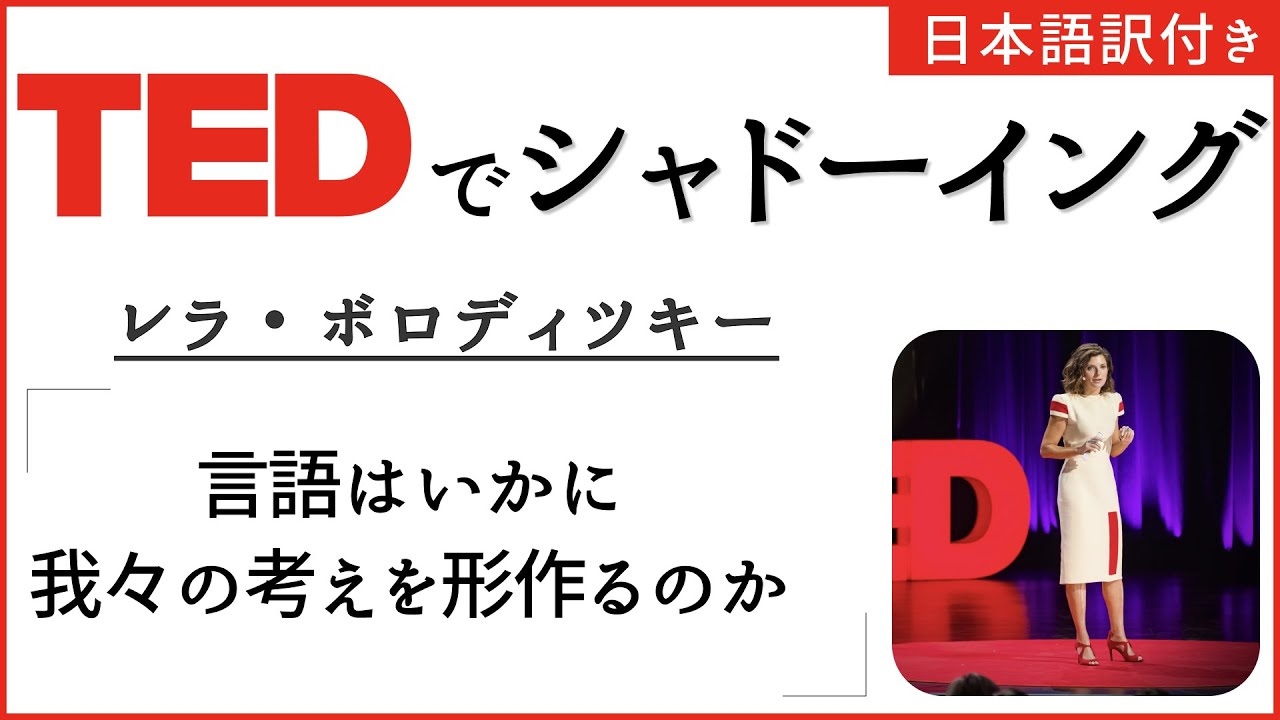
How Language Shapes Thought: Lera Boroditsky on Cognition
Added:The Sapir-Whorf Hypothesis (Linguistic Relativity), specifically the distinction between linguistic determinism (strong version) and linguistic influence (weak version).
Basic cognitive psychology concepts regarding human perception, memory encoding, and mental categorization.
The distinction between grammatical structures (such as grammatical gender and spatial coordinate systems) and lexical/semantic differences across languages.
Fundamental research methods in cognitive science, including how behavioral experiments measure reaction times and memory accuracy.
The impact of linguistic framing on legal psychology, specifically how verb choices influence eyewitness memory, blame attribution, and financial liability.
The cognitive effects of bilingualism and multilingualism, exploring how switching between languages can alter decision-making, moral reasoning, and personality expression.
Applications of linguistic relativity in Artificial Intelligence and Natural Language Processing (NLP), examining how language-specific training data shapes AI reasoning.
Metaphor theory and political discourse, analyzing how conceptual metaphors structure human thought and influence public policy and social attitudes.
44.9K views475likes1:02:11Original Release: 2012-07-26
some of the questions you guys were asking Steve um my research is in how uh language helps us construe the world helps us construct knowledge and how it helps us construct knowledge that actually goes beyond what's available in physical reality and I think the fact that we're able to do this in language is one of the things that makes being human so much fun and uh makes us so smart and sophisticated um to let me start with an example of how languages differ from one another.
So, uh let's take this hypothetical uh statement. Palin read Chsky's latest book. Now, uh I think you guys figured out why it's hypothetical. Uh let's focus on just the verb read. To say this in English, uh you have to change the verb to mark tense. So, if this is something that happened in the past, you have to say read as opposed to will read or is reading. But if uh you're speaking Indonesian, you couldn't change the verb. Uh the verb would always stay the same regardless of when the event occurred. And marking time information in other parts of the sentence would be optional. You could do it if you wanted you, but you don't have to do it. In other languages, tense, it's not just that tenses are required, but there are five different five different past tenses that you have to choose from depending on when the event occurred.
So, if it's something that's in the in the immediate uh past, that's one form.
If it's something that happened within two weeks, that's another form and so on. Now, uh in some languages beyond uh tense, you have to mark other things on the verb. So, in Russian, my native language, if this is u if this is Sarah doing the reading, that would be one form of the verb. But if it was uh Todd Palin, say doing the reading, that would be a different form of the verb. In Russian also, you have to mark uh something like completion. So, uh, suppose Sarah Palin read the whole thing from cover to cover, that would be one form of the verb. But if she just picked it up and put it down, uh, just leave through it, that would be a different form of the verb. In Russian, inconveniently, you also have to do this in the future uh, tense. So, if someone gives you their thesis to read, uh, you say, "Oh, I'll read it tomorrow." You're committing with the form of the verb whether you're actually going to read the whole thing.
Um, in some languages, like in Turkish, you have to change the verb depending on how you came to know this information.
So, if uh you were to say witness this miraculous event with your own eyes, that would be one form of the verb. But if it's something you inferred from something she said, or if it's something that you just heard uh about from someone else, that would be a different form of the verb. Now, this is just a small sampling of the different things that different languages could possibly require their speakers. And when people have noticed differences like this, one really common uh conclusion that people draw kind of want to draw an opriori conclusion and that is speakers of different languages must see the world differently. Just look at the kinds of things that their languages require.
Right? On the other hand, people have on on the other side of the debate, people have said not so fast. Just because languages differ, just because people talk differently, doesn't necessarily mean they think differently. And uh here's some uh let me put some weight behind that argument. Um whenever you say anything in language, your description is incredibly sparse, right?
So if I say right now it's raining, suppose it were raining. Uh you wouldn't think to yourself, boy, Larara doesn't know if it's raining inside or outside because she didn't specify that. She only said it's raining. she must not know that it's not raining inside this room. Obviously, anything we say is always going to be just a small proportion of some of what we know. So, just because you don't mention something in a sentence, maybe even habitually don't mention something in your sentences, doesn't mean you don't notice those things, doesn't mean you don't encode them, don't pay attention to them, and don't remember them. So, that's uh largely the debate. uh to the extent that languages differ, is it the case that speakers of these languages are also led to pay attention to the world differently? Uh led to remember things differently, led to reason about things differently, or is it just that people talk differently, but everyone thinks basically the same way? Um so, uh this is a question, it's often called the Warian question, but it's a question that goes back long before war. People have been speculating on this topic for uh many, many years. So here uh for example Charlamong uh says to to have a second language is to have a second soul. A very strong statement about uh the relationship between language and identity or language itself.
Uh here's one of his successors Charles V says a man who knows four languages is worth four men. Uh that again is a very strong statement about the value of a language. Frederick the great of Prussia had a more specific set of hypotheses.
He says, "I speak English to my accountants, French to my ambassadors, Italian to my mistress, Latin to my god, and German to my horse."
It's not uh entirely clear how he came up with that particular set of associations, but this is the kind of thing that people have been doing for a really long time, claiming that this or that language is good for uh this or that activity. Hebrew is great for argument, whereas Arabic is great for oratory or vice versa. People have been making uh these kinds of arguments for a long time but not ever with any kind of empirical basis or evidence. Uh I should point out that this question has been extremely controversial and uh not everyone this is an understatement not everyone has been excited uh about the idea that language shapes thought. Uh and in fact for a good couple of decades the idea went completely out of favor in cognitive science. Uh so here for example is Jerry Foder uh saying I hate relativism more than I hate anything else excepting maybe fiberglass power boats. Um he likes sailing that's why he doesn't like power boats but uh other than that the real bane of his existence is this idea that language might shape the way we think.
Um, so let me give you today a few examples of uh ways that languages and cultures help us construct things that go beyond what is available in experience. And I've picked um three domains. There are lots of examples, but I picked three domains where I think it's pretty clear that the way we think about things is not strictly speaking the way that those things really are.
And I can show you that influence from language and influence from culture plays a role. So let's start with our representations of time. Uh time is a good thing to look at. It's very popular topic of discussion. Um the word time itself is the most frequent noun uh in English. So we like to talk about it a lot. Uh how do we think about it? And uh this question about time is really part of a larger set of questions about how we think about abstract things in general. How do we think about things that we can't see or touch that we can't physically experience? uh it's enough of a problem to try to explain how we think about things like chairs, right? But at least you have a starting point. You can say, well, you've observed chairs. You know what they look like. You can store those experiences. You know what it feels like to sit on one. You can store those experiences. But how do you think about something like time travel or how do you think about something like justice or ideas? These things don't smell like anything. They don't feel like anything. They don't look like anything. And so, how do we construct uh these ideas? This is a problem that's vexed uh thinkers for uh a very long time. Uh Plato uh for example formulated probably one of the first arguments from the poverty of the stimulus uh when he was considering how you would teach someone the abstract notion of virtue.
Uh basically his uh conclusion was that the information available in the environment was not rich enough to be able to teach someone to be able to learn uh something abstract like virtue.
And um this is called the poverty the stimulus argument because the stimulus uh the environment is not rich enough to be able to learn things from. Uh and so he concludes that we don't therefore learn these things. Instead we recollect them from past incarnations of our souls.
Uh now you might say okay that's a long time ago. Uh what did the Greeks know anyway? Um Aristotle thought the brain was a radiator. So you know clearly we've progressed since then. But but in fact even quite modern and elegant theories uh of knowledge uh take a very similar uh perspective. So here's Nam Chomsky uh borrowing to some extent from Jerry Foder. He says even words such as carburetor and bureaucrat in fact pose the familiar problem of poverty the stimulus. The fact that the environment is not rich enough to support learning.
However surprising the conclusion may be that nature has provided us with an innate stock of concepts and that the child's task is to discover their labels. there appear to be few other possibilities. Um so that's a very strong claim. Um let me stop here for a second and say if it were the case that we were born with all human knowledge past and future including concepts like carburetor and bureaucrat in our minds that would be extremely cool right that would be awesome. Uh I don't think that's the case. Um and so I think it's prudent to look for other uh possible solutions.
Uh so uh what's my story? How do I think uh we create uh abstract ideas? Well, let me tell you a story uh about time travel. And I think this kind of story can apply to a lot of abstract ideas.
How do we come up with an idea like time travel? It's not from having actually experienced time travel hopefully um and then just stored that experience and so there you go. Um, but here's a story.
Across languages, people tend to talk about time using spatial terms. So, we'll say things like, "We're approaching the holidays. We're coming up on New Year." Now, those spatial terms, those spatial metaphors create an analogy. Time is treated as a path that you can travel that we're traveling on.
Well, once you have that analogy in place that time is a path you can travel, you can start extending that analogy. a path you can travel in whatever direction you want and whatever speed you want. So once you have that analogy between time and space and place, you can actually start creating other ideas about time that go beyond what is physically possible in your experience.
So um that's a story. It has a couple of components in it. One is the metaphors we have in language. The fact that we treat time in language as if it were space is important. It invites an analogy, a conceptual analogy. And the second uh part of that story is that if people were to have different metaphors, if uh across languages people were to differ in what parts of space they wanted to import into time, then you'd expect that people around the world would think about time differently as a result. Um now I've already said this, uh we talk about time as if it were space in English. It's impossible to get away with from spatial terms when talking about time. So we say things like the future is ahead of us, spring is around the corner, the deadline has passed. Uh it's very very hard to talk about time without using spatial terms.
And this is true in a lot of languages.
Um let me give you an example just from English and then we'll move to other languages. So in English we have two contrasting ways of treating time. One I've already described. We're we're moving on a path from the past to the future. So, we're approaching the deadline. This is called the ego moving metaphor because you're moving and time is stationary. But we can also flip it around. We can say the deadline is approaching. On this view, you're stationary and time is coming towards you like a train or a river. Now, let's pause for a moment. If time is a unidirectional, uni-dimensional entity, it shouldn't matter whether you're approaching the deadline or the deadline is approaching you, right? Because there's no fixed ground against which uh we're moving. So in space, it matters.
If I'm approaching you or you're approaching me, that's different because there's a fixed ground against which we're moving. We can distinguish those two. But me approaching the deadline versus the deadline approaching me shouldn't be different. But if people are really thinking about time in these spatial terms, perhaps they've imported this extra dimensionality into time and they actually treat these two scenarios.
We're approaching the deadline as opposed to the deadline is approaching as conceptually different. So um how would we know? Here's a simple way to test. Suppose I tell you next Wednesday's meeting has been moved forward two days. What day is the meeting now that it's been rescheduled?
Who thinks Monday?
A few. Okay. Who thinks Friday? Okay. A few others. Uh that's normal. Don't worry about uh uh but half the people usually say Monday and half the people usually say Friday. Now if you think of time as coming towards you, then the meeting moves forward what forward means is in the direction of motion of time and that's from Wednesday to Monday. But if you think of yourself as moving forward in time, then the meeting moves forward in your direction of motion from Wednesday to Friday. That's still just a story I'm telling you. How do we know that people really have some spatial basis for these ideas? Well, here's a nice old experiment. Um, we get people to think about one spatial scenario or another. In one, they imagine themselves moving forward through space. In the other, they imagine an object coming towards them. So half the people have imagined one, half the people have imagined the other. And now we ask everyone, next Wednesday's meeting has been moved forward two days. What day is the meeting now? The people who've been imagining themselves moving through space, we'll say the meeting is on Friday. The people who've been imagining object coming towards them will say the meeting is on Monday. Neither group knows that they're being affected by uh by the prime. And that suggests that the spatial representations that we build up actually can matter for how we think about time. There's something spatial in the way we're resolving this ambiguity in thinking about this question. Now, uh there's been lots and lots of work showing that uh time is in fact uh spatialized and uh I'm not going to spend a lot of time uh going over that evidence, but I will show you some of the other ways that our ideas about time go beyond what is actually true in experience. So, here's a simple one.
This is an effect of writing direction for English speakers. Time goes uh from left to right. And this is true for people who read from left to right in general. So uh here what I'm showing you is a a logo from Nestle. This is for a nutritional supplement for kids. And uh if you're an English reader, you can easily read this from left to right. And it shows what uh the product will do for your child if you uh feed the product to your child. Now uh when they tried this in Arabic-sp speakaking countries you can imagine they ran into some difficulties because if you read this graphic from right to left it becomes a lot less clear what uh this product could possibly do uh for your child make it unable to walk uh perhaps uh and in fact if you ask people to uh just do a simple task I give you a bunch of pictures scramble them together give them to you and say lay these out so they're in their correct order English speakers will lay uh the cards out from left to right like you see here. Uh and Hebrew speakers or Arabic speakers are more likely to go in the opposite direction laying the time out going from right to left. And these associations are quite ingrained. Uh so uh here's an a way of showing that these are automatic uh implicit associations. I can show you a picture like this um halfeaten apple and then another picture. And for the second picture I ask you is this showing an earlier or later time point than the first?
answer later. Very good. Let's try another one.
Very good. All right.
You guys are getting good at this.
One more earlier. Okay. So, uh the trick in the experiment is that uh people are given buttons to respond and the way the buttons are positioned differs across conditions. Sometimes the earlier buttons on the left, sometimes it's on the right, sometimes it's above and sometimes it's below.
uh and I'm going to generalize now over a whole bunch of experiments. But uh what these experiments show is that people across uh languages and cultures have real preferences for for how time is laid out. These preferences are not the same from culture to culture. But within a culture, there's consistent axis and direction of time that people have. For example, English speakers really prefer the arrangement where the earlier buttons on the left uh as opposed to when the earlier buttons on the right. and they don't they don't care whether the earlier button is on top or on the bottom. Uh Hebrew speakers prefer the earlier button to be on the right. Uh they respond faster. Uh Mandarin speakers show a pattern where they like the pattern where the earlier buttons on the left and they also like the pattern where the earlier buttons on top. There's a set of vertical metaphors for time uh in Mandarin that uh are much less frequent in English. Um and this shows up in this kind of task. Now let me just remind you that left to right, right to left, top to bottom, these are entirely invented properties of time.
This is not true of the physics of time.
Right? This is just something that we create and use for our psychological expedience because uh it I assume it must be helpful. Uh now here's a completely different way of organizing time and uh it's motivated by a very different way of organizing space. There are folks around the world uh who when they talk about space don't rely on relative terms like left and right and instead organized space in terms of cardinal directions or other absolute directions. In this case I'm showing you uh uh the KTY group. This is an Aboriginal group in Australia I had a chance to work with. Now in this language instead of left and right you put everything in terms of north,southeast and west. And by everything I really mean everything. So you say things like there is an ant on your northwest leg or move the cup to the southsoutheast a little bit. To speak a language like this, you have to be oriented all the time. And you don't just have to be oriented in the moment.
You have to store all your memories in oriented space. So you can talk about past experiences in a way that preserves that absolute orientation.
Uh in cooker um the way you say hello.
So in English say how are you fine? In cooker you say which way are you going and the answer should be something like northnorthwest in the far distance. How about you? So every time you greet someone, literally in order to get past hello, you have to know which way you're heading. Now imagine if this were a requirement for you in your language.
One thing that's that's interesting about language is it creates a very strong social requirement. Uh right, if you didn't know which way you were facing, you literally couldn't get past hello in this culture. And if your language required this, if your culture required this, every time you said hi to someone every day, you had to report your heading direction, you would get oriented pretty fast. Otherwise, you'd be a total social outcast. Right? So, this is one I just want to tell you the story as a way of illustrating how language can force a particular cognitive style, can force you to pay attention to things that you wouldn't otherwise pay attention to. Um, let's see if uh I'm right that we don't always pay attention to direction. Why don't you guys all close your eyes and I can see you so I can tell whether or not you've closed your eyes. Now, uh, point southeast.
Okay, you can open your eyes. I see points here, here, here, here. I have no idea which way it is myself, but I can tell you that you're not all right. Um um this is a kind of task that will be trivial for folks who speak a language like kuktai or uh in fact it would be somewhat insulting to sh figure it out later.
In fact, it would be somewhat insulting to uh ask an adult that question because it would be like asking do you know which way up is? Uh it's kind of obvious. So uh here's a a way of testing a hypothesis. If the way we think about time really depends on how we think about space and we really build time out of our ideas of space, then folks who think about space this way should also think about time uh differently. So uh here's um an example of a task. I give you a bunch of pictures again scramble them up say lay these out so that they're in the correct order. So here are pictures of my grandfather at different ages.
Uh this is how English speakers lay out these pictures from left to right. What would the cook tire do? They don't use left to right. What did they do? Okay, so here's some data. These are a bunch of different trials, so a bunch of different picture sets. This is a person sitting facing south, and they lay everything out from left to right.
Here's another uh tri trial. This is the same person. Now they're facing north.
And now they lay everything out from right to left. Here's another person.
They're facing east and they lay everything out coming towards them.
What's the pattern?
The sun.
The sun. East to west. Right. So in this culture, folks orient themselves in space with respect to the landscape with respect to cardinal directions. And time also is oriented on the landscape in absolute space. Uh in English, you know, if I'm facing this way, then time goes that way. If I'm facing this way, the time goes that way. If I'm facing this way and the time goes that way, it's very egocentric of me to make time chase me around every time I turn my body. For these folks, time always goes the same way from east to west. And uh east to west is not the only possible uh direction. So since uh we uh found this pattern, other folks have gone out and looked for other absolute patterns. Um other systems uh include uh a topographic system where time goes first downhill and then across a valley in this particular culture in Papa New Guinea. It goes down river in Mia and another culture in Papa New Guinea. Uh Penny Brown finds uh that time goes uphill for the Selena Amayan group. Uh and there are also other ways of organizing time that are not absolute.
So for example, it's very natural in English to think that the past is behind us and the future is in front of us. But that's not true in all languages and it's also not true for how people spatially organize time across cultures.
So the immara for example, this is an Andian group put the past in front of them and when they're talking about uh the past they gesture in front of them whereas English speakers gesture behind them when they're talking about the past.
Okay. So uh across many studies we found that there are quite a few ingredients that go into how an individual is going to construct an idea of time in the moment. So, it matters how your language typically talks uh about time. It matters what language you're currently speaking if you're bilingual. Uh it matters what metaphors you're using in the moment. So, if your language offers a variety of metaphors, which metaphor you're using in the moment matters. Um it matters what spatial representations are cognitively available. So if you're uh used to thinking about space one way or the other or if you lose the ability to attend to a particular part of space for example we have a study with uh hemispatial neglect patients who can't attend to the left side of space and they end up not being able these are folks who read from left to right they end up not being able to attend uh as well to events in the past and instead try to cram everything into the future when they're told about events that happen on a timeline. And there are lots of other organizational patterns in language and culture that matter like writing direction.
I'm going to skip through this and you can ask me about it. Okay, here's another case where I think language makes something up that just isn't true of reality, but nonetheless, people treat it as real. Uh, and this is the case of grammatical gender. So, um, in lots of languages, uh, all nouns are bro are broken out into grammatical categories. a very boring system would have masculine and feminine. Uh sometimes masculine, feminine, neuter, and then some languages have as many as 16 genders, 16 different categories that things get uh broken out into. Let's stick to the boring cases. Uh let's say German and Spanish, uh two or three genders. What's interesting about these grammatical genders is they differ from language to language quite quite wildly.
So uh just to give you an example, the sun is feminine in German but masculine in Spanish. And it's reverse for the moon. Do people actually take these genders as being somehow meaningful? Do German speakers, for example, treat the sun as being more malike, whereas uh Spanish speakers treat it as more uh femaleike? Uh sorry, the other way around. uh because of the set of correspondences in language because you treat the sun as if it were uh as if you would treat a biological male in one language and you treat the moon as if it were a biological female in another language.
Uh there's been a variety of evidence on this. One of my uh favorite examples is an old observation by Roman Yakobson around uh 1915. He noticed that Russians um for some reason the Russians he was talking to liked personifying days of the week. So they would act like Monday or they would act like Wednesday. Well, different days of the week are different grammatical genders in Russian. What he noticed is when Russian speakers were personifying Monday, they would act like a man, grammatically masculine, and they were personifying Wednesday, they would act like a woman. Um and this is a spontaneous behavior. So kind of interesting. In other studies, little kids are asked, "We're making an animated movie. Can you tell us what voices we should give to these characters?" And the characters might be a clock or a toaster. And the kids are then uh trying to give different voices to these uh characters. And what these studies find is even very young kids start assigning genders of voices that are consistent with grammatical gender.
You also see patterns in how people describe objects. So uh if you tell say German or Spanish speakers describe a bridge, give us three adjectives to describe a bridge. The kinds of adjectives you get will often have a gendered flavor. So one group might say bridges are beautiful or elegant while another group might say they're strong and uh long and towering and things like that.
Um now this is a kind of difference you can actually see with your own eyes. Um, if you go to an art gallery and ask yourself when artists are trying to personify something that's abstract, um, how do they choose the gender of the personification? So, if you're going to make liberty or justice into a concrete, uh, representation, how do you decide to do that? I [snorts] don't know if uh this made the news, but uh on the on the right is a picture of John Ashccraftoft in front of the uh Statue of Justice, and he was outraged when he saw this picture because justice is bare breasted uh behind him. And he tried to put drapes over her so that this would never occur again. Um but of course, you could ask, why does justice even have breasts in the first place? Uh that's a that's obviously a creation. Well, uh we did a little study. We looked at uh an art database over a million images. We looked at all the personifications and allegorories. And what we find is that 78% of the time you can predict the gender of the personification from the grammatical gender in the artist's native language. There are of course lots of other factors that matter, but being able to explain 78% of the variance is not bad, right? Uh so here are some examples. Uh these are some of my favorites. This is Michelangelo uh sculpting different parts of the day. Uh so we have the feminine dawn, uh the masculine day, the masculine dusk, and the feminine night. Uh and these of course are all uh corresponding to grammatical gender in Italian. And I think this is an this is an example of grammar quite literally carved in stone.
We've uh we've reified this weird quirk of grammar, grammatical gender, and made it part of our physical environment.
Right? That's a that's an interesting cultural cycle.
Okay. Well, let me give you uh my last example.
Uh and that has to do with causality and agency.
Now, uh events in the world are very complicated and uh even simple events are complicated. I know that sounds paradoxical, but uh even the simplest momentary split-second physical event uh requires a lot of conr and a lot of meaning making on our part. So, take this uh example uh from a few years ago.
Dick Cheney goes out quail hunting with uh his friend Harry Whittington. Harry Whittington happens to be a lawyer and Dick Cheney accidentally shoots Whittington in the face. Um so [clears throat] uh there are lots of ways that we could describe this event.
You could describe it the way I just did. Uh here's a headline from the European Herald. They say Cheney bags lawyer. Uh that gives the sense that Cheney went out hunting for lawyers and he got one.
Um, now more canonically in English you could say Cheney shot Whittington uh or Whittington got shot by Cheney or just Whittington got shot taking Cheney out of it al all together. You could say what uh Texas paper said at the time Wittington got peppered pretty good. Um here's what Cheney actually said about the event. Um this is when he was giving an interview taking full responsibility for what happened. He said, "Uh, well, ultimately I'm the guy who pulled the trigger that fired the round that hit Harry." And you can talk about all the other conditions that existed at the time, but that's the bottom line. And uh, no, it was not Harry's fault. So, it's very nice of him. Not my friend's fault that I shot him in the face. But look at that first sentence. Ultimately, I'm the guy who pulled the trigger that fired the round that hit Harry. This is a split-second event, but now he's made it into four separate events, and he just happens to be on one end of that causal chain.
Bush actually did one better, if you can believe it. He says, um, he heard a bird flush and he turned and pulled the trigger and saw his friend get wounded.
Now, that is a masterful exculpation.
Janie transforms from agent to mere witness in the scope of a sentence, right? He pulled the trigger and then he saw his friend get wounded. Um, that again is a very different take on this split-second event. Now, of course, The Onion always has the best uh headlines.
They said White House had prior knowledge of Cheney threat. August briefing warned Cheney determined to shoot old man in face. Um, what all of these descriptions differ on is to what extent is Cheney really responsible. to what extent is he an agent in uh the event? To what extent is he tied to the eventual outcome?
Um now I'm giving you all of these examples just to show you h how many options language gives us for construing even the simplest event. This is not talking about an event like uh global warming or economic collapse that are complicated events. This is a really simple physical split-second event and yet we have tons and tons of options for conceptualizing it. We can make it into many events or one event. Uh we can have it make it have an agent or not have an agent and so on. And languages differ from one another in terms of how they canonically describe such events. So uh here's a a simple difference. Uh in English we like canonical agentive expressions like John broke the vase.
That's a normal way of putting something, even if it's an accident. Um, you could say the vase broke. That would be a non-aggentive uh expression. Um, but it's the sort of thing that sounds evasive uh in English. Uh, it's the sort of thing that kids say. It's the sort of thing that politicians say. Uh, English speakers don't like, don't tend to favor this kind of construction. Uh, generally, if something happened, there should be an agent and that agent should be responsible. It's a basic uh thing that English speakers require. And this is not true across languages. So in Spanish for example, you can also make an agentive construction just like in English or you could have a non-aggentive construction which essentially is something like the vase broke itself.
And Spanish speakers tend to prefer the non-aggentive construction in the case of accidents. In fact, English is kind of strange in that it doesn't distinguish very strongly between intentional events and accidental events. A lot of other languages distinguish much more strongly whether distinguish by intention um on in terms of the kind of verb that gets used. So first let me uh let me tell you a little bit about um how we can quantify whether uh speakers of different languages really prefer different constructions. Uh here's a simple way. We show them uh videos of intentional actions or videos of accidental actions and we ask them to describe what happened. I hope this video works and maybe because Okay.
Any luck maybe maybe this part didn't get transferred.
I will mime it for you. In the case of an intentional action, the fellow is sitting with the balloon. He picks up a tack. He uh pin pricks the balloon with the tack and the balloon uh pops. In uh the accidental version of the same action, the fellow is sitting there. Uh he makes a non-specific motion, the balloon pops, and he's surprised. He makes physical contact with the balloon in the process of making the non-specific motion. So, they're very similar except in the one case you give you get this social cue that it was an accident. He didn't mean to do it. And uh then we ask people just tell us what happened. So let me show you some of the accidental uh some of the descriptions of accidental events. In English uh people like their transitive expressions. They will say things like a guy broke his pencil while trying to write with it. Or he put his hand down and picked up a sticky note. He lost a balloon. Uh here's a funny thing about English. A man opens an automatically opening umbrella. Umbrella is already automatically opening and yet still we need an agent to open it. um or they make personality attributions like a klutzy guy knocked a box off a table.
Uh in in Spanish the situation looks uh quite a bit different. So people say things like an egg that fell on him broke on him or the pencil broke or he was going to put a uh something away and the drawer closed itself, some keys threw themselves or my favorite out of nowhere a pencil split itself in two.
This is not the sort of thing that happens in English. Um, uh, but it it happens in Spanish.
Um, so, uh, in fact, you can quantify how often people use a transitive or an intransitive expression to describe accidents or intentional actions. What we find is that for intentional actions, the languages we've tested so far, English, uh, Spanish, Japanese, uh, with collaborators, Morati, all of those, uh, speakers use transitive expressions to describe, uh, intentional events. They will use an nice agentive expression.
When it comes to accidents, the situation looks very different. English speakers still like their agentive expressions. They will still say, "He popped the balloon." where speakers of Spanish, Japanese, Morati start uh to become uh much more likely to use an intransitive non-aggentive expression saying something like the balloon uh popped or balloon popped itself. So now you could ask does this matter for how people actually encode and remember these events? Is it just that they're describing the events differently or do they actually think about these events differently? So, take another group of people who haven't described the events, show them the same videos, and then test their memory.
Thank you.
Uh, and then test their memory. Uh, so essentially what you have is a little lineup like an eyewitness memory test.
You've seen uh one of these two guys uh before do something with the balloon.
Which guy was it? Do you remember who it was? What we find is a pattern that perfectly mirrors the pattern in language. When it comes to intentional events, everyone remembers who did it really well. When it comes to accidental events, English speakers still remember who did it really well, but speakers of Spanish Japanese don't remember uh who did it nearly as well. They were paying attention to something else when the event was an accident. They weren't paying attention to who it was necessarily because that's not nearly as important.
Okay. Now, you could ask, is language causal in this uh situation? How do we know that it's really uh a difference between the language groups that uh between how people talk that makes a difference as opposed to any number of other differences uh between speakers of English, Japanese, and Spanish. So uh one way to find out is to manipulate language specifically in the lab. You bring English speakers in, change the statistics of their linguistic environment and see if that changes what they remember about events. So we bring English speakers in and we bombard them either with agentive language like he burned the toast, he unfassened the necklace, he splattered the paint or non-aggentive language. The toast burned, the necklace unfastened, the paint splattered. And after that, we put them in exactly the same memory task.
These are unrelated events. They couldn't be described by the uh sentences they just heard, but nonetheless, they've just been put into an agent or non-aggentive uh way uh uh of talking. So what do they remember about these events? Well, it turns out if you've just been bombarded by a lot of agentive language, you're much more likely to remember who did it in an event than if you've bombarded by non-aggentive language. So the local statistics of your linguistic environment matter for how you construe an event.
Now beyond uh just eyewitness memory of course whether you put something agentively or non-aggentively could have consequences for notions of responsibility and blame and punishment.
Right? So uh let me briefly describe a set of studies we've done on this. Uh we took a famous accident. This is the wardrobe malfunction uh of the Super Bowl. Uh we wanted a famous accident because we wanted something that was on video. you could watch it yourself so you could assess it with your own eyes and also people have already seen it and talked about it. It's uh uh I'm told it's the most paused uh video on YouTube so people are very well familiar with this event. Um so Janet, in case you don't know, Janet Jackson and Justin Timberlake uh were performing together at a Super Bowl halftime show.
Uh, and uh, there was a set of dance moves that ended up with her, uh, breast being exposed for 9/16 of a second, uh, which, uh, was very, uh, traumatic for the American audience. Um, so, uh, we show people this video, uh, and we give them a description. We tell them about the Super Bowl, uh, halftime show and what and the the dance moves and the whole thing. And at the very end, we put in a transitive or an intransitive description. Either in the very last dance move, Justin Timberlake reached across Janet's chest and the snap unfassened or he unfassened the snap.
But people can see the video. They can see exactly what happened with their own eyes. Then we ask them how how much is he to blame? Uh how much should he be fined? So this is the FCC tried to find the the uh television station $550,000 for this indecency. So how much of that should he have to pay and so on? Well uh to make a long story short, people are very much affected by that small transitive uh change. Uh if we say he unfassen the snap, people blame him more and they also want him to pay 53% more in fines. uh and that's a substantial amount. Perhaps not for Justin Timberlake, but uh for any uh anyone else it would be a substantial amount.
Okay, so this is an example of how structures and patterns in language can have real serious consequences.
Consequences for eyewitness memory, consequences for blame and punishment, uh financial liability and so on.
Okay, so let's come back to uh this idea of conjuring the abstract. Um uh it's uh fairly uh uncontroversial that people in some way store perceptual experiences um that they have. Um but these representations can then be reused, reconjured up in new combinations for new purposes. And of course we can all imagine things that go far beyond our own experience. We can think about things that have happened in distant past that we could never have experienced or things that happened in distant lands that we could never visit.
Now, language because it has such wonderful combinatorial power. You can put elements together and uh so many different combinations uh really encourages this kind of recombination.
It allows you to invite others to create new combinations of ideas that they might not have had on their own. So, I can say right now uh to you um imagine an ovulating zebra riding on the back of a rhinoceros solving differential equations. Um hopefully you've never had that thought before. Uh and now you have and I did that by taking elements that already exist in your mind and through the power of language in invited you to make those ideas. Now some of those patterns are not idiosyncratic things that some person says. They're patterns that are built into the structure of language. Systems of metaphors or systems of uh construing events. And this is the way that language helps us uh both create uh knowledge in the first place but also make it universally available within a culture so that anyone who speaks the language should have to learn to have those ideas.
uh and this reuse uh and sometimes people get very scared when you talk about how language shapes thought because it makes you think, "Oh my god, we're not perceiving reality and we're clouded by language." But I think it's actually quite the opposite is true.
Language is allowing us new ways of seeing the world. Reality is completely overrated. It's, you know, boring stuff like this stuff is wooden and it's hard and it's solid. Who cares? That's not what we spend all our time thinking about, right? It's uh it's the other stuff that makes us human that makes life fun. And this is the stuff that language allows us to create easily and spread around easily. And that's the stuff that makes us so sophisticated.
Okay. So to end with a bit of propaganda, um languages shape how we represent, reason, perceive, and attend in the world. They help make us as smart as sophisticated as we are. But um here's a I I know I started by uh disagreeing with Nam Chomsky on something. There's something very fundamental that that I do agree with him on. Uh and here he expresses the importance of language. He says when we study human language, we're approaching what some might call the human essence, the distinctive qualities of mind that are so far as we know unique to man. Uh there's something about this that really resonates uh with me. It is it is true that uh there's something really important to the human essence about language. But one thing that's really important about language is that we don't just have one. We have 7,000. We the human mind uh is incredibly flexible and inventive. And that incredible diversity of languages is a testament to the flexibility and inventiveness of the mind that we're able to create all these different perspectives, all these different parallel universes, ways of looking at the world. We're not constrained to the physical reality that we inhabit. We can uh go far beyond it.
Uh so I think appreciating the diversity of languages helps us understand that very core of being human which is that flexibility and diversity. Okay. Well, let me end with a bit of levity since that was pretty uh uh heady.
Uh just because language is important doesn't mean that every time you change what something is called, it should make uh a difference or should have a difference. Uh, and we're all familiar with examples that don't work. So, here's an example. Um, from a few years ago, the US Congress decided to rename French fries into Freedom Fries. This is to punish France for not going into, uh, Iraq.
Um, now I don't need to tell you that this made no difference whatsoever. Um, uh, and in fact, it's not even a new thing to try. So, for example, during World War I, everything that had a German sounding name got renamed in America. So we had liberty cabbage and liberty sausage and liberty puppies and so on.
Um now these kinds of substitutions don't work because they uh logically fa they fail a logical test.
Uh in language normally if two words are substitutable if you can just substitute one for the other. They're typically synonyms. So postman and mailman they can be used in the same context and so uh they they mean the same thing. So uh let's carry out this substitution to its logical conclusion. You say French fries could be freedom fries and then you have freedom toast and freedom poodles and freedom kissing and freedom manicures.
Uh but what should we call France?
Freedom land. Um and what should we call French? The language of freedom. Uh the substitution is logically exactly the opposite of what was intended. Right? It makes uh it makes exactly the opposite association. So I propose that if we understand the mechanisms by which language shapes thought, we can even be nationalistic in more effective ways.
Um, so if Americans really want to annoy the French, I say what they should do is take the things that the French hate and call them French. So ketchup would be French sauce. McDonald's would be the French cafe. Shorts might be French pants. Mimosas would be French cocktails. Disneyland would be called France. Americans would be called French people. English language would be called French and so on. Thank you very much.
[applause] Glad to take questions.
We'll take the question.
Okay. Um, thanks. There are a lot. Um, I wanted to know how far do you want to push the program? So, sort of combining your position with Steve's position. Do you believe that we have sort of a universal conceptual repertoire of ideas and basically each language picks selects from that supermarket but actually all the other conceptual possibilities are still there to us to pick up for us to pick up?
Well, clearly anything that humans can represent is in principle representable.
So I I'm not arguing against that idea, right? Clearly anything that humans around the world have come up with is in principle representable, in principle learnable. Um, I don't think it's the case that all of those ideas are already set in mind and you just decide to use one or the other. I think it's that you learn and construct ideas uh as they are useful in your culture and then you pass them on. And some things that may not be particularly useful stick around like grammatical gender. You know, it's not really that useful to think of tables and chairs as male or female, but they stick around because those are those are patterns in the language and they create categories that are psychologically real and so on. Um, so you know, relating back to to Steve's position, I think he showed some wonderful examples of how they're incredibly intricate details of language that are reflected in cognition. And I absolutely agree with that. I just think that languages differ a whole lot from one another. And so when you look at those intricacies across languages, you'll see different uh patterns that underly underly those patterns. So language is not just a window. Uh it's also a tool for shaping, creating and teaching people things.
We'll take a question down here.
A comment, two comments actually. One is about gendered languages.
Um it seems to be very difficult to learn your second gendered language.
After you've committed to one set of genders, suddenly you have to have other genders for no reason whatsoever. And the other one is I think it's actually quite useful to have gendered language because uh the more granularity you have in terms of the characteristics of the words the more you can attach the adjectives. If I say something is beautiful, I have two I already have two nouns, one the masculine, one feminine, then the then the gender works, right? The more in general, the more grammat the more morphological marking you have, the more complex you can make uh sentences to keep track of who's doing what to whom and and and where and the more free your word order can be and so on. So that's absolutely true. So I think having grammatical gender can be useful for the purposes of processing language and so on. I don't know how useful it is for like thinking about the world. You know, how useful is it to divide all of objects in the world into masculine and feminine? Conceptually, I don't know. Maybe it is. Uh but it's a pretty rough division anyway. It's a lot of 16 genders, right? Uh even if you have 16, you're still going to have a whole lot of things that don't neatly fit into those 16 categories. Um but to your first uh point about learning a second language uh that also has grammatical gender, this is something that people very consistently report regardless of whether you speak your first language has grammatical gender or not. Learning a second language with grammatical gender is very very hard. So Mark Twain has a wonderful essay called the awful German language. This is about his experience learning German. uh and he has great passages on gender and uh David Sedaris talks about learning French and being so frustrated by not being able to get uh French grammatical gender that he starts just referring to everything in the plural. So when he goes to buy things he'll just get uh two toasters and two pounds of potatoes because that that way you don't have to remember the gender of things and so no his apartment is filled with twos of everything.
Um yeah I was just wondering if if you had uh done any work with uh uh multilingual speakers, you know, who who have uh who who who u you know might have sort of conflicting systems and and if so um what what kind of what pattern of results did you see there?
That's a great question. So in the case of gender, we um did a study where we got Spanish, German, English triilingual and we wanted to test people in English.
So it's a nice neutral testing ground for grammatical gender. it's hard to find these folks and we did uh these studies where they had to rate similarity between objects and people and what we found was in the end it the data looked really boring and after I looked at it I thought well what did I expect to find the pattern was uh relatively to which lang depending on which language you're more fluent in to the degree that you're more fluent in that language that you know your pattern of results would look like that language so if you were a little bit more fluent in Spanish you would look a little bit more like a Spanish speaker, but if you were a lot more fluent in Spanish, you'd look a lot more like a Spanish speaker.
And then you see you just see this nice kind of linear spread. And then I thought, well, that's kind of I mean, I guess that's what you would expect. Um, but uh there are more interesting cases than that. There are cases where um you find both an immediate effect of what language you're speaking right now and also kind of a long-term underlying effect. So, having learned another language changes what you pay attention to even when you're not speaking that language. So we have um for example Indonesian English bilingual Indonesian doesn't mark uh tense on verbs and it's optional to include it elsewhere in the sentence whereas English of course does and Indonesians who have learned English start paying attention to temporal distinctions more even when they're not speaking English and they actually even start putting more temporal distinctions in their Indonesian uh so the way they start speaking their native language changes as a function of uh having learned their their first language. So it's not always boring but uh uh there there have been a lot of studies looking at bilingual and how things shift with context. Yeah.
[clears throat] Another how far does this go question um interested in effects on perceptual experience. So um [snorts] a conservative line would be that these crosscultural differences in language maybe they affect some forms of action certain forms of cognition but um There's a debate about the cognitive penetration of perceptual experience. I suppose there debate about well there can be a debate about the linguistic penetration of perceptual experiences.
So I wonder what you think is the best evidence for that kind of linguistic penetration. Actually I'm especially interested in the case of temporal experience. Do you find in these cases of difference and the spatial associations of language? Are there cases where um of temporal language cases where it looks like people from different cultures will experience events as taking a longer time or a shorter time depending on spatial properties.
Yeah. So uh let me give you an example.
Uh so all of the examples with time I talked about were about event ordering but you're asking about duration uh estimation which is a different element of time. Um and we've done a few studies on duration. Uh this is another domain of time that we have a lot of metaphors for. So in English we use distance metaphors a lot. So uh long concert, short evening. Uh uh in fact it's hard to talk about duration without using terms like long and short like we don't have a term that's duracious. Some languages do uh but in English you say how long did it take? It's hard to uh to separate cleanly. In other languages, uh, instead of long and short, people more dominantly rely on volutric terms like large or little or big or small.
Um, and so we did a few studies where we had people estimate the duration of an event that was either a distance event, so a line growing uh to a particular distance or more like a volutric event, container filling. uh and what we find is that people in gen in general the finding is people are biased by the spatial information in estimating duration. So if a line grows to a further distance they'll say it took a longer amount of time even if it didn't.
But the degree to which a distance uh interference or volutric interference uh actually gets you uh depends on the pattern in your language. So for example, English speakers are more affected by the distance information whereas Greek speakers are more affected by by the volumetric information. And we've done an experiment. We've we've trained English speakers to use volutric terms. So you say things like that was a big movie uh meaning it was a long movie. Um and that makes uh the volutric interference more salient for them. So they start being more affected by the volumetric information after being trained to talk this way.
the first time they read best.
Has your research or research like yours ever been used in trial instructions?
The way the judge instructs the jury could determine the outcome.
Um, in fact, you know, I think a lot of the things that I talked about are things that lawyers instinctively already know. Um uh Amos Tursky used to say that uh everything he was discovering about human decision-making was something that used car salesman already knew and he was just formalizing it. Uh and I think this is another case of that where people politicians certainly know this and uh lawyers certainly know this but uh these cases do come up a whole lot especially in cases of um court translation. So, uh, there's one case that's been analyzed in the linguistics literature where a Spanish-sp speakaking defendant is giving testimony to an English-speaking court and, uh, his testimony is being translated through a court interpreter.
And, uh, the case is he's standing at the top of the stairs. He's holding his girlfriend. They've had a disagreement.
And at the end, she's at the bottom of the stairs and she has died. And so the the thing that he says in Spanish is, "I was holding her and to me it happened that she fell." Now, if it's an accident in Spanish, that is a canonical way of putting it. That does not sound evasive.
That's just a normal way of putting it.
And then it's translated for the English court as I was holding her and then I dropped her down the stairs, which has a very different feeling. It's also normal. That's a normal way of saying it in English, but it has a very different feeling. And so the question then is what does the court make of that testimony? How do you actually how would you actually translate that such that it didn't change the flavor of the testimony? Does the court think he's just admitted guilt? He's just said, "I dropped dropped her down the stairs." So these kinds of issues come up all all the time in legal cases. And I've spoken to court interpreters and other groups like that trying to trying to understand what could be done in cases like that just to make people aware of these alterations.
We have time for one more question.
Yeah. I I wanted to ask more about the conclusion you were drawing from the experiment where um people have different preferences of where the buttons are for earlier and later. So um it it seemed it seemed like that that showed something about the format in which people prefer to represent the properties of being earlier than or being later than. But were you saying that it shows something about um what it is to be earlier than or or later than or was it a conclusion that was just not just but was it a conclusion about the format of representation of those properties as opposed to conclusion about our our very concepts of those properties? uh it's a conclusion about the implicit associations we have with the ideas of earlier or later. How we implicitly [snorts] organize time spatially. So in the the stimula that you see there's nothing spatial in them.
You just see pictures appear in the same spot on the screen one after another.
And uh the question is do you kind of automatically extract those into a spatial timeline of some sort such that you would associate uh one response with uh the left side space and one response with the right side space. And those experiments are just one piece of that puzzle. There are lots of other pieces that for example you can you can look at people's gestures how they gesture to the left or the right when they're talking. You can look at people's body sway as uh they're about the past or the future. You can get people to do interfering motor actions as they're processing time or I gave the example of uh patients with left neglect who then start cramming things into into the future to represent and would those all add up to evidence just at level of association or do they add up? Do you think they add up to evidence about um the concepts we have of those temporal properties?
Well, I think at the very least it's showing you that that that spatial uh layout is an important component of how people organize when they need to organize events in time. They're very likely to create some kind of spatial timeline and it's going to go in a particular direction within a cultural group. So an English speaker, you're very likely to make either a left to right or a forward back time.
And so that is that is a key component.
But I [clears throat] think there's another element to your question and I think an earlier experiment actually addresses that question better. So um when I talked about moving through time or time coming towards us that's a case where I think the spatial representations that you've drawn on to represent time uh have really changed the nature of the representation that you're going to use for thinking about yourself.
those facial representations have really added something that we didn't otherwise have. And um maybe following the logic of um the mental imagery debate where uh for a long time people were arguing uh about do we have mental images, do we not? What does it mean? And one of the key uh lines of argument was uh we have mental images to the extent that mental images have properties like size, orientation, direction. They have these geometric properties and I think for time we can demonstrate all of those same things. Representations of time have size. They have orientation.
Up Next

8:46
How Language Shapes Thought: Cognitive Science Explained
@TEDEdStudentTalks
285.5K views•2017-04-27
36:52
Constraint Interaction in Optimality Theory: Epenthesis & Deletion
@Vidyamitra
180 views•2018-08-20

8:59
Forensic Linguistics: How Language Solves Crimes | PBS
@pbsstoried
1M views•2024-01-25

21:32
Accent Expert Explains U.S. Regional Dialects | Part 1
@WIRED
9.3M views•2021-01-21
Related Study Plans & Knowledge Roadmaps
Structured learning paths in Linguistics
linguistics
Optimality Theory: Tableaux & Constraints
01Phonological Basics: Sounds, Syllables & Rules
02Foundations of Optimality Theory: GEN, CON, and EVAL
03The Constraint Inventory: Markedness vs. Faithfulness
+ 2 more learning modules
15h5 modules
Explore Roadmap
linguistics
Morphosyntactic Alignment: S, A & P Systems
01Foundations of Syntax: Transitivity and Arguments
02The Linguistic Variables: Mapping S, A, and P
03Nominative-Accusative Alignment
+ 3 more learning modules
12h6 modules
Explore Roadmap
linguistics
Analyzing Sign Language: Phonology & Syntax
01Foundations of Sign Language Linguistics
02Phonology: The Five Parameters of a Sign
03Morphology: Word Formation and Classifiers
+ 2 more learning modules
14h5 modules
Explore Roadmap
linguistics
Pragmatics: Speech Acts, Grice & Politeness
01Introduction to Pragmatics: Meaning in Context
02Grice’s Cooperative Principle & Implicature
03Speech Act Theory
+ 2 more learning modules
14h5 modules
Explore Roadmap