

![Phonology and Morphology ( chapter 1 ) [ Linguistics ]](https://i.ytimg.com/vi/5vKbC8046iM/maxresdefault.jpg)












Africa is home to an incredibly diverse range of languages spanning multiple language families, including Afro-Asiatic (with Semitic languages like Amharic featuring verb conjugations that change at both beginnings and ends, and consonant root systems), Nilo-Saharan, and Niger-Congo (the world's largest language family with approximately 1,540 languages and 700 million speakers, particularly through Bantu languages featuring complex noun class systems with up to 19 classes requiring agreement from adjectives and verbs); additionally, African languages showcase remarkable phonetic diversity including click consonants (as seen in Khoisan languages like !xo/Taa, which holds the world record for the largest consonant inventory), ejectives, lateral fricatives, and syllabic nasals, while indigenous writing systems such as Tifinagh and Ge'ez (an abugida script) provide unique ways of representing these languages.
The Amazing Languages of Africa: Grammar, Sounds, and Writing Systems
Added:Hi my name is Dave Huxtable and I'm here in Nairobi Africa to investigate the fabulous diversity of the languages in this vibrant continent. So we'll be looking at some fascinating grammar, an absolutely amazing array of creativity when it comes to speech sounds and some really beautiful writing systems.
Stay with us!
...changing the vowels in between... nineteen classes of nouns... that means the bird flew away It's black history month at the moment which is February in the United States and I think November in the UK. I mean it's not November in the UK at the moment because it's February in the United States there's not that big a time difference! So whenever you're watching this there's a 1 in 6 chance that it's Black History Month somewhere in the world.
I wanted to commemorate that month by investigating and sharing my findings about the marvelous linguistic diversity of the continent of Africa. So here goes!
I have a nasty feeling that at least some people will imagine that African languages are somehow primitive. Nothing could be further from the truth! We will see that Africa is home to immensely rich, complex, and expressive languages.
And just to be clear there is no such thing as a primitive language!
Languages demonstrate the magnificent power of human creativity.
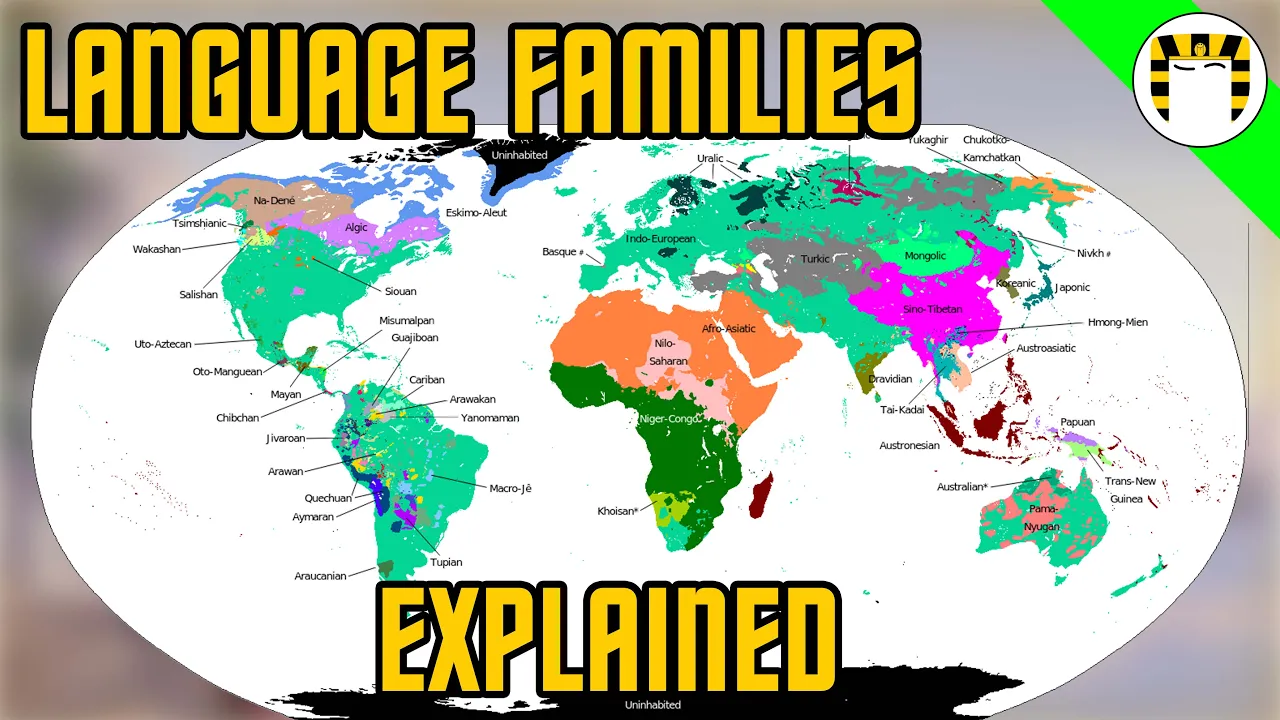
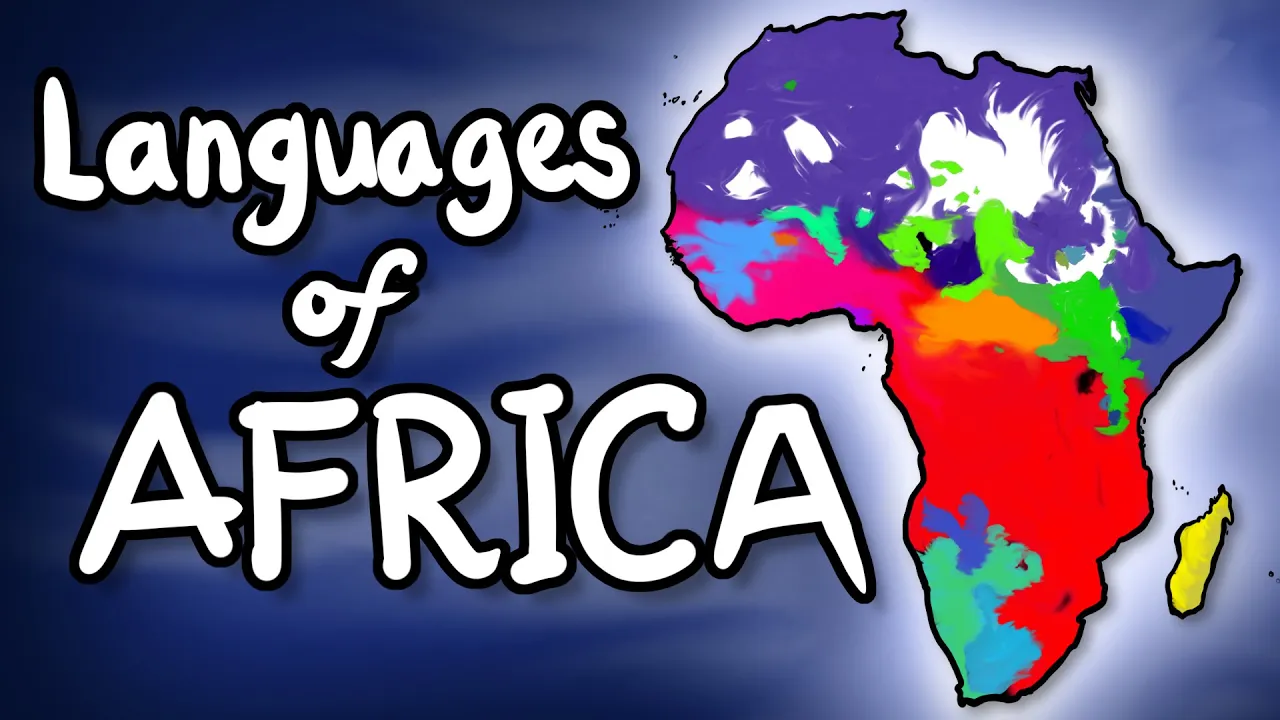
If we look at the map of the language families of Africa we can see that there are these big broad horizontal stripes that go across the continent and the topmost one of those is the Afro-Asiatic languages which, as the name suggests, hang out in both Africa and Asia. The Asiatic bit comes from the fact that Arabic, as well as being the language of millions of people in North Africa, is of course also spoken in the Arabian Peninsula. It's a member of the Semitic family along with Hebrew, Aramaic, Maltese and Amharic. A fun feature that ties together all the Afro-Asiatic languages is the fact that when you conjugate verbs, the beginnings change as well as the ends. For example Amharic is a Semitic language and it's the main language of Ethiopia. If we look at the compound imperfect of the verb säbbärä, which means 'to break' it goes as follows: Another key feature of semitic languages is the system of consonant roots, which act as a framework, so related meanings are expressed by changing the vowels in between or building bits on the beginning or the end or doubling bits – basically just playing around with this three-consonant shape and then kind of using that as a template to fill in other things to express different meanings.
So, for example, the three consonants N G R create a family of words (also in Amharic) that are connected to speaking.
Next, in the kind of splurgy pattern on the map, there is a group of languages or are they called Nilo-Saharan and they're spoken along the Nile and in the Sahara Desert. There seems to be quite a lot of suspicion in the world that linguists who looked at the languages of Africa ended up with a group of languages that they didn't really find a category for so they just put them in this one it's the kind of the "other bin". Now the next group of language is, I must admit, kind of my favorite or at least my joint favorite and that's the Niger Congo languages, which pretty much are spoken across the whole of the continent south of the Sahara. The Niger Congo language family is the biggest language family in the world in terms of number of languages. Apparently there are fifteen hundred and forty (1540) named languages in the group. Although, of course, once you start counting languages you run into the problem of like where the border lies... When one language kind of... They tend to blend into each other a lot, don't they?
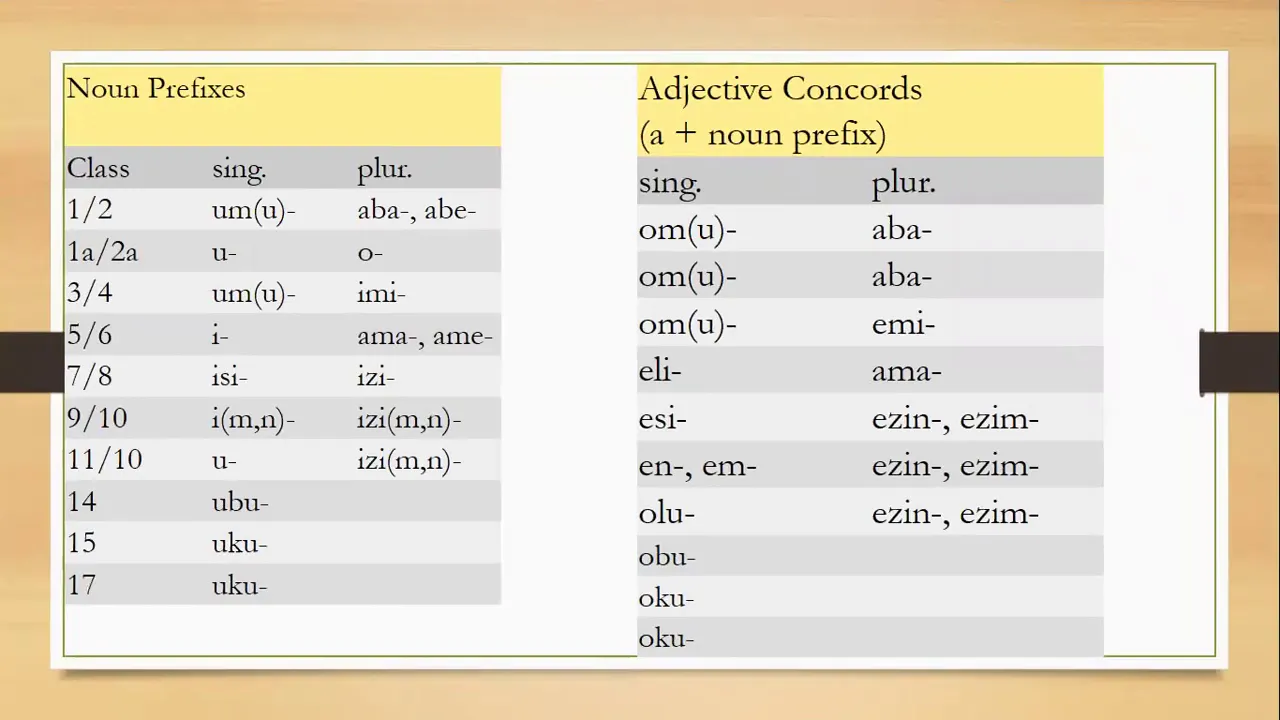
One record that is indisputable is that the Niger Congo languages are the third largest language family in the world in terms of native speakers with 700million people speaking the languages. The Niger Congo family owes a lot of its success to a group of people called the Bantu who, as soon as they discovered agriculture, decided they were off and started slowly but surely to migrate across the continent. Fast forward to today and Bantu languages – a group of really quite closely related languages – is spoken from the east coast to the west coast all the way down to the southern tip of the continent. One of my favorite things about Bantu languages is their grammar! One of my favorite things about Bantu languages is the grammar and a key component is the noun class system.
Languages like French, Spanish, Italian, Portuguese, etc. show the relationships between words by dividing all nouns into two groups – traditionally called masculine and feminine – and then having other words, such as articles and adjectives, agree in terms of gender and number. So for example in Spanish we get: Languageslike German and Russian take it one stage further by adding a third group – neuter – to the mix, so we get: Bantu languages have taken the whole noun-class thing to a whole new level entirely! Some of them have up to 19 classes of nouns which not only adjectives, but also verbs, have to agree with. For example in Swahili the word for student is in the M-Wa class which tends to contain words for people and living things. The word for new is... but if I want to say new student I have to make it agree with the M-WA class so: If I want to say "The new student has arrived" using the word... I have to put the verb into the perfect form, and then make it agree with the subject by adding 'a' at the beginning. In the plural all these agreements change so "The students have arrived" is: For other noun classes the sentence "The new 'whatever' has/have arrived" sounds like this: One of the things I like about grammar isn't kind of just like the studying of the rules and everything, which can be a bit dull!
But what you can do with it.. and one of the exciting things that you can do with the noun classes in Bantu languages is to convey new meanings.
So, for example, mtu in Swahili means 'person' but jitu means 'giant'.
Maybe that's not that exciting... It is, it is. it is! Mtoto means child, but if you change it to the KI VI class and say kitoto that means 'baby' because it's small and cute!
You can also use now classes to distinguish between words that have the same form, but different meanings, so for example – again from Swahili – the word for 'aeroplane' and 'bird' is ndege but if you use the animate agreements, so for example: That means the bird flew away, but if you do it as an inanimate: that means the plane flew away.
There's a pattern across all of the Bantu languages where using different noun classes you can express the country people are from, the person, a plural of the person, and their language. For example, a person from Botswana is called a Motswana, several of them are called Batswana and they speak Setswana.
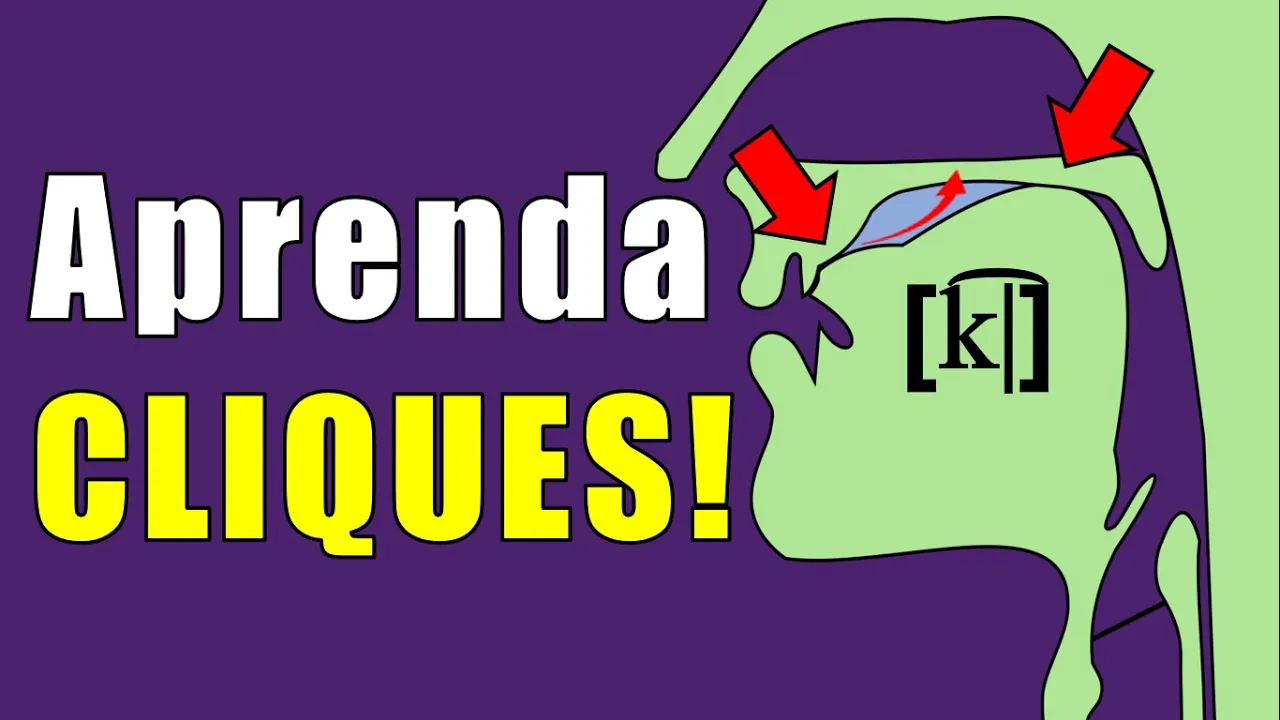
The same thing happens with: Which brings me to another thing that's absolutely fascinating about African languages, and that's their absolutely amazing repertoire of speech sounds. Now the big prize winner, the the Oscar winner for speech sounds in the world I think – one of the largest consonant inventories of any language in the world – goes to a language which rejoices under the name of!xo.!xo is also known as – rather disappointingly really – as Taa and it sounds like this: Isn't that magnificent!
The!xo language is a Khoisan language and the Khoisan people have just like taken the human vocal tract and really put it through its paces!
It's like, you know, we get a piano for Christmas – those of us who aren't Khoisan speakers – and we kind of you know go [basic notes] They play Rachmaninoff with their left hands while like banging the table legs with a drumstick and climbing inside pinging the strings and Using a violin bow to play them.
It's not just click consonants. They've got this whole repertoire of you know as I said basically what you can do with your vocal tract, they do it!
While we're on this subject I really don't like the label "click language" because although many of these languages in – especially in southern Africa the Khoisan languages in the Kalahari and in Namibia – have like this amazing array of click consonants like you know going from front to back and everything in between If you can imagine that. So you know there's: But they're not... The languages themselves aren't just about clicks. So you know, you hear the term "click language" and it's as if they're gonna be going: But they don't. They have vowels and they have other consonants so calling something like!xo – and I do love saying that – it's so calling something like!xo a click language is like saying English is a 'lisp language' because it's got θ and ð in it. You know going up to people and saying "Oh can you say.. can you lisp for me?", which I suppose some people might do... Oui Monsieur There are 40,000 feathers on a thrush's throat The Khoisan language family, by the way, isn't actually proven to be... you know... for there to be a historic relationship between all these languages. They have lots of features in common, they happen to live in the same place but there's a... there's a phenomenon called a 'Sprachbund' which you can probably guess isn't an African term – it's from German – which is like a community – a federation if you like – of languages so I like to see it as like a neighbourhood where you start borrowing sugar from each other. So what happens is that like in southern Africa there are these click consonants that that only happen there or their use in languages is unique to southern Africa and then people start borrowing them from each other. So I think it's not necessarily known if all of the Khoisan languages have always always had them, but definitely what happened is the Bantu people migrated down and kind of pushed the the Khoisan people out. They also intermarried with them and so borrowed some of their sounds so that's why in languages like Xhosa and Zulu you also get clicks – not as many and not as frequently as you get in the Khoisan languages – but there's that kind of interchange and also grammatically some of the features that we looked at of Bantu, for example the noun classes some Khoisa languages also have those so I don't know if they've been borrowed across "Excuse me, I borrowed your consonants here have a grammatical system."
There's another unique sound that I came across quite recently which is in the Shona language of Zimbabwe and it involves whistling which I can't do. I can do the sound but I can't whistle.
I've always wondered why Morgan Tsvangerai's name had a V in it and then I discovered that it's actually whistled so it's... There's also that the the word for ant in Shona is... Other common phonetic features of African languages are not necessarily unique to the continent but again they're they're kind of found a lot there. One of those is syllabic nasal so you get words like for example in Swahili: I've said elsewhere that one of my favorite sounds is the lateral fricative that you find for example in one of the ways of saying goodbye in Xhosa which is: Now that sound isn't unique to Africa you can also find it for example in Welsh Llangollen – not just in Llangollen but like in the Welsh language,and as an example,the place name Llangollen.
Navajo, Mongolian... languages like that!
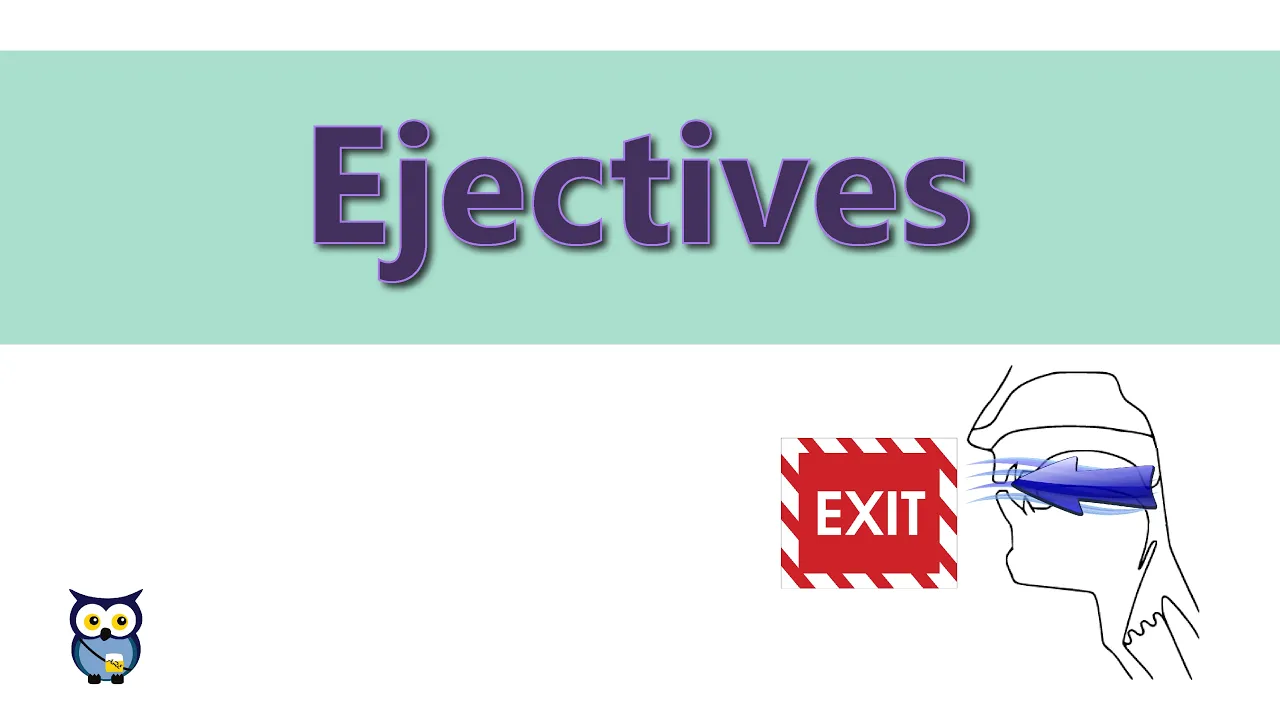
another not unique but quite frequently found in Africa and less so elsewhere set of sounds the ejectives so... for example the Xhosa word for cat is... Now those aren't unique to Africa also you get them in Navajo and lots of American languages... lots of North American languages and in the exotic climes of Lancashire especially at the ends of words that end in P T and K so like... I read recently a rather bizarre theory by someone called Caleb Everett that one of the reasons that you get these kind of clumps of languages using unusual sounds is to do with the geography. So according to him it is easier apparently to say ejective sounds in high altitude because of the lower air pressure.
Here I am at sea level and I'm perfectly capable of saying... And also it might come as news to Caleb Everett that Burnley is not on the Tibetan Plateau!
Now if you were looking at the map earlier and thought "I wonder what those Austronesian languages are. That doesn't sound very African!"
You would be right. The inhabitants of Madagascar originally migrated across the ocean from Borneo about a thousand years ago so the language they speak is very, very close – very close indeed – to languages spoken in Borneo and they actually belong to the Malayo-Polynesian group of Austronesian languages, so related to stuff like Javanese, Malay, various languages of the Philippines, Micronesia and Polynesia. So very, very different from your average African language but because of the Sprachbund phenomenon they also have syllabic nasals and some other features of especially phonology that they've borrowed from their neighbors across the straits and possibly from the original inhabitants of the island of Madagascar.
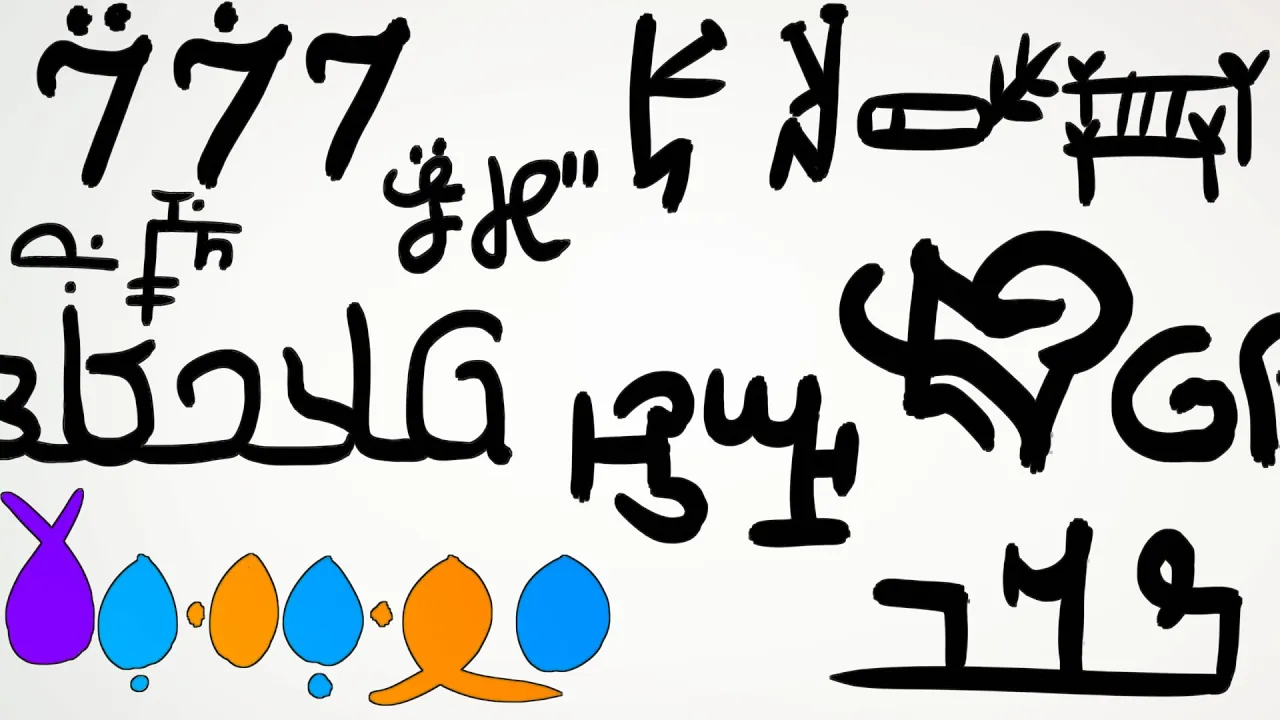
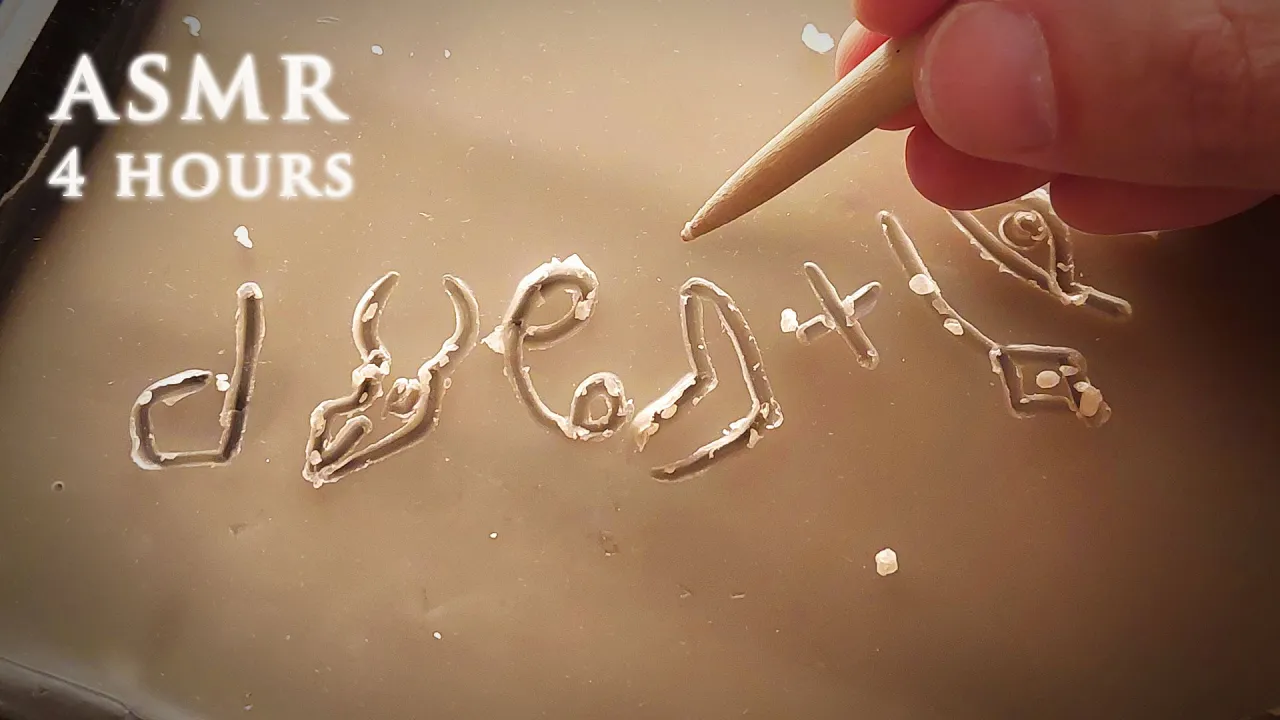
Most of the languages of Africa are written using the Latin script or the Arabic script but there are some indigenous writing systems for example the magnificent Tifinagh script which is used to write Berber languages, Tuareg, Tamazight etc. the Tifinagh script is so magnificently modern looking. It looks like a really cool designer has has come up with it recently but it's ancient.
Another cool writing system is the Ge'ez script which is used to write Amharic, Tigre, Tigrinya and other languages in Ethiopia and nearby. The Ge'ez script is what is known as an abugida. That's a writing system where there's a symbol for each syllable made up of a consonant shape modified by a vowel element. For example all syllables beginning with a 't' sound have this basic shape which on its own is read as: For other vowels we get: Amharic has ejective consonants too and they have their own shape unrelated to the pulmonic version so we get: Affricates are represented by adding a horizontal line to the corresponding stop I hope you've enjoyed this little romp around the linguistic treasures of Africa. Don't forget to subscribe to the channel if you'd like to experience more humorous takes on the world of linguistics, phonetics, phonology, polyglottery and diversity. See you soon!
Up Next

Sign Language Phonology: Parameters, Holds, and Movement
@MrSsurrency
14.6K views•2016-07-21
Constraint Interaction in Optimality Theory: Epenthesis & Deletion
@Vidyamitra
180 views•2018-08-20

Forensic Linguistics: How Language Solves Crimes | PBS
@pbsstoried
1M views•2024-01-25

Accent Expert Explains U.S. Regional Dialects | Part 1
@WIRED
9.3M views•2021-01-21
Related Study Plans & Knowledge Roadmaps
Structured learning paths in Linguistics