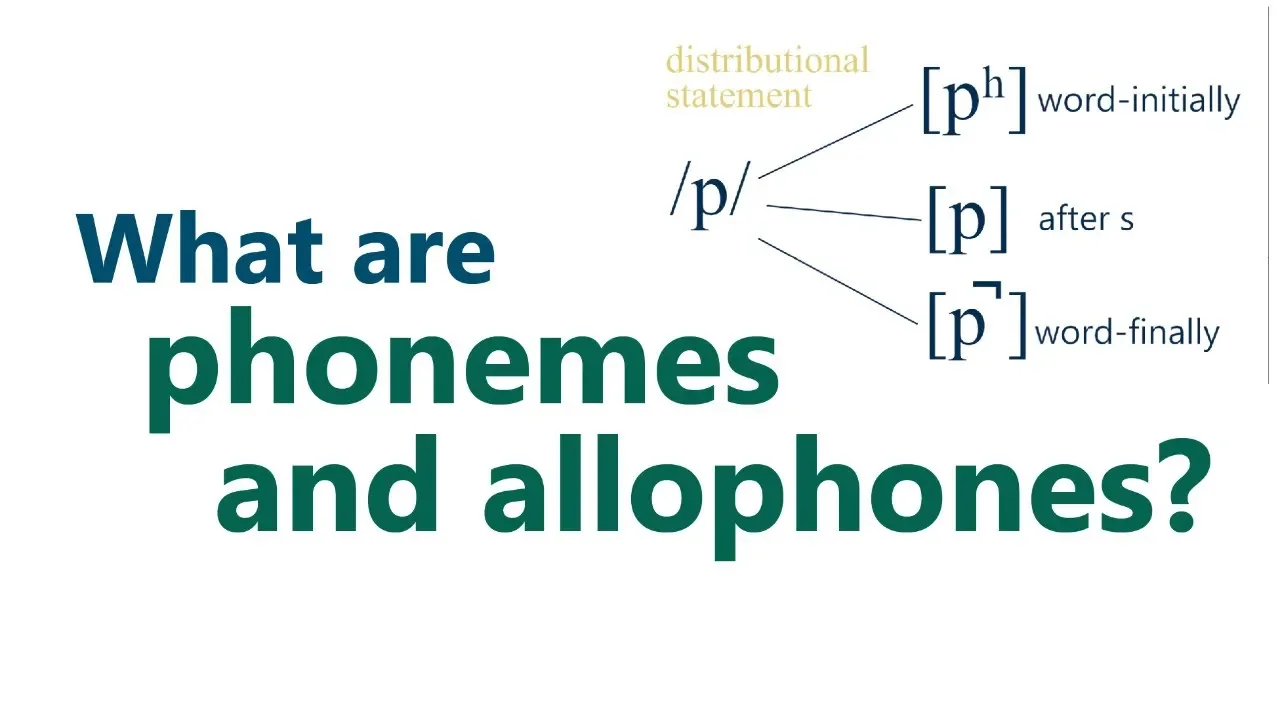

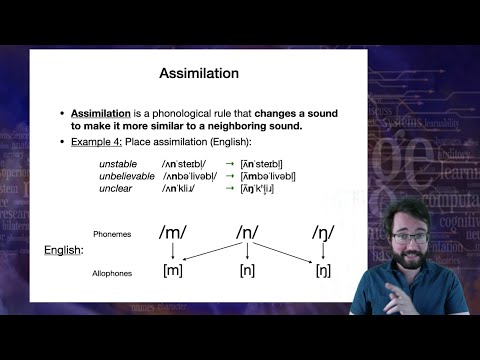

![[Phonology] Phonemes, Allophones, and Minimal Pairs](https://i.ytimg.com/vi_webp/zGM8dSLCnyc/maxresdefault.webp)
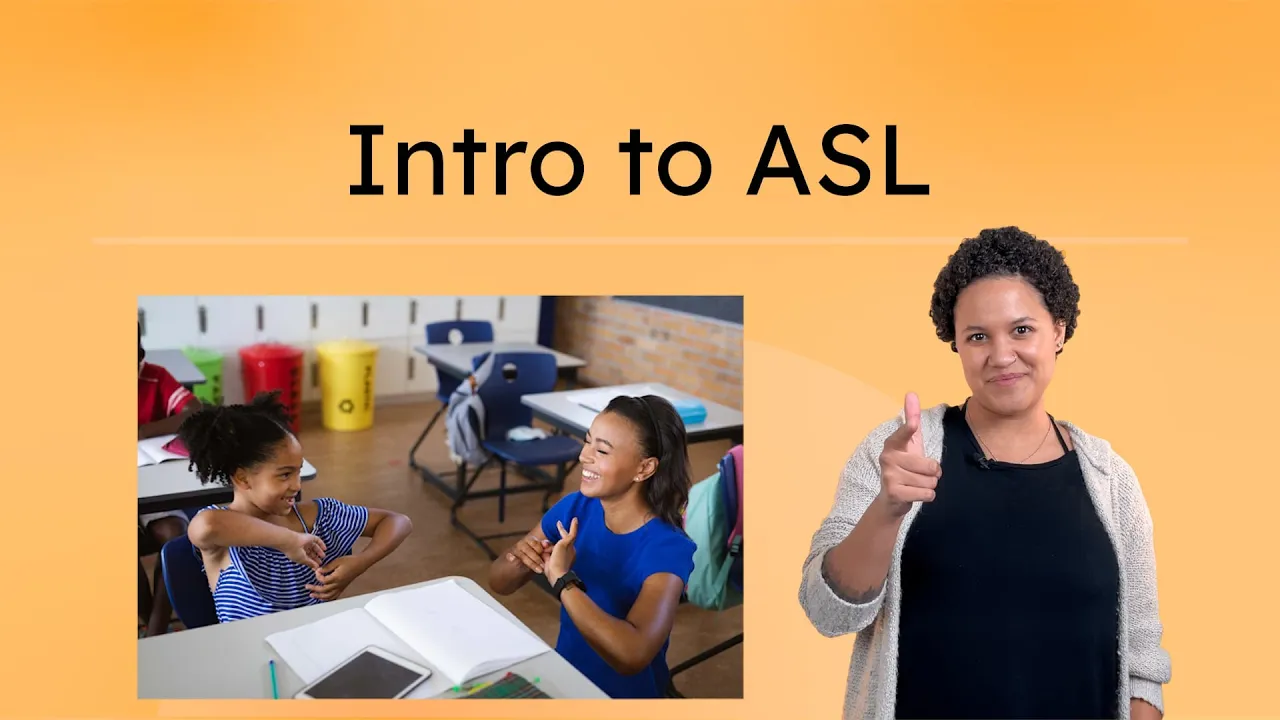





![AULA [AO VIVO] PARÂMETROS, LINGUÍSTICA E GRAMÁTICA! - FELIPE SABARÁ](https://i.ytimg.com/vi/Kd7aw5cXUlM/sddefault.jpg?sqp=-oaymwEmCIAFEOAD8quKqQMa8AEB-AHUBoAC3gOKAgwIABABGGUgZShlMA8=&rs=AOn4CLCD9Hfl9goN-s00w9XHimnhhWtaMw)





![[Neurociencias] Procesamiento del Lenguaje (Area de Broca y Wernicke)](https://i.ytimg.com/vi/PdhFGq96eg8/maxresdefault.jpg)


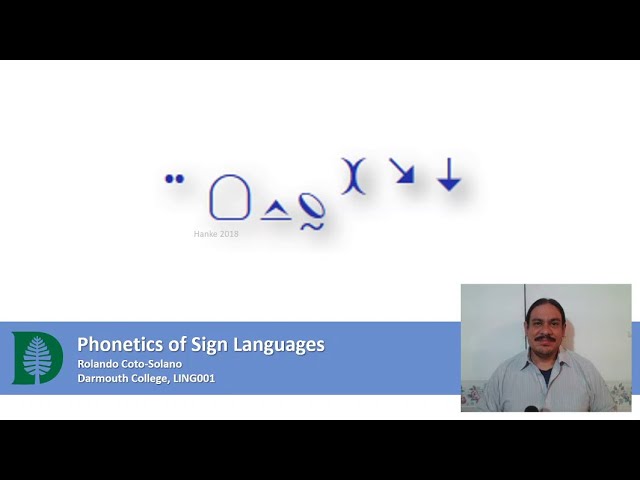


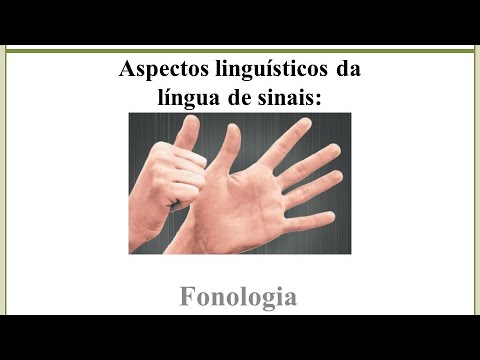
Sign languages like American Sign Language have a phonological structure similar to spoken languages, where signs can be broken down into five parameters (handshape, palm orientation, location, movement, and mouth movement), and further analyzed using Liddell & Johnson's Movement-Hold Theory which identifies that signs consist of sequential segments (holds and movements) that function similarly to phonemes in spoken language, revealing that both modalities share fundamental structural similarities in how language is organized and produced.
Sign Language Phonology: Parameters, Holds, and Movement
Added:Basic concepts of spoken language phonology, including phonemes, allophones, and minimal pairs.
An introductory understanding of American Sign Language (ASL) as a natural, rule-governed visual-gestural language.
The linguistic concept of 'duality of patterning' (how meaningless units combine to form meaningful units).
Familiarity with William Stokoe's traditional parameters of ASL (handshape, location, and movement).
Advanced formalisms of sign phonology, specifically the Liddell and Johnson Movement-Hold Model and the Prosodic Model.
Phonological processes in sign languages, such as assimilation, reduction, metathesis, and deletion during natural discourse.
Sign language morphology, exploring how phonological parameters are manipulated to mark grammatical aspect, agreement, and compounding.
Cognitive and neurolinguistic processing of visual-spatial language in the brain compared to auditory-vocal languages.
Transcription systems for sign language phonology, such as the Hamburg Notation System (HamNoSys) or SignWriting.
14.6K views158likes7:42Original Release: 2016-07-21
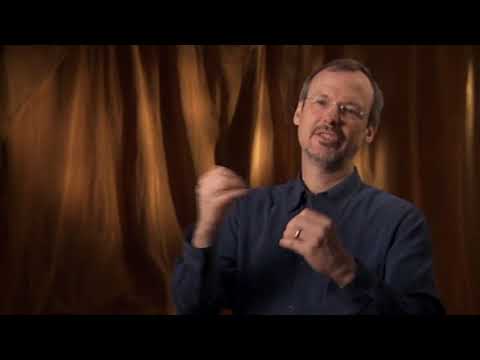
now let's take a look at sign language phonology in particular because obviously since phonology tends to be the study and spoken language of the smallest little bits of language which are usually just sounds then sign language is going to have something different because sign language doesn't use sounds well we see that spoken language phonemes particular sounds can be broken down into parts so you can take the phoneme the S sound the "sss" sound and we can notice where exactly the tongue is when we make the sound we can notice whether or not air comes out of the nasal cavity when we make the sound we can notice whether our vocal cords are vibrating or not when we make the sound we can figure out how exactly we're making the sound whether we're stopping the sound the air from coming out or creating friction or sending the the the air out the nose so the location of the tongue the nationalization whether it's voiced how exactly it's articulated are all sort of features of phonemes in spoken language well Stokoe notice this and he thought of signs as sort of each individual phonemes and he said well look: each sign has parameters and you can take these parameters the handshape, the palm orientation, the location the movement and in certain signs the mouth movement that goes with a sign and but based on these five parameters we can create a sign the parameter on its own doesn't mean anything for example if you "the middle of the chest" has no meaning it depends on what you do there if you point to yourself that means I if you have an open hand and you rub the middle of the chest that means please or enjoy but the middle of the chest itself doesn't mean anything the parameter doesn't mean anything until you put it with the other parameters with a particular handshape with a particular location with a particular movement then they can mean something together and so Stokoe thought that this is how we should think about signs we should break them up into their individual parameters this is still very common i'm sure you learned about the parameters of signs at some point when you learned we you first learn American Sign Language but really this is an old problem this happened in spoken language - and spoken language at first people just heard words they didn't realize you could take the words and break them into parts but when they did they broke them into syllables they didn't notice that the syllables could then further broken down into sounds and of course now linguists do that linguists listen to the spoken language and we break them down into individual sounds well in sign language they needed to do the same thing at first they noticed that there were signs and over time Stokoe said wait these signs can be broken into parameters the five different ways we can look at the signs but then even within the parameters there seem to be sequences sequences of movements that happen within the parameters within the sign itself so signs have a sequence they don't all happen at once they start in one place and oftentimes there's some sort of movement they end in another place you probably remember when you were first looking at parameters back you had to decide that what's the location of the sign and if you take a sign like hungry you said well it starts in the center of the chest but it ends down almost on over the belly so what is the location where there are two locations Liddell and Johnson were two linguists who develop movement hold theory and they said this is the way we're going to describe the fact that signs can be broken up into sequences then the whole theory says look signs start and stop throughout the sign there's a period of time when the the sign is not moving and that's called the hold and then there are periods of time when the sign is moving and that's the movement so we have this X which is used to represent a brief hold a brief stop M which is used to represent the movement of the hands and then H which is used to represent a full holder or a longer stop and based on these brief holds these movements and these stops we see that signs have structure they have a sequence a beginning a middle and an end now not all signs have this sequence of hold movement and hold but this is a pretty common sequence of signs there'll be an original stopping point of a sign a hold for example in the sign GOOD you start the same good writing in front of your chin with your hand held there for a brief second then the sign moves downward in out into the space in front of your body where it again holds so there's a hold of the chin the movement downward and then a hold in front of the body that's how you sign the sign good notice the location of the first hold and the location of the second hold are different the palm orientation the first hold and the palm orientation of the second hold are different and the first hold your palm is facing back towards you and in the second hold your palm is facing upward as you move from good in front of the chin with the palm back to good in front of the body with the palm facing upward there's no particular mouth movements that's associated with the word good so we won't worry about a mouth movement for that but what Liddell & Johnson discovered in this movement hold theory is that you can break signs up into individual parts there weren't just five parameters of the sign but each sign had to be thought of in terms of what happens first what happened second what happens third that's not always a hold movement and hold sometimes it will be a complex system of hold movement hold movement hold or perhaps just a hold or just a movement but regardless there's a sequence that happens in a sign and we've got to look at the parameters that happen in each hold in each part of the sign so if we were to look at the sign goat we can, we can then draw out exactly how the sign is formed it starts with a hole that the chin with your hand in the S shape with your palm facing toward the body with no mouth movement there's been a movement that movement is directly upward as the handshape opens to the second hold the second hold happens when the movement finishes right in front of the forehead with the hand now in a 2 with the palm orientation still facing back toward the head toward the body and with no mouth movement so that's the sign for goat so what these link was discovered what Liddell & Johnson discovered is that each of these segments the first hold the movement and then the second hold each of these segments is like a phoneme with its own individual features so just as an english word moves between maybe the sound s and then the sound tea and then the sound o and then the sound p so S-T-O-P you can look at the individual features of the S sound where's the tongue what's happening with the vocal cord the individual features of the T sound where is the tongue what's happening with the vocal cord what's happening in the nose how is the sound created and then with the AA and the P sound you can do the same thing well in Sign Language you can look at each individual hold in each individual movement and we can see that based on the hold and the movement there will be various features location handshape palm orientation and perhaps mouth movement so what we've discovered is that ASL happens in a way that's very similar to English just as English moves from consonants two vowels so ASL moves from stops to holds just as each individual phoneme in English each individual sound in English can be analyzed so each individual segments in ASL sign can be analyzed according to its handshapes, its palm orientation, its movement, etc. so as you think about english and ASL phonology we see that there really are a lot of similarities not so many differences
Up Next

44:17
Signed Languages: ASL Linguistics & Grammar | MIT Intro to Linguistics
@mitocw
10.7K views•2023-01-27
36:52
Constraint Interaction in Optimality Theory: Epenthesis & Deletion
@Vidyamitra
180 views•2018-08-20

5:02
ASL Compounds: Morphology, Phonological Rules, and New Meanings
@MrSsurrency
10.7K views•2016-07-21

21:32
Accent Expert Explains U.S. Regional Dialects | Part 1
@WIRED
9.3M views•2021-01-21
Related Study Plans & Knowledge Roadmaps
Structured learning paths in Linguistics
linguistics
Optimality Theory: Tableaux & Constraints
01Phonological Basics: Sounds, Syllables & Rules
02Foundations of Optimality Theory: GEN, CON, and EVAL
03The Constraint Inventory: Markedness vs. Faithfulness
+ 2 more learning modules
15h5 modules
Explore Roadmap
linguistics
Morphosyntactic Alignment: S, A & P Systems
01Foundations of Syntax: Transitivity and Arguments
02The Linguistic Variables: Mapping S, A, and P
03Nominative-Accusative Alignment
+ 3 more learning modules
12h6 modules
Explore Roadmap
linguistics
Analyzing Sign Language: Phonology & Syntax
01Foundations of Sign Language Linguistics
02Phonology: The Five Parameters of a Sign
03Morphology: Word Formation and Classifiers
+ 2 more learning modules
14h5 modules
Explore Roadmap
linguistics
Pragmatics: Speech Acts, Grice & Politeness
01Introduction to Pragmatics: Meaning in Context
02Grice’s Cooperative Principle & Implicature
03Speech Act Theory
+ 2 more learning modules
14h5 modules
Explore Roadmap