









![Fonética e Fonologia - Aula 1 [Prof Noslen]](https://i.ytimg.com/vi/BOj2xCwIo8M/sddefault.jpg)




![The Greatness of Hangeul Part1-1 Hunminjeongeum 1445 [KBS WORLD SELECTION]| KBS WORLD TV 251118](https://i.ytimg.com/vi/TQ9M2cCdcNw/maxresdefault.jpg)
![[한글날 특집] 마누라가 이런 뜻이야? 깜짝 놀랄 겁니다 (정수아 수능전문 국어학원 정수아 강사)](https://i.ytimg.com/vi/KFIN3zpEg90/maxresdefault.jpg)


![[해외감동사연] "바벨탑의 저주" 왜 한글만 예외였습니까](https://i.ytimg.com/vi/-u_q8GngDwU/maxresdefault.jpg)




![[해외감동사연] 한글을 본 그날, 그의 시선이 달라졌다. “이 위대한 글자를 대체 누가 만든 거죠?” 미국 언어학 교수가 한글에 경외를 표한 이유](https://i.ytimg.com/vi_webp/zCa3EE4QNSg/maxresdefault.webp)
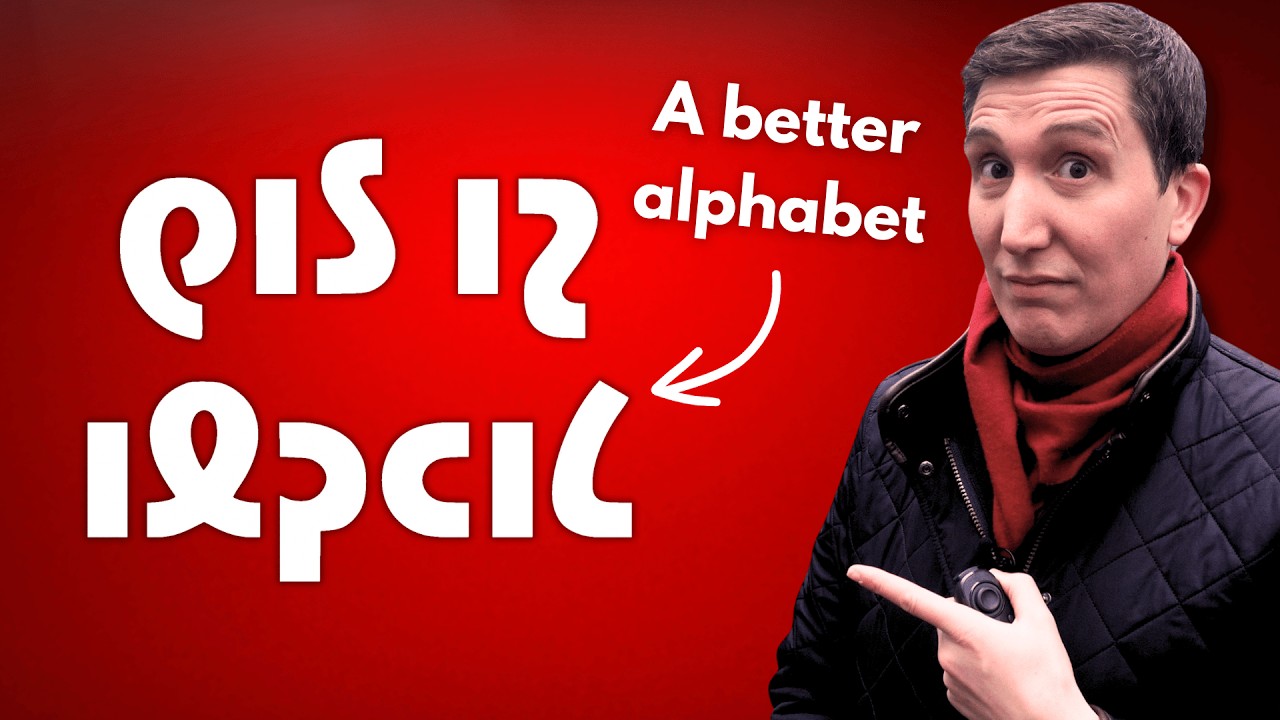
A featural alphabet is a writing system where each character's shape reflects its phonetic features, such as lip position, tongue placement, and vocal tract configuration, making it easier to learn and use; King Sejong the Great of Korea invented Hangul in the 15th century as a more efficient alternative to Chinese characters, creating a system where consonants and vowels are arranged in separate blocks within each syllable, with similar-sounding letters sharing similar shapes based on how they are produced in the mouth.
Featural Writing Systems: How Hangul Revolutionized Korean Script
Added:Understanding the basic classification of writing systems, such as logographic (e.g., Chinese Hanzi), syllabic, and alphabetic systems.
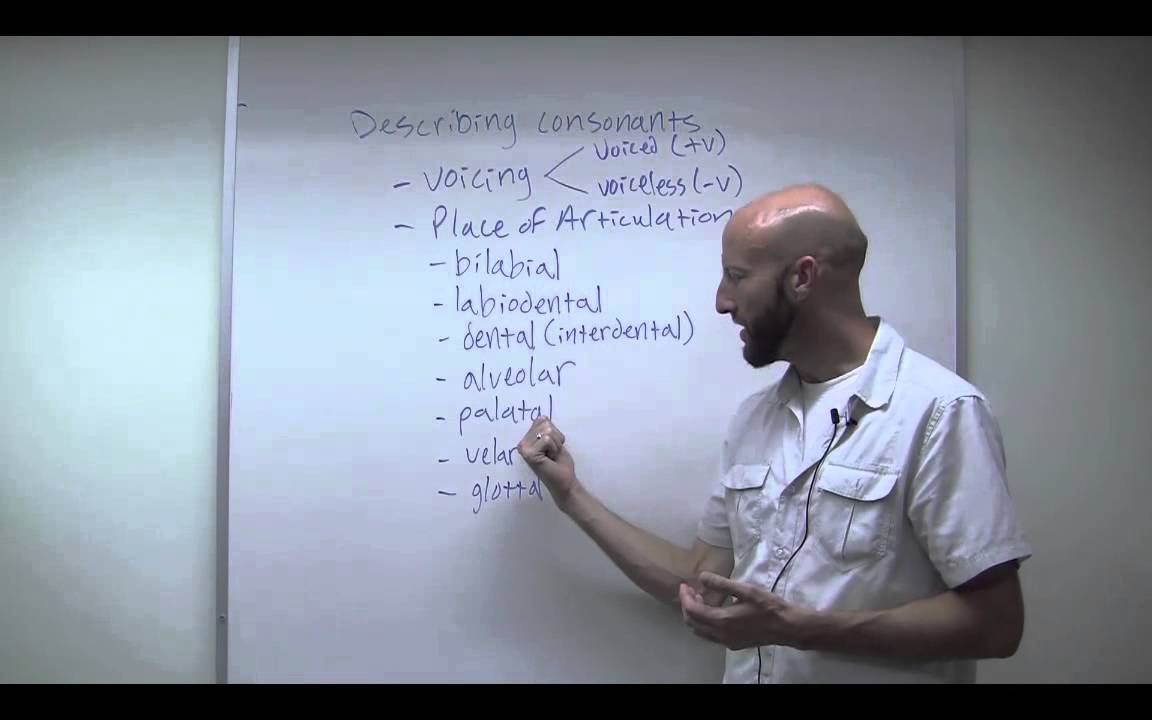
Fundamental concepts of articulatory phonetics, specifically how speech sounds are classified by place and manner of articulation.
The historical context of the Korean Peninsula prior to the 15th century, particularly the use of Classical Chinese (Hanja) and the resulting literacy gap among the populace.
The distinction between phonemes (the mental representations of sounds) and graphemes (the written symbols that represent them).
A deep dive into the 'Hunminjeongeum' (The Proper Sounds for the Instruction of the People), the historical document that introduced and explained the design of Hangul.
An analysis of other constructed or featural scripts, such as the Shavian alphabet or Pitman shorthand, to compare their design efficiency with Hangul.
The sociopolitical history of Hangul's adoption, including the initial resistance from the scholarly elite (yangban) and its eventual rise to prominence.
The computational linguistics of Hangul, examining how its unique syllabic block structure is handled in modern digital typography and character encoding (e.g., Unicode).
891.5K views21.4Klikes4:24Original Release: 2015-10-23
You guys love reliving the invention of the Greek and Roman alphabets, like it’s some climax in the history of writing. But real language nerds drool over Korean, and here's why.
Another time, another king. This time in a Korean palace. He presents himself as King Sejong. As you get a grip on your surroundings, you begin to tell him of your journeys. Yet, with a sweeping gaze, the king looks right past you.
You’ve been out for a very long time, over 1000 years. The world has come so far, and the scripts you once knew have, too. He reminds you of the old Chinese logographs and sound-meaning combinations. Those are still useful to his court, to a point. You see, Chinese has these nice word units, one after another. But Korean, he boasts, has these elegantly complex words with different pieces and endings. Fitting Chinese writing to Korean grammar hasn’t been easy.
He tells you of a people across the sea who’ve gone through a similar struggle. The Japanese simplified Chinese characters by turning them into a fixed syllabary, which they now use alongside the Chinese characters. So they have these syllable characters and these thousands of Han characters. They use the Han characters for the meaning-heavy components, the vocabulary terms. Then they use the syllabary to write little grammatical words and word pieces or new vocabulary words that don’t historically have their own Chinese logograph.
(Such a complicated system, gentlemen!)
The king has an almost puzzled look, like he’s holding back a punchline. He recounts how, in Old Japan, women wrote entire books using only the syllable characters, because writing with the traditional Han characters was seen as the masculine thing to do.
But he knows of another land. He’s heard exotic tales of the West, where people write out all of their sounds logically. He pauses. He can’t quite grasp this himself. You snicker as you think back on how you saw the alphabet develop with your own eyes in your journeys.
You would know. So you sit down and show him how to write every vowel and consonant with the alphabet. A couple dozen shapes and you can write any sound! You smile and think, so simple! But he lets out an unimpressed sigh.
Why do all the characters look so different, so haphazard? I mean, you make “f” and “v” by putting your bottom lip against your top teeth, the only difference is that your throat vibrates when you say “v”. He quizzes you - why do you write “f” and “v”? And he goes on interrogating you - what about “b”? Why does it look that way, when it’s just taking the “v” sound and saying it through smacked lips?
Seems you underestimated the king. He doesn’t want any old alphabet. He wants a writing system that shows the various features of sounds - that the sound is made in your throat, against your teeth, made with your lips, and so on. He puts his brightest scholars to work, giving them the humble name of the Hall of Worthies. In go the experts, and out comes another “Major Moments in the History of Writing”!
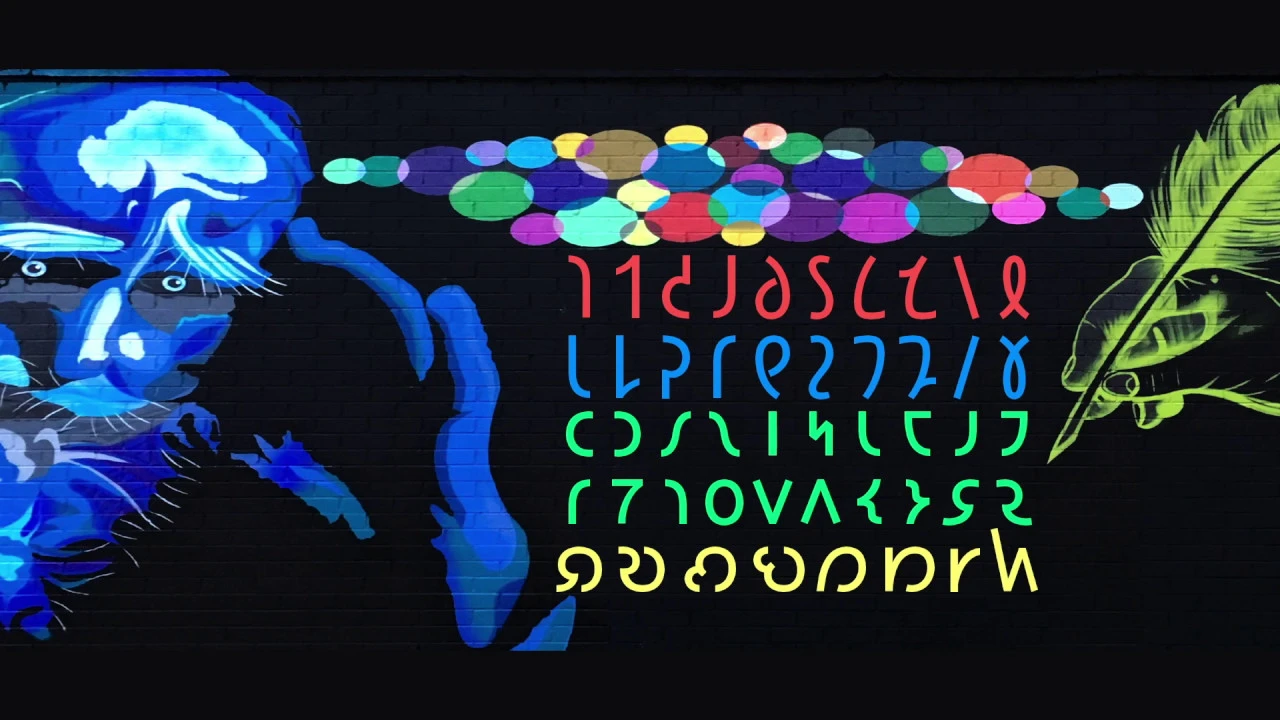
They develop Korean Hangul, a featural alphabet. Every syllable gets separated out into its own block. The syllable’s consonants and vowels will be written side-by-side within that block. Each consonant and vowel letter inside that block will be shaped according to its features. So here are the consonants that get pronounced with the lips. See the similar lip shape? Here’s /g/, and here’s /k/. Again, similar sounds, similar shape.
The featural alphabet was so simple and straightforward that one of the king’s historians almost dared people to learn it: “if you’re smart, you can learn it in one morning. If you’re a fool, it’ll take you ten days.” Not everyone’s jumping on the Hangul easytrain. Community-accessible writing bothers traditionalists, who skip out on the innovation and keep using Chinese characters fitted to Korean, Hanja or Han characters, even into the 1900s. Still, for the rest, writing is easier than ever.
It has its first rockstar. It even gets its own holiday!
Oh, writing! You’ve come a long, long way from pictographs in a cave.
Up Next

1:55
Alphabets vs Abjads vs Abugidas: Writing System Differences
@humanteneleven
476.3K views•2026-01-11
36:52
Constraint Interaction in Optimality Theory: Epenthesis & Deletion
@Vidyamitra
180 views•2018-08-20
4:00
Optimality Theory: Grammar as Ranked Constraints (Linguistics)
@NativLang
48.3K views•2012-10-04

21:32
Accent Expert Explains U.S. Regional Dialects | Part 1
@WIRED
9.3M views•2021-01-21
Related Study Plans & Knowledge Roadmaps
Structured learning paths in Linguistics
linguistics
Optimality Theory: Tableaux & Constraints
01Phonological Basics: Sounds, Syllables & Rules
02Foundations of Optimality Theory: GEN, CON, and EVAL
03The Constraint Inventory: Markedness vs. Faithfulness
+ 2 more learning modules
15h5 modules
Explore Roadmap
linguistics
Morphosyntactic Alignment: S, A & P Systems
01Foundations of Syntax: Transitivity and Arguments
02The Linguistic Variables: Mapping S, A, and P
03Nominative-Accusative Alignment
+ 3 more learning modules
12h6 modules
Explore Roadmap
linguistics
Analyzing Sign Language: Phonology & Syntax
01Foundations of Sign Language Linguistics
02Phonology: The Five Parameters of a Sign
03Morphology: Word Formation and Classifiers
+ 2 more learning modules
14h5 modules
Explore Roadmap
linguistics
Pragmatics: Speech Acts, Grice & Politeness
01Introduction to Pragmatics: Meaning in Context
02Grice’s Cooperative Principle & Implicature
03Speech Act Theory
+ 2 more learning modules
14h5 modules
Explore Roadmap