









![Phonetics: Intro to linguistics [Video 2]](https://i.ytimg.com/vi_webp/GLBsvdaR_ow/maxresdefault.webp)




![Phonology: Intro to linguistics [Video 3]](https://i.ytimg.com/vi_webp/1JYahvKUvPU/maxresdefault.webp)

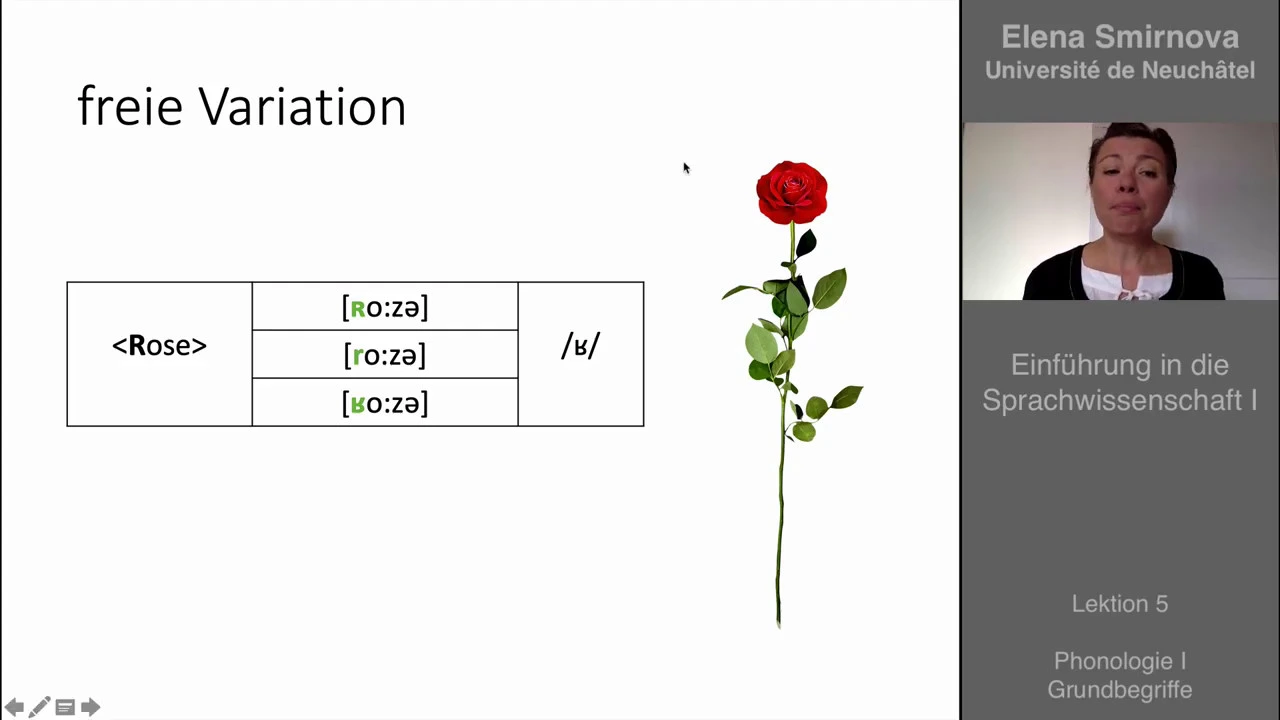




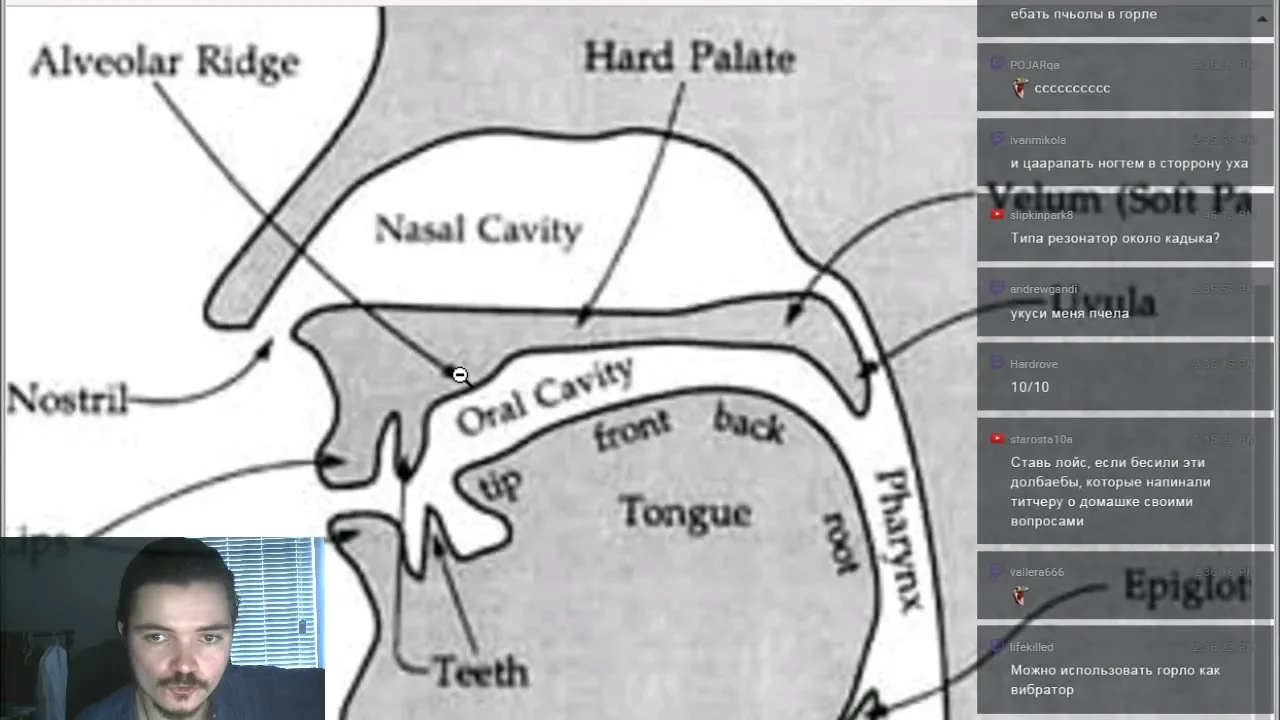
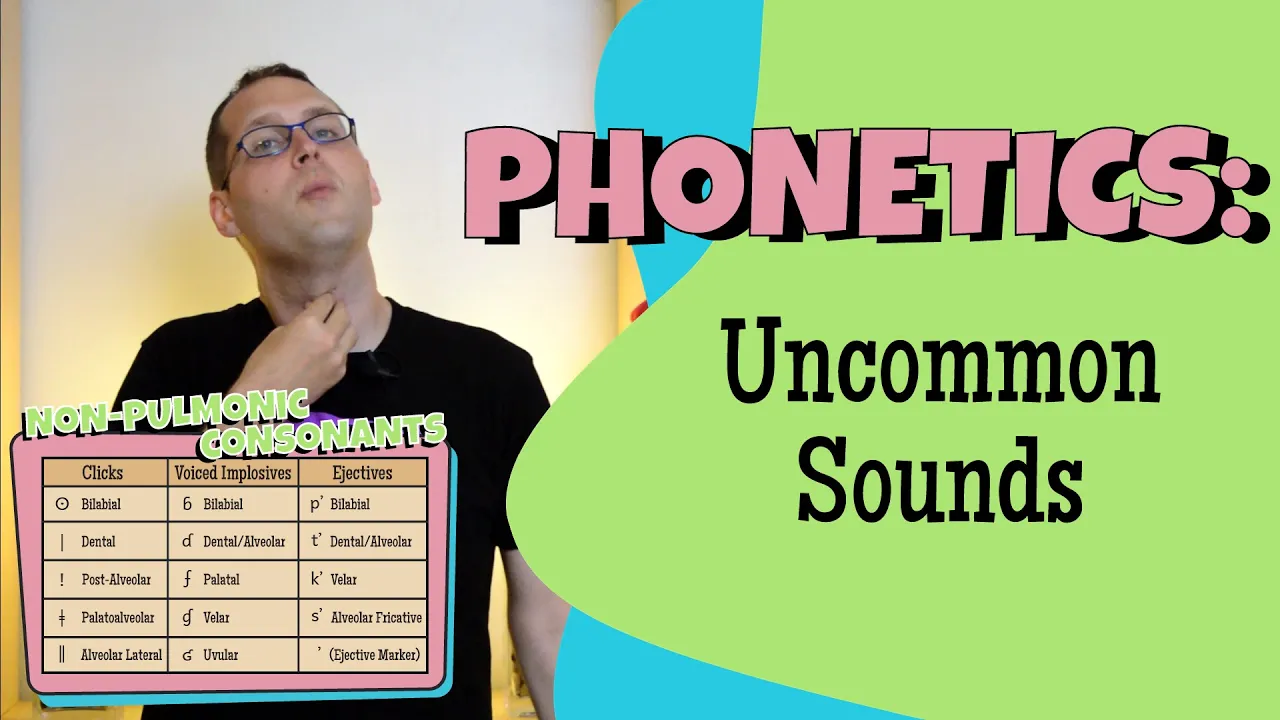
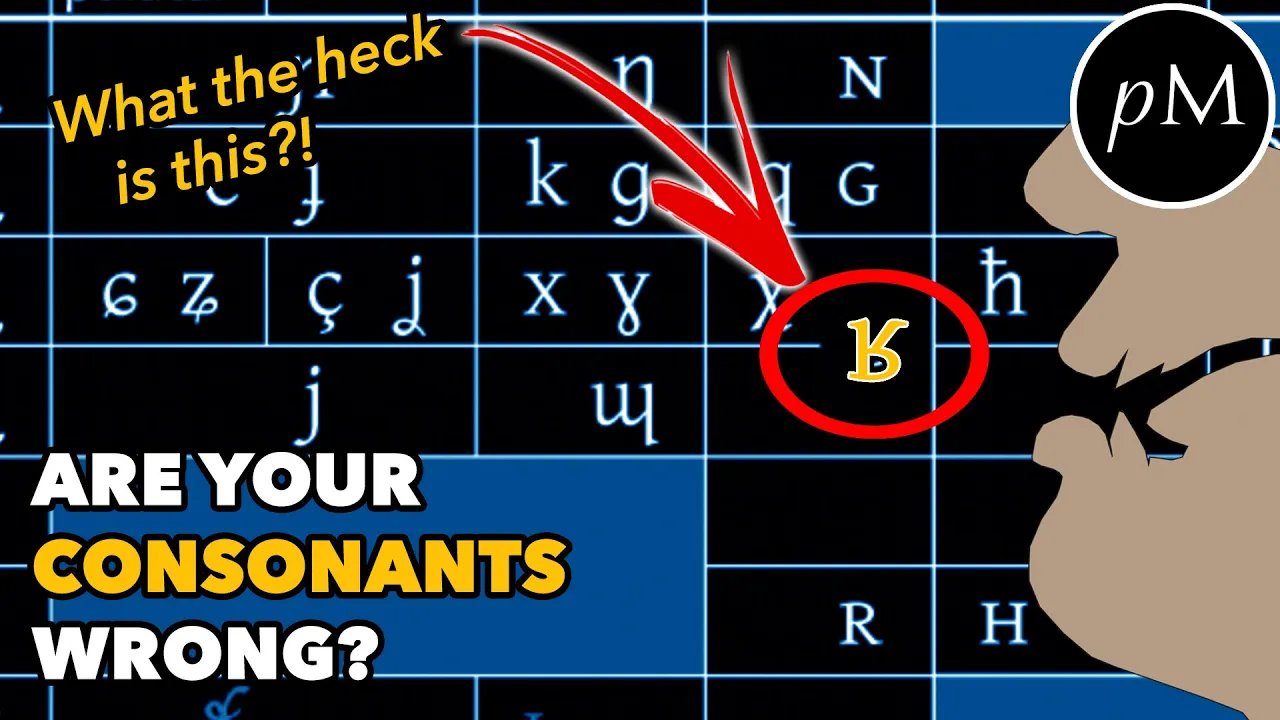

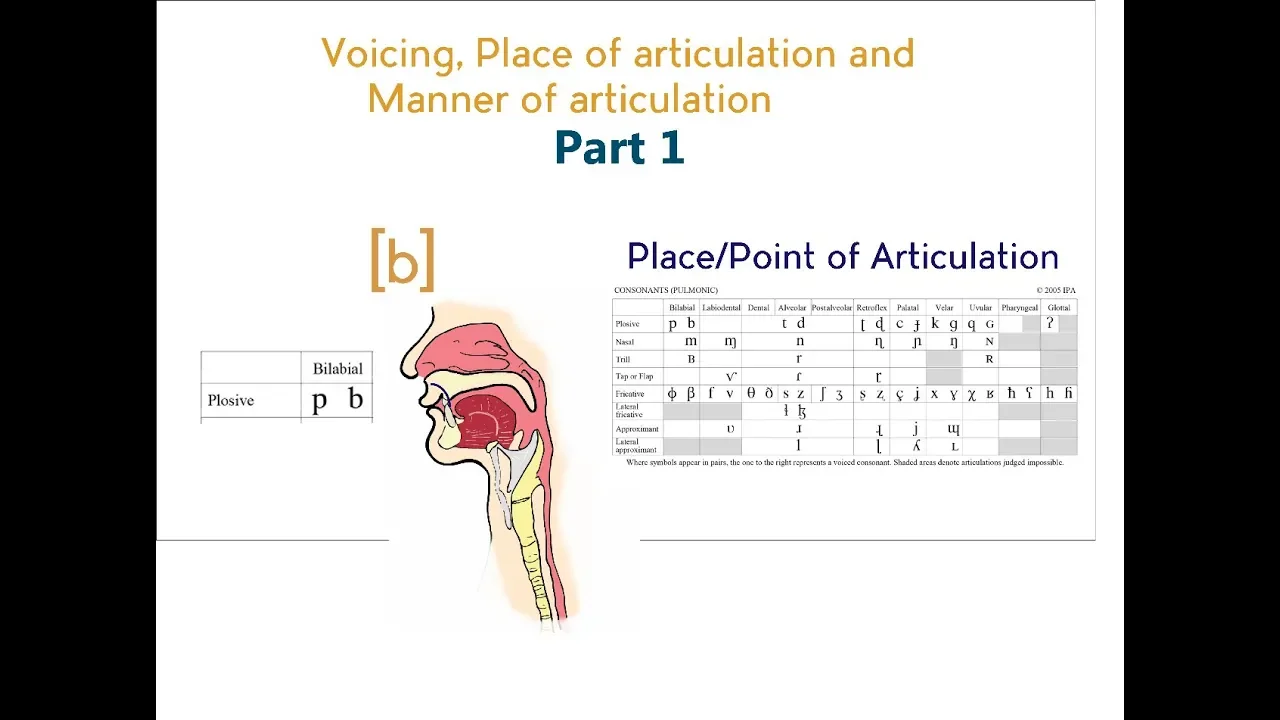
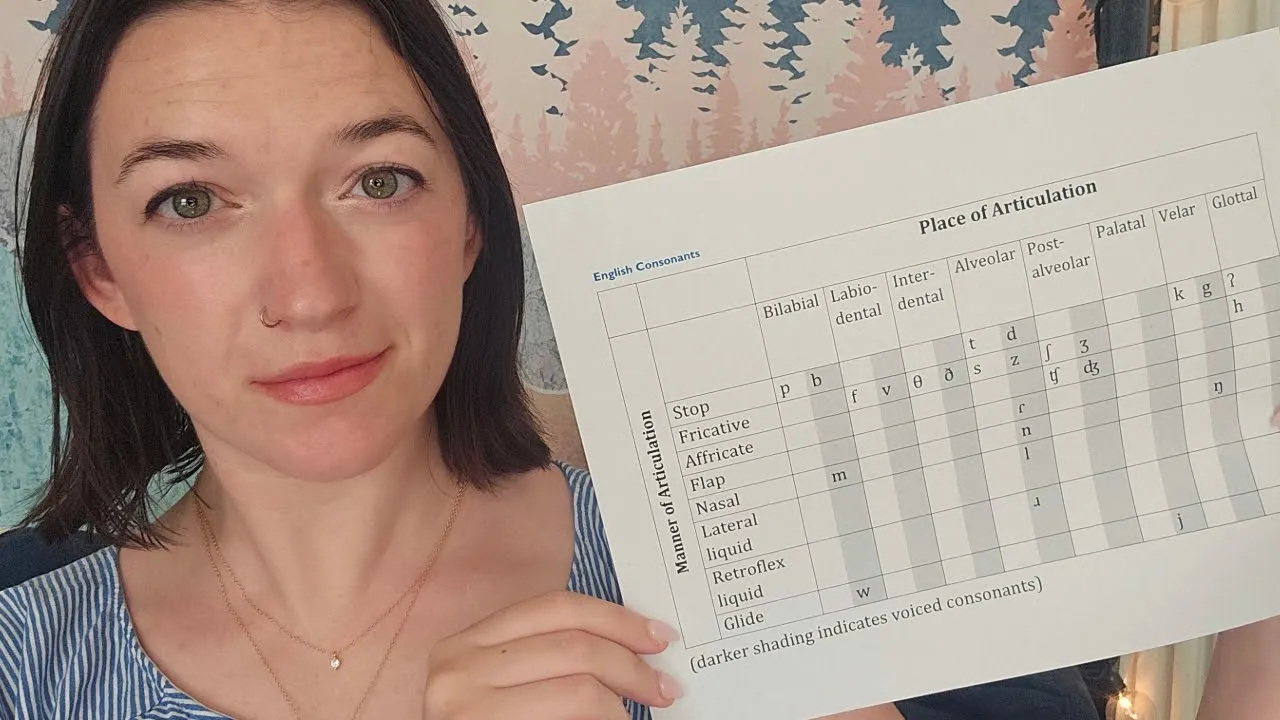
Linguists describe consonant sounds using three criteria: voicing (whether vocal folds vibrate, e.g., [z] is voiced while [s] is voiceless), place of articulation (where airflow is constricted in the vocal tract, such as bilabial [p], alveolar [t], or velar [k]), and manner of articulation (how airflow is constricted, including stops [p,t,k], fricatives [f,v,θ,z], affricates [ʧ,ʤ], nasals [m,n,ŋ], liquids [l,ɹ], glides [w,j], and taps [ɾ]). In North American English, the alveolar tap [ɾ] appears in words like 'butter' instead of a full stop.
Articulatory Phonetics: Consonants Explained
Added:The basic definition of phonetics as the study of speech sounds, distinguishing phonetic sounds from spelling and orthography.
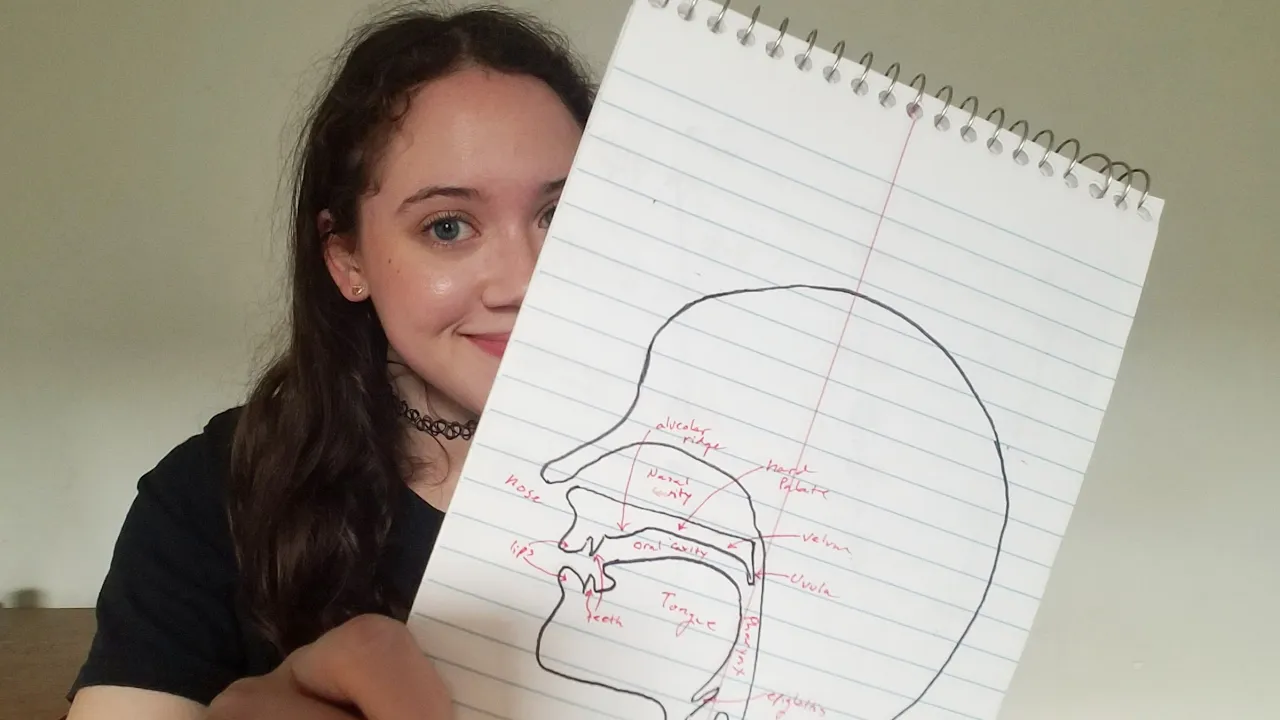
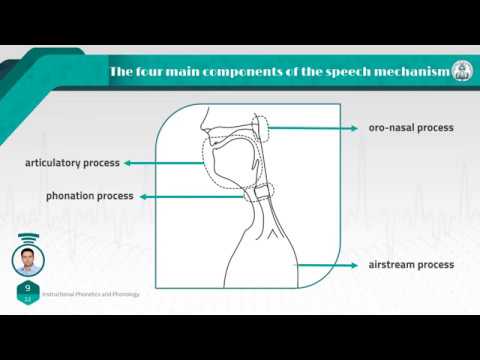
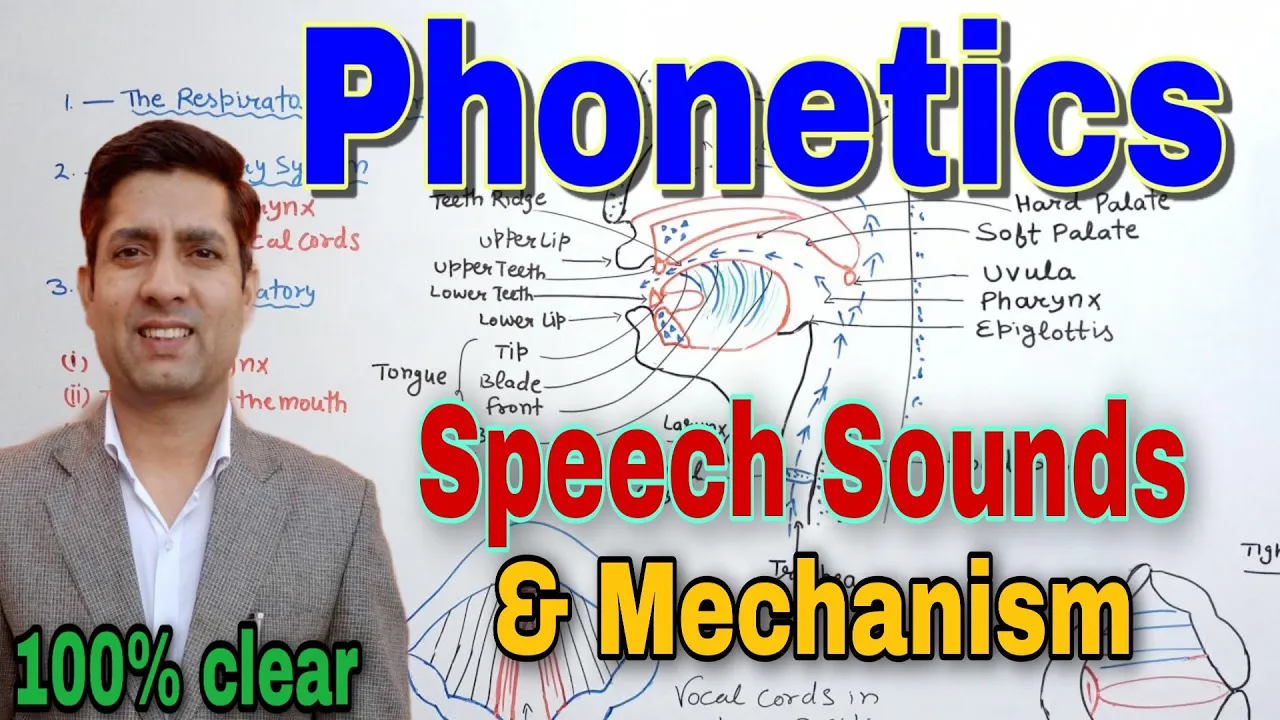
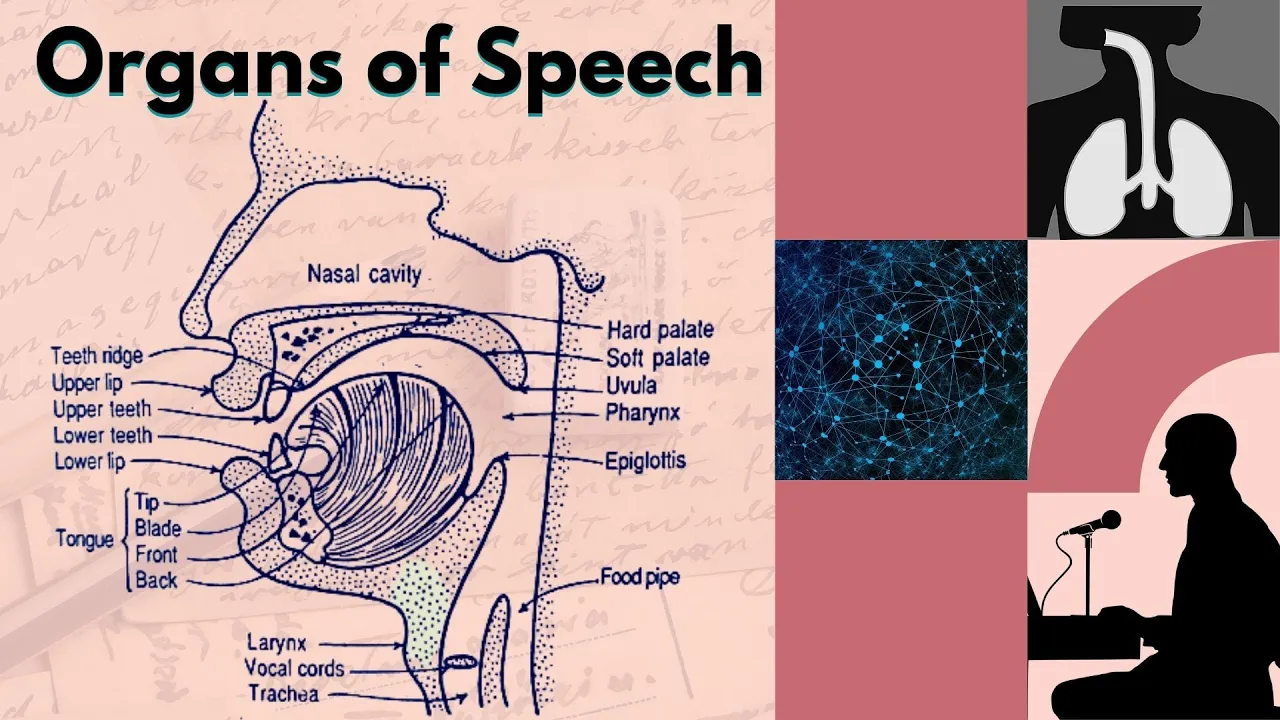
The anatomy of the human vocal tract, including key structures such as the vocal folds, tongue, teeth, alveolar ridge, hard palate, and velum.
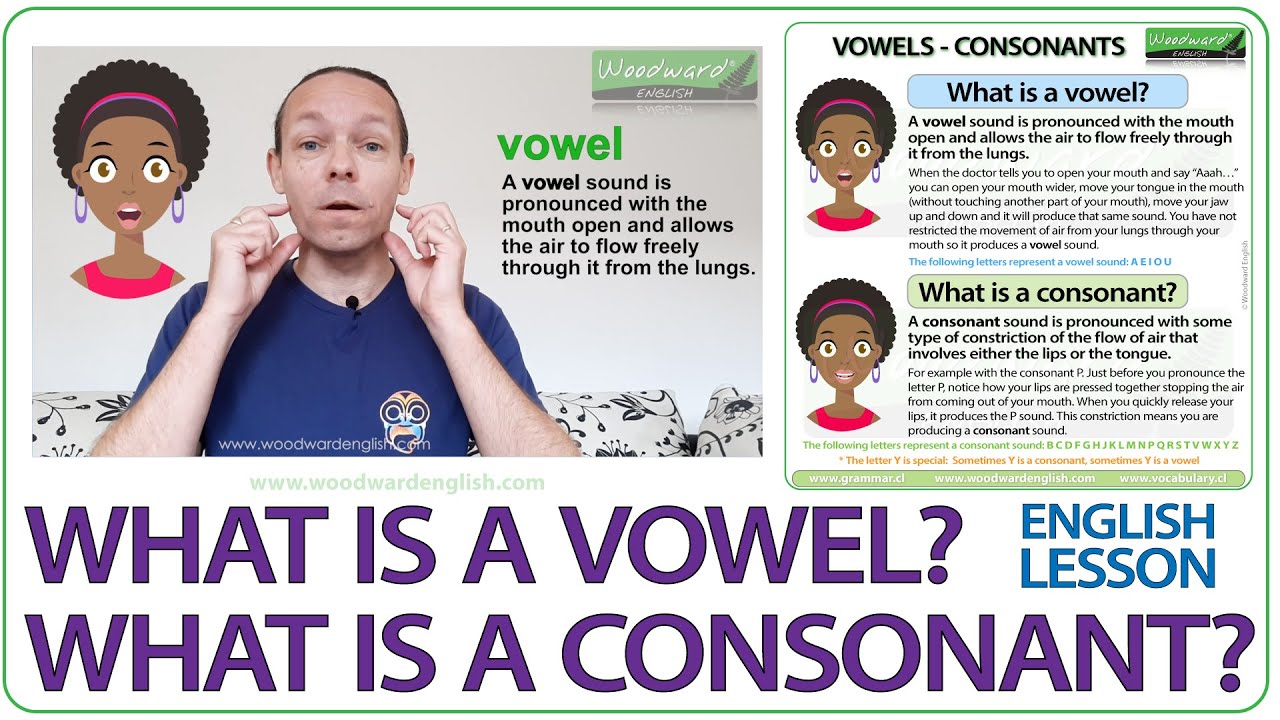
The fundamental distinction between consonants (which involve a constriction or closure in the vocal tract) and vowels (which feature a relatively open vocal tract).
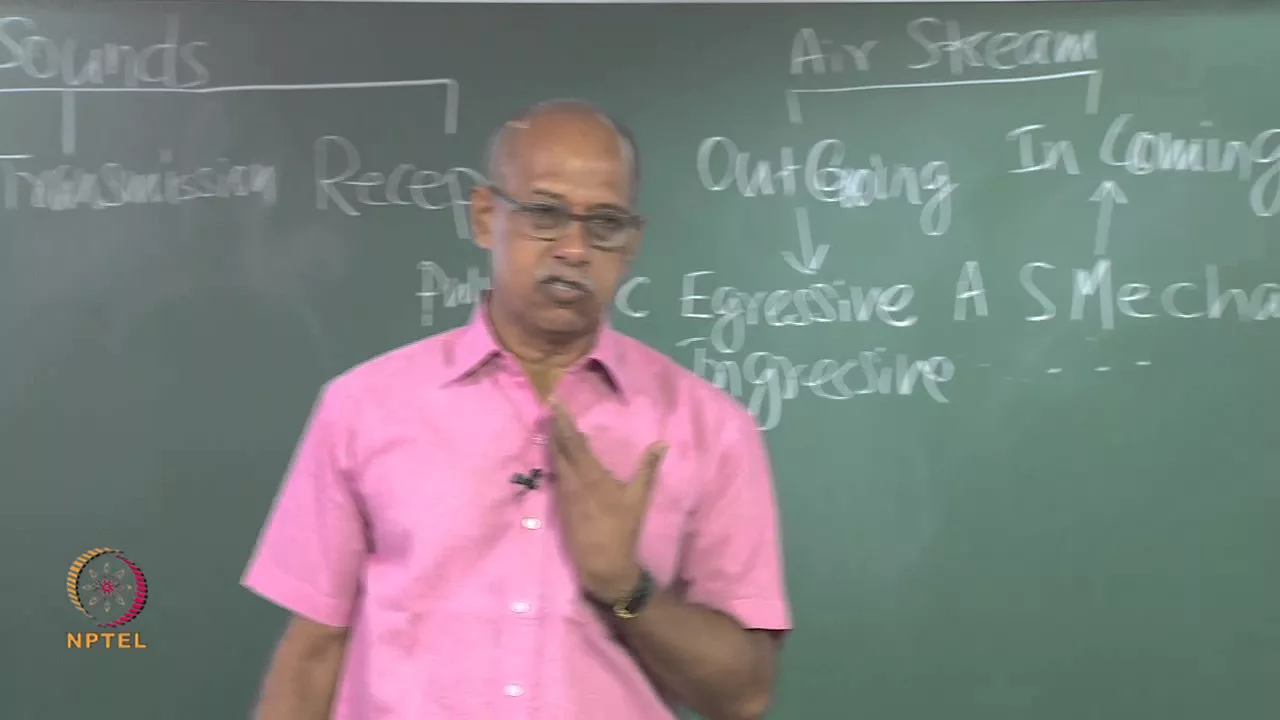
The concept of the pulmonic egressive airstream mechanism, which is how air pushed out from the lungs acts as the power source for speech.
The articulatory classification of vowels using tongue height, tongue advancement (backness), and lip rounding.
Phonetic transcription using the International Phonetic Alphabet (IPA) to represent spoken North American English consonants symbolically.
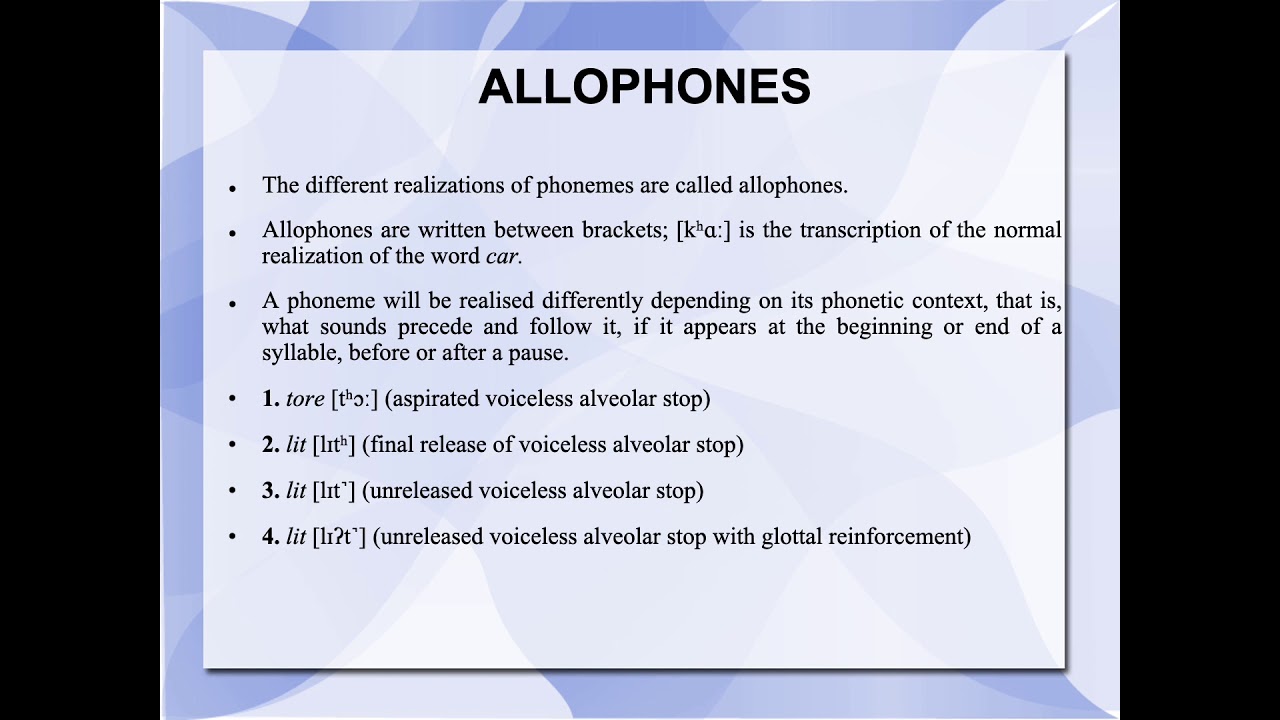
Phonological analysis and allophonic variation, exploring how these consonant sounds systematically change in different phonetic environments (e.g., aspiration, flapping, and glottalization).
Acoustic phonetics, which involves analyzing the physical sound waves of these consonants using acoustic software to read spectrograms.
Cross-linguistic phonetics, studying non-English consonant articulations such as uvular, pharyngeal, retroflex sounds, and non-pulmonic consonants like clicks and ejectives.
1.6M views34.4Klikes6:14Original Release: 2015-01-28
Hey everybody. Welcome. Thanks for joining us.
So today we will be talking about articulatory phonetics.
This is the study of how speech sounds are produced in the vocal tract.
All of our articulators in our vocal tracts must work in concert to produce just one speech sound.
This is to say nothing of the complexity of these motor routines in casual speech.
So just a note, we will be focusing on the phonetics of spoken languages, and more specifically consonant sounds in North American English in this video.
So what's the difference between consonants and vowels you might ask.
Well basically consonants involves some construction of airflow, whereas vowels do not.
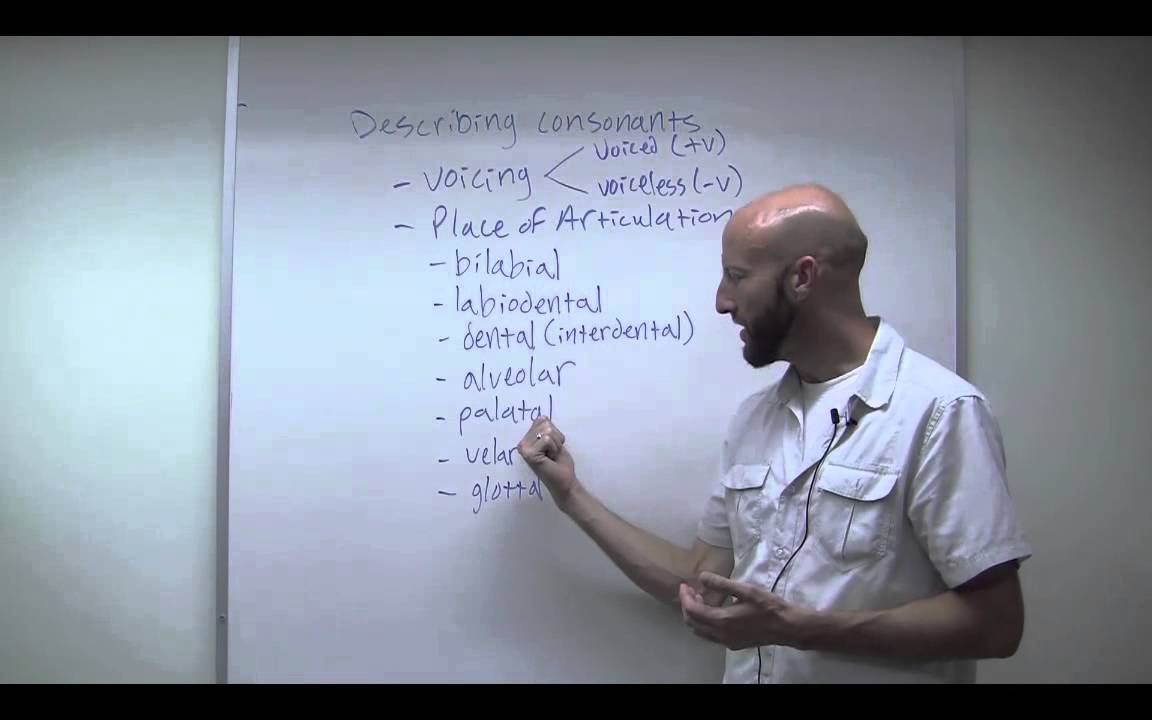
When linguists described consonant sounds, we use three criteria: voicing, place of articulation and manner of articulation.
Let's talk about each of these in turn.
Voicing or state of the glottis refers to what the vocal folds are doing.
When air passes through open vocal folds, we call these voiceless sounds.
When air passes through vibrating vocal folds, we call these voiced sounds.
You can feel the difference between voiced and voiceless sounds by putting your hand right here on your adam's apple if you're male or where your adam's apple would be if you're a female.
So produce these two sounds in succession [s] [z] [s] [z] Which one produces the vibration?
You should feel that [z] produces a vibration. So it's a voiced sound.
whereas [s] does not produce the vibration. So it's a voiceless sound.
Place of articulation refers to where in the vocal track the construction of airflow takes place.
Bilabial sounds are produced with both lips like [p], [b], [m].
Labiodental sounds are produced with the upper teeth and the low lips such as [f] [v].
Interdental sounds are produced with the tongue in between the upper and lower teeth such as [θ] [ð].
such as [θ] [ð].
Alveolar sounds are produced with the tongue at or near the ridge right behind upper front teeth such as [t] [d] [s].
Palatal sounds are produced at the hard palate or the roof of the mouth such as [ʃ] [ʒ] [j].
Velar sounds are produced at the velum or soft palate such as [k] [g].
Glottal sounds are produced at the glottis or the space between the vocal folds such as [h] or the catch in the throat as in Batman Manner of articulation refers to how the airflow is constricted in the vocal tract.
Stop sounds result from a complete constriction of airflow followed by a release of that air such as [p] [t] [k] [b] [d] [g].
Fricatives are sounds produced when the tongue approaches but does not make contact with a place of articulation causing a bottleneck of the airflow.
This gives the sound a friction like quality such as [v] [θ] [z] [ʃ].
Affricate results from the sequence of stop plus fricative in rapid succession.
So the affricate [ʧ] represents [t] plus [ʃ] just as the affricate [ʤ] results from [d] plus [ʒ].
Nasal sounds are produced when the velum is lowered allowing air to pass through the nasal cavity such as [m] [n] [ŋ].
Liquid sounds are produced by allowing air to pass by one or both sides at the tongue and the tongue itself can move a lot to shape the sound such as [l] [ɹ].
Glide sounds are produced with very little constriction of air flow so little in fact that they are often referred to as semi-vowels such as [w] [j].
And finally we have tap sounds.
Tap sounds are involving rapid flick of the tongue to some place of articulation.
In North American English we only really have one tap, and that's at the alveolar ridge.
You can hear the tap sound in the word butter butter.
Notice where we write it with two "t"s in English that your tongue is producing a tap sound there rather than a full stop.
So in North American English you say [bʌɾɹ], now as compared to in received pronunciation where you say [bʌtɹ] that involves a full [t] stop.
Okay we discussed these three criteria for describing consonant sounds: voicing, place of articulation and manner of articulation.
and when linguists talk about a consonant sounds they do so in that order so for example the sound [b] is considered a voiced bilabial stop.
[s] is a voiceless alveolar fricative.
That's it for this video. Thanks so much for watching. Hope you enjoyed it.
So please check out our other videos including articulatory phonetics and vowels and also how to navigate the international phonetic alphabet.
See later.
Up Next
16:02
Vocal Tract & Articulators: Active vs Passive in Phonology
@BillieEnglish
50.7K views•2023-09-22

34:16
How Language Shapes Reality: Oppression and Liberation
@Kathrin_yt
13.6K views•2025-01-30

5:03
Articulatory Phonetics: Describing Vowels in North American English
@ubcvisiblespeech9115
798.6K views•2015-02-04

21:32
Accent Expert Explains U.S. Regional Dialects | Part 1
@WIRED
9.3M views•2021-01-21
Related Study Plans & Knowledge Roadmaps
Structured learning paths in Linguistics
linguistics
Pragmatics: Speech Acts, Grice & Politeness
01Introduction to Pragmatics: Meaning in Context
02Grice’s Cooperative Principle & Implicature
03Speech Act Theory
+ 2 more learning modules
14h5 modules
Explore Roadmap
linguistics
Code-Switching: Syntax, Poplack & MLF Model
01Foundations of Bilingualism and Language Contact
02Sociolinguistic Motivations of Code-Switching
03Poplack's Grammatical Constraints
+ 2 more learning modules
15h5 modules
Explore Roadmap
linguistics
Writing Systems: Abjads, Alphabets & Logographs
01Foundations of Writing Systems
02Meaning and Syllables: Logographies & Syllabaries
03Segmental Scripts: Alphabets & Abjads
+ 2 more learning modules
8h5 modules
Explore Roadmap
linguistics
Language Documentation: Ethics, IPA & Metadata
01Foundations of Language Endangerment & Documentation
02Fieldwork Ethics & Community Collaboration
03Audio and Video Recording Standards
+ 3 more learning modules
16h6 modules
Explore Roadmap