
![Phonetics: Intro to linguistics [Video 2]](https://i.ytimg.com/vi_webp/GLBsvdaR_ow/maxresdefault.webp)











![Звук шва [ə] и редукция гласных в английском и русском. The schwa and vowel reduction.](https://i.ytimg.com/vi/-VeRLEPwN-o/maxresdefault.jpg)

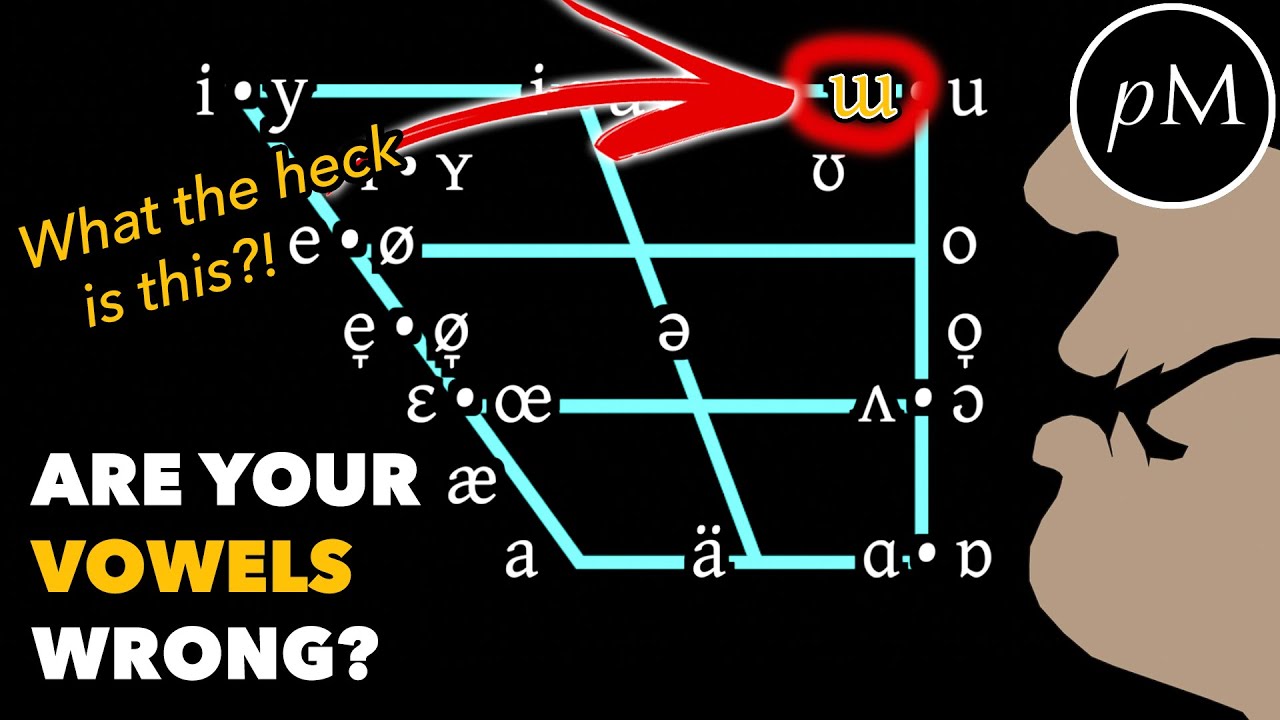


The vowel grid (or vowel quadrilateral) is a visual tool that maps vowel sounds based on two key articulatory dimensions: tongue height (vertical axis, from high/close to low/open) and tongue backness (horizontal axis, from front to back), with lip rounding indicated by symbols to the right of unrounded vowels; this chart contains 28 primary and secondary cardinal vowels organized systematically, though actual vowel positions in languages vary continuously and are influenced by factors like stress, surrounding sounds, and individual accents, making precise placement on the abstract grid challenging.
Master the IPA Vowel Grid: Tongue Position & Lip Rounding Guide
Added:Basic understanding of the International Phonetic Alphabet (IPA) and the distinction between spelling and phonetic transcription.
The anatomical difference between vowels (unobstructed airflow) and consonants (obstructed airflow) in speech production.
Familiarity with the vocal tract and the primary articulators, specifically the tongue, lips, and jaw.
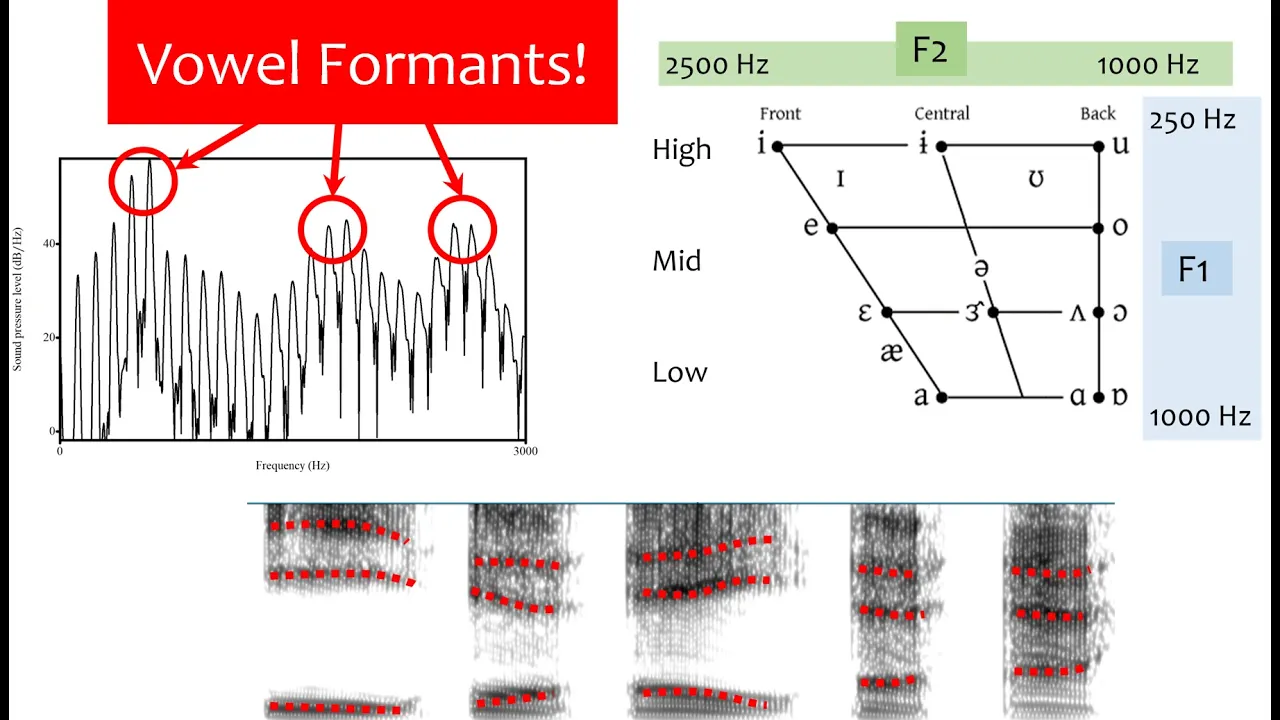
Acoustic phonetics, focusing on how tongue height and advancement correlate with first (F1) and second (F2) formant frequencies.
The pronunciation and transcription of diphthongs and triphthongs, which involve gliding between different vowel positions.
Vowel reduction and the role of the central 'schwa' (/ə/) sound in unstressed syllables of connected speech.
Dialectal variation and comparative phonology, analyzing how different accents shift vowel production on the IPA grid.
72.3K views3.4Klikes8:38Original Release: 2024-01-30
In this video I'm exploring the vowel grid, otherwise known as vowel chart or vowel quadrilateral. It's in three parts, you can see the timings now if you want to skip to any of these sections: The first one is the shape itself and how that relates to the mouth. The second part is the phonetic symbols - all 28 of them and at the end of this second section I'll go through all these symbols in a pronunciation drill, so skip to there if you want to learn or practise the chart with the symbols. In the third section I'll map the vowels of my own accent - a Southern British English one - and see how that looks on the chart.
Throughout the video you'll be able to see the vowel grid, the mouth diagram and when necessary my live feed.
Right, let's get going.
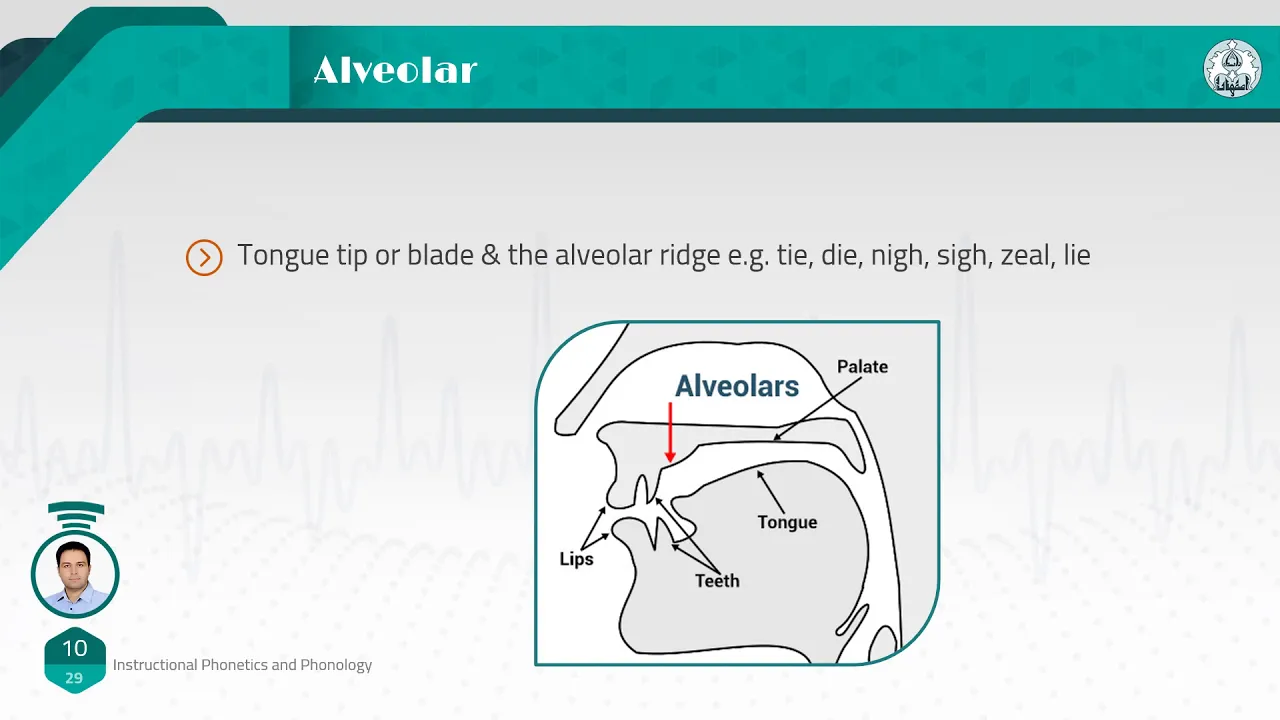
So the shape is designed to look like the inside of your mouth. The horizontal lines show the position of the tongue which can be highest to the front of the mouth, in the centre and or to the back. It's worth taking a moment to feel these positions - front, centre, back. And of course it can be anywhere in between those positions.
The vertical line shows how far the tongue is from the roof of the mouth. At the top it is close to the top, and at the bottom it's further away. It can help to imagine this line as the opening and closing of the jaw, though it is possible to create the space without doing this.
So let's just move around a bit. Front sounds have a kind of crisp, clear quality central sounds have a flimsy, relaxed feel and back sounds are a bit muffled.
If we go from front to back and back to front you can hear the dynamic change clearly.
This chart is found in the IPA chart by the International Phonetic Association and it has 28 symbols on it. They can look horrifyingly confusing if you're new to them, but there is a logic to it.
So let's take a look.
Starting with 4 reference vowels, which really show the 4 corners of the mouth You might have noticed lip rounding on this last sound. There is a general relationship in most languages between the tongue going back and lip rounding, but it doesn't always happen, as we'll see later.
So we now have our references and we can add 2 steps between them - now we have [i e ɛ a ɑ ɔ o u] These are known as the primary cardinal vowels, with the last three made with rounded lips.
It is technically possible to round the lips or unround them on any sound, so next we'll see the group of secondary cardinal vowels - a rounded sound to go with the unrounded ones, and an unrounded one to go with the rounded ones. In each pair the rounded sound is to the right of the dot, the unrounded to the left.
[i y e ø ɛ œ a ɶ ɑ ɒ ʌ ɔ ɤ o ɯ u] So, now we have the primary cardinal vowels, and the secondary cardinal vowels.
The full IPA vowel grid has some additional sounds that are found between the front and back columns of the cardinal sounds, from close to open: [ɨ ʉ ɘ ɵ ɜ ɞ] and additionally there is a triangle of sounds with a mid, central unrounded schwa in the middle [ə], [ɪ] half way to the top corner and rounded [Y] next to it, [ʊ] half way to the back corner, and [ɐ] half way to the open central position.
Additionally there is [æ] in between open-mid and open at the front.
Right, let's have a go then, we'll go from front to back, gradually opening the jaw, so starting at close, front, unrounded [i] and ending our drill at open, back rounded [ɒ].
So now we've said all the sounds, let's put them into use. So far it's all been a bit abstract, this what a mouth can do. But what does it actually do when we speak in a language? To show this, we'll map the accent I am speaking in - often categorised as Standard Southern British, or General British, or perhaps even modern RP. It doesn't really matter what we call it, let's just put my vowels in there.
I have about 13 monophthongs - that's single positions: And I also have about 6 diphthongs: It's worth noting that the distinction between monophthong and diphthong is blurred in some cases, and I have left out a diphthong - /ʊə/ that would go here and is found in many many phonemic charts but in my pronunciation it merges with other sounds. I'll look at these areas in later videos.
What's noticeable here is that the sounds I use don't generally match the exact positions of cardinal or other symbols on the grid. And this is true of all languages - the grid is somewhat abstract in this sense. All vowel sounds are very changeable, so we can't be very precise about where they are made. Factors such as stress, surrounding sounds, and an individual's accent will all influence the positions.
That's all for now.
I hope you've found this useful. I'll post any relevant links and activities in the description.
Thanks for watching!
Up Next
50:47
Learn Phonetic Transcription with British English IPA Practice
@Pronunciationwithemma
687.7K views•2023-03-10
36:52
Constraint Interaction in Optimality Theory: Epenthesis & Deletion
@Vidyamitra
180 views•2018-08-20

8:59
Forensic Linguistics: How Language Solves Crimes | PBS
@pbsstoried
1M views•2024-01-25

21:32
Accent Expert Explains U.S. Regional Dialects | Part 1
@WIRED
9.3M views•2021-01-21
Related Study Plans & Knowledge Roadmaps
Structured learning paths in Linguistics
linguistics
Optimality Theory: Tableaux & Constraints
01Phonological Basics: Sounds, Syllables & Rules
02Foundations of Optimality Theory: GEN, CON, and EVAL
03The Constraint Inventory: Markedness vs. Faithfulness
+ 2 more learning modules
15h5 modules
Explore Roadmap
linguistics
Morphosyntactic Alignment: S, A & P Systems
01Foundations of Syntax: Transitivity and Arguments
02The Linguistic Variables: Mapping S, A, and P
03Nominative-Accusative Alignment
+ 3 more learning modules
12h6 modules
Explore Roadmap
linguistics
Analyzing Sign Language: Phonology & Syntax
01Foundations of Sign Language Linguistics
02Phonology: The Five Parameters of a Sign
03Morphology: Word Formation and Classifiers
+ 2 more learning modules
14h5 modules
Explore Roadmap
linguistics
Pragmatics: Speech Acts, Grice & Politeness
01Introduction to Pragmatics: Meaning in Context
02Grice’s Cooperative Principle & Implicature
03Speech Act Theory
+ 2 more learning modules
14h5 modules
Explore Roadmap