




![[중3 국어] 음운의 체계와 특성 - 수박씨닷컴 김지연선생님](https://i.ytimg.com/vi/8cK09uG_V_g/maxresdefault.jpg)











The Greek alphabet is a 24-letter writing system that represents individual phonemes (basic sounds), unlike the earlier Linear B syllabary which represented complete syllables. The alphabet was adapted from the Phoenician alphabet around 1200 BC, with key innovations including the addition of vowel letters and the reassignment of some consonants to represent vowels. The Greek alphabet includes 5 vowels (alpha, epsilon, eta, iota, omicron, omega) and 19 consonants, with some letters having multiple forms (like sigma, which has a special terminal form at the end of words). The alphabet was standardized in Attic Greek, which became the dominant form for Classical period literature and later evolved into Koine Greek.
The Greek Alphabet: History, Sounds, and Writing System
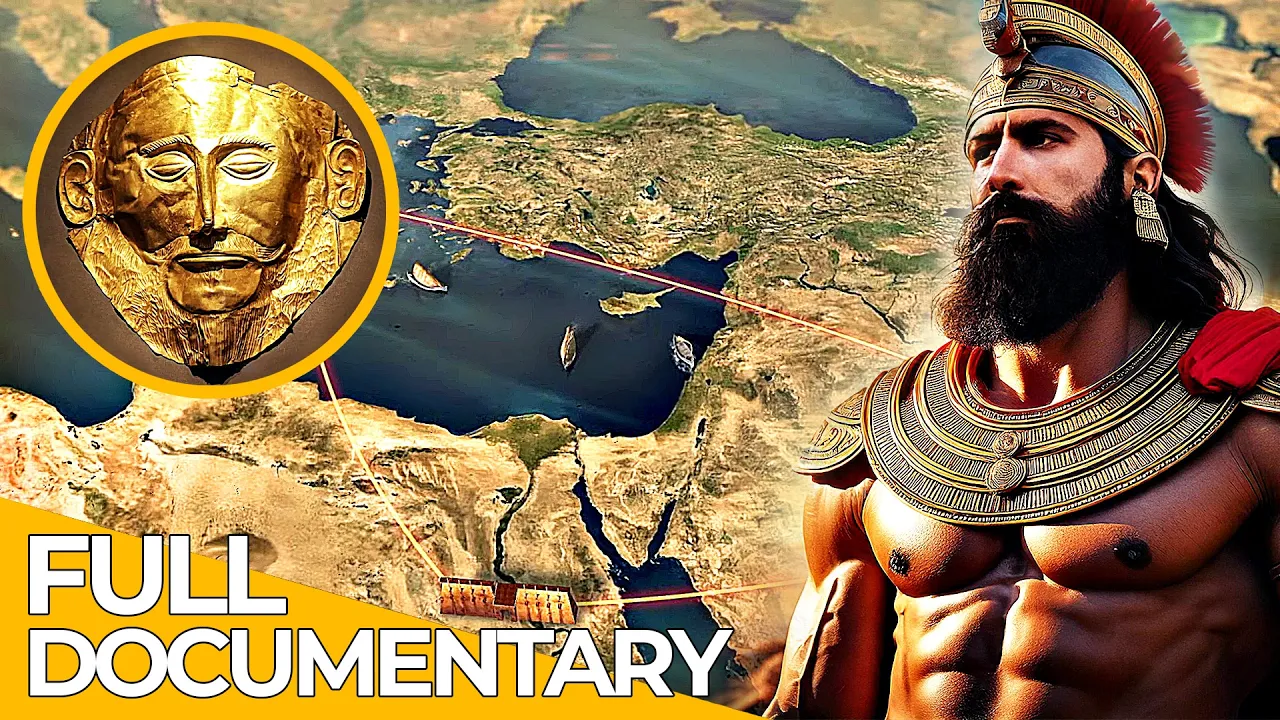
Added:Basic historical context of the Bronze Age Mediterranean, specifically the Mycenaean civilization and Phoenician trade networks.
The conceptual difference between different types of writing systems, such as logographies, syllabaries (like Linear B), and alphabets.
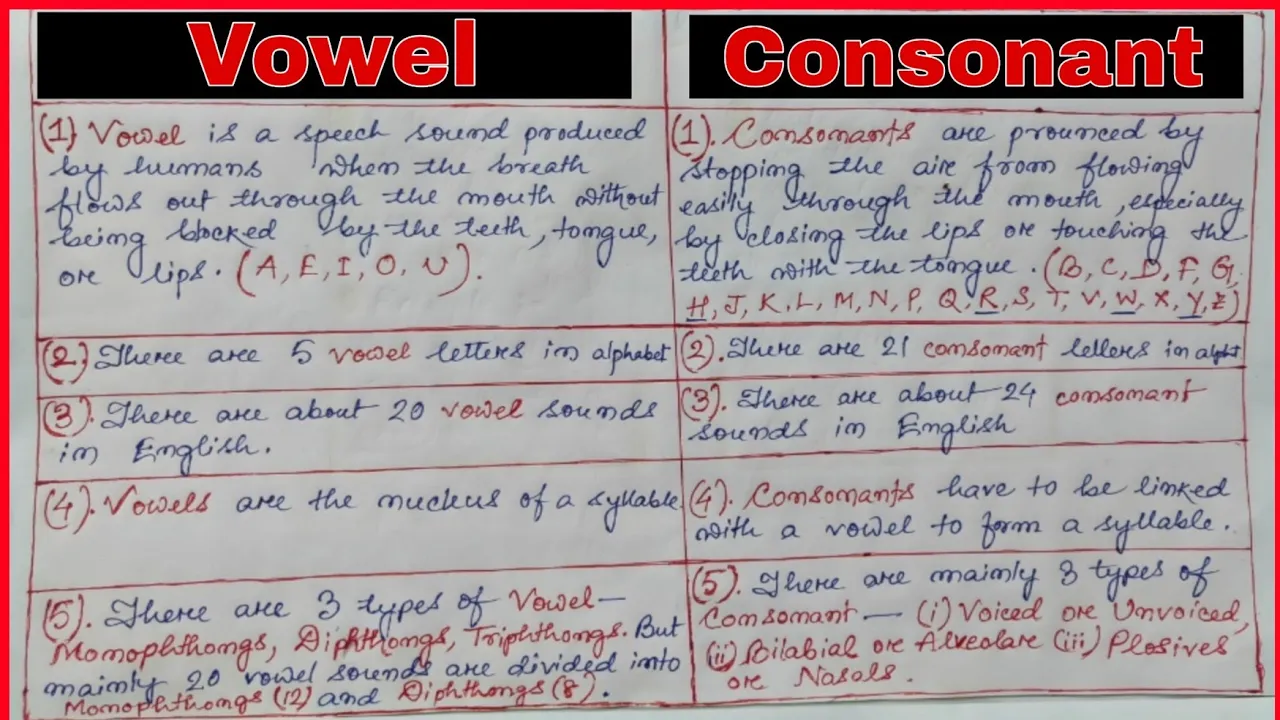
Fundamental linguistic terminology, particularly the distinction between vowels, consonants, and phonemes.
The historical transmission and evolution of the Greek alphabet into the Latin (Roman) and Cyrillic writing systems.
The rules of Greek diacritics, including breathings and accent marks, and how they affect pronunciation and meaning in classical texts.
Introductory Ancient or Modern Greek grammar, syntax, and vocabulary acquisition.
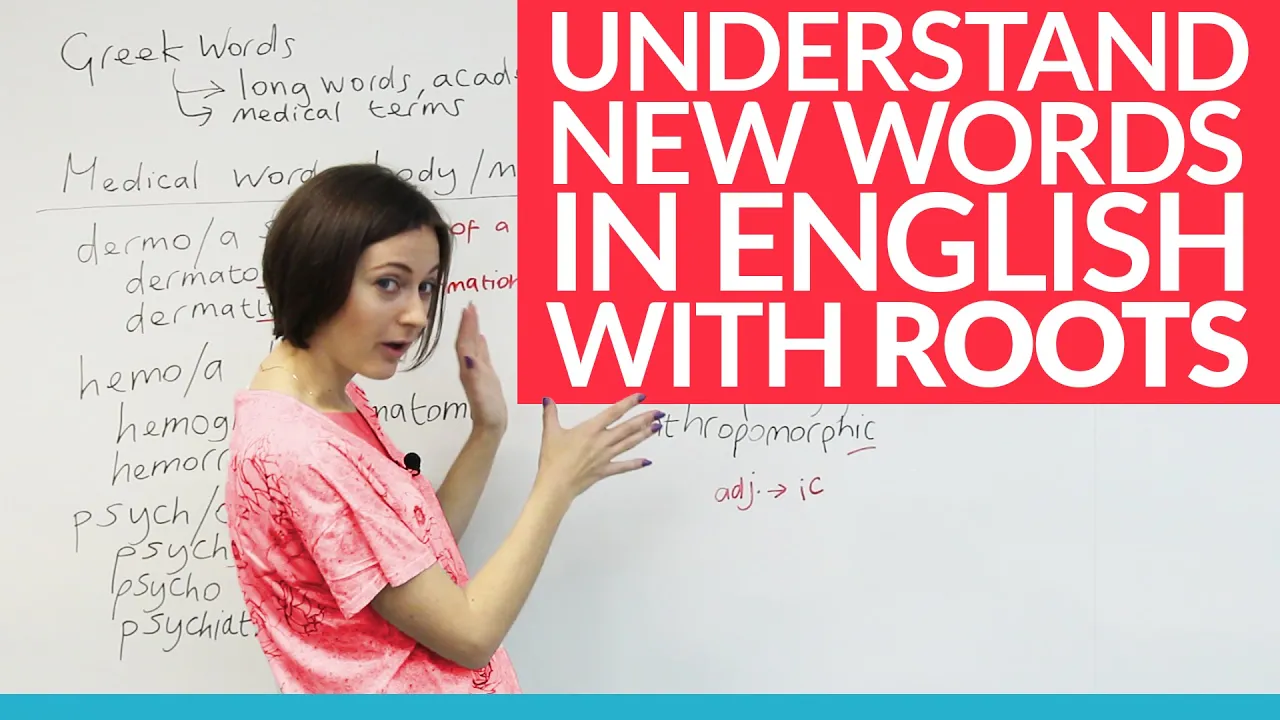
The influence of Greek roots, prefixes, and suffixes on English vocabulary and its pervasive use in modern scientific, mathematical, and philosophical nomenclature.
31.2K views340likes52:02Original Release: 2017-11-15
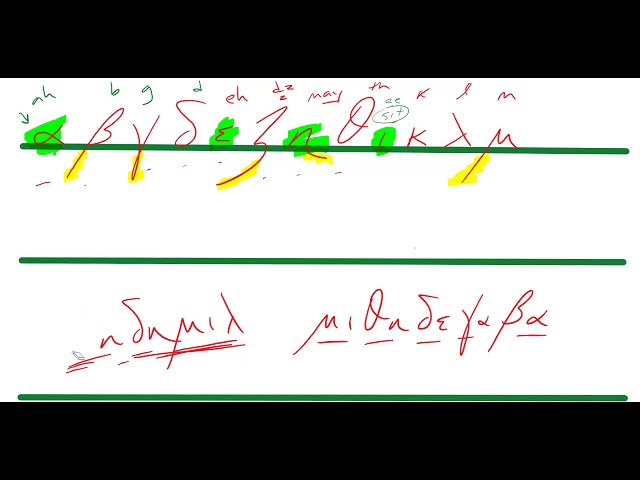
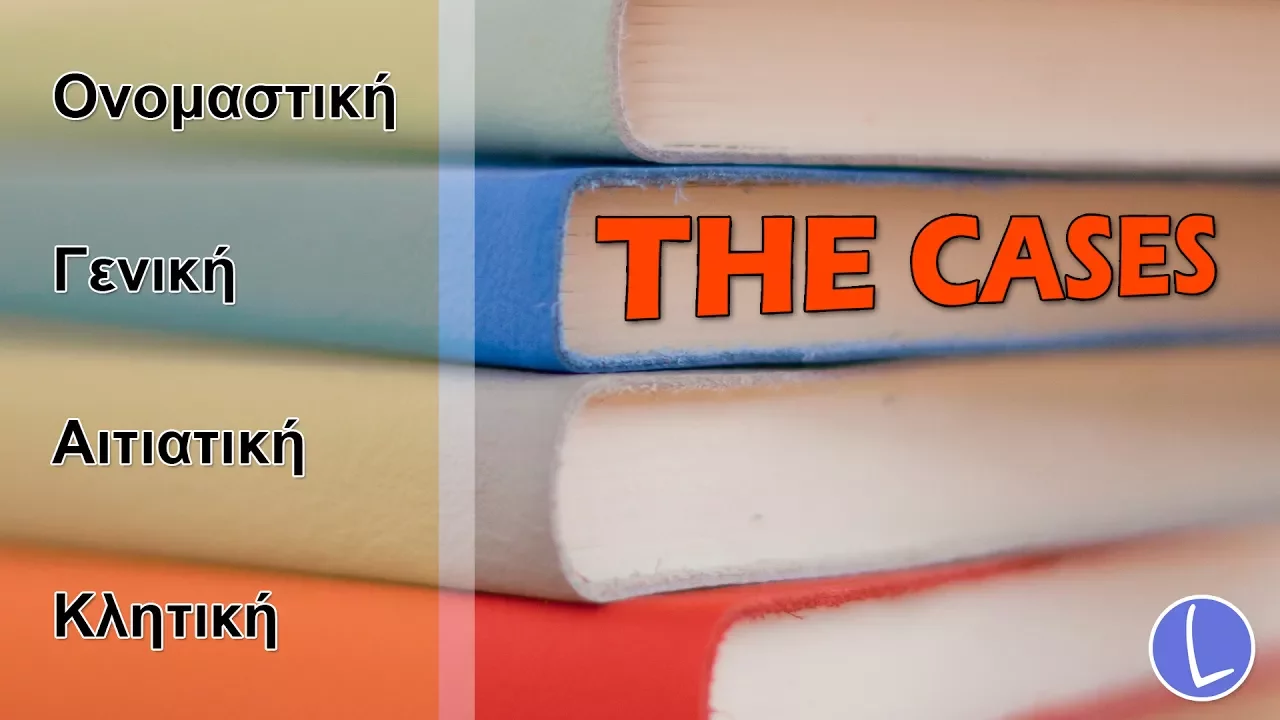
hi guys and welcome to our first lesson today we're going to talk about the Greek alphabet first though we need to think for a minute about what an alphabet is now this might seem like an easy question to answer it's a set of letters for example if you've successfully signed up for this course you're probably familiar with the Roman alphabet which we use to write English and here are some examples of letters from the Greek alphabet the name alphabet in fact as you may know comes from the names of the first two Greek letters alpha and beta which gives us the BET part of alphabet but we can be a little bit more specific with our definition an alphabet is a kind of writing system in which written symbols which are called letters represent individual phonemes so what are phonemes well phonemes are the basic units of sound that make up words so for example the UH and the sound sound in alphabet are examples of phonemes and in English we represent them with the letters A and T respectively but alphabets aren't the only kind of writing system out there and that's important for our purposes because the earliest system used to write Greek was not an alphabet in fact the earliest Greek texts that we know of uses a writing system called linear B linear b was used by an early Greek people whom we referred to collectively as Mycenaeans and the earliest examples that we have date to the 15th century BC we call it linear because its Discoverer Sir Arthur Evans the British archaeologist and this was him over here Sir Arthur Evans noticed that it was composed sort of abstractly of individual lines which was different from some of the pictographic scripts he'd seen before in the region and we call it linear B to differentiate it from an older script called linear a from which linear B is probably descended now linear a has never been deciphered and we don't know what language it represents which is one of the problems with deciphering it but in the 1950s linear B was proven to be a system for writing Greek now linear B is not an alphabet as we said but rather a syllabary a syllabary is a kind of writing system in which written symbols represent complete syllables and not just individual phonemes so instead of having an individual symbol for the sound which we saw in the last page was the letter T linear b has different symbols for each syllable that can be formed by combining the sound with a vowel so for instance the syllable ha has its own symbol Ted has its own symbol T has its own symbol talk and to each of these has its own symbol and linear be and that means that linear B needs a lot more symbols than an alphabet does so for example on this tablet we can see the Greek word tree Buddhist written in the upper left hand corner right here which is the Greek word for tripods so this first symbol and it's hard to see on the tablet but if we look down here at the reconstruction we can see the first symbol which tends 40 T the second symbol gives us re and this third one is PO and then we have this fourth one which is dead so you put them all together and you get T repo day now you're probably saying to yourself now well that doesn't say tree pod s and you're right that says T repo day and the reason is that linear B isn't actually always a very good system for writing Greek almost every symbol in the linear b syllabary represents either a vowel by itself or a consonant followed by a vowel and that means that whenever you have a consonant sound that isn't followed directly by a vowel like that or the sound in tree pod s you have to do one of two things you can add in an extra syllable and that's what we did here so we turned tree into tre or you can leave out the consonant sound entirely so we turned des and so just death and didn't represent that's to anywhere now around 1200 BC for reasons that are still debated many of the Mycenaean centres collapsed and linear B writing seems to have been abandoned around that time but sometime in the early first millennium BC Greek writing began to reappear in early versions of the Greek alphabet that's still in use today since the alphabet represents individual phonemes and not entire syllables as we saw in linear b it only needs 24 characters and it can still represent Greek words much more faithfully than linear be good so now we can write the same word tree potus like this so where did the Greek alphabet come from well the ancient Greeks as you may know were fond of myths that explained the origins of things and they had a couple of myths like this to explain the origin of their alphabet now one of these myths attributed the invention of the alphabet to this guy over here in the red and that is Cadmus a mythical founder and king of the Greek city of Thebes so how did Cadmus come up with the Greek alphabet well the 5th century BC historian Herodotus of Halicarnassus tells us that he probably learned the letters from the Phoenicians who are an ancient people who lived on the coasts of the Levant over here on the eastern end of the Mediterranean and indeed many of the Greek letters correspond to older Phoenician letters so whether or not there ever was a Cadmus Herodotus was probably at least partly right so this first Phoenician letter called Aleph corresponds with the Greek alpha and you can see the similarity there and the second one is in bet corresponds with beta and so on now if these names sound familiar to you it's probably because Phoenician is a Semitic language which isn't related to Greek but is in the same family as Hebrew and Arabic Phoenician has a number of characteristics in common with ancient Hebrew and Arabic including the absence of vowels in their alphabet Phoenicians just wrote the consonant sounds included in a word and the reader had to be able to infer the vowel sounds that made up the rest of the word from there when the Greeks adopted their alphabet though they made a few distinctive innovations they added some letters to represent consonant sounds and double consonant sounds and they reassigned some of the Phoenician consonants to represent vowels so for instance this Phoenician consonant Heth over here became the Greek vowel Aida which makes a long e sound now we should note here that the change wasn't immediately Universal and in some versions of the Greek alphabet Heth was still used as a consonant that made a sound and the roman alphabet as you might guess had descended from one of those forms and so that's why our letter H looks like a Greek Aida that makes an H sound now a lot of other Greek letters were written differently in different places as well so if we go back to this picture of the Gorton law code which is a law code inscribed on a wall on the town of Gorton in Crete we can see that it's written in an epic auric script that is a regional variant of the Greek alphabet so for example we can see the letter pi which we will write like this written here as though it's shaped like a letter C and we can see the letter iota which will write like this like a sort of uppercase I written here shaped like an S sort of a curvy iota and we can see Sigma which we will write like this written sideways right here like a letter M and sometimes this is identified as another letter son another sibilant from the Phoenician alphabet which makes the same S sound for the Greeks and we also see here the letter D gamma which looks like an uppercase F which we won't use it all because it dropped out of the Greek alphabet by the Classical period you should also note that all of these letters are capital or majuscule or uppercase consistent capitalization on lowercase script weren't developed in Greek until much later letter forms weren't the only variation within ancient Greek there were also several different regional dialects this is true in English too for example people from Boston like my mother often don't use the same words or pronounce words in the same way as people from New Orleans unlike in English though these variants were regularly reflected in Greek in the spellings of words so when the historian Xenophon tells us how a beleaguered greek army rejoicing to see the sea at the end of a long journey home cried salat ah Fallot ah we can tell right away that he's an athenian that is he's comes from this region of athens and the surrounding area because anyone else would have written fallacy fallacy for the same word which means the sea the sea fortunately for us after the fourth century BC attic Greek that dialect of Athens that Xenophon used and the corresponding alphabet slowly became more or less standardized throughout the Greek world and so that's the dialect we're going to learn to read the overwhelming majority of surviving Greek literature from the Classical period that is roughly the fourth and fifth centuries is written in attic and most subsequent written Greek was produced in an adaptation of attic Greek called Koine or common Greek acquainting is most famously the language of the New Testament and here you're looking at some coin a Greek in the Codex Vaticanus which is one of our oldest New Testament manuscripts this here is the end of the Gospel of Luke and the beginning of John so once you've learned attic you should be able to handle most of the ancient Greek texts out there without too much trouble so without further ado let's look at the alphabet I suggest you pause the video and grab something to write with if you haven't already got something handy so that you can practice drawing the letters as we go over them and if you'd like you can follow along on page three of your alpha 2 omega textbook now this first letter is called alpha alpha and it makes a short a sound and roughly corresponds to the Roman letter a it makes that sound is in father aa aa another way to draw an alpha is for an uppercase one nice and I draw it just like an uppercase a for a lowercase alpha I tend to start halfway up the line loop down around and back down so you end up with two little tails there some people will draw an alpha this way or this way and that's okay too but you want it to end up looking roughly like this an example of a Greek word with the letter alpha in it might be the verb groffo groffo which means I write Rafa and you can hear the Alpha in the middle there our second letter is called beta beta which as you might guess corresponds roughly to the English letter B and it makes a B sound as in ball now the way I draw a beta is for an uppercase beta just the same as an uppercase B for a lowercase beta I start down below the line come all the way up to the top loop around once loop around again and make sure you leave this tail down below the line that you're writing on now an example of a Greek word with the letter beta in it might be the verb bleep Oh bleep Oh which means I look bleep Oh next we have the Greek letter gamma gamma which roughly corresponds to our letter G but always to that hard G that you get in the word game and never to the soft G that new we pronounce in the word giant it always makes that hard good sound the only exception is when gamma comes before another palatal consonant and those are consonants that are formed by touching your tongue to the part of the top of your mouth called the palate so our four palatal consonants in Greek are gamma itself Kappa Sai and Chi so when gamma comes before one of these it makes a kind of ng sound as in anger now to draw an uppercase gamma that's pretty easy I draw it just like an uppercase English letter F except without the second bar so we draw our long bar from the bottom of the line up to the top and then a horizontal bar and we can stop there to draw a lowercase gamma I start halfway up the line loop down around and back up so it looks sort of like a Y that hangs directly down below the line and that's where your line should be now an example of a Greek word with that regular hard Gama that makes a good sound is the verb gig no ska gig no schoo which means I know give you know ska in an example of a gamma that's nasalized before a palatal might be the word hunga hunga low which is a verb that means I report where I announce or we could try the word an on K an on K and there you can hear that sound after the nasalized gamma and then on K means necessity or compulsion next we have the Greek letter Delta Delta which corresponds roughly to the letter D and it makes that sound as in dinner to draw an uppercase Delta let me just draw a big triangle a lower case Delta is a little bit trickier here's how I do it I start at the middle of the line and make a circle but instead of stopping my circle I continue up around and then put a little curl on here so when I do it fast it looks kind of like that and that's Delta an example of a Greek word with the letter Delta as the verb do Co do Co which means I hunt I pursue next we have the letter epsilon Epsilon literally the name of letter epsilon means simple e ar e simple and that's what epsilon is it's a short letter e and epsilon is always a short vowel it never counts as a long vowel the long form of epsilon is represented by a de which we'll get to in a minute so epsilon makes that short e sound as in the English word bet that episode now to draw an epsilon an uppercase Epsilon looks just like an uppercase e for a lowercase epsilon I tend to draw it like this the way your font does I start at the middle of the line and make two loops sort of like a backwards 3 you'll also see Epsilon's drawn in other ways Poston principally like this and that's okay too an example of a Greek word with epsilon is the verb temple temple I send temple next we have the Greek letter Zeta Zeta which corresponds roughly to our English letter Z but it doesn't sound quite the way the English z sounds instead Zita is made up of two consonant sounds and s followed by a D and that's a voice test that makes this sound or the way we pronounce it sometimes a D followed by an S so it can sound as in the word wisdom that sound or as in gadzooks when you get that kind of sound now the way we draw is a de this one's a little bit tricky in the upper case of course it just looks like an uppercase Z but in the lower case here's how I do it I start with a sort of horizontal line and you can make that curvy if you want a big curve down and a little curlicue for the tail so horizontal line big curl down when I curl like you for the tail and that nut curl like you should go underneath the line you're writing on now an example of a Greek word with Zeta in it might be the verb Zeta Zeta which means I look for I seek the next letter we have is ADA ADA and you'll remember ADA because it's that adaptation of the the Phoenician letter Heth which became a Greek consonant now ada makes a long e sound in Greek originally this sound was sort of like the epsilon but held for twice as long and that's how long letters worked in classical Greek they were just like short letters but held twice as long so we can represent the original sound of eight a sort of like the e an error error which we hold a little bit longer than a normal short e but the way we pronounce it nowadays and our reconstructed or what's called a Raz nian pronunciation tends to be closer to a long a sound so like the a and ace and that's how we'll pronounce ada in this class as a now to draw an ADA an uppercase ADA just looks like a letter age for reasons we've discussed a lowercase ADA is a little different so we started the middle of the line and start like we're going to draw an N but then we make the second bar of the end drop down below the line now an example of a Greek word with a tie in it is the word heyday heyday which means already the next letter we have going in order is Theta now feita is in origin the aspirated form of the letter tau or the sound so that means that you get your sound followed by exhalation the kind of rough breathing so what it would really sound like but again we have a more modern convention for how to pronounce theta that develops later on in classical Greek and that is to pronounce it like the English unvoiced th that is tha so where it would originally have sounded like the th in sweetheart or they make two distinguishable sounds now we pronounce it as the th in author now the way we draw theta is pretty easy we just draw a big circle and a bar across it and for a lowercase theta we can make that circle a little thinner the bar across it an example of a Greek word with feita in it is the verb SL oh that fellow which of course in this original kind of pronunciation would have been more like at Telo and it means I am willing or I wish our next letter is iota iota the Nyota roughly corresponds to the English letter i know unlike ada iota can be long or short we pronounced a long yoda we tend to pronounce it like that long e sound as in pizza and a short iota we tend to pronounce as a short hi in English as in Pitt now in some words you'll also see iota acting sort of like a consonant and in that case we pronounce it like a hit the letter Y in yodel like a yeah sound the way we draw an iota is pretty simple an uppercase I heard it just looks like an English letter I and you can put your little series on here if you want to a lowercase iota looks like a lowercase a high in English but we don't put the dot okay sometimes you'll see in a Yoda with a mark over it like this or is in the name like this like this but those means something else so we never dot re HOTAS in Greek an example of a Greek word with iota in it is the verb Postell this demo I believe or I trust and that's a short iota and there's an pista or over here this is a short iota and it's making that sound an example of a word with a long iota is the adjective that we've seen before see loss so you loss and we put this mark over the iota to show that it's long that's called a macaron our next letter is Kappa Kappa which corresponds roughly to the English letter K or to that hard C never to a soft C but always to a hard see that makes that sound as in cat now Kappa we draw sort of just like an English letter K so for an uppercase one I just draw what okay for a lowercase one in this font we have it sort of curly so it looks sort of like this and that's okay I tend to draw my lowercase Kappas just as a small letter K so a letter K that comes only halfway up the line and that's fine too you'll see them that way in some fonts a Greek word with Kappa in it is the word hackathon Hecate ton that means 100 next up we have lambda lambda and that corresponds roughly to the English letter L as in land now lambda we draw a little bit differently from an L though so an uppercase lambda just looks like a big triangle without the bottom bar and again you can put these little surfs on the bottom if you want to don't close the bottom of the lambda though you have to leave this space open or it'll look like a delta for a lowercase lambda I like to start with a shorter bar and then kind of cross it with the longer bar like that and sometimes when I'm writing quickly you'll see me write or lambda like this and that's okay too an example of a Greek word with lambda is the verb l'm bono i'm bono which means i take i seize and you can hear that la belle sound at the beginning lombardo next we have mu and mu as you might guess corresponds to the English letter M and it makes an M sound their lips together but nut sound as in mitten to draw uppercase movie just draw it the same way which we draw in uppercase M to draw a lowercase mu though we start down below the line come up then I kind of make a you a little tail and it's important to get these tails in here because if you don't have them it can look like you've got a letter U here when I see them in there they remind me of the bars of the M and you can see up here and so that helps me remember to pronounce it as an admin sound so don't let yourself get confused now an example of a Greek word with mu in it is the adjective Magus right like this mega sand it means big or great and you can see the move here on the beginning making that sound next we have new a new corresponds roughly to the English letter end and indeed it makes an end sound as in ninja the new can be a little bit tricky an uppercase new looks just like a letter n but a lowercase new looks a lot like a letter V and I draw it kind of the same way so when you see a new you have to remember very carefully that it's making an end sound and not a V sound and in fact one way to help you with this is that there is no letter in classical Greek that made a V sound of a sound in modern Greek and in Byzantine Greek bata made a V sound instead of a B but in classical Greek there's no sound that makes that V sound so we should always remember to pronounce our new as an N an example of a Greek word with new in it is the word Nomos No Mas which means custom or law and you can see that new at the beginning making an end sound Nomos next up we have our letter sigh sorry and that roughly works the way in English letter X does it's another of our double consonants just like the X in English and so the sound you're getting is sort of that K + S sound or Kappa plus Sigma and you can still hear both of those sounds pretty distinctly in the pronunciation of X I it makes the X sound as in our English word taxi to drop psy is a little bit difficult an uppercase ones not too hard you just draw three parallel lines where the middle one is shorter then you can put these cerise on if you want to but again you don't have to to draw a lowercase X I I do it's sort of the way we did a Zeta I drew our horizontal bar but now we kind of make a backwards three or an epsilon before we add our curly Q so there's basically sort of one extra little point on X I an example of a Greek word an important Greek word with sy is the word CentOS silo's it means foreigner next letter is Omicron Omicron and the name literally means o McCrum small o and Omicron is another in our mouths that's always short it always makes a short o sound as in dot or log and this is contrasted with Omega which we'll get to them in a minute which makes that long o sound o to draw an electron is pretty easy we draw an uppercase I'm a crown like an uppercase o and a lowercase I macron like a lowercase o an example of a word with Omicron all that we've seen some already so is the word or us or us which means muntin next we have the letter pi which you're probably familiar with from some geometry classes a PI and Greek just makes a piece out doesn't pop to draw an uppercase PI I tend to sort of shortcut into our our vertical bar horizontal bar and then come back down on a vertical bar and I'll do this for lowercase PI's as well but just make them not come up as far but if you want to draw a little nicer one you can draw your vertical bars and then sort of cross them with the horizontal bar om it's really up to you and all of those would be recognized in different fonts now an example of a Greek word with PI in it is the verb pipped Oh pip dough which means I fall pip dough and you can hear the PI making that sound next we have the letter Rho which roughly corresponds to our letter R now originally in classical Greek this would have been pronounced as a rolled R then some that you get in Spanish when you're pronouncing it in ancient Greek though and for our purposes we can pronounce it if you'd rather just as a regular R sound as in English so as in Roger and either way you want to pronounce it is fine for our purposes now when Rho is at the beginning of a word it has a sort of special property which is that it always comes with an H sound attached to it and makes instead a sort of aha sound an example of a Greek word with a row at the beginning is the word rate or rate or and we'll come back to that one a little later great tour and you can hear that H sound coming in there a Greek word with her Oh in the middle of the word is Corre Corre which means young woman our maiden and can also be a name of Persephone the daughter of Demeter Corey or daughter it can mean daughter as well now to draw a row it's pretty easy we just draw it the way we draw an uppercase P and this is another one that can confuse you because you'll see it and want to make a piece sound but you have to remember that in Greek this letter is purl and it makes a sound or a rip sound if we want to make a letter P sound we use PI to draw a lowercase row I'm gonna do almost the same thing we start below the line come up and curl it around and in some fonts you'll see a row with a little curlicue added on here so it'll look like sort of like this and this can confuse you to looks a little like a beta but it'll be hanging down below the line so you should be able to tell the difference all right next up we have Sigma Sigma and Sigma corresponds roughly to the English letter S which is pretty straightforward and easy it just makes a sibilant sound like a hissing sound between your tongue and your teeth as in simple in English the tricky part about Sigma is drawing a Sigma because there are several different ways to do it so over here these first two examples you have are an uppercase Sigma which you draw like this you draw a horizontal bar or diagonal in diagonal out and another horizontal bar and we have our lowercase Sigma which we draw like this I tend to draw a circle and then your bar out some people will draw it like this and that's fine too now we also have this alternate form and this was the form of Sigma that gets written at the end of the word and only at the end of a word we never draw this Sigma in the middle of a word and so to draw that one we just draw a kind of like an English letter s but it hangs down a little bit below the line the line being here so let me sort of draw a letter C with a curly Q on the bottom now you'll also see Sigma written as just a letter C very often and this is called a lunate Sigma lunate from the Latin for moon because it looks kind of like a crescent moon and just looks like a letter C when you have fonts that use a lunate Sigma often they won't distinguish between this this kind of Sigma and the kind that comes at the end of a word and so you'll see this illuminate Sigma even at the end of words so an example of a word with Sigma is the noun Sophia Sophia which means wisdom and a word with Sigma at the end is the noun paulus paulus which means city or city-state so if we were to draw either of these words in a font with a lunate Sigma and I'm running out of room here we would write them like this and again you can see that there's no change between the forms when we're using the lunate signal our book though will use these forms and that's the one you'll see more often in printed texts nowadays and so it's important to recognize both the uppercase and lowercase Sigma for the middle of word and the terminal Sigma when we're writing all in uppercase if we have a Sigma at the end of a word we still use the regular uppercase form so that's Sigma there are a lot of different ways to draw it but it always sounds as an S as it's simple next we have tau tau which makes it sound like the letter T in English as in tiny to draw a towel that's pretty easy an uppercase tau just looks like an uppercase T for a lowercase tau then draw smaller uppercase T basically and you can draw this little curl on the bottom if you want to when I'm writing quickly you'll see when you skip it a lot of the time but that's probably the most correct way to draw tau an example of a Greek word with tau is the word Dec Nam which means child next we've got oops Ilan oops along and this corresponds roughly to the English letter U but sometimes also to the letter y and we'll talk about why in a second so when you're pronouncing Epsilon originally it would probably have sounded something like the French U as in creme brulee or something so you get this kind of each sound and the way to make that sound the best way I can describe it is to curl up your lips as though you're going to say ooh as in boo and then try and say an e sound along a sound instead so you get this kind of you you know when we're pronouncing Epsilon sometimes we just pronounce it the way we print out so long u as in boot in English and that's fine too the reason to distinguish between the two though is that we have a diphthong in Greek that is a combination of two vowels on the crown Epsilon that makes an O sound as in boot and so sometimes it's useful to pronounce the epsilon as the French you you just to distinguish between those two sounds and help you remember how to spell words the Romans when they transliterated an epsilon that is when they wrote a Greek word in Latin that hadn't you belong in it they represented the epsilon not with the letter U but with the letter Y and they represented this diphthong with a letter U and so that suggests that the two really did sound different in antiquity to draw an uppercase u salon we draw it just like an uppercase Y and to draw a lowercase Upsilon we just draw it sort of like a fancy lowercase u it's important to make the bottom of your group salon rounded enough though to distinguish it from the new the new excuse me or it's going to make an end sound an example of a Greek word with epsilon in it as a preposition Tsun Tsun which means width and another example might be the preposition who PO Hoopa which means under and it's where we get our prefix hypo like in hypodermic 4 more to go next we have the letter Phi Phi which is the aspirated form of Pi so it's that PI that sound with an H after it and originally would have sounded a little bit like as in a pill so you'd hear both sounds distinctly but nowadays we tend to pronounce it like a letter F just the way we do a pH in English and this is the way the modern Greeks pronounce it as well so it sounds as in phony to draw an uppercase Phi I tend to draw a whole circle and then a line down through it make sure this line is vertical and it can cross the circle unlike in theta where you have your horizontal line to draw a lowercase Phi I tend to do it all as one line and you can sort of see that in our Greek font here so I'll start my circle here come all the way around and then draw a line down through and this line should hang down below the line an example of a Greek word with Phi in it is the word feel us feel us which means friend next we have our letter Chi Chi which is again an aspirated letter and it's the aspirated form of Kappa so it makes a sound with that followed by a sort of escape of breath ID and you can hear both sounds so originally it would have sounded as in backhand nowadays when we're pronouncing a chi as English speakers we sometimes have a hard time distinguishing between an aspirated an unaspirated K sound so sometimes you'll hear people pronounce a chi as though it's just a regular K as in kick the other way that you can pronounce chi is the way the modern Greeks do it which is sort of as a German CH sound and to do that you bring your tongue up to the top of your mouth as though you're going to say a K but then you don't quite touch it to the top of your mouth and you just force some air through so you get this sound to draw an uppercase Chi we just draw what looks like a big X and this can be a little bit confusing because we have to remember not to confuse Chi with psy which makes an X sound to draw a lowercase Chi let me just draw one slash bar that hangs down below the line and then another bar down and this should all hang below the line and the second bar can be a little curly when I draw a lowercase Chi quickly I tend to do my first bar like the first bar of a lowercase X and then just cross with the second bar going down the line below the line and that's fine too you'll see farts that do that next we have psy psy which is another of our double consonants it's not an aspirated one this time though instead it just makes a peace ound plus an S sound or a PI sound plus a Sigma as in up side and you can hear both the P and the S sound in there so to draw up sy I start with a u that only goes from the top of the line halfway down and then I cross it with a vertical line looks a little bit like a pitchfork to draw a lowercase I it's the same sort of process except here u goes from the middle of the line down to the bottom and then across it and this line should hang down below the line an example of a Greek word with sy is the word zu k zu k meaning spirit or soul and this can be a little bit hard to pronounce for English speakers to pronounce this P and s sound at the beginning of the word you can practice it a little by inserting a kind of vowel sound and saying absolute k but it's good to practice so that you can really start on that P sound and yep okay okay so practice saying that one a couple times I know you'll feel silly talking to your computer but again that's going to be a part of this class and finally we have Omega now remember that Omicron was a short oh and Omega just means Big O remember our word Magus that means big and Omega is indeed another of our vowels that's always long and it's always a long o sound now originally in Greek just like with Ada this would have been an O sound like an Omicron that was just held for twice as long so where it would have made an O sound in classical Greek where your Oh sound just has a longer duration we tend to pronounce it now as in the English word Oh for an upper case Omega I start at the bottom of the line do a horizontal line and then a big almost closed circle and then another horizontal line if sometimes also see an Omega written as just a circle hanging out above the line so like an a sort of underlined floating OH but more often we'll see this Omega for a lowercase Omega so yet another one that can confuse you because it looks a little bit like a curvy W like in the Walt Disney logo now you have to remember when you see this letter there is no W in Greek if we wanted to make that sound we would use something like an epsilon as a consonant so this this letter always makes a long o sound and an example of a Greek word with an Omega in it is the word soma soma which means body so those are our Greek letters now I just want to revisit our long and short vowels for a minute we talked a little bit about long and short vowels as we went over the letters but to review we have two vowels that are always short epsilon that's short e and Omicron that's short oh then we have two corresponding vowels that are always long those are the long forms of those vowels ada that's our long e and omega that's our long Oh and that leaves three vowels that can be either long or short and those are alpha alpha this way iota and oops alone and when we have a long Alpha Iota or epsilon sometimes your book will distinguish it by writing a macron are these horizontal lines over it now your textbook will do this consistently so if you see an alpha Yoda or Epsilon without the macron over it like these ones over here you can assume that it's a short one other Greek texts that you see though won't always do that and so you just have to know as part of the spelling of the word whether your Alpha Iota or epsilon is long or short and so that's an important thing to memorize when you're memorizing your vocabulary the next thing we need to talk about our diphthongs a diphthong is a kind of funny word that comes from the Greek word diphthong loss sorry diphthong loss and it means two sounds and so a diphthong is a pair of vowels that are pronounced together and your book makes a useful distinction between proper diphthongs and improper diphthongs so there are eight proper diphthongs proper diphthongs generally have vowels that combine to make one sound so we pronounce them together as one sound it's important that you be able to spot them anywhere in a word and whether or not the first vowel is capitalized and so I've written them both ways here and here they are so our first diphthong is Alpha Iota and Alpha Iota makes an AI sound as an aisle so we pronounce that I I when we see alpha and I owed it together next we have Alpha Epsilon and that makes an owl sound as in ouch ouch next up we have epsilon iota and that makes an a sound as an eight and it sounds very similar to the way we will pronounce our ADA 8a next up is epsilon Epsilon and that we pronounce a two different ways really so more originally we would have heard kind of both sounds in there we were to further the glide into that French you sound so ooh ooh and that's kind of how I'll tend to pronounce it but some people will also pronounce this you just like the English word you so you and we have that in words like Europe next we have eight at epsilon ada Epsilon and that's just like epsilon Epsilon except that we have our long ADA sound instead of our our short Epsilon sound and so for this one we really do kind of have to do the glide and the example your book gives us hey you but we sort of omit the H sound and hey you and say it all together so a you a you next up we have Omicron Toyota and that makes an OE sound as an oily boy then we have Omicron epsilon which we talked about a little bit and that makes a long ooh as in booze or boot and finally we have epsilon iota and that makes a sort of we or we sound those word we we also have three improper diphthongs and each improper diphthong is composed of a long vowel followed by an iota and what they have in common is that eventually the iota stopped being pronounced and so in an improper diphthong we have a special way of writing the iota which is called an iota subscript and that's this guy down here the iota is just written as a little tail underneath the vowel like that so when we pronounce these diphthongs we'll just tend to pronounce the first letter and that's always a long vowel alpha beta or Omega remember though that the iota subscript is a medieval convention so the classical Greeks never wrote an iota subscript they always wrote it on the line like this or ad script we call the head and they pronounced both letters in the diphthong so you'd get this long alpha and in this example followed by an iota so an IE sound in your book though you'll see the iota is written subscript consistently in an improper diphthong except when the first letter of that improper diphthong is capitalized and so you'll see the improper long Alpha Iota written this way now Greek also has a number of words that start with a sound from H sound followed by a vowel and remember that our Greek our version of the Greek alphabet doesn't have a letter that makes that sound and so instead we represent it like this we begin the word with a vowel and if the word has an H sound before it we write what's called an aspiration or a rough breathing mark over it like this and it looks like an inverted apostrophe so like this so a word starting with this epsilon right here would sound like at the beginning whenever a word starts with a vowel that is not preceded by that H sound we instead write a smooth breathing mark over it and that just looks like a regular apostrophe so like this and so a word starting with this epsilon would start at a and note that sometimes when we have a capital letter we just write the breathing mark behind it like this so if we look at our examples down here this word is an on K an on K and it starts without an H sound and so we put a smooth breathing mark over the Alpha and that's the next word is Hecate on which we saw before when we talked about Kappa hackaton and that starts with a rough breathing and so we put a rough breathing over it starts with that H sound Hecate on now next we have this word air coma which you can see I've written over here for when we talk about punctuation now Erica my doesn't start with sound and so we need to put a smooth breathing on it but you'll notice it's already got this accent over the over the epsilon and we'll talk more about those accents in our next lesson and what we do is we put our breathing mark right before the accent we never put it after the accent it always comes before now let's jump back a second to the letter Rho remember that the letter L when it's at the beginning of the word always comes with an H sound attached to it and so for that reason we always put a rough breathing mark over a row that's at the beginning of a word otherwise we only ever put breathing marks over vowels but Rho is the one exception at the beginning of the word it always has a rough breathing now the only time a breathing mark doesn't go over the first vowel in a word is when that word begins with a diphthong in that case the breathing mark always goes over the second letter of the diphthong remember that a diphthong counts as one syllable and so we still put that sound at the beginning of the word so this last word means I find and it's pronounced hell risco and we're gonna put our breathing mark right here over the epsilon the second vowel in the diphthong how risco now looking over at the second column there are also four punctuation marks we need to worry about and here I've written the word air kamae which means I'm coming four times to demonstrate them so the first one is a period which is just like the period we use in English and that denotes the end of a sentence and so here we have the sentence air come I I'm coming all by itself that's the complete thought we also use a comma in Greek and that just works the same way the English comma does and so here we have air come I which means I'm coming and then presumably our sentence would continue next we have the raised dot and this is a little bit different this is one we don't have in English and this can be used the same way as either a colon or a semicolon in English it can act like either one so here we have I'm coming and then presumably we'd have a related thought that came afterwards and finally we have this mark that looks like a semicolon and that's actually the Greek question mark so it's important not to mix those up remember that if we wanted to do what we do with an English semicolon we would use the raised dot so this is a question mark and so it indicates that it for this last one we have another sentence and it says am i coming and the last thing we need to talk about is capitalization and these rules are in your book if you need to review them but in Greek as in English we capitalize a proper name we capitalize the beginning of a quotation and we capitalize the beginning of a paragraph what we don't do is capitalize the beginning of an ordinary sentence and you can see that up here this air come I remember that was a complete sentence with a period at the end but we have a lowercase epsilon to begin it again if you forget any of these rules you can refer back to this video or look at page six of your book so that's the Greek alphabet congratulations now you're ready to try the exercises at the end of the chapter and you can read some of them along with me in the next video
Up Next

19:33
Devanagari Script for Sanskrit | Conjunct Consonants Explained
@SanskritToday
482 views•2023-11-26
34:16
How Language Shapes Reality: Oppression and Liberation
@Kathrin_yt
13.6K views•2025-01-30

8:59
Forensic Linguistics: How Language Solves Crimes | PBS
@pbsstoried
1M views•2024-01-25

21:32
Accent Expert Explains U.S. Regional Dialects | Part 1
@WIRED
9.3M views•2021-01-21
Related Study Plans & Knowledge Roadmaps
Structured learning paths in Linguistics
linguistics
Pragmatics: Speech Acts, Grice & Politeness
01Introduction to Pragmatics: Meaning in Context
02Grice’s Cooperative Principle & Implicature
03Speech Act Theory
+ 2 more learning modules
14h5 modules
Explore Roadmap
linguistics
Code-Switching: Syntax, Poplack & MLF Model
01Foundations of Bilingualism and Language Contact
02Sociolinguistic Motivations of Code-Switching
03Poplack's Grammatical Constraints
+ 2 more learning modules
15h5 modules
Explore Roadmap
linguistics
Writing Systems: Abjads, Alphabets & Logographs
01Foundations of Writing Systems
02Meaning and Syllables: Logographies & Syllabaries
03Segmental Scripts: Alphabets & Abjads
+ 2 more learning modules
8h5 modules
Explore Roadmap
linguistics
Language Documentation: Ethics, IPA & Metadata
01Foundations of Language Endangerment & Documentation
02Fieldwork Ethics & Community Collaboration
03Audio and Video Recording Standards
+ 3 more learning modules
16h6 modules
Explore Roadmap