




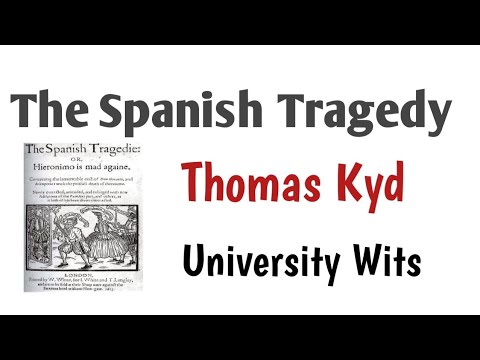














Thomas Kyd's The Spanish Tragedy (c. 1587) is credited with inventing the English revenge play genre, establishing conventions that would influence Shakespeare's Titus Andronicus, Hamlet, and other Elizabethan tragedies; the play explores the tension between public justice and private vengeance through the story of Geronimo seeking revenge for his son's murder, featuring a ghostly narrator and supernatural elements that create a meta-theatrical structure where audiences watch characters who watch other characters, ultimately demonstrating how Kyd's innovative use of dramatic devices and exploration of revenge as 'wild justice' laid foundational groundwork for English drama.
The Spanish Tragedy by Thomas Kyd: Analysis & Influence
Added:Familiarity with the historical context of Elizabethan and Renaissance English theatre.
Basic understanding of Senecan tragedy, specifically the conventions of Roman tragedy such as ghosts, revenge, and highly rhetorical language.
An introduction to the plot and themes of Shakespeare's 'Hamlet' to better appreciate the influence of Kyd's work.
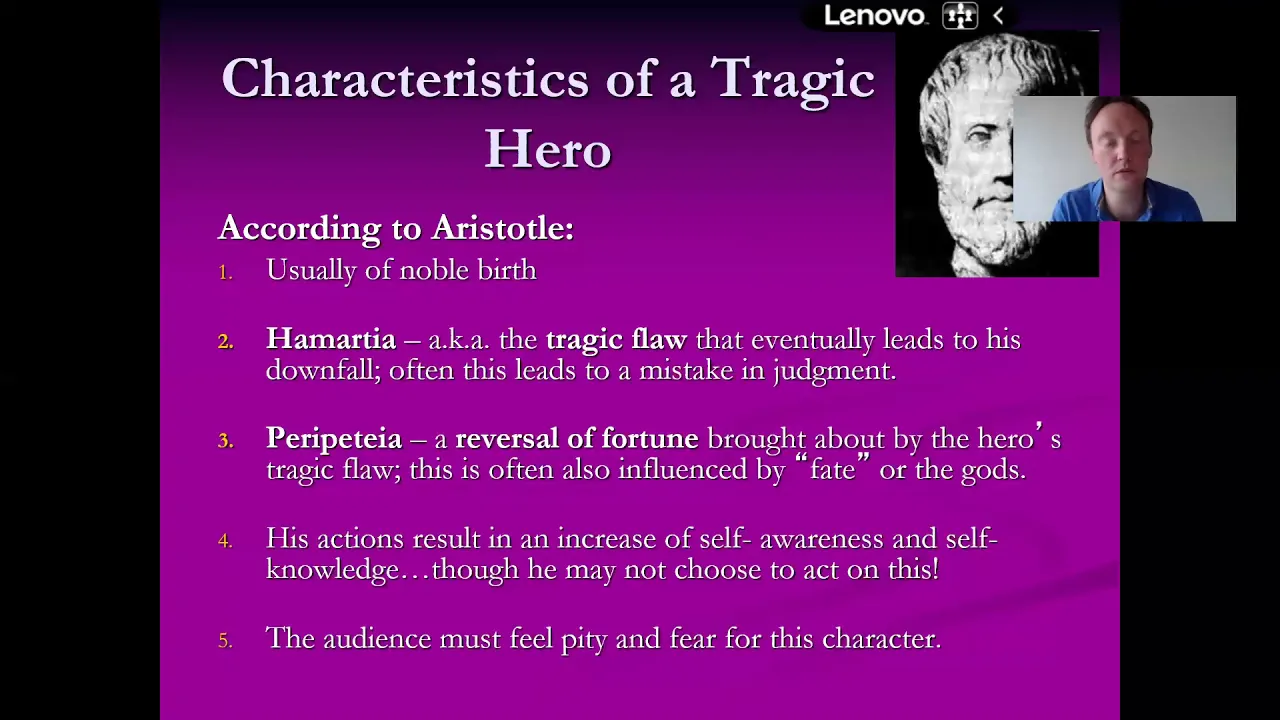
A foundational understanding of the concept of literary tragedy and the tragic hero.
In-depth comparative analysis of the 'play-within-a-play' motif in 'The Spanish Tragedy' and Shakespeare's 'Hamlet'.
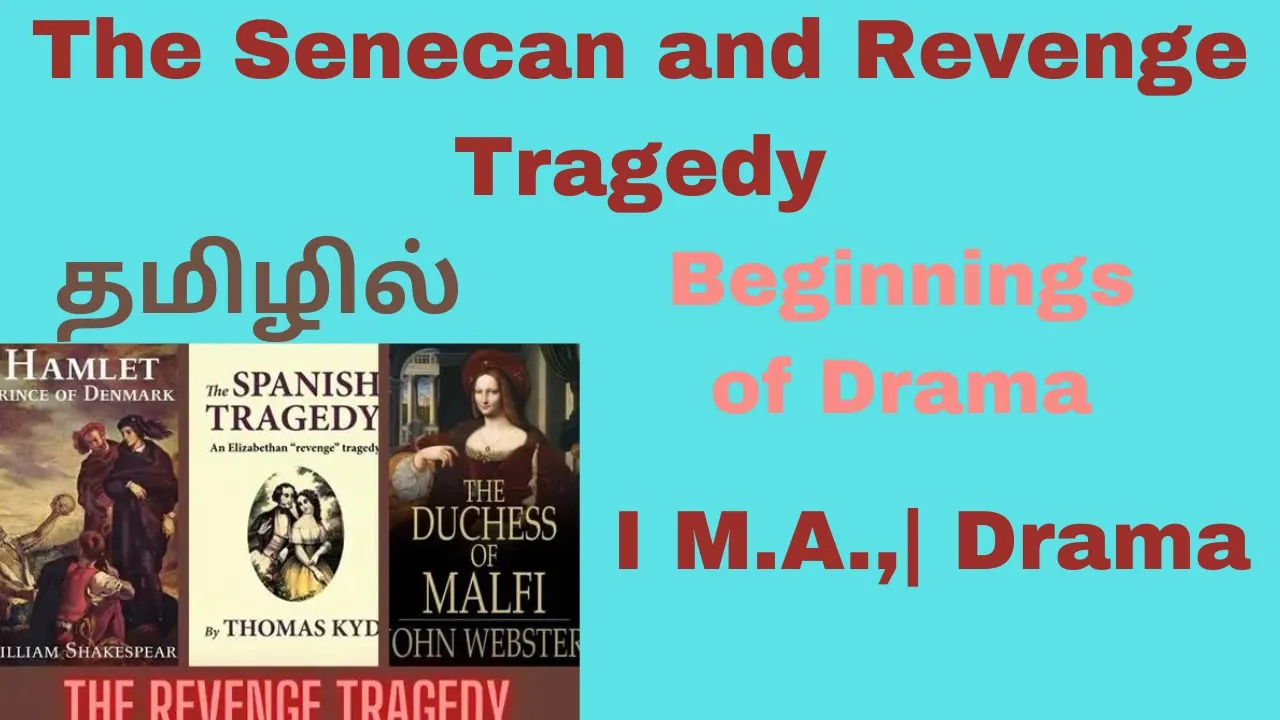
Exploration of later Jacobean revenge tragedies, such as John Webster's 'The Duchess of Malfi' or Thomas Middleton's 'The Revenger's Tragedy'.
Study of the 'madness' trope in Renaissance drama, analyzing how mental instability is used for both dramatic tension and social critique.
Investigation into the geopolitical context of Elizabethan England, specifically Anglo-Spanish relations and how they influenced contemporary literature.
Analysis of the 'Ur-Hamlet' theory and Thomas Kyd's potential authorship of the lost early version of Hamlet.
4.7K views136likes1:28:24Original Release: 2023-02-08
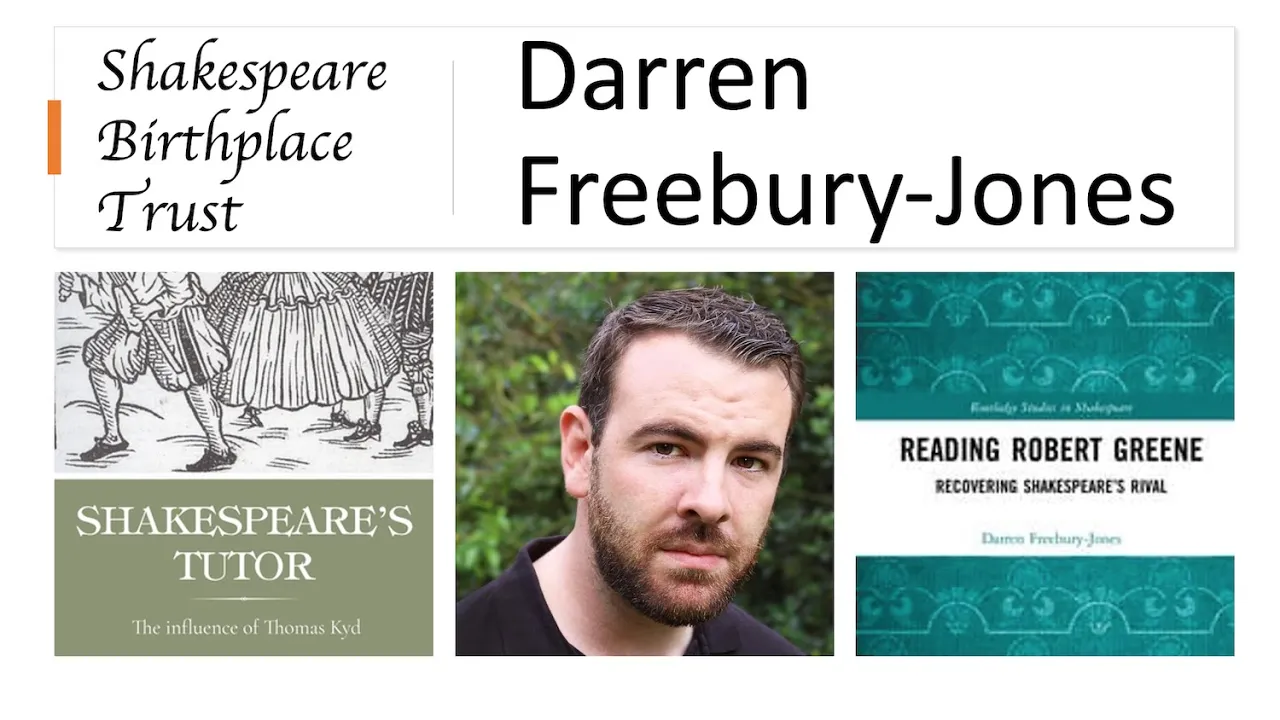
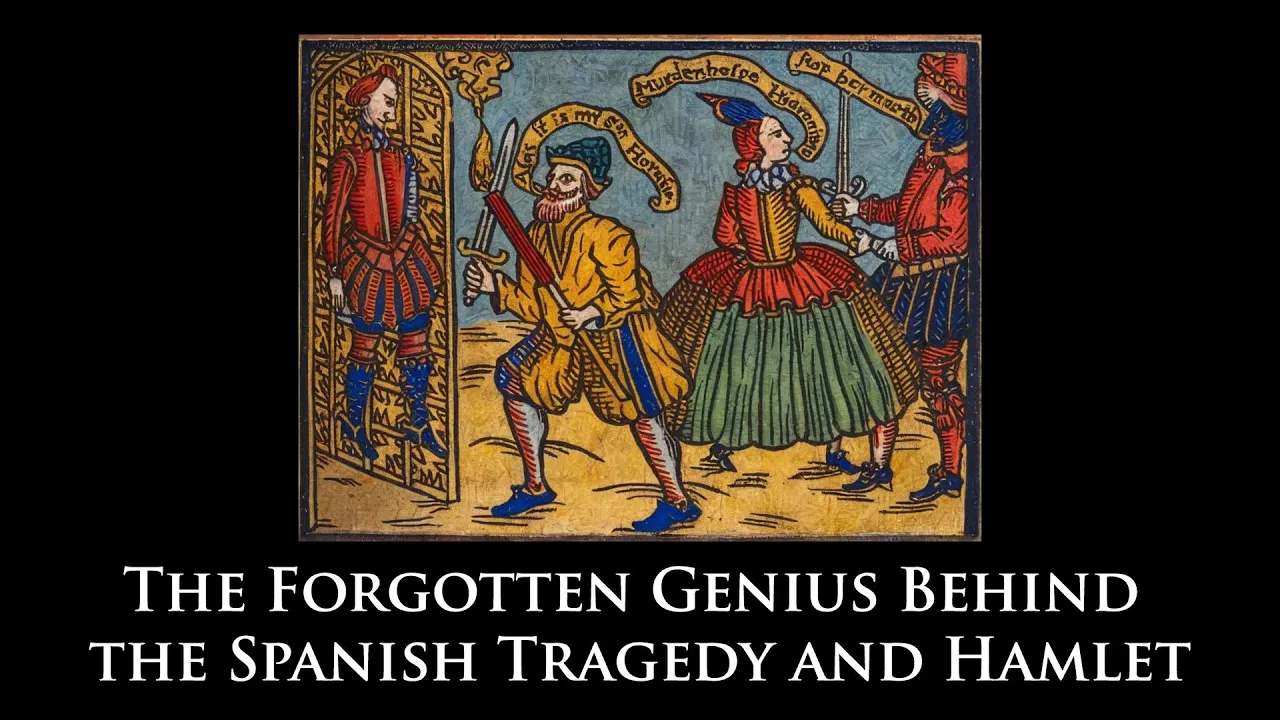
the playwrights Thomas Kidd died in August 1594 possibly as a result of his arrest and torture the previous year pursuing the anonymous author of an offensive doggeral poem found posted on the walls of the Dutch Church the privy Council had offered a 100 Crown reward for information and authorized its officers to apprehend every suspect their investigations produced if the suspects didn't talk they were to put them to the torture in Bridewell and by the extremity thereof draw them to discover their knowledge in this strikingly theatrical phrasing we find what Charles nickel has called The Raw tones of the Elizabethan police state the poem in question was 53 lines of iambic pentameter and was signed tamberlain it was the latest in a series of libelous writings containing not only anti-semitic rhetoric but threats of violence against worshipers in the Dutch Protestant church originally arrested on the 12th of May 1593 in connection to this investigation kids fortunes worsened considerably when papers seized from his lodgings were found to contain not threats against the Dutch but a suggestion of atheism panicking kid told his torturers that the documents were in fact the possession of his roommate and fellow playwrights for Lord strangers men Christopher Marlowe in hindsight a conspicuously obvious suspect as Marlow is credited with popularizing iambic pentameter and was of course the author of a two-part play called Timberlane if as it has been suggested kids early death was the result of the pains and undeserved tortures he had suffered the year before it was a miserably ironic fate for a writer whose best known play had explored the relationship between public Justice and personal Revenge [Music] foreign [Music] this edinburgh's most powerful book podcast I'm Ash your host and today I'll be discussing the Spanish Tragedy by Thomas Kitt critical consensus dates this play to around 1587 so a couple of years before Shakespeare's first plays appear on the scene the Spanish tragedy or hieronymo is mad again is credited with inventing the popular genre of Revenge play and some of the conventions kid establishes here can be seen in later Elizabethan and Jacobian plays like Shakespeare's Titus andronicus Hamlet Middleton's Revengers tragedy and John Marston's Antonio's Revenge set during Spain's conquest of Portugal it tells the story of Geronimo a Spanish Knight Marshal driven to Madness by the brutal murder of his son and the subsequent bloody Revenge he enacts on the murderers but geronimo's revenge is only part of a wider Revenge story set in motion by the ghost Don Andrea the presence of Don Andrea adds a mythological frame to the play a literal frame as Andrea watches events unfold on the sidelines accompanied by the personification of Revenge together they serve as a chorus to kids tragedy Revenge promising Andrea he will see the author of his death deprived of life in his own life Andrea was in love with bell Imperia nice of the king of Spain a love that they kept secret due to Andrea's inferior social status he was killed in battle by the son of Portugal's political leader the Viceroy this son's name is baltazar he is captured and taken back to Spain where he is well treated in fact the king of Spain sees an opportunity to smooth diplomatic relations with the conquered Portuguese by marrying his niece Bell Imperia with baltazar Balthazar luckily has fallen in love with bell Imperia and befriended her brother Lorenzo what Balthazar doesn't know is that he killed the man that Bell Imperia was in love with Andrea she now wants her revenge on him and rejects his advances instead partnering off with Horatio one of Andrea's friends however the devious Lorenzo and Balthazar react by killing Horatio hanging his body in his family's Garden where his mother Isabella and father hieronymo find him the distraught parents in their night clothes woken by screams and discovering the gruesome remains of their son is one of the most famous images from the play as Molly Smith has written Horatio's body hanged and mutilated before a full house takes precedence over Don Andrea whose death has been narrated rather than witnessed we'll talk a lot about the tension between what is seen in this play and what is said in the second half of the play we see the murderer Lorenzo covering his tracks by arranging the deaths of various Witnesses and accomplices Geronimo becoming increasingly mad and the Ghost of Don Andrea expressing frustration at not seeing Revenge performed against his killer but rather the miseries and deaths of friends this Supernatural figure the personification of Revenge tells him in response thou talks to harvest when the corn is green the end is crown of every work well done the sickle comes not till the corn be ripe be still and here I lead thee from this place I'll show thee baltazar in heavy case Bell Imperia who was with Horatio in the garden when he was killed has since been locked away by her brother Lorenzo however she manages to write Geronimo a letter in her own blood telling him what happened so Geronimo now knows the identity of his son's Killers but his attempts to seek Justice by appealing to the king are thwarted by the clever Lorenzo denied legal means of satisfaction hieronymo and Bell Imperia plan to Stage a play for the court casting themselves baltazar and Lorenzo by swapping prop daggers for real ones Bell Imperia and hieronymo are therefore able to stab The Killers to death for real in front of the king Bell Imperia then kills herself Geronimo gives us another memorably violent image by committing Auto glassotomy biting out his own tongue and then kills the father of bell Imperia and Lorenzo before finally killing himself the ghost of Don Andrea and revenge wrapped the play up Andrea requesting that the villains be subject to further agonies in hell and revenge promising to begin their endless tragedy throughout the play kid pits the judicial system against geronimo's Revenge dramatizing the distinction made by Francis Bacon revenge is a kind of wild Justice bacon wrote which the more man's nature runs to the more ought law to weed it out for as for the first wrong it doth but offend the law but the Revenge of that wrong putteth the law out of office by taking the Law into your own hands you assume a Godlike right vengeance is mine the Lord said making it quite clear that it is not the office of mere mortals taking the role of Avenger has not only Blasphemous implications but it also raises questions to do with authorship who is it who gets to right wrongs and rewrite history they wreck no laws that meditate Revenge says the Viceroy of Portugal but the law is shown to be both arbitrary and corruptable manipulated by the likes of Lorenzo to deny heronimo a fair hearing kids exploration of what is Right versus what is just is one reason writers like Margaret lamb have said that this is the first English tragedy to go beyond Good and Evil and similarly Gordon Braden has written that the play disputes with Marlow's tambilane and never to be settled claim to be the first mature drama on the Elizabethan public stage this maturity can be seen in the breadth of religious and literary reference the level of self-awareness bordering on what we would Now call Meta theatricality and the complexity of its verbal design an underappreciated aspect of kids craft that belies the critical commonplace the kid was better at physical action than he was with language on the contrary writers like Jonas a barish credit kit with playing a crucial part in developing English theater's rhetorical style into the dramatic saying that kid used the figures of rhetoric not simply to decorate the action but to articulate it the earliest recorded performance of the Spanish tragedy is February 1592 where it is referred to by Philip henslow as Geronimo and performed by the Lord strangers men however this is not thought to be the first performance as henslow doesn't Market as a new play as was his custom Edward allaine and Ben Johnson May well have played the title part of Geronimo and the greatest actor of the day Richard Burbidge almost certainly did as an anonymous eulogy to Burbage says he's gone and with him what a world are dead which he revived to be revived so no more young Hamlet old Geronimo kind Lear the grieved more and more beside that lived in him have now forever died the Contemporary Fame of the Spanish tragedy is attested to by its appearance in a student play return from Parnassus which features a scene with Will Kemp and Richard Burbidge auditioning actors who read from both Shakespeare's Richard III and kids Spanish tragedy in 1605 so over a decade after kid's death a first part of Geronimo was published telling the story of the Portuguese Wars and Andrea's death the tragedy was performed around Europe in both English and translation proving a particular hit with the Dutch but while the play was famous the playwright was not in its time the Spanish tragedy was better known and more referred to than Hamlet and although named along with Shakespeare by Francis Mears as being one of the best contemporary English tragedy writers Thomas Kidd's name became separated from his play over a century after his death the Spanish tragedy was performed as an anonymous Elizabethan drama late in February 1668 Samuel peeps watched the performance of the Spanish tragedy in Hatton Garden recording in his diary that the play was a bad one and that he and his company had mocked the Productions acting edel Semple comments that frustratingly then peeps has little to say on kids play Beyond its being bad moreover this fleeting judgment is the last record of a performance of the play until the 20th century it wasn't until the mid-18th century that the author's name was finally reunited with his play when as simple says Scholars Unearthed a comment by Thomas Haywood which quoted Mr Kidd in the Spanish tragedy this did not entirely resuscitate the play's critical reputation if anything as Shakespeare's posthumous Legend grew that of his contemporaries suffered they didn't measure up to Shakespeare's psychological reality the prevarications of Denmark's Prince left plays like the Spanish tragedy looking unsophisticated and sensationalist in 1815 August Wilhelm Von Schlegel called the play inane even today there exist many contemporary stage reviews and in fact podcasts about the Spanish tragedy that more or less described the play as a failed Hamlet an Elizabethan equivalent of a sleazy B movie on the 9th of November 1921 at birkbeck College the Spanish tragedy had its first performance since the 17th century J.H loben director of that production later wrote a verse prologue to the play which showed that even he the reviver of the Spanish tragedy considered it to be of rather dubious Merit with all the crudeness of an earlier age its artless borrowings from the Roman stage it's noisy rhetoric its uncertain touch hovering betwixt too little and too much with verse unkindled by fire Divine that glows and leaps in Marlow's Mighty lion our tragedy with more prosaic art finds a sure entrance to the human heart tracing relentlessly without relief the poignant anguish of a father's grief however by this time the fortunes of the play were beginning to change as a couple of years before T.S Eliot had lectured on kid in 1918 to 1919 introducing him as the first important dramatist nowadays there is a growing interest in kid and joining me today to discuss the playwright and the Spanish tragedy is Darren freeberry Jones author of a new book called Shakespeare's tutor the influence of Thomas kit Darren is a Shakespeare lecturer in Stratford upon Avon in 2016 he wrote a doctoral thesis on kids influence on Shakespeare and he is the associate editor for the first edition of kids collected works since 1901. so I don't think I could have a better guest to rescue kid from Shakespeare's Shadow and present him to you in his own light I started our conversation by asking Darren about the first responses to the Spanish tragedy well uh looking at the performance records I I think it was uh veritable Blockbuster really um really it really was it was uh it was like the Titanic of its era the the Gone With the Wind I think um of the Elizabethan periods uh most Scholars tend to date the play around 1587.
um it could have theoretically been earlier than that uh I don't think it was any later than 1587 and the play wasn't entered into the stationers register until the 6th of October 1592 uh for a chap named Abel Jeffs and Lord strangers men the theatrical company Lord strangers men revived the play that year and they actually performed the tragedy on 16 occasions at the Rose Playhouse between the 14th of March 1592 and the 22nd of January uh 1593 and then another plane company the Admirals men revived the play on the 7th of January 1597 and performed it 12 times Ash up to the 19th of July and the the records of uh theater impresario Philip henslow suggests that the play was on stage again uh in 1601 and 1602 and we have evidence that English actors performed the play on tour in Germany uh in 1601 and both German and Dutch adaptations of the Spanish tragedy uh were made so I I think the frequent performances uh attest to the play's popularity with audiences there's there's plenty of evidence it was popular with readers and printers if you'd like me to elaborate on that as well Ash yes please yeah well we can see in the publication record for the Spanish tragedy uh that the play was published in an undated quarto likely 1592 and Publishers actually competed over the rights to kids play so you know you think of a a studio hit uh I I I think I think that's uh that conflict attest to the to the popularity of the drama um so so able Jeff's uh and Edward White were responsible for publishing the first editions of the play and Edward White actually published two other plays uh that have long been Associated uh with kids uh Solomon and persada and Ardmore fabersham and he also owned the rights to the true Chronicle history of King Lear uh another play with a long history of being attributed to kids and Abel Jeffs was buying 10 Shillings uh for publishing an illegal edition of Arden fabisham in 1592 and white was also fine for publishing edition of the Spanish tragedy which seems to have belonged to Jeff's and the the wonderful scholar uh wonderful textual scholar and kid Scott Lucas CERN notes that the quick success of the Spanish tragedy Solomon and persada and ardner favisham is intriguing and he speculates that the reason why these plays were published by the same stationer around the same time maybe the kid actually sold Edward White the manuscripts and so we we have a reprint of the Spanish tragedy in 1594 with a compromising credit to Abel chefs to be sold by Edward white and on the 13th of August 1599 Jeff's transferred his copyrights uh to the play to uh William white who issued the Third Edition that year and White's intern transferred the copyright to Thomas Pavia on the 14th of August 1600s and pager issued the fourth quarter Edition in 1602 which is a very interesting addition because it was newly corrected amended and enlarged with new editions of the Peter's part and others and these editions amounted to around 320 lines in total and that fourth quarter Edition was reprinted in 1610 as well as 1615 in in two editions two issues uh if I remember correctly 1618 uh two issues again in 1623 uh the year of the publication of Shakespeare's first photo and 1633 and there's actually evidence of an addition preceding the uh 1592 surviving quarter uh that that was registered to to Jeff's and a revised version by Ben Johnson uh for which he was paid in 1601 and 1602 which very few Scholars now believe are represented in the 1602 Edition and just thinking about this play in terms of popularity and just to elaborate on that 1602 Edition a little bit I think what we see in these editions is an update of an old Blockbuster I called it a blockbuster earlier uh which would draw in new audiences who could take refuge uh in seeing an old classic but also offering something slightly different so revised version of kids play could entertain audiences in different ways and and the offer of a new spin on a popular play could entice audiences to attend renewed performances I mean think of think of changes like um added scenes and special effects to classic movies uh like in 1997 with the Star Wars Trilogy Of course um and viewers will often attend and did in that instance Cinema screenings of these uh updated films or or they'll buy such adaptations when they're available on mediums like Blu-ray and just to just to finish off my um my rather long answer to your question Ash um I think another indicator of the play's popularity can be seen in contemporary Illusions so so the play was parodied by dramatists like Thomas Nash Thomas Haywood uh John Marston Thomas Decker Ben Johnson Nathan field Francis Beaumont uh James Shirley uh Shakespeare as well well there's a database of plays uh developed by Martin Muller which is called Shakespeare his contemporaries and that database records large numbers of repeated phrases between kids tragedy and 16 plays by different authors and interestingly um six of those 16 plays are actually by Shakespeare well I wanted to ask you about that um that thank you so much for summarizing that that was brilliant I'd never thought of it before as the sort of the extended edition you know come come back for some more type the Revenge Type Thing yeah the opening lines of the Spanish tragedy are spoken by the ghost of Don Andrea when this eternal substance of my soul did live imprisoned in my wanton flesh each in their functions serving others need I was a courtier in the Spanish Court as Darren mentioned there one of the playwrights who parodied kid was Francis Beaumont whose play The Night of the burning pastel features a mock heroic death scene where the errant grosser wraith says when I was Mortal this my cost of corpse did lap up figs and raisins in the Strand here writes edel sample the Absurd demise of a lowly grosser's apprentice and the scatological wit Rafe describes himself as a constipated cadaver are used to poke fun at the Spanish tragedy's lofty rhetoric and to undercut the seriousness and permanence of death thereby deflating in semple's words the bombast and pretensions of Andrea's speech and it certainly is a bombastic speech one that declares the play part of the Epic literary tradition as Andrea recounts his Passage through a Greco-Roman underworld we also see straight away the place concentration on theatricality itself an actor walks on stage and in his opening lines discards his former role this Apparition calling itself a soul is not of the same substance it says as the deceased courtier from Spain a distinction made only more intriguing by the Contemporary reference to roles in the Elizabethan theater as Shades or Shadows if we Shadows have offended says Puck at the end of A Midsummer Night's Dream so the performed part whether it's puck or Andrea's ghost Can Be Imagined as a kind of Soul passing from body to body actor to actor between times between languages even all while maintaining certain fundamental characteristics with this speech and later as Andrea watches the subsequent action unfold from the sidelines we are being invited to wonder what happens to these Souls when they are outside of the context of the play proper Andrea's ghost gives us some idea describing what has happened to him since his death in battle how he descended straight to pass the flowing stream of acharon but churlish Charron only Boatman there said that my rights of burial not performed I might not sit amongst his passengers one of the most consistent elements of ghost mythology is the rule that the spirit of an unburied body cannot rest so Charon the ferryman to the underworld rejects passage leaving Andrea in a kind of limbo some critics have wondered whether kid presents in the Spanish tragedy a vision of purgatory Purgatory both In this passage through the underworld and by extension forcing Andrea to sit through the events of the play unable to interfere by recounting its death and afterlife to the audience Andrea's ghost performs a kind of literal spiritual confession which along with the purgatorial theme and kids arrest for heresy has given some writers like Thomas wrist the suspicion that kid had Catholic sympathies this afterlife however is not Christian at all but as I say based on Greco-Roman mythology and once back in the real world Don Horatio who is Andrea's friend has given his Fallen comrade a proper funeral Andrea's spirit is given passage by Charan and met with the three judges of the Dead minus ayakus and radamanth these three Wonder aloud where Andrea's Eternal destination should be and we see from its personage and divisions that kids underworld is based largely on Virgil underworld in book 6 of The Aeneid with however one notable deviation between the fields of Love and War on one side and the deepest hell on the other Andrea tells us I trod the middle path as Lorna Hudson writes this Third Way kid's invention for in book six of the Aeneid there were only two ways the right to Elysium the left to Tartarus corresponds to the notion of purgatory as a third place the locus of Torment not as Dan Nation but as trial and purification however as other critics like Tom Rutter have said there is no neat correspondence between the three ways and the three Dwelling Places of Heaven hell and Purgatory for starters the Third Way leads Andrea not to a forlorn Celestial waiting room as we might imagine but a stately Tower housing Pluto and his wife prosopine it is the latter who gives Andrea his doom and fourth width he says Revenge she rounded thee in the ear and they lead me through the gates of horn where dreams have passage in the Silent Night no sooner had she spoke but we were here I what not how in twinkling of an eye at the beginning of his journey the ghost describes how from life to death he made Passage through his wounds we have seen his subsequent virgilian Passage through the underworld and finally he passes through Gates of horn Gates of horn this is a classical illusion first found in Homer's Odyssey where through polished Ivory past eluding lies while true Visions through transparent horn arise so if we take this illusion in Earnest it has a very significant bearing on the play that follows kid is signaling that the subsequent action is a true Vision it is not some kind of afterlife entertainment the character of Revenge responds to Andrea telling him Thou Art arrived where thou shalt see the author of thy death Don baltazar the prince of portingal deprived of Life by Bell Imperia here set me down to see the mystery and serve for chorus in this tragedy now Kate was a follower of the Roman playwright Seneca whose plays were notable for their formal inventiveness and graphic violence and while in plays like Agamemnon Seneca used both ghosts and choruses critics like Howard Baker have suggested that The Ghost and revenge aren't actually Seneca Imports but taken from medieval tragedies GK Hunter expands on this saying that Andrea and revenge's departure through the gates of horn and their arrival at the Spanish Court can be seen as dramatic equivalents to the introductory sequences of medieval dream allegory the play may be viewed in this sense as what Andrea dreams as an allegory of perfect Justice the gods are indeed just and now you shall see how their Justice works out we have promised a mathematical Perfection of total recompense where Justice and revenge are identical from this point of view the human beings who appear in Andrea's dream the characters of the play scheming complaining and hoping are not to be taken by the audience as the independent and self-willed individuals they supposed themselves to be but in fact only as the puppets of a predetermined and omni-competent Justice that they the characters cannot see and never really understand but we watching the whole stage must never lose sight of this piece of knowledge so in Hunter's reading the vision Andrea's ghost is treated to through the gates of horn the play itself is not true in the sense of being what actually happened but true in the sense of being right what happens is just when Andrea later expresses impatience and demands to know when he will finally see Justice performed when he will finally see baltazar his killer killed Revenge tells him you talk of harvest when the corn is green a reminder not only to Andrea but to ourselves the wider audience that with Justice will come satisfaction as long as it is allowed to ripen just just for anyone who's not not as familiar with Thomas Kidd where does he what sort of contemporary is he to Shakespeare is he a bit older uh where is he in his career as Shakespeare's making his first steps in plays like Henry VI uh well well the Spanish tragedy is kids first surviving drama and like I said that that's usually dated um 1587. so so kid is a dramatic predecessor of Shakespeare's um but if we go along with uh Martin wiggins's argument that Shakespeare's career dramatic writing career probably starts around 50 91.
um kid was on the scene at the same time as Shakespeare um and I would suggest that they they actually collaborated on certain plays and I'm pretty convinced that Shakespeare likely acted in some of kids plays um potentially four pembroke's men that that's the plain company I'm inclined to um to assign to Shakespeare as an actor so I think Shakespeare would have learned a great deal from acting in kids plays and absorbing that phraseology and learning from kid in terms of uh verse Cadence and registers and dramatic devices so so they were I mean kid died in what was it 1594 I think um Cornelia his last place dated 1593. so so their their careers overlapped slightly the first couple of years of Shakespeare's writing career but I think kids influence on Shakespeare endured throughout most of uh Shakespeare's career actually the Shakespeare play with the most apparent connections to kids tragedy is Hamlet featuring as it does the appearance of a ghost a protagonist's indecision about taking his revenge and of course using the staging of a play as a means of achieving that Revenge an innovation that Catherine eisermann Mouse says is probably kids invention but a much earlier Shakespeare play Titus andronicus is perhaps closer in spirit to the Spanish tragedy it is much more violent for one thing the Revenger Titus is a father not a son and the villain Aaron is similarly Machiavellian to kids villain Lorenzo also the play is set in Rome so it shares that mythological backdrop we've already seen in the Spanish tragedy now Titus andronicus's Revenge story features unforgettably people being eaten in a pie a riff on the classical story of theestes which incidentally Seneca had adapted for the stage and while there is no people eating people in the Spanish tragedy there is a rich tradition of cannibalism in Revenge drama it's tempting to explain this tradition as a reaction to the Unstoppable messiness of Revenge as the cycles of Retribution spill out and proliferate the gut reaction is to stop that Revenge by having it consume itself to tie it in a knot have it eat its own tail and while there is no actual Act of cannibalism in the Spanish tragedy I think we still see that impulse I think we see cannibalism implied when Revenge has his line about Andrea eventually getting his satisfaction when the corn is green he uses a harvest metaphor you can't eat until the corn is ripe only a few lines before Andrea talks about passing through his wounds he says Valor drew me into Danger's mouth and then of course we have the near cannibalistic Act of Geronimo biting out his own tongue hard to think of a more brutal signifier of the failure of language than that the intensity of Hieronymus sorrow is such that he can't articulate it as he says my grief no heart my thoughts no tongue can tell interestingly in geronimo's play within a play at the end the king reads that Geronimo wrote the play in Sundry languages once the killings have been done Geronimo apparently abandons the script and says here break we offer sundry languages and thus conclude I in our vulgar tongue in some Productions the play within a play is indeed performed in a foreign language and it's interesting to wonder whether this was the case in its original performances Michael hattaway has suggested that one of kids great Fascinations was for memorable speech rhythms and Cadence and it is possible that he was trying to see whether he could employ a theater language that would to the unlettered at least communicate by mere sound kids use of silence is also worth paying attention to striking moments of Silence on stage can be missed entirely in reading the play we might forget for example that revenge and Andrea are watching the play with us in silence in fact Revenge falls asleep at one point awoken by the Urgent Andrea he says behold Andrea for an instance how Revenge hath slept and then imagine thou what tis to be subject to Destiny kids repeatedly draws attention to the fact that events proceed invisibly and wordlessly that even as Revenge sleeps he is soliciting Souls after Bell Imperia declares her love for him doomed Horatio says the less I speak the more I meditate Imagining the pleasures and dangers that this love will bring is more than Horatio can put into words just as the impact of Horatio's brutal murder will prove more than his father can put into words in fact Geronimo spends the interval between the discovery of Horatio's body and the climactic Revenge attempting to articulate his trauma but just as his wife Isabella is reduced to ruling lunatic cutting down the branches of the Fatal Pine where she found her song hanged hieronymo cannot make sense of his loss either their attempts to do so are read by the other characters as Madness Jonas a barish has written that the in the tension between speech and act lies much of the tragic force of the plot Geronimo is failed by the law and by his language just as we have seen him try to force his grief into comprehension after he has taken his revenge the king demands he explain himself why speaks thou not says the king to which hieronymo responds what lesser Liberty can Kings afford than harmless silence then afford it me suffice I may not nor I will not tell thee but the king waves him off fetch forth for tortures traitor as Thou Art I'll make thee tell here hieronymo is being denied the legal right to remain silent like the members of the privy Council mentioned in the introduction to the podcast the king intends to torture him into talking Geronimo denies his would-be torturer with Silence by biting out his own tongue and then by committing suicide leaving the king with the incomprehensible vision of three murdered relatives like the murder of Horatio there will be no explanation for him Diane K jakaki has written the riveting nature of Horatio's death is not as strong on the page primarily because it takes place between the lines it's almost as if like Geronimo the text itself can't quite account for Horatio's death unpunished it evades the latter of the law and without Hieronymus Vengeance it will go unrecorded kid expresses functional relationships as bonded in word and action Horatio declares how the birds record by night for joy that Bell Imperia sits in sight to which Bell Imperia flirtatiously reposts no Cupid counterfeits the Nightingale to frame sweet music to Horatio's Tale here the two exchange symmetrical phrases a stylistic device known as sticker mythia their back and forth proceeds If Cupid sing then Venus is not far I Thou Art Venus or some fairer star if I be Venus thou must needs be Mars and where Mars reigneth there must needs be Wars then thus begin our Wars says Horatio put forth thy hand that it may combat with my Ruder hand set forth by foot to try the push of mine says Bell Imperia but first my looks shall combat against thine then Ward thyself I Dart this kiss at Thee the Zyra taught the dart thou threwest at me Jonas a barish writes of this back and forth that the language dictates physical gesture nearly line by line the governing analogy between Love and War completes itself in a series of bodily movements the hand the foot the lips the glance of each lover Advance with ceremonious gravity to be parried by their counterparts from the other just as the Sallys of deportinggale troops were repulsed by the counter assaults of the Spaniards he's talking there about Don Andrea's account of the war right at the start of the play in Bell Imperia and Horatio's sticker Mythic interchange balance is maintained until they are startled by the entrance of the murderers in the opening account of the battle the waves of assaults go back and forth almost like the sea and victory is to neither part inclined until the entry of Don Andrea with his Brave lanciers made so great a breach so the entrance of the character who sets the whole Revenge cycle in motion is the one that first upsets this verbal balance when the world ceases to function the symmetry of the verse disappears as can be heard in hieronymo's famous Soliloquy oh eyes no eyes but fountains fraught with tears o life no life but Lively form of death a world no world but mass of public wrongs confused and filled with murder and misdeeds oh sacred Heavens if this unhallowed deed if this inhuman and barbarous attempt if this incomparable murder thus of mine but now no more my son shall unrevealed an unrevengered pass how should we term your dealings to be just if you unjustly deal with those that in your Justice trust the night sad secretary to my moans with direful visions wakes my vexid soul and with the wounds of my distressful son solicits me for notice of his death the ugly fiends do Sally Forth of hell and frame my steps to unfrequented paths and fear my heart with Fierce inflamed thoughts Michael Neal writing about how the play violently disrupts its stately rhetorical Norms says that here as the old man's distress grows the patterning becomes less conspicuous and the iambic rhythms more agitated while the rush of hieronymo's emotion begins to push across the line endings until it is checked by the imposition of a rhymed couplet though even here the four extra syllables of line 11 suggest the fragility of this formal restraint so even though there's a rhyme here with just trust what Neil is saying is that kid is writing in a way that sounds more spontaneous more improvised breaking out of the eyes no eyes formulation and speaking in a kind of Rush of emotion in Horatio's fleeting imagined happiness the birds he says record by Night the beauty of bell Imperia here we have a vision of peacefulness all is accounted for by contrast in the speech I've just quoted Geronimo says the night sad secretary to my moans with diaphal visions wakes my vexid soul and with the wounds of my distressful son solicits me for notice of his death there's a slightly obsessive theme with recording here we have this strange image of the night pictured as a neglected secretary waking Geronimo and demanding he dictate his notice of Horatio's death but instead of defining his situation all he can do is cancel definitions oh eyes no eyes oh life no life his grief is so extreme that language is incapable of expressing it just quickly some other similarities to early Shakespeare plays ones that we've talked about before on the podcast as mentioned in reference to Titus andronicus both writers were influenced by Seneca and Philip Edwards has described kids Roman borrowings as a deliberate attempt to fuse the Two Worlds of tragedy classical and popular thus familiarizing the elevated and elevating the familiar in Shakespeare's early history plays we see long cycles of Revenge play out down the plantagenet line revenge is said 20 times in the third part of Henry VI and in the second part of Henry IV we have the figure of rumor opening the Play Running before King Harry's Victory he says traveling faster than truth here in the Spanish tragedy the character of Alexandro says Evil news fly faster still than good hieronymo says at one point my son and what's a son a thing begot within a pair of minutes they're about a lump bred up in darkness sounding more than a little like how the future Richard III is described in the second part of Henry VI heap of Wrath foul indigested lump Shakespeare's language here may have been taken from kid or perhaps both took from Arthur golding's translation of Metamorphoses also known as Shakespeare's Ovid there in the creation story Golding writes of chaos a huge rude Heap and nothing else but even a heavy lump and cluttered clod of seeds together driven of things that Strife among themselves for want of order due and in relation to Henry VI I I noticed there's there's a lot but both in both plays there is a a lot of this apocalyptic returning to chaos imagery uh a lump bred up in darkness um oh world no world but massive public wrongs which is it reminds me of how Gloucester is described uh before becoming Richard III and also the the sort of creation story and Metamorphoses that Shakespeare seems to quote quite a lot does this suggest that someone's borrowing from each other or or that kid and Shakespeare might have had similar reading tastes that's interesting I I was thinking you mentioned the name Gloster there I was thinking of a different Gloucester uh in King Lear many years later um and that kind of job-like element of Shakespeare's great tragedy King Leah um and returning to logos primordial state of being I think I'm thinking of a passage from The Book of Job naked came out from my mother's womb and naked shall I return there um but but going back to earlier in in Shakespeare's career you mentioned reading material I think most playwrights of the Elizabethan period were drawing from similar materials in the context of the narrow and um intensely competitive worlds of the commercial stage I think they were constantly seeking stories to tell a new and innovative ways and killer Shakespeare both had grammar school education so so kid attended Merchant Taylor school which um also boasted such alumni as Thomas Lodge Lancelot Andrews and Edmund Spencer while Shakespeare went to King Edwards School in stratford-upon-avon so they would would have both remembered for instance their their ovids from Schoolboy studies we see a lot of influence or vidian influences in Shakespeare's work particularly his his earlier plays um uh and in in kids closet drama Cornelia uh the eponymous characters recollection of the grief of Venus over the dead body of Adonis transformed into a rose derives from Orbit's Metamorphoses as the um uh the editor of the 1901 edition of Thomas kids Works pointed out in 1901 and Cornelia in fact concludes with a colophon quoting uh Metamorphoses and Frederick espo has also pointed out that the marginal notes added by kids uh in kids pamphlets uh it's a it's a translation of an Italian work by toketo tasso the householder's philosophy uh includes a line from orbit so so there's just one example of you know similar reading materials um essentially because playwrights were seeking to draw from uh similar sources or potentially because they had similar grammar school educations but I think the the correspondences you picked up on I I think they're more than I think it's more than a case of uh both writers having similar reading takes so so I'm I'm working on a book at the moment uh with with the working title Shakespeare's tutor uh the influence of Thomas kids and in that book I mean I've been working on it for for several years um as I've been working on kid for for several years a kid in Shakespeare's relationship and in the book I I show that Shakespeare borrowed excessively from kids so so not just in terms of uh shared phraseology but also dramaturgy um Shakespeare's use of feminine endings if you forgive the uh the rather sexist term there for um first lines concluding in extra unaccented syllables uh Shakespeare and kit both share a uh propensity for compound adjectives uh so kid has such examples in his plays as gold abounding and Cloud compacted and I actually think that Shakespeare's debts to kid are equally if not deeper uh than his his debts to Christopher marlawan which much more has been written so I think a proper understanding of kids influence on Shakespeare's early work actually has the potential to to revolutionize our understanding of Shakespeare's dramatic development and those influences are most tangible most patents in his earliest works like um Henry VI Part three for instance the example you gave there Ash the Spanish tragedy has a terrific standout moment of gallows humor as on the day of his execution the character of pedringano is awaiting his promised pardon from Lorenzo and the hangman asks him come are you ready I pray sir dispatch the day goes away to which pedrugano responds what do you hang by the hour a kid may have had a contemporary inspiration for this sequence as Michael Neal writes he could be remembering a particularly scandalous episode in which Elizabeth's favorite the Earl of Leicester ensured the execution of An Inconvenient accomplice while pretending to work for his release a piece of gentlemen like Avery mirrored in the trick by which Lorenzo consigns the gullible pedrugano to his death the reason I bring up the hang by the hour gag is to highlight the comedic side of the play pedrigano is denied his pardon expecting Deliverance Lorenzo instead sends a boy with an empty box so pedrinano is hanged or turned off as it is described in the play the blunt and blundering mechanism of the law operates like farce turning same characters like hieronymo into incomprehensible instruments of Revenge Stephen justice has written that heronimo's tragedy is not so much that of a man who makes the wrong choice as that of a man to whom the right choice is unavailable a tragedy it most certainly is but it is one characterized like farce by miscommunication arbitrary and extreme violence and the subjugation of Sanity by overwhelming emotion T mckildon has written that kids imaginative energies are devoted not to the exploration of a moral problem but to a psychic upheaval in which the protagonist oscillates between the poles of his being until his darkest instincts take complete control silencing his Noble self or using it as their instrument The Bleak joke of the empty box delivered to pendragano has been read by Frank ardelino as a kind of reverse Pandora's Box where meaninglessness comes in the form of nothing instead of everything this is what Geronimo learns he cannot put his grief into words it has no expression Margaret lamb has written that the primary impact of the play is not moral or aesthetic but metaphysical the message is an image of the world it is so this chaos is not only inside heronimo he makes the entire court feel what he feels then they know at last then he need not bother to speak words Express moral ideas and so are useless kid shows the Unspeakable if the martial show trial is a travesty of justice that is because Justice is a travesty I think he'd got there first with so many things so you mentioned Gallows humor uh quite literally so so black comedy is is very prevalent in in Shakespeare's work so so he kind of goes against uh your neoclassical Traditions there in in blending humor and um and tragic matter and I think you really see those influences in his roommate Marlow's plays um which seem to post dates uh kids works and of course Shakespeare uh makes Optimum use a blending uh comic and tragic material um I think kid actually exhibits something of a an intolerance of Tidy genre definitions it was a very experimental uh period we tend to think of Elizabethan drama as quite old school and fustian and and high tragedy but but you know playwrights were drawing from from uh multiple Tales to tell tell existing stories and new and innovative ways and and they were they were experimenting with with generic paradigms and and I I think that the one thing that kid is definitely credited with is is the refinement of Seneca uh for the Elizabethan stage uh so so we've got the the Roman tragedy and loose Lucius Seneca uh who who was responsible for for such great tragedies as The Madness of Hercules uh The Phoenician women uh Agamemnon and kids demonstrably draws from from Seneca elements that had been previously seen in in courtly English tragedies in particular I think um you know like you're ghosts crying for Revenge uh you're bloody violent you know that kind of thing but I think what what kid does especially cleverly so something that really interests me is that he he placed his special emphasis on that idea of providentialism so seneca's dramas very much adhere to a providential design uh the idea that um events in the player divinely ordered and that disorder when sensitively interpreted uh reveals the Divine or or Supernatural will and many early modern folk of course were firm Believers in Divine Providence um maybe could because of the the growing Calvinism of the era and of course Shakespeare uh follows follows kid in incorporating elements into his into his dramas but particularly his his early history plays um especially Richard III which a scholar named William well was actually called a study in kidian methods Shakespeare's Richard III and that idea that that Divine forces have a say in uh historical events really tallies with Shakespeare's Chronicle sources for his for his history plays and you know the idea of the the Tudor mess and that kind of thing so I I would suggest that Shakespeare recognized uh through through kids Works an opportunity to blend Roman tragedy uh with with English History and that emphasis that the kid places on on providentialism just just to think about these playwrights in terms of uh dramaturgy and dramatic structure uh I I think that emphasis deeply uh impacted the structure of the Spanish tragedy so in in kids play you've got the ghost of Andrea and the allegorical figure of Revenge serving for chorus uh in this tragedy and they divide the plays acts with commentary on the action which very much uh follows um seneca's divisions of Acts separated by choruses and I think the kids device of having uh the revenge and the Ghost of Andrea watch over events follows that the Seneca chorus in that it casts a shadow of fatality uh over the unwitting characters in the play and I I think that Shakespeare recognized the the Artistry of kids dramatic paradigms especially that um voyeuristic I can't think of a better word for it really uh voyeuristic framing device which we also see in um you know very early Shakespeare comedy potentially Shakespeare's earliest comedy the team with the Shrew uh with the induction you've got Christopher Sly uh watching watching the play within a play of course um you know you always think of Midsummer Night stream or maybe loves labors lost or Hamlet with plays within plays but most of the action of the team with the Shrew is is a play within a play in that that induction with sly actually contains a number of lines from kids plays which are clearly product uh like go by go buy um Sanctuary I I think the line is which is you know if you read the Spanish tragedy of all the lines that um that leap out you I don't think go buy go buy necessarily woods but there seems to have been something about that line that's um just made it fair game for for parody and satire um so I don't know if the actor playing qurano must have done uh something something interesting with it you know some kind of gesture um some wild delivery some some kind of just yeah batshit delivery with that line baby yeah um but but talking about kids complex dramatic structure I think kids often consider to be a rhetorical drama test and I think his his language is very rhetorical I I think uh he was more uh proficient in terms of rhetoric than than a lot of contemporaries like your George peels for instance um or or your Robert Green's actually uh whose plays become more rhetorically charged as he progresses through through his short um uh dramatic writing career but I I think that complexity of dramatic structure is is complemented in plays like the Spanish Tragedy by ornate verse so I'll I'll give you some examples you've got that moment you've got that moment in which um kids stages about his eyes unwelcome advances towards Bell Imperia um that they had a winner of kids play and here kid combines your classical drama with the traditions of Renaissance love poetry I'm quoting is there uh actually and we can see this in the rapid fire um single line machine gun like stoichomethic exchanges between baltazar the the prince of porsing Gale and Bell Imperia so baltazar asks what it conceits have laid my heart to gauge and Ben and Perry responds pray that you borrowed and recover it uh to which baltazar says I die if it returned from whence it lies incredibly wet blanket line there um and Ben Imperia says a heartless man and live a miracle so you've got this this witty single line dialogue there and and what I I've discovered reading kids plays is that he often disrupts the these kind of verbal fencing um Jewels with uh the interposition of a spectatorial third character um just just a supernatural forces often intervening the outcomes of kids plays so kid also Reveals His talent for transforming ancient devices by making the Seneca stichomethia the vehicle for Horatio and Bell imperia's Ambrose fence uh in act 2 scene two so better period turns to uh Horatio uh very romantic tender scene and says but we're on dust out chiefly meditate to which Horatio uh Geronimo son says on Danger's past and Pleasures to ensue so you know it all seems well here but then you've got baltazar uh this this voyeuristic villain puncturing uh their exchanges with the sides to the audience so Balthazar says on Pleasures past and dangers to ensure so so you've got and Lorenzo actually the the villain of the play you've got those two characters Blake breaking up the Lover's discourse with a series of billionaire societies so you've got kids on it verse which is very much running in tandem with elaborate multi-layered stage action in the the audience we as audience members um or or contemporary audiences are watching revenge and the Ghost of Andrea who are watching the villains uh who in turn watch the the lovers in this play now Scotland's like Anne Thompson have pointed out that in The Taming of the Shrew uh in act four scene two you've got a moment in which hortends you and Tran you over here the courtship of lucentio and Bianca uh um Thompson notes that this is strikingly similar to actual scene 2 uh when Balthazar uh and and Lorenzo listening on Horatio and Ben Imperia so you see a debt in the team of the shoe that I think in that multi-pattern staging and I think that Shakespeare is few of love poetry with with stichomethia which is more traditionally associated with tragedy specifically um Seneca tragedy uh this is something we also see in Richard III of course uh when Richard Wu's Anne uh most famously you know was ever woman in in that manner would um and I think that Shakespeare is multi-pattern staging uh I I think that was a great uh debt to kid this late conflict mentioned by Andrea at the start of the play refers to the Spanish conquest and annexation of Portugal that took place between 1580 and 1582. the reason some Scholars have dated the play specifically to 1587 is that the year that followed was the year of the Spanish Armada 1588 which the play makes no reference to something critics deem pretty much Unthinkable in a play about Spain given that England and Spain were at War the play is quite restrained in its hispanophobia there's nothing like the amount of anti-scots or anti-french rhetoric found in Shakespeare's history plays although kid does get in a somewhat gratuitous reference to what a sound thrashing the English gave both Spain and Portugal in centuries gone by still this is less than what we would expect considering contemporary international relations in an age where as Eugene Hill has written a Spanish tragedy implied an English comedy perhaps the play functioned as both a tragedy the audience could walk away from feeling cheered although modern Productions tend to interpret Bell Imperia as a victim some have seen her as an embodiment of the Spanish Empire Eric Griffin has written that rather than possessing her one by one each of the plays Dons first Andrea then Horatio next baltazar and finally even Geronimo are possessed by Bell Imperia the argument of kids tragedy suggests writes Griffin that there is something perilously seductive about his Imperial mistress's charms as her name indicates Bell Imperia is a double related both to Bellum or war and to Bell or beauty uh was it a controversial time to Stage a play set in Spain and with a with a Spanish cast I'm not entirely sure to be honest how how controversial it would be I mean thinking of that dating of the Spanish tragedy um 1587 that and like I said it could be earlier I don't think any scholar would be inclined to date the play later which might surprise some listeners um I think that's important I mean firstly in setting to play in Spain kid is transporting his audiences to a more exotic world than early modern London um uh so I I think here you've got a kid holding up a mirror uh to contemporary Society um but I think it's a it's a distorted mirror because of that geographical distance and and this of course is is something we see in so many Revenge tragedies uh set in Spain or or Italy or whatnot by the likes of Shakespeare uh and and uh the likes of John Webster as well of course so in doing that in in in setting your play in a distant location playwrights can you know they can criticize the court uh essentially criticize the the monarchy uh because they you know they they don't adhere to Protestant England um and I imagine that audiences would respond slightly differently to to kids play depending on whether they were seeing the play prior or post-spanish Armada which occurred in July to August 1588 of course and you know you've got you've got moments of jingoism uh in kids playing kid can be quite um Shameless actually in uh in the patriotism of his plays uh you've got a moment where um Geronimo gives an account of English History and and kid draws from the convention of the um the dumb show and I imagine moments like that might have resonated a bit more after the English Protestant Victory I mean we we know very little about um the performance records of the Spanish tragedy preceding its entry in the station is register in 1592 but we know it was a huge hit um post-armada of course so it seems it seems to have resonated with Elizabethan audiences uh after the Armada um and there's no indication that it was it was like your Isle of dogs or your game of chess or you know those controversial plays that um that more or less got banned it seems to have been a very accessible play like it was a hit so so I don't get a sense that it was a controversial text because of that um setting reflecting on his triumph over Portugal the Spanish King declares Blessed Be Heaven and guider of the heavens from whose Fair influence such Justice flows a sentiment that would be widely shared by kids audience in England who not only believed that God would take their country's side in the fight against Spain but as Ronald Brown has written step in and reveal the identity of criminals in unsolved legal cases a belief that things will in effect work themselves out that regardless of how Stark things look the righteous will prevail is expressed in conventional terms by Isabella time is the author of both truth and right and time will bring this treachery to light the phrase was a common formulation in the wake of a failed plot to kill the queen in 1586 a writer signing himself TK possibly but not necessarily Thomas Kidd as brown writes employed the time truth right formula to draw a moral from the abortive attempt to assassinate Elizabeth time trieth truth and truth hath treason tripped the belief in time as the author of Truth and right would have been a comfort to Protestant England under threat from Catholic Spain like Andrea they had to content themselves to suffer the ripening of the Corn and the purgatorial watching of the play by Andrea is particularly interesting in the light of the Contemporary religious crisis Tom Rutter describing the impact of the Protestant rejection of the doctrine of purgatory writes that in dismissing this Doctrine as unbiblical Protestant theologians changed the relationship between the living and the dead to traumatic effect the dead were now to be considered as immutably located either in heaven or in hell not in any third place where the prayers of the living might diminish their sufferings we've already talked about how kids effectively dramatize is a failure of language where words Prevail not violence prevails says Lorenzo in moments where the failure of language is expressed most starkly such as when hieronymo tears papers with his teeth Michael Neil has identified a pattern of biblical illusions that provides a Mythic underpinning for the action these involve the Genesis story of the Tower of Babel imagined as a second fall of mankind it accounts for Humanity's woeful history of internacine strife in terms of the curse of linguistic division Frank ardlino has written that on the subtextual level the Spanish tragedy presents the defeat of Babylon Spain which is symbolically represented in the Revenge playlet Geronimo says now shall I see the fall of Babylon wrought by the heavens in this confusion as ardelino writes contemporary Protestant apologetics conflated Spain under Philip II with Babylon the [ __ ] of Babylon and the Antichrist Kidd has presented the Spanish tragedy the defeat of Spain by England Babylon was of course known for its Hanging Gardens and the manner in which Horatio is hanged in his parents Arbor is reminiscent not only of the crucifixion but a famous biblical betrayals that take place in gardens those of Eden and Gethsemane as he is stabbed Horatio cries out what will you murder me and Lorenzo replies I thus and thus these are the fruits of love as Michael Neal comments of this Lorenzo plays blasphemously with a familiar image of Christ's sacrifice in in which the fruit of love hanging on the tree of crucifixion cancels out the sinful Legacy of genesis's forbidden fruit Catherine Goodland has highlighted an interesting further illusion in this scene to the mystery Cycles in the York crucifixion Four soldiers repeat the word height as they complain about their orders to raise Jesus high for people to see as Goodland says following the murder Lorenzo looks up at Horatio's lifeless body and quips although his life was still ambitious proud yet is he at the highest now he is dead and it's cruel wit he evokes the fixation on the height of the cross in the Mysteries which may have suggested it to Kid the Babylonian parallels continue after Horatio's death becoming even more distinct when Isabella his mother running lunatic destroys the bower where her son was hanged saying fruitless forever may this Garden be seemingly referencing the destruction of the Babylonian Gardens meanwhile baltazar Michael Neal tells us was the common Elizabethan name for belshazzar the last king of Babylon for kids audience Neil writes this recollection of divine retribution against the enemies of God's chosen people will have had powerful political resonances for the destruction of Babylon the mother of whoredom was taken by Protestants to foreshadow the destruction of that scourge of True Religion papal Rome the [ __ ] of Babylon herself transforming therefore the Spanish tragedy from a drama of personal Revenge into an exercise in Theatrical prophecy announcing the apocalyptic destruction of a self-proclaimed Catholic monarchy Andrea awaits his personal Revenge but the audience watching kids play were waiting for an even Greener corn to ripen for an even greater treason to be triumphed by time as Ronald Brown has written the disaster which befolds kids Spain is representative of the Doom awaiting all nations in which the laws of God are ignored we mentioned some of the resemblances between uh kitten and Shakespeare but his his protagonist aeronimo seems quite unlike um Shakespeare's tragic protagonists anyway in being a sort of middle class uh a civil servant um not a prince or a you know a leader like Shakespeare's often are is he a typical kid protagonist you know I absolutely love that question Ash because like I said I I've been studying um kid and Shakespeare's relationship for several years and I've got to be honest I've never quite thought of Geronimo as something of a a domestic tragic figure um but by which I mean you know he's a non-arastocratic personage center stage uh in a tragic play but you know what you're absolutely right um he kind of anticipates that the the likes of tragic figures like Thomas uh Thomas Arden in art and a fantasy doesn't he in terms of um he's the tragic protagonist but he's not a king or a prince uh he he's the he's the Knight Marshal of Spain uh thinking of kids other plays you've got the Turkish tragedy uh Solomon and pesada in in which uh kid very much expands the um play within a play uh drawn from Henry Watson's uh Cupid's cartels uh Solomon of persada um the the the tragic protagonist in that play is a chap named erastus and he's the the Knight of Rose so so again you know he's not a uh a king or an emperor and just thinking in terms of because we're kind of talking about class uh and I also like to think about the language of class um and in terms of its language the Spanish tragedy is is very much a mixture of your heightened rat Rich um that that sort of uh dignified poetic verse that we associate with with high tragedy and and Royal figures um be they protagonist or antagonists but but also choppy dialogue akin to what audiences might hear in the Streets of London I think so I I I'm inclined to say that kids plays are uh you know they've been criticized for being bombastic and and um kid being more of a rhetoric rhetorician or retortition um there's a word there uh rather than I'm not sure which it is to be honest um you said both so I could just pick one in the edit I'll look it up he's considered to be more of a um retro Edition than a poet necessarily um but I I think kids plays even even the Spanish tragedy which is you know his earlier surviving play I think they reveal a real fluidity in terms of linguistic register uh which a wide range of of dramatic voices are um uh are conveyed one of the reasons that the elizabethans expected time to be the author of right was that in the words of Ronald Brown they were well aware that their police and courts were all too fallible they knew that Vengeance visited by due process of law was the exception rather than the rule the character of hieronymo would bring certain connotations of this as Timothy a Turner has said in the play Geronimo is a night Marshall an office Elizabethan audience members were would have associated with martial law and torture it is rather curious that his duties also seem to cover the staging of plays it is hieronymo who arranges the mask at the start of the play which in a rather unlikely way Trumpets the success of English conquerors of yore like John of gaunt then again perhaps kids own experience at the hands of State torturers proves that their respective lines of work weren't that far apart imprisoned the playwright wrote to the Lord keeper John puckering that he hoped those who falsely reported him are questioned that the state might break open their lewd designs and see into the truth their lives he says should be examined and ripped up effectually Charles Nichol has written that there are echoes of the torture chamber in his choice of words similarly there are echoes of the theater in Lorenzo's scheming I lay the plot he says he prosecutes the point when Geronimo achieves his revenge he announces to the audience who still think that the play is only a play happily you think but bootless are your thoughts that this is fabulously counterfeit and that we do as all tragedians do to die today for fashioning our scene and in a minute starting up again surely any actor delivering these lines is hoping to provoke some anxiety In Their audience about the health of his castmates Jonathan bate has written that by casting revenge in the form of an elaborate public spectacle the drama reveals that the public performance known as the law is also a form of Revenge action indeed on the way to the theater some of kids audience might well have had a stark reminder of the public spectacle of this kind of Revenge action as they crossed London Bridge they may well have seen heads mounted on spikes Molly Smith has written that during Elizabeth's Reign 6160 victims were hanged at tybin and elizabethans were certainly quite familiar with the spectacle of the hanged body and the disemboweled and quartered corpse in kids treatment of the body as spectacle we witness most vividly the earliest coalescence of the theatrical and punitive modes in Elizabeth and England uh unlike Geronimo uh Lorenzo seems very much like a Shakespearean villain he's delicious a delicious bastard really sort of a a natural performer he seems right out of the Shakespeare rule book in being a bit of an actor um who is who is relishing his part um and he and he he talks in that very sort of self-aware way I lay the plot I set the Trap um and in fact the place full of characters who are sort of vying to author and ax to play the words author and act crop up again and again um it almost feels like someone's trying to wrestle for control of it um how how radical was kid being in in writing sort of such self-aware drama because it's another thing that we we accredit Shakespeare for as being revolutionary and Brilliant but you know here it is again um years before in kids in kids my argument really is I really don't think um people recognize just how influential kid was on on Shakespeare's um dramaturgy um and so many other writers as well your Marlow's your greens or great debts to to kids I mean Lucas CERN uh calls Lorenzo the original Machiavellian villain in Elizabethan uh so you know Shakespeare and a great many of the writers oh another debt to Kit there um and what I found interesting recently while working on on my book was um that Lorenzo's uh speeches seem to have been at the Forefront of Shakespeare's mind when he was writing The Taming of the Shrew which is which is not relationship you don't think uh oh Lorenzo oh Taming of the Shrew Patricia or whatnot um but but there's a there's a database of all shared phrases between plays of the periods uh called collocations and engrams um which was developed by a colleague of mining perverse risby and in that database you've got uh unique phrases by which I mean they're not found in any other play in that uh Corpus of I think it's 527 plays of the period um from the date 15 52 to 1657 um and you've got nine phrases uh between the Spanish tragedy and the taming the Shrew that can't be found anywhere else in drum of the periods and five of those nine phrases are found in Lorenzo speeches you know if you were just thinking in terms of line count you might expect more from Geronimo or whatever um so I think the the evidence really suggests that Shakespeare was was influenced by Lorenzo in particular um I don't think we can discount the possibility that Shakespeare might have played Lorenzo um I am I haven't um discovered any evidence in favor of that but but I don't think there's necessarily any reason to uh to discount it and when we're talking about kid as being um a self-aware dramatist well you know you can really see that self-awareness in the structure of the Spanish tragedy where you've got uh you've got the audience watching revenge and the Ghost of Andrea uh with Revenge Revenge performing something of a a playwright Duty I think yeah he's he's a cosmic playwright really um he's he's going to write that tragic ending uh for audiences and those two figures intern watch the villainous voyas as I call them in this play who entered watch the lovers in those scenes like to scene 2 I mentioned earlier and then all of this is capped off by a play within a play that anticipates the use of that device for Revenge purposes specifically uh in Hamlet and that kind of multi-patent um staging and um that that self-awareness that meta theatricality um of the Spanish tragedy you know the kid plays is more sophisticated than than anything I've seen in in the plays of Marlow or green or George peel or or Thomas Lodge secretly watching Bell Imperia and Horatio expressed their love for one another baltazar says oh sleep mine eyes see not my love profaned be deaf my ears hear not my discontent die Heart Another Joys what thou deserves meanwhile his accomplice Lorenzo says watch still mine eyes to see this love disjoined here still mine ears to hear them both lament live Heart To Joy at fond Horatio's fall at this point in the play We are watching two characters revenge and Andrea watching the conspirators watching the secret lovers John J Winkler has commented on this aspect of kids stagecraft calling it an immensely clever articulation of boxed audiences watching audiences each reinterpreting the central tale and again on these levels of watching watching watching GK Hunter has said at each point in this chain what seems free will to the individual seems only a predetermined act to the onlookers although baltazar and Lorenzo are both villains we are quicker to understand baltazar's response I think he can't bear to look at the woman he loves with another man Lorenzo's response to watch and enjoy in fact to Feast his eyes on this scene knowing that he's going to kill Horatio is much less understandable and downright Grim considering it is his sister that he is watching but as we too are watching on we can't totally comfortably dismiss Lorenzo's enjoyment we would surely be disappointed by a happy rewrite to the end of a play like Romeo and Juliet and similarly we would be disappointed to have sat down to the Spanish tragedy and see Lorenzo's plan to murder Horatio averted kid raises this uncomfortable topic of enjoyment more than once already we have seen Revenge bidding Andrea to wait for his satisfaction one reason Tom Ritter finds it difficult to accept a reading of Andreas watching the play as a kind of purgatory is as he writes that his experience over the course of play is not exactly one of purgation in the final scene his ghost lists the killings he has observed of friends and foes alike and comments these were spectacles to please my soul expressing a sense of gratification that does not sound very beatific before going on to describe the punishment he anticipates for his enemies in the afterlife Margaret lamb has written that one of the most interesting critics of the Spanish tragedy is the playwright who did the additions of 1602 whoever he was he makes the painter scene a preview of the terrible end Geronimo demands The Impossible of art saying first to this painter that he meets draw me five years younger than I am my wife Isabella standing by me my sweet son and my hand leaning upon his head can't thou draw murderer make me curse make me rave make me cry make me mad make me well again make me curse hell invocate heaven and in the end leave me in a trance and so forth lamb comments that Geronimo first wants the impossible happy past then the moment of horror repeated plainly he wants a moving picture the play why would hieronymo want this surely it's not to save her and memorialize the moment of his deepest despair but to change himself from participant from actor in his tragedy to onlooker to reduce his involvement in the story and Shrink into the audience David cutts has written that in hieronymo's staging of his play the author ultimately loses control of his creation and he is displaced by the text of his revenge I find it tempting to see the Spanish tragedy as a story of craft vs Talent the cunning Corruption of Justice by Lorenzo eventually Blown Away by the artistic revenge of hieronymo his creativeness having been signaled by his theatrical Illusions the spontaneous poetry of his language and his final cut de teatra and perhaps hieronymo was almost right when he asks for the moving painting in the additional scene he glimpsed at the right way perhaps the only way to express what had befallen him was artistically but choosing to Stage a play and then claim revenge for real signals his failure to realize the potential of art to achieve Solace peacefully Donna B Hamilton has written that the play suggests that it remains within the dramatist's power to cultivate rather than to destroy become a maker who contributes something real to man's ability to endure and to profit from experience I was I was trying to sort of follow the the you know the levels of who's watching who who's watching who and then towards to the end Geronimo has a line which I'll probably bungle but he says something like I I'm going inward um to get my revenge or something and it almost lands like a joke because it's like you you certainly are we're well down this process of it's almost like kids saying you know I'm going in and in it well he he writes to play doesn't he he has a line like in Toledo that I studied and he and he says that he wrote this Solomon of persaider play so so he's uh he's the playwright um and he's the he's the casting director uh most fatally uh and it's you've got that spectacular moment where Horatio's uh corpse is revealed behind the Discovery Space you kind of Imagine uh hironment putting a curtain um back and then biting his own tongue out as well so uh that author figure silences himself and then you've got the intervention of the cosmic uh playwright as I caught him in the figure of Revenge this is something we see in seneca's tragedies actually is that the the chorus at the beginning of seneca's Dramas uh are very much serving according function you know they're just commentating on the play but as seneca's dramas uh progress they tend to get sucked into the tragic Vortex of the drama uh and I I get the sense that this is uh this is something we see in in kids play I mean Revenge falls asleep earlier in the play um and the Ghost of Andrew is like you know what are you doing mate you know wake up uh this this is going you know really well and I'm not enjoying it you know I want to see a bloodbath here um so I just think it's fascinating those those influences and um it's a bit like Inception isn't it it's the Inception of Elizabethan drama it's got so many layers uh and you end up asking yourself Revenge falling asleep and not really seeming all that um into it for a lot of the time how avoidable how how avoidable was it is it is it is Revenge demanded by the audience Andrea um I think can you think of another can you think of another coreic figure who falls asleep watching a play within a play you've got Christopher Sly in The Taming through he's not interested enough in the in the comedy he falls asleep so yeah so you've got Christopher Sly um performing the same Duty as the allegorical figure of Revenge if that's not offensive I don't know what is that brings it to the end of this episode on the Spanish Tragedy by Thomas Kidd thank you very much to my special guest for this week Darren freeberry Jones if you'd like to hear more from Darren I'll not only have my usual extended interview when we talk more about uh Darren's book Shakespeare's tutor we also recorded another episode on a play by another contemporary of Shakespeare one that we've never talked about on the podcast before so whether you're listening on your podcast platform or choice or watching on YouTube if you'd like to hear more please hit subscribe and look out for that episode coming out shortly until then Happy reading [Music] thank you [Music]
Up Next

114:49
Learn English Through Story: Shakespeare's Life and Plays (Level 4) with Subtitles
@ColourPages
11K views•2021-10-25

13:43
Formalism in Literary Criticism: An Academic Lecture Overview
@mattalberhasky9952
39.1K views•2015-08-05

6:08
Point of View in Fiction: First Person vs. Third Person
@magicalthriftyteacher
153.8K views•2014-03-31

15:25
1984: Orwell's Dystopian World and the Mechanisms of Totalitarianism
@AlternateHistoryHub
7M views•2017-03-04
Related Study Plans & Knowledge Roadmaps
Structured learning paths in Literature
literature
Graphic Memoirs: Visual Art, Trauma & History
01Foundations of Sequential Art and Visual Language
02Autographics and Processing Historical Trauma
03Visualizing Personal Trauma, Grief, and Graphic Medicine
+ 2 more learning modules
14h5 modules
Explore Roadmap
literature
Campus Novels: Evolution, Themes & Critique
01Introduction to the Campus Novel Genre
02Mid-Century Satire and the Post-War Academy
03Dark Academia and the Critique of Privilege
+ 2 more learning modules
14h5 modules
Explore Roadmap
literature
Theater of the Absurd: Philosophy & Plays
01Postwar Existentialism & Historical Roots
02Dismantling Narrative: Esslin & Absurdist Conventions
03Samuel Beckett and Tragicomic Existentialism
+ 2 more learning modules
12h5 modules
Explore Roadmap
literature
Revenge Tragedy: Justice, Madness & State
01Foundations of Early Modern English Theatre
02Anatomy of Revenge: Structural Conventions
03Psychological Complexity: Madness and Melancholy
+ 2 more learning modules
15h5 modules
Explore Roadmap