


![Phonology: Intro to linguistics [Video 3]](https://i.ytimg.com/vi_webp/1JYahvKUvPU/maxresdefault.webp)
















This video presents a speech sound development chart showing which phonetic sounds children typically master at different ages: by age 3, children should produce p, b, d, h, and w sounds; by age 4, they should produce t, k, g, n, f, and y sounds; by age 5, they should produce v, s, z, sh, ch, j, and o sounds; by age 6, they should produce r and j sounds; and by age 7, they should produce both voiced and voiceless th sounds. The chart focuses on single-word production rather than conversational speech, helping parents determine if their child's speech errors are age-appropriate or require professional intervention.
Speech Sound Development by Age: A Parent's Guide to Articulation
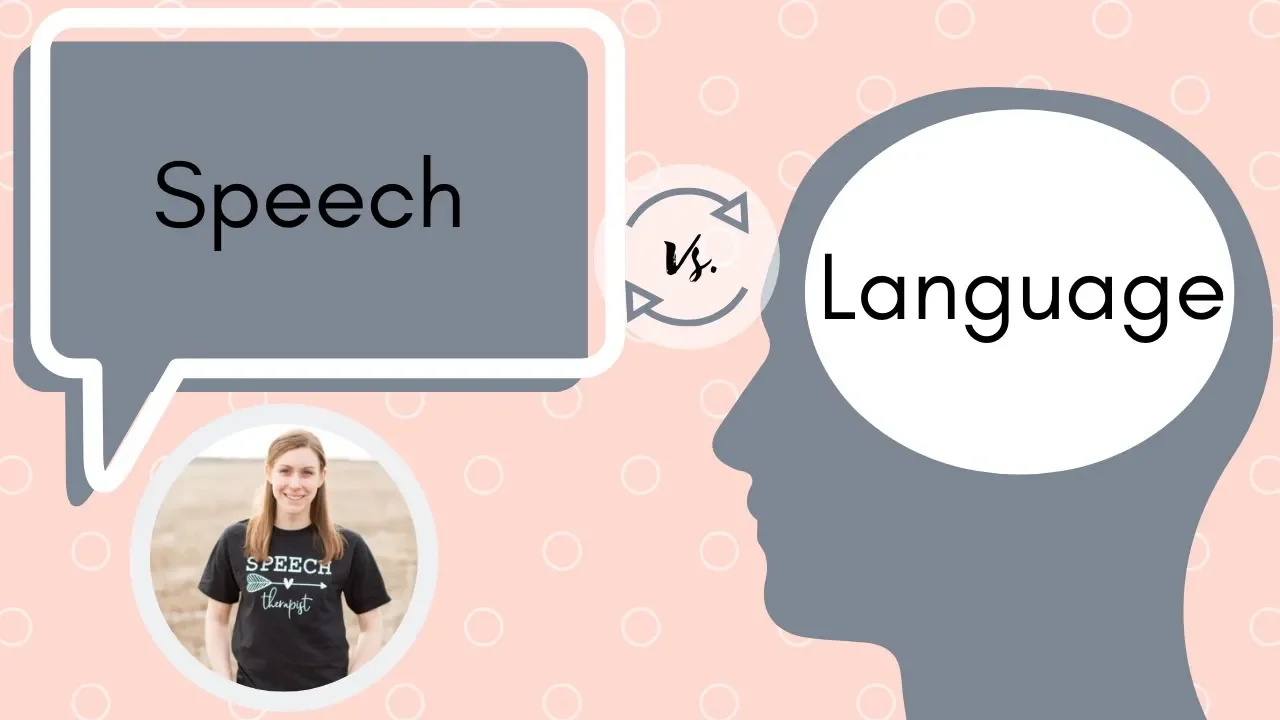
Added:Understanding the distinction between speech (the physical act of producing sounds) and language (the cognitive system of words, grammar, and meaning).
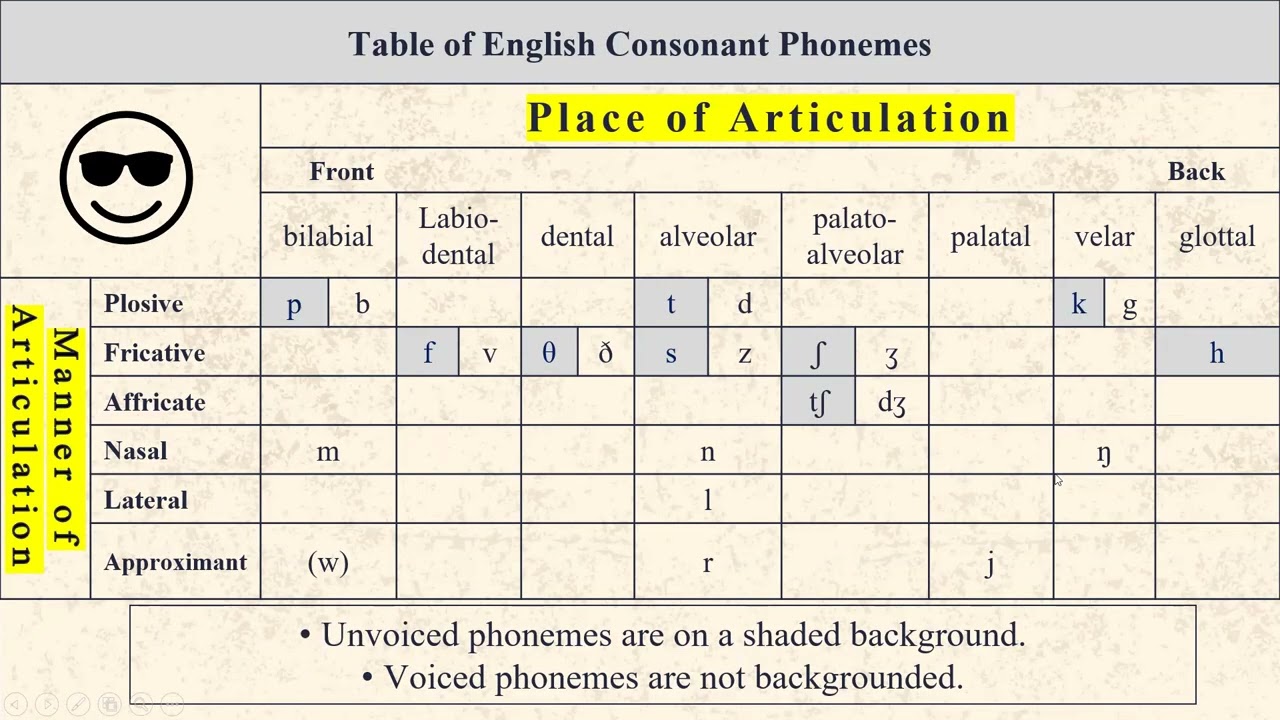
Familiarity with the concept of phonemes, which are the distinct units of sound in a specified language that distinguish one word from another.
Basic knowledge of the speech articulators (tongue, lips, teeth, jaw, and hard/soft palate) and how their coordination is required to produce clear speech.
Awareness of typical infant and toddler communication milestones, such as cooing, babbling, and the emergence of first words.
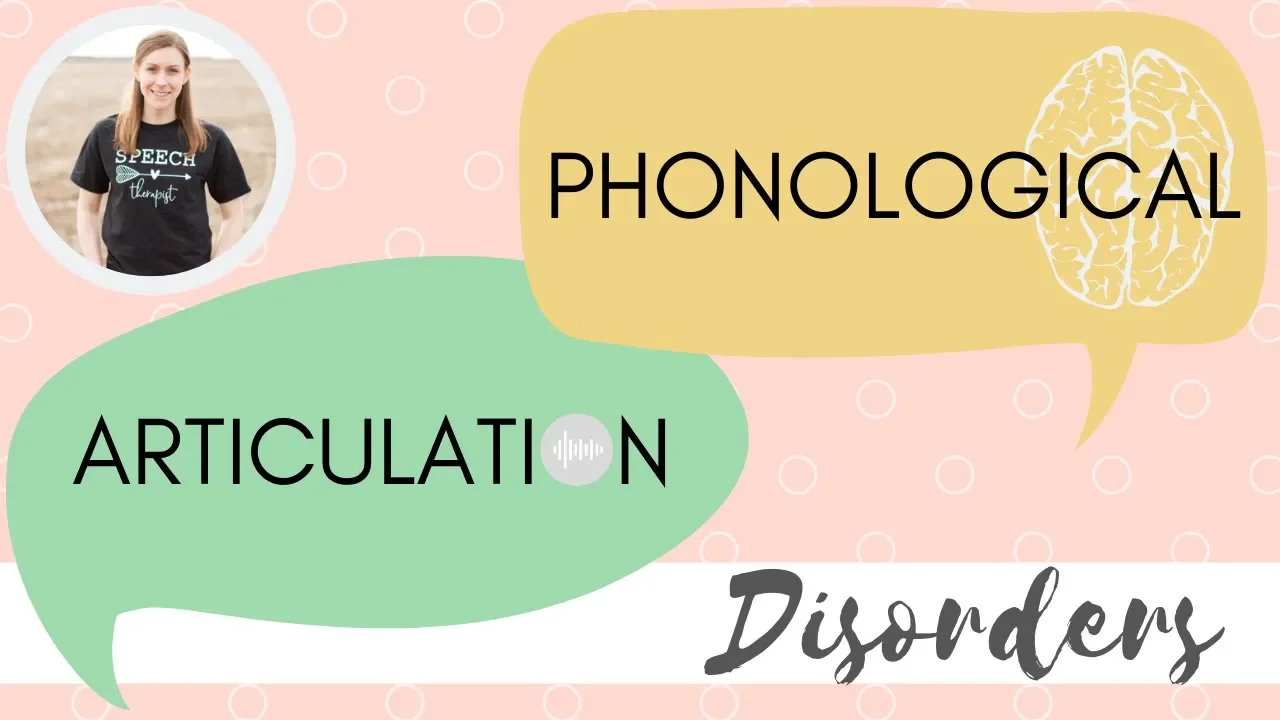
Differentiating between phonetic articulation disorders (difficulty physically producing a sound) and phonological process disorders (difficulty organizing speech sound patterns).
Exploring phonological awareness and its critical relationship to early reading, spelling, and literacy development.
Investigating the referral process for Speech-Language Pathology (SLP) services, including what to expect during a formal pediatric speech evaluation.
Learning evidence-based home stimulation strategies and speech exercises that parents and educators can use to support typical speech sound acquisition.
379 views32likes13:38Original Release: 2025-02-11
in this video I'm going to be talking about typical speech sound development or in other words I'm going to be going through each speech sound that slps work on and helping you know which sounds are usually produced at what age so that you can better know if your child is using the sounds that they should at their age or if there is reason for concern [Music] [Music] hi everyone welcome to my own SLP I'm Rachel and I'm a licensed speech language pathologist and I create videos with step-by-step strategies showing parents and caregivers how you can help your child increase their speech skills at home I have a video that comes out every Tuesday and on Thursday showing you different stratey for all of the different speech sounds as well as ideas and activities for how you can make the process fun and engaging for both you and your child be sure to hit subscribe so that you're sure to see each of my videos as I show you step by step how to work on your child's articulation skills at home helping your child to increase the confidence as well as their ability to communicate with others as you watch this video I also have two other videos that go along with it where I show you how to go through and test the different speech sounds so that you can figure out which sounds your child might be struggling with so those videos are linked in the description below I have one showing you how to take a speech sample of your child and there's also one that shows you how to do an articulation screener with your child and I'll talk about those more in this video a little bit later on but check those out they're in the description below so that you can know how using those to figure out which sounds your child needs help with watching this video along with those two other videos will help you figure out three things it will help you know if your child is on track for their speech skills it'll help you know if you should be concerned and if there is concern it'll help you decipher which sounds your child needs help with now throughout this video as I'm talking about the different speech sounds keep in mind I'm talking about the phonetic sound so it's not necessarily the letter that is used to spell a word so we are just focused on the sound that is being made in that word and if the child is able to say that sound so for example if you have the word cello and your child struggles to say cello maybe instead of saying cello they say then you're going to look and on this part of the word in cello you notice it's right here on the C where the child is struggling where the mistake is being made in production but when we think of the letter c oftentimes we think of a hard C sound so in this example you might say oh they they messed up on the word cello and it's this part of the word where the mistake was made but they weren't making a mistake on the C Sound it's on the CH sound or we usually refer to that or we think of a CH sound spelling it with ch so as I go through the development chart of speech sounds keep in mind that one we're talking about the sound that is being made not necessarily the letter that's used to spell a certain word and also as I go through the chart I will show you what letter is used with speech pathologists to represent each specific sound as I mentioned earlier I have two other videos that will to show you how to go through and test for any sounds that your child might be struggling with so the first one shows you how to take a speech sample of your child and this video you can find on my channel it's the speech sample for parents and you can also find the free form on my website at myones slp.com and what you'll do is you will print off that form and you will have this form and over the course of a day or two you will write down words that your child struggles with then I go through in the video and I show you how to take a record of the words that your child struggles with and how to figure out if the mistakes being made are age appropriate or if they are mistakes that you should be concerned with in this video with the speech sample usually you're doing over the course of a day or two just trying to take note of the mistakes that your child makes the thing that can be tricky with this is you are just waiting for your child to make a mistake and so they might not make a mistake during the time that you're trying to listen for it this will help you catch errors that they happen to make during that time but there might be other sounds that they struggle with that maybe they didn't happen to use that sound during that time frame that you were trying to take note of that so this is an option but then also I have another video it's my articulation screener you can also find the form for the articulation screener on my website I also have it linked in the description below and what is helpful about the articulation screener it's also testing for any speech sounds that your child struggles with but in my articulation screener I have a sheet of different pictures where you go through and you're able to test your child on every single speech sound that an SLP would test your child for so any sound that might be of concern it's going to test your child for all of those sounds in this screener and this usually takes between 10 to 20 minutes depending on the age of your child and their cooperation so this is much quicker and it is sure to test all of the speech sounds so you can go through and you can decide if you want to do the speech sample or if you want to do the articulation screener you can choose which one you'd like to do again both of those forms are on my website whichever one you end up choosing both of them are going to help you figure out which speech sounds your child might be struggling with then looking back at this developmental chart that we are going to go over in just a second it will help you know if your child should have already mastered that sound or if they should already be able to say this sound or if that's something that you don't need to be concerned about for a while whichever form you decide to use whether it's the speech sample or the articulation screener they are both going to help you figure out three things that's going to help you figure out which sounds your child might be struggling with it's going to help you know where to start and it's going to help you know in what order to tackle the speech sounds if your child is struggling struggling with more than one so now we will jump in and we'll talk about the speech sound development chart so as you look at this you'll see that it's broken up into different ages what it means by the different ages so you'll see that you have a list of letters associated with each age for the earliest developing sounds you'll see that by the age of three these are the sounds that a child typically can produce the thing to take note of is each of these sounds it it isn't in conversation so it isn't if your child is telling you a story or they're having a back and forth conversation with you that they're able to use these sounds this is purely just saying one single word so for example you will notice that by the age of three one of the sounds they should have mastered is the P sound so for example it isn't your child being able to talk about the park in conversation and use that PE sound it would simply be if you pointed to the park and you said hey what is that and your child just in one word can say park so if your child is now 3 years old and you point to the park or you point to a penguin and you say what is that they should be able to say park or they should be able to just say penguin using that P sounds just saying that one word let's go through the sounds that are typic quickly Mastered by the time a child is 3 years old I will go through and show you the letters that we associate with the different sounds so for this it would be p b d h and W then by the time a child is four years old typically on average they can produce the sounds t k g n f and Y by the time they're 5 years old typically they can produce v s Z SH CH J and O just to reiterate the fact that we're talking about the sound that these make so you'll notice here by the time a child is five they can make the J sound like the J so it will also consist of words that maybe are spelled with a G instead so like I'm going to the Jim Jim is spelled with a g in that instance but it's not the G or we usually associate that hard G with the G letter if they have a hard time saying Jim it's not the G that they struggle with it's the J is the sound and letter that would go together the J by the time a child is six years of age they can produce the r the r as well as the J and what we refer to as the vo th and what I mean by voice th is so there's two forms of th voice is if you put your hand on your throat and say words like them or mother you'll notice there's a slight vibration from your vocal folds you'll feel that vibration in your throat when you make the sound as opposed to by the time a child is seven years old they have typically mastered the voiceless th so again if you put your hand on your throat and you say words with the th as in words like think or bath you're going to notice that there is no vibration that's the voiceless th so both the th sounds but one has vibration and the other does not so by the time a child is seven they can produce the voiceless sound and just a reminder like I mentioned earlier these are sounds that are typically mastered at each of these ages but but only expecting the child to be able to say them in a single word not when speaking in sentences or in conversation they are just saying one single word on its own I would also recommend that you check out my speech sound hierarchy video as I will go through each of the levels to help you make more sense of what I mean when I'm saying in single words or in conversation in my hierarchy video video I go through all the different levels in which we work on speech sounds and that is very essential to understand those levels as you begin working on the individual speech sounds now this should give you an idea of which letters are associated with a specific sounds and at what age each of these sounds are typically mastered all right I hope some of the strategies in that video are ones that you're child specifically needs right now as you are striving to help your child increase their articulation skills let me know in the comments down below what was helpful or if you have any questions and don't forget to hit subscribe so that you can see each of those videos coming out twice a week on Tuesday and Thursday showing you all the various strategies for working on different speech sounds as well as making this process fun and engaging now I hope that you will will go share your goodness with someone today and I will see you in the next one
Up Next

15:14
IPA Transcription Tutorial: Weak Forms & Word Stress
@BillieEnglish
202.9K views•2022-03-10
36:52
Constraint Interaction in Optimality Theory: Epenthesis & Deletion
@Vidyamitra
180 views•2018-08-20

8:59
Forensic Linguistics: How Language Solves Crimes | PBS
@pbsstoried
1M views•2024-01-25

21:32
Accent Expert Explains U.S. Regional Dialects | Part 1
@WIRED
9.3M views•2021-01-21
Related Study Plans & Knowledge Roadmaps
Structured learning paths in Linguistics
linguistics
Optimality Theory: Tableaux & Constraints
01Phonological Basics: Sounds, Syllables & Rules
02Foundations of Optimality Theory: GEN, CON, and EVAL
03The Constraint Inventory: Markedness vs. Faithfulness
+ 2 more learning modules
15h5 modules
Explore Roadmap
linguistics
Morphosyntactic Alignment: S, A & P Systems
01Foundations of Syntax: Transitivity and Arguments
02The Linguistic Variables: Mapping S, A, and P
03Nominative-Accusative Alignment
+ 3 more learning modules
12h6 modules
Explore Roadmap
linguistics
Analyzing Sign Language: Phonology & Syntax
01Foundations of Sign Language Linguistics
02Phonology: The Five Parameters of a Sign
03Morphology: Word Formation and Classifiers
+ 2 more learning modules
14h5 modules
Explore Roadmap
linguistics
Pragmatics: Speech Acts, Grice & Politeness
01Introduction to Pragmatics: Meaning in Context
02Grice’s Cooperative Principle & Implicature
03Speech Act Theory
+ 2 more learning modules
14h5 modules
Explore Roadmap