
















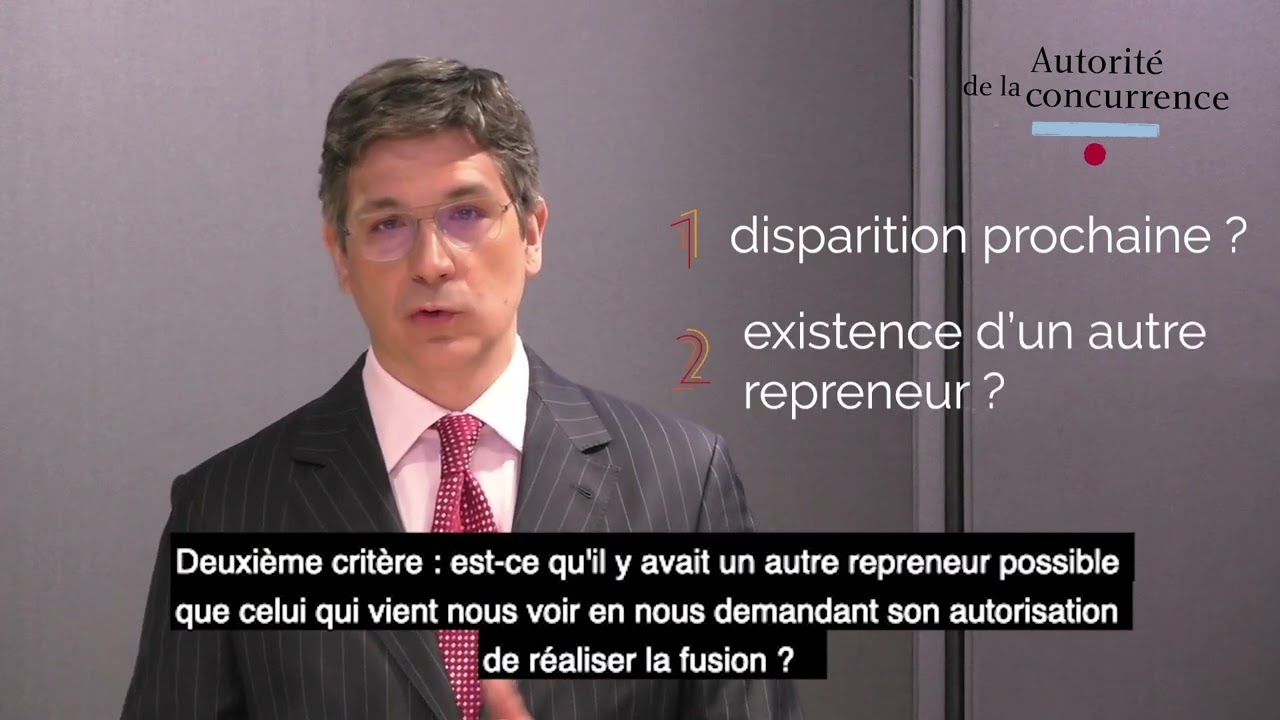







The failing firm defence is a legal mechanism in merger control that allows anti-competitive horizontal mergers to receive unconditional approval when one party is financially distressed and will exit the market anyway; it requires satisfying three strict criteria: (1) the allegedly failing firm would be forced out of the market due to financial difficulties without acquisition, (2) there is no less anti-competitive alternative merger that could occur, and (3) the firm's assets would inevitably exit the market without the merger. This defence is accepted at the EU level, national authorities like Germany and Greece, and in the US and UK, though it is rarely invoked successfully due to the high burden of proof on merging parties to demonstrate that the merger will preserve competition better than allowing the firm to exit naturally.
The Failing Firm Defence in EU Merger Control | Academic Seminar
Added:[Music] welcome everybody to the manham competition policy Forum today we do it virtually and we're very happy to have valant muu with us uh who is traditionally a professor at the Athens University of economics and business but now um also spending time as a commissioner at the helenic competition commission and the topic of today is a very important one something which is not completely new but which we have been seeing in some cases the failing firm defense in merger control Vala the floor is yours thank you very much for willing to talk to us great thank you for the invitation um Happy that I will talk about this topic and um I want to clarify that I will speak in my own name and not in the name of the helenic competition commission so uh I will start with the basics B that is uh what is a failing firm a failing firm is a firm which is very close to bankruptcy it has serious uh financial problems and which mean that it will soon in the near future exit the market okay now consider a situation in which a competitor of the failing firm wants to acquire the failing firm such a merger could rescue the failing firm keep it in the market or at least keep the assets of the firm in the market consider now that in the same situation the firms I mean the quir and the failing firm know that the merger will reduce competition in the market significantly meaning that they know that if they notify the merger if they should not they should notify the merger probably the the the decision of the competition Authority will be to prohibit the merger because again it's a merger let's say in a very concentrated Market okay but in such a situation the competitive conditions in the market can be at least as problematic and competitive even without the merder precisely because the failing firm is about to exit the market and this exit will take place anyhow I mean even if the merger will reduce the number of firms but without the merger firm will exit the market most likely anyhow this argument that the competive conditions can be at least problematic even without the merger uh can be the basis of a defend used by the merging party the firms that want to merge between them a defense that can lead to the approval of the merger which is an anti-competitive merger in theory okay the main logic I would say is that you cannot save something competition in case that cannot be saved through maor control now in competition policy practice decisions sometimes in guidelines as well such a defense exists and it's the so-called failing firm defense in fact uh in competition poish practice the failing from defense is formulated as a specific test as a rule that consists of a number of predetermined criteria it's not just a concept it's not that I just go and say I have a failing firm and please consider my merger but I when the firms invoke the from defense it means that they in their notification to the merger to the competition authorities they explain how they satisfy a number of criteria predetermined criteria included in the failing firm defense so it's not the same as an efficiency defense where the criteria are more vague and not somewhere explicitly predetermined or written here the criteria the rule to use the failing from defense uh are pretty clear now if the merging parties invoke the failing from defense that is in their not in their merging notification they say that you know it's a case of failing firm defense and they satisfy the criteria the defense then they get immediately merger clearance there's no possibility of you know remedies commitments or or so just merger clearance uh implicitly the existence of the failing firm recognizes uh that firm FL fa failure and the subsequent loss of its asset from the market could be even perhaps even worse competition than uh the merger itself because at least with the merger some of the assets which can be in some cases valuable for the economy for the market Remain the market uh it's a defense that is accepted and used in merger control both at the EU e level the level of various National authorities like Germany Greece uh and so on France as well as in the US and in the UK but it use is not straightforward from the from the Pary point of view I mean the criteria quite strict and hard to uh to prove uh from the emerging parties that they are satisfied actually my own experience is that it's hard from from the practi from the enforcers point of view from the competition authori point of view also to check if they are satisfied indeed um the last time that it was used successfully at the EU level at the I mean at the EC European commission level was a case in 2013 involving two Greek firms uh in their line Market g a lines and OIC a I will talk about this case a bit later on so 2013 the last case at the EC level uh it was expected by some commentators and Scholars that during the covid-19 crisis that there would be a reawaken of the fa failing from defense more firms doing wars because of the financial crisis and then the covid crisis and thus that the number of uh cases were invoking the fa link firm defense will increase this not this did not happen at least didn't happen immediately during I mean in 2020 or 21 but it did happen more recently although I'm not sure that these cases are related to the covid crisis or what was before the crisis okay so very recently uh the it seems that failing f is making let's say a comeback uh for example uh in the France competition Authority in 2022 for the first time uh cleared a merger on the basis of the failing firm defense uh the Greek competition commission the helenic competition Commission in the summer of to 2023 so last summer we also cleared the merger for the first time on the basis of failing firm defense and very lately recently in the last uh two or three months uh the CMA the UK competition Authority clear two merges on the basis of the failing firm uh defense okay that's why you see also the title in the in this posing is the failing for defense making come back uh now I finish with introduction so let me say what's going to be the rest of the talk I mean the structure of the rest of the talk uh we first talk about uh merger control and the use of counterfactual merger controls then I will uh present the legal framework work at the EU level regarding failing fir defense and the ca the B the main case law on failing from defense at the AC level uh then I will move move on to the economic analysis and rationale of the failing firm uh defense if I have time I will talk about some related Concepts issues to that there's some debate about them and I will conclude with presentation of uh the Greek case that I mention not the the Gan or liic but the one that we the heling competition commission analyzed uh last summer NE case okay now so let me start with magicals assume the two Farms decide to merge and they are competitors okay so we have horizontal merger if certain thresholds are met what they have to do is they have to notify the relevant competition Authority and then the relevant competition Authority has to assess the merger examine the situation see if there are theories of harm and so on this would lead to a decision by the competition Authority regarding the merger and what which are the options as we all know the options are three either merger clearance or merger approval with remedies commitments H or merger prohibition okay now when should the competition Authority choose merger prohibition there are two necessary conditions the first is that the merger is anti-competitive that is according to the merger regulation of the European commission that the merger would significantly uh har effective H competition the second necessary condition is not only that the merger you know will decrease cical competition but all the second cation is that the merger causes the decrease in competition the competition harm that in other words there's a causal link between the harm and the merger that the harm wouldn't ex if the harm H would ex exist even without the merger then it's not the merger fault for the harm okay now how the competition Authority H examines if these two conditions for merge prohibition are satisfied it does so by comparing two situations it compares the competitive conditions in the factual what is the factual the factual is what will happen if we allow the merger the future with a merger but is expect to happen in Market in case of merger clearance with the situation the counterfactual which is what will happen if we don't allow the merger future without the merger and it should allow it should go for merger prohibition only if competition conditions in the factual are worse than the counterfactual so that we have the causal link between them okay now in most cases in most merger cases since they do not include the failing firm uh the counterfactual is pro proxied by the stat status quo by the current situation in the market before the merger by the competitive conditions that Prevail at the time of merger okay the implicit assumption is that in the near future the situation will not be very different than the current situation that we have before the merger takes place this is also stated formally in the E horizontal merger guidelines in most cases uh the current conditions uh will consider the relevant uh uh competitive conditions for evaluating the merg counter fuction for instance let's see how this works so consider a situation where Prem merger the status quo as is the one as as the one we see in on the slid that is we have two firms competing between them to opoi competing for the same consumers they're in the same Market they are competitors now what will happen if they merge the factual what will be the factual is that we going to have a merger a measure among them sorry which going to create a monopoly now if there's no failing firm story in there what the competition Authority will do is will compare the factual is the merger with the counterfactual which is the situation what that is expected to to occur if we don't allow the merger which is proxied by the pre merg situation status quo if we have a merg like the one in the slide the conclusion of the competition Authority is that emerg is anticompetitive creating a monopoly in the market why the standard theory of harm strong unilateral effects decrease I mean actually disappearance years of competitive um constraints or effects in the market increasing Market power increasing prices and so on similarly if we don't have in the beginning let's say a doo but we have an oligopoly with a more than two firms let's say three firms firm a b and c the factual will be a merger between A and B so we have a Doo and the comparison between the factual and the counterfactual will be again here situation where from three firms uh we will go uh to uh uh two firms so the merg again will be likely antic competive now the theories of harm being unilateral effects or and some cases also coordinating effects okay now take a merger as the one that I uh described in the previous two examples that is a merger from two to one firm or a merger from three to two firms horizontal merger uh an anticompetitive merger most likely and assume now that in this merger one of the firms is failing so we have an antic competive merger where one of the firms is failing so we know if it is indeed failing that in the near future we're not going to be in the status BX situation so here the counterfactual shouldn't be the status as in the previous examples that I I show you I showed you here if the merger includes a failing firm the counterfactual should be adjusted to reflect this we should consider alternative counterfactuals reasonably realistic alter the possibilities depending on the market and the situation and so on what could be the potential uh counteract shs well the answer can depend again on the case in the market and the industry and so on but in theory we could have the following ones we could have a counterfactual where if we don't allow the merger then the failing firm will exit from the market as well as the assets of the firm let's say you know it's Vehicles build things Machinery whatever we could have another counterfactual which is if we don't allow the merger H The Firm exits from the market but not all of its assets maybe some of its assets remain in the market because somebody else buys it buys them you know it buys the Machinery the building whatever okay it could be the this other firm could be either another incumbent or even a potential entrant who uses the uh the assets in the same Market though a third counterfactual could be that another merger takes place that is the failing firm is not acquired by the H proposed acquired by but by another you know acquired which could be another incumbent or it is acquired by a potential entrant in the market you know a fir who is not currently the market and H it acquires this firm and ners it to this Market all this could be alternative counteracts that in some cases they can uh arise I mean case with uh failing firms uh so go back to the situation that I describe which is that we have two Farms which decide to merge one of them is a failing firm the firms want to merge know that the merges anti- competitive relative to the status quo what can they do they have one one of the options that they have is when they notify you know the competition authorities about the murder that they invoke the failing from def FS they invoke the use of this criteria uh that as I said ear I mentioned earlier it's predetermined it's a kind of a formulated test uh rule and uh if they do that if they invoke the failing from defense what follows is that in the merg assessment the competition Authority will need to examine whether the criteria of this test are um satisfied or not uh this parenthesis here I will talk about this criteria in a moment because they I will describe them in detail what are the criteria I'm just saying here about the general idea of the process that occurs so have a merger with a failing firm and at the competive merger they have the option on invoking the failing firm defense if they do that the competition authorities examine whether the criteria are satisfied if we have successful use application of the failing F defense and if they conclude that this is the case then the competition authorities have to decide that the merger is cleared okay so in other words as I said in the introduction the failing fir defense uh is a kind of an absolute defense successful use of it leads to unconditional approval because of this because exactly of the reason of the fact that it's an absolute defense that its criteria should be you know very ER carefully uh designed and its criteria should identify the cases in which indeed the defense is absolute the cas is in which there is no possibility that the counterfactual is better in terms of competition than the factual in order what in order to avoid the type two errors you know clearance instead of prohibition which should have been prohibition through the use of the failing FR defense uh okay now uh what is uh the current form of the failing fir defense at EU level and when I'm talk about EU level I mean at the AC level okay European commission level um in the European Union the failing firm defense is not included in the merg regulation so if you read the merg regulation there's no mention of the term failing firm defense but it's included in the EU merger guidelines of 2004 the horizontal merger guidelines um in particular this guidelines say that uh H the EC may decide that otherwise problematic merger is nevertheless compatible with the common market if one of the F merging parties is failing and the it goes on and says that the European commission considers the following three criteria to be especially relevant for the application of a failing firm defense so it describes the criteria that constitute the failing firm defense and that firms need to satisfy the first Criterion is the following the first cron says that the alleged and this is like a copy paste from the merary regulation uh the allegedly failing firm would in the near future be forced out of the market because of financial difficulties if not taken over by another undertaking the second Criterion is that there is no less an competitive alternative purchase of the notified merger and the third is is that in the absence of a merger the assets of the failing firm would inevitably exit the market okay three criteria H they should be satisfied all of them and the burden of proof is on the merging parties I mean the merging party when they notify they should explain why the first gr is satisfied why the second is and why the third is satisfied and the commission she has to check whether what they say you know make sense or you know uh or not and check maybe in depth uh more in depth what the AR what the claims are let me go now more into details of the details of each criteria uh because I mean they have the essence let's say of the failing firm defense in clis in practice so the first criter who can restate it as says that we should have exit of the allegedly failing firm from the market without the market the The Firm will exit the market if we don't allow the merger I mean it's obviously what why we need this criteria we want this criteria in order to make sure that it is the firm indeed is failing and otherwise there's no point of having a fail from defense um formally it must be the case at least in in Europe that the uh firm uh shows that by showing that its financial situation is pretty bad okay so remember the burden of proof the burden of proof is in the merging parties so they must demonstrate that they are making loss for more than a year for a number of years they must also demonstrate that they are unable to secure the necessary additional funding for banks or investors that could help them survive they should also show that they are unable to undertake any restructuring H you know sell some assets themselves or change a bit their business and so on that would would allow them to return to profitability uh so the firms provide this evidence um there is no particular formula or test for checking this first criteria used by the commission it does it on a Case by casee H basis it evaluates I mean the financial difficulties and the evidence depending on the particular case and here there a some words of cion provided by not the European commission by the FED FTC in the US which says that it has been striking to see firms that were condemned as failing rise like Phoenix from the asses once the proposed transaction was abandoned so it's not we should be careful with this criteria it's necessary and we should make sure that it's satis right um now the second criteria can be stated as follows there should be no less anti competitive alternative merger okay nobody else from either from inside the market or from outside the market who might be interested in entering H is not interested in buying the failing firm and if it is interested the mer with him going with that firm going be H more competitive than the actual merger okay so two conditions in in this one condition in this one criteria uh so again the burden of proof is on the merging parties so what does this mean the merging parties must demonstrate that they have made good faith efforts to find alternative acquires they cannot just say you know that nobody came and nobody was interested my they have to show that they ask the market you know for AC for potential acquirers uh and also they have to say that to show that uh for instance that they were not uh some offers which they rejected because uh the acquisition price was low or lower than the one with which they made the agreement or lower than the asking price any price acquisition price which is above the liquidation liquidation value of the firm should have been accepted or it doesn't otherwise the criteria is not satisfied let's say uh here in most of the cases uh in order to evaluate this criteria to make sure that it's satisfied or to check whether it's satisfied the commission itself the European commission uh undertakes a market test test itself what do I mean it it it SS questioners to potential acquires of the firm I mean usually firms in the same Market or similar markets and asks them you know during the merger assessment Pro procedure whether they're interested in buying the fil F there have been cases where interest has been expressed during this the stage of the assessment um a disadvantage or you know a risk with this uh procedure of you know asking firms whether they're interested or the failing firm looking for acquirers is that a time especially of Crisis there might be no viable merger but uh maybe things will change in the future and it might be viable better emerging in the future but might might be too late not only because you will have to make a decision but also because maybe the firm is out of the market you know it's assets out out of the market maybe it's too late so but anyway you should keep that in mind now the third C is a bit more tricky and says that the assets of the failing firm will exit the market without the merger now talking about assets of course most firms have both tangible or intangible assets so machines buildings brand names uh usage rights licensing rights and so on now this assets if they are valuable if they have value if the firm exit the market it's about to exit the market The Firm will this ass will be liquidated during the bankr bankruptcy procedures so this could mean that other friends could potentially buy these assets and potentially they can put it back in this market use use them in this market okay not immediately most of the cases but hopefully not very far I mean not not very far away in the future now the merging parties must states that there are no interested buyers in this in their assets you know and uh the European commission also sometime often actually makes Market test with respect to that Criterion as well I mean it asks other firms in the market or similar markets whether are interesting in buying assets of the firm in case the firm exits the Market no it's a The Firm has not exited the market we evaluate the merg before that but here it's also important that if there are uh potential buyers of the assets uh that the this can be done in a in a timing way I mean because sometimes the assets can be uh destroyed in the meantime not in purpose but because of their nature you know the during the bankruptcy procedure which can take months or sometimes even years so what I've done so far is I I describ the criteria of the AC uh emerging guidelines and now I'm going to talk about some case law I mean the main case law actually I think all the cases that exist that are or like to include all all of them at least that have to do with the failing firm defense uh and the European commission uh the approach that the failing firm defense has over uh sorry the European commission has over the failing firm defense and the criteria that I described earlier they were not there put there from the beginning they they were developed they were they evolved through time through case law so we didn't first have the criteria and then we had the cases was actually the other way around okay in Europe uh so the first case where in the European commission we had the applic the development actually in the application of H infirm defense uh was a case in 1994 K Sals and MDK uh it was a case which uh would create uh almost a monopoly a monopoly I would say in the number of chemical product markets in in Germany and in this case the European commission identified uh three criteria in the decision which it stated that if this criteria are met then we would have faing failing First Defense the first two criteria are the same as the ones that I described earlier okay so they were included in the decision of this case the third criteria was different was not the one that I said earlier it was a criteria which was saying that without the merger the acquiring firm would gain the failing firm's market share that is if we have exit of the failing firm the market share of the failing firm would go to the proposed acquir anyhow okay so it was a reference to the market sh and not to what would happen to the assets of the firm uh two decisions followed uh which were unsuccessful I mean the commission decided that they did not fulfill the three criteria that I mentioned earlier not the I the two the first two which I mentioned plus the market sh criteria not the exit of f criteria H the second successful failing Farm defense case at the AC level was in 2001 it was uh uh the acquisition of Euro dial and Banton by Bas the two uh the Euro and ping were firms who uh were having important financial problems the merger in this case would not create a monopoly so it was not two to one it was it would create a dominant position okay so it's kind of 3 to2 or 4 to three and so on uh in this case the European commission changed the third criteria the decision so uh instead of using the market shtin that used in C on case that I mentioned earlier it it changed the thir Criterion to the following one to the one that I mentioned when I described the merger guidelines which is that without the merger the failing firm's asset would exit the market so reference to exit of assets not reference to the market shes indeed in in the decision of the case the commission explained that we have a situation where the market s would not necessar acquire AC crew go to the acquir in the case of exit but still that merger would be preferable to no merger because in the no merger case we would have the loss of the assets so the European commission stated that even though the market secr that he had used in in the previous you know C Sal case would not be satisfied here the factal could be better than the counter factual due to the exit of faet in the lad okay and this decision led to the creation H to sorry to the three criteria that were used in the E horizontal guidelines that I presented earlier okay so we started with some different CR IIA then the first two were kept and the third was adjusted and then they were included after this case in the merg guidelines which was 2004 so three years after the BFF decision uh we had two more cases which were unsuccessful failing firm defend cases in 2007 2012 but unsuccessful did not mean that they were prohibited it meant in these particular cases that uh the European commission said that the fa failing from defense criteria not satisfied or at least some of them are not satisfied so what it did it did a complete analysis counterfactual analysis with a correct counterfactuals take into account that perhaps we going to have exit of the firm uh and the decision that it reached in both of them was merger approval with remedies okay so unsuccessful failing from defense cases but no merger prohibitions but instead merger with remedies and a more complete counterfactual analysis not just checking the criteria um and then we have the two most recents which are actually pretty old cases of success for failing from defense in E level which one was the Nina cell case and the other ones was the DN Air Lines olymic air case in 2013 to the best of my knowledge I mean these are the most recent at the level a a common characteristic of uh sorry of the Nina cell case and the Gian OIC case uh was not only that they were successful in terms of failing firm defense and God M clearance but that they both were cases of failing division not a firm meaning the the uh subsidiary of a firm was failing you know not the whole uh not the parent company okay um so for instance in the Nina cell case uh Nas was uh wanted to acquire a certain failing refiner that belonged to cell the parent company cell what didn't have financial difficulties or I mean important financial difficulties the refiner which was a subsidiary let's say of f head and the European commission was convinced that sell although not failing could shut down the refinery because it was not profitable for it and this would be a big problem for European consumers because the shutdown of the refinery would lead to reduction in production capacity for oil and the do result in higher prices for consumers so it did clear the merger on the basis of the failing fir defense the general L Olympic air uh case is uh uh Strange Case in the following sense is the first time that there were two decisions about the same merger okay there was the first decision in 2011 which uh prohibited the merger ER the decision was that the failing firm defense was not successful the criteria were not satisfied and then in 2013 a second decision about from the European commission after a second notification of the merger of course I mean which was uh merger clear is on the basis of the failing firm defense again it's the first and only time that the European commission cleared the merger after it has been previously prohibited okay two years afterwards uh it was a merg between two Greek Airlines companies only because the previously public national uh Greek a line that we had which was privatized in the meantime 2009 and which was a division of a marfing group which is an investment uh company the bar company was an Investment company uh the merger would create a monopoly on five local routs I mean connect flights within Greece for instance the flight between the two main cities of in Greece which is Southend and the saloniki they were the only companies you know uh providing services in this one but the the same thing would happen in four more local routs and it would eliminate potential compor on six more Roots so emerged to Monopoly or to almost Monopoly in some cases uh so what happened between the two decis Visions uh the financial the there was a big change the first criteria the what is the big change in the first criteria is that the OIC care but also its parent company morphing have been doing much worse in 2013 than they were doing in 2011 I mean bankruptcy was uh certainly say in the case of Olympic air Airways in 2013 marfin was doing pretty badly the parent company so it was didn't have the incentives or even the abilities to find to keep on financing K care and uh some argue and probably correct that this was also uh an outcome of the big economic Finance G crisis you know which hit Greece quite uh severely I mean the deterioration in the economic situation of these two companies uh also so this affected the satisfaction of the third Criterion uh which uh you know the brand name uh of uh OIC air uh belonged actually to the Greek state but nobody was seemed to be interested in buying it they were not in uh ER they were I mean the commission did Market test and found out that they were not players who were interested in entering this Market even in the case of exit of OIC and so on okay but that was 2013 now the answer could be different you know with uh tourism and so on and there is some entry I mean in the local uh regional and local markets increase even in Airlines um besides the EC as I mentioned in the beginning the failing from defense emerg control is used in many countries the US the UK National authorities use it in fact uh there's a lot of case law regarding no there's not a lot I mean there are many cases of H failing firm defense also in the US and in fact the first failing firm case was in the US and it was the international suitcase in 1930 started back then and the if the logic of the failing firm defense as a test is similar in all the jurisdictions I mean the there's a test some criteria if satisfied it then they get you know Mar clearance the criteria in most of the jurisdictions and cases are uh it seems that they are the same see very similar but very similar but there exist some difference sometimes okay for instance in Germany if you look at the German uh uh guidance on substantive merg control of uh 20 12 it's with respect to the third criteria Criterion it says that it doesn't refer just to assets it it says that without the merger the acquiring company would also largerly gain the failing firms Market position and it go on and explains what does it mean it actually cares about what will happen to Market sh and says that if several other competitors remain in the market it is generally to be expected that the acquiring company will not gain the fail company's market shares in total instead that is likely that the remaining companies will also be able to gain a significant part of Market sets so exit can be more beneficial than the merger with regard to impact on competition if the other suppliers would compete for Market assets of the failing firm okay so it says I mean at least that's highight I translated that we shouldn't care only about what will happen to us we should also care what happens to to the market shares in the scenario of exit while in in the formal uh I mean the easy mer guidelines talks about only Assets in the past there was cases where it looked at uh Market said and it switched to Assets Now they' been it seems that it's not clear whether markets are should be looked on also or not okay in I mean in terms of 's law so a bit of Economics now I mean basic economics of uh the failing firm defense so initially I will talk about just the basic uh logic or economic logic of the defense and whether there is a such one if there is some economic rationale for the existence of a failing defense the answer is yes one can think of very simple cases where uh indeed the merger uh clearance is not course it can be even better than the merger prohibition I mean settings where we have a failing firm so I'll just demonstrate the most basic one case which is similar to one that I described earlier so again let's consider a situation where Prem merger uh the status quo is that we we have uh two firms competing for the same consumers and then we have a proposed merger and one of them is failing let's say that firm B is failing okay and let's say that we have a proposed merger the factual the merger will be the creation of one firm acquire a firm a acquiring B so creation of a monopoly and then here the the comparison between the factual and the counterfactual will be the following the factual we have the Monopoly created but the counterfactual will have just a in the market big will exit because it's a failing firm that's the difference from the beginning where there was no failing firm in my in the boxes that I show you okay so if we compare now this factual where we have a monopolist with the merger and we have a monopolist also so without the merger we could conclude that either that they are equal I mean the competitive conditions are similar the two cases or we could conclude that it actually the merg situation could be better than you know the counterfactual why because if the assets of the fair of the failing firm Are useful we're talking about markets with capacity constraints uh we're talking about markets where B had let's say um a strong uh brand name as product variety then we compare we end up comparing a firm with bigger capacity more production than a monopolis with smaller capacity smaller output and or similar we compare situation if we're talking about product variety brand names and so on comp We compare situation with a multiproduct monopolist in the faol versus a single motor single product monopolies where the multi product can be better for consumers for I mean for than the single product so one can think of my very various similar cases where the factual with the merger can be better or at least not worse than the counterfactual okay which is a exit of the firm um now this is I mean this was for the main basic logic uh of having a failing firm defense now if we talk about the criteria in particular because we have failing F defense but failing fir defense has a number of criteria we should understand or try to understand also the logic of them and try to for me it was trying to understand whether they do Safeguard it's an absolute defense I was wondering whether they do indeed Safeguard against situation where the counterfactual is not more competitive than the factual because if they don't you know satisfy that then they should shouldn't be an absolute defense we shouldn't keeper clearance on that because there's a danger of type two errors uh to be honest uh I did I haven't found uh maybe it's too obvious or I don't know for me it was not obvious I I I didn't find somewhere written the rationale of this criteria besides the first one which is obvious I mean I saw that people use it I saw that some people criticize that especially practitioners finding them too strict in almost always they find them too strict and they want for relaxation of them but I didn't find a justification uh of them or if to see whether they are indeed necessary or sufficient okay so uh I mean this comment doesn't that I just made doesn't apply to the first Criterion because it's obvious why we need the first Criterion we it's obvious why we need that to make sure that the firm is indeed failing that it will exit the market if otherwise now regarding the second criteria um I think uh this is also necessary for and uh for safeg guarding uh that the counter factual is not more competitive than the factual and let me explain why so the Second Great says that there is no less antic competitive merger H without what would happen if we didn't have this criteria if we didn't have this criteria a possible counterfactual would be one in which the failing firm is acquired by another Market in incumbent Which is less dominant than the proposed acquired or by potential market entance so in both situations in the counter factual we have more competitive conditions probably than in the in the factual so the counter could be more competitive than the factual so in order to avoid such situations to Safeguard against them H it's logical to include this criteria in the in the faing firm defense rule what about now the third criteria sorry call the third criteria was saying exit of failing from assets from the market without the merger of this criteria makes sense of course only the assets are valuable if the assets are not valuable it's different whether we have it or not have it but there are many situations where the assets can be valuable at least some of these of the assets can be valuable now what would happen if we didn't have this Criterion so I'm asking I'm trying to answer the question is it necessary I mean for safeguarding for safeguarding that the counterfactual is not better in terms of competition than the factual now without the Criterion a possible counterfactual would be one which failing from sasset or some of them are bought and used in the same Market potentially by less dominant incumbent or by a potential Market Endra not by the proposed acquir so let's say the factual we have that they're used by from let's say we are were from three to two uh firms and all the assets go to the acquired so we have two firms while in the counterfactual can we can have a situation where some of the assets go to the other firm not to the potential acquire and the other this other firm is less dominant you know maybe it had smaller market share in the preer situation so we don't have the creation or the strengthening of a dominant position or at least it's the the dominance is is weaker in this counterfactual than in the factual okay so clearly one can think of counterfactuals where if this criteria regarding the exit of failing assets is not uh used the counter F can be better than the factual so for me this proves that we do need this uh uh criteria followup question though is uh is it sufficient this third Criterion or do we also need to accompany this criteria with the market share criteria the one that I said that is used in Germany it used it it is examined in some cases it was in the cuts or the s cases it used to be included also in the CMA guidelines but the CMA recent very recently change the guidelines I do not longer have it uh so is the third criteria sufficient if it doesn't include you know the market share story includes only the exit of a story or not uh okay I think we have to distinguish CA between cases here in order to be able to answer this question no so one case could be a case where we have a merger to Monopoly and high entry barriers the mark so no potential entry in such a case the market sh if we have AER to Monopoly the market share of the failing firm in any case will go to the proposed acquir with or without the merger so here it doesn't matter if we're talking about ex assets or we talk about uh market shares again given that are talking about situations where there are entry barriers assets and either you say it as exit of asset or you say as Market sh the answer will be uh the same this is indeed recognized I must say in the EAS horizontal Market guidelines in a footnote that they have and they refer to the cult s case and they say that when we have a monopoly mer to Monopoly then the markets are criteria we don't need to look at it because it's uh uh the same thing as uh the exit of f but they don't say whether we should look at it when they we don't have a merger to Monopoly they are unclear about that okay now when merger is not to Monopoly then the market set of the failing firm as also the German guidelines all mention will not necessarily ACC go to the proposed acquir without the merger even if there is exit of the failing firms assets from the market you know maybe for instance uh uh capaity easily adjusted maybe another FR used to be 30% go to 35 or another recover go increases market so and so we cannot be sure for sure if it's not a Capac stra constraint Market or a market where capacity dictates say output um now so if we have a situation where H in the counterfactual so in the case of uh merger prohibition exit of the failing firm the market shes uh can vary and not it's not necessary that the market sh of the failing firm will go to the proposed acquire can there be can we then have a counterfactual which is more competitive than factual if the answer is yes then it means that the third Criterion is not sufficient should do something to to include something else in there you know to safeguard that it does not allow for such situation arising you know situation where the counter factual is um can be more competitive than the factual um I think I mean I thought about it uh a lot during the last I think it's hard to think of such counterfactual if there are high entry barriers in the market of situations where it's I mean capacity is important or entry barriers are high H and we have even a change in Market set occuring in the counter faor and a situation H that arises in the C factor which is horse than the factual okay but I could think of cases where this can occur when we there is the threat of potential endry or potential entry is is possible meaning that entry barers in the market are not very high and let me go through that what again what do I mean here can I I can think of cases where if we have just the exit of asses criteria we could have that the counterfactual can be course can be sorry better in terms of competition than the factual and if it's such the case then it means that the set criteria included only the assets exit exit of assets is doesn't Safeguard it shouldn't give an absolute it doesn't work as an it should not work as an absolute def it's not an absolute defense okay let me describe such the situation uh okay so I start again from this from the same point of the of a situation where Prem merger in the status go we have two firms and then we have a merged Monopoly uh in the factual but assume that in this example that I I do assume that the failing firms are assets are valuable okay so for instance B has a brand name strong brand name a acquires it so it's a multiproduct firm producing two product varieties okay now consider that in this market in contrast to all the examples that I said I gave you before and the Assumption most in most of the cases uh or apply uh in in case law or are done in case law are applied in Gaye law that there is a Potential Threat of Entry or potential entry in this market not threat of Entry so meaning that uh it's a market where entry bares are not that high okay so we have Epsilon that considers entering to this Market in the factual okay uh what about the counterfactual the counterfactual here will be that be exit the market so we have just a and again we have Epsilon firm Epsilon considering entering into the market okay so in both set settings the factual and the counterfactual I have a firm who considers entering the market right but I think one can see here that there is a possibility that entry incentives are stronger in the counterfactual because if I enter in the counterfactual I will compete with a firm with for instance has just one brand name while in it's not multiproduct and I will lay there with my own brand name or my own product variety while in the factual I will have to enter a market where I going to have a stronger uh you know dominant firm which has two brand names it already covers part of the market and so on so I can have a situation here where entry incentives in the counterfactual um faing a less stronger comp are stronger so can end up in a situation while where maybe in the factual I won't have entry while in the factual I will have entry okay and competition because so this is a plausible story in a market where we're talking about Dynamic counterfactuals here while not considering stat static counteract or in markets where entry barriers are not so strong or we don't Define let's say the near the future very near can look a bit be be a bit more forward looking just to uh clarify so essentially this is a story of an efficiency offense right because inefficiency of efficiency offense yes because now the the merged party becomes kind of more valuable offer is more is stronger yeah or big I mean strong but not necessarily because of efficiency gains but because of uh brand names H or uh size of assets not because of merger efficiencies that not synergies okay but if this not necessary because of of merger efficiencies okay the inclusion of conclude on this part saying that the inclusion of the market requir with there is potential entry could solve this problem because if we on assume on top of the exit of asset Criterion that uh the market s should go to the you know potential acquir and if this criteria is satisfied then we cannot end up with a situation as the one I described okay so the additional use of the market share criteria can safu against the situations but it could create other problems because it would mean that situation like in the bus case uh where this criteria was not satisfied that that measure would not be cleared on the basis of uh the market criteria okay so entry potential uh what type of facets are used or how valuable the use assets are used or how easily they can be adjusted you know quantity output and capacity I think a it should be a uh affect the decision and should affect the flexibility let's say of how we formulate the thir criteria okay how we use it uh I will just a two minutes about the economic literature on the on the topic of failing Fair defense there's a lot of lit on mergers for mergers but the one focusing on failing F defense are very few papers uh there are a couple of papers who look at merger incentives in the presence of failing firm defense uh but not at the criteria of the failing firm defense one of them the first one that I mention on the slide of C and C says that uh a firm might will not have incentives to acquire a failing firm you would prefer that the failing firm exit the market so if we see a failing firm a merger with a failing firm it will be because there are some other reasons like economies of scale or some without such efficiencies we wouldn't expect to see that such a merger H the consus has a considers a setting where there's a sequence of mergers so he considers two mergers instead of uh just one and he shows that the firm might have incentive statistical to First make a merger which is efficiency improving has efficiency gains so that becomes a very efficient firm it's competitor in the market is not able to compete with that efficient firm it fails and then it the first firm aquire is also the competitor and we have a Monopoly created in the market so the existence of the firm defense that that it can end up buying the failing firm can not always serve let's say one ethical situation where it doesn't serve consumers interest uh there is an old paper by person in the J indal economics which deals mostly with I would say the second Criterion because he says that the fact that H the second criteria kind of favors you know smaller acquires I mean meaning no less incumbent entrance and so on um affects uh the merger proposals that will take place Acquisitions that will take place and it there are in generally the failing firm defense protects consumer surplus even if is so but unless the small firms who make the Acquisitions are too small but I think in that case the me might not be anti competitive so kind of there is a tradeoff in what he I mean he focus in cases that may not create a problem in the market uh and the the last paper I want to mention is a paper at the European Economic Review in 2013 uh who has a a longer run let's say perspective and says that uh if we think about firms thinking about entering a market a firm might be more skeptical about entering the market if the firm knows that if I enter the market and then conditions perhap in the market go bad you know financial situation goes well my exit will be hard while if I know that there's the failing firm defense that meaning that if I end there and then I fail I will be able to exit you know and sell my company let's say my initial incentives to enter the market will be higher okay and hex said just that the first Criterion is relaxed that we that the firms don't have should not show that they are very close to bankrupts it's just that they're doing bad okay um there are some related question I'll will Skip and I will move on now to the presentation of the case that we the fing from defense case that we addressed in uh the healing competition commission recently okay so the merging parties were two uh companies who had the headquarters in Greece ATA and anek both of them are active in Maritime Transportation Services of passengers and vehicles not cargo so passengers and vehicles so tracks cars and so and they were active uh well they still are active and domestic roots in Greece and in Roots mainly between uh in the Adriatic Sea connecting GRE and Italy okay uh interestingly these two firms had the Consortium a joint venture you want between them for a number of years for more than 10 years and they had a Consortium where they were they were offering joint operation in a number of uh Roots the ones between piras which is the main Port of aens and kit Iraq as well and Joint operation in the in the root between Greece and Italy joint issuing of uh tickets and Joint distribution of tickets and rationalization of the use of their seeps of the vessels uh I will skip the timeline just mention that the notification was in 2022 October uh we enter into a second phase investigation uh they in the not ification they invoked the failing from defense otherwise I wouldn't be talking about this case okay and uh we had many plenary meetings and hearings regarding this case to clarify many things with the emerging parties and the third parties and in 2023 August we cleared the merger on the base of failing F defense it was the first clearing decision of the heling competition Cas based on this defense uh relevant markets uh product markets were Mar transportation service for passengers different Market than the one for cars and there was a different level Market than the one for trucks and it was also Maritime Transport Services Under public obligation Services here the interesting part in the market definition is was not only I mean the relevant product Market depending on whether you are passengers cars trucks and so on but how do you define uh the geographic Market uh we use the methodology which is similar also in some Airline mergers that every origin destination Port combination is a different market so let's say it's a different Market to go from ha to P than to go from P to okay and to go it's a different Market to go from ha to p and to go let's say from irao to to peras okay and they were more than 100 such combinations so had a lot of work to look into all of them uh 22 of them were affected markets 22 times the type of 22 time three actually because by type of product like pass car tracks level and they were the markets where both merging parties were present and not only they were both present they they operated through the Consortium through the joint venture so here there was an issue with calculating market shares which made the things interesting first of all when you in transport markets usually in case law the market shares are calculate in terms of volume number of passengers cars Tracks number of cars not on terms of value and the interesting thing that I said the challenge is how to assess Prem merger or post merger markets and when we already have a a Consortium in there they are already working jointly you know they so they there was as if the merger somehow had already taken place you know in the affected markets there was no merger but I mean the market say were such uh so still the merger is not the same thing as a Consortium because the consumtion also was about to uh to expire they had an agreement until the summer of two 2023 and the difference between them is that um uh we have extensive cooperation in the Consortium Prem merger but if a merger takes place this cooperation will be replaced by permanent structural link the merges it's not the same thing so it should be treated as different this is also uh this also we found another decision you know making this distinction by the European commission at the Delta Northwest there and based all we did a similar assumption so what we did is we split the consor I mean the market of the firms in the pre merger situation okay and doing that we would found that the merger would create a dominant position in many roots uh especially in the The Roots between Creed I mean kanano and P there the market said that new Ed would be between 60 to 100% there were cases would be even Monopoly okay but not in all the cases there was also a market where we had coordinated effects edified so in other words without the failing firm defense the mer would be anticompetitive it would be prohibited okay now they invoked the failing fir defense so they had to prove the criteria I will skip the first one because I mean their financial reasons and proofs that they we thought that they did satisfy I would go to the second one where they saw that the firm actually one of the creditors of the firm had taken measures had asked for uh proposals in the past and just one firm got interested ATA I mean the one that actually acquired The Firm nobody else showed interest although the final situation of anck was already known h i mean that was failing uh because it it's a well-known firm it's listed in the aens stock exchange uh the healing competition commission made a market test it asked 17 sipping firms uh whether they had an interest in acquiring an neck I mean this is during the merger assessment period one of them out of the 1 said yes that it's interested okay but it expressed interest under certain conditions it need he hadn't submitted a proposal yet to anyone okay and there was a lot of uncertainty that if it you know really does a proposal whether the proposal will be accepted by the creditors and the shareholders of anck and it did not present any evidence that it was part of its strategic uh planning or business plan to acquire an egg so it just appeared said yeah I'm interested okay H uh the same company uh also after the statement of of objections was released submitted a proposal of acquisition proposal so we had already statement of objections we were very close to the deadline for the merger and suddenly one fir Mak a formal proposal for acquisition uh the creditors shareholders rejected the proposal but the competition Al Authority also had to evaluate the proposal actually we an export for this purpose I mean to see whether it's a credible and financially stable proposal and so on and on the basis of the information and some of them I cannot reveal because it was it's confidential we concluded that uh The Firm had made some effort to find alternative acquires they were not successful and the proposal of the alternative acquir was not credible it was he had not proven that was Financial viable feasible or uh that it could continue to I mean that his proposal would be viable and continue the operation of aneg and now let me move to the third criteria the exit of assets we did a market test we asked many firms you know whether they would be interested in buying the brand name or the vessels the ship of an two so interest one was Minon which was one of the main competitors in the irao route uh it was interested buying one vessel but said the conditions conditions that the K the competition would impose in the market commitments which we didn't have the option of imposing such conditions because you don't impose conditions in merger clearance or merger prohibition I mean mer clearance decision with failing firm defense uh the other firm who also was interested in acquiring the trademark as some vessels was the one who also made the it's called CET and was the one who also made iion offer which was not credible and uh the both of them did not provide any strategic interest evidence that what was the planning to do with these vessels whether it's the business plan and so on so the Hing competition concluded that both expressions of it were theoretical and not credible uh this has been done in other case law at the European level that the proposals are considered to be theoretical and and what I want to mention here two things about the third criteria first is that it was a big challenge to uh to to examine this criteria and to interpret this criteria when you talk about assets which are vessels and vessels are movable assets meaning let's say that you want to what you want to check whether somebody's interested in buying them and somebody's interested in keeping them in the same Market but the same Market is like a particular route but vessels you can change them you know movable you can use them in one route you can use them in the other one they're not industry specific Market specific in terms of you know I can use it only in the route of going from Haya to P so in this case meaning that even if you find somebody's interested how can you answer the the question the question say make sure that he's interest in buying the asset and keeping it in the market and thus the criteria is not satisfied if the answer is this one it's very unlikely that you can answer such a question uh with movable assets uh so this was also taken into account by the heling competition commission Ms realized that the you know how let's say this issue and problem with the third uh Criterion interpretation in case of movable assets uh we looked at the market sech also to make sure that we satisfy I mean we use the more you know we said that let's say that we also look to make sure that the what will happen to the market there uh and uh ER based on arguments by the acquiring firm and uh the fact that um the markets which were problematic were markets which were doing well in terms of profit uh and it was a closer competitor to the one which was the failing firm I mean they were actually had a Consortium between them if you you recall so it was more logically that after the the exit of the firm The Firm which which was cooperating with this firm will continue you know providing the services also it had the vessels to do it I mean ATA had enough ships to continue providing the services and in some of the problematic Roots it was actually the firm who was providing the services anyway okay instead of so we conclude that the third criteria was also satisfied and um again it was the first decision uh uh for failing Fern and we hope that we didn't fail I mean that we got a we and actually we we did a very in depth analysis it was a hard summer let's say for the Greek competition commission we had long uh hours of work and hearings and uh we used external exper on top of our Personnel in order to you know safeguard that the criteria were satisfied thank you very much Banta thanks a lot for sharing all this with us [Music]
Up Next

Google Ad Tech Antitrust Verdict Analysis | Legal Forum
@TheFederalistSociety
5.4K views•2025-05-08

Understanding Copyright and Fair Use in the Digital Age
@techquickie
144.1K views•2016-07-22

Forensic Phonetics: Speaker Identification in Legal Cases
@nptel-nociitm9240
539 views•2025-03-19

Police Interrogation Tactics: False Confessions & Legal Reform
@LastWeekTonight
7M views•2022-04-18
Related Study Plans & Knowledge Roadmaps
Structured learning paths in Law