










Equity crowdfunding platforms like WeFunder enable retail investors to participate in startup investments by purchasing shares, thereby democratizing access to early-stage investment opportunities that were previously limited to accredited investors with high income or wealth thresholds. This model allows startups to raise capital from their customer communities while providing ordinary investors the chance to invest in promising companies, potentially spreading the wealth created by capitalism more broadly and reducing concentration of investment opportunities among the wealthy few.
Understanding Equity Crowdfunding and Community Rounds
Added:The distinction between traditional rewards-based crowdfunding (e.g., Kickstarter) and investment-based models.
Basic concepts of corporate equity, startup ownership, and how shares represent a stake in a company's future growth.
The regulatory distinction between accredited and non-accredited investors under securities laws.
Traditional startup funding stages, including bootstrapping, angel investing, and venture capital.
The mechanics of Regulation Crowdfunding (Reg CF) and Regulation A+ (Reg A+) compliance, including SEC Form C filings.
Financial instruments commonly used in community rounds, such as SAFEs (Simple Agreements for Future Equity) and convertible notes.
Portfolio diversification and risk management strategies for retail investors engaging in highly illiquid startup assets.
Post-campaign investor relations and the use of Special Purpose Vehicles (SPVs) to manage cap tables with thousands of micro-investors.
14.1K views6likes31:31Original Release: 2025-12-03
Hello, welcome to another episode of Executive Suite. I'm Thomas Brun, your host. And today we have a very special guest, Johnny Price from Wefunder, which is uh probably the biggest crowdfunding platform for equity crowdfunding in the world. Uh uh Johnny, can you please give us a quick overview of Wefunder?
>> Absolutely. So, I'm the president of Wefunder. I've been here since 2018. Um before that, I worked for a nonprofit called Cuba.org and before that I did management consulting. I'm from England originally. These days I live in Nashville. We fund is based in San Francisco. And yeah, as you say, we're the largest regulation crowdfunding platform. So we help startup founders and entrepreneurs raise capital um as well as from VCs and you know accredited investors. We allow them to raise capital from their customers and community. Um, and through Rex EF, you can raise up to $5 million um, per year and unacredited investors can invest as well as accredited investors. Um, and so yeah, we're having a lot of fun helping founders hopefully make it a little bit easier for them to raise capital and then also like build stronger community and connections with their customers around their startups.
>> Yeah. And I want to make it clear to everyone who's looking at this uh, episode that we're talking about equity crowdfunding. completely different from GoFundMe, Kickstarter or anything like that. You're actually buying shares in the company. In the case of we we funer uh usually it's uh preferred shares which are normally only sold to venture capitalists and angel investors. So can you tell us about that thesis a little bit where you're trying to level the playing field and give retail investors institutional type access to these startup companies?
>> Yeah, absolutely. So um our founders started we founded back in 2012 um Nick Tomarello and Greg Bot and Mike Norman.
Uh, and the idea was that it's very unAmerican that you have to be rich to invest in cool startups that you love.
And so they were frustrated because they had all these friends who were starting companies and they wanted to invest in their companies, but because they weren't accredited investors, um, i.e. they didn't have 200k annual income or they didn't have a million dollars of wealth excluding their house.
Um I think maybe now it's maybe kind of 8% or so of the US population is accredited but then 92% of the population can not invest in startups right um they can invest in public companies on the stock market anyone could go to Robin Hood and invest in a public company post IPO company but these days companies are going public later and later right I don't know what the latest valuation is for SpaceX but it's really high or open AI right maybe it gets to a trillion dollar valuation before it goes public. And so the idea is if the only people that get to invest in the early rounds of Open AI and Anthropic and SpaceX and all these big kind of hyperscaling AI companies, if the only people that get to invest in the early rounds of those companies are millionaires and like those companies are creating vast sums of wealth before they go public, then that's kind of another force for like the concentration of wealth in the hands of a privileged few. It's another force for kind of concentration of income and wealth inequality. And so a big part of the thesis of our founders, you know, when they started Weunder was we need to spread the wealth that capitalism creates around more broadly and we need to allow everyone to invest in startups they love, not just rich people. Um, so that was kind of the thesis. And then on the founder side of the marketplace, so we're a two-sided marketplace, right? We have founders who are raising capital and then investors who are investing into those companies. Um, and on the founder side of the marketplace, it was like, let's make it easier for founders to raise capital by allowing them to raise from the same VCs and angels that they always have, but now also they can tap into retail investors, which means just more capital that we can deploy to startups. that means more potential attempts at curing cancer or that means more you know restaurants in neighborhoods that need some money to start up and this was the jobs act that paved the kind of legislative way for what we do what we funer it was passed through Congress in 2012 and it's coming out of the 2008 recession the great financial crisis and the economy took a while to recover from that right so I think like everyone was looking at it like man how do we get more capital flowing to businesses to try to kind of kickstart the economy. And one of the ideas for doing that was okay, what if retail investors could invest in early stage private companies as well as investing in latestage public companies.
And obviously there are risks associated with that, right? So there was a reason the SEC made it illegal for 80 years for unacredited investors, retail investors to invest in startups, i.e. Startups are super risky. Big public companies are tend to be, you know, a lot less um likely to fail tomorrow. Investing in startups is super risky and it's also a liquid. So if you buy a stock on the stock market, you can sell it tomorrow.
Maybe at a loss, but you can still sell it tomorrow. It's liquid. Whereas investments in startups tend to be a lot more illquid. You might be holding them for eight years until there's an exit, even if there is an exit. And so that's why I think the FCC wanted to protect retail investors. Um, but then as with a lot of these kind of legislative kind of questions, right, there's a double-edged sword and are we are we protecting them or are we kind of preventing them from participating in these like really exciting investment opportunities and that's one of the challenges for legislators and the SEC in terms of like how do you how do you strike that balance? But yeah, that's we benefit corporation. weunder.com/charter is our PBC charter if you want to read it. Um, and we talk about some of these issues in there. But yeah, that's kind of really the the ethos and the mission of the company. The idea is, as you put it, let's allow retail investors, everyone, not just rich people, to have like opportunities to invest in in cool startups um that they love.
>> Yeah. Well, before this opportunity came along, you had to go through these gatekeepers who are a handful of VCs. There really aren't that many and they kind of work in concert. And um the same with the investment bank. So quite often they might decide not to finance your company simply because they've already invested in your competitor, you know, and they see no reason to start financing a competing company and they allocate their funds and they just decide we've already allocated funds to that sector and to this type of company. We don't want to invest in a second one plus you're competing with the one we just invested in. So uh it's really unfair and you don't have a smoothly functioning functioning capitalist system unless you have the free flow of capital and so you have to you do have to have these other outlets I think um and there are some companies like that have done really well >> 77% of venture capital in America is deployed in three states California, New York and Massachusetts and so I live in Tennessee and so a Part of the idea with We Thunder as well is like let's level the playing field a little for founders outside of Silicon Valley, New York and Boston and let's make it a little bit easier for founders. Okay, even if they're, you know, in a state that currently doesn't have as much venture capital. Let's help founders in those states outside of those three major markets, make it a little bit easier for them to to raise capital as well.
>> Yeah. And I think it's really important.
So what's the maximum for the average retail investor then?
>> Well, so the rules are that if you're an accredited investor, you can invest an unlimited amount through regulation crowdfunding, just like regulation D, which is like the standard exemption that companies raise capital using. But within regulation crowdfunding, what we do at WeFunder, there's a formula. So anyone can invest $25,000 per year in regf companies and then if depending on your income and wealth you can invest more than that and I can't remember the formula. It's like 5% of your income but it's like if it's above certain amount then it's 10% of your income. It's a pretty complicated formula. You can just Google it and find it. Um but yeah on the weunded checkout flow if you trip the $2500 kind of limit that anyone can invest.
Let's say you want to invest 5K.
>> Then we'll we'll ask you like please enter your income, please enter your wealth.
>> And then we'll be able to tell you, okay, yes, you can make this investment fine or no, the SEC only allow you based on your income and wealth to invest $3,000 in this offering. Okay, but to summarize the uh you can always invest $2,500 for unacredited investors and accredited investors uh can invest as much as they want. So that's good to know. And to raise the $5 million um the company's got to have audited financials, but that can be from any uh CPA auditing firm. I believe they don't have to go to a a a public company auditing firm. Is that correct?
>> Correct. Yeah. Mhm.
>> And then they >> KPMG is is usually not the auditor on uh we fundraisers, >> right? And and uh for small companies, you can expect to pay uh 10 to $15,000 for an audit, but uh that allows you to raise up to $5 million.
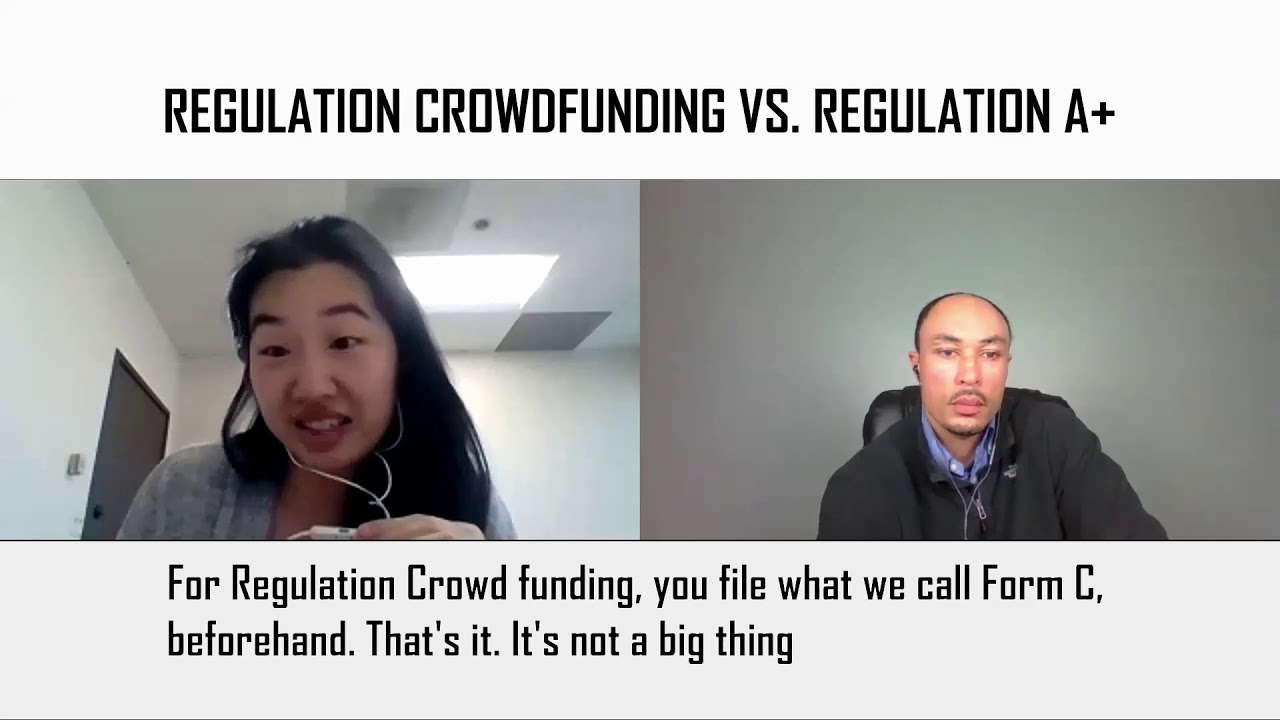
And previously, you would have had to file a prospectus to raise that much money. So, um, you know, when when the jobs act first came in, the amount was quite low, quite a bit lower, but it has since been raised to $5 million, which is quite nice. Uh, you do have to file a form C, though. So, can you walk us through that a little bit? If you are a uh startup company, this can be a little bit um intimidating because they do have to file an offering memorandum with the SEC and with all of the attachments, it ends up being about 86 pages long.
>> Yeah. So, um two things. One, you can start fundraising in what's called testing the waters, um without filing a form C. So, normally that's what we recommend to companies. So, you know, don't worry about the financials, don't worry about the legal paperwork. You can just launch from Weunder in 30 minutes and you just like upload your pitch deck photo, social media links, tell the story, set the investment terms, and boom, you're live and you can start sharing it with people and start fundraising. Um, and technically they're reservations to invest at that point.
Then later when we file the legal paperwork, there'll be confirmed but initially reservations. But you can get started on Weunder very quickly and easily. And so if you're like, I don't know if this is going to work, then it's like don't spend any money on a CPA or a lawyer. Don't file the legal paperwork, 86 pages, you know, like just start fundraising and see what happens. And if it's going well, then okay, cool. Now we're building confidence. We think this is going to work. now let's pay the CPA and get the the legal stuff done. So that's one thing and then the second thing is like refunder will do the form C filing for you. So you like we have a pretty nice online kind of application where you go in and you fill out who are the owners and officers of the business and you know what are some risks that we need to disclose to investors and what's our minimum and maximum goal and what's the breakdown of the use of funds and everything that the SEC requires for the form C filing is like in this nice weunder UI and most of that is actually pretty quick and easy to fill out. Um the one long pole in the tent usually is the financials. So you need two years of financials or if you're a more recently incorporated company then financials going back to incorporation date. So you don't have to be have two years of of history to do we can do we thunder if you incorporated yesterday. Um but so getting those financials done usually will be the long colon the tent and then as you said if you're raising more than 1.235 235 million up to 5 million need a CPA audit. If you're raising 124K to 1.235 million CPA review if you're raising less than 124K, you can just do it with self-reported financials. So then you don't need to engage a CPA at all. Um but yeah, the the form C file I mean we file form C's in like two days at weunder. you can do it like very quickly and easily especially if you have self-reported financials usually a CPA to do a review suddenly an audit that's going to take a few weeks and what we've seen is the financials are almost always the long pole in the tent when it comes to finding the filing the form C >> sure so uh a person could do it in stages theoretically they could do it with their own financials and just raise the what was it 124,000 or 126,000 and >> Yeah. And then you could use that money to go and hire a CPA.
>> Yeah.
>> Um and get your um social media going, I guess. Uh so you could do an initial round with friends and family, still use the platform. I can say uh as a securities lawyer, the one of the things I like about regulation crowdfunding and the platform is that everybody who goes through there is guaranteed exempt from having to have a prospectus. So you have to have a prospectus exemption when you sell stock in the United States um or most countries for that matter but especially in the United States. So uh there's a whole bunch of different exemptions that are available like friends uh relatives directors employees and so forth. But there are all sorts of different rules governing it and you can never be 100%. Sure. Sometimes people think this person's my friend. Well, they're only your friend until they lose money and then now they're calling the Securities Commission on you. So, everybody who goes through regulation crowdfunding uh will be automatically deemed to be ex and exempt uh from prospectus investor. And that'll help you a lot later on in life if you're being bought out or you do an IPO because that's when the real due diligence will be done by the buyer and they'll go over every single stock issuance and they'll ask you what was your exemption.
>> Mhm. Right.
>> So I Yeah. So I really like uh regulation crowdfunding because you can have any number of people. You just funnel them through the platform and all and they take care of all the paperwork automatically. So you're not sending people subscription agreements and they have to sign it and scan it and send it back to you or docu sign or whatever >> payment the payment mechanisms and the communication and we roll it up to one SPV, one special purpose vehicle, one line on your cap table. Um so yeah, it's um it's uh it makes it very kind of smooth and streamlined.
>> Yeah. So you actually get a lot of uh value uh for the uh the commission that you're paying. So that I believe there's like a 7.9% commission. Is that right?
>> 7.9%.
Yeah. Um although any of your friends and referrals, Thomas, um can earn a discount to 6.9%.
>> Okay. So, uh, that's that's actually it's, you know, even credit card fees are like 2 and a half% 3%. So, you're kind kind of like twice as much as the credit card company, but you're providing all of this paperwork being done for the person. At the end of the day, you just get uh, you know, a a spreadsheet saying here are your investors, here how much each one invested, the date they invested, and and you know, all of the information put together for you. hear all the subscription agreements and so on and so forth.
>> You do and you're a lawyer, so you're focusing on that. I I'm I'm like on the the business development team of We So I'm so going to say you also get a a beautiful website view of all the investors with their photos >> and their bios and their LinkedIn pages and how they can help you and like a note they wrote on why why they were excited to invest. So, for example, this company Nest raised on Weiunder. It's like a prop tech company. Um, and they're helping people kind of get on the housing ladder. Really cool company.
Um, and you know, they have this list of investors now, hundreds of investors in their we round. And if you're reading through the bios of their investors, it's like I was a three times prop tech founder or like I'm a like, you know, mortgage lender or I'm a real estate broker. and like you you're reading these bios and all these people are like wow you're all in the real estate industry and you you're now like basically brand ambassadors for nestmen um and the founder then Niles can can maybe go to those people and put them to work for him as he's trying to go to market and build the brand of Nest or maybe with hiring or product feedback um or you know hey we just launched this product we need you guys to like share the announcement on LinkedIn in or whatever it is. So yeah, it's um on one hand the role of the platform I think is as you're saying like contracts, payment processing, SPV, administration stuff, compliance, but I think the other role is we're kind of helping you build this army of investors that you can put to work to, you know, help you grow your companies. Starting companies is very, very hard. It's a kind of grueling lonely journey and like our kind of whole thesis is if you bring on hundreds even thousands of your customers and community members to invest in you then that makes that journey a little a little bit easier. Um, honestly, you know, both in terms of like how they can help you kind of in terms of like, you know, actual value and like more economically, but also on maybe on some level emotionally like so many founders will tell me it's really really moving to see like all of these supporters like investing their hard-earned money into our company with some really awesome like you know messages of why they're investing which almost never talk about the money or the financial return. It's always like I believe in you. I believe in your um mission like that. We had this one um investor note from earlier today. Um I'm going to read it here.
Having served in the Marines alongside the CEO, I'll know he'll I know he'll find a way to win. And it's like we get like thousands of those messages every day. Founders are getting like thousands of these messages. is like very like positive like uplifting uh thing to them I think.
>> Yeah. So it sounds like uh community is really important and I was >> I like the term equity crowdfunding.
>> We never call it that >> because crowdfunding as you said it makes people think of GoFundMe and Kickstarter.
>> Yeah.
>> And it also sounds like a little more um impersonal I would say and like less less kind of prestigious. So we call it a community round.
>> Mhm. So you raised an angel round from angels friends and family round.
Community round from your community.
>> Yeah.
>> And I would say if there's one word that like defines what we're all about at Weunder, it's community.
>> Mhm. Yeah. So uh that ties into uh questions about social media >> and uh the success of companies when they do a crowdfunding and what kind of groundwork do they have to do? So, I think it's unrealistic for somebody to think that I have zero followers on any social media and now I'm going to do a crowdfunding and it's going to be immediately successful.
It seems that almost all of the companies that are really successful already have uh a pretty big following.
What do you think about that?
>> Um, I would push back a little bit on that.
like Piouette.
>> Piouette is a Y Combinator company that's kind of revolutionizing injections and they raised 7.7 million on Weunder.
They did the 5 million Rex CF limit and then 2.7 million through RECD as an over subscription to that and I think they had like 80 Twitter followers maybe you know uh so >> wow >> they they're like an early stage you know pre FDA approval medical device company you know >> they are not they don't have a big audience they're not consumerf facing >> and yet they raise 7.7 million on refund so obviously if you have a big audience then that helps Um because you can now go to that audience and say hey thanks for being our customer or thanks for you know being in a part of our like community. Would you like to invest in us?
>> And so that is a a channel for how to like make the community round like go really well out the gate.
>> So Substack for example they had millions of users when they did a weunder newsletter platform and they raised $5 million in 24 hours. Right.
>> Sure. So yeah, if you have this huge audience that can really help you with the fundraising, it's just not a requirement. And we have a lot of, you know, you might say boring companies like big industrial companies, not that sexy >> B2B. Yeah.
>> B2B, you know, >> not consumerf facing, right?
>> They don't have a social media audience and they can still raise successfully on Weunder. It's just going to be a lot harder for them to do that.
>> Mhm. Interesting. So, uh, but in any event, if you are if you are in a business that does lend itself to social media, it sounds like it's worth building up your social media following ahead of the crowdfunding.
>> Yeah, I mean it I would say usually most consumerf facing companies are pretty active on social media, but I think there's a nice alignment with like your kind of business objectives, right? like consumerf facing companies, they want to build an audience, they want to build a customer base, they want to build a social media following. And if they're doing those things, then that now can have an added benefit not just of like driving revenue for your business, >> but also driving investment capital that you can raise and like an alternative option for for raising investment capital.
>> Yeah. So recently I uh interviewed a venture capital uh fund manager and I was asking him about social media and he said that one of the things they're looking at very closely is Tik Tok and that they use AI to go over uh Tik Tok and to discover new companies that already have a healthy following. And that's and that's because all of the things that you have to do to build up followers on Tik Tok are the same sorts of things that you have to do to run a successful business, right? So, you know, kind of like um KPMG wants to hire people who were uh you know, also captain of the lacrosse team, you know, not just a business degree and straight A's, but they like these people who were athletes cuz they had to get up at 5 in the morning and go to a practice at 7 a.m. and yada yada, right? So, >> so I think they're they're looking at that and they're thinking, well, if you're smart enough to get, you know, thousands of followers on Tik Tok, then that that those are the skills you're going to need to scale up your uh product.
>> Yeah. Exactly right.
>> Yeah. Um, so what's hot now in crowdfunding? Because just like in the venture markets and the PE funds, you have all sorts of sectors that are coming in and out of favor. Uh what's the flavor of the month now, do you think?
>> Yeah, I mean I think one of the cool things about Weunder and Community Rounds is that it's a little less um bubbly and a little bit less kind of boom and bust flavor of the month. And I think one of the one of the cool things about our model is that you know VCs are like shifting all of their energy and dollars from crypto where it was in 2021 to AI where it is in 2025.
Well, if you're not in that like hot VC sector then you know it's okay kind of hard for us to raise and I think we can help like smooth out the kind of market like kind of volatility. And so healthcare for example is actually our number one sector right now on weunder.
I think it's like a relatively tough time for healthcare founders to raise capital. But we're seeing companies like Siren Biotechnology raised 4.2 million.
They closed recently or like HCO raised a million. Piouette like I mentioned raised 7.7 million. So there's a lot of these like health >> I think was over four million.
>> Skimbit. Yeah. There's so many um we founded companies in the sector. Some number one sector. So, >> wow.
>> And I think it's yeah, partly because it's maybe harder for founders in that sector to raise from VCs now than it than it used to be, you know, 5 10 years ago.
>> It it is and and part of that is also that the health care sector also has these sort of gatekeepers and the the market is a little bit rigged if you know you have to go through those gatekeepers. So having this alternative uh for these companies is so important because sometimes >> found us more options. Yeah.
>> Yeah. The the VCs that you know actually invest in that sector like you might think oh there's tons of VCs. Well a lot of them don't invest in healthcare at all. There only certain ones that will invest in junior pharmaceutical companies or in medical device companies. So you don't get a lot of chances and um it's very uh clubby sometimes and uh it's more who you know than what you know. So I think it's very important to have this as an alternative.
>> Mhm.
>> Yeah%.
>> Yeah. So, uh, that's a very insightful answer, you know, because with AI, a lot of people are saying it is a a bubble and a lot of these, um, VCs that are just, you know, falling over themselves to invest in any company that calls themselves an AI company may end up losing their money, right? So, uh, being a moderating force there, I think, is is, uh, pretty positive for the investors. Um, now we're getting towards uh the uh end of the podcast. This might actually be a good place to wrap up. Would do you have any closing thoughts for our viewers before we say goodbye?
>> Yeah, I think maybe just a couple of last things. One, um, if you're a founder looking at raising capital and you're interested in running a community rounds, I think we can make it easier to raise capital. I always say we don't make it easy.
Usually, sometimes fundraising is really easy, right? If you're an AI company in Silicon Valley, >> usually not even, but usually it's hard.
And so, >> you might accidentally trip and fall into some money, but probably not.
>> Yeah. Uh, and if you're not that lucky, then I always say We doesn't make it easy to raise capital, but we'll make it a little bit easier because now you can publicly promote it and you can raise from everyone, not just credit investors, and you can get in front of the Weer investor base, etc., etc. Um, so you can hoover up a bunch of smaller checks. And so yeah, I think refund can make it easier for you to raise capital if you're a founder or if you or if you have all the best VCs in the world throwing money at you and you just think it's cool to let your customers and community invest alongside them, awesome. We want to talk. We.com is where you can go to like learn more about like the process and start an application. Um, we're a pretty open platform. So, the minimum is 50K and we're doing main street businesses.
We're doing loans to restaurants and bars and coffee shops as well as $5 million, you know, investments into Mercury Banks series B or Substack series B. So, it's a really eclectic kind of mix of companies on the platform. And then on the investor side, if you're listening to this and you think, well, this is cool. Like, I like the idea of like investing in startups as well as big public companies.
um startups being very very risky and illquid, but they also have the potential of like getting really big.
And so you can go to weunder.com/explore.
There's like hundreds of companies that are on the platform raising capital and you can find one that you like. Maybe it's in a sector that you know something about, you're interested in, and you you watch the video, you read the deck, you kind of maybe ask a question of the founder or like connect with the founder on LinkedIn. Um, and you can actually then engage as an angel investor even for as small as $100. We're just massively lowering the barrier to entry to like angel investing in startups and we want to get like millions of people to like participate as direct investors in startups they love. We've already had 400,000 people invest in a company on Weiunder and um we're about to cross a billion dollars uh raised soon which is an exciting milestone for us. And yeah, so if you're interested in becoming an angel investor in a startup maybe for the first time, then go to weon.com and you can browse through investments.
>> Well, yeah. And and people can also uh diversify. So if they think, well, I maybe I can invest $10,000. You can invest $1,000 in 10 different companies.
>> Exactly.
>> And have your own little venture capital fund.
>> So um yeah, so I think that that's a good thing, too. Um well, thank you again for coming on and uh thanks for giving us your uh thoughts and insights on these issues. Uh for more information, people can always go to weunder.com. They have all the frequently asked questions and things like that for founders and for investors. Um if you like this kind of content, don't forget to like and subscribe to this video and we'll see you next time. Bye for now.
Up Next
4:15
How to Create a Compelling Startup Pitch Video: Key Tips
@HalfIdeas
1.8K views•2021-09-07

46:36
Retention Habits of Top DTC Ecommerce Brands Revealed
@SendItPodcast
44K views•2026-03-03

15:23
Decoy Effect: How Pricing Psychology Influences Consumer Spending
@bobinvestsUS
90K views•2026-01-05

17:30
The Planned Obsolescence of Light Bulbs and Tech
@veritasium
25.3M views•2021-03-26
Related Study Plans & Knowledge Roadmaps
Structured learning paths in Business
business
Pop-Up Retail: Strategy, Design & Execution
01Introduction to Pop-Up Retail & Strategic Goal Setting
02Budgeting, Site Selection, and Legal Essentials
03Experiential Retail Design & Visual Merchandising
+ 2 more learning modules
15h5 modules
Explore Roadmap
business
Reg CF: Startup Funding, Marketing & Launch
01Introduction to Equity Crowdfunding & Reg CF
02Platform Selection & Legal Preparation
03Crafting High-Converting Campaign Assets
+ 2 more learning modules
14h5 modules
Explore Roadmap
business
Productized Services: Scaling Solo Freelance
01Foundations of Productized Services
02Packaging and Scope Definition
03Pricing and Subscription Models
+ 2 more learning modules
15h5 modules
Explore Roadmap
business
Gov Procurement: Find, Bid & Win Contracts
01Introduction to Government Procurement & Business Setup
02Small Business Certifications & Set-Asides
03Finding and Analyzing Contract Opportunities
+ 2 more learning modules
14h5 modules
Explore Roadmap