

















The Vigenère cipher is a classical polyalphabetic substitution cipher that encrypts messages by using a repeating keyword to shift each plaintext letter by different amounts, making frequency analysis more difficult than simple substitution ciphers; however, its security can be compromised through techniques like Kasiski examination and index of coincidence, which exploit the periodic nature of the repeating key to determine the key length and ultimately break the encryption.
Vigenère Cipher Explained: Encryption, Decryption & Cryptanalysis
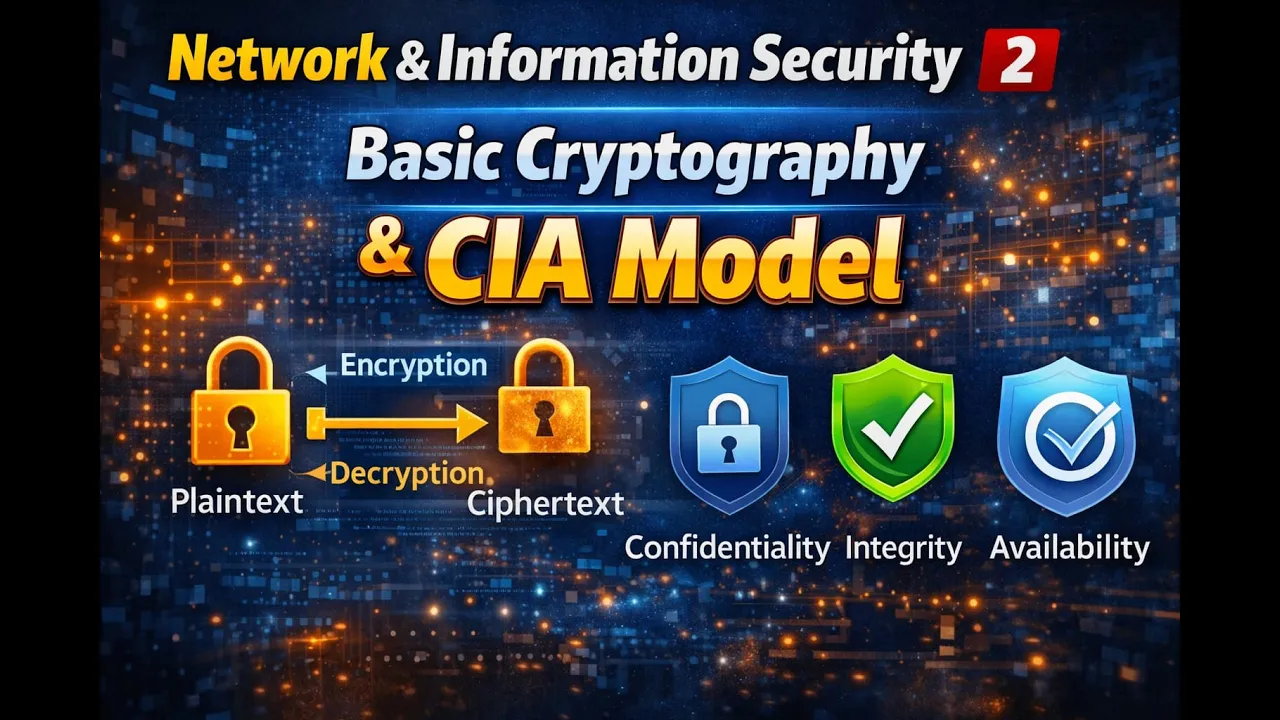
Added:Understanding of basic cryptographic terminology, such as plaintext, ciphertext, keys, encryption, and decryption.
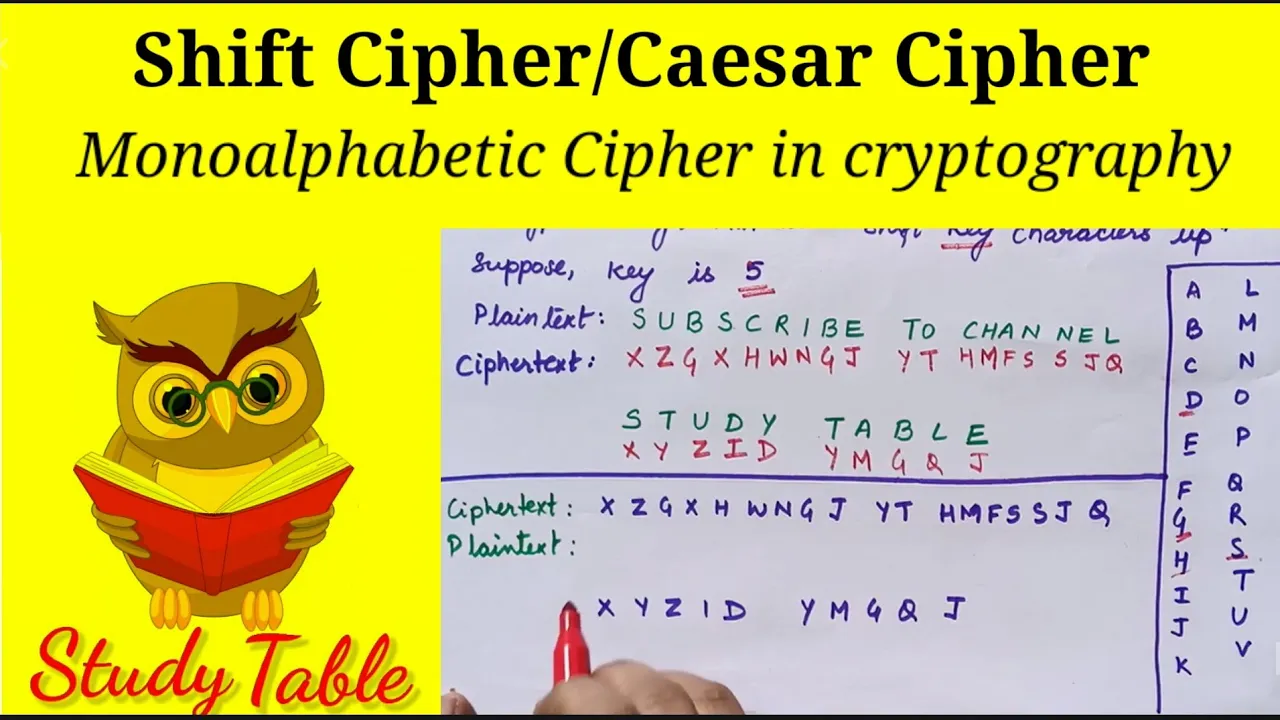
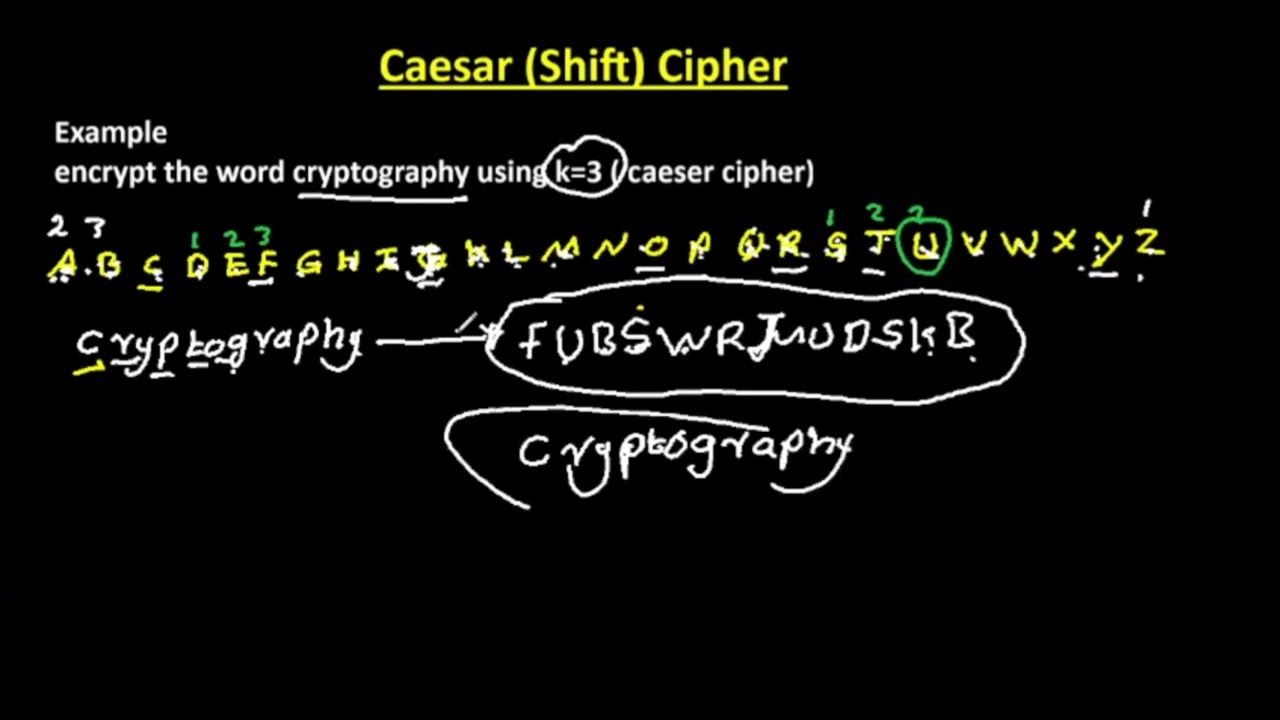
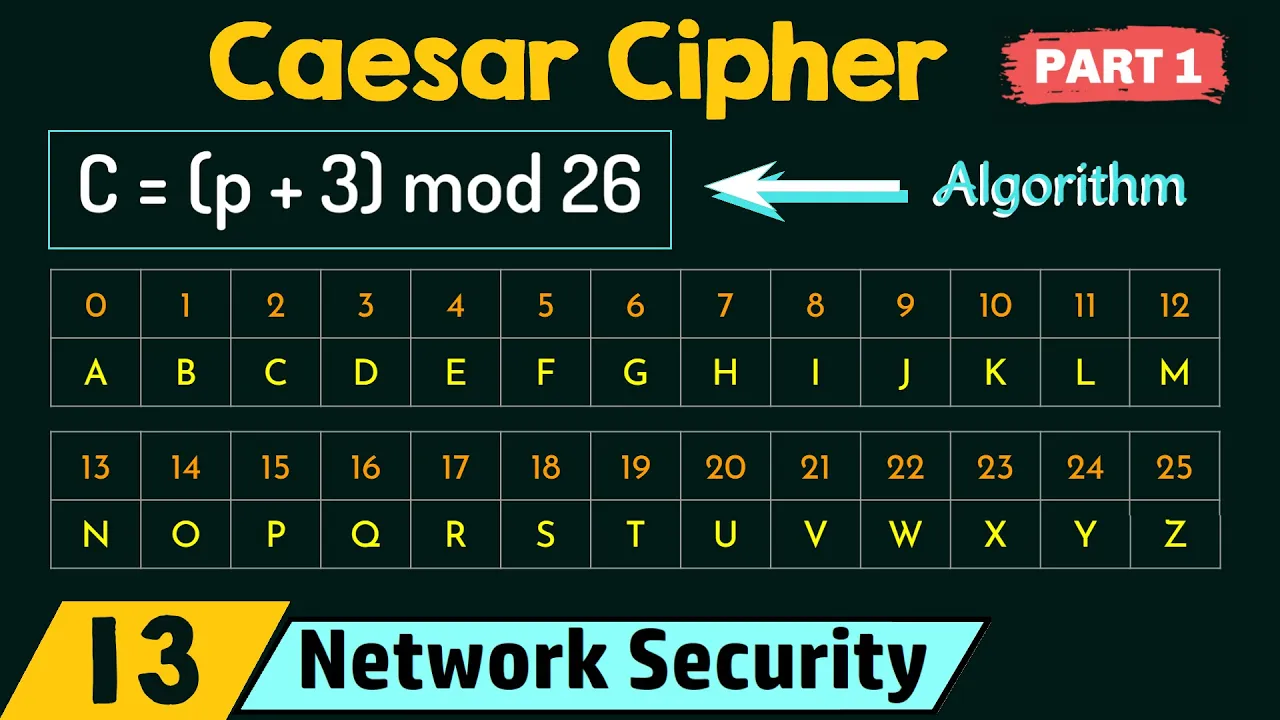
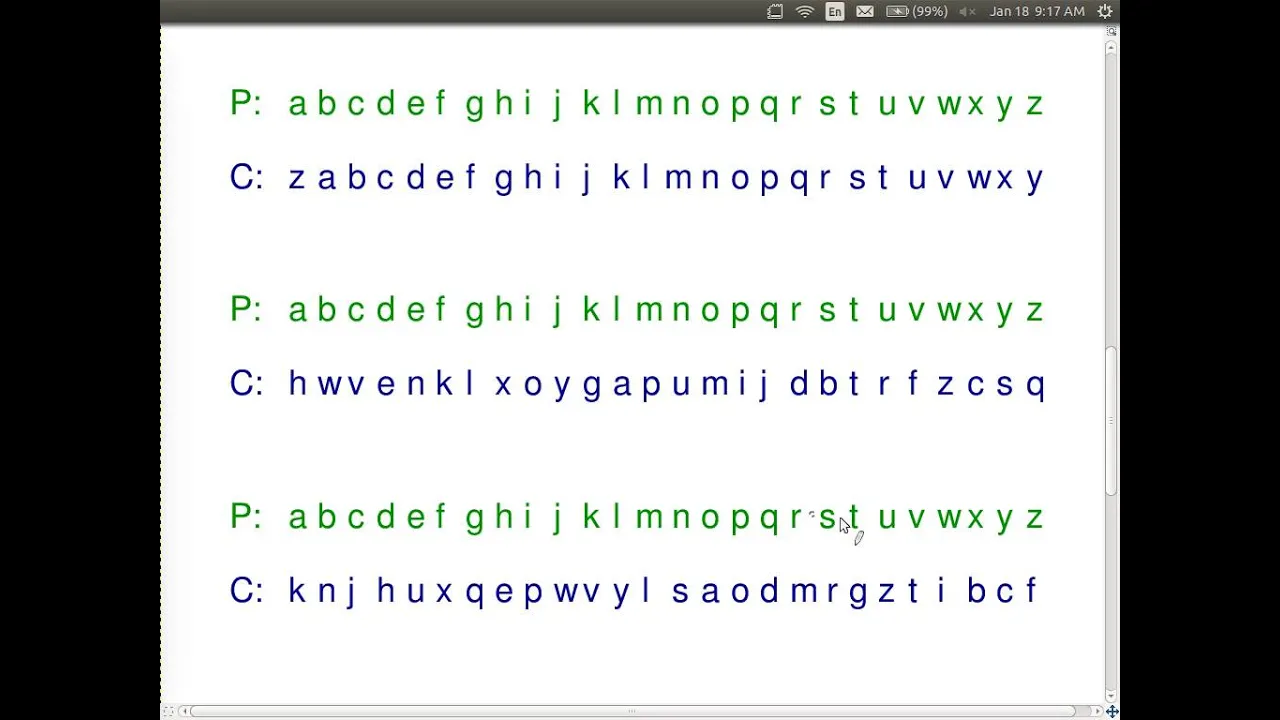
Familiarity with monoalphabetic substitution ciphers, specifically the Caesar Cipher, and how character shifting works.
Basic knowledge of modular arithmetic, particularly modulo 26, which is used to mathematically calculate letter shifts.
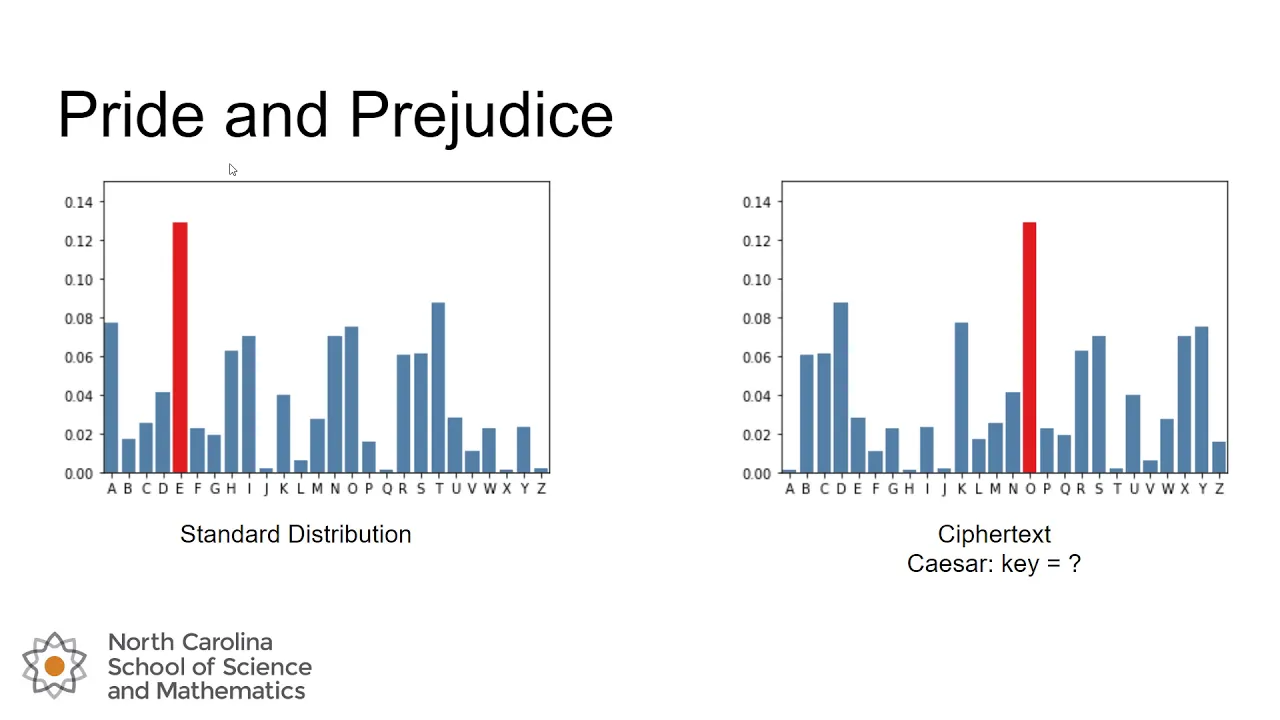
An introductory concept of frequency analysis and how it is used to break simple single-alphabet ciphers.
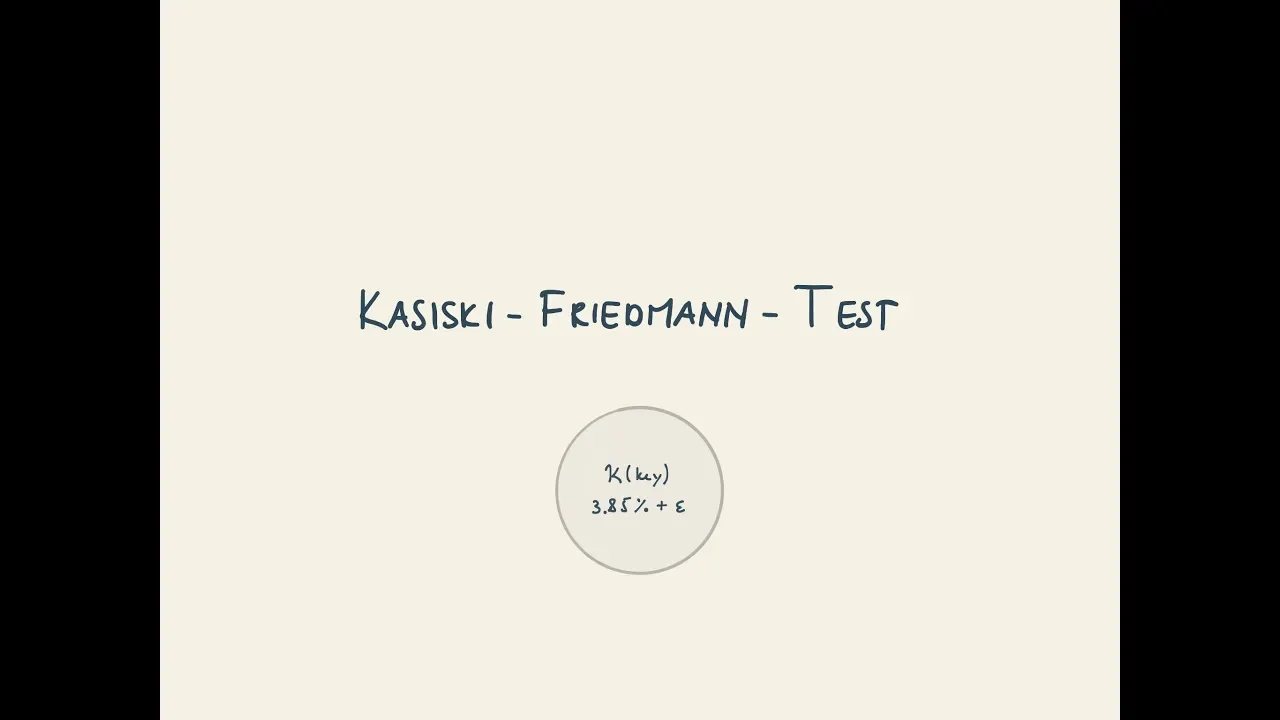
Advanced cryptanalysis methods for Vigenère, specifically the Kasiski examination and the Friedman test (index of coincidence) to find key length.
The concept of the One-Time Pad (OTP), which is mathematically unbreakable and can be viewed as an extension of the Vigenère cipher with an infinitely long, non-repeating key.
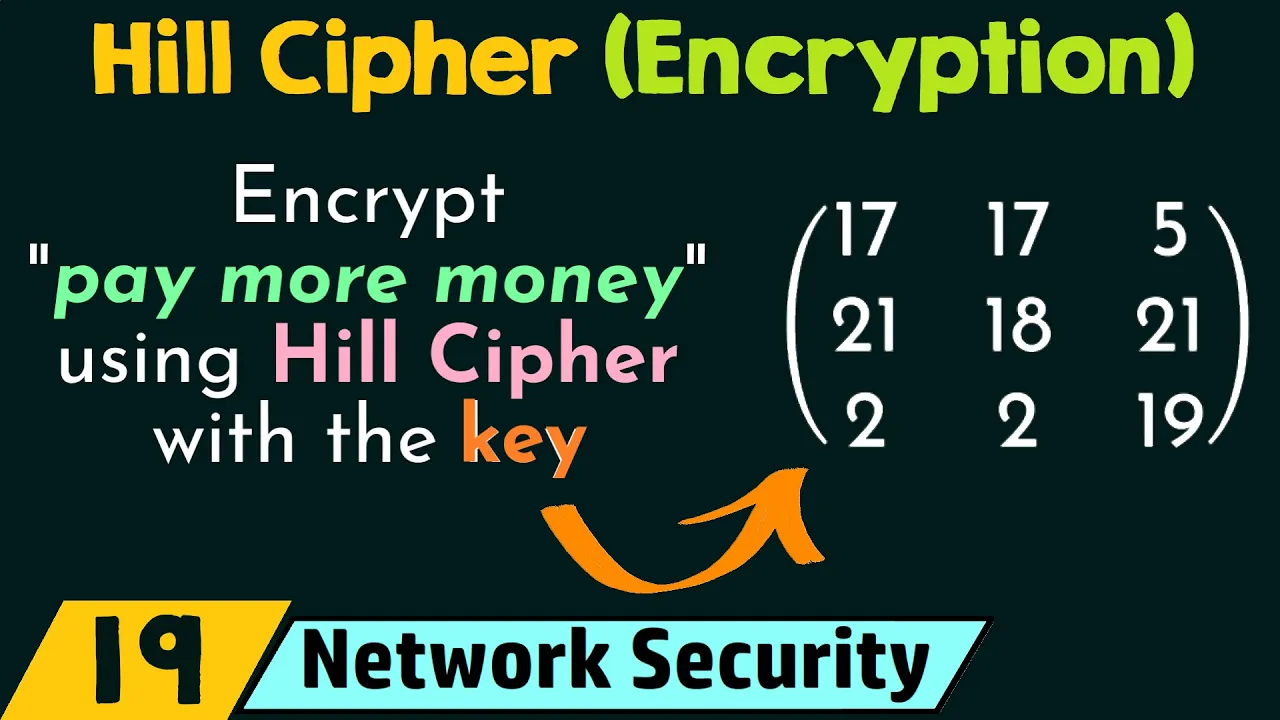
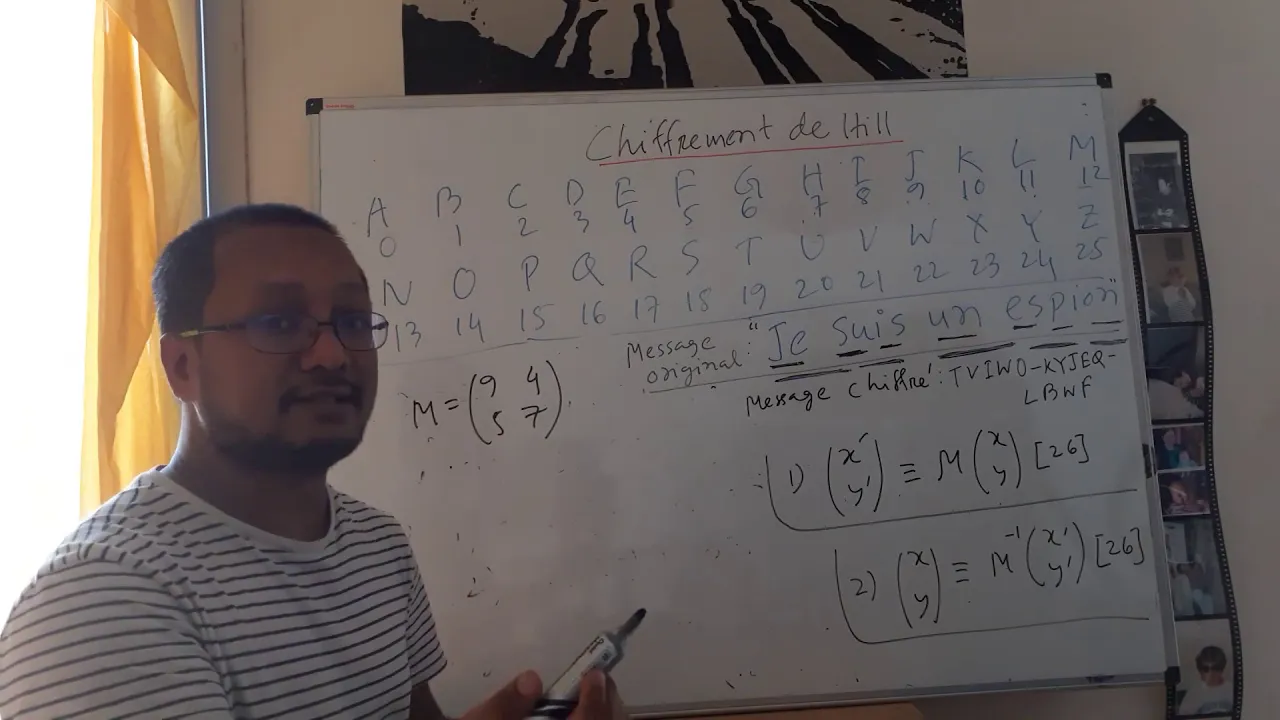
Introduction to polygraphic substitution ciphers, such as the Hill Cipher, which encrypts blocks of letters using linear algebra.
The transition to modern symmetric cryptography, including stream ciphers and block ciphers like AES, which build on the concepts of diffusion and confusion.
959 views26likes8:35Original Release: 2025-07-17
In the world of classical cryptography, some ciphers stood the test of time, not because they were unbreakable, but because they were deceptively clever.
One of the most famous is the Visionaire cipher. Once considered the inddecipherable cipher, the Visionaire cipher is a method of encrypting alphabetic text by using a keyword to shift each letter of the plain text by different amounts.
Let's imagine Alice and Bob want to communicate over a distance and ensure their messages are protected by encryption. First, they need to agree on and share a secret key that they'll use to encrypt and decrypt their messages.
Now, suppose Alice wants to send a message to Bob. She encrypts the message using the shared secret key in the Visionaire cipher, then sends the encrypted message to Bob. If an eavesdropper named Eve intercepts the message, all she sees is cipher text, an unreadable string of characters that makes no sense without the key. When Bob receives the encrypted message, he uses the same secret key to decrypt it and recover the original message that Alice sent.
Let's explore how encryption works in the Visionaire cipher. First, we select a key, a short word of length M. In this case, our key is key. We now want to encrypt a message, also called the plain text. The message is hello world. To begin, we repeat the key enough times to match the length of the plain text, but we ignore non-letter characters like spaces.
Each letter in the alphabet corresponds to a number. A is 0, B is 1, etc., and Z is 25. We'll convert each letter of the plain text into its number using this mapping.
[Music] We do the same for the key.
Now we add the corresponding numbers of the plain text and key together. letter by letter.
If the result is greater than 25, we apply modulo 26 to bring it back within range. This gives us a new sequence of numbers. This is our cipher text in numeric form.
Finally, we convert these numbers back to letters again using the same alphabet mapping.
[Music] And that gives us our final encrypted message or cipher text. R I JVS UY VJN.
Let's now decrypt this message.
We use the same key.
[Music] Now convert each letter of the cipher text into its numerical equivalent.
[Music] Do the same for each letter in the key.
[Music] For each letter, we subtract the keys value from the cipher texts value. For example, R 17 - K 10 gives us 7. But what if the result is negative? To fix this, we add 26.
This guarantees that all values are positive.
Finally, we apply modulo 26 to all results.
This wraps any large numbers back into our 0 to 25 alphabet range.
Now we convert the numbers back to letters.
Seven is H, four is E, and so on.
[Music] Piece by piece, the message reveals itself.
And there it is, the decrypted plain text, hello world.
In the 16th century when the visionire cipher was invented, it was more convenient to use a visionire table for encryption and decryption instead of relying on arithmetic.
The table consists of the alphabet repeated in each row with each subsequent row shifted one position to the left. To encrypt a message, we find the row labeled with the key letter and the column labeled with the plain text letter. The intersection gives the cipher text letter.
Let's try encrypting the word hello with the key key. We repeat the key to match the length of the plain text.
The first letter H column and K row give R.
E and E give I.
L and Y give J.
L and K give V.
O and E give S.
[Music] So the encrypted message is R I JVS Vs. [Music] Decryptions using the Visionaire table works a bit differently. For each letter in the cipher text, start with the row labeled by the key letter. Then look across that row to find the cipher text letter. The column where it appears tells you the plain text letter.
[Music] Repeating this for every letter, we successfully decrypt the message back to the original word. Hello.
[Music] Let's look at the letter frequency in this original text.
The most common letter is E followed by T and so on. This closely matches the typical frequency of letters in English.
Now after we encrypt the text using the key, [Music] we get this new cipher text.
Its frequency analysis looks very different.
As you can see, it's now much harder to detect any clear pattern between the cipher text and the original text.
[Music] In this sequence, we encrypt the same plain text using keys of increasing length.
At each step, we add one more letter to the key.
As the key gets longer, the letter frequency distribution of the cipher text becomes more uniform.
This shows that the Visionaire cipher becomes more secure when using longer keys.
The Visionaire cipher is no longer considered secure because there are effective methods to break it. One of the most well-known techniques is the Cassi examination which finds repeated patterns in the cipher text to estimate the key length. Another method is the index of coincidence which uses statistical properties of language like how often certain letters appear to help crack the cipher.
So an eavesdropper like Eve doesn't need the secret key. She can use these techniques instead to eventually recover the original message.
Up Next
19:25
Enigma Machine Mechanics: WWII Encryption Explained
@JaredOwen
13.2M views•2021-12-11
87:26
Introduction to Secure Multiparty Computation with Yehuda Lindell
@fhe_org
7.7K views•2021-02-04

4:55
HTTP Requests Explained: GET, POST, PUT, DELETE
@codecademy
103.1K views•2021-10-07
35:12
How QR Codes Work: The Science and Engineering Behind the Patterns
@veritasium
9.1M views•2024-09-30
Related Study Plans & Knowledge Roadmaps
Structured learning paths in Computer Science
computer-science
Container Runtimes: Namespaces, Cgroups & Go
01Linux Systems & Go Programming Foundations
02The Core of Isolation: Chroot and Filesystems
03Linux Namespaces: Process Isolation
+ 3 more learning modules
32h6 modules
Explore Roadmap
computer-science
Building a CHIP-8 Emulator: Rust & CPU Basics
01Computer Architecture Foundations (Bits & Bytes)
02Rust Programming for Systems Development
03CHIP-8 Virtual Hardware Specifications
+ 2 more learning modules
32h5 modules
Explore Roadmap
computer-science
Building BitTorrent: Go, P2P & Concurrency
01Go Fundamentals & Concurrency
02Networking Foundations & P2P Architecture
03Bencode Parsing & Torrent Metadata
+ 3 more learning modules
26h6 modules
Explore Roadmap
computer-science
Actor Models (C++ Concurrency & Lock-Free)
01C++ Multi-Threading Foundations
02Thread Pools and Task Scheduling
03Atomics and Lock-Free Queue Design
+ 3 more learning modules
45h6 modules
Explore Roadmap