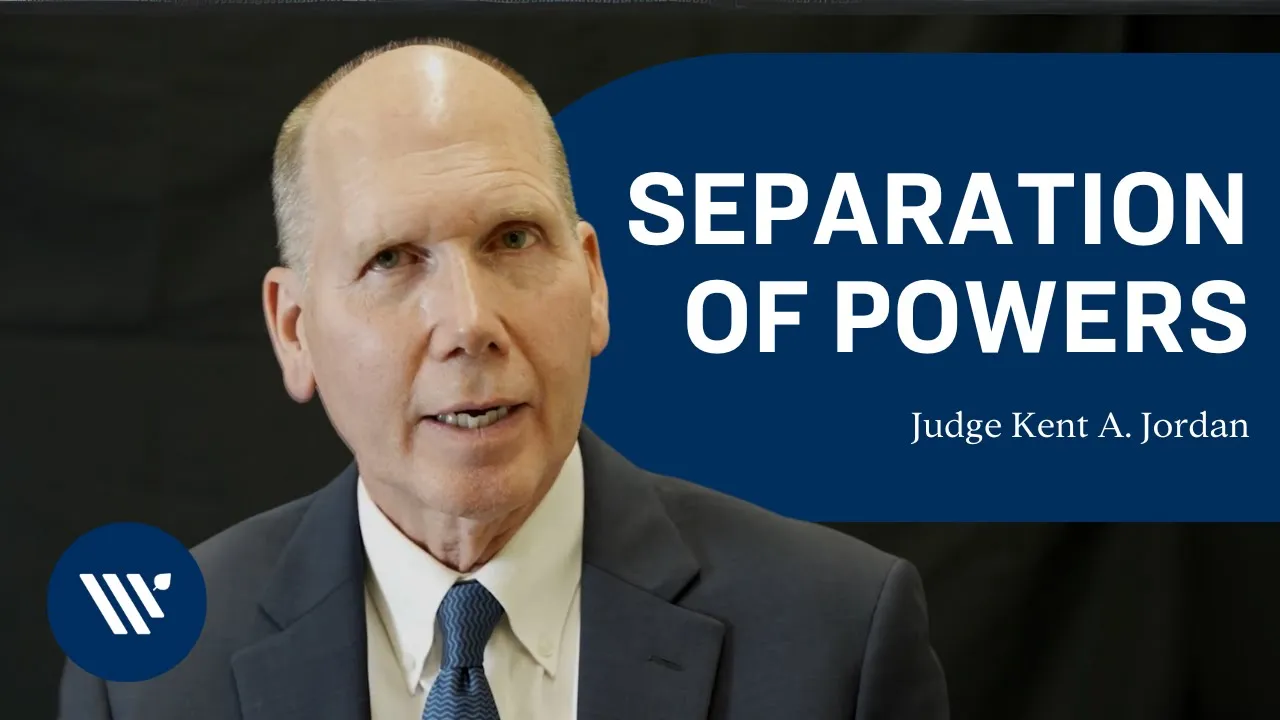



![Is There a Legal Difference Between Statutes and Rules? [No. 86]](https://i.ytimg.com/vi_webp/bDy25B1OTyQ/maxresdefault.webp)
![How Did We Get the Administrative State? [No. 86 LECTURE]](https://i.ytimg.com/vi/RAwUfjX1l_E/maxresdefault.jpg)
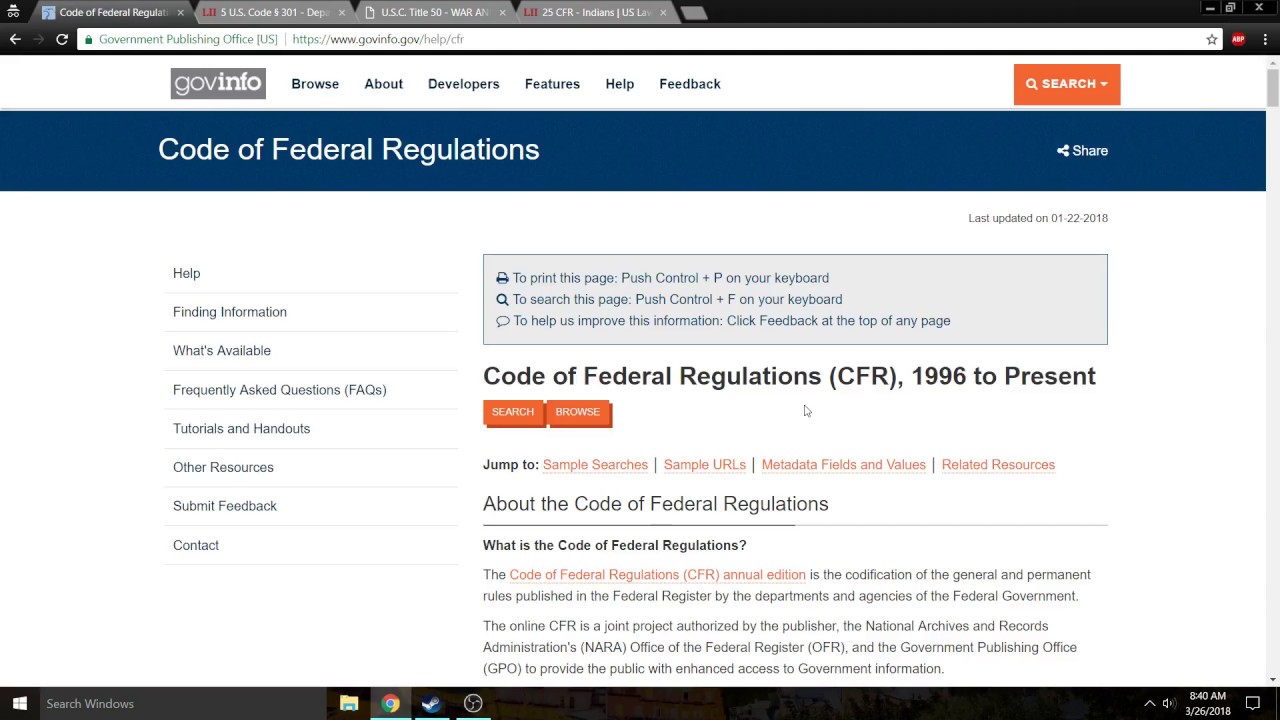
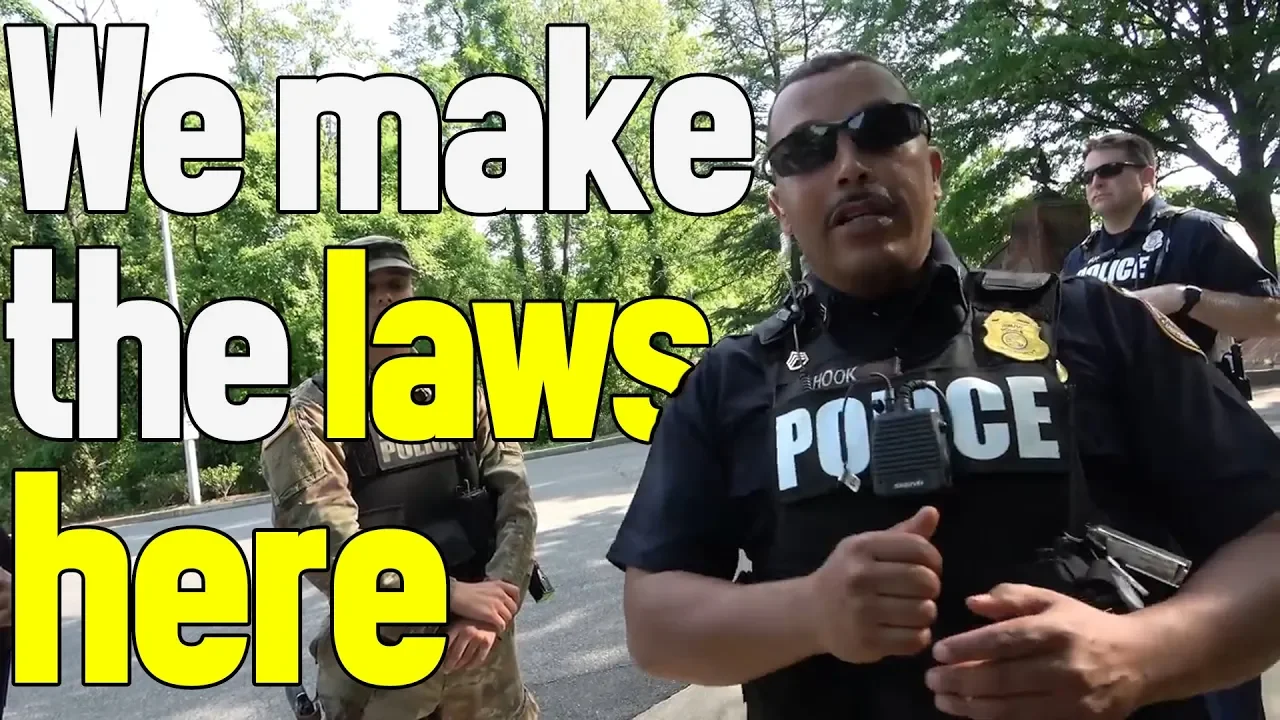













The explosion of federal laws and regulations since the 1970s—from Congress passing 2-3 million words annually and agencies producing 60,000-70,000 pages of new rules each year—has created a system where ordinary Americans face overwhelming legal complexity, often leading to unintended consequences like John Yates being convicted under the Sarbanes-Oxley Act for a fishing violation, or Aaron Schwarz facing 50 years in prison for downloading academic articles; this regulatory overreach undermines the Constitution's original purpose of securing liberty while creating barriers that disproportionately affect vulnerable individuals who cannot navigate complex legal systems.
Justice Gorsuch on Over Ruled: The Human Toll of Too Much Law
Added:The structure of the U.S. Federal Government, specifically the separation of powers among the legislative, executive, and judicial branches.
The distinction between statutory law enacted by Congress and administrative regulations promulgated by executive agencies.
The constitutional principle of the 'Rule of Law,' including the necessity of fair notice and accessible legal standards for ordinary citizens.
The historical growth of the modern administrative state and the delegation doctrine, which allows legislative bodies to grant regulatory authority to agencies.
The doctrine of judicial deference (such as Chevron deference) and the impact of recent Supreme Court rulings that limit agency authority.
The legal concept of 'overcriminalization' and the erosion of the traditional 'mens rea' (guilty mind) requirement in regulatory infractions.
Justice Neil Gorsuch's specific judicial philosophy of originalism and textualism, and how it influences his opinions on administrative law.
The field of 'Law and Economics,' focusing on how regulatory compliance costs and legal complexity affect economic mobility and small businesses.
2.9K views74likes1:09:33Original Release: 2024-09-18
now please welcome president and CEO of the national Constitution Center Jeffrey Rosen honorary co-chairman of the national Constitution Center US Supreme Court Justice Neil Gorsuch and his co-author and former law clerk Jamie nit Hello friends happy Constitution Day it is so exciting to welcome you to the National Constitution Center and to welcome Justice Gorsuch and Janie Nitza let's begin as we always do when we have the privilege of convening in this Sacred Space by gazing at the words of the First Amendment which are behind me and now look at Independence Hall that where it all happened the Declaration and the Constitution were drafted and just look at it for a moment and feel the energy kindling passion in the ideals of the Declaration and the Constitution is what this day is all about it's been an amazing day which started with a ceremony for new citizens and there's nothing more inspiring uh that any of us has the privilege of doing than watching uh new citizens take the oath and it included a great town hall with Justice Gorsuch and Janie Nito with teachers who are introducing into the classroom the new constitution 101 class that we launched today with KH Academy and it's just a thrill to see this remarkable class and the and and the and the caliber of the scholars and historians that we've assembled to teach the essence of the Constitution free to high school students across the country the depth of the primary sources I'm so proud to be part of the amazing team that put this together and we think it's going to transform civic education in America and now we have the great privilege of talking with the justice and Janie about his new book overruled I should uh say how compelling it is in telling human stories of people who uh encountered the toll of too much law and uh we're just going to begin with the obvious question um Justice Gorsuch why did you decide to write this book well first of all can I say thank you Jeffrey thank you thank you for having me and Janie here today we in addition to meeting with teachers from around the country some of whom I see in the audience uh we met with students and you held a wonderful session with a bunch of students in your Auditorium where we got to talk about the Declaration and the Constitution today and watching what you do on Constitution Day it's it's like Christmas in this building it really is it's fabulous Ben Franklin was wandering around telling stories there was a constitution cake and games out on the lawn it just it's inspiring the work you do here Jeffrey and I I I just want to say thank you from the bottom of my heart because if there is hope for this country and I am hopeful it comes from places and people like this and you thank second thing is I want to introduce three people real quick first Janie who you just heard about Janie is one of the most remarkable young women of her generation that I've ever encountered um her family came to this country from Czechoslovakia escaping communism in 1968 first generation of this country an immigrant um and three degrees from Harvard uh one in physics another in statistics and the last one in law now where she went wrong on that course I don't know she clerk not just for me but also for my colleague Justice sod mayor she's held a a senate confirmed presidentially appointed post and she has with her two of her three children here or with us tonight [Applause] Claudia Claudia and an and we have had a lovely Constitution Day haven't we we even got a a tour of Independence H together and it has been a lot of fun so thank you for allowing me to make that introduction you had a question the question is why did you write the book why did we write the book why did you write the book well um I love our Constitution and I know you do and that's why you're here and thank you for coming out tonight this is not exactly everybody's idea of a date night but it apparently is some of yours so thank you um I I've been a judge for 18 years or something like that and I had just come to see too many cases where ordinary Americans are just trying TR to go about living their lives secure the blessings of liberty for themselves and their families trying to hurt no one who've just been caught up in ways that you can't even imagine without really appreciating the depths of their stories in laws that they didn't foresee couldn't have foreseen in many cases and their lives were just ruined and whether it's a veteran who's seeking benefits for his disability who follows the letter of the law to a t but it turns out there's a regulation that everyone concedes is is inconsistent with the law he doesn't follow that and he's still denied disability benefits whether it's an immigrant to this country who follows not just the law but the judicial precedent about the law and then is told by an agency later that now that doesn't count we disagree with the judicial president ignore it and now you have to start all over again and spend 10 years out of the country when you have four children here in the United States or whether it's a company small home health care company in Kansas I used to sit on the 10th circuit in the Western United States it's accused of Medicare fraud well that's a big deal and I take that very seriously that can ruin your your business that can kind of be it and it turns out that they followed all not just the statute but all the regulations under the statute perfect L the ones that were in effect at the time they provided the services and were being accused of violating regulations that were enacted or adopted only later and it takes six years of litigation before the case makes it all the way up to my court and people figure that out the agency is so confused by the number of regulations that it produces that it just got mixed up and I just saw too many of those cases too too many of those cases and I thought time for me to explore what's going on with our law and and whether maybe we need to think about some of the changes that have happened in our law in our lifetime and that's why we sat down to write the book well your your passion comes through and Janie you worked with the justice what did you learn in the course of helping him tell all these stories um I'll back up even further than that if if it's all right with you um I didn't come from a family of lawyers didn't know a whole lot about law when I went to law school first and I always you know when learning about the Constitution understood it by virtue of powers and the rights but I I never fully appreciated until I started work for the Justice Just how much everything came down to is all about the individual every word in the Constitution that is there is really written to protect the individual and it is our government and self government all that and um so when and the Justice came to me and said what about this book that tells a stories of individuals I sort of thought how perfect because it really takes me back sort of 15 years to when I was first clerking for him in Denver and sort of this just very common thread of who he is as a Justice and how he use the law that he never loses sight that there is an individual behind it um and you know just writing the book with him I not only learned so much from working with him but it it was really incredible to talk to some of the people who lived the cases that I had once read just as Supreme Court opinions and read through the lens of Law and sort of take you Sandra and John Gates who I'm sure the justice will talk about really talking to Sandra Gates and hearing from her what they went through um it it made so much more real um what the law can do both for good and and for not so good for people in this country so that so just to follow up on that I mean here's what we found when we started digging in you know you have this anecdotal sense there's something going on but you want to check your work right you want to see if you're right we all think Congress isn't busy these days they should do more does anyone know that they write two to three million words of new law every year that's Congress and guess what that's just the tip of the iceberg agencies federal agencies promulgate regulations 60 to 70,000 pages of new regulations every year that's new that number is new and it's happened really since about 1970 is what we've discovered this isn't a new deal thing this isn't a 1950s thing this about 1970 if I had to Peg it there are 6,000 maybe federal criminal laws on the books in fact nobody really knows how many federal criminal laws there are they gave up counting them in the 1980s it's going like this and that too is the tip of the iceberg there are by again estimates because nobody can count them all maybe 300,000 Federal regulatory crimes that agencies have promulgated through their regulations and this is a feature of the law that has changed in my life time it turns out and so that's really if you want to know what we found out that's what we found out and chances are pretty good according to people who are really quite thoughtful about this and not joking that you have probably committed a federal felony today each and every one of you there's a Constitution Center exemption so everyone is save it's such a powerful uh argument why did law explode in the' 70s and ' 80s well I I I I I I I think we could maybe point to many I mean there are undoubtedly many causes but one thing that I can't help but come back to time and time again and I think I'd like you to talk about this too is social trust right when toille came to this country in the 1830s he marveled that where a a great project had to be undertaken in Britain a lord would lead it in France a government would lead it in America America people just got together and did it whether you needed a new hospital or a new school or new charity needed to be undertaken people just got together and did it it was that voluntary Association that he said separated America from the old world and I think and this is not a disparagement of of government or law I'm a lawyer I serve as a judge I've chosen that life hardly it's just a question about is there a golden mean in most things in life is there maybe in law as well right you don't want to have too much you don't want to have too little right just right okay and um those are the sorts of things that we wanted to look at in the book go ahead J I want to hear what your thoughts Jenny but that's a powerful thesis toille predicts in the 19th century that overregulation might in the future come to infiltrate America uh because of a decline in civic virtue did it happen in the 70s and 80s because of a decline of trust again I think there's sbly many factors at stake but we did find when we were looking at sort of certain you know surveys had been taken over the years sometimes by the same organization and and you can sort of track a lack of trust in one another um that seems to coincide with a rise of Law and as as as we say in the books right if you can't trust your neighbor if you can't trust yourself if you can't trust your local officials your local school to make these decisions like so where where is there to turn to but law and I think we we saw some of this in covid which we talk about in the book where there was sort of an inclination sort less to trust our neighbors and communities and schools and more of an inclination to turn to law to answer sort of some some fairly profound questions for us well you look at like some statistics right increasingly polls show that we think of the people who are of the other political persuasion not just as wrong fair enough right that's why we have elections but is evil as evil right that and and those numbers have gone like this you ask young people today the polls increasingly show that they think it's acceptable to silence people with whom they disagree on on college campuses and of course that's not limited to college campuses I don't mean to pick on the college students here young people also increasingly say like a third of them will say that it's not very important to live in a democracy and so I do think you know and toefield did talk about this he says well what happens when we lose these intermediate associations these connections that bind us whether it's our bowling league our church the kaanas club whatever and he said that if we become so self-absorbed and less connected with one another we might be come like a flock of timid sheep looking for a Shepherd to lead us wherever we would go and he said that's the end of America that was in his mind the end of the American exceptionalism and I I'm I I'm an encourageable optimist I don't think we're there yet but I do think it's worth asking did toille have he have a finger on something well just one more beat on this because it's so important teville says that when we lose intermediate associations we risk losing Republic and the solution is two things self-interest properly understood which is self-mastery and civic virtue and then the spirit of religion thoughts we let you take this one Justice yeah I I do think when we isolate ourselves we are less apt to see those with whom we disagree as equal and is intelligent and is thoughtful right and the whole point of democracy right is is to get us all in a room and have us debate rather than fight and trust that the best solution will emerge right the wisdom of the masses was kind of the idea Francis gton in England went to a a county fair and he noticed there was a guess the weight of the ox contest and he he noted down all of the guesses by the experts and then he averaged up all the guesses by the ordinary people and guess which was closest the average of the ordinary people and I do think that's how Madison tried to set up our our legislative process to bring to bear the wisdom of the masses to get us all in a room we have to debate we have to we have to disagree in order to get the best ideas and to still them down and make law and when we when we can't do that anymore we look for somebody to answer those questions for us um the the great power of the book is the stories and you illustrate these ideas by telling them and let's begin with Sally and John Yates you want to tell this one you tell okay so John and Sandra were high school sweethearts and John loved fishing and he wanted to make a life as a commercial fisherman so they moved down to Florida also to be near family and Sean works his way up from just deckhand to the captain of his own small crew he's out one day for red grouper and he's actually been out for a while how long Janie oh good two weeks two weeks maybe okay he's got a lot of fish and a young man comes up and and he's a state official but he's cross deputized with Noah a federal agency and he says I'd like to measure your fish to make sure they're the right size and regulations at that time Federal Regulations said they have to be 20 in John says I got an awful lot of fish in the ho and he says I've got all day so he brings out a stick to measure the red grouper and there's immediately a little disagreement because reged grouper apparently have a lower jaw that sticks out and this fellow according to John was measuring from the nose to the tail not from the lower jaw and so his measurements were a little short John thought the ancient disagreed oh okay he finds by way of his measurements 72 reg roer that are under 20 inches all of them are over 18 and 3/4 inches that's important for him you'll see in a minute well he says segregate those fish and I'll deal with you when you get back to doc John says okay I'm gonna get a citation whatever I'll deal with it gets back to Doc a couple of days later fell says I'd like to measure those fish in this in the crate again he measures them but this time he only finds 69 nine that are under 20 in and he's very suspicious strangely though he does nothing John hears nothing about this incident for three years three years later agents surround His House armed the whole thing his wife's doing laundry they say where's John she has no idea what this is about and John's out crabing it turns out but he comes straight in they arrest him don't tell him what's going on they take him two hours to Fort Meers and book him and they're charge him with violating the sarbanes Oxley act now the lawyers in the room are laughing because the sarbanes Oxley act folks was in adopted after the Enron accounting Scandal and it was dealt to address accountants who destroyed documents when a federal investigation was impending and the law reads something like this thou shal not not intentionally destroy mangle blah blah blah blah records financial documents accounting spreadsheets yada yada and other tangible objects when a federal investigation is impending you guessed it reged grouper are the other tangible objects okay sarban oxy charge carries up to 20 years in federal prison it's a federal felony and uh John says this is this is crazy I'm not guilty of sarbanes Oxley act I'm happy to pay a citation maybe not and maybe he wants to talk about the Jaws whatever and so he he proceeds to trial most people today can't afford to proceed to trial for a variety of reasons I'm sure we'll get into over 97% of federal criminal cases ple out he takes it to trial very brave courageous move by by the time he goes to trial guess what the size limit for reged grouper is 18 in 18 Ines and the federal government still spends money to pursue Johan he loses he says can I spend my prison term can I start it after Christmas the judge happily only sentences him to 30 days but he's got to wear the bra bracelet for a while the DNA the registration all that stuff for years and and and then of course no so he spends Christmas in in jail he wanted to spend Christmas at home because he was Raising with his wife two of their grandchildren he appeals he loses again he takes it all the way to the Supreme Court of the United States the case is taken by the Supreme Court of the United States and he wins by one vote five to four just as Ginsburg including Justice Alo say other tangible objects have to be sort of like the the ones that are listed you can't just say everything I mean what isn't a tangible object Pluto is a tangible object four Des centers including Justice Kagan and Justice CLE disagree they have a very good argument both sides have a good legal argument The Divide isn't along ideological lines he wins all the Vindication a man can win in our legal system today but what's happened to him he's lost his fishing boat he's lost his ability to support his family they're now dependent on his wife's job and they live in a trailer having lost their home that's what I wanted to talk about in this book one can make a very good legal argument either way but what are we doing with laws that capture somebody like John and make him a federal felon there's a little footnote to the end of the story afterwards after Justice Ginsburg wrote the majority opinion uh the Department of Commerce which oversees Noah decided to do an internal investigation An Inspector General did a report wanted to see if they're being maybe too tough on Commercial fishermen throwing sban oxy at them found yeah maybe maybe they are but he also told Congress that he had difficulty conducting his investigation because one of the agents involved destroyed all of his documents and to the best of our knowledge no sban oxy charges were brought against him Janie that story appears in the first chapter in introduction to Law's Empire and you talk about how difficult it is to hold uh Federal officials accountable many of these regulations are passed through executive order and some can't be challenged at all what are the broader points you're trying to bring out in the introduction I think our introduction was really trying to um briefly sort of summarize some of the issues that are be you know that that we're um facing today in the country um and one of the things that struck me was just in part through this story that you know it used to be take our federal criminal laws um it used to be that without reading anything you would sort of just know what was prohibited criminally because was like do not kill do not steal do not um things things of that sort right do not kidnap um and things that you were sort of taught or should have been taught from a young age and our laws take just or criminal laws have exploded so much that no one really knows anymore um what is in our criminal laws no one really knows what is in our civil laws and it's you know John Sandra Sandra was actually a legal assistant at one point and she had never heard of sarain Oxley and were bring to bear laws against individuals that not only did they not know about but reasonable person could have expected them to know about and I think it was sort it's sort of that disconnect of what we think of nowadays as Fair notice or just flat sort of fairness um that has been lost um but one follow up to the eighth story I think it's it's it's in many ways a very depressing and sad story but it there's a little bit of optimism in it in the sense that you know sander Gates who really in a way is a heroin of the book um she was the one who at each step said you know we're you know we're not going to give up right at one point after John had served his time in prison so was before they had um uh filed Ser petition before The Supreme Court he wanted to end he' already served him time in prison there was nothing more that he could personally gain from continuing on and she said no we have to sort of continue on for all the other fishermen um and so what I do like is that even in these sort of sad stories we find a lot of optimism and sort of um lights of Hope and the courage and courage and courage incredible courage of somebody like Sandra Yates who says no no we're going to stand up to this and we're going to pursue it all the way and I got to tell you she's still a little bit angry she didn't get more than five votes well that's the power of following up on the court record with the interviews and it really helps bring the stories to life the second chapter is far from home and uh you also tell a really important historical story about Connie buck and Eugenics why did you choose to tell that story well everybody knows the story of Buck versus Bell or if you don't you'll read it in the book but um if you care to um the point of that chapter though is what we start looking at okay how has this happened what what exactly has happened and there are two moves that I think in general the book describes the first is the movement of a lot of our legislative Authority our lawmaking from the local level where you can participate there are thousands upon thousands I can't remember how many tens of thousands of elected jobs in this country over 50,000 over 50,000 right and you can volunteer you just our lawmaking used to be primarily at the state level and it is really moved up to the Federal level and then the other piece we document is how it's changed within the federal level and I'm sure we'll get to that now the move from the states to the federal government in our lawmaking has certain virtues right uniformity good right good everybody knows what the rule is and they can cross States and that actually facilitates Commerce too right race to the bottom you prevent races to the Bottom by States right you get rid of discriminatory and inappropriate laws that that are popular maybe in one section of the country or another so there's a lot of good things about nationalization but is there a cost when you take things away to PE from people possibly possibly and the story of Carri Buck just in brief is that story right um there was in the early part of the last century a move toward Eugenics and a belief that it was okay to sterilize people who are considered in that time as feebleminded and and Carrie Buck was one such person that that that never really took off in America the way it did later in Nazi Germany it happened in some states but not in others others recognized this is not a place we should be and even in the states where it took off it often got rejected by Governors who vetoed the legislation or by judges in state courts who stopped it under State constitutional law and said no okay then krie Buck was a test case as it turns out out of Virginia by those who promoted sterilization they thought they were losing badly in the states and they had to fight 50 50 battles so maybe they could win one that would rule the mall and they took that to the Supreme Court of the United States where Oliver Wendell Holmes one of our most famous jurists wrote in opinion saying among other things that three generations of imbeciles is enough and that reignited the move toward sterilization and eugenics in this country and many more people died and were sterilized as a result okay but we never reached so it's it's a story about be careful what you move to the federal level maybe there's some virtue in our Laboratories of experiment as Justice brandise called our states maybe you can stop things or start good ideas we talk about good ideas too that come out of the state level and percolate up and you don't want to destroy federalism you just want to make sure again you have the right balance between the two you don't want to destroy the federal government you need both I mean Madison knew this it's that tension that that improves our thinking right it's ambition against ambition but when there's one person or one group that answers for everybody you sometimes get good answers and you sometimes get very bad answers like you did in Buck versus Bell the good news is because it was never purely a federal issue we never did what Nazi Germany did right we never had there is a single powerful State and one decider and of course their record on Eugenics was far far worse than ours so if there's a silver lining in carot bucks story it's that not much of one but there it is it was so stri stking that you told that story you quoted Justice brandise on Laboratories of democracy and you also Ed justice brandise as your epigraph those who won our independence by Revolution were not cowards they did not exalt order at the cost of Liberty a quotation from his famous Whitney case which you also quote are you you know I'm a huge fan of Justice brandise do you admire him as well what do you think great excellent it's wonderful Janie um the chapter on Federalism is so powerful during our student Town Hall the students were great in defining separation of powers but they had it was a little tougher to sum up federalism why is federalism important and what are you trying to tell about it in this chapter um I I sympathize with where they're coming from because um T takes a so much in the last sort 30 40 years in the span of sort of their lifetime my lifetime um so much has Mo to the National level that I think for folks who are younger certainly my kids they were asking me today what what's what's state versus federal government they see everything being pushed National um and you know Department of Education in you know the early 1970s there was not a cabinet level department of education today it has 4,000 employees budget of I think 70 billion dollar and a lot of that money is being um given to States with certain conditions attached to it um and you know Justice tells a funny story about a governor of Nebraska Ben Nelson I think his name y um who said you know I I took this job and I sometimes didn't realize I would just be sort of a federal branch manager of the of the federal government and I think we've moved so far in recent decades again seemingly since the 70s um in really shifting power up to the federal government and so in the chapter we wanted to remind readers of some of the reasons why our Founders thought federalism was a good thing um some of it was if if you know um Buck V Bell if you answer things at a federal level once and for all you sort of lose the Laboratories of democracies the ability to um have good ideas sort of percolate up and sort of potentially stop bad ideas from percolating up um suit is really just going back to tville and the idea Association like you there's only so many people who can be a federal Congressman or president right but there's you know lots of people who can sit on a board of education or their local school board sorry the local school board or um Town Council and it really gets back to I think the gift our Founders gave us of self you know self-rule and it's just so much more possible at a local level will you really make that case and show that this is a nonpartisan an issue uh we've had recently Dean Heather girkin of Yale law school came to defend federalism and state constitutions as being able to help liberals as well as conservatives judge Jeff Sutton has made the same case and you make it very powerfully in this book the next chapter is bureaucracy Unbound and you tell the great story of Marty the magician so tell that story so if if if we're losing something by losing our opportunity to connect with one another the local level by elevating everything up to the federal government and again it's not that we shouldn't do some of that it's a matter of balance what's happened at the federal level that's what this chapter is about and it's about how so much of our lawmaking Authority which was vested in article one in a congress composed of two houses of elected representatives we the people acting through our Representatives bringing to Bear the collective wisdom of the masses right and in a way that by cameralism in Pres mment which we all know is difficult is designed to ensure that Minority voices can be heard in particular because they often are at the fulcrum of decision making you need to get to 50 plus one you got to make compromises to get that 50 plus one in two houses what happens when you move that lawmaking power to the executive branch to a president who's accountable directly to the people to be sure but he only cares about his electoral responsibility he cares about 50 plus one of the nation as a whole do you have that same deliberative care and process that you might have in the legislative branch is there a loss there and and we tell the story of Marty the magician Marty does children shows he loves magic the guy loves magic Janie can tell you just how much he read a book about Harry oudini as a kid that was it and he's doing a show one day and somebody comes up to him at the show and flashes a badge and says I'm here from the US Department of Agriculture do you have a license for your rabbit right out of the hat and he says why no I do not have a license for my rabbit do I need one why yes you do there was a law that Congress passed it no doubt a good law well certainly well intended that says circuses and zoos with certain animals need to have a license and other animal exhibitors there's that phrase and they wrote a regulation saying basically not just zoos and carnivals and obvious things where you might care about the elephants but every already the magician with his rabbit needs a federal license we the people didn't vote on that our elected representatives well I mean they did write and other animal exhibitors but one has to wonder what they had in mind at any rate Marty's a law-abiding citizen he got his license you know though something happened after that hurricane Kina happened shortly after that and they rewrote their regulations and said well now you have to have an emergency preparedness plan as well but he had to hire an expert in emergency preparedness plan writing and he wrote a 28 page document now the emergency preparedness plan expert thought that was rather short and he wasn't sure it was going to fly and you had to you had to detail everything you do from chemical spills to hurricanes and Marty's like as he told one agent I live in Missouri we we we have we don't have we have tornadoes and I do wor about tornadoes and I have a plan I'm going to get the family in the basement and the dog and the cat and then if there's time I'll get the rabbit you know the agent said no I I don't care about any of that it's the rabbit that has to go first they didn't they didn't see the humor in it Marty also then started asking other questions like well okay rabbits are covered but what about like other things what if I had an iguana I pulled out of the Hat that's not covered by the way you can have an iguana without a federal license but a rap I don't ask me why don't ask and and it and it's only if you're exhibiting the rabbit so Marty said that means if I wanted to have the rabbit for stew tonight I wouldn't need a license you wouldn't need a license though okay all right now there are home inspections too that come with Federal licensing and during one home inspection the inspector comes in and wants to see the cage where he carries the rabbit to the shows and Marty shows him the cage it's a it's a cage and the inspector says but it doesn't have any this way up stickers so how do you know how to carry the rabbit and Marty said why there's a handle on the top said not good enough you have to have the stickers say where I get the stickers I'll send you some two weeks later he got 200 stickers in the mail from the federal government your tax dollars at work that's what's going on that's a humorous story and it has a happy ending ultimately uh administrations change and the regulation gets dropped the cover people like Marty but isn't there something in that too that rather than we the people deciding how far this good idea should go whoever's president can flip-flop the requirements every four years based on what what they think and it only requires them to think so now I don't doubt the value that there are great experts at the US Department of Agriculture and in all of our agencies and they have much to add in advising us we the people and how to rule ourselves but what happens when we give up the responsibility and the opportunity to rule ourselves and hand it to to one unelected group of people to change their minds every four years that's a question question we POS in the book through Marty and Janie what struck you about in that bureaucracy Unbound chapter about the costs of federalizing everything um well certainly one of the costs and we talk about this in a later chapter and remind of every time we talk about Marty is really the the cost in equality um and so when there are so many rules being churned out for who wins and who loses who can keep up with it who can't keep up with it um when decisions are made behind closed doors who has more access um to those decision makers who doesn't and a remind of one of the stories we tell in the equality chapter of a family farm in apple farm apple orchard farm and actually the New York Times did have Prof founded them a number of years ago and discovered according to the New York Times estimate there are 5,000 rules that apply to this Orchard at the federal level alone and the orchard owner said you know the number of rules on ladders alone and there were rules regulations on sort of the Tilt that the ladder had to have against the tree right and there were rules on um every morning someone had to sort a scour the orchard to look for mice droppings in the event that someone stepped on the mouse dropping stepped on the ladder put their hand on the ladder they stepped on then touched an apple someone would eat the apple without wash you know you get and okay so if we live in that world then who's going to best be able to understand the 5,000 rules and abide by it you know the the the small Orchard owner or through a larger um larger organization and so uh certainly that's one of the things that struck me in the bureaucracy chapter other things that I had not fully appreciated before um we quote a professor um jonan Turley who said you are 10 times more likely to end up in a case before an agency than federal court and I think that you know seeing my kids now what they're learning or not learning you you learn so much about federal courts but really so much of the is happening in agencies now um and it's sort of happening in a way that I think is not necessarily so visible to US unless you are actually the one before before the agency so so some of those few things can I follow up on that so yeah what does it mean one of these agency adjudications right so if Marty violates a rule or the apple orchard or whatever the agency that brings the charges again who writes the rule kind of an act of legislation if you will also decides if you violated the rule and prosecutes you for it kind of the executive branch traditionally understood and then they have employees who judge you they used to be called hearing officers but now they like to call themselves administrative law judges and that's fine by me that's okay they're good people and they're trying hard but they're usually employed by either the agency or by another Federal agency with some protections they vary in some agencies they have very few protections others more but it's all just the law can change on that the rules can change on that too some agencies if the boss doesn't like your decisions he can fire you he can move you around he can rehear the case in any event you're being tried not by somebody who has life tenure and doesn't care whether he's popular or not he's going to give you your rights period full stop try to as best I don't answer to the prosecutor I don't answer to the legislator this person does this person does and no surprise that the win rate that agencies have before their own employees is a lot higher than it is in federal court beyond that you lose some things along the way you lose the right to confront your accuser often instead of cross-examination you're given a report how do you cross-examination cross-examine a report you can't talk to the person who wrote it no sometimes you can sometimes you can't it's up to the agency you don't get a jury no jury of your peers and yeah you can eventually get to federal court but you have to appeal from that administrative judge up to the agency the commissioners of the agency those are the ones who voted to bring the charges against you by the way you can imagine how that usually goes then if you're lucky and you have enough time and money because this takes years and fortunes you can go to Federal Court however there you're greeted with two things one on the facts we have a rule it's an interesting rule I'm not going to talk a lot about it that says if there's substantial evidence in the record we're not going to review the facts ourselves now that that standard sounds pretty good substantial evidence but it's been interpreted by courts to mean more than a Mir cintilla now I don't know what that means I still not I know air C I'm not let's say we know it a mirtill is how much more than is more than a not much if if it's more than a mirtilla we won't look at the facts and then on the law let's say you have a good argument on about the law like Marty did about what that whether that should cover magicians up until recently you guys may have heard of Chevron courts would defer to the agency's interpretation of ambiguous statutes as well so your opportunities for getting judicial review are virtually nonexistent in a world like that that's what's happened and and is that why uh it was important to overturn Chevron so that people could get judicial review well I think it was important to overturn Chevron because Chevron was a mistaken decision and a gravely mistaken decision and I've been writing about this for a long time and I just came to see how it impacted individual after individual I'll tell the story of Mr Denise robz real quick I alluded to it earlier here is a guy who was in this country he's he's married to an American he has four American children and there are two statutes about him becoming a citizen one says you can apply for admission immediately and seek relief from the attorney general the other says no you got to wait out outside the country 10 years and they seem to conflict these two statutes in fact they they do that's another problem right two conflicting statutes and the 10 circuit mile Court had to look and decide which one controlled and it said well the first one does so people in his shoes can go ahead and apply they don't have to leave the country for 10 years to apply and he relied on that judicial presedent he relied on that and he made his application the agency sits on it for six years six years application sits for six years and then they come back to the man and say the 10th circuit is incorrect these are ambiguous statutes we believe the second one trumps the first so now he has to spend 10 years outside of the country and start all over again that's what Chevron did to ordinary Americans in cases I saw day in and day out and I'm listen who's again who who going to win in a situation where agencies can shift the meaning of laws like that who's best able to deal with it I'm not worried about the big companies that when they're perfumed lawyers and the legions of lobbyists okay they they can figure it out and they can in fact influence the agency and maybe capture the agency but what about Mr Denise roets who can do n none of those things and who's relying on the law as written and as inter Ed by the courts of this country what about him the next uh chapter is um The Sword of Damocles this is about overcriminalization and you tell the sad story of eron Schwarz I'd like Janie to tell this one um so Aaron Schwarz was a child prodigy really he sort of taught himself to read at age three um he s of built his first computer by age six something like that um homeschooled for a good portion of his life went to Stanford dropped out of Stanford um was a co-founder read it sold it for millions of dollars but s didn't didn't care very much about money and um believed very much in the Freedom of Information and so so early on he thought that um uh documents on Pacer so court documents should be free and should not you know be um charged 10 cents a page or something like that and so he sort of did some movements to try to sort of free some documents from Pacer and um FBI followed him for a time being surveilled his parents but then ultimately decided sort of no laws have been broken sort of moved on um he becomes a fellow maybe you know his early 20s becomes a fellow at Harvard um becomes close from back in his Stanford days actually with Lawrence lassig um uh who's now a professor at Harvard Law School again they have sort of this common movement of really sort of freeing the internet um and one day he decides to um uh connect his computer to the MIT Network um where his father for a Time Time worked and was had gone to school there connect to the MIT Network MIT has a long history of hacking and he starts downloading millions and millions of Articles from J store um which is a collection of academic articles and you know for a time there was like s c cat and mouse game where J store notices these millions of Articles being downloaded contacts MIT they try to sort of switch there's some technical things happening they say cat and mouse game um and uh he's eventually caught um J store says he returns the Articles didn't have any copies Returns the only copies he had and Jor says listen we're we prefer no charges to be brought this matter is settled um State bring some trespass charges against some drops them uh Federal prosecutors uh have um other ideas and bring initially I can't remember the EXA maybe six or seven felony charges against him um uh carrying a prison term of about 30 years in prison and they say no problem though you can plead guilty to sort of four six months or so in in prison but you'd still plead guilty to being a felon and you know he as interviews of his his you know girlfriend at the time he just really believes that he didn't really do anything wrong um or at least not wrong by the law and certainly not wrong enough to sit in jail um so he says you know no I'm not going to take that plea bargain federal government says fine it adds five more felony charges UPS the potential prison time to 50 years in jail um his mom becomes sick his money's dwindling and he eventually commits suicide um a few weeks before going to trial and um again interviews from his family at the time and girlfriend the time um you know they all say that it really he just couldn't stomach the idea of being called a felon and going to jail and the the prior year of interacting with the federal prosecutors just essentially broke him um and Lawrence leig wrote a very um pieace that essentially said listen his methods are not my methods and I get wrong um but I also get proportionality and if you don't get both you don't deserve to have the power of the federal government behind you and um so right here was a kid and did he you know did he deserve this for 50 years in prison that's you know that's what the FED GMA brought against him so it was it was a a piece that we included in the book in particular in the ple baring chapter or chapter on plea bargain showing sort of the immense rise in plea bargain again just in the last sort um few decades to the point where now the statistic is there was 7 97% of felony cases at the federal level and something like 94% at the state level end in a plea bargain and Aeron shortz's story is um really demonstrative for what happens often these ple bargain cases which is that there's immense pressure to Bear to plea bargain and if you don't accept the plea bargain there's often more pressure to bear um on you and the substitution of plea bargaining for jury trial means you lose all of your constitutional rights at trial and Justice was the Aaron Schwarz case a result of an over Brad law or of lack of prosecutorial discretion and how did we get to the point where plea Bargains replace jury trials yes and yes it's hard to ignore the fact that when you have 6,000 federal statute criminal criminal statutes on the books I mean we how many do we have for fraud we gave up counting gosh I can't remember a lot a lot and every year they propose new ones right yeah we got wire fraud we got we got mail fraud I get that but now we have like something called honest Services fraud and nobody that's been on the books for 20 30 nobody knows what it means we got another one on identity theft I'm good we I don't nobody wants identity theft right but it's written so broadly that if you um round up your hours as a lawyer you might be guilty of it if you charge somebody for tuna um but you serve them trout little up charge there you're a federal Identity Thief okay yeah I'm not kidding it's it's it's real it's real go go read the US Reports I know he he doesn't believe me it's true when you have so many laws that cover so much terrain and that carries incredibly and ever harsher penalties what are you going to do you're going to ple you're going to ple like Aaron Schwarz you see the pressure we incarcerate today in this country more than almost anybody else on the planet we incarcerate people for longer than almost anywhere else on the planet there are more people today serving in life sentences in prison today than that were serving for any duration in 1970 think about that that's happened in my lifetime and it's just part of the explosion of laws and does it lead to questions about prosecutorial discretion or do you say that's a vigorous prosecutor enforcing the laws I don't know that's that's that's all in the eye of the beholder but does it lead to a world in which we come close or should we worry about someday coming close to what Stalin's police chief said show me the man I'll show you the crime uh there's another powerful story about overcriminalization in the three freedoms chapter and that's the story of the criminal hairdresser Isis Brantley who wants to tell that one you want to do Isis for it go for it okay um so Isis Isis Brantley is a is a hair braider um she learned braiding from her mom I think at the age of six um she grew up poor and it was way to um to to make money um really and you her her daughter worked her way you know through college Hair Braiding and she really built built a following she believed not only in braiding hair but in teaching Hair Braiding um she viewed as for a real ancestral ancestral sort of art form and she's in her Salon one day um Sal's only Hair Braiding and as she describes it um seven police officers um five uh wearing uniforms and two undercover raid her Salon um like of strong force she described it and handcuff her and she has no idea what's going on and they they say we're taking you to jail and they do in fact take her to jail and there she learns that she's um uh in jail because she is Hair Braiding without a license this is in Texas and she says license why do I need a license and they said well you need a barber license she says Barber I'm I'm not a barber i i i braid with my hands I don't cut I don't use chemicals um and on top of it your barber schools don't teach Hair Braiding um so what would I be doing in a barber school and the barber school cost thousands of dollars and hundreds of hours of time time that she does not have um she decides to fight this much like Sandra Gates she ends up homeless five kids in tow as she fights because she loses her job um and eventually she um she wins and the state legis says okay fine there's an exception for hair braiders she says wonderful but story's not quite done and that took her maybe 10 15 years H you know super long long time they said but you can't teach because you need to have another license to teach you need to be a barber shop barber shop license and um and she said but I'm not a I'm not a barber shop so a barber shop requires something like you know chairs with sing sensor and spacing this and that she said I just need a chair um because all I do is braid hair and so she enters another battle of another several years until she also then wins that too she's another sort of heroine um of that chapter because she really um I think it took her in all uh 20 years um until finally she persuaded the state to remove license requirements for hair braiders but again what did it cost her she was she was was homeless she got lost her business um and it took her sort of many many many years to sort of build it all back up again um she's an inspiring story and we talk about in in that section of the chapter just how much um the need for licenses in States has just really exploded again since the 70s and um there's push back on it now we talked a little bit about that in chapter Sev there were some optimism in green shoots in the states um but now you need a variety Li for all manner of work and we tell another story of eyebrow threaders also in the state of Texas also who had a multi-year fight um in order to not require again a cosmetology license in that um in that space wonderful well our time is up and like the Supreme Court we end our NCC programs on time but Justice your last chapter is that's a pretty depressing note to end on no no no we're GNA make a little exception I mean let's let's you're going to bring it home okay and I want you to really BR really bring it home because well I got a lot of work to do to make up you can do it pole here Jeffrey the amazing last chapter the spirit of Liberty quotes the great judge learn at hand about how the spirit of Liberty uh has to live in the hearts and minds of the people you say some really nice things about the NCC and the importance of civic education and we're so honored to have you as our honorary co-chair so and please take as much time as you want tell our a please tell our a audience on Constitution Day there are some people who have got reservations for dinner no no no this is very important why is civic education so urgently important and what can citizens do to resurrect the spirit of Liberty right so Learned Hand gave the speech and said basically what I believe to be true that no judge certainly no judge no law no elected representative can preserve the spirit of Liberty in this country it requires it to live in your hearts so what do we do about this if you're as thoroughly depressed as I am at the end of this hour what do we do about it and I think the answer is first of all there's a lot you can do at the state level to deal with this right look at what Isis did in her world on hairbraiding she got rid of those licensing requirements and now in fact there's a movement in part inspired by stories like her to say if you have a license for something in one state shouldn't it transfer to another presumptively unless there's a good reason how about that how about that okay and and who's doing the licensing requirements should we revisit those because is it sometimes maybe The Barbers who are writing the barber school licenses to protect Barbers regulatory capture got a story about monks and caskets in the book about that maybe we should revisit who's doing who's doing the licensing rules okay and there's a lot going on at the state levels where this is happening Idaho for example said the legislature said we hereby abolish the entire Administrative Code of the state except for those sections that the governor in a due amount of time says are necessary wow now I'm not saying you have to go that far but it's interesting isn't it right Texas has a sunset law provision that says agencies end unless they are affirmatively renewed within a period of years New York New Jersey have commissions now on studying old laws and whether they can some of them can be taken off the books how about that sensible can we all agree on that can those things be bipartison they are right and at the federal level in case you think it's hopeless let me tell this story briefly about my colleague my former colleague Steve Brer and my current co-chair and a dear friend before he came onto the Supreme Court he was a legislative Aid to Senator Kennedy back in the 70s and there was an agency called the Civil Aeronautics board and the Civil Aeronautics board was a big deal you couldn't sort a new Airline without a license from them you couldn't change your fairs without their approval and you couldn't offer a new route without approv approval as well and Steve Brier this started during the Ford Administration it was bipartisan they looked at this and they said this is inhibiting competition in a way that is impairing the ability of the American people to fly it was very expensive it was nice I mean if you flew on Panama and if you're old enough you you it was nice but it was incredibly expensive right and who wanted this agency and it turned out there only two groups who wanted the agency the agency and the large Industries because they knew it created a barrier to entry from anybody else okay and he said this is nuts he said this agency should go and he went and talked to very famous economist George stiglets who said that's never going to happen it's impossible to break the Iron Triangle of lobbyists agencies and Industry when they want it you can't get rid of it and you know what did it they abolished an entire Federal agency Ted Kennedy Steve Brer Gerald Ford Jimmy Carter did it and if they can do it we can do it too all right and now we all fly it's incredibly uncomfortable and you have to pay extra for everything but we all get to I mean it's people the number of people flying went like this it changed our ability to stay connected with family to do business it changed everything in our lives and it can be done so ultimately though how do you get the spirit of Liberty going and I think it is civic education and what this man is doing okay and it's really important to me that young people learn we have three branches of government not four not seven we got three and why we have three why do they pick the legislative branch to be the people an executive in one hands judges with life tenure now I'm not saying you have to like the just why why and before you start throwing around new ideas maybe you just understand what we have and you may want to change it that's up to We the People those words are around here somewhere but to understand what you have I agree with Daniel Webster that said what happened in that Hall was a miracle it was a miracle the notion that that people can govern themselves while respecting inalienable rights of each person and with the aspiration that we should all be treated equally under law that happened there those promises were made that's our national report card we have some work to do on all those fronts right but that's our hope and I think it's essential that we all have that in our hearts and and turn to one another again and look at those whom we disagree agree and as Steve loves to say if you listen to somebody else talk long enough you're likely to find something you can agree on and maybe we should start there [Applause] thank you for attending this evening's program we ask that you please remain seated we will provide further guidance when guests May depart their seats to join the book signing downstairs or exit for the evening thank you was itar for
Up Next
9:33
Supreme Court 6-3 Border Ruling: Federalism and Preemption Analysis
@ArmedScholar
545.9K views•2024-10-28

4:27
US Secondary Sanctions Impact on EU Businesses and Blocking Legislation
@Bureauvandijk
1.6K views•2019-03-20

64:32
Free Speech in America 2014: A Panel Debate at NCC
@ConstitutionCtr
5.3K views•2014-03-26

24:42
Police Interrogation Tactics: False Confessions & Legal Reform
@LastWeekTonight
7M views•2022-04-18
Related Study Plans & Knowledge Roadmaps
Structured learning paths in Law
law
Self-Defense Law: Imminence & Castle Doctrine
01Foundations of Self-Defense Law
02Imminent Threat & Reasonable Belief
03The Principle of Proportionality
+ 3 more learning modules
12h6 modules
Explore Roadmap
law
Defamation Law: First Amendment & Actual Malice
01Introduction to civil torts and the First Amendment
02Elements of Defamation: Libel and Slander
03Public Figures vs. Private Individuals
+ 2 more learning modules
8h5 modules
Explore Roadmap
law
Hearsay Rule: Trial Evidence & Exceptions
01Introduction to Trial Evidence & Courtroom Basics
02Demystifying Hearsay: The Core Definition
03Non-Hearsay: Exclusions Under FRE 801(d)
+ 3 more learning modules
14h6 modules
Explore Roadmap
law
Medical Malpractice: Law, Liability & Care
01Foundations of Tort Law and Civil Liability
02The Four Elements of Medical Malpractice
03Defining and Proving the Standard of Care
+ 2 more learning modules
12h5 modules
Explore Roadmap