




![Understanding Federalism in the Context of the U.S. Constitution [No. 86 LECTURE]](https://i.ytimg.com/vi/dkZOpaFJYro/maxresdefault.jpg)













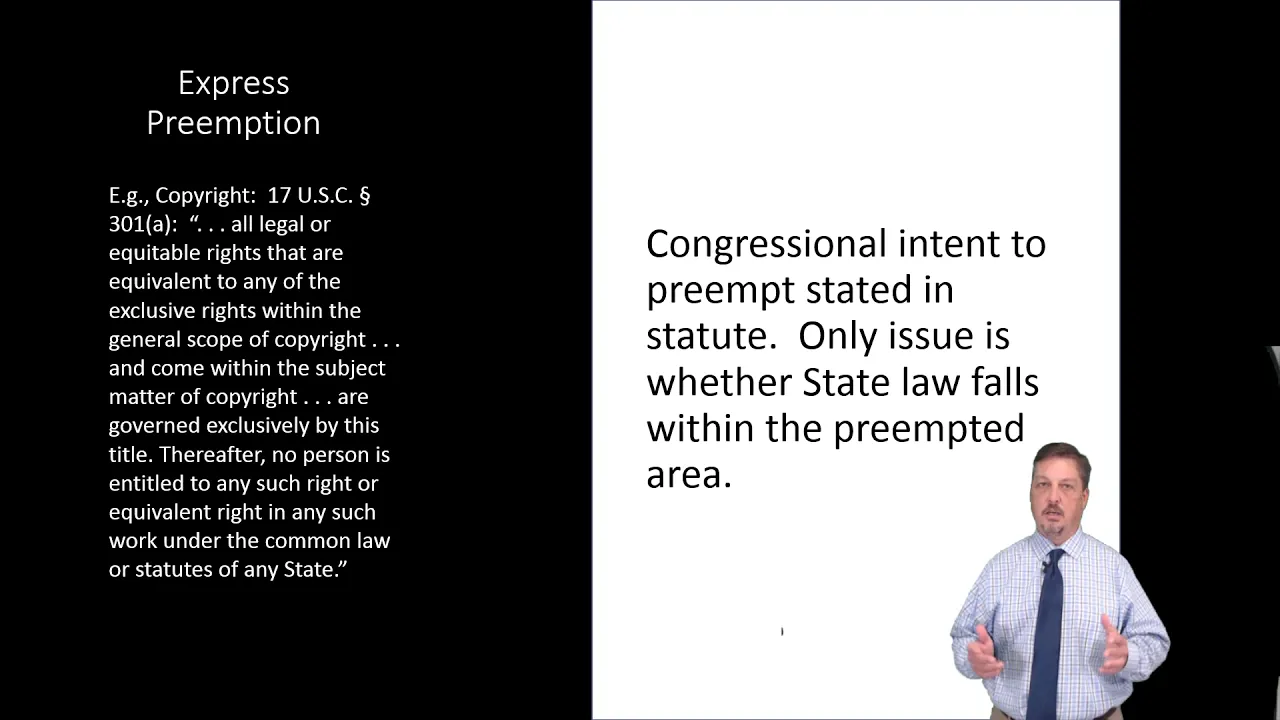
The Supreme Court's 6-3 emergency order in the Texas border dispute case demonstrates how federal courts apply the Supremacy Clause to preempt state immigration laws that conflict with federal authority, as evidenced by the parallel Iowa Senate File 2340 case where a federal district court ruled the nearly identical state law invalid under federal preemption principles.
Supreme Court 6-3 Border Ruling: Federalism and Preemption Analysis
Added:The Supremacy Clause of the U.S. Constitution (Article VI, Clause 2) and the constitutional doctrine of federal preemption.
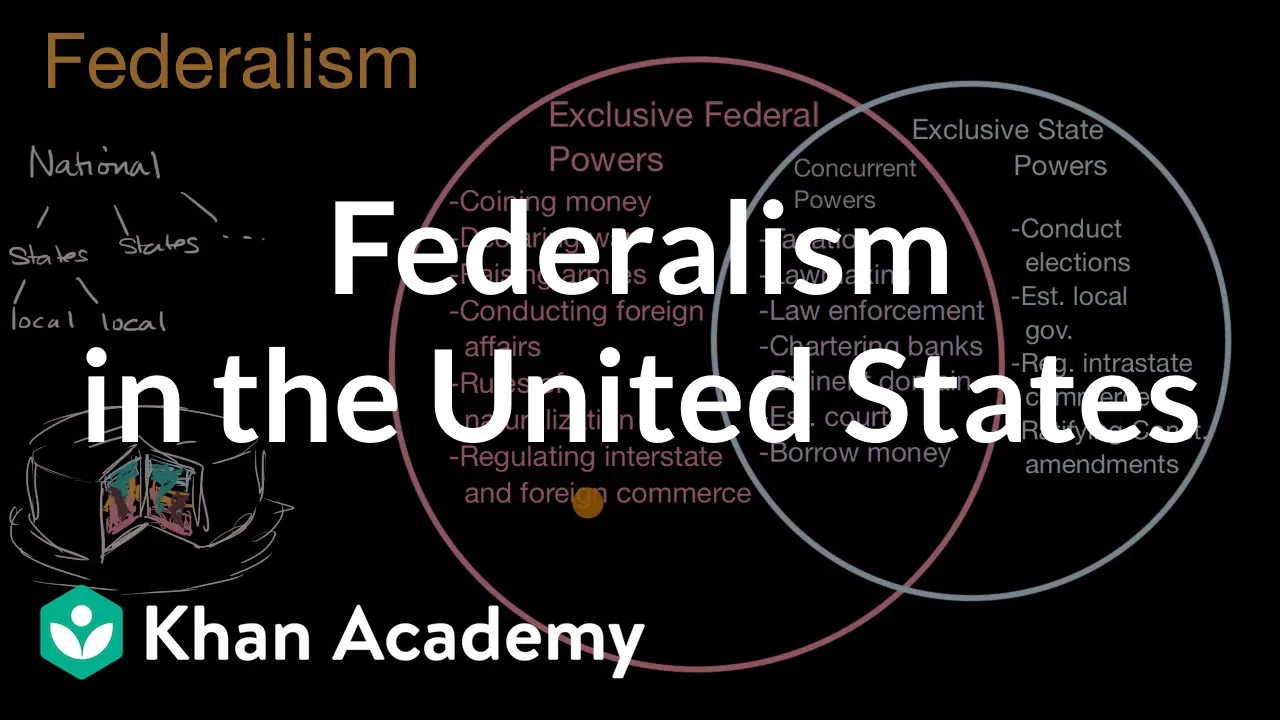
The basic structure of American Federalism and how authority is divided between the federal government and state governments.
The federal government's historically recognized 'plenary power' over immigration, naturalization, and international border control.
The mechanics of the Supreme Court's emergency docket (or 'shadow docket') and how emergency stays differ from final merits rulings.
Comparative analysis of Arizona v. United States (2012) and how Texas SB4 challenges or attempts to bypass this precedent.
The diplomatic and international relations implications of individual U.S. states enacting independent immigration enforcement policies.
The constitutional limits of state police powers under the Tenth Amendment when confronting perceived sovereign emergencies or 'invasions'.
The evolving debate regarding judicial reform and the Supreme Court's increasing reliance on emergency orders to decide major policy disputes.
545.9K views30.2Klikes9:33Original Release: 2024-10-28
so the battle over the Texas border just got even more complicated even though the Supreme Court issued a 63 order now we have another state a the state of Iowa and their immigration law which was recently halted and is now going to impact what is going on in [Music] Texas now really quick before we jump this video I want to ask you guys for a huge favor looking at some of my analytics about 60% of all my viewers are actually not subscribed to to the channel so consider subscribing to the channel That does help the channel to grow and then also click the notification Bell I know a lot of people aren't aware of that if you click the notification Bell and turn on all notifications it helps to ensure that YouTube actually sends you these videos now as I mentioned in the intro in this video we need to talk about how multiple decisions are now impacting this issue over the Texas border and the dispute between the Biden Administration and the state of Texas things are getting even more complicated not only because of the Supreme Court's recent orders on this issue but also because you have the state of Iowa and their recent law which is almost identical to the state of Texas that was just ruled on by a federal district court putting a halt even on that Iowa law this issue of the Texas border law is currently in the hands of the fifth circuit and multiple Supreme Court decisions on twoa topics and now even this Lower Court decision on the Iowa immigration law is being submitted to the fifth circuit to influence their decision so this is very important and we need to talk about what is happening now if you're not aware how this kind of developed Texas sp4 effectively makes it a crime for an individual to violate federal law by Crossing into the state of Texas at any location other than a lawful point of injury it also makes it a further crime and allows the state of Texas to enforce the federal laws when someone illegally reenters when they've already been found and removed once before it also gives them power to the state judges there and some of the federal judges there to enforce federal laws against these individuals and require that they have have to return where they came from this Texas law was challenged by the B Administration and a federal district court on review issued a preliminary injunction which prevented the state of Texas from enforcing all of sb4 that lower court in that case placed a universal preliminary Junction on S sp4 and it broadly blocked the enforcement of that entire law Texas then appealed the granting of that Universal preliminary Junction up to the fifth circuit and in response the fifth circuit issued an administrative State on that lower court Universal order now various cases after that dealing with this Texas issue were then Consolidated and then at that time multiple plaintiffs including the ab Administration then filed for Supreme Court emergency intervention they asked for the Supreme Court to step in early and removed the fist circuit administrative state that was put in place that effectively allowed s sp4 to still be enforced and put in place by the state of Texas well then we received an order from the Supreme Court and they denied that Biden Administration request to vacate that administrative State now interestingly even though we got a win from the Supreme Court on that emergency intervention then what happened is the fist circuit on their own issued a new order and they removed their own administrative State and effectively that allowed the B adminstration to still get a temporary win and halt the enforcement of that Texas as before law and then just a few days after that the fuit heard AA arguments on whether or not they were going to side with the B demonstration find that s sp4 should be join should be blocked or were they going to side with the state of Texas and find that s sp4 is valid and is not unconstitutional now after those arguments the fif circuit is now set to rule on this case we are waiting for the decision but since then since those arguments a lot of other decisions and a lot of other prent from the Supreme Court to other federal district courts have been submitted to the fifth circuit to try to suway their decision one of the most recent developments was a decision in a federal district court dealing with a very similar Iowa state law which is almost identical to Texas asb4 in Iowa the state passed Iowa senate file 2340 and that law again is very similar to Texas sb4 the Iowa law was challenged by the Biden Administration in a case called the United States versus the state of Iowa and recently the federal district court judge reviewing that issue granted the B Administration their request for a preliminary injunction so again very similar to what the federal district court did in the Texas S4 case and in that decision the Iowa district court judge stated that under binding Supreme Court prent Senate file 2340 is preempted in its entirety by the federal law and thus is invalid under the supremacy clause of the United States Constitution the court therefore grants the Motions for preliminary injunction filed by the plaintiffs in those related cases and enjoins the enforcement of Senate file 2340 pending further proceedings that ruling by US District Court Judge Steven Locker sided with the doj and it the supremacy clause of the United States Constitution that states that the Constitution and federal laws and treaties take precent over conflicting state laws the Iowa immigration measure according to the judge here is preempted in its entirety by the federal law and that it's invalid also in that opinion he went on to state that as a matter of Politics the new legislation might be defensible but as a matter of constitutional law it is not so he maybe is saying he agrees in theory with what the law is trying to do but he's saying under the Constitution he does not believe a state like Iowa can do this now this Iowa decision is very important not just because this law here is almost identical to the text as before law but you have another federal court dealing with this issue issuing a decision and now this case is being appealed up to a different Circuit Court the E Circuit Court of Appeals interestingly you have the discri court judge in the Texas sb4 case who told all the parties in this Texas's lawsuit that they should submit to the fifth circuit panel for the review this Iowa decision in the Iowa case there was a notice of appeal so there was an appeal up to the 8th circuit but then we got an order and a judgment from the 8th circuit essentially that one of the petitioners one of the Iowa individuals did not actually respond appropriately to the appeal did not file something accordingly so that appeal was dismissed and one of the weird things with that is you still have another petitioner in the Iowa who seems to be filing for an eight circuit appeal and it seems like that is moving forward and then there was also a stay from that lower court judge you know staying the preliminary Junction so potentially the ically still allowing for that Iowa law to be enforced but right now that Iowa decision is being submitted to the fifth circuit as persuasive evidence for why the fiz circuit should strike down this Texas law which is dealing with the Border crisis now currently we are waiting for the fiz circuit to decide on Texas sb4 um they've already heard arguments on that and that happened a couple months ago but after that hearing you have this case like the Iowa immigration decision and even other notable two-way decisions which are being submitted to the fif circuit to to influence their decision recently we've talked about how the Supreme Court's decision in rahime was submitted to the fif circuit and then you also had the Missouri Second Amendment preservation act case the Sapa case which was decided by the 8th circuit that was also submitted to the fifth circuit on this Texas S4 issue when it comes to the Missouri Sapa law the B Administration recently submitted that to the fist circuit and they stated that in this case the United States proceeds under the same Equitable right of action as it did in Missouri this court should reach the same conclusion as the a circuit and should reject Texas's argument that the United States lacks a right of action so they're using the Missouri Sapa law in the wind that they got in the E circuit to say that they have standing to bring this lawsuit against the Texas law here which deals with immigration and then when it comes to the rahimi Supreme Court decision that two-way case the state of Texas is actually the ones bringing that to the fif circuit and they argue that this court should not repeat the District Court's error on appeal plaintiffs have failed to show that the federal law preempts S4 at all let alone in every application as Texas has explained S4 mirrors and supplements Federal statutes it does not conflict with it regardless because the Constitution Trump statutory law s sp4 can be applied pursuant to Texas's self-defense or authority their right to self-defense and they have their right to protect themselves under this Texas law Texas argues that since S4 can be constitutionally applied in some aspect the universal relief that was granted by the lower court should be down by the fist circuit so these are very interesting developments when it comes to the Texas border dispute and this lawsuit here with sb4 there have been a lot of arguments that have been going on uh there's arguments about the impact of rahimi there's arguments about the impact of the Missouri Sapa law the second man preservation act law there and then now you have the impacts of this Iowa decision dealing with a very similar uh border law immigration law that was decided by a federal district court and is currently up for appeal in the 8th circuit so very interesting it's going to be interesting to see how all these sway the fist circuit and as things develop if we get any more information I will let you guys know so if you guys like this video and you would like support the channel one of the best ways to do that is to like comment and subscribe all those things help to feel the algorithm and it signal to YouTube that you guys see value in these videos and in this type of 2A news but as always thank you all for watching don't forget to like And subscribe and don't forget this nation was built by arm Scholars and this nation will be maintained by armed Scholars [Music]
Up Next
5:03
Hostile Work Environment: Legal Definition Under Anti-Discrimination Law
@LawlineCLE
42.6K views•2017-10-18

4:27
US Secondary Sanctions Impact on EU Businesses and Blocking Legislation
@Bureauvandijk
1.6K views•2019-03-20

5:27
Forensic Phonetics: Speaker Identification in Legal Cases
@nptel-nociitm9240
539 views•2025-03-19

24:42
Police Interrogation Tactics: False Confessions & Legal Reform
@LastWeekTonight
7M views•2022-04-18
Related Study Plans & Knowledge Roadmaps
Structured learning paths in Law
law
Self-Defense Law: Imminence & Castle Doctrine
01Foundations of Self-Defense Law
02Imminent Threat & Reasonable Belief
03The Principle of Proportionality
+ 3 more learning modules
12h6 modules
Explore Roadmap
law
Defamation Law: First Amendment & Actual Malice
01Introduction to civil torts and the First Amendment
02Elements of Defamation: Libel and Slander
03Public Figures vs. Private Individuals
+ 2 more learning modules
8h5 modules
Explore Roadmap
law
Hearsay Rule: Trial Evidence & Exceptions
01Introduction to Trial Evidence & Courtroom Basics
02Demystifying Hearsay: The Core Definition
03Non-Hearsay: Exclusions Under FRE 801(d)
+ 3 more learning modules
14h6 modules
Explore Roadmap
law
Medical Malpractice: Law, Liability & Care
01Foundations of Tort Law and Civil Liability
02The Four Elements of Medical Malpractice
03Defining and Proving the Standard of Care
+ 2 more learning modules
12h5 modules
Explore Roadmap