










![AP Government UNIT 1 REVIEW [Everything You NEED to Know!]](https://i.ytimg.com/vi_webp/lxotd_zV1hc/maxresdefault.webp)
![The United States v. Lopez, EXPLAINED [AP Gov Required Supreme Court Cases]](https://i.ytimg.com/vi/WnAgQKqc0F0/maxresdefault.jpg)


![McCulloch v. Maryland [SCOTUSbrief]](https://i.ytimg.com/vi/Et7Hel9nsvQ/maxresdefault.jpg)






Federalism is the division of governmental power between the national (federal) government and state governments in the United States, evolving through distinct historical periods: dual federalism (1788-1937) established a strict separation of powers with clear jurisdictional boundaries, while cooperative federalism (since 1930s) uses grant-in-aid programs and mandates to encourage states toward nationally-defined goals, with modern developments including regulated federalism and new federalism's emphasis on returning power to states through block grants and devolution.
Federalism Explained: US Government & Politics Crash Course
Added:The historical failure of the Articles of Confederation and the motivation for drafting the US Constitution.
The distinction between horizontal separation of powers (executive, legislative, judicial) and vertical division of power.
Basic constitutional concepts of sovereignty and the definition of a federal republic.
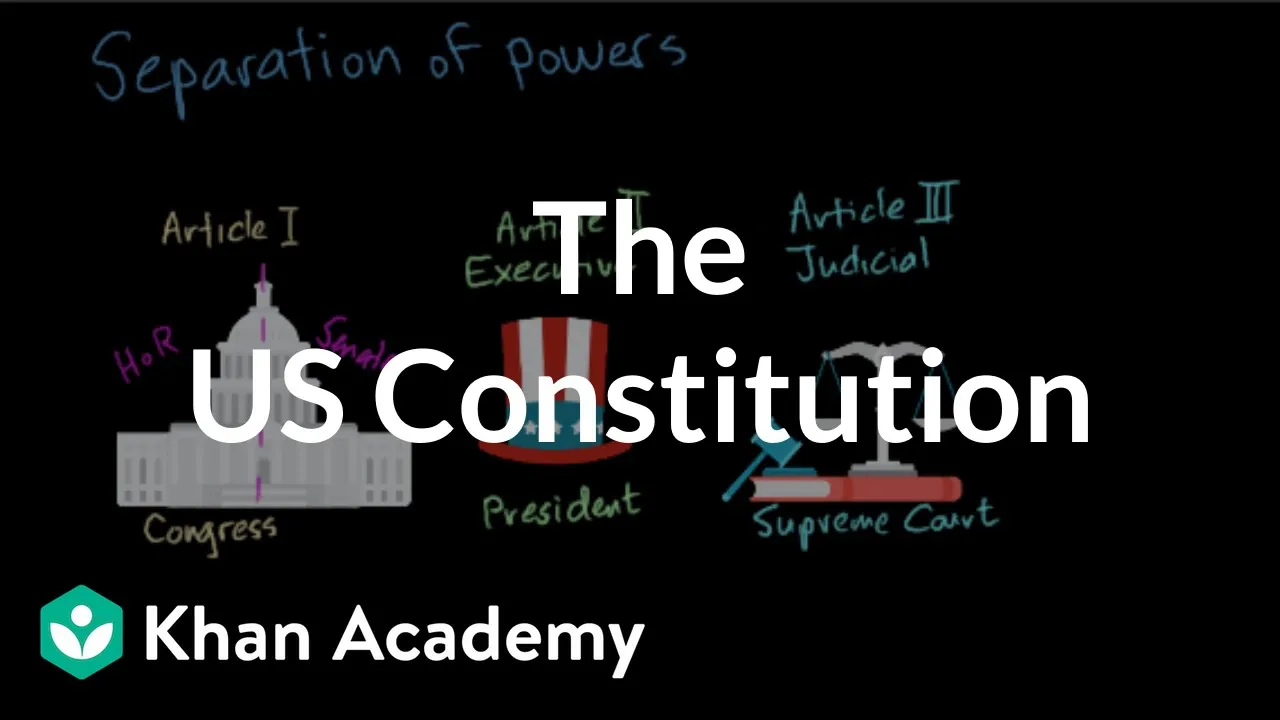
The foundational structure of the US Constitution, specifically the roles of the legislative, executive, and judicial branches.
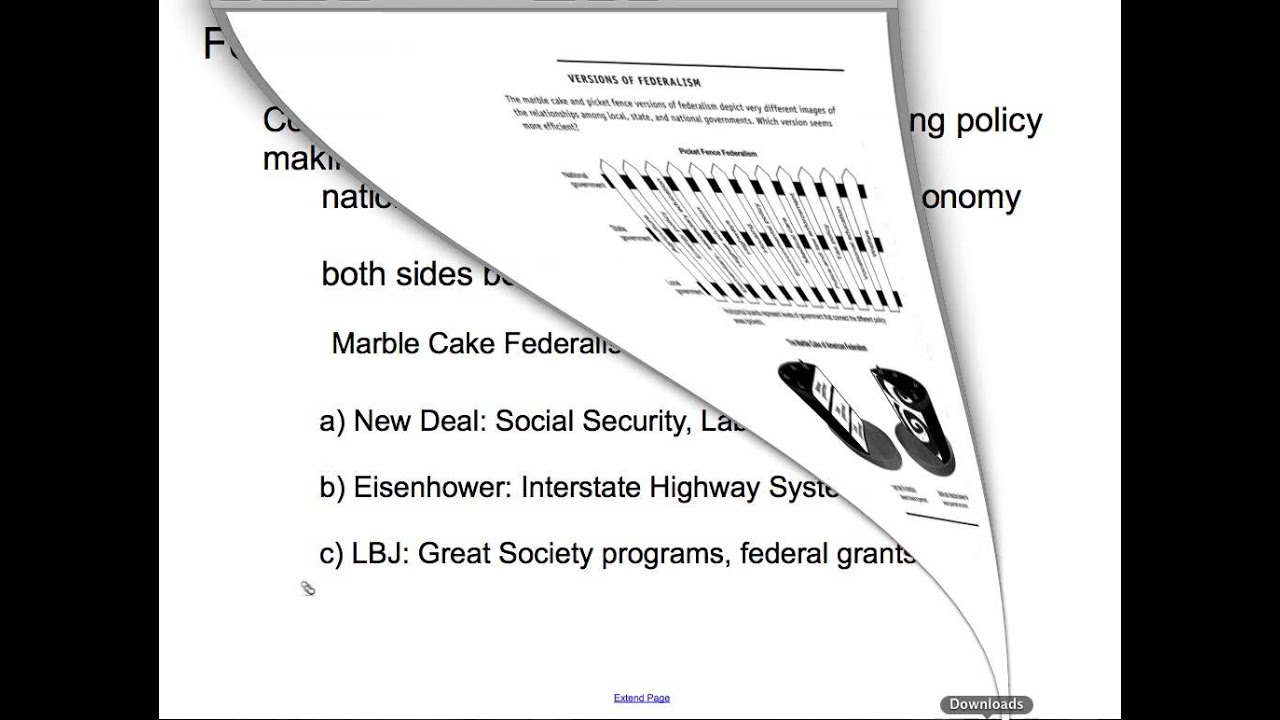
The historical evolution from Dual Federalism ('layer cake') to Cooperative Federalism ('marble cake') starting with the New Deal.
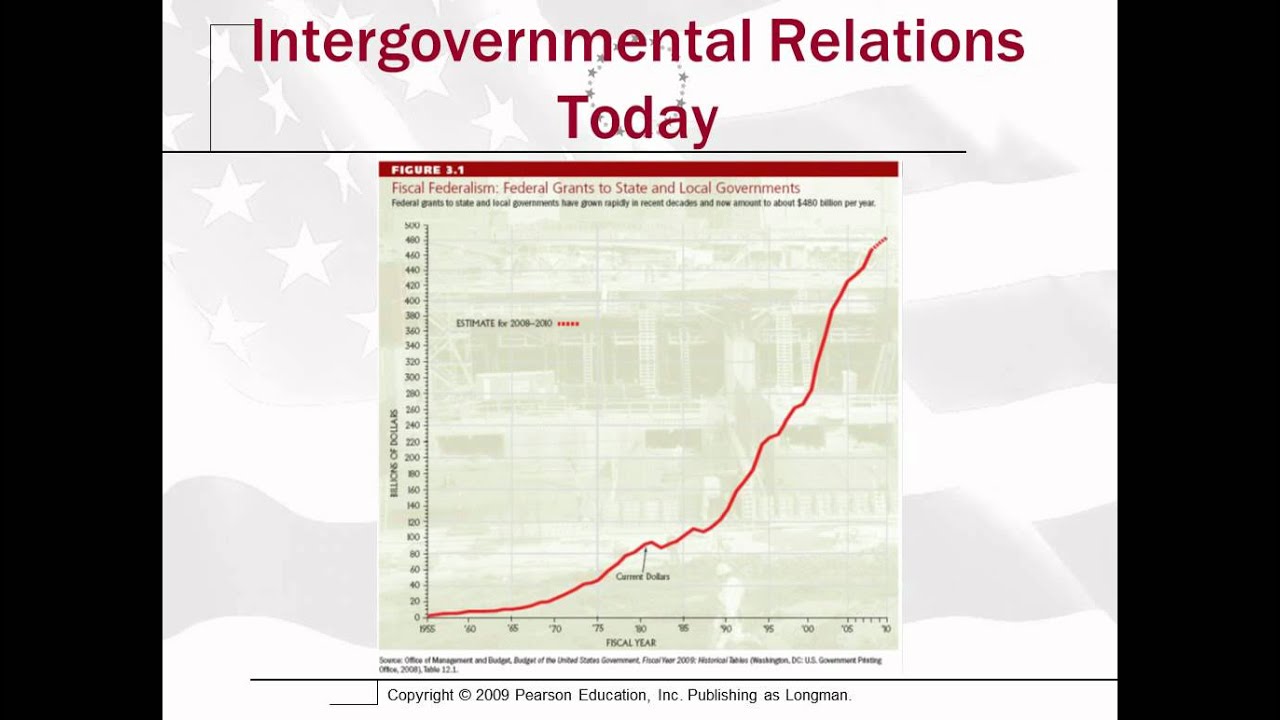
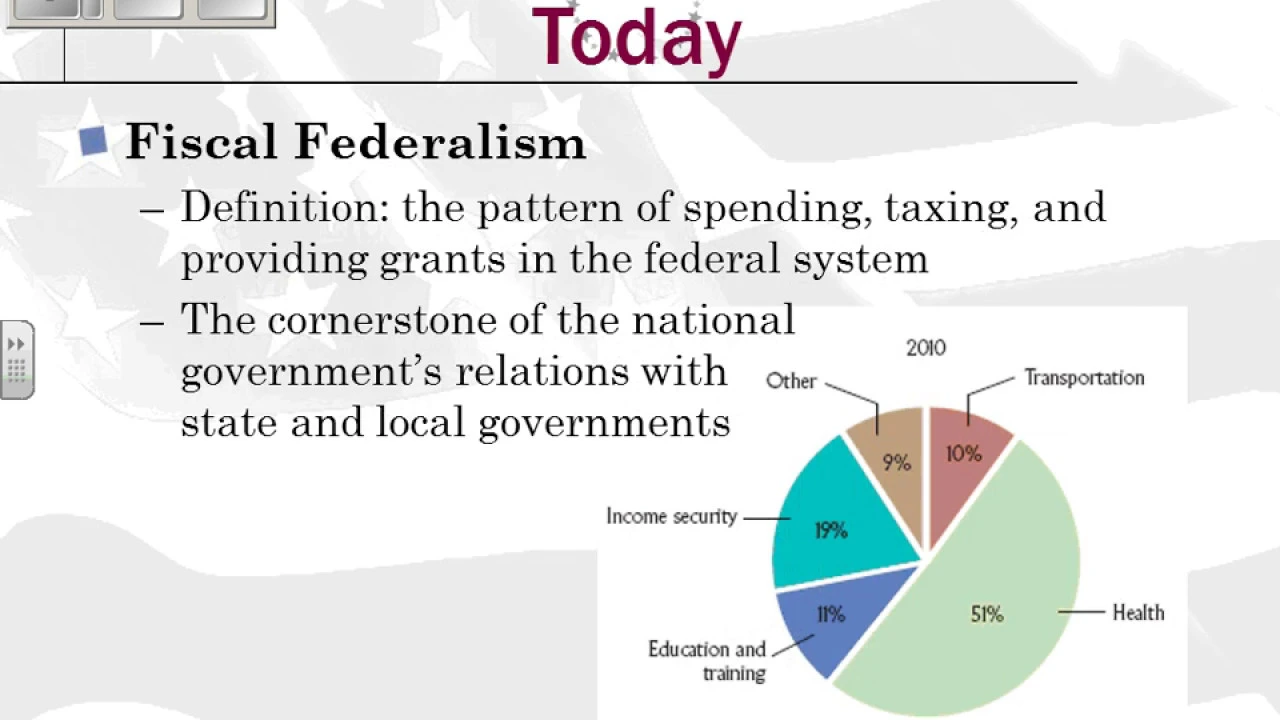
Fiscal Federalism and how the national government uses grants-in-aid, block grants, and mandates to influence state policy.
The role of the Supreme Court in defining the boundaries of federalism through landmark cases like McCulloch v. Maryland and US v. Lopez.
The concept of states acting as 'laboratories of democracy' to test policy innovations before they are implemented nationally.
Contemporary policy debates where state and federal laws conflict, such as environmental regulations, healthcare, and immigration.
3.8M views34.9Klikes9:14Original Release: 2015-02-14
Hi, I'm Craig and this is Crash Course Government and Politics. And today we're going to talk about a fundamental concept to American government: federalism.
Sorry. I'm not sorry. You're not even endangered anymore.
Federalism is a little confusing because it includes the word, "federal," as in federal government, which is what we use to describe the government of the United States as a whole.
Which is kind of the opposite of what we mean when we say federalism. Confused? Google it.
This video will probably come up. And then just watch this video. Or, just continue watching this video.
[Theme Music] So what is federalism? Most simply, it's the idea that in the US, governmental power is divided between the government of the United States and the government of the individual states. The government of the US, the national government, is sometimes called the federal government, while the state governments are just called the state governments. This is because technically the US can be considered a federation of states. But this means different things to different people. For instance, federation of states means ham sandwich to me. I'll have one federation of states, please, with a side of tater tots. Thank you. I'm kind of dumb.
In the federal system, the national government takes care of some things, like for example, war with other countries and delivering the mail, while the state government takes care of other things like driver's license, hunter's licenses, barber's licences, dentist's licenses, license to kill - nah, that's James Bond. And that's in England. And I hope states don't do that.
Pretty simple right? Maybe not. For one thing, there are some aspects of government that are handled by both the state and national government. Taxes, American's favorite government activity, are an example. There are federal taxes and state taxes. But it gets even more complicated because there are different types of federalism depending on what period in American history you're talking about. UGH! Stan! Why is history so confusing!? UGH!
Stan, are you going to tell me? Can you talk Stan?
Basically though, there are two main types of federalism -dual federalism, which has nothing to do Aaron Burr, usually refers to the period of American history that stretches from the founding of our great nation until the New Deal, and cooperative federalism, which has been the rule since the 1930s. Let's start with an easy one and start with dual federalism in the Thought Bubble.
From 1788 until 1937, the US basically lived under a regime of dual federalism, which meant government power was strictly divided between the state and national governments.
Notice that I didn't say separated, because I don't want you to confuse federalism with the separation of powers. DON'T DO IT! With dual federalism, there are some things that only the federal government does and some things that only the state governments do.
This is sometimes called jurisdiction.
The national government had jurisdiction over internal improvements like interstate roads and canals, subsidies to the states, and tariffs, which are taxes on imports and thus falls under the general heading of foreign policy. The national government also owns public lands and regulates patents which need to be national for them to offer protection for inventors in all the states. And because you want a silver dollar in Delaware to be worth the same as a silver dollar in Georgia, the national government also controls currency.
The state government had control over property laws, inheritance laws, commercial laws, banking laws, corporate laws, insurance, family law, which means marriage and divorce, morality -- stuff like public nudeness and drinking - which keeps me in check -- public health, education, criminal laws including determining what is a crime and how crimes are prosecuted, land use, which includes water and mineral rights, elections, local government, and licensing of professions and occupations, basically what is required to drive a car, or open a bar or become a barber or become James Bond.
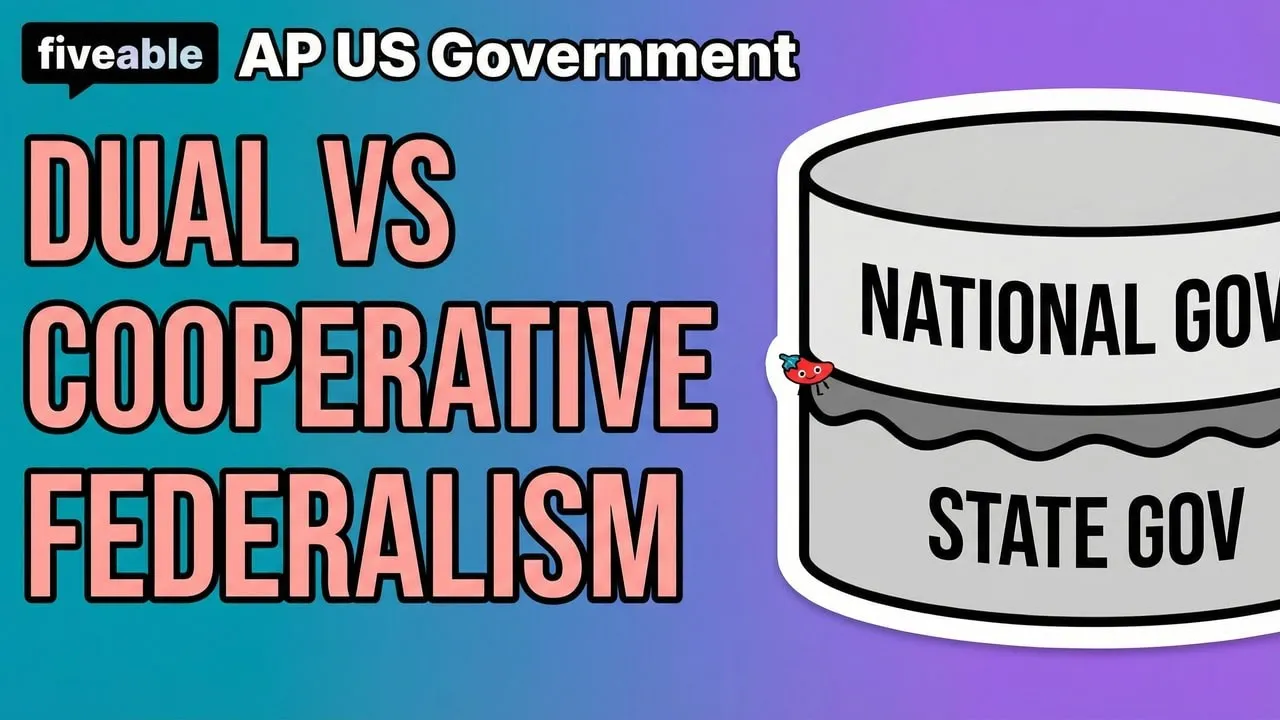
So, under dual federalism, the state government has jurisdiction over a lot more than the national government. These powers over health, safety and morality are sometimes called police power and usually belong to the states. Because of the strict division between the two types of government, dual federalism is sometimes called layer cake federalism. Delicious. And it's consistent with the tradition of limited government that many Americans hold dear.
Thanks Thought Bubble.
Now, some of you might be wondering, Craig, where does the national government get the power to do anything that has do to with states? Yeah, well off the top of my head, the US Constitution in Article I, Section 8 Clause 3 gives Congress the power "to regulate commerce with foreign nations, and among the several states, and with the Indian tribes." This is what is known as the Commerce Clause, and the way that it's been interpreted is the basis of dual federalism and cooperative federalism.
For most of the 19th century, the Supreme Court has decided that almost any attempt by any government, federal or state, to regulate state economic activity would violate the Commerce Clause. This basically meant that there was very little regulation of business at all.
FREEDOOOOOOMM!
And this is how things stood, with the US following a system of dual federalism, with very little government regulation and the national government not doing much other than going to war or buying and conquering enormous amounts of territories and delivering the mail.
Then the Great Depression happened, and Franklin Roosevelt and Congress enacted the New Deal, which changed the role of the federal government in a big way. The New Deal brought us cooperative federalism, where the national government encourages states and localities to pursue nationally-defined goals. The main way that the federal government does this is through dollar-dollar bills, y'all. Money is what I'm saying. Stan, can I make it rain? Yeah?
All right, I'm doing it. I happen to have cash in my hand now. Oh yeah, take my federal money, states.
Regulating ya. Regulator.
This money that the federal government gives to the states is called a grant-in-aid. Grants-in-aid can work like a carrot encouraging a state to adopt a certain policy or work like a stick when the federal government withholds funds if a state doesn't do what the national government wants. Grants-in-aid are usually called categorical, because they're given to states for a particular purpose like transportation or education or alleviating poverty.
There are 2 types of categorical grants-in-aid: formula grants and project grants. Under a formula grant, a state gets aid in a certain amount of money based on a mathematical formula; the best example of this is the old way welfare was given in the US under the program called Aid to Families with Dependent Children. AFDC. States got a certain amount of money for every person who was classified as "poor." The more poor people a state had, the more money it got. Project grants require states to submit proposals in order to receive aid. The states compete for a limited pool of resources. Nowadays, project grants are more common than formula grants, but neither is as popular as block grants, which the government gives out Lego Blocks and then you build stuff with Legos. It's a good time.
No no, the national government gives a state a huge chunk of money for something big, like infrastructure, which is made with concrete and steel, and not Legos, and the state is allowed to decide how to spend the money. The basic type of cooperative federalism is the carrot stick type which is sometimes called marble cake federalism because it mixes up the state and federal governments in ways that makes it impossible to separate the two.
Federalism, it's such a culinary delight.
The key to it is, you guessed it -- dollar dollar bills y'all. Money. But there's another aspect of cooperative federalism that's really not so cooperative, and that's regulated federalism.
Under regulated federalism, the national governments sets up regulations and rules that the states must follow. Some examples of these rules, also called mandates, are EPA regulations, civil rights standards, and the rules set up by the Americans with Disabilities Act.
Sometimes the government gives the states money to implement the rules, but sometimes it doesn't and they must comply anyways. That's called an unfunded mandate. Or as I like to call it, an un-fun mandate. Because no money, no fun. A good example of example of this is OSHA regulations that employers have to follow.
States don't like these, and Congress tried to do something about them with the Unfunded Mandates Reform Act or UMRA, but it hasn't really worked. In the early 21st century, Americans are basically living under a system of cooperative federalism with some areas of activity that are heavily regulated. This is a stretch from the original idea that federalism will keep the national government small and have most government functions belong to the states.
If you follow American politics, and I know you do, this small government ideal should sound familiar because it's the bedrock principle of many conservatives and libertarians in the US. As conservatives made many political inroads during the 1970s, a new concept of federalism, which was kind of an old concept of federalism, became popular. It was called, SURPRISE, New Federalism, and it was popularized by Presidents Nixon and Reagan.
Just to be clear, it's called New Federalism not Surprise New Federalism. New Federalism basically means giving more power to the states, and this has been done in three ways. First, block grants allow states discretion to decide what to do with federal money, and what's a better way to express your power than spending money? Or not spending money as the case may be. Another form of New Federalism is devolution, which is the process of giving state and local governments the power to enforce regulations, devolving power from the national to the state level. Finally, some courts have picked up the cause of New Federalism through cases based on the 10th Amendment, which states "The powers not delegated to the United States by the Constitution, nor prohibited by it to the States, are reserved to the States respectively, or to the people." The idea that some powers, like those police powers I talked about before, are reserved by the states, have been used to put something of a brake on the Commerce Clause.
So as you can see, where we are with federalism today is kind of complicated. Presidents Reagan, George H.W. Bush, and Clinton seem to favor New Federalism and block grants. But George W. Bush seemed to push back towards regulated federalism with laws like No Child Left Behind and the creation of the Department of Homeland Security. It's pretty safe to say that we're going to continue to live under a regime of cooperative federalism, with a healthy dose of regulation thrown in. But many Americans feel that the national government is too big and expensive and not what the framers wanted.
If history is any guide, a system of dual federalism with most of the government in the hands of the states is probably not going to happen. For some reason, it's really difficult to convince institutions to give up powers once they've got them. I'm never giving up this power. Thanks for watching, I'll see you next week.
Crash Course Government and Politics is produced in association with PBS Digital Studios. Support for Crash Course US Government comes from Voqal. Voqal supports non-profits that use technology and media to advance social equity. Learn more about their mission and initiatives at Voqal.org. Crash Course is made with the help of these nice people. Thanks for watching.
You didn't help make this video at all, did you? No. But you did get people to keep watching until the end because you're an adorable dog.
Up Next

6:38
Dual vs Cooperative Federalism: Key Differences Explained
@writerescue
971 views•2024-06-03

24:30
BRICS Pay and de-dollarization: A New Financial Order Emerges? | 55 chars
@DannyHaiphongYT
164.6K views•2024-10-22

6:47
Freedom of Religion: Supreme Court Cases & the First Amendment
@crashcourse
1.1M views•2015-07-24
10:19
Explaining the Saudi-Iranian Proxy Conflict in the Middle East
@Vox
18.2M views•2017-07-17
Related Study Plans & Knowledge Roadmaps
Structured learning paths in Political Science
political-science
Economic Statecraft: Sanctions & Chokepoints
01Foundations of Geoeconomics and Economic Statecraft
02The Mechanics of Weaponized Interdependence
03International Sanctions: Types, Implementation, and Efficacy
+ 2 more learning modules
12h5 modules
Explore Roadmap
political-science
Central Bank Independence: Politics & Policy
01Foundations of Central Banking and Monetary Policy
02The Time Inconsistency Problem & Inflation Bias
03The Delegation Model and Designing Independence
+ 2 more learning modules
12h5 modules
Explore Roadmap
political-science
Consociationalism: Power-Sharing & Stability
01Democratic Dilemmas in Divided Societies
02Introduction to Consociational Democracy
03The Four Pillars of Consociational Design
+ 2 more learning modules
12h5 modules
Explore Roadmap
political-science
Rebel Governance: Legitimacy, Economy & State
01Foundations of Rebel Governance and Statehood
02Establishing Political Legitimacy and the Rebel Social Contract
03Wartime Economies and Rebel Resource Management
+ 2 more learning modules
14h5 modules
Explore Roadmap