








![Masterpiece Cakeshop: The Decision [SCOTUSbrief]](https://i.ytimg.com/vi_webp/4eAa0bC0DCU/maxresdefault.webp)


![[Landmark Cases] Religious For-Profits: Burwell v. Hobby Lobby](https://i.ytimg.com/vi/Yv0g0mbUEEQ/maxresdefault.jpg)




The Supreme Court established the Lemon Test in Lemon v. Kurtzman (1971) as a three-pronged framework for evaluating whether government actions involving religion violate the First Amendment's Establishment and Free Exercise Clauses: (1) the law must have a secular legislative purpose, (2) its primary effect must neither advance nor inhibit religion, and (3) it must not create excessive entanglement between church and state. This test has been applied to cases like Engel v. Vitale (school prayer) and ongoing debates about religious practices in public schools, though critics argue it leaves room for interpretation and encourages continued litigation on religious freedom issues.
Freedom of Religion: Supreme Court Cases & the First Amendment
Added:The basic structure of the United States Constitution and the Bill of Rights, specifically the purpose of the First Amendment.
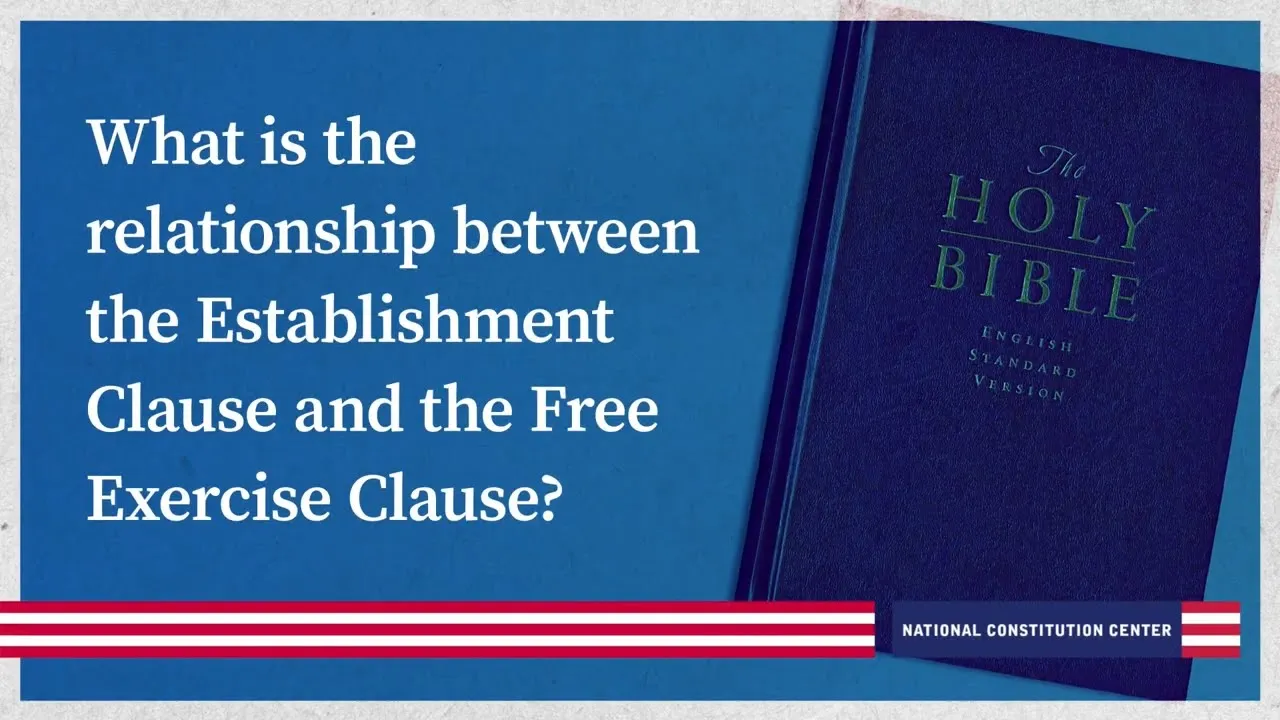
The distinction between the Establishment Clause (preventing government-sanctioned religion) and the Free Exercise Clause (protecting individual religious practices).
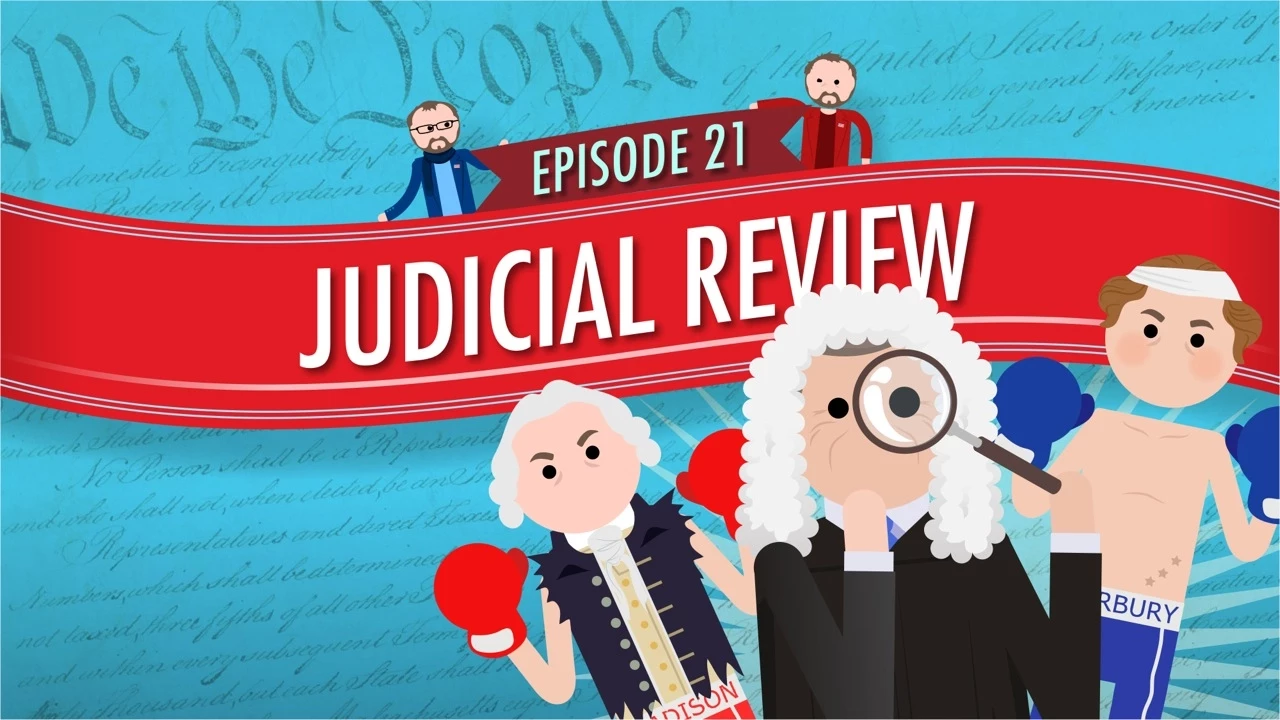
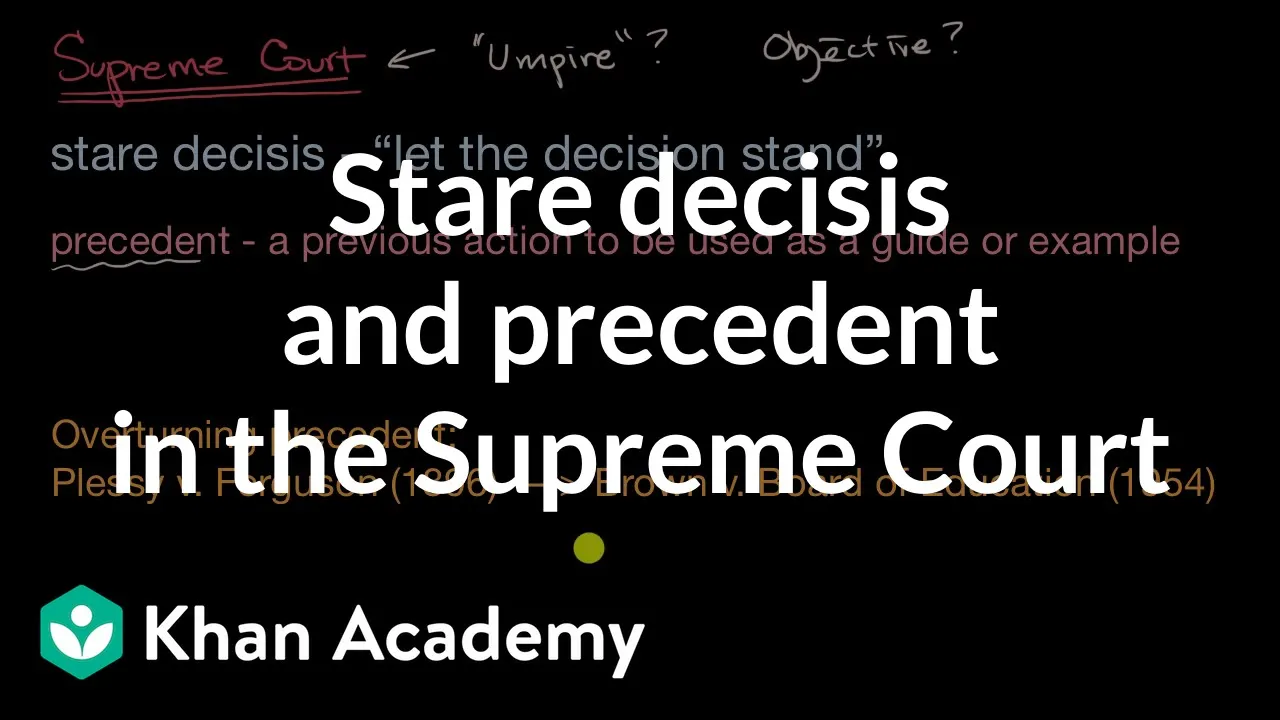
The concept of judicial review and how the Supreme Court of the United States interprets constitutional law through precedent.
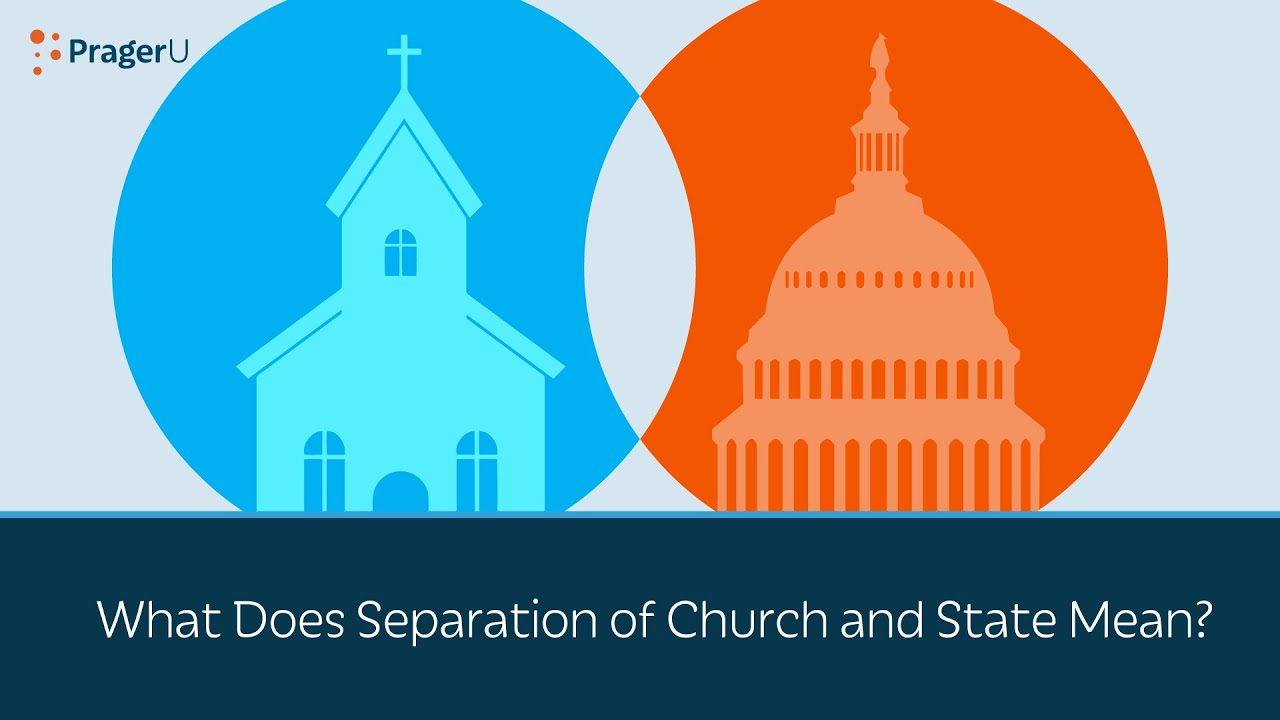
The historical context of the phrase 'separation of church and state' and its influence on American jurisprudence.
The modern shift away from the 'Lemon Test' and the Supreme Court's current historical-tradition standards for evaluating Establishment Clause cases (e.g., Kennedy v. Bremerton School District).
The tension between religious free exercise and state anti-discrimination laws, as explored in cases like Masterpiece Cakeshop v. Colorado Civil Rights Commission.
The statutory protections of religious liberty, such as the Religious Freedom Restoration Act (RFRA) and its application to corporations in Burwell v. Hobby Lobby.
Contemporary debates and rulings regarding public funding, school choice vouchers, and religious education (e.g., Carson v. Makin).
1.1M views10.2Klikes6:47Original Release: 2015-07-24
Hi, I'm Craig, and this is Crash Course Government and Politics, and I'm excited.
I'm excited because today, we start delving into Supreme Court jurisprudence, with the totally controversial topic of freedom of religion. Now, other than being fun to say, jurisprudence means all the important cases on a particular topic, but unfortunately, I'm only going to be talking about a couple of them, because they demonstrate how the Supreme Court reasons its way through a tricky issue. Jurisprudence. Jurisprudence.
[Theme Music] So the Constitution deals with religion right there in the First Amendment, which is also the one that deals with speech and the press and assembly and petitions. Here's what it says: "Congress shall make no law respecting an establishment of religion or prohibiting the free exercise thereof." It's the first clause in the First Amendment of the Bill of Rights, so it's pretty darn important. Notice it has two parts, and each one creates a separate religious liberty or freedom. The first part, "no law respecting an establishment of religion" is caused the establishment clause; can you guess what the second religious liberty is? If you said free exercise, you're right. What do these two freedoms mean, though?
Establishment of religion means that the US can't create an official state church, like England has with the church of England. This means that the First Amendment ensures that the US does not have any state endorsed religion nor does it write its laws based on any religious edicts, and it's also the clause in the Constitution that deals with religious monuments and school prayers and stuff like that.
The free exercise clause in a way is more straightforward, it means you can't pay for exercise.
Gym memberships are illegal. But freedom isn't free. You're gonna pay with pain!
No pain, no gain. Actually, none of that is what we're talking about.
What it means is you can't be prohibited from being part of a certain religion, although it doesn't mean that any religious practice is okay. For example, if your religion requires human sacrifice, because you're an Aztec, state, local, and federal law could prevent you from practicing that aspect of religion, for obvious reasons, although it couldn't prevent you from believing that human sacrifices were necessary to make the sun rise every day.
We are gonna anger a lot of Aztecs with this video, Stan.
There are a number of cases that establish this distinction between religious belief and religious practice, but my personal favorite is Church of Lukumi Babalu Aye vs. Hialeah, because I love saying Lukumi Babalu Aye. You probably figured out that what these two clauses mean in practice has been determined to some degree by Supreme Court decisions. There's a bunch of them, but probably the most important one is called Lemon v. Kurtzman, from 1971.
Right off the bat, the Lemon decision is a little complicated because it combines two sets of facts, although they both involve public money and parochial schools. In one case in Rhode Island, the state was using taxpayer funds to pay teachers in parochial schools in an effort to educate Rhode Island children, which is generally a good goal.
In the other case in Pennsylvania, the state was paying teachers in private schools to provide secular education services, but enough with the set-up, let's go to the Thought Bubble.
The Supreme Court in Lemon vs. Kurtzman devised a three prong test to see if the state law violates the First Amendment religious freedom clauses. Under the first prong, the Court looks to see whether the law in question has a secular legislative purpose. In this case, the purpose of the law was educating children, which you remember, is one of the powers reserved to the states, and for the most part, is a secular purpose.
Under the second prong, the Court examines whether or not the law's principal or primary effect neither enhances nor inhibits religion. Here again, the Court found that paying private school teachers or using private school facilities did not necessarily promote religion or prevent students from worshipping as they wanted to.
The third prong requires that the law under consideration does not create excessive entanglement between a church and the state. This is the one where both the Rhode Island and Pennsylvania laws got into trouble. In Rhode Island, the school buildings where the children were learning were full of religious imagery, and 2/3 of the teachers were nuns. The Court paid close attention the fact that the people involved were kids, ruling, "This process of inculcating religious doctrine is, of course, enhanced by the impressionable age of the pupils in primary schools particularly. In short, parochial schools involve substantial religious activity and purpose." In Pennsylvania, the problem was different. The Court ruled that in order to make sure that the teachers were NOT teaching religion, the state would have to monitor them so closely that it would be excessive entanglement and give the state way too much control. They ruled that, "The very restrictions in surveillance necessary to ensure that teachers play a strictly non-ideological role give rise to entanglements between church and state."
Thanks, Thought Bubble. So it's pretty complicated, and I'm not 100% sure that I find it convincing.
First of all, the Justices engaged in some slippery slope reasoning about the Pennsylvania case.
The Court argued that even if, in this situation, the secular purpose was a good one, there's a tendency for states to take more and more power for themselves. But my bigger concern is that all three prongs in this case were given equal weight, and I'm not sure that they always should be. I mean, you got the one round one and then the two like, you know, long ones, and you can pull that round one, it's just for grounding.
What the ruling in this case meant was that the secular purpose, educating children, was not gonna happen, or at least would be made more difficult. Also, you could argue that it was kind of paternalistic, assuming that kids wouldn't be able to block out religious imagery, but since they are kids, maybe a little paternalism is okay. You spit that gum out, Junior.
So Lemon vs. Kurtzman built on an earlier case, Engel vs. Vitale, which ruled that prayer in schools violated religious freedom. You would think that, taken together, this issue would be pretty much put to bed, yet every few years, a case comes along involving prayer in school, and now they apply the old three prong Lemon test. For example, one state adopted a statute mandating a moment of silence at the beginning of each school day. One of the purposes of this statute is to provide students with an opportunity to pray in school. Another purpose is to create a calming atmosphere in the classroom to better promote learning.
The first purpose doesn't look so secular, and as for the second prong, doesn't necessarily advance or inhibit a particular religion. Students can choose not to pray at all. Is this excessive entanglement? That's always gonna be difficult to say, especially since 'excessive' is pretty subjective, but if you go on the standard of the Pennsylvania case in Lemon, almost any religious practice in school could be excessively entangling, because the state is going to have to step in and monitor it.
Some school systems have tried to get around this by having the prayers led by students, because they aren't agents of the state. But then you have the issue of how much a student-led prayer is really led by a student, and how do you find out without more monitoring and more state entanglement? The Lemon test is an attempt by the Court to set up a framework for analyzing future situations where religion and the state might get mixed up. It's probably better than having what legal scholars like to call "a bright line rule" about religion in public spaces like schools and courthouses, but it does leave a lot of wiggle room and it seems that it encourages future cases because we keep seeing them. The funny thing is, religious freedom is one of the less controversial protections found in the First Amendment, if you don't believe me, wait until our next episode on free speech. Just wait. You just -- you just wait.
Did you guys hear what he said? See ya next time.
Crash Course Government and Politics is produced in association with PBS Digital Studios. Support for Crash Course US Government comes from Voqal. Voqal supports non-profits that use technology and media to advance social equity. Learn more about their mission and initiatives at voqal.org. Crash Course was made with the help of all these jurisprudences, am I using that word right? Thanks for watching.
Up Next

32:46
Gun Control Legislation, Religious Liberty, and Hollywood | Verdict
@VerdictwithTedCruz
75.8K views•2022-06-23

24:30
BRICS Pay and de-dollarization: A New Financial Order Emerges? | 55 chars
@DannyHaiphongYT
164.6K views•2024-10-22
9:14
Federalism Explained: US Government & Politics Crash Course
@crashcourse
3.8M views•2015-02-14
10:19
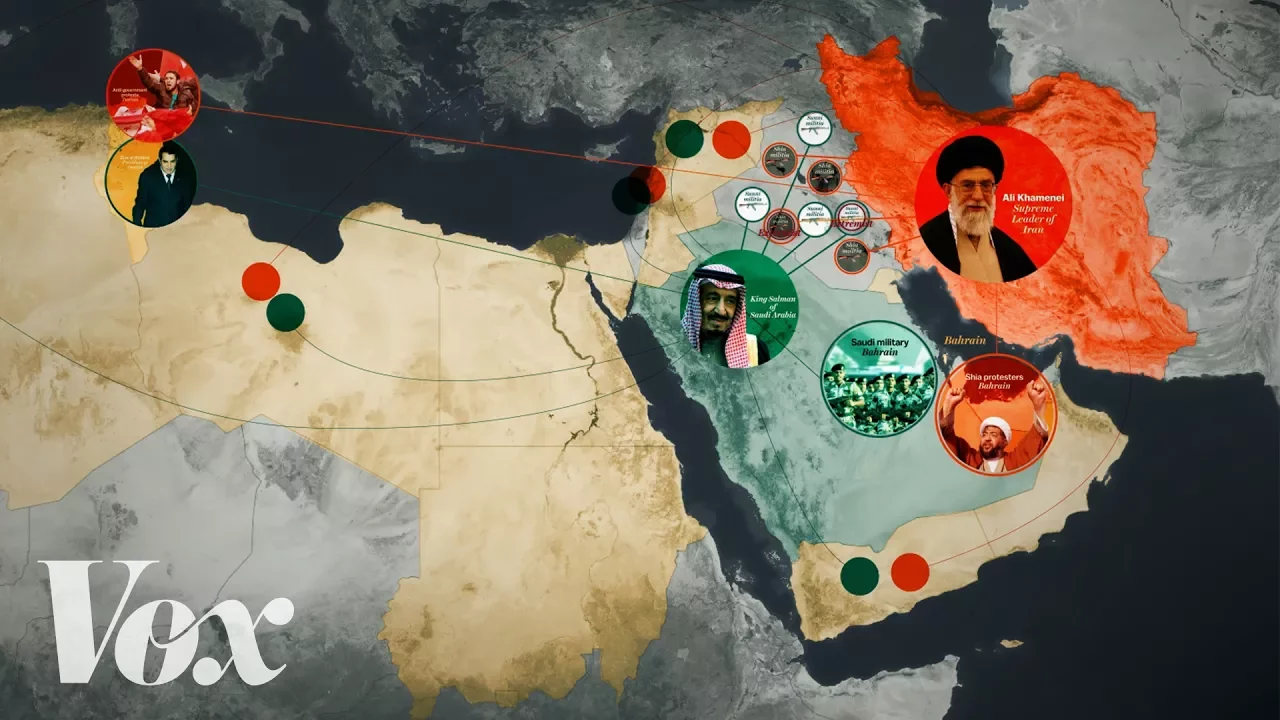
Explaining the Saudi-Iranian Proxy Conflict in the Middle East
@Vox
18.2M views•2017-07-17
Related Study Plans & Knowledge Roadmaps
Structured learning paths in Political Science
political-science
Economic Statecraft: Sanctions & Chokepoints
01Foundations of Geoeconomics and Economic Statecraft
02The Mechanics of Weaponized Interdependence
03International Sanctions: Types, Implementation, and Efficacy
+ 2 more learning modules
12h5 modules
Explore Roadmap
political-science
Central Bank Independence: Politics & Policy
01Foundations of Central Banking and Monetary Policy
02The Time Inconsistency Problem & Inflation Bias
03The Delegation Model and Designing Independence
+ 2 more learning modules
12h5 modules
Explore Roadmap
political-science
Consociationalism: Power-Sharing & Stability
01Democratic Dilemmas in Divided Societies
02Introduction to Consociational Democracy
03The Four Pillars of Consociational Design
+ 2 more learning modules
12h5 modules
Explore Roadmap
political-science
Rebel Governance: Legitimacy, Economy & State
01Foundations of Rebel Governance and Statehood
02Establishing Political Legitimacy and the Rebel Social Contract
03Wartime Economies and Rebel Resource Management
+ 2 more learning modules
14h5 modules
Explore Roadmap