







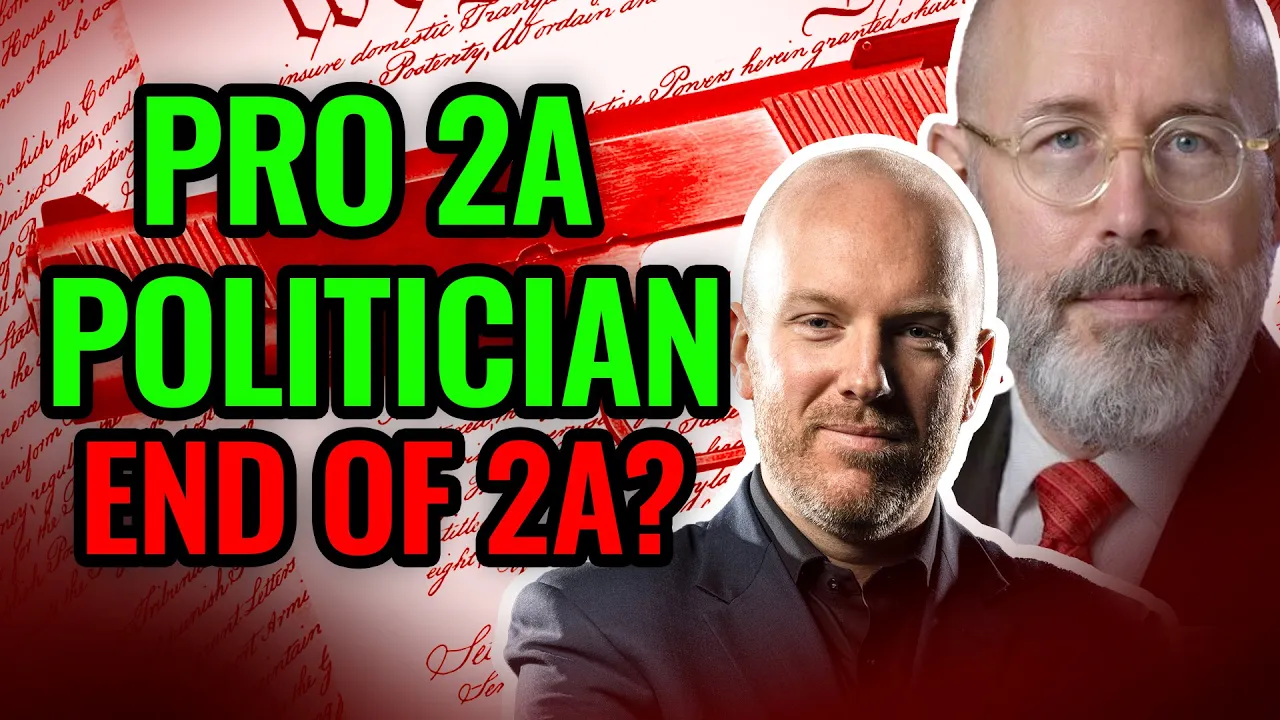






In the U.S. Senate, the requirement of 60 votes to proceed with legislation creates incentives for moderate-to-liberal Republicans to vote with Democrats, as demonstrated when 14 Republicans joined all Democrats to pass gun control legislation, illustrating how supermajority requirements can lead to bipartisan compromise and potentially moderate conservative positions on traditionally partisan issues.
Gun Control Legislation, Religious Liberty, and Hollywood | Verdict
Added:The basic legislative process in the U.S. Senate, including how bipartisan compromises are negotiated and passed into law.
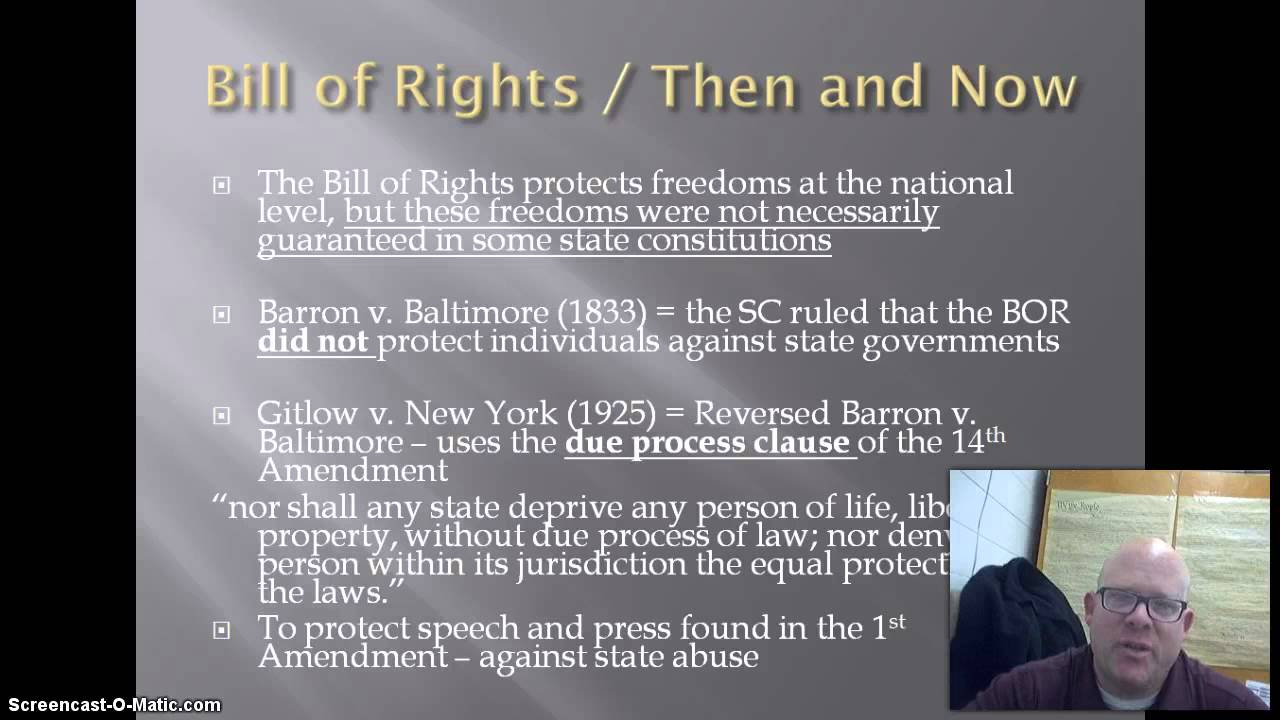
The constitutional foundations of the First Amendment, specifically the legal boundaries between the Establishment Clause and the Free Exercise Clause regarding public funding and religious institutions.
The historical and legal context of the Second Amendment, including key Supreme Court precedents and the ongoing national debate surrounding gun control regulations.
The concept of 'culture wars' in modern America, including how socio-political issues intersect with mainstream media, entertainment, and corporate decision-making.
Critical evaluation of the Bipartisan Safer Communities Act's long-term effectiveness on public safety, mental health, and gun rights.
Advanced analysis of recent Supreme Court jurisprudence on religious liberty, specifically focusing on the precedent set by Carson v. Makin regarding school choice and public funding.
The study of corporate political advocacy (CPA) and consumer backlash, examining how political branding affects media conglomerates' market value and audience engagement.
Media literacy analysis of political discourse, studying how political figures utilize podcasts and alternative media to shape public opinion on legislation and cultural issues.
75.8K views1.5Klikes32:46Original Release: 2022-06-23
i've got good news and good news and bad news the good news is there's a big win for conservatives at the supreme court the other good news there's a big win for conservatives in the culture at the box office but the bad news is squish republicans are caving to democrats up on capitol hill on the second amendment well the co-host of this show has just come from voting on that legislation this is verdict with ted cruz [Music] today's episode of verdict with ted cruz is brought to you by ipvanish did you know that browsing online using incognito mode doesn't actually protect your privacy without added security you might as well give all your private data away to hackers advertisers your internet service provider and who knows who else ipvanish helps you securely and privately browse the internet by encrypting 100 of your data this means that your private messages passwords emails browsing history and other information will be completely protected from falling into the wrong hands ipvanish makes you virtually invisible online it's that simple just for verdict listeners ipvanish is offering an insane 70 off their annual plan that's like getting nine months for free you have to go directly to ipvanish.com cactus to get this 70 off discount ipvanish is super easy to use just tap one button and you're instantly protected you won't even know it's on you can use ipvanish on your computers tablets and phones whether you're at home or in public don't go online without using ipvanish don't forget verdict listeners get 70 off the ipvanish annual plan just go to ipvanish.com cactus to claim your discount and secure your online life that's ipvanish.com cactus this episode of verdict with ted cruz is brought to you by genyasel how old does your mirror say you are you can delay this question by 5 10 even 15 years with jenny cell's new ultra retinol serum you can you know see it sitting right here on the desk here's a testimonial from marina marina lives in fort lauderdale florida she says great product my skin loves it i have spent more money she says on creams over the years enough to pay off my house just kidding but it feels like that this product has changed my life like no other now marina is flying high with geniusel's new ultra retinal serum with hyaluronic acid um this works to hydrate your skin at the cellular level it builds on this deep moisture with incredible anti-wrinkle effects and gentlemen you know that we ladies we wives use your razors in the bathroom when you are not looking likewise we know that you use our face products our skin care products and it's fun all's fair in love and war now if you go to my url that is genusell.com cactus you can get up to fifty percent off geniusell's new ultra retinal serum that is fifty percent off if you go to jennysell.com cactus it's spelled g-e-n-u-c-e-l dot com slash cactus genusell.com cactus this episode of verdict with ted cruz is brought to you by american hartford gold now the new inflation numbers are out and i think we can all agree they are incredibly depressing the price of gas is way up the price of housing is up the us national debt is way way way up and unfortunately given the way that our current administration prints money and spends money experts don't see this going away this inflation going away anytime soon so how do you protect your money your savings your retirement from inflation well when times are turbulent americans like you turn to physical gold and silver and american hartford gold can show you how to hedge your hard-earned savings against inflation by diversifying a portion of your portfolio into physical gold and silver it's really easy to get started all it takes is a short phone call and they will have physical gold and silver delivered right to your door or if you prefer inside your 401k or your ira they make it easy if you call them right now then they will give you up to fifteen hundred dollars of free silver on your first order so don't wait call them right now call eight five five 855-768-1883 or if you prefer texting you can text the word cactus to 65532 again the phone number is 855-768-1883 or text the word cactus to 65532 welcome back to verdict with ted cruz i'm michael knowles senator you have just come from capitol hill just voting on this big gun control legislation there seems to be a compromise between a bunch of republicans and the democrats what happened well i just voted about an hour ago on the initial vote the the motion to proceed to take up the legislation now the statutory tax texts they rolled out just a couple of hours ago so we're still in the process of studying the details of what they laid out but all the democrats voted for it and 14 republicans voted for it so the vote was 64 to 34. they needed 60 to proceed so they get they got there uh with 14 republicans and uh that's going to consume this week the debate on that bill i think it is safe to say you you are not one of the 14 republicans who voted to proceed with this legislation that is safe and actually i printed out uh the 14 who are so if you want to know the 14 who are it is blunt bur capito cassidy collins cornyn ernst graham mcconnell murkowski portman romney tillis and young those were the 14 republicans who voted yes wish i could say that i were surprised senator but uh but i'm not you know that obviously you've named a lot of the moderates and the people who often do go over with the democrats here but that's a big nut 14 is a big number well it's a combination of the moderate to liberal republicans combined with republican leadership combined with the republicans who are retiring and and that's sort of the ace in the hole for leadership is the folks who are retiring are never going to face the voters again they're likely going to go be lobbyists in town and and so suddenly they have all sorts of votes that that the people who elected them would prefer they wouldn't take but since they're not on the ballot anymore they vote differently than they would otherwise you know it's it's it's actually a it's a similar manifestation in the senate you've got six year terms and it's a common phenomenon where two out of every six years people grow a backbone or a conservative and those happen to be the two years they're on the ballot and then the other four years they're not on the ballot they they transmogrify into very very different senators until the last two years when they're back on the ballot when suddenly they become conservative again and unfortunately it's kind of a a merry-go-round of of who are the chunk of republicans on the ballot uh that will stand steady the retiring republicans it's an even worse problem because then they feel little to no accountability to the voters who sent them there so this is still being worked out right now just in in broad strokes how bad is it you know i don't know the full details as i said they just rolled out the statutory text right before we voted on it which is a typical uh capitol hill strategy so i'll study the details more and know it there's some elements that are fairly unobjectionable in terms of funding for things like school safety that everyone agrees with uh the most problematic elements i think concern red flag laws red flag laws that there's funding to incentivize states to pass red flag laws red flag laws are proceedings whereby you can strip guns from law-abiding citizens and in a number of states particularly blue democrat states they're very very low thresholds for doing so there's very little protection of due process um and and you know it poses a real problem if somebody is unhappy with you michael if you have a a you know someone who's mad at you a disgruntled co-worker a a jilted ex-girlfriend uh what have you red flag laws particularly without serious due process protections can provide an avenue for that person unhappy with you to go behind your back and take away your second amendment rights to protect yourself because in that case the red flag is not you know some raving lunatic who's making direct threats who says i'm going to kill you i'm going to kill you the red flags flag simply could be you are a conservative you are a republican you voted for someone that i don't you said something that i disagree with the red flag could be you and and in that case to deprive someone of a constitutional civil right would seem to be a huge overreach well and i will say this look that they were negotiating back and forth between the republicans and democrats on the exact language and so i haven't read the statutory language yet i will read it this week before we vote on the final bill this was the initial vote just to take it up uh so i'll study the details but but there's a lot of uh there's a lot of variance in the details the devil is in the detail on this and so for example some of the formulations they were talking about keyed off of whether someone was a quote mental defective that's some language that actually is in uh federal law right now it's sort of a different era we don't don't tend to speak much in terms of things like mental defective but if the threshold is low look there are estimates that that something like 20 of americans have some form of mental illness um you know i i joked at lunch last week that it seems to me serving in the united states congress should be prime facial evidence of mental illness um you know you think about schools how many kids are diagnosed with adhd how many kids are medicated on on prozac or or ritalin or something else and and if the threshold is low that there's a hyperactive 15 year old who gets a diagnosis and gets medicated and you have a gun grabbing blue state that says okay well guess what you've just lost your right to keep and bear arms for the rest of your life um i think that's obviously unconstitutional and would be strike struck down by any court following the law but in the meantime it's a real problem and so my view on on guns and crime generally is there's a right approach and a wrong approach you know there's an interesting story are you familiar with project exile no i'm not okay so project exile was something that was created during the bill clinton justice department and it was created uh in richmond virginia in the eastern district of virginia and it was the u.s attorney there laid out and said we are going to prosecute anyone who commits a violent crime with a gun we're going to go after them under federal law we're going to lock him up in jail with a mandatory minimum sentence and we're going to let people know we're going to let people know if you knock knock over a liquor store and you're a felon if you're a felon in possession of a firearm that carries a mandatory minimum sentence under federal law but typically the feds don't prosecute it project exile says you commit a crime with a firearm you're going to jail you're doing hard time and they advertise it they put up billboards in richmond virginia carry a gun do hard time and richmond had one of the highest murder rates in the country and the feds started anytime you brought a gun to a crime boom you got prosecuted and the murder rates plummeted and you started seeing criminals that would literally go knock over a liquor store go do a home invasion and they'd leave their gun at home because they'd say if i take a gun i'm doing serious federal time if you want to stop crimes that's the sort of program that works that's that's a great point obviously we all agree that we should take guns away from criminals and people who have in some objective way been deemed to be too dangerous to have a gun we shouldn't just go along with some program to exploit a shooting or a tragedy as a way to advance generally unrelated gun control measures that democrats have been pushing for a while not too late uh to stop this kind of thing let's hope that the squishes toughen up a little bit here and and back off of this and listen to this podcast that's that's the bad news that the squishes are going along with the dems here there is quite a lot of good news in the culture though i really want to get to the supreme court case uh which the left has lost their mind over they've now said that this is a nearly fatal blow to the separation of church and state before that though i do i do have to do a little bit of gloating on the culture front there was a big cultural win here uh we sort of predicted it on this show it's the get woke go broke uh prediction uh we we talked last time about how people don't want to see toys and cartoon characters uh engaging in all sorts of eccentric sexual activities and kissing and pushing the uh woke sexual revolutionary agenda and then over the weekend light year which made a big show of having a lesbian toy kiss in it light year bombed at the box office they were expecting a global box office of 135 uh million dollars what did it come to i think it was 80 80 something million and then the domestic box office was way below predictions at 51 million dollars did you senator did you take the air out of the gay toys that's a question i've never gotten um listen i i will say this i i do think it's amazing how the verdict podcast seems to be driving hollywood uh at our campus uh live tour in alabama we talked about how disney wanted mickey and pluto to go at it and liberals brains exploded and apparently the show runners for light years said hey what a great idea uh let's let's have lesbian toys get it on and you know they got a little uh barry white with his deep voice let's get it on and then last week on verdict we said this is terrible leave the kids alone you said we don't want to see uh eccentric sex uh with with with kids or toys let me take out the word eccentric how about no sex like kids and toys and by the way i will say leftists really lost their minds because last week we talked about do we really need lesbian toys and cartoons and and leftists like the phrase lesbian toys that i i really think their tiny little walnut-sized brains broke uh that that apparently they're supposed to go on these these cultural rampages and we're not supposed to notice yeah and not only that we're all supposed to quietly shut up and take our kids well you know what there were very few kids movies at the box office this past weekend it was father's day you want to talk about a good time to take your kids to the movies and i think there were a whole bunch of americans that said you know what i can think of something better to do than listen to hollywood lecture my six-year-old on their views of sexuality how about just have a fun like the toy story films are awesome yeah but it speaks volumes that while light year was getting his ass kicked the kicker was tom cruise and maverick and top gun a straight up patriotic conservative we love americans beat the bad guys like the contrast is night and day and hollywood is is so knuckleheaded that they seem unable to get the message maybe they will because look there's tens if not hundreds of millions of dollars delta between those two uh maverick's been out for several weeks and it's still obliterated light year somebody depositing the checks ought to notice that they certainly should that this is what the left does to so many institutions is as you say toy story is a great movie it's a great friend i love toy story 1 i liked toy story 2. i don't really remember toy story 3 or if there was a 4 but they were good movies and by the way tim allen was fantastic tim allen was fantastic and they yanked him out of this movie and and so people look at it and they say well we like these movies and then the radicals go in and they say oh look we've got these really popular movies and institutions let's go in and in a really heavy-handed way in a very didactic and obvious way let's uh go in and use the things that people love to push our radical political agenda which is completely superfluous and and irrelevant to the story and i i'm really pleased to see that uh the american parents and moviegoers said oh no thank you yeah we like toy story we don't like you using the things that we love to push your radical agendas so no thanks and let me make a point also michael this is also not about so the left likes saying things like the florida law was don't say gay you're right it's actually not about that um and i'll give an example on the counter so so hollywood usually is so willing to chase the dollar that they're craving when it comes to china and they're willing to censor movies because china wants them to and and one great example of that is bohemian rhapsody bohemian rhapsody i think was a fantastic movie i really enjoyed that it was very well done china insisted that they edit bohemian rhapsody to cut out the scene showing freddie mercury was gay which by the way is insane how do you tell freddie mercury's life story and leave out that he's gay it was a big damn part of his life and bohemian rhapsody is not being marketed to six-year-olds yeah i it bohemian rhapsody was an r-rated movie it was for adults it was the story of an incredible artist um that was entirely appropriate you know rocket man about elton john you wouldn't tell elton john's life story and leave out that he's gay it's it's an integral part of who he is what made the lightyear antics so dismaying is was entirely gratuitous it was meant it was targeted at kids and it was meant to say this is what we want to convey to you little children and i think a lot of parents are saying leave our kids alone and and and let us discuss sex and sexuality with our kids at a time and age that is appropriate not what you if we can't even take him to disney movies what can we take him to right stop stop forcing this i i love that point it was it was so gratuitous superfluous irrelevant to the the plot of toy story was so heavy-handed and on the nose and and i like that that the the gamble from the left didn't pay off that the the moviegoers are not so infatuated with toy story that they were willing to go to the movies and just allow the left to to go in and hollow out their their stories to push their own radical agenda so there's a big one at the box office there was also apparently a big win for conservatives at the supreme court this is in the case that carson versus macon this is a case up in maine on on religious liberty it would seem to be what's the case about so it's a terrific terrific victory for religious liberty uh so the state of maine has a tuition assistance program and then there's some parts of maine that are very rural where they don't actually have public schools up and running and so the state provides tuition assistance for you to send your kids to whatever schools are there to whatever private schools are there particularly in smaller communities where you don't have the resources of a big public school but maine excluded religious schools said you can send your kids somewhere but if it's a religious school or as they called it a sectarian school which means yeah they actually believe in faith believe in god and teach something about god then you're not eligible and and so the plaintiffs in this case challenged that and said look you're discriminating against my free exercise of religion and and i want to choose to send my kid to a religious school and you're discriminating against faith and religion and the supreme court 6-3 so chief justice roberts wrote the opinion and concluded that it violated the constitution to discriminate against religious schools when otherwise they would qualify they met all the other criteria if they just stopped those pesky references to god they would get the state money but if they insist you say god nope no money and the supreme court said sorry you you can't if it's an equally applicable program that everyone else can get you can't discriminate against people of faith and schools of faith just because they're exercising their first amendment rights and their religious liberty rights i think it is a great victory for religious liberty for everyone but it's also a great victory for school choice and and and both of those i think are incredibly important now what are conservatives supposed to say when they hear the liberal justices on the court and the a lot of people in the liberal media complaining that this is an outrageous attack on the american tradition of the separation between church and state well there are a lot of things they should say first of all the words separation of church and state are found nowhere in the constitution they're not in the constitution they're not in the bill of rights they're not in the declaration of independence that that's not there the phrase a wall of separation between church and state comes from a letter that thomas jefferson wrote to the danbury uh baptist so it's it's a private correspondence is where that phrase is taken from but it's not actually the law and what is the law is the first amendment and the first amendment has two religious liberty clauses it has the establishment clause that prevents congress from establishing a religion and it has the free exercise clause that prevents congress and prevents government from restricting the free exercise of religion and they're two different interpretations of what the establishment clause mean liberals interpret it as saying that that essentially government must be hostile to religion that government must treat religion as something bad that's where you get the phrase wall of separation of church and state is church bad um i think that's a complete misreading of what what the establishment clause is about the establishment clause was about preventing government from controlling churches preventing government from controlling faith both the establishment clause and free exercise clause work hand in hand well this actually leads into one of the mailbag questions that we got we've been extremely derelict on taking mailbag questions so i do want to get through a few of them before we go and this this was on this case and on the question of religious liberty uh this is from zachary who says if the satanic temple starts private schools that your tax dollars will pay for will you conservatives regret the supreme court decision so we're we're happy about it now i think this is a great ruling and obviously i don't think that the christian schools should be discriminated against and i'm very in favor of school choice but what happens if the the satanic temple which is a great it's a little different than the outright satanists down on their knees they're kind of ironic satanists and we could debate uh further whether one can be an ironic satanist or if you end up kind of being a sincere one either way but what if they started school and they say okay we've got the satan school and your tax dollars are going to go for that is one would that follow from the court case and two should we support it so yes it would follow uh and should we support it well let me answer it by making an observation i don't maintain today that federal student loans federal pell grants should be disallowed from going to yale university so why should i say they shouldn't go to the satanic temple they're teaching as much garbage at yale right and for that matter my alma mater is princeton and harvard so i don't don't particularly mean to single out yale it's a really good point on i'm sorry to say on my alma mater and yours too and uh probably most schools at this point in the country is if you had a school that that was was teaching the tenets of satanism and then you had any old run-of-the-mill public or otherwise name-brand school what would the difference be i'm not sure that if it were a blind test i'm not sure you could identify them so michael let me give you an example a tenured professor at princeton is a guy named peter singer peter singer is a very left-wing ethicist who among other things has argued not only is he in favor of abortion on demand which a lot of people on the left are he's argued in favor of infanticide up until age six right there's a fair bet that professor singer could could make some of the some of the more moderate satanists blush very that's a very important point and there's a phrase you rarely hear more moderate satan so this ques i got a lot of questions this week with lots of salty language but this is a family show so i'm going to clean it up a little bit this was one of the more eloquently written ones gets back to what we were talking about at the top of the show uh this is from josh why are there so many worthless rhino republicans currently and it's not obviously this guy and other people are complaining about this but it is a real tactical republican question which is why are there so many rhinos why are there so many people when it seems that there is so much wind at the backs of the conservatives because we don't do a good enough job in primaries on insisting on and finding strong conservatives with proven records uh listen i'm on the road nonstop between now and election day i'll probably be on the road 30 40 days between now and the november election uh campaigning for candidates for the senate campaigning for candidates for the house look i'll give you an example so we had uh primary elections uh tonight in multiple races um yesterday i campaigned for a candidate in northern virginia yes lee vega yes lee vega is and she won tonight so i did two rallies for her yesterday she won tonight so yesterday vegas i think a fantastic candidate she's running in a democrat district you you have abigail spamberger who's the incumbent um yesli is the daughter of immigrants from el salvador her brother was nearly killed by ms-13 he was badly wounded by ms-13 she knows firsthand the perils of illegal immigration uh she's a cop in fact she's a three-time cop she's been a member of two police forces and she's now a deputy sheriff she is the wife of an army soldier she is the daughter of a pastor her her dad is is a pastor right now in maryland she is the mom of two teenage kids and she is a fantastic candidate now when she jumped in this race no one thought she had a prayer all the money was on the other side i sat down i met with her i said you're a star endorsed her campaign for she was trailing yesterday she just won today that's encouraging we don't do that enough um and there's a structural problem listen republican leadership in both the senate and house they want members their number one criterion is a member who will be obedient who will just do what leadership says and and the dirty little secret is if you have someone who's going to rock the boat who's going to be a rebel leadership would rather a democrat get elected than a pain in the neck conservative who will buck leadership if you're a middle of the road squishy mod they'll flood you with cash because you'll be obedient you'll do what leadership wants if you're a pain in the neck conservative they'll do everything they can to kill you and so listen if you want stronger conservatives then you got to get involved in the primary process and get behind people who will follow through on what they say not only are you hanging around trying to gum things up on capitol hill while the squishes are trying to give away our second amendment rights not only are you going around the country uh raising lots of money for the good conservative candidates but not only are you doing this show coming straight and doing this but senator we can't let you go because you are sticking around for the verdict plus community to discuss even more on the cloak room with liz wheeler liz what are you going to talk about hi michael hi senator we are going to get into some really nitty gritty legal stuff so we're all waiting with baited breath for the dobb's decision right is roe v wade going to be overturned did chief justice john roberts convince somebody else to join him in not overturning roe v wade we're waiting for this it seems like it's going to be at the last minute but the democrats meanwhile are preparing their arsenal of what they're going to do in response to roe v wade being overturned what tactics they're going to use and so we're going to dive into some of the legalities of some of their ideas because a couple of their suggestions i'm pretty sure are against the law so if you'd like to join us for this conversation it's going to be great head on over to verdict plus it's verdict with ted cruz.com plus if you use my promo code cloakroom then you can watch for free for one month on your annual subscription it's verdict with tedcruz.com plus and the promo code is cloakroom it's really going to be a great discussion i'm very excited about it and michael let me jump in for a second and take people behind the uh behind the curtain and and getting a little bit of the sausage making of how we do cloak room so before we do the podcast every week michael you and i get on a conversation with our producer and we talk about what topics we want to have and sort of roughly lay out okay tonight we're going to talk about uh the gun stuff and we're going to talk about light year and we're going to talk about the supreme court case this just happened on capitol hill yes we got to hit this yeah right so so we do a prep call and and it's a loose prep call we kind of just roughly have topics and then get into it but it's interesting cloakroom the way we've done it has just sort of arisen organically every episode when you turn to liz and say liz what are we going to discuss on cloakroom if you cut to me and asked me i have utterly no idea so when liz comes on she's coming up with these topics and and she sort of has a mandate of fine interesting esoteric deep dive legal topics and i got to say she's phenomenal at coming up she's come up with some really good topics but i'm sitting here every week i don't know let's hear and sometimes if it's really esoteric liz and i will have a brief like she'll forward me some if she wants to talk about a particular case that i haven't read recently she'll forward it to me and i'll reread it quickly but it is an interesting process because we've had some really good deep dives on cloakroom of ideas that liz has that that she springs on me out of nowhere and and we jump into him this week on cloakroom we'll be discussing the air speed velocity of an unladen swallow [Laughter] well i can't wait i can't wait to hear the topic and so uh i don't have to do any preparation at all it's you're in the hot seat senator liz you've got all the prep we will see you next time this is verdict with ted cruz [Music] this episode of verdict with ted cruz is being brought to you by jobs freedom and security pac a political action committee dedicated to supporting conservative causes organizations and candidates across the country in 2022 jobs freedom and security pack plans to donate to conservative candidates running for congress and help the republican party across the nation if you like this video you should click the like button and then you should subscribe and you should ring the bell and you will never miss another video
Up Next
30:41
Marco Rubio's Address at the Munich Security Conference | Full Speech
@ForbesBreakingNews
233.1K views•2026-02-14

88:38
Patronage and Political Machines in Southeast Asian Elections
@NewYorkSoutheastAsiaNetwork
511 views•2023-04-05
7:33
Government Surveillance Methods: 10 Ways You May Be Watched
@BeAmazed
1.6M views•2017-04-09

10:19
Explaining the Saudi-Iranian Proxy Conflict in the Middle East
@Vox
18.2M views•2017-07-17
Related Study Plans & Knowledge Roadmaps
Structured learning paths in Political Science
political-science
Analyzing Clientelism: Patronage & Vote-Buying
01Foundational Concepts of Clientelism
02Mechanics of Patronage and Resource Allocation
03Vote-Buying, Turnout Buying, and Ballot Secrecy
+ 2 more learning modules
12h5 modules
Explore Roadmap
political-science
Economic Statecraft: Sanctions & Chokepoints
01Foundations of Geoeconomics and Economic Statecraft
02The Mechanics of Weaponized Interdependence
03International Sanctions: Types, Implementation, and Efficacy
+ 2 more learning modules
12h5 modules
Explore Roadmap
political-science
Central Bank Independence: Politics & Policy
01Foundations of Central Banking and Monetary Policy
02The Time Inconsistency Problem & Inflation Bias
03The Delegation Model and Designing Independence
+ 2 more learning modules
12h5 modules
Explore Roadmap
political-science
Consociationalism: Power-Sharing & Stability
01Democratic Dilemmas in Divided Societies
02Introduction to Consociational Democracy
03The Four Pillars of Consociational Design
+ 2 more learning modules
12h5 modules
Explore Roadmap