Transitional Justice: Peace vs Accountability
Learning Goal: Analyze the political trade-offs of transitional justice, evaluating how post-conflict societies balance peace, stability, and accountability through truth commissions, lustration, and criminal tribunals.
- Prerequisites: Introduction to Human Rights Law (or basic familiarity with international relations/post-conflict political development).
- Estimated Total Study Time: 12 Hours
Module 1: Foundations of Transitional Justice & The Core Dilemma
This module introduces the conceptual boundaries of transitional justice—the processes and mechanisms used by societies to address mass human rights violations during political transitions. You will explore the foundational struggle of post-conflict governance: the "peace vs. justice" dilemma. By contrasting retributive models (prioritizing punishment) with restorative models (prioritizing relationship-building and reintegration), you will understand how political actors navigate international obligations and local stability.

Why this video: Professor William Schabas, a preeminent international law scholar, provides a rich historical framework for transitional justice. He explains that transitional justice is not a rigid legal template but a set of highly complex compromises. This serves as the ideal theoretical starting point to understand why standard judicial mechanisms often fail to adapt to systemic political transitions.
- Explain the temporal and political criteria that define a transitional justice framework.
- Contrast how legal purism differs from the pragmatism required in active political transitions.
- Identify the historical evolution of "compromise" as a core pillar of international transitional justice over the last 25 years.

Why this video: Understanding the philosophical underpinnings of justice is key to analyzing trade-offs. This video offers an academic comparison of retributive and restorative justice. It breaks down how retributive justice prioritizes state-administered punishment, whereas restorative justice focuses on healing, repairing societal bonds, and addressing victim needs—concepts critical to evaluating truth commissions.
- Articulate the main differences between the state-centered focus of retributive justice and the victim-centered focus of restorative justice.
- Describe how restorative justice frames accountability differently from retributive incarceration.
- Evaluate which model is more viable when the perpetrators of violence must live alongside their victims post-conflict.

Why this video: Produced by the International Center for Transitional Justice (ICTJ), this concise explainer connects the abstract theories of the previous videos to concrete policy outcomes. It outlines how societies use a holistic mix of truth-seeking, reparations, and institutional reform to prevent the cycle of violence and dismantle cultures of complete impunity.
- Define the primary goals of a holistic transitional justice strategy as advocated by the ICTJ.
- Explain how unchecked impunity impacts a post-conflict nation's long-term democratic stability.
- Identify the four core pillars of transitional justice described in the video.
Module 2: Criminal Tribunals: Prosecuting Atrocities
This module evaluates the use of international, ad hoc, and hybrid tribunals to prosecute mass atrocities. Using the International Criminal Tribunal for the Former Yugoslavia (ICTY) and the International Criminal Court (ICC) as core case studies, you will analyze how criminal prosecutions provide individual accountability and document a factual record of crimes. Additionally, you will examine the political risks of trials, such as fueling nationalist backlashes or deterring military leaders from surrendering.

Why this video: Delivered by Sir Geoffrey Nice, who led the prosecution of Slobodan Milošević, this lecture offers an insider's critical evaluation of the ad hoc tribunals (ICTY, ICTR) and the permanent ICC. Nice details how these courts operate, explains their geopolitical limitations, and challenges the assumption that international tribunals consistently produce objective justice.
- Differentiate between the mandates of ad hoc tribunals (like the ICTY and ICTR) and the permanent International Criminal Court (ICC).
- Explain how geopolitical interests and state sovereignty limit the arrest and enforcement powers of the ICC.
- Evaluate Sir Geoffrey Nice’s critique regarding whether tribunals successfully deliver a sense of justice to affected local populations.

Why this video: This FRONTLINE documentary offers a rare, behind-the-scenes look at the prosecution of Bosnian Serb general Ratko Mladić. It exposes the legal hurdles, the collection of evidence, and the defense arguments at the ICTY, demonstrating the real-world complexities of proving individual criminal responsibility for genocide.
- Identify the legal standards and types of evidence required to prove "command responsibility" for war crimes and genocide in court.
- Describe the political challenges the prosecution faced in securing testimony and arrests in Bosnia and Serbia.
- Discuss the societal divisions that persist in the Balkans despite the legal conclusions of the Mladić trial.
Why this video: This official ICTY retrospective details the atrocities in the Prijedor region of Bosnia and how international media coverage catalyzed the establishment of the ICTY. It shows how criminal tribunals reconstruct disputed historical events into legally verified records, serving as a powerful tool against denialism.
- Explain how media exposure of detention camps in Prijedor shaped international political will to establish the ICTY.
- Analyze the role of international tribunals in creating an undeniable, legally verified historical archive of human rights abuses.
- Discuss how local communities often react differently to legal findings vs. regional nationalist narratives.
Module 3: Truth Commissions: Restorative Justice and Healing
This module covers the theory and execution of Truth and Reconciliation Commissions (TRCs). You will focus on the South African TRC under Nelson Mandela and Archbishop Desmond Tutu, analyzing how the African philosophy of Ubuntu ("I am because we are") served as the foundation for this restorative model. You will study how these commissions trade retributive punishment for truth, amnesty, and national healing.
Why this video: As highlighted in the curriculum review feedback, integrating the Ubuntu philosophy is key to understanding the cultural and ethical framework of the South African TRC. This video explains how Ubuntu prioritizes community preservation and restored relationships over individualistic punishment, offering a philosophical alternative to Western retributive legal traditions.
- Define the core tenets of the Ubuntu philosophy and how they challenge standard Western conceptions of justice.
- Explain how Ubuntu justifies prioritizing community restoration over the retributive punishment of human rights violators.
- Connect the communal philosophy of Ubuntu to the decision to establish a truth commission rather than mass criminal prosecutions.

Why this video: This video provides a structured overview of the South African TRC. It details its origins under the Promotion of National Unity and Reconciliation Act, its three operational committees (Human Rights Violations, Amnesty, and Reparations), and the controversial trade-off of granting individual amnesty in exchange for full disclosure.
- Explain the legal and political mechanism of "conditional amnesty" used by the South African TRC.
- Describe the functions of the three distinct committees that comprised the TRC.
- Critique the TRC's success in providing reparations to victims compared to the amnesty granted to perpetrators.

Why this video: This historical documentary captures the political atmosphere during South Africa's democratic transition. It outlines the strategic choices made by Nelson Mandela and Desmond Tutu to foster forgiveness over revenge, demonstrating how restorative justice principles were used to prevent a projected racial civil war.
- Analyze Nelson Mandela's political rationale for rejecting retributive prosecutions of apartheid leaders.
- Discuss the role of public hearings and shared pain in building a unified post-apartheid national identity.
- Evaluate how this "healing" approach might leave systemic economic inequalities unaddressed.
Module 4: Lustration and Institutional Vetting
This module explores administrative justice, specifically lustration (the purging of former regime loyalists from public office) and vetting (evaluating the integrity of public officials). You will analyze how post-communist and post-authoritarian states attempt to rebuild public trust.
Curriculum Gap Alert: The video pool contains limited direct academic lectures on lustration theory, utilizing UK police vetting as a conceptual analog for administrative vetting and Eastern European case studies for historical context. To fully master this topic, you should independently research Germany's Gauck Agency and Poland's Lustration Laws (1997) to see how states handle archival intelligence files.
Why this video: This video unpacks the linguistic and political dangers of "lustration" (derived from the Latin word for purification). It explains how purifying the state of former regime elements can quickly morph into political witch-hunts, revenge, and the destabilization of state institutions.
- Define "lustration" in a transitional justice context and explain its etymological roots.
- Analyze the risk of lustration policies being used as partisan weapons to purge current political opponents.
- Evaluate the tension between purifying state institutions and maintaining the administrative expertise of public servants.
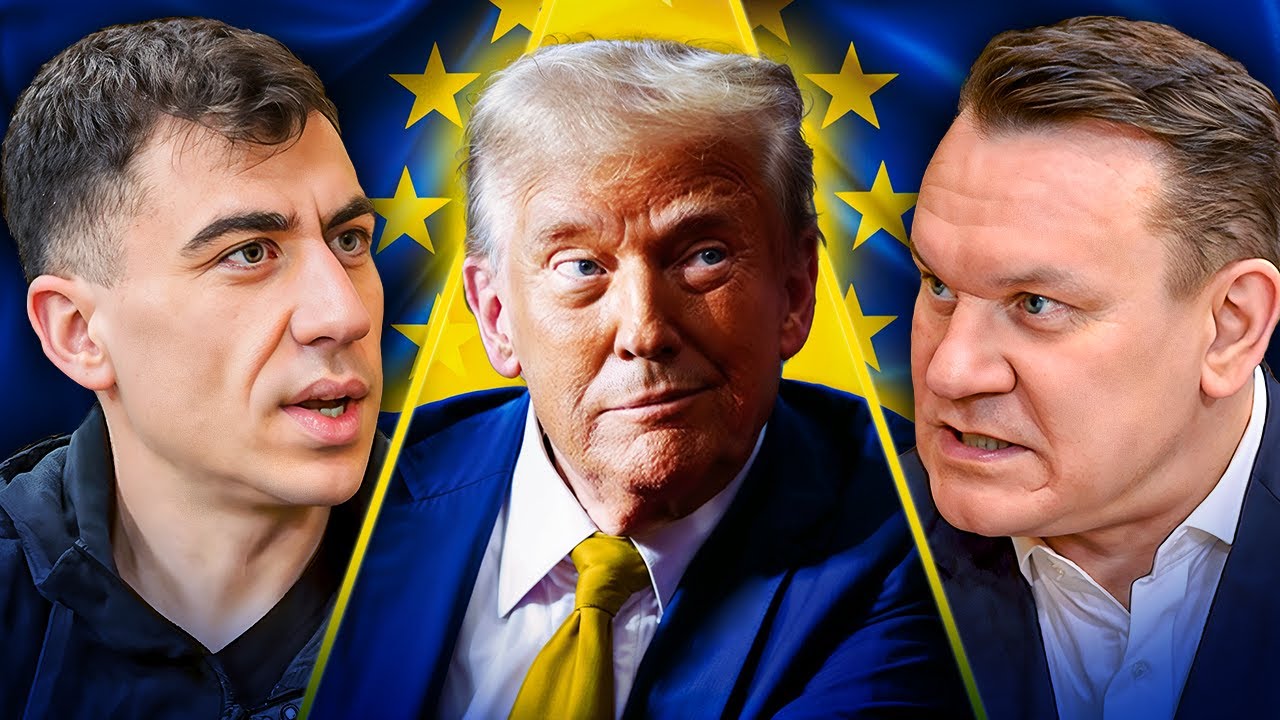
Why this video: This brief interview with a Polish politician highlights the long-term political effects of incomplete lustration. He details how communist-era networks and their descendants can retain deep influence inside post-communist state judiciaries, media, and security structures when vetting policies are weak.
- Explain how failing to execute rigorous lustration can allow old-regime networks to persist within a new democracy.
- Discuss the societal and political consequences of ongoing distrust toward "unvetted" state officials decades after a transition.
- Contrast the political motivations of modern calls for lustration with those immediately following the 1989 transitions.

Why this video: While centered on a modern democratic institution (the London Metropolitan Police), this detailed panel discussion serves as an excellent conceptual case study on systemic vetting failures. It highlights the direct link between poor background vetting, institutional decay, and the collapse of public trust.
- Define "institutional vetting" and describe the administrative steps required to assess an official's integrity.
- Analyze how political pressure to quickly scale up staff (such as post-conflict police rebuilding) can lead to vetting failures.
- Discuss how a failure to purge abusive elements from security agencies affects public trust and the rule of law.
Module 5: Evaluating Trade-Offs and Designing Policy
This synthesis module brings together the political calculations surrounding amnesties, the sequencing of transitional mechanisms, and the strategic timing of prosecutions during active peace negotiations. You will analyze real-world policy designs to determine how leaders balance demands for accountability with the pragmatic need for peace and stability.

Why this video: This panel discussion from the Woodrow Wilson Center directly addresses the political trade-offs of post-conflict design. Using the case of Liberia, the speakers explain how pursuing immediate trials against powerful warlords can easily derail peace agreements and push a fragile country back into active civil war.
- Explain how threatening warlords with prosecution can deter them from signing peace accords or relinquishing power.
- Discuss the concept of "sequencing"—why a society might choose to prioritize immediate stability and truth-seeking, delaying trials for a later date.
- Analyze how international pressure to prosecute can conflict with local desires for peace and stability.

Why this video: This debate between two world-class national teams systematically dissects the arguments for and against prosecution-centric approaches vs. amnesty-based approaches. This academic exercise will help you structure your own policy arguments regarding deterrence, victim satisfaction, and national reconciliation.
- Outline the core arguments for why prosecutions are vital for deterring future human rights abuses and establishing the rule of law.
- Outline the core arguments for why political amnesties are sometimes necessary to secure demobilization and disarmament.
- Evaluate the impact of trials vs. amnesties on a post-conflict nation's long-term democratic stability.

Why this video: This historic documentary on post-civil war Sierra Leone captures the fallout of the failed 1999 Lomé Peace Accord. It provides an excellent case study of a compromise that granted complete amnesty to the brutal RUF rebel group in exchange for disarmament—an agreement that quickly collapsed, illustrating the risks of unearned impunity.
- Analyze the provisions of the Lomé Peace Accord and explain why its amnesty-for-peace trade-off failed.
- Discuss how giving unchecked political power to armed rebel groups as a "peace concession" impacts public safety and institutional trust.
- Evaluate the ethical implications of granting amnesty to perpetrators of systematic sexual violence and forced child soldier recruitment.
Course Map
This flowchart maps the structure of the curriculum, showing the recommended path and dependencies.
Key People Index
- Professor William Schabas: A world-renowned expert on international human rights and genocide law. He outlines why transitional justice requires pragmatic political compromise rather than rigid legal purism.
- Professor Sir Geoffrey Nice QC: Lead prosecutor in the trial of Slobodan Milošević at the ICTY. He provides critical insight into the geopolitical limitations and institutional challenges of international tribunals.
- Archbishop Desmond Tutu: Chair of the South African Truth and Reconciliation Commission. He was instrumental in building the TRC's restorative justice framework around the African philosophy of Ubuntu.
- Nelson Mandela: First President of democratic South Africa. He chose restorative national healing and conditional amnesties over retributive trials to prevent a civil war during the transition from Apartheid.
Final Self-Assessment
To complete this course, you should be able to confidently verify and check off each of the following statements:
- I can clearly define the core differences between retributive and restorative justice in a transitional framework.
- I can analyze the "peace vs. justice" dilemma, explaining how immediate criminal prosecutions can sometimes destabilize active peace negotiations.
- I can detail how the ICTY was established, its achievements in prosecuting high-level figures like Ratko Mladić, and its role in building an official historical record.
- I can explain the African philosophy of Ubuntu and how it shaped the South African Truth and Reconciliation Commission.
- I can outline the legal mechanism of "conditional amnesty" used by the South African TRC, including its benefits and critiques.
- I can define lustration and vetting, explaining how these administrative measures help restore public trust in state institutions.
- I can analyze the political risks of lustration, particularly how the process can be co-opted for partisan political purges.
- I can evaluate the strategic concept of "sequencing"—specifically how and why a country might delay trials in favor of immediate demobilization.
- I can explain why the Lomé Peace Accord in Sierra Leone collapsed, identifying the dangers of unearned amnesties for armed rebel groups.
- I can synthesize these lessons to argue both for and against prosecution-centric vs. amnesty-centric approaches in any given post-conflict scenario.