











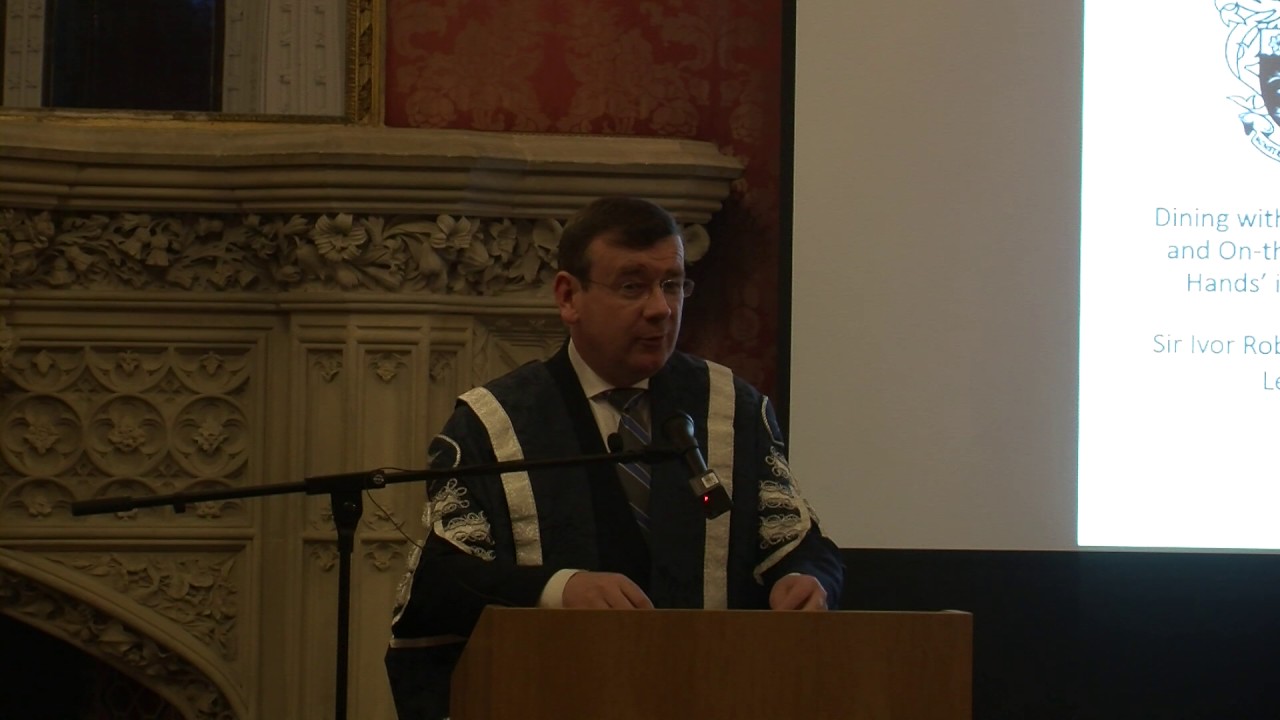
![[55] Philippe Sands — Impunity: International Justice in an Age of Lawlessness](https://i.ytimg.com/vi/JQL6SJL2fRg/maxresdefault.jpg)







Transitional justice mechanisms—including truth commissions, prosecutions, reparations, and purges—can address accountability in post-conflict societies but often fail to achieve lasting peace when underlying social and economic injustices are not addressed, as demonstrated by case studies from El Salvador, Sierra Leone, and East Timor where violence persisted despite formal justice processes.
Transitional Justice Post-Conflict: Mitigation Strategies & Choices
Added:The distinction between retributive justice (focused on punishment and trials) and restorative justice (focused on healing, repair, and reconciliation).
The fundamental principles of International Humanitarian Law (IHL) and International Human Rights Law, particularly regarding war crimes, genocide, and crimes against humanity.
The general phases of post-conflict peacebuilding and the challenges of Disarmament, Demobilization, and Reintegration (DDR) of combatants.
Basic political science concepts of state sovereignty, institutional legitimacy, and the rule of law in fragile or transitioning societies.
In-depth comparative case studies of transitional justice in practice, such as the South African Truth and Reconciliation Commission (TRC) or the Gacaca courts in Rwanda.
The structure, jurisdiction, and political challenges of the International Criminal Court (ICC) and its principle of complementarity.
The 'Peace vs. Justice' debate, analyzing the ethical and practical trade-offs between negotiating peace treaties and prosecuting human rights violators.
Institutional reform strategies in post-conflict states, specifically vetting (lustration) of public officials and security sector reform (SSR).
The role of reparations, memorialization, and oral history in long-term collective memory and conflict prevention.
796 views1likes2:00:33Original Release: 2013-11-07
a moderator and then and then turn it over to him to introduce the panelists but we're going to do something different one of our panelists Doug Castle was not able to join us so he's going to be on the telephone from uh from uh from his Locale to give us a presentation and we'll open with that uh Martin will explain it a little bit but Martin kamani is going to be our moderator I've only really only met Martin about two months ago I think but he's the sorry Africa fellow over at the Atlantic Council of the United States um a place where I was a senior fellow for a while he's a deputy director of the uh the uh I'm sorry sinner I'm sorry uh he's also an associate fellow at the conflict security and Development Group at King's College in London um prior to this he'd held positions Institute Institute for security studies in the Africa division at exclusive in analysis Ltd in foreign exchange Concepts Incorporated in addition to being published in a variety of journals and newspapers Martin is a fellow of the Africa leadership initiative and ask it's been Global Leadership initiative he's also on the board of a story Mojo Africa Regional publishing company so I'm delighted to turn the moderating duties over to Martin thank you very much foreign thank you very much Steve um I'm very happy to be here I was actually following the proceedings early in the morning from my webcast so now I suppose I'll I'll be on the same thing it's a bit surreal uh but I have the pleasure of moderating this session with an exciting group of people and this session is on comparative case studies now the way we're going to arrange it with your forbearance is that Doug Castle is not here with us and will be appearing via some form of Technology um and because he's far away in a hotel room in London where technology breaks down regularly because I've spent time in London we're going to do a short q a with him um and then we'll move on to the rest of the program but let me actually introduce everyone you have um bios in front of you but I'll just read some of the lines from them just to give us the context of the kind of expertise and the kind of perspectives that we will be getting um Doug Castle who is who is going to be our fast speaker as a professor of law Notre um and not at a professor of law uh at the Notre Dame law school uh and he's a Notre Dame presidential fellow and director of the center for civil and human rights uh and he teaches on human rights International humanitarian and international criminal law and his experience is in the field of Trent in the field of transitional Justice includes Service as legal advisor to the United Nations Commission on the truth for El Salvador and Consulting to governments and ngos on transitional justice issues in Guatemala Ghana Indonesia Northern Ireland Panama and Peru among other affiliations he continues to serve as a president of the due process of law Foundation here in Washington which promotes judicial reform throughout the Western Hemisphere so it's a he's a person coming to us with considerable experience um Patrick Burgos Burgess I don't know if Burgess I'm sorry Patrick um he's an Australian Barrister who was a trial Council including trials for serious criminal offenses and was later appointed as a senior member of the Australian Refugee review tribunal he led Refugee on humanitarian Assistance programs in Rwanda and Congo following the genocide in 94 and the wars and conflict in 96 and 97 and has managed emergency projects in Yemen Eastern Indonesia and Ace um at present he's the Asia director of the International Center for transitional Justice and then we have here Jennifer East today who comes from one of my favorite places in the world which is Berkeley and she has worked with the University of California Berkeley War crime study center on research and monitoring projects since 2006 starting with a project related to the extraordinary Chambers in the courts of Cambodia uh Jennifer is currently monitoring and researching the special court for Sierra Leone and the trial for of Charles Taylor and she has worked on projects related to trial monitoring at the Iraqi High tribunal and the special Tribunal for Lebanon and training local practitioners on international criminal law in Rwanda and Uganda and then we have um Professor Richard Joseph who's a John Evans professor of international history and politics at Northwestern University and a senior fellow in global economy and development at the Brookings Institute as a fellow of the Kata Center he participated in democracy and peace initiatives in Ghana Zambia Ethiopia Liberia and Sudan and he has written extensively on issues of democracy governance and political economy so as you can see ladies and gentlemen our panel is considerably experienced and I look forward to their comments so what's the state of uh is Doug ready to I'm ready here Mr chairman fantastic okay you sound like God anyway so um so Doug I think you're going to speak to us for 20-25 minutes I won't be able to censor your time from this far away so but we look forward to it and then we'll follow that with a short q a um uh okay all the best thank you all right thank you very much Mr chairman first of all I'm very sorry I can't be there with you for the program but my schedule in London unfortunately did not accommodate it I I miss not only the friendly confines as we Chicagoans say of the Wilson Institute but also my good friend Richard Joseph and former faculty colleague at Northwestern I'm going to talk as I think you all know about the issue of transitional Justice in El Salvador whereas our chairman mentioned I served in 1992 and 1993 as one of the legal advisors to the United Nations Commission on the truth for El Salvador in order to give some context I will talk a little bit about the pre-war conditions that led to the 12-year Civil War in El Salvador then a bit about the war which lasted from 1980 to 1992 then about the various measures that were undertaken by way of transition pursuant to the 1992 Peace Accords I will include some of the recommendations made by the truth commission the reaction to the report of the truth commission and some of the continuing realities and lessons that might be drawn at least in my perspective from the experience in El Salvador so what were the pre-war conditions that led to the war and the accompanying atrocities and I think that's an important question in all of these cases to bear in mind because if one does not address the root causes then in one form or perhaps more likely another violence is likely to recur and indeed that has happened in El Salvador El Salvador Before the War Began in 1980 for decades had been a country of vast and deep Poverty of sharp inequality the famous 14 families were said to to rule and to own most of the wealth in a country that by the late 1970s had five or six million people uh Bloodshed had marked Salvador history in the 20th century unlike neighboring Guatemala there are very few indigenous survivors in El Salvador in part because in the 1930s there was a massacre that killed the remaining tens of thousands of them who were still living in their traditional ways in addition to the social exclusion the violence the poverty and the inequality uh the country has long been ruled by military hunters and authoritarian regimes some of the precipitating factors for the war were incidents that convinced many in El Salvador that a democratic path to reform was not possible in particular in the early 1970s it was rather obvious that the Christian Democrat candidate Jose Napoleon Duarte won an election but it was stolen by midnight computer manipulations by the military and instead of General was declared to have won the race and in 1980 practically the last straw uh the five or perhaps six I can't recall leaders of the democratic opposition were all kidnapped and killed and that was really the last straw I think for those in El Salvador who opposed uh the rule of the military allied with the economic oligarchy keeping the people of El Salvador many of them uh in poverty and oppression and these last events occurred um with the knowledge that in the next door neighbor country Nicaragua the Sandinista revolution of the summer of 1979 had been successful and so in in in 1980 many of the Youth of El Salvador including the Sons and Daughters of of the upper middle classes as well as the peasants and the workers took to arms and formed the smln the farabundo Marti Liberation Front which was really a an alliance of several different military Guerrilla forces that had somewhat different ideologies but they all came together in what was to become a 12-year Civil War that lasted from 1980 to 1992 in which something on the order of 75 000 Salvadorans were killed uh that that number in a country of five or six million people is of course uh far larger than the number of U.S dead in the Iraq and Afghanistan Wars that have been going on now for some years so in a country the size of El Salvador 75 000 people killed most of them civilians is an enormous number uh the war was perpetuated in large part because the gorillas received assistance from the outside include excuse me including Cuba while the government and the military received over the course of the war something on the order of six billion dollars in U.S assistance most of it military assistance the war was marked by a series of atrocious and widely known uh gross violations of human rights sort of the bookends of the war were both religious atrocities in 1980 Archbishop Romero was assassinated while saying Mass uh by a bullet fired by a Marksman who the truth commission later found out had been set up to do this by Colonel Roberto bobison the founder of the Arena political party about which I will have more to say later and the beginning of the end of the war really came with the assassination in November 1989 of six Jesuit priests at the university of El Salvador including father Ignacio ayakuria the president or Rector as they called him there of the Jesuit university who had just a day or two before return from receiving a peace award in Spain but in between the assassinations of the Archbishop and the Jesuit priests entire Villages were massacred uh men women and children wanted Elmo sote and surrounding Villages no one knows for sure but it may have been somewhere between 700 and 900 civilians killed with only one Survivor forced disappearances too many to count extrajudicial executions widespread torture and a judicial system that was trusted by no one to deal with these problems um the war essentially came to an end or began to come to an end in the late 80s and peace negotiations were underway between 1989 and 1992 uh for a couple of reasons in part it became apparent that neither side could win the military had long pursued victory over the fmln but in November 1989 the fmln attacked the capital city of San Salvador and controlled fully one-third of it before they returned back and during that evening and that was the evening the Jesuit priests were murdered the Salvador in high command realized that they were as close to losing the war as they had ever come and that there was very little Prospect of defeating the gorillas militarily a second Factor was war fatigue among the Salvadoran people the people on both sides were tired of all the Bloodshed and despaired of the military solution and finally the withdrawal of external support on both sides the Soviet Union collapsed as we know in 1990 Cuba lost its financial support from the Soviet Union Cuba in turn was was less able both financially and diplomatically with the collapse of the Soviet Bloc to to provide support for the fmln and so the fmln was weakened and at the same time with the Cold War coming to an end the United States government at that time under President Bush the first was losing interest in what it regarded as I think as sort of a relic of the Cold War and so the United States pressed very hard through the U.N and through bilateral channels and other multilateral channels for the government of El Salvador to make peace with the guerrillas and in 1992 the Peace Accords were signed the Peace Accords in addition to many other Provisions about disarmament and about reform of the society included a series of measures that come under the general heading of transitional Justice and they those those measures included purging senior officials and amnesty law and a truth commission and the truth Commission in turn dealt with issues of reparations and prosecutions so taking these issues one at a time with respect to a purge the piece of cord set up what was called an ad hoc Commission of three uh highly respected Salvadorans who were among the very few uh prominent Salvadorans who had the respect of both sides and these three were given dossiers from foreign governments including U.S intelligence uh and from Human Rights organizations and from victim groups on the officer Corps of the Salvador military and their mission was to remove from military service any officers who had uh in the Judgment of this commission been responsible for atrocities and the commission came up with a A list that was supposed to be secret but was leaked to the Press of over 100 names and after that report was or after that list was made public and given to president Alfredo Cristiani of El Salvador at the time the military Thug in its heels and according to the stories that widely circulated visited president christiani at his home and said you're not removing any of us a second part of the transitional Justice setup in the Peace Accords was an amnesty law that provided for an amnesty for everyone involved in the Civil War on both sides except for those who might in the future be named by the UN truth commission as uh responsible for gross violations of human rights in El Salvador and the third key transitional Justice measure in the Peace Accords was the establishment of the truth commission itself unlike uh the vast majority of Truth commissions that we have seen around the world in recent decades the Salvadoran truth commission was if not unique at least distinctive in that it was entirely International the situation in El Salvador was so polarized that both the government and the guerrillas with the U.N mediators who were designing these institutions these provisional and transitional institutions agreed that it would be very difficult to come up with a list of Salvadorans to serve on a truth commission who would have the trust of both sides and so both the government and the fmln each presented lists of people they wanted to serve on the truth commission or thought could serve on it each side was allowed to cross out the nominations by the other side and at the end of the day there were no National names left on the list and three international personalities then were selected to constitute the truth Commission in El Salvador the chairman of the commission was President the former president of Colombia uh who politically was viewed as somewhat to the right of Center in the Latin American political Spectrum a second member was Reynaldo figueredo the former foreign minister and minister of the presidency of the government of Carlos Andres Perez and Venezuela and he was perceived as somewhat somewhat someone a bit to the left of the political Center in Latin America and the third member was a then Professor Thomas bergenthal of the United States who had been a member and president of the inter-american court of Human Rights a very prominent international law and international human rights law scholar who by the way currently serves on the has the United States judge on the international court of justice in The Hague and Tom was rightly perceived as someone who was neither politically left nor politically right he was a a jurist who would call it as he saw it so those were the three members of the commission they ultimately hired an international staff including me of about 25 people 25 professionals uh all of whom were also International there were no professional Salvadorans on the staff because we were concerned that if we had any Salvadorans on our staff uh first of all there would be questions about our impartiality and secondly that people would be afraid to talk to us I know that I had clandestine meetings with Salvador and Military Officers for example outside the country in which they told me they were afraid to speak to anyone inside inside the country including me and they were only willing to speak to me outside the country so the level of fear of distrust of polarization was extremely high and that accounted for the unusual situation that it was in all International truth Commission initially it was given six months to review the atrocities that had been committed in 12 months of War we managed to wheedle another two months out of the United Nations so ultimately we had eight months uh during that eight months uh we worked uh if not 24 7 at least something like eighteen seven uh because there was so much work and so little time uh the commission ultimately reported in depth on 30 uh illustrative cases which we investigated in considerable detail including the assassinations of Monsignor Romero one of the Jesuits uh the massacre El masote and many other cases and we also statistically analyzed a 22 000 cases which had been denounced to the commission but which we had not had the time or the resources to investigate individually um we had a policy of naming names where we believed that a general had given the order to kill we named the general and we said he gave the order to kill we were very careful in naming names we were very careful with all of our facts because we knew that at the end of the day the primary asset the truth commission would have would be its credibility and that if we made even a single embarrassing error of fact that would be used to discredit our fact finding generally so we were very tough on on fact-finding standards nothing could go into the report by way of naming names or making significant findings about facts unless we had what we considered to be at least two independent sources corroborating the information we put into the report that disappointed a number of our young investigators who found good information leading to what could have been findings against a number of people on a number of issues but when they were single Source findings even if we if we believed in our hearts that the single Source was telling the truth we simply could not afford to take the risk based on a single source for any finding and so large parts of what might have been the report was simply never never finally included because they were not corroborated the uh Nick among the names that were named ultimately were essentially the entire High command with one or two exceptions of the Salvadoran military at the time we were writing the report including the minister of defense uh who we found uh personally had given the orders to kill the Jesuit priests we also named the president of the Supreme Court for obstruction of justice and recommended uh the removal of all the justices of the Salvadoran Supreme Court we also of course recommended the removal of all the members of the high command who we had named in addition to those recommendations we also recommended that reparations economic reparations be paid to the victims and that one mechanism for coming up with the funds would be to set aside a percentage a small percentage but a percentage of all foreign aid given to El Salvador in the near future years to fund a reparations fund with regard to prosecutions we recommended that there not be any prosecutions in El Salvador under the justice system as it existed at the time we were writing our report and that Justice efforts be deferred until after the judicial system was reformed we thought that any prosecutions in the corrupt justice system of the day would add fuel to the fire rather than bring about truth and justice um and we recommended a series also of legal and institutional reforms including that El Salvador joined the inter-american court of Human Rights reformats habeas corpus law and so on and what was their reaction to all of these uh findings and recommendations of this entirely International truth Commission first of all um the week that our report was made public a press conference was convened by the high command of the Salvadoran military and all of them appeared on television and announced the United Nations truth commission as biased as presumptuous as unreliable and just just thoroughly denounced its report um but having done that and having said that neither at that press conference nor at any subsequent time to my knowledge were they able to pinpoint or prove a single error effect in the report and that of course has been a continuing source of professional satisfaction to those of us who worked on it uh the military also insisted in response to the report that the amnesty law be brought you'll recall that before the commission did its work the amnesty law said everybody gets an amnesty except those who get named by the truth commission well after the truth commission report came out the Army went to the president of El Salvador and said we all get an amnesty or you don't get to keep your civilian government and so the Salvadoran legislature passed a complete blanket amnesty for all of the human rights atrocities committed during the war and the Salvadoran Supreme Court the same corrupt Salvadoran Supreme Court that we recommended be removed promptly upheld that amnesty law in the spring of 1993. it was not for another seven years until the year 2000 when a by then reformed Salvadoran Supreme Court constitutional chamber ruled that the amnesty law was invalid as a matter of international law to the extent purported to give amnesties for gross violations of Human Rights so the reaction by the military and the government was extremely negative to the report and certainly to prosecutions on the other hand the entire High command within a few months of our report being published was in fact removed the Supreme Court we had recommended be removed and the president of the Supreme Court Mauricio Gutierrez gave a public statement that said only God can remove the Supreme Court well I'm not sure about that but there was an election for the Supreme Court the following year 2000 I'm sorry 1994 and the entire Supreme Court was defeated an entirely new Supreme Court put in its place with regard to monetary reparations the recommendation of the truth commission that um percentages of foreign aid be paid to a reparations pot was completely ignored by the international diplomatic community and to my knowledge no reparations have been paid to victims now what kind of underlying transition did these transitional institutions bring about succeed in bringing about or fail to bring about first of all the underlying conditions of poverty exclusion and inequality which had led to the Civil War in the first place have shown uh a gradual but only very modest uh improvement over the now almost 18 years since the or 18 years since the end of the uh Civil War if one looks at the human development index of the United Nations human development program in 1992 when the peace Accord was signed El Salvador ranked 96 among 160 countries in terms of the human development index which is a composite of life expectancy educational levels and income levels in a given country on average so in 1992 it was El Salvador was 96 out of 160 by 2009 El Salvador was 106th Place out of 182.
so a little bit of a slippage or maybe at most holding its own and its own was not a very good thing to hold adult illiteracy in El Salvador is now 18 percent um according to the U.N human development report it was higher in 1992 but 18 is still a very high percentage of adult illiteracy uh 16 of el Salvadoran still lack access to clean uh Clean Water Supplies it was a higher percentage in 1992.
um something like 11 of Salvadorans today live on less than a dollar a quarter a day and fully twenty percent or one in five Salvadorans live on less than two dollars a day um fully one in seven Salvadorans is outside the country the only way they can make the economy work and mitigate to some extent this poverty and inequality is by exporting large numbers of their citizens mainly to the United States and Canada uh who then send money back to the country in uh in in important percentages so that for example in 2007 uh the Salvadoran emigres in North America are actually in total sent back 3.7 billion dollars to the country and 95 percent of that came from North America Canada and the United States and that amounted to nearly one-fifth of the gross national product of El Salvador in those years the indicators of inequality in El Salvador continue to be extremely serious the richest 10 percent of the population according to the un uh has an income that is 40 times as high as the poorest 10 of the population it's not the worst uh inequality ratio in the world but it's one of them um a second uh sequel to The transitional Justice efforts that were made and the reforms that were made at the end of the war is a situation of continuing violence we no longer have Guerrilla armies and the military army facing off across the trenches and in the jungles but what has happened in El Salvador over the last 18 years since the Peace Accords are signed is that El Salvador has become one of the most violent countries in the world the homicide rate in El Salvador is astronomical I haven't looked at the last couple of years but I know there were a number of years in the in the 1990s when during peacetime more people were killed in El Salvador than had been killed during some years of the war the homicide rate from Criminal gangs and street gangs in El Salvador has just gone through the roof in the political Arena um the ruling party that had ruled El Salvador during the last several years of the war has continued continued in power for the first 15 years after the Peace Accords were signed in 1992 in fact for the next 17 years the arena Party The Party The the Republican National Alliance of El Salvador that was founded by Roberto dobison who had ordered the assassination of Archbishop Romero the arena party held on to power in El Salvador until the year 2009. so in that sense there was no real political transition the same ruling party held on to power they did not engage in the kinds of open vote fraud that we saw back in the 1970s they did not assassinate the leaders of the political opposition but they certainly uh manipulated some of the election procedures to help themselves to Victory I know eyewitness in 1994. Doug but if the political uh system did not change in that sense it changed in another very important sense and that is that the gorillas the fmln laid down their arms and began to participate in the Democratic political process uh and they became the second most important political force in the country they always came in second to the arena party uh until 2009 when the fmln candidate for the presidency Mauricio fullness actually won and currently we now have an fmln president in El Salvador so that's been certainly an important uh achievement so summing all this up if we look at the modalities of transitional Justice that are often recommended by the United Nations guidelines and by people who work in the international human rights Community namely truth reparations prosecutions or justices it said and bridges what we thought what we had in El Salvador was a measure of Truth although it was not well publicized in El Salvador because of the negative reaction by the government we've had to my knowledge no reparations for the victims yes um sorry for interrupting um we're running uh out of time and if we're to get to your q a could you sum up in a minute or so please I I can and and finally uh we have had purges of the key actors uh there are a number of lessons that come out of this whole experience which time doesn't allow me uh to get into but let me signal just one hypothesis and that is that if the underlying social and economic injustices that lead to armed conflict are not seriously addressed and I don't believe they were in El Salvador then the violence is likely to recur albeit in a different form and we've seen that in the very high homicide rates in El Salvador Guatemala and South Africa and I'll save the rest for Q a thank you very much for your patience uh thank you um Doug we're going to just have um five or six minutes of questions and then um if you're able to stay on for the later q a that would be great if not um um then we'll have to bid you goodbye so we're just going to take the questions in a group um I think one round probably will do it there's a gentleman in uh the Blazer and the red tie so please introduce yourself um tell us who you are and keep your question very brief hi William steamer International Peace Quest Institute thanks for speaking over such a long distance um just curious you mentioned how ultimately after your report was issued there was turnover in the Supreme Court in the high command but reparations weren't paid are you happy with the way it worked out or would you rather have I mean if you had to prioritize would you rather have reparations or or the turnover in the leadership thank you I gather Mr chairman you want me to take a series of questions we'll take a couple more questions and then okay I can answer them in a group another question uh lady at the back please um station George I just have a question on what happened with the reparations or what your thoughts are about what happened with them because was it that people just didn't think they were a priority or were the resources diverted someplace else or were there just no resources at all thanks I missed the beginning of that question I'm sorry about the rep s and what you're why they did or did not take place why the International Community did not fund the reparations okay um one final question Steve McDonald ahead of the leadership and building State capacity project here at the center uh Doug um I don't think anyone in this room would disagree with your conclusion that unless you address the underlying causes of conflict uh even after a peace process and and a truth and or Truth and Reconciliation process uh that that you're in danger of returning but are you implying by by that uh by positing that uh statement that uh Truth and Reconciliation transitional justices processes actually have stated wrong that truth and and transitional Justice process should be twinned with reconciliation process uh that that uh that one of the faults of the problem in El Salvador was a truth commission and not a Truth and Reconciliation effort yeah I think um perhaps one last question and actually this will be just one round of questions and this lady in the blue shirt in the middle of the audience hello my name is Anne Charles Nielsen and I'm inviting a book on children in armed conflict and I was a student of Thomas bergenthal and I have a question about you yes yes and um and I wrote a paper on the on the truth on your truth commission uh also I'm just wondering uh about how the truth commission addressed Children and Youth participate participating as child soldiers also giving that after the conflict there have been so many youth gangs very good well I'll begin with the last question which is the easiest and less are you ready for me Mr chairman or yes please go ahead okay we did not address the issue of child soldiers we did address uh a couple of young victims of uh of disappearances and torture because we wanted to make sure that child victims were included in our illustrative cases but we did not include any specific cases on recruiting of child soldiers and I must say that the consciousness of the International Community and the international human rights Community about issues of child soldiers has grown tremendously uh in the in the 1990s uh and into the into this Century after our report was published and certainly if we had it to do over again that's something we would we would have focused on but we didn't at the time and that's that's unfortunate um taking the other three questions perhaps in order uh the question about whether to prioritize reparations over removing the high command and the Supreme Court from office that's a very very difficult and painful choice and I think probably an international participant such as myself lacks the legitimacy to make that very difficult judgment for a country I think that if you have any kind of of a legitimate decision-making process in a country that can reflect in a democratic way the views of the people who live there that that's the way you go about deciding a very tough question like that now having said that for what it's worth uh I think my own personal view would be that is essential to get the Bad actors out of high office because even if you were to somehow set up a reparations program if you've still got uh the people who led the atrocities uh running the military and running the courts it's it's not at all clear that the reparations would ever get uh to the people for whom they are intended uh so my own resolution to that very difficult choice you put is that I would opt in favor of of a purge as a top priority because as long as those people remain in office everything else about the transition and remains at risk but reparations are certainly very important the next question why did reparations not get paid why did the International Community not see to it that they were paid I think there's several answers to that one I think is Crisis fatigue we've seen in country after country around the world going through a transition that in the immediate aftermath of either a change from war to peace or a change from an authoritarian to a somewhat more democratic government and the revelations of atrocities that took place there's there's there's a period of time a window of time in which there is immense intense interest on the part of the International Community to do something about it and that results in their providing support including financial support to set up proof commissions and to take other measures but after a while once a country is at peace or once a new government is in once the atrocities in that country are no longer in today's headlines the International Community tends to lose interest and I think that was a factor in uh in El Salvador by the time the truth commission report came out 15 months after the end of the war the international community's attention was diverted elsewhere particularly at that time to the crisis in the former Yugoslavia uh second reason why I think the International Community dropped the ball was the failure of coordination within the United Nations the the World Bank and the international monetary fund had the economic Leverage both to persuade the government of El Salvador to pay reparations and to get the attention of the international diplomatic community so that the so that the friendly foreign governments could have provided funding for reparations as well but the World Bank and the IFC IFC did not do that there was no coordination between the the political officers and the Secretariat and the economic officers in the U.N family and that's not just my assessment that's an assessment that's been published by Alvaro De Soto who was the chief political assistant to the Secretary General of the U.N at the time and who was the principal person responsible for the un's work in the transition in El Salvador um with respect to Steve McDonald's question uh am I suggesting that transitional processes should be twinned with reconciliation efforts and that depends on what you mean by reconciliation efforts if you mean uh something that is a sort of touchy-feely uh let's all make peace with each other and be nice to each other in the future um I've never seen that work anywhere uh in one of these situations maybe someone else on the panel or in your days day-long program has seen it work I'm very skeptical of that kind of reconciliation on the other hand if you mean by reconciliation something broader which includes addressing the underlying social and economic injustices that spawned the war in the first place then yes I very much am saying that transitional processes of Truth and reparations and prosecutions and purges by themselves are not enough and they do need to be twinned with efforts to deal with the underlying and continuing problems in a country and with that Mr chairman I think I have addressed each other questions unless I missed one no I think you did thank you we will not take another round of questions I think we should um uh move on Doug I don't know if you're going to stay on it would be great if you could but if not that's fine and thank you so much for for your words and for taking the questions um thank you very much thank you um we have now three speakers and we're in a race for time um two hours is always a very short period of time so I'm going to ask uh Jennifer Easter day to to make her address and I'm going to be alerting each of our speakers with little pieces of paper in case you see me walking around with them and asking them to steal me a few minutes so that you guys can participate okay Jennifer welcome my apologies then uh I I will sign off and if I put the phone down I don't know whether it's going to make a strange noise where you are but hopefully your technical people can address that sure thank you so much and adios hi I'm Jennifer easterday and I first want to say thank you for inviting me to participate today I'm very excited to be here and I will be making my best efforts to race through I'm here to speak about the special court for Sierra Leone which I think in lieu of this morning's conversation and some of the things we'll be talking about this afternoon presents a very interesting case study on changes transitional Justice because it does represent three of the main mechanisms of transitional Justice including a negotiated amnesty a Truth and Reconciliation Commission and a special Court which is what will be the focus of my talk today primarily I'm going to just raise questions for food for thought trying to investigate some of the things that we can learn from the special Court example and highlight some of the tensions that I think the special court for Sierra Leone represents when we're looking at transitional Justice mechanisms in a post-conflict society so very briefly I'll give you a background on the conflict it was an 11-year conflict that started in 1991 when the Revolutionary united front invaded Sierra Leone from Liberia it was the Ruf was trained by Charles Taylor and according to the prosecution was a proxy Guerrilla Force for his own Guerrilla war that was going on in Liberia next door the Armed Forces revolutionary Council comprised of primarily ex-soldiers from the Sierra leonean Army overthrew the government in 1997 and offered a power sharing agreement to the Ruf at which time they ruled jointly at the same time the Civil Defense Forces started to take up arms in defense of Sierra leoneans they were comprised in large part of traditional hunters and other traditional fighters from Sierra Leone and were fighting in um in defense of Sierra leoneans against the afrc and the Ruf so that is a very simple explanation to a very complicated conflict but in the interest of time we'll leave it at that the conflict was also marked by horrific violence and I think the trial chamber and the afrc trial put it very eloquently and very directly in their description of some of the crimes that were committed including horrendous crimes of sexual violence including sexual slavery the Recruitment and use of child soldiers was a prolific crime that was committed and one crime that was particularly unique to the special or to the Sierra leonean conflict was widespread amputations so the special court for Sierra Leone was created in 1992 the president of Sierra Leone requested the U.N to establish a tribunal to try the Ruf they negotiated a treaty with the United Nations to establish the special Court it is not a un tribunal and so therefore does not have chapter 7 Powers um and it has a very limited mandate which is to try persons who bear the greatest responsibility for atrocities committed in Sierra Leone after November 30th 1996. so I'd like to highlight that this does not include some of the earlier years if the conflict it only includes crimes committed in Sierra Leone so what is widely considered a regional conflict the special court is only addressing those crimes that were committed in Sierra Leone and it is also only limited to those who bear the greatest responsibility for those crimes that we're committed so the special court is quite unique or was quite unique at the time that it was created it was heralded as a new model for international Justice the the creators of the Court wanted to move away from the Yugoslavian Rwanda tribunal model which were considered to be too expensive tried too many low-level perpetrators and were situated far from the countries of the conflicts which they were adjudicating so the special court is located in Freetown it has a mixed composition of both Sierra leonean personnel and Sierra leonean law mixed with International personnel and international criminal law it was created on a shoestring budget to be very inexpensive and to be very quick its initial mandate was three years even though we're quickly approaching the ninth year of the court it's also based on voluntary contributions which I think you'll see in the rest of my talk is something that was very challenging for the special Court the management committee was comprised of the main donor States and it was created to oversee the special Court in the special Court's budgetary considerations and this um has raised some tension within the court the Court's trials were limited to indicting the leaders of the various warring groups so in spite of the seemingly very very narrow mandate the first prosecutor David crane decided to prosecute a wide range of crimes committed throughout the country rather than focusing on either a particular region or a particular Core Body of crimes either of which decision could have resulted in faster and more efficient trials but would have come at the expense of having certain victim groups in certain regions being unrepresented in the trials at the special Court there were trials against the CDF Ruf afrc warring groups the leaders of those various groups and there is the child trial of Charles Taylor which is currently ongoing um there have been a number of successes at the special court for Sierra Leone not least of which is the robust and creative outreach program which is widely considered a successful model in other International tribunals we can talk a little bit later about what the definition of a successful Outreach is which was addressed a little bit this morning witness and victim Services the creation of the defense office which was the fourth pillar of the Court meant to help provide a fair trial for the defendants is considered a success and has been replicated at some of the other tribunals created after the special court and I would say the trial of Charles Taylor and something that's not here but also the trial of the CDF we're both very demonstrative of the fact that nobody is free from impunity for war crimes and atrocious crimes so the CDF trial was actually quite contentious in the Sierra leonean conflict they were regarded as Heroes by many of the locals but nevertheless the the trial and conviction of the leaders of the CDF demonstrated that there's no excuse in terms of committing atrocity crimes however for the rest of my talk I'm going to be focusing some on some of the areas of improvement that I think we can learn from in the special Court first year Leon in terms of efficiency the court had a three-year mandate it's now in its eighth year and will likely go at least until next year hopefully not any longer as the Taylor trial is uh supposedly winding down this fall similar trials at the icty and the ictr and when I mean similar trials multi-accused trials were commit were conducted faster then at the special court and although the total cost is less than the other tribunals the cost per defendant has been significantly higher at the special Court than it has been at the ictr or the icty in an independent report commissioned by the management committee and written by Antonio cassette he highlighted three main factors that contributed to the lack of efficiency one is the financial insecurity from voluntary contributions and I think this is a major problem when political interests in the situation dwindles as the previous speaker was saying voluntary donations in the interest Flags so Court principles therefore are constantly seeking funds and taking time and energy away from their other functions and I think in the time that I've been working with the special Court they've been on the brink of fake bankruptcy a number of times which is kind of scary and they've also intimated in various situations that if they do run out of funds the trial the tailored trial might have to be put on hold or called off or transferred and these These are the kind of things can really detract from the judicial function and and what the court is established to do there's also a lack of strong judicial leadership and and there have been critiques that some of the trials were poorly managed and that some of the judges are not making use of a developing set of best practices that judges in these complex and long trials can use to help reduce the time spent at trial and to make them more efficient and the third point that the report made was that there was initial failure to draw upon the body of expertise at the international level and I would just like to point that although this may be true and by drawing on that expertise could have resulted in faster or more efficient trials it does cut at Cross purposes with one of the expectations of the special Court which was to engage in capacity building and use Sierra leoneans within the court to help developed the capacity of the local judiciary so there raises a number of questions including whether we can quantify Justice what is the price of Justice are we overly committed to having a cost-efficient trial or are the tribunals that the icty and the ICT are really too expensive and and how do we go about setting those parameters how can we maximize efficiency without compromising the independence of the court and this question really highlights the role of the management Committee in terms of attempting to promote efficiency and cost effectiveness at the court while at the same time allowing the prosecutor and judges and other people at the court the independence they need to do their job and finally how can a court avoid being hampered by Financial concerns and cost-saving mechanisms the next issue is local engagement and we did discuss this at some great length this morning and so I think I can be brief in terms of in terms of what the special Court could have done there was no involvement with of the local community or the Judiciary in the initial or very little I should say in the initial discussions in terms of creating the special court so this led to a feeling of disengagement among the Judiciary and some of the victims in Civil Society groups which in turn led to some misplace or perhaps overly high expectations there's also the issue of what greatest responsibility means and that was interpreted by the prosecutor and his prosecutorial discretion so he decided to try only those with senior command positions although some of the worst direct perpetrators were not pursued and in some cases benefited as Insider Witnesses from the special court for Sierra Leone there's also a flagging interest in the special Court although the Outreach has been fairly successful several reports have indicated that while there's wide General widespread knowledge of the Court depth of understanding is quite poor the moving the Taylor trial from Freetown to the Hague has detracted from some of this access to the tribunal and access to the proceedings and there has been also perceived Injustice by some in Sierra Leone in terms of having all of this money spent on the special Court including some money spent on having the perpetrators benefits Insider Witnesses where the feeling is that that money could have been better spent on Direct victim services and other help other mechanisms to help them develop and and also the previous speaker had mentioned the Sierra Leone is one of the poorest countries in the world and remains so it's the day-to-day lives of the survivors and the victims has not improved and that could perhaps be an explanation why there is little interest in the court they're more concerned with sending their kids to school and making a livelihood so how do we understand and acknowledge local concepts of Justice avoiding a donor's Justice mindset and post-conflict situations and ensuring that the process local maximizes local ownership I think the special court for Sierra Leone and I know I'm running short on time so I'll be brief in this had a tremendous opportunity for capacity building which it did not take enough advantage of there have been historically few Sierra leoneans in senior positions within the court there was an argument that there was a diminished pool of candidates which may in in was true at the time the court was established but conversely there are other programs and and recruiting mechanisms that could have taken place which would have helped train that pool of candidates or find local candidates that would have been suitable to work with in the court the special court is disconnected from the national courts and although it is located in Sierra Leone did not do enough the special Court northern local courts did not bridge the gap between the two systems and so there was a lack of Engagement and a lack of dialogue between the two systems which could have perhaps benefited the local court system and helped develop its capacity but I think the important thing with the capacity building and Legacy which I will turn to now is that neither of these were part of the Mandate and were therefore not receiving core funds from the court so all of the capacity building and Legacy initiatives in uh taken taken on by the special Court were largely due to personal initiative and had to seek outside funding the Outreach Department had to seek outside funding and received a grant from the European commission other initiatives also suffered from a lack of funding and a lack of political or donor support to these kinds of initiatives which I think is a major shortfall for the special court for Sierra Leone so I wonder whether the special Court truly reflects a hybrid model whether the lack of Engagement with the local community and if the lack of putting Sierra leoneans at least until a later point in the Court's life truly does reflect hybrid none of the indictments included any of the charges the potential charges falling under Sierra leonean law they were very strictly international law uh were the Legacy expectations of the special Court realistic and they probably weren't because as you will recall the Mandate was only to try those persons who have greatest responsibility for those crimes committed in Sierra Leone so given that mandate I think if the Taylor trial concludes in a fair manner which I'm confident that it will the Mandate will have been fulfilled uh with a side note of you know depending on how you interpret greatest responsibility that's Up For Debate but in in large part the special court has fulfilled its mandate but there is significant room for improvement and I hope that we will be able to learn some lessons from this lessons from the special Court model in our future endeavors so I hope I made it in time and if I didn't and you have other questions please feel free to contact me thank you you made it exactly on time thank you so much uh next up uh and looking to beat that is Patrick thank you very much um this is going to be a little bit difficult because I think East Timor is perhaps the most complete um example of transitional Justice mechanisms to date and I had planned to talk at length about the two United Nations commissions of inquiry the recommendation to the Secretary General that an international tribunal be established for his Timor there's been a full truth commission Truth and Reconciliation Commission in East Timor legislation for a truth Commission in Indonesia not yet fulfilled a bi-national the world's first bi-national Truth and Reconciliation Commission involving both Indonesia and East Timor a hybrid tribunal inside East Timor National prosecutions for this the war crimes in East Timor held in Jakarta and a continuing U.N investigation of the crimes in istimor so I'm going to just cover that in a brief summary and I hopefully I'll have a chance to send you a summary of my notes on that in more complete form just before I start I think today's been very interesting in in trying to look at the both the theory and the practice of transitional Justice within a transitional Justice framework and I'm going to look at Timor in the same framework and this is what I do on a day-to-day basis as the Asia director of ictj I live in Indonesia and I work in Asian countries and I sit down on a day-to-day basis with civil society and government actors in West Papua and Nepal Afghanistan and the Burmese border and sit with them with this and I often use this four component transitional Justice framework and say how can you get some leverage and some movement and prosecutions during the next year if not what are we going to do about truth seeking can we get some truth which will Leverage The prosecutions how will that lead us towards getting reparations for victims how will that all fit into getting some institutional reform so this is much more than an academic exercise and thank you very much for all the interesting things that I've learned today because these are the things that we use day by day with activists who are struggling against impunity in their own countries the East Timor experience is one which I I draw on quite a lot because I went to his Timor for three months to help with the UN ballot in 1999 and managed to get out of there after six years in 2005.
um I and I'll just give you a brief background of why his team was important it's a tiny country less than a million people but it has a very large neighbor Indonesia which is 250 million people the largest Islamic country in the world and this conflict in East Timor involves both of those countries hence the bi-national Truth and Reconciliation Commission and many of the other issues which aren't do not just involve Team all but also Indonesia and that has its historical roots in the fact that in the 16th century the eastern half of the island of Timor was was colonized by the Portuguese the Western half of the same island was colonized by the Dutch as well as much of the Indonesian archipelago so after the second world war when the Indonesians fought a war of independence against the Dutch and became independent their independence extended all the way up till halfway up the island of Timor the West Timor West Timo is Indonesian or and was in Indonesia at that time the eastern half of that Island remained Portuguese in 1975 Portugal had a revolution which allowed it which allowed it to release all its Colonial Holdings and that led to violence in many of those Colonial Holdings in Mozambique in Angola and in East Timor what happened in East Timor was that when they got wind that they could finally look for Power themselves in in their own territory young Easter Maries quickly foreign political parties and a civil war broke out very quickly that was a short but bloody Civil War which is still a very deep scar in the East timory's psyche but immediately after that in November 1974 this was the fretland party which had won declared itself to be independent declared his team all to be independent about a week later President Gerald Ford arrived in Jakarta and had meetings with General sahato who was the Indonesian dictator and you remember in 1965 Indonesia had had its own major issue with the Communists this was in the Cold War contexts where up to 2 million people had been supposed anti-communist sympathizers had been killed in Indonesia as part of an anti-communist Purge which led to sohato coming to power many people call that a disguised coup Gerald Ford gave a clear indication as we learned in this morning we we spoke about the National Security archive here in Washington helping Truth and Reconciliation commissions and when I was working in the Truth and Reconciliation Commission in Timor we received the documents about the visit of President Ford to Jakarta at that time and the fact that he had told General sahato that the U.S would not intervene if Indonesia invaded East Timor but please don't use our weapons and can you wait until I arrive back in Washington General sahato didn't wait the three days that it took for him to get back and they invaded ten days after in his Timor had declared themselves to be independent Indonesia hosted a massive military Invasion and many people I've spoken to say they awoke in the early morning and looked up in the sky and it was black with Indonesian paratroopers warships off off the coast airplanes above uh many of those many of that equip much of that equipment was supplied by foreign countries uh and the roles of my country Australia the UK and the US have very much were also part of what was uncovered during the life of the Truth and Reconciliation Commission so what followed that was a 24-year military occupation of East Timor Indonesia wanted to take it over the Western countries thought that they left this leading fretland was part of the Communist threat and so it suited them to have Indonesia occupy it the only ones who didn't agree with these timaris they and the Indonesians thought they would win that war within two or three months because they had massively Superior Firepower they should have read the notes of a 17th century ship captain that I came across who said that in his in his view the Eastern Marines were the most rugged rugged group that he'd ever come across and they would fight to the last man before they were subjugated this is what they did with the Indonesians for 24 years they fought a guerrilla war from the mountains and they and the Indonesia never completely overcame that resistance during that time the Indonesian military without without a cone of or a cover of accountability basically were allowed to do whatever they wanted in the in the territory the very careful statistic analysis during the TRC came up with a finding that at least a hundred thousand people had lost their lives during that period out of a population of less than seven hundred thousand so a massive death toll finally in 1998 General sahato fell after the pressure that was exerted by the students in Jakarta and his friend Habibi who'd been living in Germany for a couple of decades was put in temporary power in Jakarta he knew very little about the intricacies of what had been going on but he knew that his Timor had been a a problem for Indonesia so he said they should have an opportunity to vote for Independence his generals disagreed and what they did was they formed militia groups inside Timor and this and the Indonesian military and the militia groups undertook a campaign of Terror designed to force the timaris to vote to remain part of Indonesia in the U.N sponsored vote which followed the teamery is again resisted and finally on August 13 9 30th 1999 78.5 voted to be independent I was there during that ballot working for the UN mission and immediately after that the Indonesian military Unleashed a scorched Earth policy anger at what they said with the ungrateful temaries who didn't appreciate what they had given them during that 24 year occupation and they had built a lot of schools and Roads and infrastructure at the same time as there was massive torture rape and killing going on within three weeks they burned sixty thousand houses killed about 1400 people raped several hundred women and it was only finally when President Clinton weighed in with a phone call to Jakarta and said you have to accept International peacekeepers that an australian-led contingent arrived and the Indonesian military and and and Tim Ruiz militia fled over the border into West Timor the unte admission was then set up an unprecedented U.N Mission led by Sir the late Sergio Vio Demello which was the total government of East Timor given authority to prepare it for Independence and also to bring to account those responsible for the violence what happened then was that a commission of inquiry came from the UN and investigated what had taken place at that stage I was the director of human rights for the UN Mission I hosted that the commission of inquiry and they recommended that there should be a third international tribunal criminal tribunal established in addition to that for Rwanda and the former Yugoslavia and it should be for East Timor the Indonesian government lobbied very hard in New York and the recommendation which eventually went from the Secretary General to the security Council was that Indonesia should first be given a chance to try their own citizens who were responsible that led to a two-track prosecution's process in his Timor there was a Hybrid Court set up under the U.N mission in which panels of Judges comprised of two Internationals and one teameries sat on cases and demand date was very similar to the Rome statute in Jakarta that a law was relatively quickly passed which made crimes against humanity and genocide but interestingly enough not war crimes illegal and they set up a special court to hear the case of East Timor and ad hoc Tribunal for his Timor so he had this two-track process with vastly different results trying to go as quickly as I can there's two two truth commissions and various other things to follow um in East Timor we had massive teething problems and the problems and these are some of the lessons learned that I'm in the UN has learned a lot in the intervening years but I think we owe it to ourselves to look squarely at what happened and the Personnel who turned up as investigators and I must say initially I was the head of that war crimes investigations process but not long after I it was under my authority it was handed over to a prosecutor Who was appointed they didn't anticipate what was needed and so they asked for the UN civilian police to provide investigators what was sent were traffic policemen we got one aircraft mechanic a whole bunch of people who were very ill-suited to carry out those investigations no cars no computers and I'll just tell you an anecdote of how bad that can get in those early stages at one stage one of the criticisms also that I would go into detail with if I had more time was that the unit didn't focus sufficiently on gender crimes and it had been massive gender crimes committed but there was one case which was eventually brought of a rape as the crime against humanity down in a district called maliana the investigator working one of the investigators working on that was asked to go down and pick up the victim and bring her back to the the pre-trial hearing he went down the U.N Land Rover drove the four hours picked up the victim drove a little bit further picked up the alleged perpetrator and drove back to Dilly four hours away in the Land Rover when he arrived the U.S female prosecutor who was looking after the case went ballistic and she was reprimanded for not being courteous to the investigators so these are the sort of things that can happen okay now what that that changed like a sea change when we had and I won't go into names but so much of this depends on the individuals who are involved when a new prosecutor was appointed things changed drastically after about 18 months and the process became much more professional she dealt with donors to get increased support they got much better investigators and eventually 84 people after a five-year mandate 84 people had been tried and found guilty of of various crimes mostly murder as a crime against humanity and only three people were acquitted that shows up another one of the one of the thing Lessons Learned out of that process the UN failed to take account of in its budgeting and planning that the defense Council should be have a parody of arms with the prosecution there were a number of cases that were tried where individual timaris were tried for crimes against humanity where they were defended by people who had never been in court in a criminal court trying a traffic ticket and I as a former Defense counsel um particular offense to that and did what I could to change it but there had been no budget for that and these are some of the lessons that we learned that are much better now I know in Sierra Leone and other tribunals so we are moving ahead with this another problem was that the investigators they sent had very little contact with the local communities and Civil Society organizations and as because of that they didn't understand that there'd been this long trail of violations for 24 years they didn't have access to all the information that the Civil Society groups had put together they really shot themselves in the foot by by being investigators from a foreign country which is what they are you can't blame them people from Nigeria or Sierra Leone or the United States or Australia don't know very they didn't even know where his team all was but they didn't include in the team analysts and locals who knew that context and they suffered very badly for it I need to move on in Jakarta at the same time that the ad hoc tribunal was established as a major step for Indonesia 18 people were indicted including some of the generals which was unheard of at that time at trial six people were sixth out of the 18 were found guilty which was also a massive step forward and one of the generals stood up in court and said to a friend of mine who's a judge in Indonesia Rudy rescue you're a dead man in Indonesia that's a very serious threat and and uh sohato's son Tommy was about the same time convicted of killing the judge who had found him guilty of corruption he was given a sentence of six years in jail which was later commuted to about four years so you can see a very serious issue for that judge so that was an improvement 6 out of 18.
unfortunately the Supreme Court which is notoriously corrupt overturned all of the six cases so a and a conviction rate of zero in Jakarta 84 in East Timor the problem was that in his team or the jurisdiction of that territory only included it was stopped by the border to West Timor so it all they could touch with the small fish the big fish the organizers the planners the Indonesian military and the militia leaders had all fled to Indonesia so the 84 were all East emeries and all relatively small fish but they were given serious the sentences up to 34 years in Indonesia zero and in fact in Indonesia other cases human rights cases have been brought since then on other cases which had taken place in Indonesia a total of 30 34 and at the present time 34 out of 34 acquittals so our Indonesian team we have quite a substantial team in Indonesia they're working very hard to to move forward the agenda of the fight against impunity in Indonesia at the same time the Truth and Reconciliation Commission was established in East Timor and I was very much involved as Priscilla Hanna turned up there before ictj had been born with Paul Van sale the two of them are as consultants and we would have had no idea what we were doing at ictj or and Priscilla and Paul come to us and this is a a very important thing for the work that I'm doing in the Solomon Islands right now with our TRC in Nepal there's a new TRC set up in Thailand it's basilo sang in Philippines it's the flavor of the day the initial stages are very hard to to carry out because nobody has a mandate to do it the commission might get a mandate and it'll be fine when it's up and running but who who has the resources and mandate to set it up usually nobody so in that case when I was the director of Human Rights I allocated a whole portion of about 10 of my staff to helping the TRC become established and I think that was a very good precedent I know I was involved myself but the U.N in some some way has to look after and the donors on who has responsibility for setting up a TRC now I have limited time so I'm just going to say I'm just going to talk about one of the programs that that TRC carried out and it was a very creative commission I think what we did was we we realized that the T Maris had strengths and weaknesses we worked with them there was there were seven Eastern Marines Commissioners they made all the policy decisions and there are about a dozen International advisors with more than 250 staff East timorous they were very good at the speaking part the meetings this working things out and not so good at reading and writing because they had their education had been held back so we helped them with the reading and writing parts and they did a whole bunch of fantastic I think field-based activities one of those activities was the community reconciliation procedures and and just I I beg to differ with Doug because I think this was the only case that I know of in the world where a Reconciliation procedure has in fact worked it was designed not to not to we went out and talked to the tumeries in all of the districts and they said the murderers and killers and rapists should go to the court the next level we want to be involved with they're from our villages we don't want it in some Far Away Court so we established a process whereby a panel of five including local spiritual leaders youth groups women's groups and someone from the commission would hear these cases where perpetrators of lesser crimes came forward voluntarily and they would call all the village together they held an amazing traditional ceremonies and and religious ceremonies spiritual ceremonies and then the perpetrators stood up in front of the entire Community admitted what they did wrong and asked for forgiveness the victims sat opposite them and were able to address them and then the entire Community participated in fact the meetings which we anticipated to be between the victims and the perpetrators took on an entirely different role when the whole Community turned up sometimes for days and nights running and dealt with that as an opportunity to bring up what had happened to them during the 24-year conflict and I think actually that was a very successful uh program it shouldn't be copied in other places because it was very closely designed for East Timor but it shows that if you pay enough attention to what's going on you can design something which will be useful and at the end of that 18-month program there were 1 400 perpetrators who'd been dealt with through that process who the court system could never have dealt with and there were crimes like burning houses beating people things that had kept them because in that in that conflict the perpetrators and the victims were from the same Village it was a political political problem whether you supported independence or not and this allowed them to gain regain the face with their villagers there are many many stories that I heard of school teachers who after this process could begin teaching school again things like that so it actually broke down the bridges built up the bridges which had been broken between people I've had very limited time so I'm just going to say that one of the interesting things in the Timor context as well was the establishment of the truth and friendship commission between East Timor or timor-leste as it became independent in 2002 and Indonesia now the International Community including myself basically canned that commission when it was set up because it had amnesty it had a provision where the Commissioners could recommend amnesty it was five Commissioners from Timor and five from Indonesia they were to look at the 1999 violations but only on the written records and make findings recommendations including amnesty I was asked to be an advisor and I I didn't agree with that so we can that commission it held very problematic public hearings which have a very interesting lesson learned as well because what they did was in many many of the Truth and Reconciliation commissions the public hearings involve victims coming up to a place like this and telling their story there's not much in the way of cross-examination there's some questions by the Commissioners helping them to bring out their stories in the truth and friendship commission they used the same methodology I think as the cavi had used but the people they called up were perpetrators well alleged perpetrators and so it gave them an opportunity in before National Television to tell all kinds of lies and stories and not be cross-examined which was the opposite of what a Truth and Reconciliation Commission should do so a very interesting lesson learned from that despite all of the problems at the end of the day they the commission hired uh David Cohen from uh I think he's at Stanford these days and and David did a wonderful magician's trick basically and put together all that evidence in into a an understandable form and the Commissioners came out with a report that did find that the Indonesian security forces were responsible for crimes against humanity using the Eastern Marines militia now that Indonesia had been denying this from the outset but the two presidents of East Timor and Indonesia accepted the report together the problem was that they accepted that report on the basis of a gentleman's agreement that there would be no further action on prosecutions some people say that's a total failure because it blocked it closes the door to prosecutions others say well and my own view is that it does that at this point in time but without a basis of Truth you're not going to move forward for prosecutions in any case and until Indonesia itself accepts its role in East Timor there is no there are no possibilities really of any kind of prosecutions I know I have no further time and I just want to put that in context of some of the things that we're working on now in in the Asia part of ictj because in every country that I work in and we have country programs in Afghanistan Nepal is Timor Solomon Islands Indonesia Cambodia we're looking at Decades of work I mean I I see disappointed faces when I talk to my civil society friends in these countries and say you guys who are here now for example in Nepal which is just coming out of its conflict you're going to be here in 20 years if you're committed to these causes as as we are because it takes 10 years 20 years 30 years and an analogy that that I I use with them and I'll finish up with this is that I see these four doors that we use in our transitional Justice framework the truth prosecutions reparations and security sector reform as being in the way out of a room for victims and Civil Society actors but the doors often after a conflict are all locked and the people who still have the key are the ones who were the perpetrators who were still in power how do you get any leverage there and this is part of our our strategizing for each different country and how different it is and we use the TMO experience as one of the tools sometimes you get a little leverage again in the in the reparations door because governments might give them some money to victims so we try and improve that we say well rep compensation is not reparations it doesn't recognize victims it doesn't give them respect you need to do more than compensation you need to let's look at memorials if you don't have much money buy some prosthetics for those worst affected look put up some memorials give them access to pay school fees of victims small costs uh things do what you can but keep the pressure up it might be truth you might have some opportunity for Truth for example in Nepal this year there may be a Truth and Reconciliation Commission and a disappearances commission established we work on that very often the prosecution's door is locked tight and what I say to our friends are you need to become the ones who hold those keys as transition as times goes on and political power changes the people with the keys will lose their support as they get older you need to move into a position where you have that key if you keep your shoulder to the door that door can be unlocked and we're seeing that in Argentina in Bangladesh this year after 40 years in Cambodia after tens after decades we do get some we do get some leverage but it takes a long time and a lot of work thank you very much uh thank you uh our next and last speaker is is Richard Richard welcome and we're going to be finishing precisely at four because the webcast has to go off so hopefully we'll get some time to get some of your questions for the panel okay thank you all right thank you very much um I have even less time than I planned for so um when Steve McDonald called me just a few weeks ago um and and asked me would I come and take part in this and given the fact that I have not worked in Liberia for some time um that transitional Justice is not a topic on which I work I normally would say no um certainly not looking for more to do um and um I said yes um and for some reasons and I'll just mention them very briefly first of all Liberia I was very intensively involved in Liberia during my years at the Carter Center in fact it was a country to which I devoted the most attention um and um and I I feel a certain sense of responsibility because I have still not written about what actually took place in terms of bad exercises and other exercises that I was involved in with President Carter so this is one opportunity to start making some reparations there but we'll do something more profoundly the second is I knew that this was going to be a great learning experience when I saw the people who were listed and it has been this this has been for me a very intense seminar on the subject and questions a third reason um has to do with here at the Woodrow Wilson and the I remember talking to Howard Wolfe and this Africa program was being set up I've been a great admirer of what they've been able to do with this leadership and state capacity in Burundi and so on and we have talked about it Steve and I even very recently that we have to start connecting in some way and this has been a start but then there's a final reason and this is where pretty much where I'm coming from here and this is about the profound crises in state and governance in Africa there's something that you said later uh res I mean in your comments which is that these issues are issues that we're going to be dealing with for quite a long time in Africa and I'll try to bring in some of that so I'm really going to start off from this last Point as to why all that's going on and all the work that you all are doing is really so very fundamental and it has to do with this fundamental nature of the crisis of the state in Africa and as you all know the states are supposed to protect people that's why you create space that's basically love you know Leviathan 101 but that has not been the case and also we so the whole phenomenon of State capture in Africa not just State capture regimes that come in but also the behavior of insurgencies that try to capture the state and the consequence of that of course is the incredible vulnerabilities of the people and all that's face consider for a moment and several current African dilemmas Dave Eggers and John Prendergast in the New York Times recent one calling for robust action by the Obama Administration is Sudan prepares fish referendum and they argue in that op-ed that the warrants issued for the arrest of President umah Hassan Bashir could be conditionally suspended for one year at a time to induce desired behaviors in Kenya's threats of similar warrants related to post-electro violence of 2008. have so far been largely instrumental hoping to induce better behaviors by political actors arrest warrants for atrocities committed in Congo have neither led to the apprehension of those charged nor afforded much Leverage The peacemakers in Northern Uganda the threat of external prosecution is regarded by some as a disincentive as others by others as an incentive to end in the prolonged atrocities The Hope For Justice and church context therefore becomes quite muffled with regard to Zimbabwe the International Community including Continental Africa has had little leverage in mitigating the behaviors of President Mugabe and his regime it is thought by some that the risk of being subjected to International prosecution may even have emboldened core members of the regime to maintain their recalcitrance in light of what I see as a rather Bleak and Confused scenario regarding Justice and peacemaking in the context of criminal abuses of power what is some of the lessons from the Liberian experience my engagement in Liberia took place within the framework of peacemaking efforts by The Carter Center in the early 1990s those efforts were led by President Carter and they were shaped by his unique ideas and approaches to promoting peace in situations of armed conflict During the period of my involvement the Liberian conflict was one of three in which the center was directly and very intensively engaged the others were Ethiopian Sudan the approach to all of them was pretty much the same namely engaging directly with the bad guys as mentioned directly with persons most responsible for the Warfare and trying to induce them to move towards negotiated outcomes as an officer of the center I helped Implement that strategy although I was not fully comfortable with all of it in the case of Liberia I came to regard Charles Taylor as an unindicted war criminal that was the expression I used to describe him privately the more contact we had with Taylor and the more we learned about his activities is a more nefarious as motivations appeared we were not a prayer of someone we were not aware of some of the more egregious abuses that have since come to light but they are not surprising in light of what we learned about the gangster-ish nature of the national patriotic Liberation Front there's continuity between the contradictions of pursuing peace with men like Taylor mangistu in Ethiopian Bashir in Sudan 15 to 20 years ago and the challenges being confronted today with regard the leaders of states and insurgencies mentioned earlier it was known during our meetings with mengistu that he had ordered and personally committed atrocities the Ethiopian struggles were blood drenched at all levels today Bashir in Sudan is under indictment for war crimes crimes against humanity and genocide but that is not surprising immediately after meeting him in 1989 President Carter declared that he was someone he felt he could work with unlike his predecessor The elusive Sadiq al-mahdi whose government Bashir and his co-conspirators had overthrown in fact we were the first people to meet with Bashir and the other members of the hunter just a few weeks after the coup now I was not of the same opinion I found Bashir untrustworthy from the first encounter his explanation of why the coup had taken place was unconvincing I then thought that removing him from the scene would be the best way to get Sudan back on a peace track 21 years a sincere lapse in Bashir although under indictment is virtually untouchable I also felt the same way about Taylor even while participating in efforts to help Advance peace initiatives prepare for elections establish interim governments and deal with various humanitarian issues I never understood why a surgical military exercise was not carried out to remove Taylor that however was not part of our mandate eventually such an action did occur through diplomatic means in 2003 when Taylor agreed to be shepherded by President Abu and Becky to Nigeria eventually the Nigerian authorities were obliged to facilitate his capture in March 2006 an extradition to The Hague in the context of the other African cases mentioned above the Liberian ordeal has had a relatively benign outcome it had exceptional features that may not carry over to other armed conflict situations in Africa the costly and prolonged Echo Mark peacekeeping operation did not end the Liberian conflict nor did the multifarious peace initiatives the beginning of the end of the conflict I believe was most likely the British military intervention in Sierra Leone in May 2000. elections had only been conducted in 1997 and I did go back tonight to Liberia for those and the contestant in others persisted with human rights and other initiatives in Liberia but to no avail the only way Taylor's criminal governance in Liberia would end was through military pressure the resumption of armed conflict by various militias against his regime set in training events that led to his departure yet he couldn't be brought to trial in Liberia or in Sierra Leone that represented two greater risks for those countries under trial in The Hague Taylor has used his demonic intelligence to prolong the trial and force the International Community to expand huge sums on Prosecuting him and shouldering his exorbitant defense cause cuffs we tail out of the way the International Community has invested considerable resources to achieving a peaceful and democratic transition in Liberia those processes have benefited from having an exceptionally able and forthright leader in Ellen Johnson sirleaf demanded of the Truth and Reconciliation Commission in Liberia and they began in February 2006 and submitted his final report in 2000 in June 2009 was to promote quote peace security unity and Reconciliation by investigating human rights abuses into many atrocities committed over 20 years of conflict President Johnson Surly who found herself criticizing the commission's report and initially included among persons to be sanctioned by being banned from holding public office for 30 years has recognized a great challenge of combining Justice and Reconciliation to prepare for this conference I conducted a brief review of the TRC process the brevity of time available precluded a substantial assessment of that exercise and I'll skip over some of the points here that you know there are people in this audience are much better position to be able to talk about that process but um the prosecution of former Warlords for example one of the things that the Liberian commission has called for would be very difficult to implement without propelling the country back into violence we've talked about this whole issue of spoilers here just as Taylor could not be prosecuted in Liberia only in the region so also lesser purveyors of Human Rights abuses cannot be made to pay for their crimes through prosecution and incarceration in some regards and here again I'm speaking as an outsider I'm not part of this area of work but I certainly respect the people involved in it transitional Justice is something of an oxymoron the seek to secure a transition to peace security unity and Reconciliation Justice in the sense of holding accountable those responsible for heinous crimes must be diluted or averted or deferred and again you can choose whatever is your preferred term there's a trade-off that takes place and each country in such post-conflict situations must decide what is acceptable desirable and tolerable and with different countries there'll be different answers to how you do that um in the case of Liberia the exhaust is investigations and hearings of the commission and of voluminous reports that they have produced under Origins and perpetrations of the war have put the nation through a collective therapeutic exercise that has made it possible for liberians to move on as citizens of one country and gradually bind up the wounds but I was rather taken by Priscilla's heinous point that this could also be re-traumatizing in the case of Liberia little remains hidden about what transpired now during those years of conflict dispersal and destruction despite the presence of known malefactures in the institutions of government especially legislative blank Branch they complicate but are not in a position to Halt its onward progress assuming president sirleaf is re-elected for another six-year term in 2011. Liberia could continue on the path to becoming one of the most democratic and economically Dynamic nations in Africa and I should point out they're not many of those in the continent and when considering real Liberia came for it's really extraordinary so I cut myself back to 15 minutes and looking at my watch I have two so um one uh some of the lessons to be taken away from the Liberian experience and of course these efforts obviously are flawed and David Tolbert mentioned the many ways in which we're really dealing with flawed and dependent of what kind of flawed process the first is no impunity for gross human rights abuses and even in the case of of Liberia I think and we were doing a little about this when we're involved in the early stages of the struggle is really um and in fact I will quote something from the handout of coexistence international that you have here when they I quote them the possibility of creating fundamental changes in societies that have been damaged by violence patterns of inequalities and abuse of authority there's a process of how do you transform countries that have been so fundamentally damaged um you know as a result of that ball and I see these exercises as part of that transformational process secondly the responsibility to protect may require an occasion the use of collectively sanctioned military force as in Kosovo as by the British in Sierra Leone and earlier by Tanzania in India means Uganda so in that regard I agree with Paul Carly in his book about the need for such interventions but of course the unique factors bring them out third is the importance of massive international support and I really want to experience massive for post-war reconstruction this has obviously occurred in Liberia and in other cases where for example we're involved in Zambia I'll give you a case of a very important transition but then following the transition people disappeared and then the thing started unraveling and like zombie was lucky to come out of that but it Imports is a massive important countries um the importance of of conflict prevention and here it is I do a lot of work on Nigeria and I would tell you that the interventions that took place earlier this year when Nigeria was going through some real difficulties and these will get done very um very discreetly but very important diplomatic engagement responsible for for Nigeria at least coming out of that challenge but we're not out of the woods yet and you know and we will have that going forward um I want to um all right and let me just make this my last Point um because of the time because I really I see all of these experiences and all that has happened and all the work that's being done in terms of transitional Justice I see that in the light of the nature of state power and the fact that we have so many regimes in that continent none those in terms of conflict but those in terms of which tremendous abuses have been going on continue to do so so here's my conclusion the massive abuses of state power in Africa and by contented content contestants for state power in several States means that there will be Decades of deliberation over building peace and according some degree of justice for those who have suffered using the South African and Liberian templates and those from other country experiences discussed today and perhaps the balance between Justice and peace will begin to even out unfortunately I'm not very optimistic about the likelihood of that outcome and like in light of Africa's weak and unconsolidated states the fierceness of the religious ethnic and other sectional hostilities and the low Continental capacities that we have to resolve them so we have no other choice but to be able to ramp up this work that you ought to be doing because we'll be doing it for a very long time and in a lot of countries in Africa thank you thank you thank you so much Richard now of course let us note the obvious here which is that these are all matters of great importance that deserve a lot more time than we have for this afternoon but I think each of these panelists has done a terrific job and has told us far more than perhaps they think they have because we've all been looking at these issues over time so we now have um 16 minutes and we need some questions very quick questions perhaps a very quick thought and you get equally rapid responses from the panel let's have um the gentleman in the purple blue shirt we'll take three questions to begin with you've already asked one but I'll come back to you but there's a lady in a white shirt in the middle um and then the gentleman in the gray suit right next to Ali right okay thank you um I want to thank all the panelists especially Richard Joseph the second time I've seen you speak uh always good to hear you when I woke up this morning I actually tell us who you are oh my name is chime I'm the Africa division of the international Republic Institute when I woke up this morning I thought this was a purple shirt but apparently it's purple and blue I'm glad you pointed that out to me um I'm really curious about um this is a question for Patrick I'm really curious about these two um this truth and friendship commission and also this smaller group that you said um was established in East Warren I believe that was it 1800 individuals Etc um got a chance to talk and you I want you if you could tell me what the name of that program was if you can go into that a little bit detailed and you said that this couldn't or it shouldn't be replicated and I wondered if you can kind of elaborate on that and also on the Friendship commission um where this remixed idea where perpetrators weren't cross-examined how do people did people volunteer for this I mean can you just go into kind of the specifics of these two um these two entities thank you yeah my name is Margaret I'm from the University of Nairobi Center for human rights and peace Kenya and I'm at the Woodrow Wilson Center as a scholar uh I think I'm going to address my question to Patrick who has done very good work in team moleste certainly and I really hope that those experiences have been documented well as matters you say that it should not be replicated but I think there are some good lessons which can be replicated especially for for Kenya and other African countries now this leverage gear concept I think it's very good but it sounds like Johnson so I'm wondering how you managed to to follow up so that you you you know you use so that you can see some door opening a sign of opening is it institutionalized or how does it work because it sounds so much like a game of I don't know it's a chance it's a game of chancing so how do you institutionalize that to ensure that you do not miss on the opportunities that are available thank you and then there's a gentleman here in the gray suit my name is coffee I'm the first place let me share my opinion with the last speaker I perfectly agree with your pessimism but in any case I'm encouraged that you we will continue working towards that to the first Speaker I had a occasion of be asked this question you've taken Charles Taylor to Europe and you left me here with these people what do you want me to do that was a lady who was raped and we had a child and she attempted to kill and then we intervene and they are still refugees with the people who raped a killer husband as in the refugee camp in Cote d'Ivoire Ivory Coast he asked me that question and ever since I've been hunted by it and I trust now my my answer to that lady was that we cannot solve all the problems as you rightly timed it it is Transitional Justice or the International Community can do is transitional we leave the rest to the political will of the leaders through the peace building peace capacity building to continue and solve the root causes of the crisis so that there could be peace in Africa one day thank you coffee could you tell us what you're doing now very quickly and what you were doing then I've just graduated from Illinois School in political psychology I had worked previously with the United Nations High Commissioner for refugees okay thank you so much for your perspective perhaps we can begin with you and then answering any of the questions that you think pertain to you and then we'll move on to Patrick and into Richard my understanding was that most of the questions who are actually addressed to Patrick and so they seem well and they seem quite uh detailed questions so I want to give you as much time I think okay thank you um yeah in terms of finding out more documentation uh there are Papers written by ictj on the truth and friendship commission and I've written a number of papers on the community reconciliation procedures in Timor um that was I mean I I don't know that I can go into detail as was asked for me because of the time here other than it yes to agree it was a voluntary process it started off very slowly because the perpetrators had nothing there was nothing in it for them we thought that they would be threatened by being taken to court if they didn't participate but as in most transitions the court system was so weak that it wasn't really getting on its feet so that stick actually didn't work they weren't a threat of going to court if they didn't participate in fact the courts never got to even to the murders let alone the house burnings and the others but when they saw what was happening in some of the other Villages and the perpetrators were being accepted back into their communities they voluntarily participated and we had a lot of problems in the beginning I thought we I thought we'd made a strategic mistake and this was not going to work send teams out they came back in nobody's volunteering we've got one started we've got another started and then it took off so that at the end of the 18-month period 1400 perpetrators of low-level crimes had participated and there were more than 2 000 who wanted to participate but couldn't because the program was finished so it's just a it's a very interesting indication of how people could voluntarily engage in a process where they had to apologize it was tough for them actually to face their Community say what they had done and then people would stand up and say for example you know I was at a hearing where someone stood up and said all you've said is that stuff house burning and that but you killed my brother as well and and that person then clarified he said I didn't kill your brother somebody else who was involved blah blah blah so it also gave people a chance to clear up not only what they'd done but what they hadn't done so it was a very interesting process and one of the most interesting things for me was it made me realize the value of apology because I was stunned I thought this can't be you know apology is not you know it's not in bricks and mortar how could that have such an effect and I actually just thought back to my own life and I thought what about if somebody has done something to me that's stolen my car or something you know and I really I really am you know pissed off at them about that and then they come to me and they say look Patrick I'm really sorry about that I was drunk or I needed I was out of my mind my wife had left me and all that and I'm really sorry here's my hand right now I might not like that guy but I can't feel the same about him after he stood there and looked me in the face and apologized and and that was one of the values in this process which I came to realize when I said it shouldn't be replicated I was just saying that don't you know one one of the things that we hear in this field all the time is don't copy others it doesn't mean we can't learn lessons from them and these core values of that process can be replicated but it's it was designed for a very Catholic Community where confession was part of the culture as well it was designed like that so that when I was talking to some of the Afghanistan human rights Commissioners who said oh we have that sort of tradition and we have a very strong tradition of Revenge you know and and uh and he said yes sometimes we give we also because at the end of these hearings the perpetrator had to do something they had to agree to give some symbolic payment or to paint their house or to do something whatever was agreed and they said this Afghanistan human rights commissioner said oh we have that tradition too in fact sometimes when the families are negotiating one family has to give to the other a young girl and I was like oh uh I think you'll have to design a different sort of so yeah the lessons are that I think you can I think not in every situation and these are this sort of thing is designed for Village communal based situation to try and take as I like to think of it after a conflict the kettle is boiling away madly and about to explode all we can really do is try and take some of the steam out of that kettle so it doesn't explode it will take generations to actually cool down but what we need to do is find some way of taking the steam out I think that's all I want to say Yes um yeah and let me just take the opportunity to to connect with something from this morning and this is from Wendy lambons when she was talking about about transformational and it came back to mine when we were listening to Doug Cassell and those of us who lived through that El Salvador Nightmare and to have it rehearsed Again by him but also when he talked about well you know they you know they've gone through this the war has ended but transformation has not occurred in so many ways I mean you know um and so I think in in thinking about the process we could think about how these processes could be connected to forms of transformation that will take those societies somewhere else and where they've been so in Reflections if I had the time in terms of this is to with regard to Liberia is to be really to be assessed with happening also but in terms of the fundamental transformation that is obviously occurring um in preparing for this I couldn't help reflecting on other experiences not part of my mandate but I for example I reflected for example on the United States you know and we came out of our civil war and then we had reconciliation but we had this reconciliation on the back of this profound Injustice known as racial segregation and Jim Crow that lasted for for a century um I and then I take the Nigerian situation because I work a lot with Nigeria Nigeria went through this terrible Civil War Nigeria after it was no Victors no Vanquish and after generation you can say well there are certain institutions in terms of society the economy and the state and so on which has allowed Nigeria to be transformed from where it was then if you take up the evils and so on all right so you know so it's it's important to so I'm really bringing my own kind of work and the sort of thing my day job in other words I'm back into this context that when you're thinking about those Transformations there is that immediate kind of a short-term exercise you're trying to do get to it but eventually if you're going to be successful is to what extent these sort of broader transformational processes in terms of State society and economy are going to take place and I think that's another kind of dementia we could bring to these discussions yeah I didn't answer that um no we'll we'll just check uh Steve is a 4 pm a real 4 P.M it is okay well thank you let me hand it back to you Steve uh thank you so much for your questions I'm sorry we couldn't take more and thank you to the panelists yes let's give the panel a thank you and and then a separate thank you to to Martin for managing it so well in in not the best of circumstances had to do some creativity here uh then we really thank you for that thank you Martin no I hate to be a a a hard one but we do have to close on time today uh and and I wish we had some more time because I myself would personally like to make some responses to some of the things Doug said some of the things about transformative uh and Reconciliation activities the kinds of work that the wood Russell Center is involved in in Liberia and in Burundi and DRC and elsewhere uh I I think we've always got to think about everything that we do in a holistic way and transformational Justice and Reconciliation and and and and Trust building and and conflict transformation all do go hand in hand and we should always keep that in mind but thank you very much for coming for your loyalty through this long afternoon I hope you've learned as much as I have thank you
Up Next
7:41
Jordan Peterson on the Necessity of Ideological Opposition
@CrowderBits
302.9K views•2020-12-19

24:30
BRICS Pay and de-dollarization: A New Financial Order Emerges? | 55 chars
@DannyHaiphongYT
164.6K views•2024-10-22

7:33
Government Surveillance Methods: 10 Ways You May Be Watched
@BeAmazed
1.6M views•2017-04-09
10:19
Explaining the Saudi-Iranian Proxy Conflict in the Middle East
@Vox
18.2M views•2017-07-17
Related Study Plans & Knowledge Roadmaps
Structured learning paths in Political Science
political-science
Economic Statecraft: Sanctions & Chokepoints
01Foundations of Geoeconomics and Economic Statecraft
02The Mechanics of Weaponized Interdependence
03International Sanctions: Types, Implementation, and Efficacy
+ 2 more learning modules
12h5 modules
Explore Roadmap
political-science
Central Bank Independence: Politics & Policy
01Foundations of Central Banking and Monetary Policy
02The Time Inconsistency Problem & Inflation Bias
03The Delegation Model and Designing Independence
+ 2 more learning modules
12h5 modules
Explore Roadmap
political-science
Consociationalism: Power-Sharing & Stability
01Democratic Dilemmas in Divided Societies
02Introduction to Consociational Democracy
03The Four Pillars of Consociational Design
+ 2 more learning modules
12h5 modules
Explore Roadmap
political-science
Rebel Governance: Legitimacy, Economy & State
01Foundations of Rebel Governance and Statehood
02Establishing Political Legitimacy and the Rebel Social Contract
03Wartime Economies and Rebel Resource Management
+ 2 more learning modules
14h5 modules
Explore Roadmap