


































Ubuntu philosophy, originating from sub-Saharan Africa, holds that 'a person is a person through other people,' emphasizing that human identity, rationality, and justice are fundamentally relational rather than purely individualistic. This philosophy supports three key positions: (1) Relational personal identity, where one's sense of self depends on relationships with others; (2) A modified rational choice theory where self-interest includes caring for others since relationships constitute part of human worth; (3) Restorative justice, which prioritizes healing and reconciliation over punishment, as both oppressors and victims lose their humanity through cycles of revenge. This framework was explicitly applied in South Africa's post-apartheid Truth and Reconciliation Commission under Desmond Tutu and Nelson Mandela.
Ubuntu Philosophy: Identity, Rationality, Justice | Explained
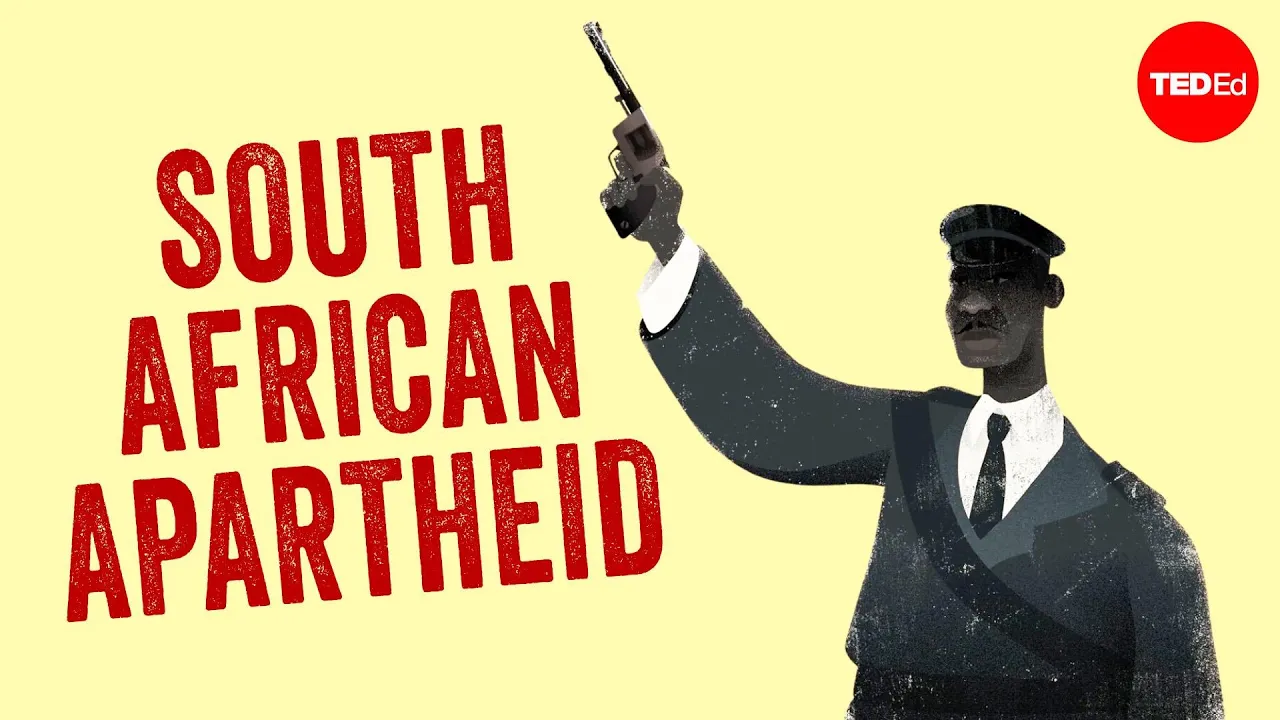
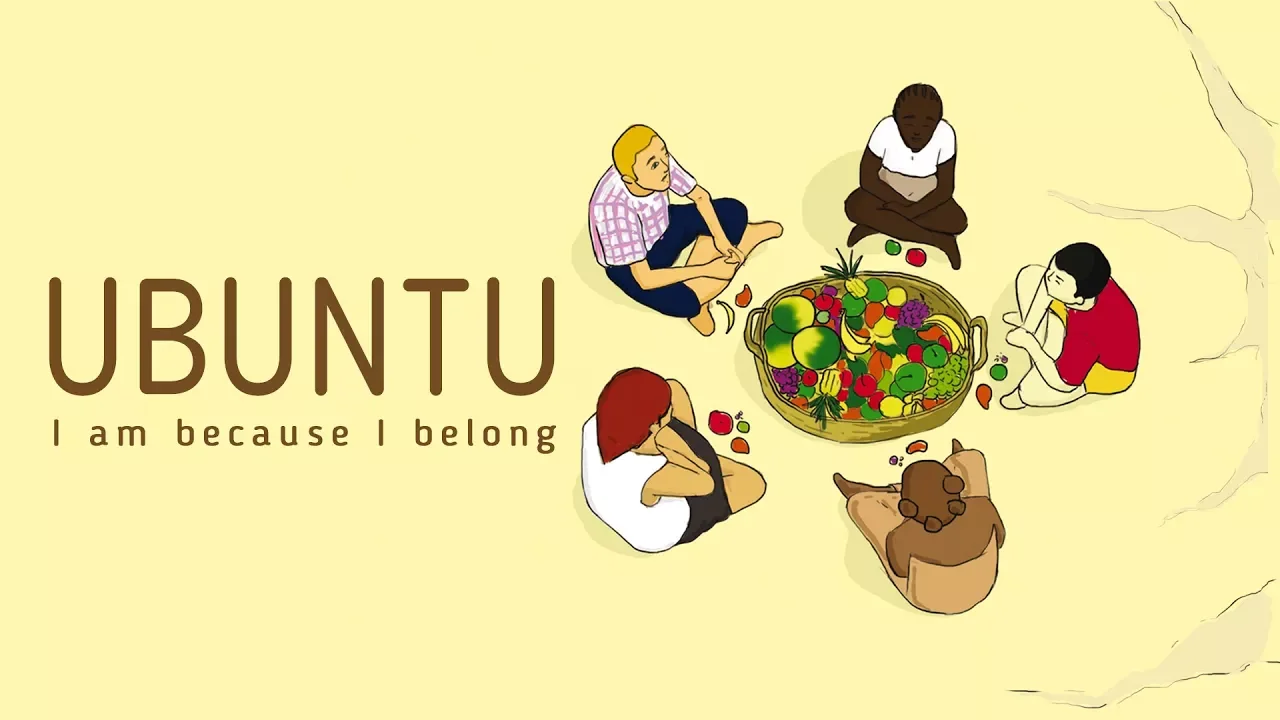
Added:welcome back to Carnegie stuff today we're gonna be continuing with our series on finding definitions dizzying distinctions and diabolical doctrines of series sorting through some of the jargon of philosophy in this video we're going to be continuing our mini-series on analyzing African philosophy looking at some of the philosophies that have come from sub-saharan Africa in this video we'll look at what is one to philosophy now a solid example of ethno philosophy is the rise of Ubuntu philosophy Ubuntu is an goony word which may roughly be translated as humanity the concept is very closely tied to the philosophy of Desmond Tutu and the Truth and Reconciliation Commission in South Africa which we'll cover specifically at the end of this video as this is an ethnic philosophy which is still being formed out of existing traditions and practices there's disagreement as to how it should be codified one common description of the philosophical position is that it is assent to the proposition that a person is a person through other people now while this offers some clarification maybe as to the kinds of things that a bundu philosophy might support it is not specific enough to fully formulate a position around it or exactly what philosophical arguments one could make from and boon to philosophy or in order to support it and what kinds of positions where it would fall so in this video we're going to try to do some of that work drawing on works that others have done claiming that Ubuntu philosophy supports particular philosophical positions so throughout this video I will present three specific positions relating to personal identity rational choice theory and justice which have been argued or inspired by the central tenets of Ubuntu the theories of justice are going to be the ones that are most strongly related to a boon to and which have the closest direct connections to it but the other theories have been offered and have been used as ways to say Ubuntu philosophy supports in this particular notion of personal identity or this particular notion of rational choice the goal here is not gonna be to attempt demonstrate whether these positions are actually deeply connected back to a particular culture or cultural practice channel the previous video on ethno philosophy for arguments as to why this might be but rather to evaluate the position on their face and determine if they are particularly persuasive so first off identity the phrase a person is a person through other people seems at first glance to at least be personally about personal identity which makes what makes someone the same over time traditional theories of personal identity include psychological theories relying on internal mental states like memories somatic theories relying on physical characteristics and narrative theories rely on the story that one tells about one's self however a solution to this problem inspired by wound to philosophy is that identity requires relationships to others in order for you to remain you fully you over time those in which you have close relationships with must continue to identify you as you for such a theory there's often both an external and an internal component to personal identity you must have a consistent narrative of yourself perhaps if we're talking about narrative identity and there must be a consistent narrative of you of who you are professed by those around you and that your actual identity lies somewhere in between those two narratives basically what this is saying is that your identity is in some way relational you're in some partial way defined by those around you who you are is not something that is simply internal to you but is in part defined and constrained by other people around you to understand this imagine someone that goes through a sudden radical personality change in a way in the way they act and treat others perhaps they used to love to laugh and joke and play with their loved ones but are now angry and violent towards the ones that they love they may internally believe that they are the same person and maintain the same internal narrative the same memories the same physical body but if those around them feel that they are categorically a different person there's some real way in which they are a different person and some way in which they are the same there's some way in which the internal perception of themselves may have stayed the same but the external perception is shifted so drastically that we might say that this person is importantly different than they used to be a non-relational view of identity does not allow for us to count for this difference as from the psychological perspective they have the same memories the somatic perspective they're in the same body in the narrative perspective they can internally tell a consistent story of themselves they are the same person who one two in relational identity allow us to say that there's an important way in which they are a different person because the way they relate to others has changed they're only really themselves through both their relationships to other people and their own internal narrative once again a person is a person through other people now there is a relational identity or broadly discussed in literature not just in reference to a boon to philosophy and a full analysis of the position is gonna need to await another video but hopefully this ethno philosophical process of taking a culture belief and demonstrating its philosophical implications is clear you might have a range of objections to kind of relational ideas of personal identity being passed on from anything from saying that just objecting to the thought experiment and saying nope that person is definitely the same person it doesn't matter what people think of them - saying well what about someone that lives their entire life in isolation and doesn't have close relationships with others is there really something that's missing from their personality or from their identity people would say I about identity that's more you're just talking about personality and that's a separate thing it doesn't really have anything to do with identity so there there are objections one could lob against this but in terms of abloom true philosophy this might be something that this kind of abstract cultural belief might support in the way of a really strict and specific philosophical position should be noted that since the original cultural belief underpinning this position is not sufficiently explanatory or agreed-upon there may be proponents of a Buddha who disagree with relational identity or this interpretation however that is tangential to the strength of the argument for the position on its face since the cultures underlying ethno philosophy are not perfectly determined it is not problematic for multiple inconsistent philosophies to develop out of them any more than it's not problematic for multiple inconsistent philosophies to have developed out of the values of ancient Greek culture the point here is that someone that holds to the values of Ubuntu may end up defining or cashing out those terms our intuitions in a different way then I just have with this idea of identity that doesn't mean that this idea of identity isn't a way that you can cash it out it just means that the underlying concepts and ethics of the culture aren't sufficiently deterministic to say that this is the one and only way you can cash this out now would you rather make twenty five thousand dollars in a world where everyone else makes twenty four thousand or make two hundred and forty thousand dollars in a world where everyone else makes two hundred and fifty thousand economists assumed that if you're rational you should pick the larger income because you would be getting more absolute benefit and amounts and the amounts that others make are irrelevant to this choice however when given this choice people most often choose the twenty-five thousand dollars over the two hundred and forty thousand dollars economists and some philosophers view this tendency as irrational or not based in some kind of ality however some philosophers have used the Boonta philosophy to explain how this behavior might in fact be rational if we define ourselves not in terms of what we have but in relation to what those around us have this decision makes sense if some part of your humanity who you are your own self worth is contained in what others have and what those around you have then in order to completely value your own self-worth and make a self-interested ly rational decision you do need to think about and consider what others around you have the argument here would be that our relationships with others are something which should be valued because a part of our identity as people is tied up in our relationships with others are part of our own personal value is tied up in our relationships with others and so you can't even if you're trying to be fully self-interested because part of your own self-interest is those relationships with others and it's constitutive of relationships with other people to be fully self-interested you need to care about what others have it's rational to take others into account when making choices because in order to be self-interested we must care about others because our own value esp--you list I'd up in the value of others in the way we relate to other people if you care only about yourself in the sense that you don't care at all about your relationships with other people then you're not human in an important way because a person is only a person through other people at least building out of a Bluetooth philosophy to formalize this claim even further we might claim that it is only through relationships with others that we are made human something around the tenants of a Bluetooth philosophy to act rationally one should consider what makes one human that that is can be part of your self-interest what makes you human should be something that you're interested in and you can act on self-interested lee and if your relationships with others are part of what makes you human then you can self interestedly make choices based on your relationships with others in the around you therefore to act rationally one should in fact consider the relationships that one has with others the first premise is something like the central tenet of a boom 2 the second premise may be a little shaky err but it seems that it's rational to care about what makes us human and that in some ways this is rationally self-interested now you might be unconvinced by this argument for several reasons you might for example object to the central claim of a boon to philosophy and claim that what makes us human is in fact rationality itself and not the way that we relate to other people and we don't really need other people this claim seems to be intuitively disputed at best often along cultural lines I think there are people out there that firmly believe that it is your rationality alone that makes you human and there are people that firmly believe that it's your relationship with other people which makes you human and so what's needed to really parse out this distinction would be arguments for the claim that rationality is what makes us human versus the claim that our relationships to other people are what makes us human and there's an interesting argument going back and forth there but it would dig down to those kind of deeper intuitive claims and I think there's a lot of people that are just saying some of those claims based solely on a gut intuition so one of the difficulties here is an argument that may be convincing for someone with one set of cultural values around perhaps strong autonomy or these kinds of things freedom all that may be entirely antithetical to someone with a different underlying value structure that has much more to do with communalism ok and so the argument may break down to an argument between autonomy and freedom and communalism and those kinds of things but all that to say this is still a coherent consistent philosophical position that one can hold with respect to rationality whether you object to it or not is another thing now the clearest application of a bootiful he's in the realm of justice it was explicitly used by Desmond Tutu and others in the framing of the underlying philosophy of the Truth and Reconciliation Commission in post apartheid in South Africa there are two positions which could be taken here when you are in a society which has just thrown off a set of people that have been oppressing you that there's a need for revenge and Punishment against those that have oppressed you or that there's a need for restoration and reconciliation traditional western philosophies prescribed the former that there's a need for revenge and punishment of the oppressors someone commits murder the state may take their life or punish them by putting them in jail for life if a group of people commits continuous and horrible atrocities against another the perpetrators deserve to be punished however this is not in line with the Abuja philosophies of Desmond Tutu and arguably Nelson Mandela tutu argued for restorative instead of retributive justice because we are made human by our relationships to others both the oppressors and the oppressed were suffering under apartheid people who Harbor hate and endorse oppression are made less human by doing so therefore they do not need to be punished they need to be restored retributive justice on the other hand would actually diminish the humanity of those exacting it just as being oppressors did to those they were oppressing the idea here might be cashed out something along the lines of by continuing a cycle of revenge you are losing a part of your humanity even if there's some sense in which you have a right to punish people that harmed you and that by continuing that cycle of revenge you're never going to stop and you're never going to get out of it and you're going to become just as bad as those original oppressors were and Desmond Tutu cash this out when talking about things like the Rwandan genocide of saying that there was a minority group of truth sees that arguably oppressed the Hutus and that when the Hutus eventually came to power and grew sufficiently in power they responded by exacting that oppression back on the Tutsis and the idea is that there was a lack of Ubuntu there there was a lack of understanding that your humanity is tied up in the humanity of other people that to be ethical you need to act in an ethical way and that by exacting revenge even if you have in some sense a right to revenge you are doing something that's wrong and in some way becoming just as bad as the oppressors here's a quote from Nelson Mandela which sums up the argument quite well probably in a better way than I just did trying to explain it I knew as well as I knew anything that the oppressor must be liberated just as surely as the oppressed a man who takes away another man's freedom is a prisoner of hatred he's locked behind the bars of prejudice and narrow mindedness the oppressor and the oppressed the oppressed and the oppressor alike are robbed of their humanity remembering that one too means humanity more formally we might say oppressing and exacting revenge makes us less human exacting retributive justice causes further harm both to those that were oppressed as well as the oppressors working to restore and reconcile both the oppressed and the oppressors heals us and makes us more human therefore to become more human we should work to heal and restore instead of punish and take revenge if one were to object to restorative justice it would likely be to claim that it may not work that the point of justice is in part to serve as a deterrent against bad acts there's no threat of hurt than those acts will in fact continue and that trying to do a sense of restorative justice is just letting people off the hook and is going to eventually end up encouraging those bad acts again a response to this might be that while this makes sense for laws of country's governing the actions of individuals it is not effective to deter entire cultures of people and when you have these kind of entire cultures stuck in revenge cycles restorative justice is more effective if you're born into a culture which oppresses others it's unlikely you'll be swayed by the possibility of a deterrent since the culture of oppression is so institutionalized whereas if you're an individual that's born into a free society you make the choice to take an action against another individual there's a sense in which you should be punished and that threat of punishment should be there and can enact well on you but if an entire culture is part of that oppressive system then there's a lot of underlying hate and bias that needs to be healed in order to fix it and that kind of retributive or revenge justice will only end up perpetuating the cycle so whoa that was wound to philosophy next up we're gonna look at Yoruba epistemology coming from Nigeria and akan philosophical psychology bond to philosophy Ethiopian philosophy and finally pan-africanism watch this video and more here at Carnegie's org and stays skeptical everybody
Up Next

Heinz Dilemma: Moral Reasoning Development Explained
@prof.mariecoppola608
93.2K views•2013-04-24

John of Damascus on Holy Images: A Theological Defense
@BannedBooks
139 views•2026-04-25
Gottlob Frege: Founder of Analytic Philosophy and Modern Logic
@CarneadesOfCyrene
15.3K views•2016-12-08
The Myth of Sisyphus: A Greek Legend of Eternal Punishment
@TEDEd
8.6M views•2018-11-13
Related Study Plans & Knowledge Roadmaps
Structured learning paths in Philosophy